Kenyan farmers should adopt seed varieties that are
resilient to climatic shocks in order to achieve food security and expand
revenue streams, Joseph Mathooko, a UN Food and Agricultural Organisation (FAO)
official said on Monday, February 11, 2019.
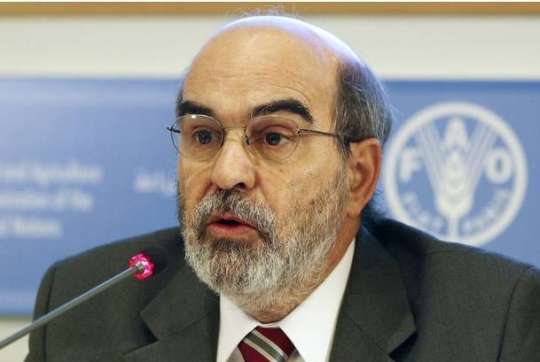
Jose Graziano da Silva, Director General of the FAO
Mathooko, a field monitoring officer, said during a field
trip to the coastal county of Kilifi that “drought and pest tolerant seeds are
fortunately available in the market to help farmers turn around their lives.’’
He noted that researchers had developed climate-smart seeds
that resist drought and pests to help farmers improve their productivity and
living standards.
The UN official reiterated that Kenyan farmers, especially those at the coastal region, are capable of producing food for domestic and foreign markets once they start growing improved hybrid seeds.
Mathooko noted that a survey on the performance of the seeds
that FAO donated to farmers in the coastal region after April 2018’s floods
found that farmers who planted the certified seeds realised bumper harvest.
“Besides planting for their own consumption, we found out
that many farmers sold out their harvests and earned reasonable profit,’’ said
the official.
Namibian is making steady progress in combating the effects
of climate change despite the challenge of lacking financial resources, Minister
of Environment and Tourism, Pohamba Shifeta, said in Windhoek on Monday,
February 11, 2019.
Pohamba Shifeta
Shifeta said the country had taken the issue of climate
change with seriousness and has established a cross-sectoral National Climate
Change Committee (NCCC) to oversee all climate change related activities in the
country.
“To be frank with you, resources are not enough at all.
“However, as a country, we are doing our level best to
mobilise funding both at home and through multilateral climate financing
windows,’’ Shifeta said.
He said they had secured funding of one billion Namibian
dollars ($74 million) from the multilateral funding system, mostly from the
Green Climate Fund, the Global Environmental Facility, the Special Climate Fund
and the Adaptation Fund to drive their quest for combating climate change.
Shifeta said other crucial milestones achieved by Namibia
include Cabinet approval of the National Policy on Climate Change in 2011 and
the National Climate Change Strategy and Action Plan.
He said these were set out towards addressing climate change
mitigation and adaptation.
“Policy implementation is a process in itself.
“Namibia continues to implement its climate change policy
that was established in 2011 together with its implementation strategies
(2013-2020) to address medium and longer-term climate change impacts that are
projected,’’ he said.
UN Secretary-General, Antonio Guterres, on Saturday called
for more coordinated international efforts to fight climate change.
“The international community need more political will
to undertake climate change mitigation, adaptation and climate finance
activities.
“We are losing the race for climate change,
which could be a disaster for Africa and the world,” the UN chief said on the
sidelines of the 32nd ordinary session of the Assembly of the AU in Addis
Ababa.
A new Initiative funded by the United States Agency for
International Development (USAID) will be launched in Fresco, southern Côte
d’Ivoire, on Wednesday, February 13, 2019 to promote the wellbeing of
households living in an area that is vulnerable to the impacts of climate change,
and an urgent need to increase the resilience to climate change for the area
and its citizens.
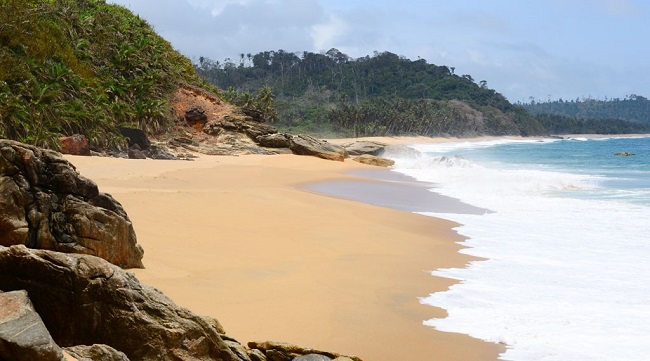
A coastline in Fresco
Fresco is a sub-prefecture of and the seat of Fresco
Department in Gbôklé Region, Bas-Sassandra District.
Until about a decade ago the Fresco coastal landscape (201
kilometres from Abidjan), despite its rich biodiversity and the significance it
holds for a fishing-based economy, was not considered a vulnerable area.
Indeed, much attention was not paid to an area where local communities and the
coastal ecosystems they depend on are exposed to extreme and harsh climate
events such as storms, high winds and floods.
With an increased understanding of climate change impacts
and how they interact with and exacerbate other drivers of environmental
degradation and economic decline, such as deforestation and overfishing,
solutions can be identified to turn the tide.
The activity getting underway in Fresco will bring together
relevant stakeholder groups including the Ivorian Government, civil society and
development partners, to support increased environmental and economic
resilience in the landscape, especially for women and youth.
The Fresco coastal landscape includes the Fresco Lagoon and
the upstream watershed consisting of the Bolo and Niouniourou rivers, which
provide the lagoon with the fresh water, essential to maintaining a healthy
balance of salt and fresh water. The lagoon has been classified as a Ramsar
Convention site, defined as a wetland site of international importance. This is
due to the richness of its animal and plant species, which include several
endangered ones like the manatee, African grey parrots and several species of
sea turtle. Bordered by mangroves, some of which have been severely degraded. The
lagoon is said to be an important breeding ground for numerous species of fish,
a key source of protein and income for surrounding communities.
Recent studies show a drastic decline in mangrove forests.
The area covered by mangroves between the towns of Fresco and Grand Lahou,
another lagoon-centred town 62 kilometres to the east, has fallen sharply from
15,000 hectares to around 6,000 hectares, and the mangroves are being replaced
over time by grasses and shrubs, which reduce the habitat for fish and of no
value to agriculture due to the high salt content of the soils.
The loss of these mangroves has led to a decline in the
productivity of fisheries, which has in turn increased poverty among local
populations, especially women and youth.
In response to these realities and the interest of local
communities to work in concert with relevant stakeholder groups, USAID through
its funded Programme, West Africa Biodiversity and Climate Change (WA BiCC),
awarded a grant to IMPACTUM – a local non-governmental organisation, based in
Abidjan, with a satellite office in Fresco, to implement interventions in the
landscape.
This initiative will be implemented in collaboration with
the Ivorian Government, relevant national institutions and local communities,
and is expected to support sustainable livelihoods, maintain the capacity of
ecosystem regeneration and enhance community resilience. This includes
restorating Fresco’s mangrove and upland forests and biodiversity habitat.
To this end, Government authorities and development partners
will work closely with local communities to implement different approaches to
conserve and sustainably manage the mangrove and upland forests as well as the
lagoon itself taking into account the area’s rich biodiversity. Activities are
planned to facilitate local fishermen’s access to the tools necessary to manage
resources at the Fresco Lagoon estuary in an efficient and sustainable way.
Farmers upstream will be supported to use agroforestry techniques to improve
the resilience of their plantations, and climate change related information
will be integrated into local policies to mitigate and adapt to the effects of
climate change over time.
The launch, according to the promoters, will benefit from the participation of high-level government officials from the Ministries of Environment, Water and Forests, Agriculture and Fisheries. Authorities from Fresco will receive stakeholders from the local communities and representatives of the relevant national institutions to review the programme implementation process, adopt, and provide collective support to ensure its success.
Participants will also embark on a field trip to the Fresco landscape to interact with the local people, and to see at firsthand, the issues pertaining to the landscape. Organisers are hopeful that this initial investment will raise awareness of the issues and the potential of sustainable natural resources management in Fresco, which will in turn interest other donors or private sector parties to keep the work going after the initial phase. Activities will be monitored regularly to show progress and to generate the lessons needed to improve the management not only of the Fresco Lagoon Landscape, but the imposing coastline of the Cote d’Ivoire.
Ethiopia’s parliament has approved a public health
legislation that observers believe will become one of Africa’s strongest laws
on reducing tobacco use. Passed unanimously by parliament, the Food and
Medicine Administration Proclamation is expected to save lives and protect over
105 million people in Africa’s second most populous nation.
According to scientists, tobacco smoking is dangerous to health
The new law requires 100 percent smoke-free public and work
places, bans tobacco advertising and promotions, restricts the sale of flavoured
tobacco products and mandates pictorial warning labels covering 70 percent of
the front and back of all tobacco products. The law also bans the sale of
heated tobacco products, e-cigarettes and shisha, and prohibits tobacco sales
to anyone under the age of 21.
The impact of Ethiopia’s new law cannot be overstated, says Bintou
Camara, Director of Africa Programmes, Campaign for Tobacco-Free Kids, even as
the group congratulates the Ethiopian government for the “public health victory”.
“As tobacco companies continue to set their sights on
Africa, Ethiopia has set an example for what all African nations can and should
to do curb tobacco use, the world’s leading cause of preventable death,” Camara
says, adding:
“In Africa and around the world, tobacco companies fight
hardest against the measures they know work to reduce tobacco use. The
Ethiopian government must now move to implement the law as swiftly as possible
and remain vigilant against attempts by tobacco companies to undermine this
tremendous progress.
“Around the world, tobacco use kills more than
seven million people each year – and without urgent action by more African countries,
nearly one third of the world’s smokers will live in Africa by 2100.”
The Bank of Industry (BoI) and All On on Monday, February
11, 2019 signed a N1 billion partnership agreement to finance the Niger Delta
Off-Grid Energy Fund to enhance access to clean, affordable and reliable power
solutions.
Mr Kayode Pitan, Managing Director, Bank of Industry (BoI), and Dr Wiebe Boer, Chief Executive Officer, All On, during the signing of a N1 billion Off-Grid Energy Fund on Monday in Lagos
Mr Olukayode Pitan, Managing Director, BoI, during the
ceremony in Lagos, said the partnership was a result of the bank’s efforts in
exploring strategic partnerships with reputable institutions in developing
sustainable solutions to facilitate social and industrial development.
Pitan said that the fund would provide local currency debt
financing to facilitate the deployment of energy solutions by access-to-energy
companies in the Niger Delta at 10 per cent interest rate per annum, with a
one-year moratorium, and seven years tenor.
“As you know, power is a critical resource towards achieving
industrialisation, and is also a major cost driver for SMEs in Nigeria.
“We are therefore particularly pleased with this partnership
as the deployment of this fund will provide clean energy at affordable interest
rate and friendly conditions not only to SMEs, but also to households and
communities in the Niger Delta region of the country,” he said.
Pitan said that the fund would stimulate the growth and
geographic spread of off-grid energy businesses in the Niger Delta to enable
households, SMEs and communities have access to clean, affordable and reliable
power solutions.
“In the Niger Delta, the majority of the population resides
in rural areas and only 34 per cent of these have access to reliable grid
power.
“The result is that SMEs in the region use expensive and
inefficient diesel and petrol generators, increasing their operational costs,
families cook with firewood or kerosene while children study with flashlights
or candles with the attendant negative health and safety concerns.
“The provision of clean, affordable, and reliable sources of
energy is therefore essential for improved economic activity and livelihoods of
the people of the region,” he said.
Also, Dr Wiebe Boer, Chief Executive Officer, All On, said
that the partnership would encourage off grid energy companies to deploy in the
Niger Delta and address the massive access to energy gap in the region.
“We are excited to partner with the Bank of Industry on the
Niger Delta Off-Grid Energy Fund because of their reputation as Nigeria’s
leading Development Finance Institutions and their deep experience as one of
the earliest investors in the Nigerian off grid energy sector,” he said.
According to him, the company’s activities complement
available grid power across Nigeria and help bridge the significant energy gap.
Boer said that the fund was provided equally by the two institutions
but would be operated by the Bank of Industry.
All On is an independent impact investing company, seeded
with funding from Shell, and works with partners to increase access to
commercial energy products and services for under-served and un-served off-grid
energy markets in Nigeria.
The company has a special focus on the Niger Delta and invests
in off-grid energy solutions spanning solar, wind, hydro, biomass and gas
technologies deployed by both foreign and local access-to-energy
companies.
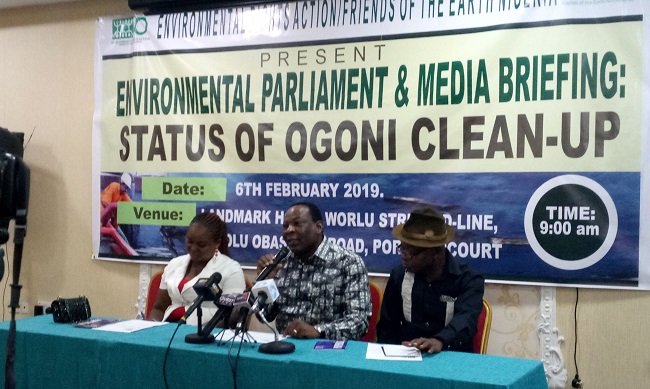
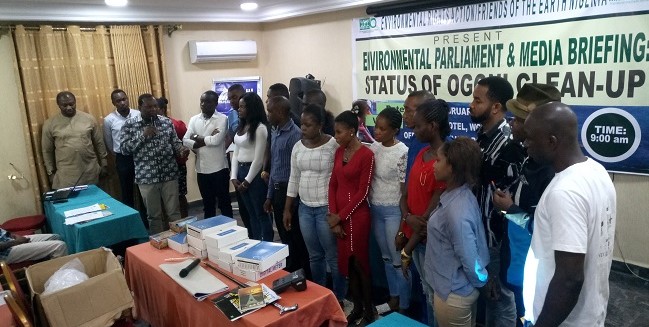
Analysing the activities of the Hydrocarbon Pollution Remediation Project (HYPREP) in line with the United Nations Environment Programme (UNEP) recommendations for the remediation and restoration of the polluted Ogoni environment, Dr Godwin Uyi Ojo, Executive Director, Environmental Rights Action/Friends of the Earth Nigeria (ERA/FoEN), at a forum in Port Harcourt, Rivers State on Wednesday, February 6, 2019 says there is “monumental deviation” from the UNEP blueprint that he claims has eroded public confidence and will likely compromise the quality of the clean-up process. He urges HYPREP to stick to the concrete recommendations relating to the clean-up process
L-R: Queeneth Stephen (Member, Movement for the Survival of the Ogoni People – MOSOP), , Dr Godwin Uyi Ojo “Executive Director, Environmental Rights Action/Friends of the Earth Nigeria – ERA/FoEN) and Chief Saint Emmah (Village Head, Deebon Village, Bodo City, Ogoni) during the forum
The much-anticipated clean-up of Ogoniland which has become
very contentious and politicised.
In 2015, the current federal administration announced the
fast tracking of the implementation process and worked to correct the
structural defects as well as the paucity of funding for the agency. Although
the clean-up of Ogoniland was flagged off on June 2, 2016 with the setting of
the Hydrocarbon Pollution Remediation Project (HYPREP
2), it was only in January 2019 that the agency announced that it was handing
over 16 sites to contractors to commence the clean-up processes.
The verdict on Ogoniland by the United Nations Environment
Programme (UNEP) Environmental Assessment has not changed. Recent visits to the
communities indicate that Ogoni land remains a wrecked environment and
environmental disaster zone. Despite efforts made towards the clean-up, till
date, contrary to popular belief, not a drop of oil has been cleaned.
The multiple claims that contractors have mobilised to site,
and that clean-up has commenced is false as there is no visible sign of
contractors going by reports from our independent field monitors who are
closely monitoring the process and were there this week.
The report finds monumental deviation that has eroded public
confidence and will likely compromise the quality of the clean-up process.
Hence, we request HYPREP to stick to the concrete recommendations relating to
the clean-up process. This report is of interest to critical stakeholders in
the Ogoni clean-up process.
Scanty information
about Ogoni clean-up contractors
There are interested observers and local communities who
would like to get full information about the contractors that were finally
selected to undertake the current clean-up jobs. Apart from the list of over
170 firms who submitted their expression of interest and bid documents, there
is an information gap in the public domain on who the successful companies are,
where they come from, track record of similar work done and the terms of the
contract.
It is now international best practice to publicly disclose
the terms, scope and cost of the contracts entered between entities such as
HYPREP and each of the companies selected to commence the clean-up process in
the 16 selected sites. The World Bank, the African Development Bank and several
other international institutions have had this as part of their operational
guidelines and disclosure policy. The process should therefore scrupulously
abide by international best practices to ensure appropriate monitoring and
evaluation by the international community.
HYPREP and a five-year
work-plan
HYPREP has raked in huge public outcry and negative
criticism by the secrecy surrounding the work-plan. In a multidisciplinary and
complex undertaking such as the Ogoni clean-up process, a work-plan should be
made available publicly. A work-plan outlining a set of goals and processes is
not in public domain, thereby shrouding the process in secrecy. A work-plan
would demonstrate a set of outcomes to be achieved in the short, mid and long
term.
Thus, the work-plan could be used as a tool for measuring
and evaluating the progress of the work over time. Work plans, whether used in
professional or academic life, help you stay organised while working. If it has
not done so already, HYPREP should develop and put in the public domain a
five-year work-plan for Ogoni clean-up process with enough in-built flexibility
to allow for practical public input and adaptation to emerging realities.
Sustainable funding
for the clean-up process
So far, after nearly three and a half years after the
presidential announcement on the fast-tracking of the Ogoni clean-up process
and the $10 million take-off fund, the only announcement in 2018 was that the
stakeholders have finally mobilised about $177 million to enable the
commencement of clean-up project. While there is a shortfall in 2018, it is
hoped that funding of $200 million for 2019 should be released early so that
there is sustainable funding for the exercise. The inability to quickly mobilise
funds to ensure effective commencement of the clean-up process created a
perception of lack of sincerity and commitment on the part of government and
the other contributing stakeholders led by Shell.
Establishment of the
Integrated Contaminated Soil Management Centre
According to the UNEP report, the key recommendation for the
clean-up of the Ogoni environment is the establishment of the Integrated
Contaminated Soil Management Centre (ICMSC) comprising an incinerator, thermal
unit, soil washing unit and a contaminated water treatment unit that are yet to
be built even after a ground-breaking ceremony in 2017 by the then Minister of
Environment, Amina Mohammed. Yet, this
facility is one of the most crucial in commencing the clean-up exercise.
A statement from HYPREP’s website reads: “On 16th February
2017, the ground-breaking ceremony was performed for the construction of the
Integrated Contaminated Soil Management Centre in Bori New City in Khana Local Government
Area in Ogoniland”. However, there are concerns about the delay in the
commencement of the ICMSC and what it portends for the project.
Another statement from HYPREP’s website gives us even more
cause for concern. The HYPREP’s Milestones document that formed part of their
media briefing on Saturday January 26, 2019 stated: “We have adopted an updated
site remediation strategy which divides the sites into three categories;
category A – complex, category B – less complex and category C – sites that
require further investigations. The work
of remediation in less complex sites does not require utilisation of the
ICMSC. We have since commenced
feasibility studies for both ICSMC and Centre of Excellence. We are adopting
international bidding process to get the best of expertise and technology for
the construction of both facilities.”
That the clean-up process does not require ICSMC is
malicious falsehood and such a manipulation will likely affect the integrity
and quality of the clean-up process.
From HYPREP statements, the following questions naturally
agitate the mind of any interested observer in the light of claims that
contractors have been mobilised to clean up and requested to deal with wastes
from their project area.
The ground-breaking ceremony for the
construction of the ICSMC has already been done in Bori in 2017 but the site is
currently abandoned and overgrown with weeds. This presupposes that the necessary
condition precedent to any construction project had been completed e.g.
feasibility studies, architectural, structural and mechanical drawings, etc.
Why then is HYPREP still as recently as last
week looking to perform feasibility studies and adopt international bidding
processes to get the best experts for the ICSMC?
Interestingly, only category B, less complex
sites made up the 16 sites showing that complex and heavy polluted sites have
been left out. This makes the initiative as superficial, make-belief and
unserious. For example, what facilities and processes have been put in place by
HYPREP to ensure that waste generated by remediation contractors even from
their project sites are properly treated and appropriately disposed in the
absence of the ICSMC that is crucial to this exercise. When will this ICSMC be
built before the real clean-up of heavily polluted sites could commence?
Federal Ministry of
Environment cutting corners in the Ogoni clean-up process
In a recent engagement with Amnesty International, the
Federal Ministry of Environment confirmed that there are currently no plans for
ICSMC. The FME argued that communities are interested in clean-up right now and
all activities cannot be simultaneously undertaken. This indicates that the FME
is oblivious of the nature of contaminated land waste – a major source of worry
to civil society organisations and contaminated management experts in Ogoniland.
In HYPREP’s advert for remediation, one of the items
highlighted was for prospective contamination remediation companies to possess
ability to manage their waste. This could mean that different companies would
adopt different approaches to managing waste from remediated sites. This approach
is different from the thinking that led to the recommendation of the ICSMC by
UNEP.
The ICSMC is expected to be a facility for receiving and
treating waste from remediated sites. All remediation approaches that would
require ex-situ treatment would generate significant hazardous waste. Thus,
given the nature of contamination in many sites in Ogoniland, the UNEP report
envisaged that managing generated waste could be challenging, hence recommended
an exclusive facility for waste management. Experts expected this Centre to be
in place before awarding any remediation contract – because it is the only
effective mechanism to manage generated waste in the clean-up process. This
recommendation was mainly to manage cross environmental contamination and
ancillary pollution of plausible receptors, create sustainable jobs and transform
Ogoniland to a global hub of skilled manpower and expertise on contaminated
land remediation.
It is our hope and the prayer of all Ogonis that the
Integrated Contaminated Soil Management Centre and the Centre of excellence
which were facilities that were both highly recommended by the UNEP report will
not be abandoned and the laudable objectives behind it defeated.
On several monitoring visits in 2018 including a visit to
Bodo on November 11, 2018, our team including campaigners from Europe, Asia and
Africa witnessed first-hand how contractors handling the initial Free Phase oil
removal operations under the Bodo Mediation Initiative (BMI) dumped bagged
potentially toxic wastes around three sites in Bodo community.
Ogoni Centre of Excellence is jettisoned
The Ogoni Centre of Excellence has not been built and highly
relegated. According to the UNEP report, the clean-up of Ogoniland is not exclusive
to environmental restoration but includes social and livelihood restoration.
This Centre is expected to train the required local manpower to participate in
the clean-up exercise and ensure that Ogoni youths secure jobs with
contractors. The Centre was also expected to increase tourism to contaminated
sites for students and researchers globally. For this reason, UNEP in their
preliminary cost estimate for the first five years allocated substantial funds
to the establishment of the Centre of Excellence.
HYREP’s 2017 Year Book has no mention of the Centre for
Excellence. Similarly, the 2018 HYPREP Milestones updates, due to pressure from
civil society groups such as ERA/FoEN, only carries a cursory mention of the Centre
with the vague statement that feasibility studies are being considered for it.
Clearly, the Ogonis feel that they have been short-changed
and taken for a ride.
Recommendations
The Federal Government should comply with the UNEP recommendation on emergency measures to provide the Ogoni communities water for drinking and other uses. In the short term, the Port Harcourt Water Corporation should play its statutory role of ensuring that “every citizen of the state has equal access to safe, adequate and reliable water supply”. HYPREP recourse to a comprehensive water scheme to embrace all the Ogoni communities is a welcome development but should translate from talks to immediate action because people are dying daily from drinking polluted water contaminated with heavy mental such as benzene. According to UNEP report, the pollutants in Ogoni water are cancer-causing and kill over time.
HYPREP and government should develop a five-year work-plan that indicates short-, mid-, and long-term goals of the project lifecycle and ensure transparency of the process.
HYPREP should urgently commence the development of the Centre for Excellence and ICSMC as no meaningful clean-up will be done without it.
A quarterly transparency and accountability meeting open to all stakeholders should be initiated. Such a platform should be used to gain trust and confidence and validate the integrity of HYPREP.
HYPREP should set up a database for the information on the remediation process.
HYPREP should develop a robust economic empowerment package/programme for local community members involved in artisanal crude oil refinery.
Government should ensure that at least $200 million per year is provided timely and sustainably to avoid the situation of shortfall that occurred in 2018.
The Head, Environment and Conservation, Centre for Environment, Human
Rights and Development (CEHRD), Dr Kabari Sam, is worried over waste management
issues under the clean-up programme. While cautioning against the possibility
of a region-wide contamination of land, he wants an Integrated Contaminated
Soil Management Centre (ICSMC) or a Mini Soil Management Centre (MSMC) to be in
place
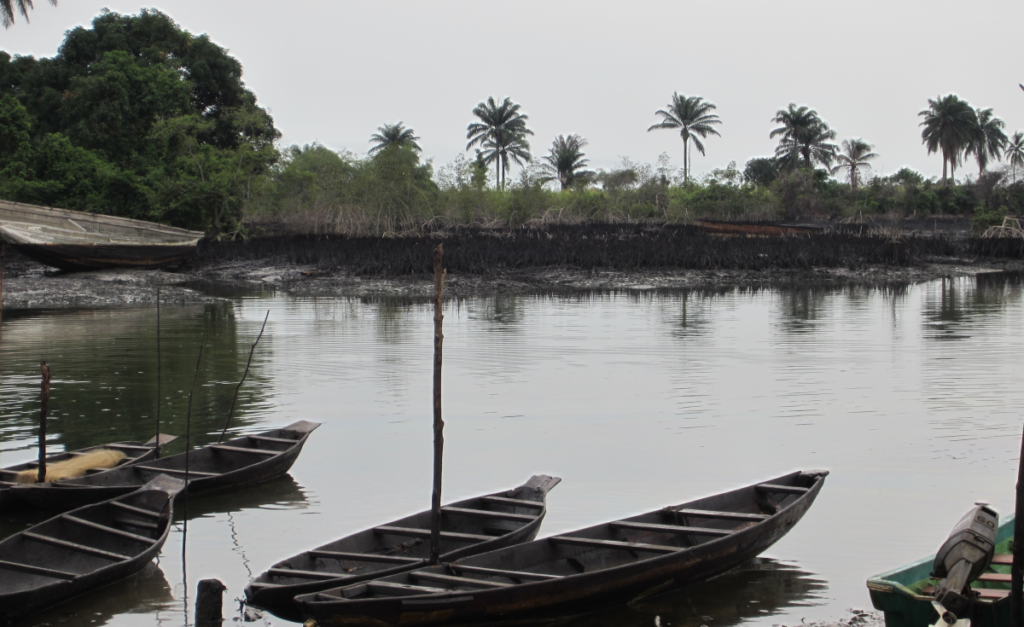
A water body in the Niger Delta polluted by crude oil
There are lots of things that we seem to have taken for
granted in the clean-up process that are very important and waste management is
one of them. We were supposed to have somewhere or a preferred environment that
will take the waste before we take them to other sites by prospective
contractors or people that will carry out the remediation.
Unfortunately, we seem to be putting the cart before the
horse and so we might run into trouble at some point because you are digging up
waste from somewhere and dumping elsewhere where we have clean land. We do not have
an Integrated Contaminated Soil Management Centre (ICSMC) now and there is no
plan on ground for us to have it. Worse still, we do not have a Mini Soil
Management Centre (MSMC).
For situations where you don’t have the funds or you don’t
have the capacity to build an ICSM, we should have had MSMCs. The difference
between the two is the facility they have in both environments.
We are supposed to have at least for a start somewhere to treat
the hazardous wastes that will be coming from the polluted sites. We are not
learning lessons from the results of our experience. The implication is that if
the contractors begin the clean-up today whatever waste that will be arising
from those sites, people are going to need land to treat the waste.
Because of the high level of poverty in our community,
people will be more than willing to sell or lease their land without asking
what their land will be used for and they will fall prey to that because companies
will buy the land at whatever exorbitant price because they know what they want
to use it for.
It is a big problem that we are going to face because there are reports that contractors have already started acquiring land in other places outside of Ogoni. So, at some point it is going to degenerate into a regional issue and not just an Ogoni issue because they (the contractors) will dig up waste from Ogoni and dump it in other parts of the Niger Delta.
Now we had a similar waste from the initial phase of clean-up that was done in Bodo. Some of us do not know where that waste is at the moment. There was no facility prepared to take that waste, we hope that the waste has been evacuated.
Let us avoid making the same mistake this time around. As we already have sites for clean-up being allocated to contractors, let us have the ICSMCs.
To complement the Ogoni clean-up process, the Environmental
Rights Action/Friends of the Earth Nigeria (ERA/FoEN) and its allies at the
local, national and international levels, on Wednesday, February 6, 2019 in
Port Harcourt, Rivers State launched some 100 Community Independent Monitors
(CIM) to provide qualitative and scientific progress reports on the state of
the clean-up process.
Inauguration of the Community Independent Environmental Monitors by Dr Godwin Ojo of the Environmental Rights Action/Friends of the Earth Nigeria (ERA/FoEN)
According to Dr Godwin Ojo, head of ERA/FoEN, the CIM will
provide feedback to the Hydrocarbon Pollution Remediation Project (HYPREP),
government agencies, media and the relevant stakeholders to ensure transparency
and accountability and ensure quality clean up.
In a similar vein, the group has expressed reservations over
the implementation of the emergency measures in Ogoni under the clean-up
initiative.
Essentially, the Ogoni environmental remediation project as
outlined in the United Nations Environmental Programme (UNEP) recommendations
should be implemented in phases – the emergency measures and the full-scale
remediation of polluted sites. There were eight emergency measures highlighted
in the UNEP report.
But Ojo alleged that, till date, only a few measures had
been partially attempted without any form of a fast-tracked implementation,
while many others are yet to be conceived.
For instance, on the emergence measure that wants the authorities
to ensure that all drinking water wells where hydrocarbons were detected are
marked and that people are informed of the danger, the group remarked: “This
emergency measure is yet to be attained. Two communities in Ogale Clan – Ekpangbala
and Agbi – have contaminated water wells that are yet to be marked, and people
still use water from these wells for different purposes.”
On provide adequate sources of drinking water to those households whose drinking water supply is impacted, ERA/FoEN commented: “This is one measure that is yet to be implemented. Contracts were advertised to study the water reticulation in Ogoniland and provide water. HYPREP is yet to provide potable water to any community.”
On informing all families whose rainwater samples tested positive for hydrocarbons and advise them not to consume the water, ERA/FoEN observed: “HYPREP is yet to identify these families, consult or inform. Or better still, sensitise the Ogoni population on the hazard of drinking contaminated rainwater.”
Concerning mounting a public awareness campaign to warn the individuals who are undertaking artisanal refining that such activities are damaging their health, ERA/FoEN stated: “HYPREP has undertaken strategic level consultations with ex-artisanal refiners. This approach has been ineffective and given that the real people involved in artisanal refining (‘the foot soldiers’) and suffer the impacts of the illicit and crude business are yet to be consulted.”
NASA scientists have announced that 2018 was the
fourth hottest year on Earth, exceeded only by 2017, 2016 and
2015. After 140 years of record-keeping, 18 out of 19 of Earth’s
warmest years have occurred since 2001.
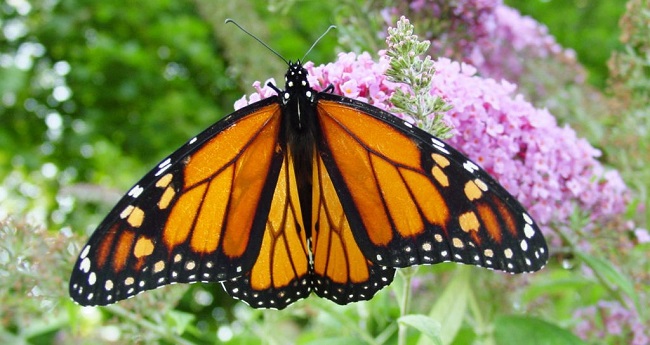
Milkweed, Monarch Butterflies’ favourite, are now being destroyed by hotter dryer land often damaged by pesticides
For humans, this means more destructive hurricanes,
floods, forest fires, droughts, and bone-chilling Arctic blasts
resulting in thousands of deaths, billions in property destruction
and massive interruptions of life as we know it.
By 2100, an estimated 50% of all the world’s
species could go extinct because of climate change.
A study by the International Union for the Conservation of
Nature (IUCN) has identified tree species native to Indonesia’s Kutai National
Park that are resilient to climate change and support threatened East Bornean
orangutan populations, recommending their use in reforestation efforts. The
study was funded by the Indianapolis Zoological Society, Inc.
The tree species are resilient to climate change and support threatened Orangutan populations
Recognising that saplings planted today face dramatic
climate changes over their 100+ year life-spans, the study, titled: “Reforesting
for the climate of tomorrow”, analysed the traits of around 250 species of
trees and other plants native to the rainforest of Kutai National Park. It
identified species resilient to the fires and drought conditions that are
expected to increase as the climate warms. The authors also identified tree
species that provide food and habitat for threatened East Bornean orangutans,
for which the park provides a key habitat.
“Increasing drought and fires caused by a warming climate
are important emerging threats to species-rich areas such as Kutai National
Park,” said Alan Lee, lead author of the study and member of the IUCN SSC
Climate Change Specialist Group. “Selecting climate-resilient tree species can
help protect the park and the orangutan populations it shelters from the impacts
of climate change. We hope that the information in this study is taken up by
all those working to restore this unique area of rainforest.”
Climate change-resilient species included those with low
sensitivity to changes, high capacity to adapt to them, or both. Two tree
species that were singled out for their resilience to fire – a native
palm, Borassodendron borneense, and the hardwood tree Eusideroxylon
zwageri, known locally as Bendang and Ulin – should be planted in buffer zones
around fire-prone areas, the authors recommended.
“This study provides valuable practical guidance as to how
we can make a unique Bornean rainforest more climate-resilient. Of course, to
halt the catastrophic impacts of climate change on nature we urgently need
ambitious emissions cuts. But with climate change already impacting many
species in alarming ways, nature needs all the help it can get in adapting to
these rapid changes,” said Sandeep Sengupta, IUCN’s Climate Change
Coordinator.
Seven plants that are likely to be climate resilient emerged
as key food sources for East Bornean orangutans, and these should be planted
alongside vines that the apes use for moving through the forest and trees which
they prefer for nesting, such as the Ulin tree, according to the study. To minimise
conflict with humans – a key threat to orangutans – the authors recommended
planting these species in areas that humans are unlikely to access.
“Kutai National Park was once one of the most important
lowland rainforest sites in Borneo, and its degradation is a major loss not
only for Indonesia but for the world,” said study co-author Douglas Sheil.
“But there is a glimmer of hope in that populations of threatened East Bornean
orangutans persist there, and work continues to restore forest cover in the park.
Selecting which species to plant is a significant contribution to restoring the
health of this ecosystem. Of course, the reasons why forest cover was lost in
the first place must also be addressed for reforestation efforts to succeed.”
Biodiversity in Kutai National Park faces multiple threats,
including population expansion into the protected area, hunting, forest
clearing for agriculture, fire, and coal mining, with climate change an
important emerging threat. Reforestation efforts in the park are being
undertaken by local organisations, government, and PT. Indominco Mandiri, a
coal mine operation on the edge of the park.
Key collaborators in this work included Anne Russon of York
University (Ontario), the staff of Kutai National Park, the Indonesian Ministry
of Environment and Forestry, the Yorkshire Wildlife Park and a range of
dedicated conservationists and researchers from local and international
organisations. Three members of the IUCN SSC Climate Change Specialist Group
played leadership roles.
“My research team had the very telling but heart-breaking
opportunity to study warming and severe drought effects on Kutai National Park
first hand, via the 2015-16 El Niño drought – the most severe ever recorded.
By its end, we had seen severe drops in KNP’s wildlife numbers – from
invertebrates to orangutans and other large mammals – and very high tree death
rates in drier areas,” said study co-author Anne Russon of York
University, Ontario. “Almost three years later it is clear that KNP’s forest
and resident wildlife have recovered somewhat, but very slowly. Innovative
studies like this IUCN one stand to contribute importantly to nature
conservation by offering constructive methods for buffering the effects of
climate change.”
“This work is among the first of its kind, in that it moves away from more common approaches to identify species that are most threatened by climate change, and instead focuses on practical ways to restore ecosystems using species that will be resilient far into the future,” said Jamie Carr, the IUCN SSC Climate Change Specialist Group member who conceived and co-led the work. “Moreover, it identifies practical and political challenges that will need to be overcome if such restoration work is to be successful.” “Kutai National Park faces many challenges in managing its area. Forest degradation is the biggest and the most pressing one. We give our utmost regard for all supporting organisations who made the Kutai National Park ecosystem restoration publication possible,” said Nur Patria Kurniawan, Head of the Kutai National Park.
“The results will guide our ecosystem restoration activities and will be implemented not only in Kutai National Park, but also in tropical forests outside the KNP. There will be immediate follow-up action related to ecosystem restoration in KNP. Moreover, we also call for continued support from IUCN and other parties in preserving the Kutai ecosystem and protecting orangutans.”