Minister of Interior, Lt.-Gen. Abdulrahman Dambazau (retd), on Tuesday, January 29, 2019 solicited support of international donors and other stakeholders in alleviating humanitarian crisis around countries in Lake Chad Basin.
Minister of Interior, Lt.-Gen. Abdulrahman Dambazau (retd)
Dambazau made the appeal at the second Regional Protection
Dialogue on Lake Chad Basin in Abuja.
He said that the cooperation of the stakeholders was
imperative in ensuring that their efforts at alleviating the crisis in the
region yielded positive results.
Earlier, at the meeting, UN Office for the Coordination of
Humanitarian Affairs (OCHA) in collaboration with the Ministry of Budget and
National Planning and the Ministry of Finance launched a Humanitarian Response
Protection Plan.
The Plan is part of concrete measures to solidify efforts to
alleviate the crisis in the region.
Dambazau recalled that a Tripartite Agreement among Nigeria,
Cameroon and United Nations High Commissioner for Refugees (UNHCR) was signed
in March 2017.
He said that the agreement was to facilitate the voluntary
return of Nigerian refugees living in Cameroon in a safe and dignified manner,
adding that the process for the return of the refugees was ongoing.
“I do not need to tell you that it is not yet ‘Uhuru’ as far as the alleviation of the challenges of the Lake Chad Basin is concerned,” he said.
The minister noted that security in the basin had remained a
challenge in spite of the efforts of the joint military forces of countries in
the basin.
“In spite of the huge breakthrough achieved in the fight
against the insurgents by efforts of our joint military forces, security in the
Basin has remained a challenge, particularly for the displaced population and
other vulnerable groups.”
He explained that the aim of the dialogue was for
stakeholders to appraise the commitments toward the implementation of outcome
of the first meeting.
“It is also to explore broader regional and international
support towards comprehensive review of the protection situation in Lake Chad
Basin countries.
“It is to reinvigorate consensus around protection
considerations and principles as informed by international law and standard
norms.
“It is also to propose and seek the adoption of a framework
for comprehensive solutions that are in line with international principles,” he
said.
The minister added that objective of the meeting was to
identify the protection risk in the region resulting from conflict-induced
crisis in the Lake Chad Basin and proffer appropriate practical solutions to
redress them.
“It is also to provide practical solutions to the plights of the people in and around the Lake Chad region who were turned to refugees and Internally Displaced Persons due to insurgency in the region,’’ he said.
Kenya is set to launch the Kenya Food and Drug Authority
(KFDA) to help promote food safety, a government official said on Tuesday,
January 29, 2019.
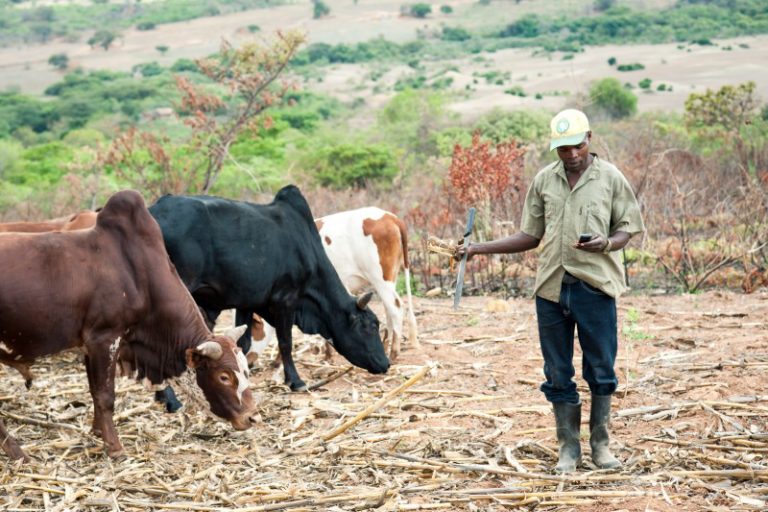
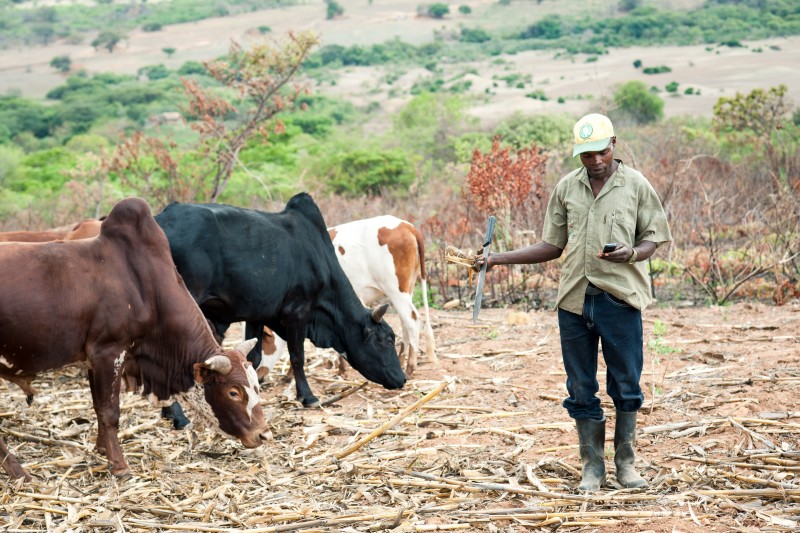
A Kenyan smallholder farmer
Harry Kimutai, Principal Secretary of the State Department
for Livestock, said this during a forum on milk quality and safety in Nairobi.
“The authority is expected to ensure that populations
consume safe food as well as promote domestic and international trade in Kenyan
products,’’ said Kimutai.
He said the authority would enforce regulations to help
reduce cases of aflatoxin in milk and cereals, a condition that is currently
blamed for the upsurge of cancer cases in the country.
The official noted that the bill leading to the formation of
the authority has been discussed by the Ministry of Health and the Ministry of
Agriculture, Livestock, Fisheries and Irrigation and is due to be subjected to
validation by stakeholders.
Kimutai said the government has developed an elaborate
framework of dairy standards that cover all the major dairy products
manufactured or traded locally.
“These standards cover safety requirements as informed and
benchmarked on international standards such as those developed by the Codex Alimentarius
Commission,’’ said Kimutai.
The Kaduna State Government on Tuesday, January 29, 2019 said it had passed a bill to the legislative arm to review laws for proper protection of the state’s forest resources.
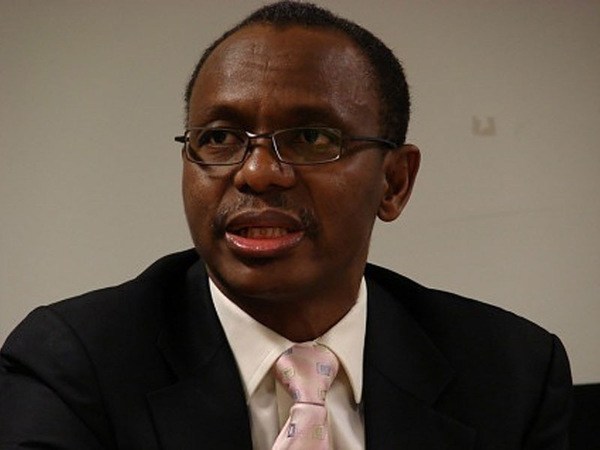
Nasir el Rufai, Governor of Kaduna State
Mr Anthony Kachiro, the Director of Forest Resources in the
Ministry of Agriculture and Forestry Development of the state, disclosed this
to the News Agency of Nigeria (NAN) on Tuesday in Kaduna, the state capital.
Kachiro, who doubles as the State Chairman, Task Force on
Forest Protection, said that the new laws would replace the old ones that had
become obsolete.
He said that the bill, when it became law, would provide a
proper legal backing to the state officials in terms of sanctions, fines and
prosecution of those encroaching in the state forest reserves.
According to the official, the state government is working
in line with the international effort to tackle the effects of global warming
and environmental hazard of desertification.
He said while the laws were being fine-tuned for
proper enforcement, the state government had set up a task force with members
drawn from the state timber and firewood dealers associations to tackle illegal
felling of trees for local use and for business.
He said that the task force had recently impounded six
trucks of firewood and timber being transported from Kasuwan Magani in Kajuru
Local Government Area and Mi-Ido, near Ladugga in Kachia Local Government Area.
When asked if any arrest was made from the impounded
vehicles, the official said: “No, we didn’t arrest anyone, but six
vehicles from a particular vendor were impounded on their way
from Ladduga.’’
“Those involved will be sanctioned and fined appropriately
to ensure that the forests resources are protected,” Kachiro said.
He said that the task force was also monitoring those
engaged in illegal felling of trees to make charcoal for business and proper
sanctions would equally be applied on them to curtail their activities.
“We are working to ensure that for everyone tree that is cut
down, at least three others are planted in the same area by the same person,”
he said.
On the number of trees planted in 2018 in the state, Kachiro
said that the ministry had concentrated in the maintenance and management of
the trees planted in 2017 in its effort to tackle desertification.
The official, however, urged the state government to provide the task force with adequate security for proper discharge of its mandate.
Stakeholders at the ongoing Nigerian International Petroleum
Summit (NIPS) in Abuja have identified the dearth of infrastructure and
commitment as the major challenges facing gas-to-power projects in the country.
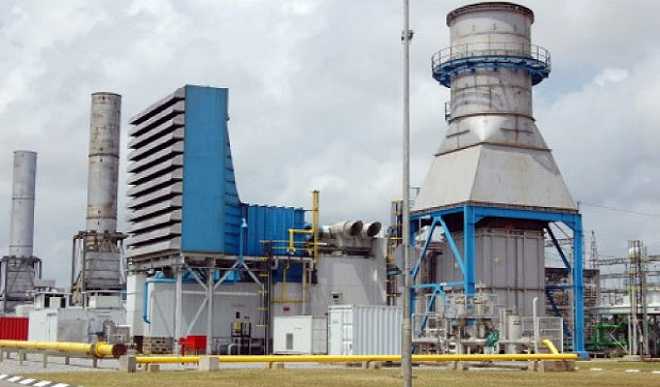
A gas-powered plant
They made the observation on Tuesday, January 29, 2019 at a
breakout session of the summit, which has “Evolution of Energy Mix: Where Are
We Headed’’ as its theme.
Mr Saidu Mohammed, Chief Operating Officer, Gas and Power,
Nigerian National Petroleum Corporation (NNPC), said that Africa was blessed
with vast natural gas resources which needed to be harnessed.
“Natural gas is available in all African countries, but we
need to work together as a continent.
“Regional integration is very important, especially in the
area of infrastructure,’’ he said.
He noted that although there had been a clamour for
renewable energy, in which Africa had a comparative advantage, gas-to-power
projects remained the best option in power supply programmes for the continent.
Besides, Mr Dayo Adeshina, Programme Manager, National
Liquefied Petroleum Gas (LPG) Expansion Plan, underscored the need to develop
the gas infrastructure in Nigeria, as part of efforts to attain the goals of
the nation’s gas-to-power projects.
He noted that the policy directions of government had
somewhat affected the use of gas in the country.
He stressed that there was huge infrastructure deficit in
gas utilisation, noting that 50 per cent of Nigeria’s gas infrastructure was in
the South West geopolitical zone, while the northern part of the country had
only three gas filling plants.
“In other nations, public utilities are powered by gas, but
the opposite is what we have here in Nigeria.
“You will recall that government had supported kerosene,
which should not be for human consumption, with subsidy but gas was left with
huge Value Added Tax (VAT) to deal with.
“I am happy that government is now addressing it but we are
expecting the outcome,’’ he added.
Adeshina bemoaned the fact that the Nigeria LNG Ltd. (NLNG)
had only three terminals for gas transportation, saying that most products were
transported by road.
He called for the development of rail and inland waterways
infrastructure to facilitate better distribution of products.
He stressed that the development of Nigeria’s infrastructure
would stimulate efforts to attain the targets of the country’s gas-to-power
projects.
In his comments, Mr Justice Derefaka, Programme Manager,
Nigerian Gas Flare Commercialisation Programme, stressed that the nation had
lost a lot of development prospects due to gas flaring.
He said that about 888 million standard cubic feet of gas
were flared in Nigeria daily, adding that the flared gas could have been used
to generate over 3,000 megawatts of power for the country.
Derefaka underscored the need to enforce polices aimed at
stamping out gas flaring in the country.
Also, Mr Ransome Owan, the Pioneer Chairman of Nigerian
Electricity Regulatory Commission (NERC), said that huge gaps existed between
what was happening and what should be done.
He said that Nigeria still lacked the infrastructure to
effectively harvest its gas resources, adding that there had not been any
tangible commitment to addressing the issue.
“What is happening with the West African Gas Pipeline
project? How well do we supply gas to Ghana?
“We are not working on connectivity; people are flaring gas
not because they want to.
“We have to resolve to solve the infrastructure challenge to enable us to achieve the goals of gas-to-power programmes in Nigeria and Africa at large,’’ Owan said.
The EU on Tuesday, January 29, 2019 approved the import of
U.S. soybeans for use in biofuels as part of efforts aimed at defusing
trade tensions between Brussels and Washington.
The European Parliament
EU-U.S. trade relations have been strained since U.S.
President Donald Trump raised tariffs on steel and aluminum imports 2018, while
threatening a similar move against the EU automotive sector.
In July, Trump met European Commission President Jean-Claude
Juncker with a view to smoothing over the trade spat.
They pledged, among other things to “work to reduce barriers
and increase trade’’ in areas including soybeans.
Since then, U.S. soybean exports to the EU have more
than doubled; although until now this was due to a fall in prices rather than
any policy decisions.
“The U. S. is Europe’s main soya beans’ supplier and today’s
decision will further expand its market opportunities in Europe.
“By submitting the request for recognition, the U.S. has
shown that it is ready to play by the rules,’’ the commission said in a
statement.
The approval, based on the finding that U.S. soybeans meet
European technical requirements, initially lasts until July 2021.
To extend the recognition, the U.S. authorities would have
to meet new EU sustainability standards.
The EU imports around 14 million tonnes of soybeans annually
for livestock feed and milk production since it cannot grow enough
domestically.
Most of it came from Brazil before the rise in U.S. imports.
Despite several meetings in recent months, Brussels and
Washington have made little progress towards launching negotiations on a
limited trade deal.
Momentum to repair degraded lands and to manage droughts
more effectively has picked up, according to reports released for review by an
inter-governmental meeting that opened on Monday, January 28, 2019 in
Georgetown, Guyana.
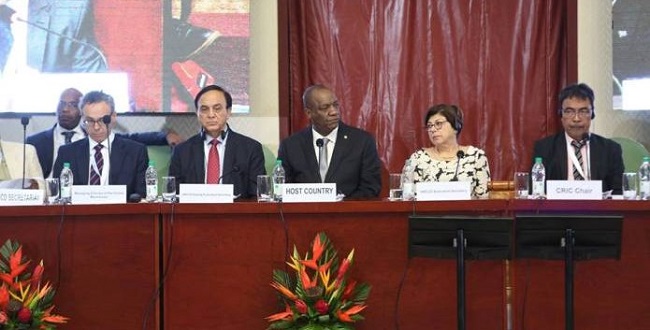
Minister of State, Guyana, Joseph Harmon, with Monique Barbut, Executive Secretary of the United Nations Convention to Combat Desertification (UNCCD), and other delegates at the opening ceremony of CRIC-17
An assessment of land degradation in 127 countries revealed
that close to 20 percent of healthy land was degraded in the first 15 years of
this Millennium. Globally, 169 countries are affected by land degradation,
desertification or drought. In the last four years, 82 countries have set
targets aiming to halt land degradation by 2030 and 44 of the 70 countries
regularly hit by drought are setting up drought management plans to ensure
droughts do not turn into disasters.
The findings are said to be the most comprehensive to date,
with data submitted by 135 countries and an assessment of degradation monitored
using earth observations.
The Seventeenth Session of the Committee for the Review of
the Implementation of the UN’s Convention to Combat Desertification (CRIC17)
taking place in Guyana will review the reports over the next three days. Their
recommendations on further actions to ramp up this momentum will be tabled at
the fourteenth session of the Conference of the Parties to the UN Convention to
Combat Desertification (UNCCD) to be held from October 7 to 8, 2019 in New
Delhi, India.
“Momentum is with us,” announced Monique Barbut, Executive
Secretary of the Convention, during the opening of CRIC 17.
“The first piece of good news is that we know more and more
about what is going on…. how much land we have degraded globally in the first
15 years of this Millennium, how life has changed for the communities living on
degraded lands, how droughts are evolving globally, the changing status of
endangered biological species, and the financial resources available to address
desertification,” she said.
She also described as good news the reports’ findings that
“in all regions, rural populations now have more access to safe drinking water,
poverty has declined by 27% overall, at least 120 countries will eventually
have targets to curb land degradation and there is growing interest from
domestic and global private finance to invest in land management.”
Barbut, who steps down as the Convention’s Executive
Secretary next month, however cautioned that “aspects such as land governance,
education, demography and land use planning still have a long way to go,” and
called on governments not to underestimate their ability to trigger change in
the most pressing areas, but to be “brave.”
Joseph Harmon, Minister of State, Guyana, said “although
milestones have been achieved… we still have to be steadfast in addressing land
degradation.”
“The continuing degradation of land and soils is a severe
threat to the provision of ecosystem services and economic development
globally,” he said.
Harmon said “the pressures on land are increasing due to
urbanization, population growth and rising demands for food, feed, fuel and
fiber. Halting land degradation is therefore a prerequisite for sustainable
development,” he stressed.
Global efforts to combat desertification began in 1977.
However, the rapid loss of productive land due to a combination of poor land
uses and growing extreme and erratic weather effects now affects more people
than ever before.
Two other recent reports examined the extent and effects of
land degradation on livelihoods. The Global Land Outlook released in 2017 found
a persistent loss of 20 percent of the Earth’s vegetative cover from 1998-2013.
The “Assessment of Land Degradation” released in 2018 showed that
land degradation impacts over 3.2 billion people. The Inter-Governmental Panel
on Climate Change is expected to release its own assessment of the effects of climate
change on land degradation later this year.
Rajahu Alahji Oumarou, a 21-year-old mother of two children,
stands at the doorway of her three-room thatched house in the Zirgene
neighbourhood of Colomine, lost in thought. Just 10 metres away, bulldozers
belonging to Chinese miners are working in a huge hole. While the excavators
continue to dig the over 70 metres deep hole, trucks stand by ready to be
loaded with the soil which is carted away to the Chinese miners’ camp to be
washed for gold.
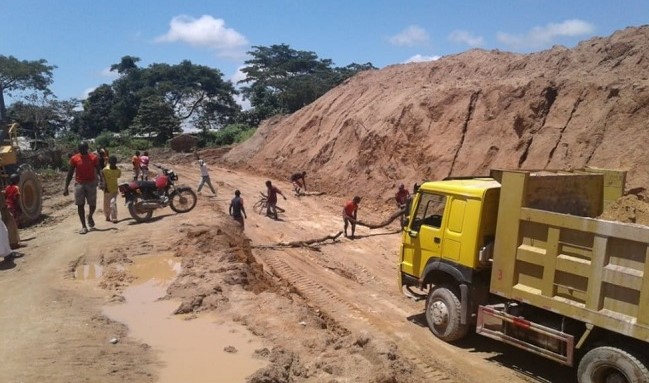
Local youth of Colomine blocking a truck belonging to a Chinese mining firm after a clash between locals and the Chinese over a mining area. Photo credit: Solomon Tembang
Like others who make up the 71 households in Zirgene,
Rajahu’s forefathers lived in the area for decades. But now she says they,
mostly of the Mbororo minority ethnic group, are about to be rendered homeless.
Their thatched houses, which now perch on the edge of the large hole, may end
up falling in. To add to this, children and even adults run the risk of falling
into the hole which may end up being filled with water.
“I am not happy seeing this. My child almost fell into the
hole the other day. If I was not vigilant to rush and hold him from behind, it
would have been a different story,” Rajahu recounts.
Oumoul Abdou, a 27-year-old mother of four, laments: “We are
living in fear as we stare death in the face on a daily basis. There are
several of these holes surrounding where we live. We can no longer use our
latrine because a hole dug by the Chinese miners has ‘cut it off’. They
destroyed our groundnut farm when they dug one of the holes.”
‘This hole belongs to
us’
As I talked to Rajahu and Oumoul, I hear loud arguments
coming from where the bulldozers were digging. When I got there, I found out
that the machines have stopped working. A group of local youths have gathered
around and are in a heated argument with the workers of the Chinese miners. Some
of the youth had used logs of wood to block the loaded trucks from leaving and
others from coming in.
Some of the youth were claiming that they have been carrying
out artisanal mining here to earn a living and now, the Chinese have come with
machines and want to take over the place.
“If they want to continue their activity here, they must
compensate us financially. This area belongs to us,” some of the youths
shouted.
The situation, which almost led to a brawl, was only brought
under control when an elderly man from the Colomine community, after
negotiation with the Chinese through their interpreter, assured the youth that
they will be compensated the next day. But one of the youngsters told me such
promises have been made severally but never kept.
Such clashes between the Chinese and the locals, Honore
Sirgho, a local vigilante leader says, are the order of the day.
On the opposite end of the town, some pupils of Government
Primary School Colomine are playing football behind one of the classrooms. But
less than 60 metres away is a hole, about 30 metres deep, that has been dug by
miners. Some of the pupils say they are aware of the danger the hole poses but
have learned to live with it.
Officials of the school, which counts some 1,400 pupils,
were not available for comment.
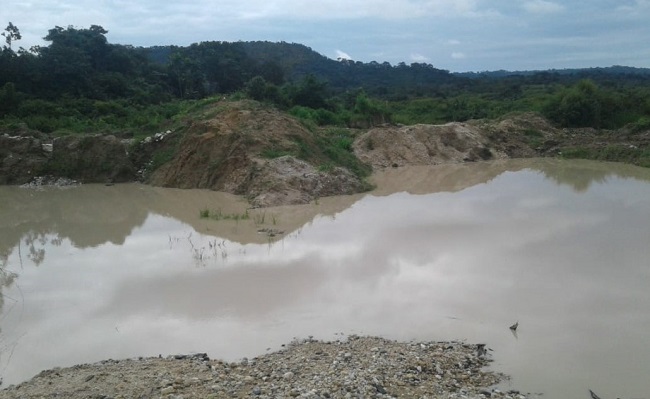
East region of Cameroon is ridden with such pools left behind by miners. Photo credit: Solomon Tembang
Death-traps
The mining activities have also left behind death-traps in
some areas like Ngoe Ngoe, a village in East Cameroon with about 2,600
inhabitants. In the night of January 1, 2017, nine people were killed in an
abandoned mining site when they went in search of gold. The site collapsed and
buried them in 33 feet of earth in the mine excavated by Lu and Lang, a Chinese
mining company banned from operating in Cameroon in April because it lacked a
license.
Yaya Moussa, head of Ngoe Ngoe village, recounts the
tragedy.
“The Chinese arrived with (Cameroonian) law enforcement
to drive the villagers out of the mine sites to better exploit our
resources,” he explained. “So, the villagers were forced to come in
the night, in the absence of the Chinese, to extract gold and find food for
their families. It was during one of these nocturnal outings that the earth
fell on them.”
However, the deaths in this gold mine in Ngoe Ngoe have not
deterred locals from venturing into it. When I visited the area in October
2018, some young men could still be seen digging in the ill-fated pit in search
of the precious stone.
Oumarou Haman, president of the Ngoe Ngoe vigilante group,
says the lure for gold still attracts people to the mine site, which is yet to
be rehabilitated.
“If nothing is done to refill this site, I fear that many
will still die there,” he says.
Students drop school
to chase gold
The lure of the gold is also having a toll on school
attendance in the East region of Cameroon. Justin Chekoua says many students
are dropping out of school to go to the sites that have not been refilled or
closed by the Chinese miners to dig for gold. Women, some pregnant and others
with babies on their backs, are also attracted to the mining sites.
Government authorities have told locals to stop digging in
the abandoned sites. But the need for income is so high that many ignore the
order, including kids who should be in school.
Yves Bertrand Awounfack, Senior Divisional Officer of the
Lom and Djerem Division, sometime ago, launched a drive during which he went
from village-to-village asking locals to leave gold mines alone and for parents
to return their child miners to school.
Vincent Atangana, a Cameroonian official at Chinese mining
firm EXXIL, blames parents for allowing their kids to work in the mines. He
argues Chinese mining has helped develop the area.
He says many houses are being constructed with modern
materials. Several years ago, fuel was sold in cans but today, says Atangana,
there are fuel stations. He says these developments are coming when gold mining
is still at a working stage – they will do even more when it reaches the
industrial level.
Billions of francs
CFA in gold lost
Under Cameroonian law, minerals in the ground belong to the
state. The state grants concessions to mining companies in return for 15
percent of the gold they extract.
This 15 percent is supposed to be paid to a state-owned
institution known as Artisan Mining Support and Promotion Framework with French
acronym CAPAM. But Justine Chekoua of FODER says some of the miners declare
less than what they mine, causing the Cameroon government losses in billions of
francs CFA.
On January 8, 2018, CAPAM declared that in 2017, it channelled
a little more than 255 kg of gold to Cameroon’s Ministry of Finance.
‘Sad situation’
Nyassi Tchakounte Lucain, Executive Director of Transparency
International Cameroon, says they have read several reports from NGOs in the
area about the deadly holes left behind by the miners.
“It is a very sad situation. We hope that while undergoing a
deep study on the situation especially on the issue of transparency, we would
be able to come back with concrete information and results about what is
actually going on and what we can propose as a civil society organisation,” he
says.
As to holes left behind by miners, Nyassi says “if verified,
I will call on the government of Cameroon to ensure that the laws are applied
for these holes to be filled because the government is the guarantor of the
security of humans and properties”.
‘We can’t encourage
destruction of environment’
Meanwhile, Ndouop Njikan Ibrahim of Extractive Industries
Transparency Initiative, EITI Cameroon Permanent Secretariat, says: “I have
myself been to some of these areas where semi-mechanised mining is being
carried out by the Chinese and I discovered that the activities are very
harmful to the environment.”
“EITI has the objective to better the lives of the
population and we cannot do so by encouraging the destruction of the
environment. So, we persuade mining enterprises to respect the norms of
environmental protection. We regret the fact that the local authorities in
these areas, who should be acting like watchdogs, are not doing so,” Ndouop
says.
“It is also regrettable that most of the Chinese miners are
not acting through formal and identifiable enterprises in a direct relationship
with the state. Most of them have got the authorisation to act on the field
after having bought the license that an individual happened to have acquired
from the administration. Now that the license acquired by an individual has
been sold to another person, who is responsible for the environmental
destruction? That is the issue that should be handled by the state. EITI
Cameroon can only act like a whistle-blower to indicate that there is a problem
here that should be resolved, or it may deteriorate the living condition of the
local populations”.
On the losses the government suffers financially, Ndouop
says: “The only way the government can control quantities of gold mined is to
go into commercial relationships with formal, identifiable companies on the
field. The government should create and multiply control instances.”
While some of the Chinese miners who were suspended by the government have continued in defiance, Ndouop blames this on “laxity” on the part of administrative authorities.
“The Chinese are doing this in complicity with
Cameroonians,” Ndouop states. “Something really has to me done in the
semi-mechanised mining sector as it was done with the petroleum sector.”
Need for strict
regulation
On her part, Evelyne Tsagué, Africa Co-Director of Natural
Resource Governance Institute, says: “From the work that we have been doing, we
know that the semi-mechanised mining sector in Cameroon has a lot of problems;
the problem of impact, regulation, problem of effectiveness of the rule in
place. There is the need to strictly regulate activities in the semi-mechanised
mining sector.
“There is a huge gap between the mining rule and what is
practiced. The government should ensure that if a regulation already exists to
guide activities of people in the mining sector, this should be respected to
the letter. Where there is no rule, the government should pass a law so that
there is a kind of policy and regulation in this sector.”
Government moves to
stem the tides
However, the government of Cameroon has not been lying on its laurels. It has taken several steps to stem the tide as far as the activities of the Chinese miners are concerned.
In April 2018, the Minister of Mines, Industries and
Technological Development suspended the activities of three Chinese mining
companies for non-compliance to regulations.
In a statement suspending Hong Kong, Peace Mining and Lu and
Lang companies, the minister said they were no longer allowed to perform gold
mining activities in the East Region of Cameroon, and that their officials have
been asked to pack their bags and leave.
It appeared from the statement that Hong Kong Company did not have documents authorising it to carry out mining activities while Peace Mining and Lu and Lang companies’ suspension was linked to a series of conflicts recorded between their employees and local populations which resulted in deaths, in addition to a lack of respect to the environment, according to the statement.
Cameroonian government mining officials said they are trying
to address the situation by using drones to investigate claims of other illegal
mines, according to two officials who asked to remain anonymous because they
did not have permission to speak to the press. They also said most of the
Chinese mining companies do not have permission to work in the country.
The divisional delegate of mines for Lom and Djerem division, East region of Cameroon, William Djoulde, says artisanal mining contributes significantly to the national economy. He says there are over 20 authorisations and, with the measures being put in place, many clandestine miners will be flushed out.
“We want to professionalise this sector and send away
clandestine miners who help neither the state nor the local populations. The
measures are being implanted in the field,” Djoulde adds.
By Solomon Tembang
Concluded
This work was produced courtesy of a grant provided by the Africa-China
Reporting Project managed by the Journalism Department of the University of the
Witwatersrand
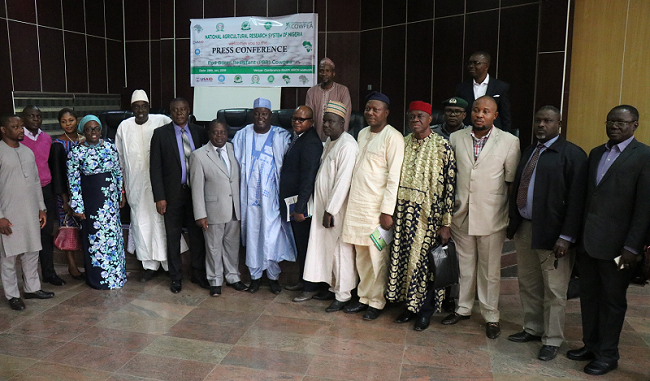
The Federal Government of Nigeria has approved for environmental release the Pod Borer Resistant Cowpea (popularly called beans) developed by the Institute for Agricultural Research (IAR), Ahmadu Bello University, Zaria.
Members of the National Agricultural Research System of Nigeria at a joint press conference on the approved PBR Cowpea, in Abuja on Monday, January 28, 2019
The approval was contained in a decision document issued by
the National Biosafety Management Agency (NBMA) granting permit for the
environmental release of the PBR Cowpea which has been genetically modified to
resist the insect pest – Maruca Vitrata.
The approval means the crop is safe and posed no harm to
human and the environment and can now be submitted to the National Variety
Release Committee for consideration and registration as a commercial crop in
Nigeria.
The PBR Cowpea, by this development, becomes the first
genetically modified (GM) food crop to be approved in the country.
IAR in partnership with the African Agricultural Technology
Foundation (AATF) commenced the research to address the deadly Maruca Vitrata
attacks on beans in 2009 after series of efforts to use conventional breeding
methods failed to produce results.
After 10 years of extensive research, government has deemed
it fit to introduce the crop variety into the nation’s agricultural seed system
having met all regulatory stipulations and scientific procedures.
The introduction will address the national cowpea demand
deficit of about 500,000 tonnes and also improve the national productivity
average of 350kg/hectare.
At a public display of the approval on Monday, January 28,
2019 in Abuja, the coordinating agency for agricultural research in Nigeria,
the Agricultural Research Council of Nigeria (ARCN), said that after many years
of research the council was proud to present to Nigerians the first home-grown
genetically modified food crop which, according to him, has passed all
necessary scientific tests and posed no danger to human health or the
environment.
“As the coordinating agency for the over 15 agricultural
research institutes in Nigeria, we have identified modern biotechnology as one
scientific tool whose potentials can help improve crop and animal production
and we have done this with all sense of responsibility, bearing in mind both
national and international protocols that guide the deployment of genetic
modification,” the Executive Secretary of the ARCN said.
The Executive Director of IAR, Prof. I. U. Abubakar, in a
presentation summarising the process that lead to the development of the PBR
cowpea, said the decision to venture into genetic modification in cowpea
breeding was as a result of pest infestation that has over the years made
cowpea farming difficult as farmers get less for their efforts and even have
their lives exposed to danger due to chemical spraying to keep the pest away.
“Cowpea is the most important food grain legume in Nigeria.
The low yield of the crop in Nigeria is due to many constraints particularly
pod boring insects which cause up to 90% yield loss in severe infestation
cases.”
Dr Abdourhamane Issoufou, AATF Country Director, said since
the mid 1980s, cowpea scientists have declared maruca as the main limiting
factor of cowpea production in Africa hence the intervention of the AATF based
on its principles of providing access to appropriate technologies by small
scale farmers.
“AATF was able to obtain access to the Cry1Ab gene used for
this modification on humanitarian basis and worked with institutions in
Nigeria, Ghana, Burkina Faso and Malawi for the transformation. Today, Nigeria
stands tall in the comity of nations for effectively managing and bringing to
fruition this dream.
“The research results have shown that the PBR-cowpea is safe
for human and animals, completely resistant to Maruca; leads to yield increase of
20% with fewer sprays of chemical insecticides,” he noted.
Prof. Alex Akpa, Acting Director General, National
Biotechnology Development Agency (NABDA), said that by the approval, Nigeria
has registered her name among the global scientific community as a country
capable of finding solutions to her challenges.
“After 10 years of laboratory works and on-field
trials, Nigerian scientists have developed its first genetically modified food
crop, the PBR Cowpea, we are proud to be associated with this noble development,”
Akpa said.
A new international report linking obesity, under-nutrition
and climate change is calling for strong global actions to address all three
issues at once.
Prof. Boyd Swinburn
The Lancet Obesity Commission report published on Monday, January 28, 2019 argued that, to address the three interconnected pandemics, leaders must take a hard line against powerful vested commercial interests.
Prof. Boyd Swinburn from the University of Auckland,
co-chair of 43 world-leading experts, who authored the report, said the
commission has overhaul regulations and economic incentives within the food
system.
“Obesity, under-nutrition and climate change are usually
viewed as separate, but we show that not only do they share many key drivers,
they fuel each other via multiple feedback loops.
“For example, food systems not only drive the obesity and
under-nutrition pandemics but also generate more than a quarter of global
greenhouse gas emissions and about half of New Zealand’s emissions,’’ Prof
Swinburn said.
According to him, car-dominated transportation systems
promote sedentary lifestyles and generate up to a quarter of global emissions.
“Climate change will increase under-nutrition through
greater food insecurity from extreme weather events, droughts, and shifts in
agriculture,’’ Swinburn said.
The scientist said New Zealand could become a trailblazer if
the principles behind the government’s new well-being budget were applied
across all government policies and spending.
The Lancet Obesity Commission also recommended that all
countries enshrine in law an overarching Right to Well-being, which would
include the existing human rights, along with a new right to a healthy
environment.
It also suggested subsidies redirected towards healthy and sustainable foods and energy; a global philanthropic fund of $1 billion to support social movements demanding policy action. Also, it called for “a 7-generations fund’’ to research and apply indigenous and traditional knowledge and worldviews on living well, “making decisions today for seven generations ahead.’’
The UN High Commission for Refugees (UNHCR) has called for
urgent protection and humanitarian solutions for over seven million displaced
persons across the Lake Chad Basin (LCB) region.
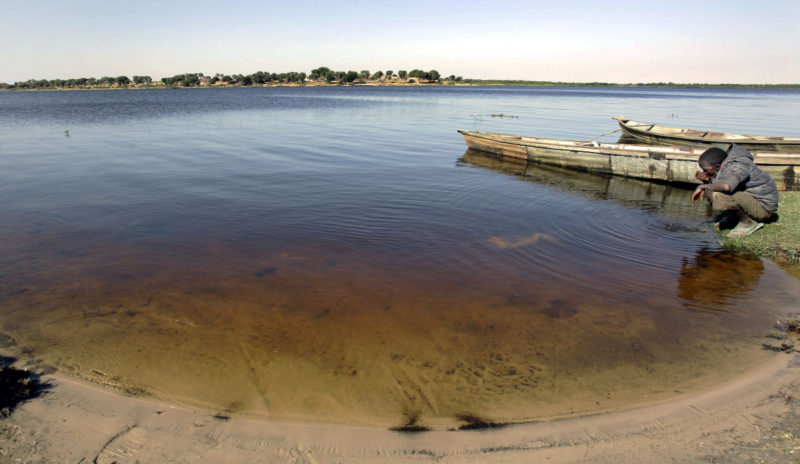
Scientists say the Lake Chad, that borders Nigeria and some other countries, has shrunken by 95 percent over the past 50 years. They have also linked the Boko Haram insurgency to the lake’s situation. Photo credit: AP/Christophe Ena
Countries in the LCB region include Nigeria, Nigeria,
Cameroon and Chad.
Mrs Liz Ahua, UNHCR’s Regional Representative for West
Africa, made this known in Abuja during the second Regional Protection Dialogue
(RPD).
She added that amidst the heightened insecurity, the Lake
Chad Basin continued to face serious protection crisis.
Ahua explained that the region was traumatised and going
through insecurity, terrorism, poverty and climatic situations that have
deteriorated.
“Today, two-and-half years after the first RPD, all of us
are gathered to share the pains being inflicted to over 7.5 million women,
girls, boys, men, young and old in the Lake Chad Basin.
“The Regional Protection Dialogues seeks to remind the
governments in the Lake Chad region on the principles of humanitarian action,
principles such as respect for the people who are displaced.
“Non-renouncement, which means that if they flee to another
country they should not be thrown out, then for us, a responsibility to ensure
that if they are in camps, there are no infiltration of the bad people and
creating mayhem.
“We remind the governments and work together with other
partners to say we have a responsibility to protect you.
“From there, we also move to the areas of not just
humanitarian assistance, but ensuring that even if they are displaced, their
means of livelihoods are not diminished. Now, there is so much happening.
“The climatic conditions are pushing people to move from one
place to another so, you have huge root causes.
“But we would like for these people, wherever they are, to
be able to continue with their dignified activities,’’ Ahua said.
Acknowledging the successes achieved by military operations,
Ahua said that there are cases of new displacements on regular basis.
She said that close to 320,000 persons have been displaced
anew in the last three months.
Ahua said that in a bid to addressing the humanitarian and
protection crisis, the UN and Nigerian government launched the Humanitarian
Response Strategy (HRS) and the Nigeria Regional Refugees Response Plan (RRRP).
She said that the comprehensive approach plan seeks to
address the weakness and vulnerabilities of refugees, IDPs, and persons of
concerns and to ensure the humanitarian and development responses of actors.
Mr Yassine Gaba, UN Deputy Humanitarian Coordinator to
Nigeria, said that as conflicts continue to linger everyday, civilians bear the
brunt of the crisis.
Gaba said that protection of civilians remained the key
priority of the operation and an issue that must be tackled head on at all
levels and from all angles.
He said that despite the challenges, the humanitarian
community was determined to continue providing life-saving humanitarian
assistance in support of government-led initiatives.
The second RPD was a follow up to the maiden RPD which held
in June 2016 and birthed the 24 commitments Abuja Declaration.
The RPD seeks to look at various achievements, progress made
and challenges in the implementation of the Abuja Declaration.