A palm oil producer, Mr Godswealth Henry, on Monday January
28, 2019 decried the increase in destruction of oil palm plantations in the
country.
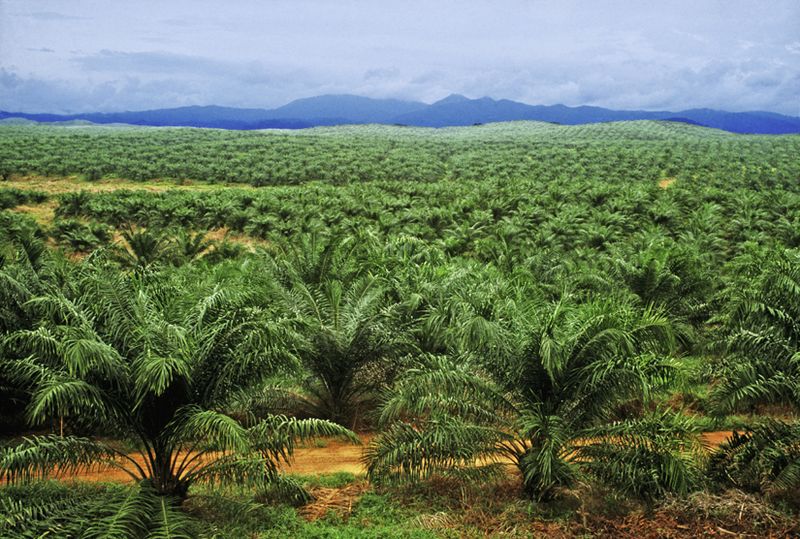
A palm oil plantation
Henry, who is the Managing Director of JEKON Integrated
Farms Nig. Ltd., lamented the development in an interview with the News Agency
of Nigeria (NAN) in Lagos.
According to him, while Cameroon and Ghana are developing
thousands of hectares of new oil palm plantations, Nigeria is busy destroying
the same number of hectares of surviving oil palm plantations.
“We producers are being discouraged from producing palm oil
in the country.
“Cameroon and Ghana have saturated the Nigerian market with
their low quality palm oil, as a result our high quality ones are considered
very expensive.
“Nigeria palm oil quality is of high reddish pigmentation
unlike the ones from Cameroon and Ghana which have low reddish pigmentation.
“This high reddish pigmentation from wide palm is the real
palm oil and is what makes our palm oil superior.
“However, it is difficult to export our palm oil now because
it is very expensive compared to that of Cameroon and Ghana.
“Even locally, palm oil producers cannot compete in the
market with the ones coming in from Cameroon and Ghana because they come in
large quantities and at cheap prices.
“Producers of local palm oil are being forced to sell at par
with the ones from Cameroon and Ghana which is far below our production cost,’’
he said.
Henry said that the volume of palm oil produced in Nigeria
now was very low because of scarcity of palm fruits.
He said that the biggest palm oil miller in the country
assisted by the United Nations Industrial Development Organisation (UNIDO)
could not mill oil to its maximum capacity because of scarcity of palm fruits.
The managing director added that even at the peak period of
oil palm production, the mill could not operate steadily for a month.
He said that oil palm plantations were being sold for
housing estate development projects, adding that even the oil palm plantation
adjudged as the biggest in West African had been sold to a foreign company.
He noted that his company was planning to go to Cameroon and
invest in Oil Palm plantation to ensure steady supply of fruits to its milling
plant.
An environmentalist, Mr Emmanuel Emechete, told the Federal
Government on Monday, January 28, 2019 to embrace renewable energy in full
force, “to reduce carbon footprints’ on the environment’’.
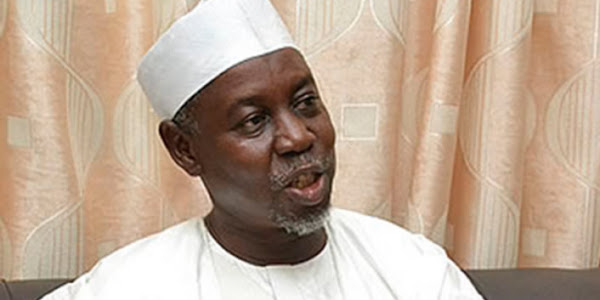
Alhaji Suleiman Hassan Zarma, Minister of Environment
Speaking in an interview with the News Agency of Nigeria
(NAN) in Lagos, Emechete said there was an urgent need to compel Nigerians to
live sustainably to save their lives.
“If we can switch to renewable energy that is one major way
Nigerians can live sustainably and reduce the carbon footprint in the
environment.”
He argued that living sustainably was the only choice for
Nigerians to engender a habitable and safe environment conducive for living.
“To live sustainably as Nigerians, we must address the basic
problem of Nigeria which is the unavailability of power.
“Due to power issues, Nigerians run their electricity
generators for long periods of time. Generators are run in schools, market
places, hospitals, offices etc.
“The fumes from the incessant running of generators affect
the environment, owing to excess carbon emissions into the atmosphere.
“We do a lot of carbon flaring arising from these generators
as well as through vehicular movements.
The environmentalist also spoke on the implications of
vehicular fumes on living sustainably, calling on government to also take
measures to correct the anomaly.
“The fumes from our vehicles cannot help us live sustainably
because of the carbon emissions from faulty exhausts in them.
“Most vehicles in the country are vehicles that have lived
beyond their normal life spans. In some of them, the drivers cannot see clearly
because of the amount of fumes they generate.
“There has to be a regulation of the kind of vehicles that
are certified as fit for Nigerian roads and the environment in the long run.
“The government had initiated a policy on taking these kinds
of vehicles off our roads, but we do not know if it has been implemented.
“Our vehicles should pass particular tests before they can
ply our roads.
“These fumes are not just hazardous to our health but also
to our environment because they deplete the ozone layer,” he said.
Emechete, however, recommended research and advocacy which
he said, were sure ways of helping Nigerians to live better.
“We should end plastic pollution through researches that
promote the use of biodegradable materials in packaging, instead of plastic or
polythene bags as done in developed climes.
“Individuals can also be encouraged to live sustainably by recycling
pet bottles thus reducing plastic pollution and preserving the environment.
“We can also use biodegradable shopping bags, instead of requesting for disposable nylon bags when we go shopping,’’ he stated.
Nagbayanga Valentin, a widow in her late thirties, sits on
the earth floor of her thatched two-roomed house she shares with her four young
children in Haya Haya, a mining encampment with about 2,000 inhabitants in
Longa Mali village of Betare Oya sub division, some 200 kilometres from
Bertoua, headquarters of Cameroon’s East region.
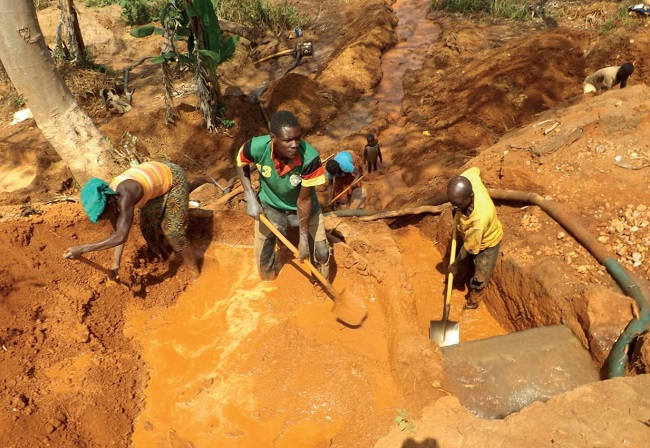
Locals carrying out artisinal mining in Cameroon. Photo credit: Solomon Tembang
Dirty pots, pans and other old household paraphernalia are
strewn all over the tiny house. Outside, the laughter and chatter of her
children and those of other neighbours is audible enough as they play a local
game, virtually ignorant of the weighty problems their mother, and the
community, are going through.
Poverty is discernible in the community whose inhabitants
live in thatch houses, but just metres away, Chinese machines are rumbling as
they mine away millions of francs CFA in gold.
Conflicts had, over the years, been brewing between the
local population and Chinese miners until it boiled over on November 15, 2017
when there was a confrontation and a Chinese pulled out a gun, shot and killed
a local. The population rose up in anger and beat the Chinese to death. Since
then, relations between the local community and the Chinese miners have been
frosty as tension continues to simmer.
“My husband was shot and killed by a Chinese and now I am
left with four children to fend for,” Nagbayanga Valentin says. “Things are not
easy as life is becoming very difficult in this community. The little money my
husband made from artisanal mining is no longer there and so I wonder how I am
going to feed these children or even send them to school.”
Her husband, Issa Paul, was shot dead by a Chinese whom the
locals simply knew as Bouboul.
Beleke Andre, brother to Issa Paul, was there when it all
happened.
“We were seven of us digging in our hole. The Chinese also
had their hole not far from ours. But later, the Chinese, maybe realising that
our hole was producing more gold, insisted that they must dig where we were
already working. As they continued to insist, we said they should wait since we
had our ‘stones’ in the hole and when we take them out, they can go ahead,”
Beleke Andre says.
“They wanted to pay us money to take over where we had been
digging. But we said since we were seven of us, they should wait until we agree
among ourselves before we can strike any deal with them. That is how we
continued digging to take out our ‘stone’. But the Chinese, whom many villagers
simply called Bouboul (we don’t even know his real name), was insisting on
closing the hole. When we did not allow him to close the hole, he called the
Chinese camp, which is close by, on the telephone.
“Three Chinese then arrived at the scene. At this moment,
Bouboul went to one of their vehicles, took a gun and shot three times in the
air. When he came close, I am the person he wanted to shoot. As my pregnant
wife was also at the scene, I went and stood behind her.
“Bouboul then fired another shot in the air and then shot at
my elder brother, Issa Paul. As my brother died, we overpowered the Chinese and
took the gun. All I remember is the population coming out in anger and beating
the Chinese who later died.”
The case has been dragging at the judiciary and the chances
for them to find justice over the death of their loved one, Beleke says, are
very slim. He says at the court, the Chinese maintain that if they have to pay
for the death of the Issa Paul, the locals also have to pay for the death of
the Chinese.
“But we are not the ones who started the conflict. He was
the one who first shot and killed our brother,” Beleke laments.
A community in Zirgene neighbourhood in Colomine threatened by mining activities. Photo credit: Solomon Tembang
‘This land is our
livelihood’
Some of the locals have been mining in this area for decades
after inheriting the land from their forefathers in accord with local
traditional law (droit coutumier),
only for them to get up one day and see Chinese brandishing a mining concession
on their land.
This was the case with Doko Habraham in Colomine, some 100
kilometres from Betare Oya.
“This land is our livelihood. If taken away from us and
given to the Chinese, we won’t have any other means of earning a living. My
ancestors have been on this land for several decades. I went to where my mine
was one day, and it was like I wasn’t even on my own land anymore,” Doko
says.
“No one came to tell me that my land was going to be taken
over by Chinese miners and if I was going to be compensated for the said land,”
he adds.
Doko Habraham says he later found out that the Chinese
miners who were working with machines on his land had bought a concession from
a Cameroonian who had secured exploration rights in the area. Doko has no land
title and so he is no match to the Chinese miners, whom, he claims, “could
easily buy their way around”.
How the Chinese
miners came here
For years, the local people had been mining for gold on
their ancestral lands, through artisanal means using spades, buckets and hard
work until the Chinese companies arrived with excavators and powerful pumps and
are now practicing semi-mechanised mining. The Chinese have been devastating
the environment and the locals say they’ve received no compensation.
The Chinese are in brisk business, mining away hundreds of
millions of francs CFA in gold. But those bearing the brunt of the mining
bonanza are the native communities who continue to live on the edge of the
precipice.
But how did the Chinese come about carrying out
semi-mechanised mining in this area? Justin Chekoua of Forêt et Développement Rurale (FODER), a non-governmental
organisation (NGO) working in the area, explains that semi-mechanised mining
came to the East region of Cameroon in early 2000 when the Cameroon government
was planning to build the Lom Panga hydroelectric dam. He says when the
government realised that a lot of gold would be lost in the area that was
going to be flooded by the dam, it set up what was christened “Programme to
Save Gold in Lom Panga Dam Area”.
Cameroon’s mining code does not allow non-nationals to
acquire mining authorisation for concession areas. Chekoua explains that
because the artisanal miners would have been slow and not be able to save all
the gold before the dam floods the area, the government allowed semi-mechanised
mining to be carried out.
“But since the nationals carrying out artisanal mining did
not have the expertise and finance to save the gold speedily through
semi-mechanised mining, the government said Cameroonians could enter into
technical-financial partnership with expatriates. That is how many Cameroonians
brought in expatriates, majority of who are Chinese, to come into partnership,”
Chekoua discloses.
The authorities conceded the move would violate mining laws
but said the situation was an emergency.
“However, instead of going into technical-financial
partnership with expatriates for the semi-mechanised mining, Cameroonians are
now instead getting the authorisation and selling to the Chinese. They are now
selling mining space to Chinese,” Chekoua regrets.
He elucidates that because the area around the Lom Panga Dam
was going to be flooded, the semi-mechanised miners were not compelled to carry
out any environmental impact assessment. They were also not forced to fill the
holes their activities left behind.
“The mining code specified that each individual could have a
maximum of four hectares to mine in…and instead of staying within the area
where gold was to be saved, those who are acquiring authorisation and their
Chinese ‘partners’ have gone beyond this zone,” Chekoua adds.
Environmental hazards
Since the Chinese miners went beyond the area to save the
Lom Panga gold, the environment and local communities have continued to suffer.
“Previously when the locals were carrying out artisanal
mining, there was little or no impact on the environment. But since the Chinese
came in with semi-mechanised mining, the environment has been devastated,”
Chekoua says.
Many waterways have been disrupted and streams silted.
“Because the Chinese need a lot of water to carry out the
semi-mechanised mining, they have deviated almost all the streams or rivers
into their mining camps and local communities downstream have no water for
household and other uses,” Justin Chekoua notes, adding: “In some areas such as
Longa Mali and Ngoe Ngoe, mud from the activities of the Chinese miners has
silted streams and rivers. The use of mercury by the Chinese miners has also
polluted streams and rivers. Fish and other aquatic animals are dying. Oil and
petrol from the Chinese machines are also polluting streams.”
Pristine forest is also being cut down to make way for the
Chinese mining activities.
Loud, vibrating sounds of excavators accompany the
back-breaking work of the mine workers, just a kilometre outside of Colomine.
Covered in mud, they sway around in the mining pits as they pan for gold, dig
more holes, or use the noisy machines on the edges of the mining pit to fill
trucks with quantities of the gold-containing mud that will later be processed
with mercury. At this exact spot, there used to be a forest, but many layers of
vegetation have already been removed by miners.
There is no possible coexistence between mining and forests,
says Justin Chekoua. “All lands dedicated to mining and, in particular, to
surface mining, will be a terrain where forests are sacrificed because it
requires the removal of large amounts of land. This sacrifice of the forests
represents an irreparable loss of natural capital.”
‘Misery is our
potion’
Despite all the millions of francs CFA being mined away in
gold, the inhabitants of these localities are living in abject poverty and lack
the most basic of social amenities.
Hamadgoulde Bouba, the traditional head of the Haya Haya settlement,
is not a happy man.
“We don’t have water. Where they throw their sand was where
we used to fetch water. Now they have blocked it. Other places we have created
to get water they have also destroyed them. Even the road is deplorable. Their
trucks have completely destroyed the roads. In fact, all we know here is
misery,” he laments.
“They do very little for the population. And to worsen
things sometimes, we go to our farm only to discover that the farms have
disappeared, with the soil having been dug by the Chinese and taken away to
their camp to wash and get gold. How do we live if our farms are being
destroyed?”
Many inhabitants of Haya Haya refused to talk on record,
saying they were afraid of being victimised by the Chinese. The Chinese have instilled
fear in the inhabitants of Haya Haya. One simply said, “The fear of the Chinese
here is the beginning of wisdom.”
Deadly open tombs
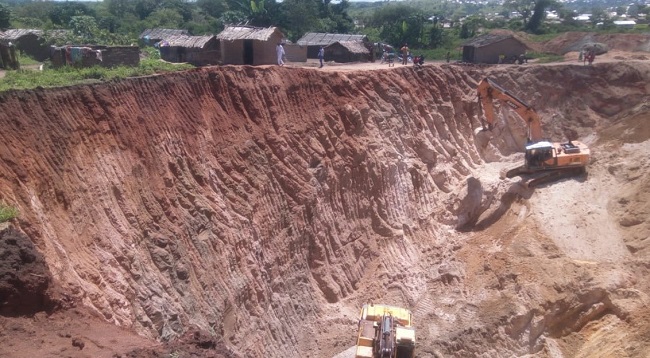
The semi-mechanised mining activities of the Chinese have
left behind deep holes which have been filled with water. The localities of
Longa Mali, Colomine, Ngoe Ngoe, Ngoura, Ngoyla, Batouri, Yokadouma are
littered with such holes, some as deep as 50 metres, many of which have been
filled with water.
People are said to have lost their lives in these deadly
tombs. According to statistics from FODER, at least 47 persons died in 2017 on
the former mining sites. About 250 mining sites opened between 2012 and 2014
have not been filled, the NGO added.
Cattle and other livestock have also been falling into these
holes, locals say.
“We cannot even rear livestock because they will all fall
into the holes Chinese miners have dug everywhere. The situation is very
pathetic,” Hamadgoulde Bouba says.
No compensation
According to Cameroonian law, the mining companies are
supposed to pay compensation to local people who owned or were making a living
on the land.
But Pilo Michel, traditional ruler of Longa Mali, says there
is nothing to write home about the activities of Chinese miners in the area.
“They have not done anything good for my village that they
are exploiting. The state of the road to the village is bad. I don’t know of
what use the Chinese are here,” he says.
“Since the days of my parents before I took over as chief,
the Chinese have done nothing here in terms of corporate social responsibility;
not a school, not a health centre, not water supply, not even to repair the
road they use to evacuate what they mine here. They have instead continued to
destroy sources of livelihood in our village. They continue to exploit us.
Longa Mali village is rich in minerals but has nothing to show for it,” Pilo
regrets.
“Even the holes they dug, they have not refilled. Water has
filled these holes and they are posing real danger to the community. People
have been dying in those holes.”
Pilo says the government of Cameroon must force the Chinese
miners to construct schools, health centres, repair the road and provide
potable water to the community and even build a market.
As for the open tombs they have left, Pilo says: “they should fill them. We insist on the Chinese closing these holes they have dug, if not, humans and livestock will continue falling into them.”
Etta Michael Bisong, Coordinator, Journalists for
Social Development Initiative (JSDI), in this piece examines the controversy
surrounding the proposed release of the GM Cowpea in Nigeria, saying that, to
alleviate such developments, public learning must be adopted and integrated
into biotechnology development in the country
Cowpea
The disagreement between some environmental
activists and the federal government over the commercial release of the
proposed genetically modified Cowpea (GM Beans) has raised serious public
distrust on the risks, safety and benefits of this crop on socio-economic
growth. These environmental campaigners have strategically united into groups
and taken to the streets to protest what they referred to as “dangerous pest
resistance GMO Cowpea”.
They argue that this new variety contains
the Cry1Ab Bt gene which is an old throw-away technology because of its
unacceptable health risks and possibilities to use it as a tool for the
sterilisation of Nigerians, as well as its hallmark as an economic disaster for
farmers.
This coalition of activists laments that it
is unfortunate that biotechnology firms try to force Africans to eat toxic GMO
foods by capturing the food security of Nigeria. They indicted these firms of
using people with links to the political class to influence policy at the
detriment of national interest and food safety for Africa. Therefore, they have
threatened to prosecute all proponents of GM foods that are assisting foreign
business entities to harm Nigerians because of commercial interest.
Meanwhile, the National Biosafety
Management Agency (NBMA), the competent national authority on biosafety in
Nigeria, views this differently. The Agency described this set of protesters as
people who have continually fed Nigerians with contradictory and false information
about the Agency ignorantly. The NBMA admitted that while the Agency believes
that citizens are free to criticise government agencies’ decisions, it is
expected that such criticisms should not be without relevant knowledge and
should not be intended to damage the integrity of officers who are carrying out
their legitimate duties in the implementation of the mandate of their offices.
The regulator decried that those who
constantly criticise the Agency have never at any time visited its office to find
out why some decisions are taken and ascertain its competence, adding that even
when they are invited for their programmes they refuse to attend. They accused
the NBMA of lack of neutrality.
The Agency urged these activists to
understand that neutrality in this context should not be without a decision,
arguing that the NBMA is not established to stop GMOs, rather to ensure they
are safe to the environment and human health. Two committees are going to be
constituted – the National Biosafety committee and National Biosafety Technical
committee of eminent experts and scientists to carry out detailed review of the
risks assessment and management and make recommendations to guide its final
decision.
The Journalists for Social Development
Initiative (JSDI) is highly worried about this sad development. Nigeria is the
highest producer of Cowpea globally and yet the nation still imports this food
crop to meet up domestic demand. Farmers continue to lose over 80 percent of
their crops to the brutal devastation of the pod-borer insect (Maruca) and
spend more money on pesticides spray which is very harmful to both human and
environmental health.
Biotechnology is a sophisticated and
knowledge driven technology, therefore, we believe that public education can
help redefine this dialogue. The government and private sector must invest in several
enlightenment initiatives to help the public understand and take the right
position on the GM Cowpea. They must collaborate to build the capacities of
journalists, lawyers, farmers, scientists, consumers and other actors in the
agric-biotechnology circle to gather the required public support around this
crop.
Public learning must be a continuous
practice that is integrated into biotechnology development in the country, and
not the periodic gathering of stakeholders that has failed to generate the
required knowledge to mobilise public trust and acceptance of the recommended
GM Cowpea in Nigeria.
On our part as an organisation, JSDI has made
efforts to reach out and collate views from both parties on their reservations
concerning this proposed new variety. Additionally, we are organising a Science
Hangout on Monday, January 28, 2019 in Abuja to sensitise the public on the socio-economic
implications of the GM Cowpea in Nigeria. We have released numerous publications
and carried out talk shows on radio and television stations to increase public
engagement, awareness on this indigenous and first ever food crop in Nigeria.
The Nigeria Meteorological Agency (NiMet) has warned that
there could be prevalence of climate-induced diseases such as malaria,
cerebrospinal meningitis and respiratory diseases in many parts of Nigeria in
2019.
Heavy rainfall is one of the factors that will trigger the diseases
NiMet’s forecast, in its 2019 Seasonal Rainfall Prediction
(SRP), projects that high temperature, rainfall and relative humidity as well
as harmattan dust are factors that will trigger the diseases.
It predicted that incidences of malaria and other diseases
would be higher in areas with high temperatures in the range of 18 to 32
degrees Celsius associated with high relative humidity above 60 per cent
precipitation.
It said areas covered by thick vegetation that provide
environmental conditions conducive for the survival of vector and development
of malaria parasites were also prone to malaria spread.
According to NiMet, climatic and environmental conditions
expected for January, February, March and April will make many states
vulnerable to incidences of malaria.
“High vigilance is required over the coastal cities of
Lagos, Abakiliki, Eket and Calabar; moderate vigilance over parts of Lagos,
Ogun, Ondo and southern states and low vigilance over the rest of the country.
“In February, high vigilance is advisable over parts of
Lagos, Ogun and southern states; moderate vigilance required over Ogun, Owerri,
southern states and parts of Lagos and Enugu states, while the rest will
require low vigilance.
“In March, high vigilance is required over southern states;
moderate vigilance over the inland states of Enugu, Ondo Ebonyi and parts of
Kogi, Cross River, Benue, Ogun, Osun, Ondo and Delta states.
“In April, high vigilance is required over the south and
parts of Kogi, Benue, Plateau and Kwara states and moderate vigilance over
Abuja, parts of Kogi, Kwara, Niger, Nassarawa, Benue, Plateau and Taraba
states,’’ it stated.
On cerebrospinal meningitis, NiMet disclosed that low
relative humidity, low rainfall, high temperatures, dry north easterly winds
and surface dust conditions would encourage the spread of the disease up to
mid-March.
It said that the meningitis epidemiologic season would
observe slight increase in cases due to intensifying effects of harmattan over
the northern and central states.
On respiratory diseases, NiMet warned that harmattan dust in
the months of December to mid-March would likely increase the incidences of
asthma, bronchitis, flu silicosis and lung cancer.
It disclosed that warm conditions were expected over the
country during the months of February to May, adding that heat related ailments
such as measles and heat rashes were expected during the hot season.
According to NiMet, the information and projections provided
will assist health policy makers to plan early warning and reduce the negative
outcome with good lead time.
“Early warning would assist health authorities such as the
Nigerian Centre for Disease Control (NCDC) to develop effective vaccination
strategies to prevent outbreaks,’’ NiMet said.
The Sixth Global Environment Outlook (GEO-6) Summary for
Policy Makers (SPM) has been endorsed and is set for presentation to the
fourth session of the UN Environment Assembly (UNEA-4).
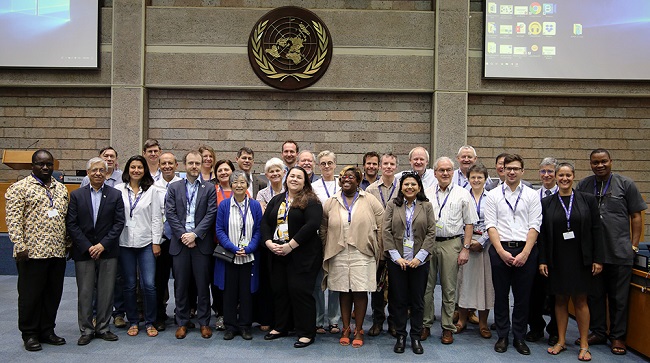
GEO-6 authors
This formed a major outcome of the Intergovernmental Meeting
on the GEO-6 SPM convened from January 21 to 24, 2019 at the UN Environment
(UNEP) headquarters in Nairobi, Kenya. The meeting was attended
by 251 participants from 95 countries,
including 26 participants from major groups and stakeholders.
Throughout the week, delegates discussed the SPM in order to
reach agreement on a document that will be presented to UNEA-4. On Thursday, January
24, they agreed to the GEO-6 SPM, and requested the Assessment Report Co-Chairs
to formulate and forward a summary with key messages of the SPM to UNEA-4.
Jorge Laguna-Celis, Secretary, Secretariat of Governing
Bodies and Stakeholders, UNEP, who opened the meeting, noted that GEO-6 would
be presented to UNEA-4 for possible endorsement in March 2019.
Joyce Msuya, Acting Executive Director, UNEP, characterised
the GEO reports as one of the most important UNEP products, representing “the
very best of science and partnership for the environment.” She noted that,
unlike previous reports, the GEO-6 report considers policies that may help make
a difference in future outcomes.
Highlighting the disconnects between policy, science, and action, Keriako Tobiko, Cabinet Secretary for Environment and Forestry, Kenya, urged decision makers to incorporate science into policies and called for translating policy into tangible, concrete and measurable actions on the ground. He lauded the GEO-6 authors for incorporating traditional knowledge, thus strengthening the link between science and traditional knowledge.
The GEO-6 report, organised under the theme “Healthy Planet,
Healthy People,” draws attention to the connection between environmental and
human health. It also encourages the achievement of the environmental
dimensions of the Sustainable Development Goals (SDGs), internationally agreed
environmental goals, and the objectives of multilateral environmental
agreements (MEAs), for the benefit of humankind.
The GEO-6 differs from the GEO-5 in that the development of
this report involves Co-Chairs in addition to Vice-Chairs. This structure
was recommended by the Scientific Advisory Panel (SAP) to help further ensure
the scientific credibility of the GEO-6 process, and to encourage learning from
best practices from the Intergovernmental Panel on Climate Change and
Intergovernmental Science-Policy Platform on Biodiversity and Ecosystem
Services.
The GEO-6 meeting considered the second order draft of the
SPM, which was developed at a meeting convened by the High-level
Intergovernmental and Stakeholders Advisory Group. The GEO-6 assessment report
and the SPM adopted at this meeting will be presented for consideration and
possible endorsement by UNEA-4, which will be held from March 11 to 15, 2019 in
Nairobi, Kenya. This endorsement is expected to raise the profile of GEO
assessments due to the high-level and universal membership of UNEA.
The SPM consists of five sections:
What is the Global Environment Outlook?
What is Happening to Our Environment and How
Have We Responded?
Effectiveness of Environmental Policies;
Changing the Path We Are On; and
Knowledge for Action.
Previous GEO Reports
GEO-1, published in 1997, provided a comprehensive overview
of the state of the world’s environment and showed that although significant
progress had been made in confronting environmental challenges in both
developing and industrialised regions, there was still a need to vigorously
pursue environmental and associated socioeconomic policies.
GEO-2, published in 1999, concluded that if current trends
in population, economic growth, and consumption continued, the natural
environment would be increasingly stressed.
GEO-3, published in 2002, provided an overview of the main environmental developments over the previous three decades, demonstrating how social, economic, and other factors contributed to the changes that had occurred. It highlighted increasing poverty and concluded that four major divides categorise the world and threaten sustainable development, namely, the environmental, policy, and lifestyle divides, and the vulnerability gap.
GEO-4, published in 2007, assessed the state of the global
atmosphere, land, water, and biodiversity, as well as the human dimensions of
environmental change, and presented scenarios and policy options for action in
the context of environment for development. It issued an urgent call for action
in dealing with persistent and urgent environmental problems, such as climate
change, that undermine human wellbeing and development.
GEO-5 was requested by the 25th session of the UNEP
Governing Council, held in February 2009, in Nairobi, Kenya. The GEO-5 report
differed from previous GEO reports by shifting from assessing priority
“problems” to include assessments of priority solutions. The GEO-5 report
consisted of three major parts: an assessment of the state and trends of the
global environment; regional policy analyses; and potential opportunities for
action at the global level.
Earthquakes and tsunamis accounted for the majority of the
10,373 lives lost in disasters last year while extreme weather events accounted
for most of 61.7 million people affected by natural hazards, according to
analysis of 281 events recorded by the Centre for Research on the Epidemiology
of Disasters (CRED) in its EM-DAT (International Disaster Database).
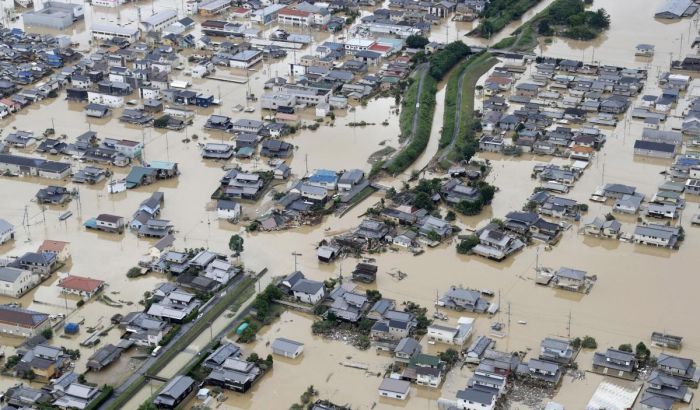
Flooding in Japan
With 3,938,204 affected persons, Nigeria is fourth out of the top 10 countries of people affected in 2018. India (23,900,348) tops the list, followed closely by The Philipines (6,490,216) and China (6,415,024).
On top 10 countries by total death toll, Nigeria is sixth (300), behind Indonesia (4,535), India (1,388), Guatemala (427),
Japan (419) and China (341). The USA comes seventh with 298.
Mami Mizutori, Special Representative of the
Secretary-General for Disaster Risk Reduction, said: “No part of the globe was
spared from the impact of extreme weather events last year. Examined floods,
droughts, storms and wildfires affected 57.3 million people, underlining once
more that if we want to reduce disaster losses, then we must improve how we
manage disaster risk.
“Time is running out for limiting global warming to 1.5˚C or
2˚C. We have to be equally active about climate change adaptation which means
reducing disaster risk in our cities, avoiding the creation of new risk by
better land use, stronger planning regulations and building codes, safeguarding
protective eco-systems, reducing poverty, and taking active measures to reduce
exposure to rising sea levels.”
The 2018 toll of 10,373 lives lost compares with an annual
average of 77,144 deaths recorded between 2000 and 2017, averages which are
inflated by large-scale loss of life in catastrophic events such as the Indian
Ocean tsunami (2004), Cyclone Nargis (2008) and the Haitian earthquake (2010).
There were no such mega-disasters in 2018 but loss of life from major natural
hazards appears to be on the decline likely due to improving standards of
living and better disaster risk management.
Seismic activity including earthquakes, tsunamis and
volcanic activity disrupted the lives of 3.4 million people last year and
claimed more lives than any other hazard type, including Indonesia (4,417),
Guatemala (425) and Papua New Guinea (145).
Floods continued to affect the largest number of people,
35.4 million people, including 23 million people in Kerala, India. They
caused 2,859 deaths including India (504), Japan (220), Nigeria (199), and
Korea DPR (151).
Storms affected 12.8 million people last year and caused a
recorded 1,593 deaths. It is anticipated that storms, particularly due to
hurricanes Florence ($14 billion) and Michael ($16 billion) and typhoon Jebi ($12.5
billion), will be the costliest type of disaster of 2018 once final economic
losses are compiled.
Wildfires in Europe and North America claimed a record
number of lives as Greece (126) had the deadliest European wildfire on record,
and the United States (88) had its deadliest wildfire in over a century, and
costliest wildfire on record (estimated $16.5 billion).
The CRED statistics highlight that 9.3 million people were
affected by drought worldwide, including Kenya (3 million), Afghanistan (2.2
million), and Central America (2.5 million), including migration hotspots
Guatemala, Honduras, El Salvador and Nicaragua. Insufficient reporting from
drought and extreme temperatures events hinder a better understanding of these
events worldwide.
Debarati Guha-Sapir, head of CRED at UCLouvain, said: “The
impact of all disasters, particularly drought and extreme temperatures are
notoriously poorly reported, especially from low-income countries. The human
impact of these events are difficult to quantify, but it needs to be done
urgently, especially in order to report on specific SDG target indicators.
Therefore, innovative approaches that measure progress in resilience and the
adaptive capacity of communities needs to be addressed by appropriate UN
agencies.”
UN member States are committed to reducing disaster losses
and implementing the Sendai Framework for Disaster Risk Reduction (2015-2030),
the global plan for reducing disaster losses which has a clear focus on
reducing mortality and the numbers of disaster affected people, as well as
reducing associated economic losses and damage to critical infrastructure.
Speaking to leaders at the 2019 World Economic Forum in
Davos last week, UN Secretary-General António Guterres said that climate change
was the most important global systemic threat in relation to the global economy
that required a unified response in the form of inclusive
multilateralism involving all parts of society.
António Guterres at the World Economic Forum in Davos
In Davos, the UN’s top official addressed three main
mega-trends in 2019, including migration, digitalisation and climate change.
Against the background of ever more frequent and intense droughts, storms and
floods, Guterres left no doubt about the urgency of the situation,
and the priority that tackling climate change needs to have for the
international community:
“I think the climate risk is the most important systemic
risk for the near future. I believe we are losing the race. Climate change is
running faster than we are. And we have this paradox: the reality is proving to
be worse than scientists had foreseen, and all the last indicators show that.”
On Thursday, January 24, the United Nations Office for
Disaster Risk Reduction published a report outlining that
extreme weather events affected 60 million people in 2018 alone, with no
part of the globe spared from the impacts of accelerating climate change.
Whilst the UN leader described the overall political will to
tackle climate change as inadequate and even slowing down, he made a positive
assessment of the outcome of the UN Climate Change Conference in Katowice in
December.
“Everybody thought that would be a failure,” he said. “It
was not. We managed to approve the Work Programme of the Paris agreement.
It doesn’t solve the problem, we need more ambition, more ambition and
mitigation [cutting greenhouse gases]. That was not solved there, but it was
possible to bring together countries that were in a totally different position,
to at least agree on the basis to move forward,” he said.
Given that with current pledges by governments, the world is
heading towards a 3 degrees Celsius global average temperature rise, and that
governments and multilateral institutions cannot solve the challenge of climate
change alone, Guterres called for inclusive multilateralism which recognises
that not only national states are part of the global system of governance and
influence, but also cities, the business community, civil society and the
academia.
“We need more and more a multilateralism that also is able
to incorporate the contribution of all these other sectors, and I think the
World Economic Forum has an absolutely vital role to play,” he said.
Looking forward to the rest of the year, Guterres told
leaders in Davos that he was convening a major Climate Action Summit in
September to step up ambition in cutting emissions, in adapting to the
inevitable impacts of climate change, along with a focus on finance
and innovation. The Summit will come ahead of the submission to the UN of
the next round of national climate action plans by governments in
2020. The inclusion of civil society, and not least the business society,
would be another main feature of the September meeting.
The Nigeria Meteorological Agency (NiMet), has predicted
dwindling availability of water for various socio-economic purposes over most
parts of Nigeria in 2019.
Director-General/Chief Executive Officer of NiMet, Prof. Sani Mashi
NiMet’s forecast in its 2019 Seasonal Rainfall Prediction
(SRP), revealed that most places would have between below to normal amount of
rainfall, while areas around Adamawa, Kwara and Oyo states would experience
above-normal rainfall.
It listed states expected to experience below-normal
rainfall to include: Sokoto, Katsina, Borno, Niger, Plataeu, Nasarawa, Osun,
Lagos, Ondo, Ekiti, Edo, Delta, Enugu, Anambra, Imo, Bayelsa, Rivers and Cross
River.
This, according to NiMet, will create water shortfall and
will thus negatively affect availability of water required for domestic and
industrial uses like agriculture, groundwater recharge and inland waterways
transportation.
The agency, therefore, advised that integrated water
resources management skills be adopted in line with the predicted amount over
various parts, especially areas that might have to contend with below normal
rainfall.
“There is need to impound and establish adequate irrigation
facilities to mitigate the effects on agricultural activities and properly
manage the available water resources for domestic and industrial use.
“However, proper Dam management is recommended to avert
disastrous effects of flooding due to expected flows over the places where
normal to above normal rainfall amounts were predicted,”it said.
On power generation, transmission and distribution, the
prediction indicated that since power generation in Nigeria is majorly
hydroelectric, it could be affected by rainfall amount as water shortage could
lead to lower generation.
According to the prediction, rainfall in 2019 is expected to
be below normal to normal in most parts of the country, including areas where
hydroelectric dams exists such as Kainji, Jebba and Shiroro.
“This implies that power generation is likely to be affected
negatively by lower rainfall amount in 2019.
“Therefore, policy makers are advised to develop alternative
means of power generation so as to meet up with the growing demands in
electricity by the public,”it added.
The Abuja Environmental Protection Board (AEPB) says it has commenced
the review of its Act No 10 of 1997 to address emerging environmental
challenges in the Federal Capital Territory (FCT).
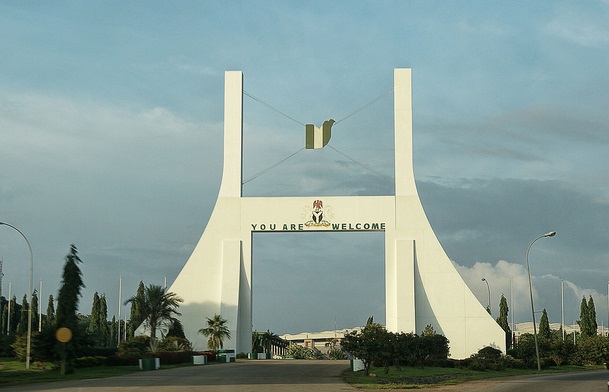
The Abuja city gate
AEPB Director, Mr Baba-Shehu Lawan, said this in Abuja on
Saturday, January 26, 2019 at a two-day Management/Stakeholders Retreat.
Lawan said that the review would ensure proper composition
of members of the AEPB Governing Board and ensure adequate sanctions for
environmental defaulters.
“We are here today to review the AEPB Act No 10 of 1997
because it has stayed very long. It is now 21 years after the laws were
enacted.
“So many environmental issues have come up that the laws had
not addressed, and the penalties are not adequate to deter the defaulters.
“So, we are here for two days to review the act by putting
adequate penalties to address issues that come up over the years that the act
had not addressed so that we update it for the betterment of the city,’’ he
said.
The Chairman, AEPB Governing Board, Dr Baruwa Yahaya, said
that the review of the Act became necessary as the AEPB had been operating the
same act that established it for the past 21 years.
Yahaya added that most of the rules and regulations in the
Act were obsolete especially in the areas of punishment for environmental
violation.
“That is why we are reviewing the act, especially in the
areas of punishment.
“Some of the punishments attract N200. You can imagine.
However, N200 some 20 years ago is something, but now it is nothing that is why
nobody is afraid of it.
“The highest punishment that we have is about N2000, which
is nothing for environmental offenders nowadays.
“So, we want to ensure that appropriate punishments and
rewards are updated to the present standard,’’ Yahaya said.
He said that after the review, the board would draft the
Act, take inputs from the public, before sending it to the National Assembly
for legislative process.
Chief State Council of AEPB, Mr Udeme Umanah, said the new
Act would assist AEPB to deliver its mandate of providing preventive health
services.
Umanah said that the act would also address issues of double utility bills given to residents by AEPB and Area Councils in the FCT.