Home Blog Page 1713

Japan battles influenza epidemic, Cold snap hits Britain

0

Japan’s Ministry of Health, Labour and Welfare said on Friday, February 1, 2019 that the nation is contending with a flu epidemic with a record-high number of patients being diagnosed.
UK snow
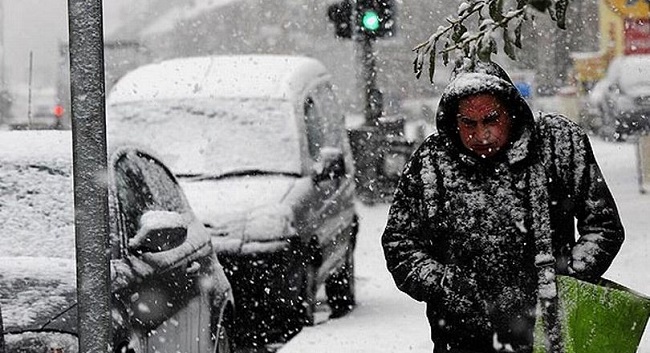
Heavy snowfalls in Britain as blizzards make walking and driving treacherous. Photo credit: Mirror

According to the ministry, an average of 57.09 patients were diagnosed with influenza at each medical facility conducting tests for the virus, with the figures gathered for the seven days through Sunday being the highest number since data gathering on the virus began in 1999.

The figure compares with a per-institution peak logged last winter of 54.33, the ministry said, adding that around 2.23 million people have been diagnosed with influenza in the recording period, an increase of around 100,000 cases from Jan. 25.

The ministry said that 3,205 patients have been hospitalised due to influenza of which 628 are in a severe condition, with the numbers comparing to peaks last winter of 2,050 patients being hospitalised of which 379 cases were severe.

A total of 7.64 million people is estimated to have been affected by the virus across the country.

In a related development, snow and ice disrupted travel by road, rail and air in many parts of Britain on Friday after overnight temperatures plunged to a near-seven-year low of minus 15.4 degrees Celsius in Northern Scotland.

Scotland and south-western England were among the worst-hit areas, while the National Met Office issued a rare amber weather warning the second-highest level for London and nearby areas.

Heavy snow stranded scores of motorists overnight at the famous Jamaica Inn on Bodmin Moor in Cornwall, southwestern England.

“Around 140 people stayed with us last night all 36 rooms, 15 mattresses in the restaurant, five in the residents’ lounge, then we gave out every blanket and pillow we had!’’ the pub tweeted.

“Everyone got on well and there was a strong sense of community,’’ it said, highlighting “strangers playing board games with each other in front of the fire, joking about the situation.’’

Nearby Bristol Airport was closed on Friday, many rail and bus services were disrupted nationwide, but major airports in London were operating normally.

Bristol Airport said it expected disruption of flights to continue into the afternoon as more snow fell.

Paul Gundersen, Chief Meteorologist at the Met Office, said the heavy snow was caused by “moist air from a weather system bringing storms to France clashing with the cold air sitting over the UK’’.

Gundersen said more snow and ice were likely to hit southern and central England into the weekend.


Kenya launches plastic bottle recycling initiative in schools

0

Kenya’s Ministry of Environment and Forestry in partnership with Kenya Association of Manufacturers (KAM) on Friday, February 1, 2019 launched an initiative to engage public schools in safe disposal and recycling of plastic bottles.

Mohamed Elmi
Mohamed Elmi

Chief Administrative Secretary of the Ministry of Environment and Forestry, Mohamed Elmi, said this at the launching of the programme.

Senior officials said the school-based campaign to promote sustainable management of plastic bottles would create additional green jobs in the country.

“The new project to eradicate pollution linked to haphazard disposal of plastic bottles in our environment by involving school children will boost the overall green agenda in the country,” said Elmi.

He said the government had been exploring innovative measures to boost circular economy by engaging the youth in recycling plastic bottles widely used by the food and beverage industry.

“The ministry has signed a cooperative framework with KAM to enhance collection and safe disposal of plastic bottles,” Elmi said.

He added that the government had created a conducive policy framework to boost disposal, collection and recycling of plastic waste linked with grave threat to the environment and human health.

“It is important to empower our children with the knowledge and tools to enable them become environmental champions.

“Our goal is to ensure the next generation make informed decisions in natural resource use and waste management,” said Elmi.

Muchai Kunyiha, Vice Chairman of KAM, said a strategic engagement with learning institutions was expected to revitalise action on plastic waste.

“We are keen to tackle the plastic pollution menace as a team and are convinced that school children can be effective champions for safe disposal and recycling of non-biodegradable waste,” said Kunyiha.

He noted that Kenya had joined the ranks of African countries that had come up with innovative measures to manage plastic waste.

“By creating a strong ecosystem to support collection and recycling of plastic waste, we expect to stimulate economic growth and unleash new jobs for the youth,” said Muchai.

Surveyor-General to support UNDP-GEF identify renewable energy sites

0

The Office of the Surveyor-General of the Federation (OSGOF) said it will provide technical support to the United Nations Development Programme (UNDP) and the Global Environment Facility (GEF) in developing a Geospatial Information System (GIS)-based tool in Nigeria.

Ebisintei Awudu
Surveyor-General of the Federation, Mr Ebisintei Awudu

The Surveyor-General of the Federation, Mr Ebisintei Awudu, disclosed this in a statement issued by Mrs Grace Okeke, Assistant Director, Press, OSGOF, on Friday, February 1, 2029 in Abuja.

According to the statement, Awudu was represented by Mr Samuel Taiwo, the Director, International Boundary, at a meeting with the consultants from UNDP.

He said that the GIS-based tool would provide private developers with geospatial information concerning favorable sites for developing Solar PV, Wind and biomass Energy Projects in Nigeria.

He said that the office was ready to provide all the necessary information needed for the project.

According to him, the mapping department will provide data on the total information per state, administrative units, land use maps, territorial planning instruments, such as urban areas, industrial, military and tourist areas among others.

Awudu stated that his office would sign a Memorandum of Understanding (MoU) with the UNDP-GEF office on the project noting that the data from the mapping department could assist experts when needed.

“This MoU will provide a comprehensive framework on the commitment and involvement of this office in the project, and equally assist UNDP-GEF by providing available information needed for the project,” he said.

The UNDP consultant, Mr Carlos Gueitao, said the essence of the meeting was to seek OSGOF’s support in identifying geospatial information on favourable sites for developing solar projects in Nigeria.

He called on the office to provide necessary information on military sites, tourist areas, industrial and desert areas, to enable the agency to have a smooth discharge of its projects in Nigeria.

By Uche Bibilari

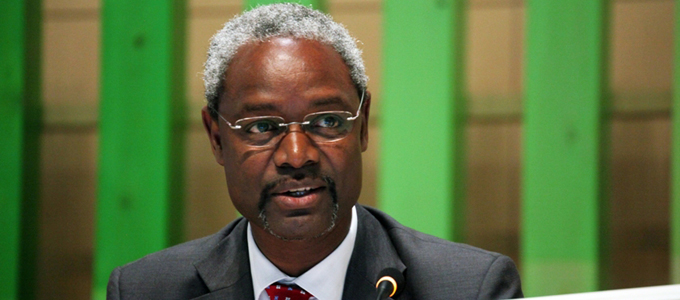
Ibrahim Thiaw emerges new head of UNCCD

0

United Nations Secretary-General, António Guterres, following consultations with the Bureau of the Conference of the Parties to the United Nations Convention to Combat Desertification (UNCCD), on Thursday, January 31, 2019 announced the appointment of Ibrahim Thiaw of Mauritania as the next Executive Secretary of the UNCCD.

Ibrahim Thiaw
Ibrahim Thiaw

He will succeed Monique Barbut of France, to whom the Secretary-General is grateful for her outstanding commitment and dedicated service to the organisation.

Mr. Thiaw brings to the position almost 40 years of experience in sustainable development, environmental governance and natural resource management. He is currently Special Adviser to the Secretary-General for the Sahel. From 2013 to 2018, he was Deputy Executive Director of the United Nations Environment Programme (UNEP), where he played a key role in shaping the organisation’s strategic vision, mid-term strategy and programme of work, and strengthened collaborations with Governments and other environmental governing bodies, including the United Nations Environmental Assembly.

Joining the United Nations in 2007, Mr. Thiaw was the Director of UNEP’s Division for Environmental Policy Implementation. Before joining the organisation, he was the Regional Director for West Africa, and later Acting Director General, of the International Union for Conservation of Nature (IUCN).

Mr. Thiaw started his career in Mauritania, his home country, where he served in the Ministry of Rural Development for 10 years.  He holds an advanced degree in forestry and forest product techniques.

In a reaction, Thiaw said: “I am truly honoured to be appointed by the UN Secretary-General as Executive Secretary of the UN Convention to Combat Desertification. Looking forward to working closely with all Parties, staff and partners to the Convention to protect people and ecosystems.”

Kenya to partner private landowners on affordable housing

0

Kenya will partner private landowners to implement a development blueprint on affordable housing, Charles Mwaura, Principal Secretary of the State Department for Housing and Urban Development, said on Friday, February 1, 2019.

Charles Mwaura
Charles Mwaura

Mwaura said that individuals, who own huge tracts of land, have been invited to become partners in the implementation of the mass housing programme.

“We are interested in getting private landowners into the affordable housing programme provided they will comply with the stipulated guidelines,” Mwaura said.

Mwaura added that a legislative framework had been in place to facilitate private investments in low-cost shelter.

Kenya aims to develop 500,000 housing units annually as part of the Big Four Agenda outlined by President Uhuru Kenyatta to transform the country.

Government statistics indicated that Kenya has an annual housing deficit of 200,000 units thanks to bottlenecks linked to high cost of land, archaic regulations and volatility in the real estate sector.

Mwaura said that availability of land is key to bridging housing deficit in the rapidly growing urban centres.

“Private landowners will help us develop projects that would be added to the affordable housing programme pipeline. The government will facilitate strategic partners to deliver low-cost shelter to citizens,” Mwaura said.

The state will invest in supportive infrastructure such as access roads, clean water, sewerage and power to pave way for construction of affordable shelter in major cities and towns, he said

Private landowners will be lumped together with financiers and contractors, who have already been roped in to help implement the affordable housing programme, the official said.

“Currently, we are receiving applications from partners with technical and financial capabilities to develop housing units for the low-to middle-income groups,” Mwaura said.

The affordable housing programme is expected to promote social equity, stimulate economic growth and create an estimated 350,000 direct and indirect jobs by 2022, he said.

Germany, Sierra Leone plan to treat plastic wastes in ships

0

Institute of Marine Biology and Oceanography, Fourah Bay College, University of Sierra Leone are in partnership with Technolog Services Gmbh, Nehlsen Saubere Leistung and Bremen University of Applied Sciences (all in Germany) in the areas of plastic waste recycling.

Ship
The plastic waste treatment facility is inbuilt in a vessel that will treat wastes in Sierra Leone and other nations on the West African coast

Dr. Mbaimba Lamina Baryoh, the Sierra Leone Ambassador to Germany, was invited as special guest and took the opportunity to explain the wastes disposal difficulty facing the capital Freetown and agreed with the plans presented by the trio in resolving the problem.

IMBO had earlier in 2009 partnered with Bremen University in the development of a curriculum for training at postgraduate level up to a master’s degree in solid wastes and Resources Management through the CODWAP project, which was funded by the European Union.

Current partnership project is concentrating on the development of technologies for a vessel-based treatment of plastic wastes in Sierra Leone and other West African countries. The project concept was developed based on the realisation that although many plastics are produced as wastes in Sierra Leone and other West African countries, none of the countries are producing enough quantities of plastics to ensure 24/7 and 365 days a year operation of a land-based plastic wastes treatment facility.

The idea was then borne that a vessel-based technology can be developed, such that the vessel can visit Sierra Leone, buy and process all the plastic wastes available, and the vessel can then move to the next country until all the waste plastics in the countries of the west coast have all been bought and processed.

Two delegates from the University of Sierra Leone, Dr. Salieu Kabba Sankoh (IMBO, FBC, USL) and his Research Assistant Mohamed John Gbla, recently participated in a workshop in Hamburg, Germany whereby the result of their research was presented to the Education Ministry of the Federal Republic of Germany, which is funding the project, and private sector stakeholders who would potentially invest on the technology.

The workshop ended with the assurance that a German team would visit Sierra Leone again together with the Ambassador of Sierra Leone to Germany sometime in 2019 to further investigate the potentials of processing plastics with the ship-based technology and to get the political buy-in of the government of Sierra Leone.

Rainfall extremes are connected across continents, study finds

0

Extreme rainfall events in one city or region are connected to the same kind of events thousands of kilometers away, an international team of experts finds in a study now published in one of the world’s leading scientific journals, Nature.

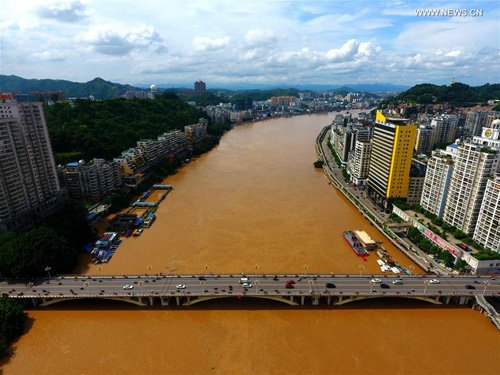
China flood
The annual monsoon season is usually accompanied by torrential rainfall in many parts of China

They discovered a global connection pattern of extreme rainfall – this could eventually improve weather forecasts and hence help to limit damages and protect people. Extreme rainfall events are on the rise due to human-caused climate change, which makes the study even more relevant. The researchers developed a new method rooted in complex systems science to analyse satellite data. The revealed extreme rainfall patterns are likely linked to giant airflows known as jetstreams that circle the globe high up in the atmosphere, forming huge waves between the Equator and the Poles.

Each year, extreme rainfall events cause devastation around the globe. For example, extreme rainfall has led to particularly severe flashfloods and mudslides in North India and Pakistan in recent years.

“We unravel a global teleconnection pattern that governs the occurrence of extreme rainfall events and identify specific types of atmospheric waves as their likely main cause. The gained insights into atmospheric dynamics and the relation to extreme rainfall events will help increase our capability to predict such events,” says Niklas Boers from the Potsdam Institute for Climate Impact Research (PIK) and Imperial College London, lead-author of the new study.

Links between the Asian Monsoon and events for example in Europe

“The new technique applied to satellite data shows very surprising relationships between extreme rainfall events in different regions around the world,” says co-author Brian Hoskins, chair of the Grantham Institute at Imperial College.

“For example, extreme events in the South Asian Summer Monsoon are, on average, linked to events in the East Asian, African, European and North American regions. Although rains in Europe do not cause the rain in Pakistan and India, they belong to the same atmospheric wave pattern, with the European rains being triggered first. This should provide a strong test for weather and climate models and gives promise of better predictions.”

High-end mathematics and interdisciplinary science yield results with huge practical relevance

By breaking the globe into a grid, the team could see where events occurred and statistically determine their relations – even if the events did not occur at the same time. The researchers could thereby detect so far invisible patterns. 

“This frontier interdisciplinary study, combining complex network theory and atmospheric science, yields breakthrough insights in studying extreme rainfall,” says co-author Jürgen Kurths, also from PIK.

“Complexity science can hence not only be applied to the spread of epidemics or to opinion formation in social networks, but also to improve our understanding of the atmosphere. Thus, our high-end mathematical methods in fact produce results of tremendous practical relevance that can help to keep people safe in the face of climate change and other great challenges of our times,” he adds.

Climate-change response: More trees on farms in Southeast Asia

0

As the world grows hotter and the impact of a changing climate becomes increasingly severe, moves are underway in Southeast Asia to put more trees back into the varied landscapes that typify the region.

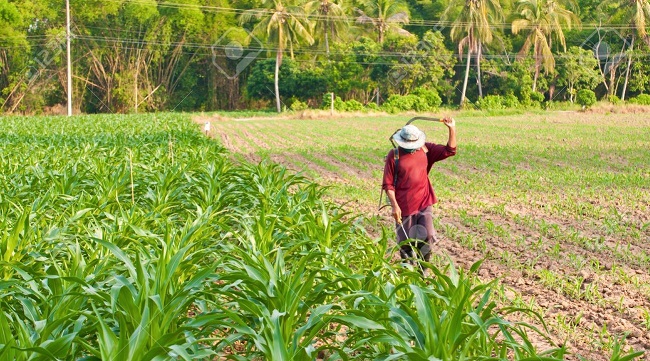
Farmland in Thailand Southeast Asia
Farmland in Thailand, Southeast Asia

The 10-member states that make up the Association of South-East Asian Nations, known as ASEAN, with a combined population of more than 650 million people, are fast-tracking the adoption of agroforestry practices as part of efforts to mitigate, and adapt to, climate change.

Agroforestry, the agricultural use of trees, is considered by the bloc to be one of the most sustainable uses of land, which can meet the dual objectives of economic and environmental resilience. With natural forests continuing to decline in both quality and area across the region, largely from pressure for more agricultural land by both small- and large-scale landholders, trees on farms can help restore some of the functions lost when forests are cleared, including sequestering carbon, regulating water in the soil, providing habitat for biological diversity and creating micro-climates that moderate temperature extremes. As well, farmers’ livelihoods improve thanks to a more diverse farming portfolio that spreads risk and provides a range of products for sale throughout the year.

“ASEAN is a world leader in this regard,” said Delia Catacutan, a senior research fellow with World Agroforestry, who led the process. “Many member states are among the most vulnerable in the world to the negative impacts of climate change. It’s prescient of the region’s leaders to recognize that widespread adoption of agroforestry can strengthen communities’ resilience and ensure a diverse range of foods year-round while simultaneously improving livelihoods and the environment.”

Stimulating the integration of more trees into farms, the 40th ASEAN Ministers on Agriculture and Forestry meeting, held in Ha Noi, Viet Nam on October 11, 2018, formally endorsed the ASEAN Guidelines for Agroforestry Development.

In their joint statement, the ministers declared: “We endorsed the ASEAN Guidelines for Agroforestry Development to promote the role of agroforestry in simultaneously achieving economic, environmental and social outcomes at farm, household and landscape levels and help ASEAN Member States achieve their targets related to food security, sustainable growth, reduction of greenhouse-gas emissions, land restoration, watershed protection, gender equality, social/community forestry, climate-change adaptation and mitigation and, more generally, the Sustainable Development Goals.”

The Guidelines were developed relatively rapidly, over 18 months, in a wide-ranging, consultative process led by World Agroforestry in partnership with the ASEAN Working Group on Social Forestry, Food and Agriculture Organisation of the United Nations, national governments, the Centre for International Forestry Research, RECOFTC – The Centre for People and Forests, Non-Timber Forest Products Exchange Programme, Southeast Asian Centre for Graduate Study and Research in Agriculture,  CGIAR Research Programme on Forests, Trees and Agroforestry and the Mekong Expert Group on Agroforestry. Non-governmental organisations, indigenous people’s organisations, research institutes, and the private sector gave input to the Guidelines. The process was supported by the ASEAN-Swiss Partnership on Social Forestry and Climate Change.

Consisting of 14 principles and 74 guidelines, the process of developing the document has already prompted Cambodia and Myanmar to embark on “road maps” for agroforestry development. In parallel developments inspired by the wider discussion about agroforestry, Viet Nam has established a national working group on agroforestry and The Philippines has called for a national agroforestry policy or similar guiding document.

Stakeholders call for massive investment in water infrastructure

0

Stakeholders participating in the National Summit on the Human Right to Water in Abuja on Wednesday, January 30, 2019 called for massive investment in water infrastructure by African governments.

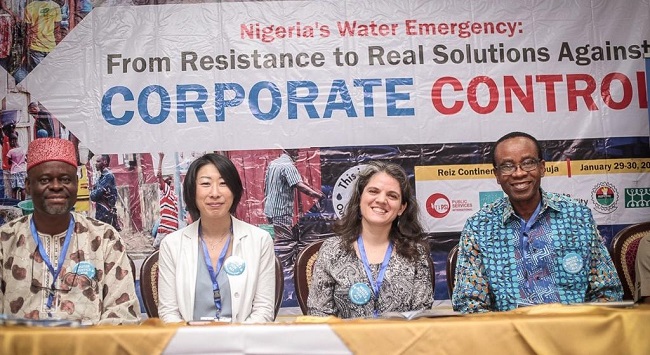
ERA Water Summit
L-R: Dr Otive Igbuzor (keynote speaker), Satoko Kishimoto (Transnational Institute), Shayda Naficy (Corporate Accountability) and Nnimmo Bassey (Chair of the board of ERA) and the summit

The advice, contained in a communiqué issued in Abuja at the end of the summit by the Secretary, Communiqué Committee, Mr Jakpor Philip, disclosed that this would make clean public water available and accessible to the citizens.

The summit was organised by the Environmental Rights Action/Friends of the Earth Nigeria, an NGO, with the theme: “Nigeria’s Water Emergency: From Resistance to Real Solutions against Corporate Control”.

The communiqué said that African governments should invest in public infrastructure and embrace democratic, participatory and transparent management of water investments.

The communiqué underscored the need for comprehensive data on both water infrastructure investment and access to aid planning for now and the future.

It also called for the review of National Water Policy to make it mandatory for all states to collaborate with local governments to ensure adequate funding for water facilities resuscitation.

“The Nigerian government and governments in Africa should reject privatisation projects designed by the World Bank and its corporate partners, including the Public Private Partnership (PPP) success-myth that it is aggressively marketing in developing and poor countries.

“Relevant anti-graft agencies should probe all PPP projects, loans and funding for the existing water system and infrastructure nationwide.

“The Freedom of Information Act (FOI) should be utilised in the public demand of information on funds sourced and approved for public water projects in the last three decades.

“There should be a national agenda for the human right to water, starting with a robust national campaign to demand for a bill that protects against privatisation of water infrastructure.”

The communiqué added that the bill would advance the human right to water.

“Governments in Africa embrace democratic decision-making in addressing water shortages. Women and vulnerable groups should be accorded priority in plans to guarantee access.

“The importance of women’s leadership was shown as vital to the success of this movement.

“Participants agreed wholeheartedly that women’s leadership shall continue to be sustained and bolstered to achieve future victories,” it added.

According to the communiqué, communities at the grassroots level, including Community Development Associations should be fully integrated into campaigns on the human right to water.

By Deji Abdulwahab

We thoroughly scrutinise GMOs before granting permit – Biosafety agency

0

Director-General of the National Biosafety Management Agency (NBMA), Dr Rufus Ebegba, says the agency scrutinises all genetically modified organisms (GMOs) before permission is granted for use.

Dr Rufus Ebegba
Dr Rufus Ebegba

Ebegba said this in a statement on Thursday, July 31, 2019 in Abuja to clarify the process of the recent approval granted for the commercialisation of GMO Cowpea.

He said that the hallmark of the agency’s duties was ensuring safety of genetically modified foods and products to humans and the environment.

“Before any genetically modified product is granted approval status by the agency, two specific committees made up of professionals and experts from the academia, line government agencies, civil society groups and other stakeholders are constituted.

“These committees will painstakingly analyse the application and review the risk management and risk assessment plans before a decision is made.

“When an application either for importation of a GM seed or grain, or for the confined field trial/ commercial release of a crop is made to the agency, it is acknowledged and treated based on the NBMA Act 2015.’’

Ebegba said that public participation in the process of permit granting started with a publication of the application as public notice in three national dailies.

He said that the NBMA website to allowed members of the public to contribute to the discussion which could either be in support or against the application for a period of 21 days.

“The agency finally makes its decision after going through the recommendation of the ad-hoc committees, advising the agency to either grant or deny a permit, considering safety issues to the environment, human health and socio-economic impact.

“The agency does not just process permits but looks critically at the application ensuring that the product does not or will not cause harm before granting approvals.’’

Ebegba said that the permit for the commercial release of the GM cotton was granted in 2016 after due diligence and the product was released under the watchful eyes of the agency.

“And what seemed like a very unpopular decision was applauded by the Ministers of Agriculture and Rural Development, and Science and Technology in a joint press conference two years later.

“The recent approval for the commercial release of GM cowpea went through the same safety procedures, taking into consideration safety of the environment which includes ensuring the conservation and sustainable use of biological diversity.

“And in the area of safety to human health, the agency ensures that GMOs are not toxic to humans and that they do not cause allergies.

He said that the agency would continue to ensure that only safe GMOs would be allowed either for planting, consumption or processing in Nigeria.

“I once more advise super stores that import GM foods without permit to desist from such as we will not hesitate to shut down such stores,’’ he cautioned.

He said that the agency would not hesitate to prosecute any violators of the NBMA Act and advised all those who intended to deal in GMOs to ensure they applied for a biosafety permit first.