The Nigerian Institute of Town Planners (NITP) has called on
the Federal Government to domesticate the components of the New Urban Agenda.
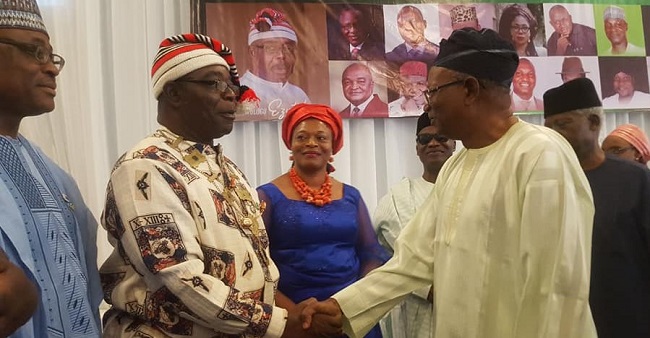
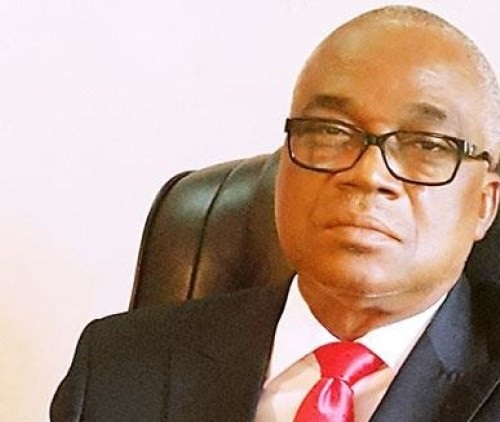
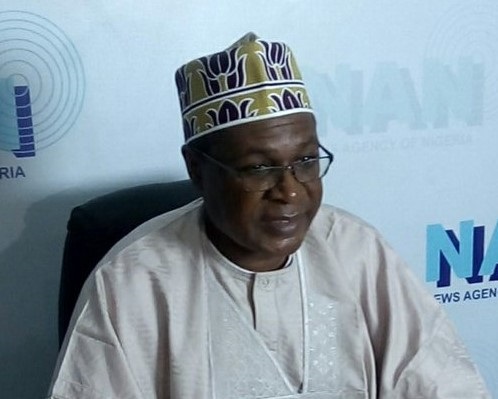
The 23rd National President of NITP, Mr Lekwa Ezutah (second left), being congratulated after the investiture
The 23rd National President of NITP, Mr Lekwa Ezutah, made
the call while delivering an assurance speech at his investiture on Saturday,
January 2, 2019 in Abuja.
The New Urban Agenda was adopted at the UN Conference on
Housing and Sustainable Urban Development (Habitat III) in Quito Ecuador, on
Oct. 20, 2016.
It was endorsed by the UN General Assembly at its 68th
plenary meeting of the 71st session in December 2016 to respond to challenges
being faced by cities.
The agenda will guide the efforts of nations, cities and
regional leaders, funders of international development and UN programmes for
the next 20 years to achieve sustainable urban development.
Ezutah said that, if well planned and managed, urbanisation
could be a powerful tool for sustainable development for both developing and
developed countries.
“I call on the Federal Government to specially and urgently
pay attention to making efforts at the domestication of the components of the
agenda,’’ the new NITP boss said.
Ezutah, who is also a Special Assistant to the Abia State
Governor on Urban Development, urged the Federal Government to adopt the
content of the Earth Charter.
The Earth Charter is an ethical framework for building a
just sustainable and peaceful global society in the 21st century inspiring in
people a new sense of global interdependence and shared responsibility for the
wellbeing of human family.
According to the expert, government should ensure that the
town planners are an integral part of its political agenda to enhance the
chances of success.
He promised that the new management would reform the
national secretariat of the institute, grow membership, improve and strengthen
the professional competence of members and increase awareness.
“No form of growth, including the recently inaugurated
economic growth and recovery programme of the Federal Government is sustainable
in the absence of physical planning.
“This is because all economic investments depend on land to
produce and when such thoughts are not located rationally in harmony with one
another, chaos and anarchy become the order,’’ he noted.
He further said that from experience, countries with robust
physical planning programmes had grown faster and developed more sustainably.
According to him, the most outstanding of such experience is
Singapore.
Also, Dr Omede Idris, Chairman of the occasion, in a remark
urged professionals to rise to occasions in the political field and facilitate
in the process of redirecting the economy, national engagement and development
of our collective good.
“Professionals have a responsibility to stimulate the growth
of the economy and productivity in the right direction.
“Government on her part should value professionals as
partners in progress for the common good of the people,’’ he added.
Going to school in Cameroon Anglophone region has
become a crime as an armed insurgency escalates, reports Arison Tamfu
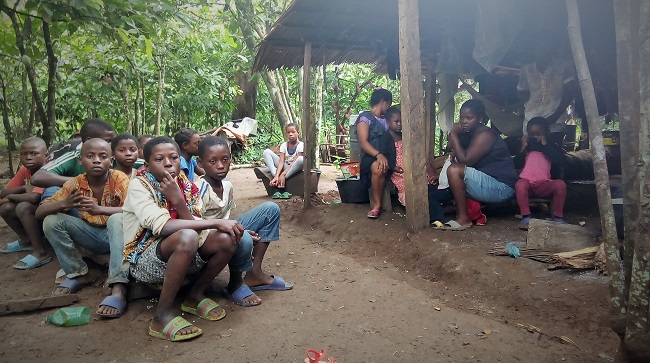
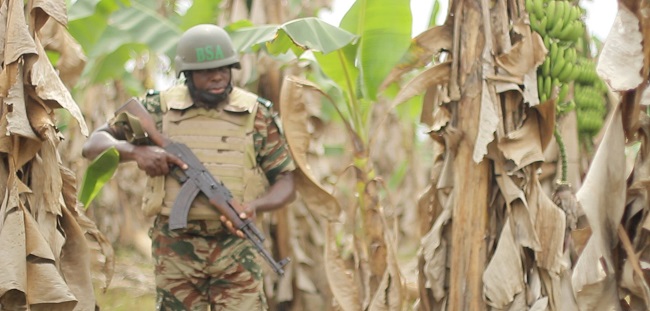
Hundreds of school children hiding in the bush have been unable to go to school for up to two years now
In November last year, Martha Lum and her
school mates were deeply asleep when the door of the dormitory abruptly slammed
with a bang. Terrified, confused and suddenly awakened by the noise, Lum saw
masked gunmen enter the dormitory. We have come to kidnap you because we don’t
want you to go to school, the gunmen told them.
“I thought I was going to die,” says Lum.
About 79
school children and staff members of Presbyterian Secondary School Nkwen
where the tragedy happened were abducted that night and for almost two days
they trekked to an unknown destination.
“As we trekked, they kept on telling us
that they don’t want us to go to school again.”
The 15-year-old form five student told me
her story in Bamenda, Cameroon’s Anglophone largest city four weeks after they
were released by the gunmen.
Lum’s story is common across Cameroon Anglophone’s
war-torn regions of Northwest and Southwest where going to school has become a
crime.
In May last year, the UN’s emergency aid
coordination body, OCHA, said approximately 42,500 children were out of school.
However, local rights groups estimate that number has since increased fourfold
following frequent abductions.
Some 20,000 school-age children now live in
the bush. With no learning materials or trained teachers, they have no access
to a formal education.
So how did the classroom become part of the
warfare between the government and separatist forces?
Right
From the start
The anglophone minority of
francophone-majority Cameroon – one sixth of the population – has felt
marginalised since two former colonies of France and Britain reunited in 1961
to form one country.
French and English are both official
languages, and the country’s 1998 Orientation of Education law says its two
“sub-systems” of education are “independent and autonomous”.
But, according to Sylvester Ngan from the
Teachers Association of Cameroon (TAC), which defends the rights of
English-speaking teachers, the francophone-majority government has been trying
to wipe out the English system.
“When the two countries decided to reunite
in a federation, they agreed to maintain their different systems of education,
but (a) few years after reunification every element of the anglophone
educational system was slowly absorbed into the francophone Cameroon culture,”
says Ngan.
Originally, children in anglophone Cameroon
were taught in English by English Language teachers. But after the country
reunited, the central government began posting French teachers to the
anglophone regions to teach children in English.
They were also expected to teach the
children using the anglophone sub-system of education, which has a different
syllabus and different methods of evaluation and certification from the
francophone sub-system.
TAC also complains that competitive exams
for the most prestigious public universities and colleges are set in French
only, and qualified English speakers are often excluded in admissions into
state schools, even in the anglophone regions.
Explaining the practical challenges for
schools in the anglophone regions, Dr. Valentine Banfegha Ngalim, a senior
lecturer at the University of Bamenda, said: “For example, in the English
sub-system, history and geography are two distinct subjects to be studied. On
the contrary, in the francophone sub-system, the two subjects are combined and
popularly described as ‘Histoire-geo’.”
Other challenges include: single subject
certification under the English system and group certification under the French
one; different course lengths; and different numbers of exams with different
timetables of study.
As a measure to erase these differences,
the Cameroonian government launched plans to harmonise them. But this met with
stiff resistance, mostly from anglophones who argued that it was just another
way to systematically suppress their culture.
“This completely undermined the original
intentions of the founders of the nation to build a bicultural nation,
respecting the specificity of francophone and anglophone Cameroonians,” says
Ngan.
After years of discontent, in November
2016, anglophone teachers began an indefinite strike to protest what they said
amounted to systematic discrimination against English-speaking teachers and
students. In response, government security forces clamped down on protests,
arresting hundreds of demonstrators, including children, killing at least four
people and wounding many more.
This caused widespread anger across the
Southwest and Northwest regions, which a year later led to the rise of the
armed separatist groups now fighting for independence and a new
English-speaking nation called “Ambazonia”.
Although most teacher trade unions called
off their strike in February 2017, separatists continue to impose curfews and
abduct people as a means to push the local population to refrain from sending
children back to school.
As a result, tens of thousands of children
haven’t attended school since 2016. Local media is awash with stories of
kidnappings of children and teachers who do not comply with the boycott, while
rights groups say the disruption of education puts children at risk of
exploitation, child labour, recruitment by armed groups, and early marriage.
“Schools have become targets” says a Human
Rights Watch report. “Either because of these threats, or as a show of
solidarity by parents and teachers with the separatist cause, or both, school
enrollment levels have dropped precipitously during the crisis.”
In June, Amnesty International said at
least 42 schools had been attacked since February last year. While latest
statistics are not available, it is believed that at least 100 separate
incidents of school kidnapping have taken place since the separatist movement
turned violent in 2017. More than 100 schools have also been torched and at
least a dozen teachers killed or wounded, according to Issa Tchiroma,
Cameroon’s minister of communication.
The
Separatists’ Way
Speaking to me in Bali, a town neighbouring
Bamenda – the capital of Northwest region – armed separatist leader *Justin
says his group is enforcing the school boycott started by the teacher trade
unions.
“They (teachers) started a strike action to
resist the “francophonisation” of the anglophone system of education and the
evil francophone regime arrested and detained their colleagues, shot dead
school children and you expect us to sit down and watch them killing our
people?” he says.
“We don’t want the school children of
Ambazonia to be part of the corrupt Francophone system of education. We have
designed a new school programme for them which will start as soon as we achieve
our independence.”
Laba who controls another group of armed
separatists is more categorical.
“When we say no school, we mean no school,”
he says emphatically.
There are about 20 armed separatist groups
across the two English-speaking regions. They operate independently, and
separatists have publicly disagreed on the various methods of imposing the
school boycott.
Both Justin and Laba accuse the government
of staging “some” of the school abductions in order “to discredit the image of
the separatists internationally”. But they also admit that some armed
separatist groups are guilty of kidnapping and killing children and teachers.
“We don’t kidnap schoolchildren,” Justin
says. “We just impose curfews to force them to stay home.”
“We have never and will never kill a
student or teacher. We just want them to stay home until we get our independence
and begin implementing our own system of education which they wanted to
“francophonise,” Laba adds.
But for many parents and schoolchildren,
staying at home for this long is already having devastating consequences.
No
School, more crimes
Parents and local officials worry that the
children could be driven to take up arms, becoming a lost generation that
perpetuates the conflict and the humanitarian crisis.
“Imagine that these children miss school
for five or ten years because of the fighting, hearing the sound of guns every day,
and seeing people being killed, what will become of them?” says Elizabeth
Tamufor, 45 and mother of four who fled fighting and escaped to the bush.
“We have been hiding in the bush for more
than a year. I am sure the children have forgotten what they were taught in
school. You think in five years they will still be hiding here? They will
probably pick up guns and start fighting,” she adds.
In most parts of the Anglophone regions,
the fear of school children joining the armed separatists is becoming a
reality. Michael, 20, used to be a student before the conflict started. He
joined the armed separatists when his friend was killed by government forces.
“I replaced books with the gun since then.
But I will return to school immediately we achieve our independence” he says.
What is even more worrisome is the shocking
rise in teenage pregnancies in the restive regions.
“The rate of teenage pregnancy is alarming.
I receive pregnant school girls almost every day who want to abort the pregnancy,”
says Doctor Babi, a surgeon.
Statistics are not available, but it is
believed that approximately 20 percent of the thousands of school girls are now
roaming the streets of Anglophone Cameroon with unwanted pregnancies.
Solange, 14, is one of them. On a fateful
day in September, she was moving pointlessly in the streets of Kumba when a boy
approached her and invited her for a drink. They started drinking and soon they
were immersed in alcohol consumption and then romance. That day, Solange lost
her virginity.
“I realised I was pregnant one month after.
This will never have happened if I was going to school. This war has destroyed
my life,” says Solange, sobbing and adding that she knows five of her school
mates that are also pregnant.
“Some have decided to become prostitute. I am afraid to go to school,” she says.
Parents who can afford it have enrolled
their children in schools in the French-speaking part of the country – mostly
Douala and Yaoundé. But the influx has caused fees to rise in the francophone
zones. Tuition fees that normally cost $150 annually have now more than doubled
to $350.
Beyond the costs, parents also need to
transport their children from the troubled regions, along a very insecure
highway, to apply for enrollment.
When they get there, success is far from
guaranteed. A lot of the francophone schools are now at full capacity and have
stopped accepting students from anglophone regions, meaning many children will
likely have to stay home for yet another year.
Those studying in a new environment can
also take quite a while to adapt.
George Muluh, 16, had been at a school in
the Southwest region before the conflict but is now attending Government Bilingual
High School Deido in Douala.
“Everything is just different,” he says. “I
don’t understand French. The classrooms are overcrowded. The teaching method is
different. I am getting more and more confused every day. I just want the
conflict to end so I can go back to the Southwest to continue my studies.”
Reforms
government-way
But it might take a while, a long while
before George has that opportunity. To the Cameroonian government the teachers’
grievances have been solved already.
“The government has employed 1000 bilingual
teachers, allocated 2 billion fcfa ($4 million) to support private education,
transferred teachers who could not speak French and redeployed them to French
zones. These were the demands of the teachers. What do they want again?” says Issa
Tchiroma, Cameroon minister of communication.
But Sylvester Ngan says most of these
measures are cosmetic and don’t solve key issues related to French-only exams
and francophone teachers in English schools.
Leave
the children alone
While the government and teacher unions
argue about who is right and what educational system to implement, the war is
ongoing, people are dying and Lum and tens of thousands of school children are
not going to school.
“No reason can be advanced to justify the
un-warranted attacks on children in general and pupils who are seeking to
acquire knowledge and skills. All children in the regions must be able to go to
school in peace,” says Jacques Boyer, UNICEF representative in Cameroon.
Paul Biya, 85, who recently won another seven-mandate
after 36 years in power, has ignored calls for an inclusive dialogue to an end
the conflict.
The first measure he undertook October
election was the creation of a commission
to disarm and reintegrate ex-fighters of armed separatists.
Cameroonian political analyst Michael Mbah
describes the move as “a joke”, saying that a ceasefire and dialogue must
precede any serious attempt at disarmament and reintegration.
Meanwhile, this academic year looks bleak
for children like Lum whose futures are being decided by a war beyond their
control. “I have always wanted to become a medical doctor,” Lum says, but she
now fears her dream will be shattered by the persistent conflict.
“Leave the children alone,” says Raymond,
a father of four whose offspring haven’t been able to study for close to two
years now.
“We, parents, cannot afford to raise a
generation of illiterates,” he says. “The future of the children is being
sacrificed, just like that.”
Names changed at the request of the interviewees for security
reasons.Parts of this article first appeared on IRIN
on December 19, 2018
Conservation activists led by A ROCHA
Ghana, demanding that the Atewa Range Forest Reserve should be excluded from
mining and left as a protected area, have taken their “Save Atewa” campaign to
another level. They have held the first ever exhibition to raise the
conservation profile of Atewa. The four-day event took place in Accra from
Wednesday January 30 to Saturday, February 2, 2019.
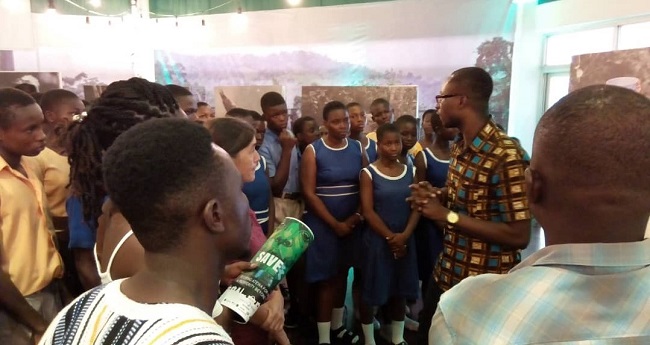
School children being briefed during the exhibition
The theme for the exhibition, “Securing
Atewa for Prosperity and Wellbeing beyond Today,” was a reminder to Ghanaians that
the continuous existence of Atewa as a Reserve, holds the promise of prosperity
and security. The organisers believe this promise does not lie in the mining of
its bauxite deposits, as the government intends to, but rather in its
exceedingly rich biodiversity resources.
Located in Ghana’s Eastern Region, Atewa
Range Forest Reserve is by no means an ordinary protected area. In terms of
biodiversity composition, it is said to possess a species richness that is far
higher for most classes of organisms than is known for most forests in Ghana.
This includes a plant richness of over 1100 species, accounting for 26 % of the
country’s entire flora; 77 % of Ghana’s butterfly species; and is home to more
than 30 % of the nation’s bird species. Some of which are endemic and cannot be
found anywhere else in the world.
Atewa is also famed for being the watershed
for three key rivers namely the Densu on which the Weija Dam is built as it meanders
into the coastal environs, the Ayensu and Birim. Together, these rivers provide
water to about five million Ghanaians in the Eastern, Central and Greater Accra
regions.
And despite the encroachment on portions of
the Reserve, first by illegal loggers and then by illegal miners or “galamsey”
operators following earlier mineral prospecting activities, the Atewa Range
Forest Reserve, is largely still one of the remaining blocks of pristine
forests in Ghana, virtually undisturbed. It is one of Ghana’s 34 Globally
Significant Biodiversity Areas and among the nation’s 36 Important Bird Life
Areas (IBLA).
The international and national importance
of Atewa lies in the interlinkages of its biodiversity, which provide the basis
that supports human life and well-being. Therefore, the ‘Save Atewa,” campaign is
purposely to halt any activity whether legal or illegal that has the potential
to eventually destroy the Reserve, it resources and the ecological services it
is providing.
The “Save Atewa,” exhibition comes after a
year of active campaign in and outside Ghana for Atewa to be left unmined. The
exhibition consisted of various poster images of some of the endemic life forms
at Atewa and the ecosystem services it provides; a banner depicting a
compilation of people’s sentiments about the Reserve and a video clip
highlighting the area’s importance.
Spectators at the exhibition were mainly from
partner institutions and allies including the Royal Netherlands Embassy; USAID;
A ROCHA International; Ghana Wildlife Society; Friends of the Earth, Ghana;
International Union for the Conservation of Nature; Forest Services Division,
the Christian Council of Ghana, members of schools Wildlife Clubs and students
of some second cycle institutions. Also in attendance were some members of the
Parliamentary Select Committee on Environment, Science, Technology and
Innovation.
Speakers at the formal opening, were
unanimous in their call for Atewa to be upgraded from a forest reserve to a
National Park.
The National Director of A ROCHA Ghana, Dr.
Seth Appiah-Kubi, proposed that “Atewa Forest be upgraded to a National Park
with a supporting buffer zone.” He explained that such a measure, will not only
secure its vast water resources and rich biodiversity, but lead to economic
rejuvenation in the area. “It will help
deliver sustainable jobs and livelihoods for many people as part of a living
landscape that can provide new economic opportunities.”
Dr. Appiah-Kobi was of the view that there is
still room to negotiate on the issue of excluding Atewa from the planned
bauxite exploration. He declared: “We are aware and mindful of the need for
economic development for our country, but we are also aware that safeguarding
important critical ecosystems and the natural environment in general, are key
elements in achieving sustainable development for any country.”
Dr. Francis Emmanuel Awotwi of Concerned
Citizens of Atewa, urged government to break its silence on Atewa by making
public, its final decision, saying, “we have waited for too long.”
The Executive Director of the Ghana
Wildlife Society, Eric Lartey, affirmed the position of the GWS on the issue of
bauxite mining at Atewa. In an interview, he stated: “Our position is clear,
Atewa must be expunged from the areas that government is considering to mine
bauxite, because of its fragility and the important ecosystem services it
provides.”
The Deputy Ambassador of the Royal
Netherlands Embassy, Madam Katjia Lasseur, who opened the exhibition, said her
country is happy to be associated with the efforts to secure forests and
protected areas in Ghana where most watersheds are inhabited. This is because
safeguarding watersheds will ensure there is a reliable source of safe drinking
water. Therefore, the Embassy, under the Ghana-Netherlands WASH Programme
(GNWP), recently supported advocacy on the preservation of Atewa Forest to make
it a National Park.
Ms. Lasseur pledged her country’s support to
the Ghana beyond aid agenda. The support will come through “the market-based
development options that are nature based, nature enhancing and nature
supportive.”
The occasion was also used to launch a
research report titled: ‘The Biodiversity of Atewa Forest.” It was launched by
the Chairman of the Board of A ROCHA Ghana, Prof. Alfred Oteng-Yeboah. He said
the 88-page publication “should provide a base-line information to support
policy formulation, especially in the larger nexus of climate change,
biodiversity and land degradation to reflect forestry, biodiversity
conservation and sustainable use, agriculture and land use options related to
mining.”
The report was co-authored by eight specialists from institutions in Ghana, the UK and Germany. The authors included Dr. Jeremy Lindsell, Director of Science and Conservation at A ROCHA International. He attended the exhibition and, in an interview, confirmed the richness of the reserve’s biodiversity, saying, “it is not just a few plants here and there, but is really a range of diversity of life, each distinct in their own way.” Therefore, “the report demonstrates the need to keep and not to loss Atewa,” he added.
As part of the ‘Save Atewa” campaign, the A
ROCHA and its partners have mounted a huge bill board near the Jubilee House –
the seat of the Government of Ghana.
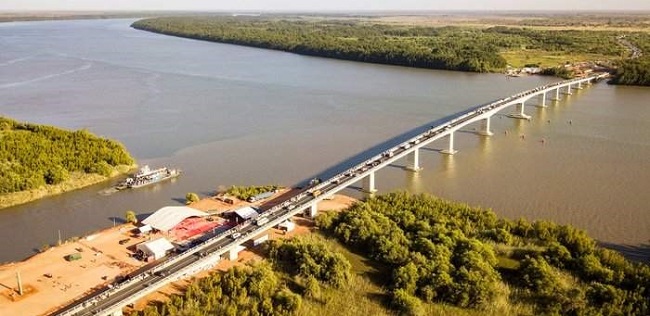
Cars, trucks and pedestrians plied the new bridge linking the Gambia and Senegal on Thursday, January 31, 2019, ushering in a new era of connectivity and integration for the two West African nations.
The Gambia-Senegal bridge
The bridge is said to be a safer, quicker, and alternative
route to the apparently risky ferry crossing or the long detour between the
northern and southern parts of both nations. The five-storey masterpiece allows
people from the north of Senegal rapidly and easily to reach the southern
Senegalese province of Casamance.
“The African Development Bank (AfDB) is here to congratulate
the people of Gambia and Senegal for their determination and relentless efforts
in ensuring that the vision to connect the North and South banks has finally
came to fruition over 40 years after the idea was conceived…The inauguration of
this bridge comes at an opportune time – less than one year after the launch of
the African Continental Free Trade Area (ACFTA) in Kigali, Rwanda,” said AfDB’s
Senior Vice President, Charles Boamah, who attended the formal inauguration
ceremony on Tuesday, January, 29.
The AfDB played a lead role in the project from its
inception, providing financing, technical and supervisory support.
The construction of the bridge (942 m long), along with two
border posts, completes the first phase of the road project which has cost $93.68
million. The project is almost entirely financed by the AfDB Group through
a grant of $88.4 million to Gambia, and a $4.4 million loan to the Government
of Senegal.
Presidents Adama Barrow of The Gambia and Macky Sall of
Senegal presided over the inauguration, witnessed by local and foreign
dignitaries, government officials, religious leaders and inhabitants of the
northern town of Farafenni, where the bridge is located. The two leaders
later made a ceremonial crossing in an open-top vehicle over the bridge.
The bridge, which spans the Gambia River, will enable free
traffic flow between the northern and southern parts of both The Gambia and
Senegal, and is expected to reduce travel time, boost trade and unite
communities that were previously isolated. It will also facilitate and increase
sub-regional trade and open rural areas; while increasing the level and
quality of service of the Nouakchott-Dakar-Lagos road corridors.
Before the construction of the bridge, travelers had to wait
hours or even days for a ferry, leading to huge losses of perishable goods and
market produce. The border posts will reduce customs formalities time at the
borders, thus enhancing the potential for increased trade and business.
The project aligns with The Gambia’s National Development
Plan which recognises high transport costs as a major barrier to development of
productive sectors of the economy. It is also consistent with the AfDB’s
Regional Integration Strategy Paper for West Africa and its Integrate Africa
High 5 priority.
The project also contributes to Senegal’s 2014 Emerging
Senegal Plan, which emphasises structural transformation of its economy and
growth, human capital and social protection and governance.
The bridge opened on Wednesday, January 30 to the general
public and light vehicles.
A legal practioner, Awa Kalu, has decried a drawback in the
implementation of the Nigerian Urban and Regional Planning Act of 2004 by the
Nigerian Institute of Town Planners (NITP).
Awa Kalu
Kalu made this known while delivering a lecture entitled
“Professionals and Leadership’’at the investiture of the 23rd National
President of NITP, Mr Lekwa Ezutah, and its executive members in Abuja on
Saturday, February 2, 2019.
According to him, there is a visible negativity in the
implementation of the provisions of the Act.
Kalu said that the Act was intended to promote cities that
could harness the energies of the citizens in an environment that promote
common good of dominant people.
He warned that slums and other negative attributes that
could arise from poor implementation of urban and regional planning
stipulations must be eliminated or kept at a minimum.
“Development control objectives must be emphasised and
elevated. As town planners, once you put on your leadership caps, your vibrancy
will be felt in our cities and towns.
“In addition, once you add professionalism to what you do,
your extra-curricular impact will be self evident.
The Former Attorney General noted that the Act set up a National
Urban and Regional Planning Commission which, by law, has a Town Planner as a
statutory member.
“By virtue of section seven of the enactment, the commission
is assigned of many functions which include the formulation of national policies
for urban and regional planning.
“Its function also includes the initiation, preparation and
implementation of the National Physical Development Plan, regional and subject
plans, among others,” he said.
He urged the institute to apply the collective learning of
its body of professionals to exert influence and control in the political
sphere.
Prof. Layi Egunjobi, President, Town Planners Registration
Council of Nigeria (TOPREC), said that the leadership of NITP and TOPREC would
continue to jointly initiate new opportunities for cooperation and mutual
benefits.
Egunjobi added that the leadership would tackle numerous
issues facing the country including building collapse, domestication of Urban
and Regional Planning Law by states and establishment of Urban and Regional
Commission at the federal level.
According to him, there will be an urban governance security
and financing urban infrastructure housing for the poor, among others.
Observed on Saturday, February 2, 2019, this year’s World
Wetlands Day under the theme of “Wetlands and Climate Change” highlights the
importance of healthy and intact wetlands to one of the most pressing
challenges of our times: climate change.
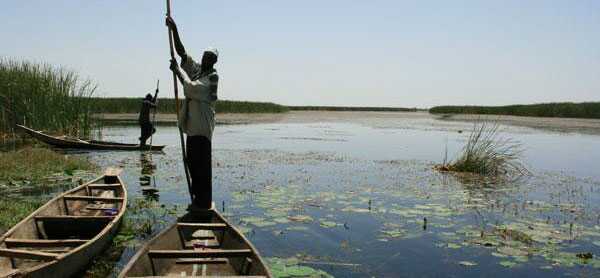
The Nguru-Hadejia Wetlands in Yobe State, northern Nigeria
Celebrated annually on February 2, the day the Ramsar Convention on Wetlands was adopted in 1971, World Wetlands Day is described as a success story of the international community ensuring efficient conservation and legal protection of wetlands worldwide.
Covering a different topic each year – for example “Wetlands
for a Sustainable Urban Future” (2017) or “Wetlands for Disaster Risk
Reduction” (2016) – this year’s theme raises awareness of the importance of
wetlands, such as swamps, marshes, mangroves or peatlands, to help us cope with
and mitigate global warming. While 90% of disasters are water related,
affecting 60% of humanity that lives along coastlines by flooding and tsunamis,
wetlands are also the key to climate change mitigation.
They function as a natural and extremely efficient carbon
sink: for example, peatlands – covering only 3% of land mass, absorb and store
twice the amount of carbon as all the world’s forests combined, namely 30%.
Moreover, wetlands act as a buffer for climate catastrophes that help
communities be resilient against the immediate impacts of climate change.
However, these fragile environments are threatened by human
activity: wetlands are disappearing at a rate of 1% per year, which is at a
higher rate than deforestation. They are exposed to draining and burning for
agricultural enterprise and rural development, as well as rising sea levels.
Nevertheless, members of the global community are acting – through instruments
such as the World Heritage Convention and the Ramsar Convention, which
contribute to achieving overarching global climate change mitigation goals
manifested in the Paris Agreement and the 2030 Sustainable Development Agenda.
To save these rich ecosystems, important for the well-being
of our planet and humanity, wetlands benefit from a protective framework on the
international level – to the extent that some wetlands areas are both guarded
by the Ramsar Convention and by the World Heritage Convention, recognising
their multiple cultural and natural values. According to the World
Heritage Review on Wetlands, more than 130 Ramsar sites
are wholly or partially inscribed in 90 World Heritage properties.
The largest multi internationally designated areas include
examples such as the Amazon River basin in
Brazil and Sundarbans in India
and Bangladesh. The World Heritage Centre takes the occasion of the World
Wetlands Day to reiterate the welcome partnership and cooperation between both
Conventions. 2019 likewise marks the 20th anniversary of the Memorandum of
Understanding established between both Convention secretariats.
Both Conventions work closely together in the
framework of the Liaison
Group of Biodiversity-related Conventions, a key mechanism for
interaction among the Secretariats of the seven key biodiversity-related
conventions.
Cameroon’s plantations workers have become targets as
the country wages a war on armed separatists in the English-speaking regions of
Northwest and Southwest. Investigative journalist, Arison Tamfu, reports
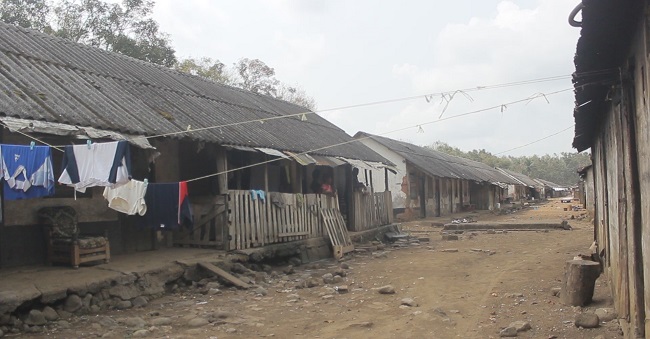
Deserted plantation camp
It was a luminous afternoon in January,
outside a thatched hut. Mako Mokosso, 42, sat cross-legged on a bamboo-made
chair explaining how his four fingers were chopped off on the banana plantation
in Tiko, a town in Southwest Region of Cameroon.
“They took us to the banana plantation and
started cutting off the fingers of three women beside me. The women wailed but
no one could hear because we were taken far away from human settlement,”
Mokosso said and took a deep breath.
“When it was my turn, they ordered me to
put my fingers on a stone. I did. The first guy cut off two of my fingers, but
it was not enough. The second guy cut the other two fingers. I was left with
only my thumb. The man beside me was shot in this side of the body and his two
fingers were chopped off,” he recalled.
“I can still feel the pains right in my
heart,” said Mokosso, sobbing.
The tragedy happened in November 2018.
The assailants proceeded to the plantation
camp where Princewell Tendong, 36, and other workers lived.
“They surrendered us with a gun and pulled
my wife and I and other workers out of our rooms and brought us to the centre
of the plantation camp and started flogging us with machetes. They cut off my
thumb on the right hand. The fingers and hands of six other workers were cut
off that day,” said Tendong, losing balance and falling on his hospital bed
where he is receiving treatment.
The painful experiences of Mokosso and
Tendong have become routine in the Southwest, one of Cameroon’s two
English-speaking regions where separatists are fighting to create an
independent nation.
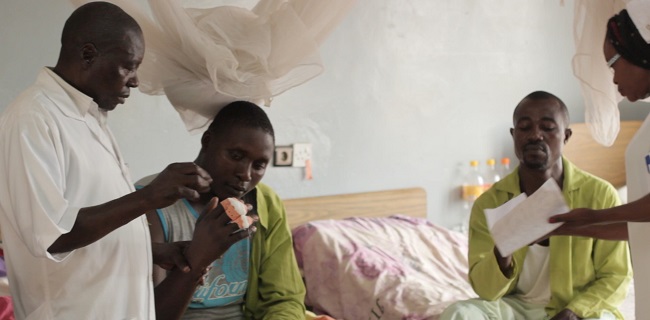
Some victims in the hospital
Working on the plantation is risky.
Officials say gunmen regularly hide on its lands and target its workers.
Soldiers are stationed nearby, but the plantation is large. By the time they’re
able to respond, employees have been attacked. For the people daring enough to
work on the plantations, it’s often a life of physical and mental torture.
According to hospital authorities where the
victims are treated, the atrocities have been increasing in frequency and
magnitude.
“We received in the hospital about 86
patients but definitely the number of those injured will be more than this
because those who come to the hospital are those that are very serious that we
eventually have to admit. These injuries have ranged from people having
amputations up to four digits on one hand. Amputation of thumbs especially on
the right hands. Multiple lacerations on their bodies from hairs to trunk and
the lower limbs,” said Dr. Samuel Fon Tita, Chief Medical Officer of CDC Hospital.
Separatists have said on social media they
want to cripple the activities of the plantations and cut off its revenue and
have asked workers to stop work or be killed.
Tendong said their crime was that they have
been working on the plantation in defiance of the no-work-on-the-plantation
order issued by the separatists.
“They were angry with us for going to work
without salary for six months. They said we are working and making money for
the company and government is using the money to buy cartridges that they use
to kill them. They said the plantations now belongs to the Anglophone
Cameroonians because they are on their land,” said Tendong.
Soldier guarding the plantation
The banana, rubber and palm oil plantations
run by the state through the Cameroon Development Corporation (CDC) are now
battle grounds between separatists and government forces.
“The plantations have been abandoned
because of insecurity reasons for many, many months. At least four soldiers
have been killed in battles on the plantations. The situation of the fields is
deplorable,” said Frankline Njie, CDC General Manager.
The workers say they now live in fear,
worried the attackers will come again. Many have deserted the plantation camps
except victims of assault.
Families of victims are barely surviving.
“Life has been difficult from the day my
husband’s finger was cut off. I don’t even have transport to visit him in the
hospital. These my children have not
eaten since morning,” said Quinta Njuh, wife of Tendong.
“We are suffering. This my child has not
gone to school because there are no school fees, no books. The father has no
fingers and cannot afford those things. It is tough on us,” said Lilian Manyor,
wife of Mokosso.
The plantation is the second largest
employer of the country, but more than 10,000 people are no longer working. Cameroon
needs at least $51 million to rehabilitate the plantation but it is not the
money that is the main concern.
“The biggest constraint is security. Nobody
can take the required care without having the assurance that nobody is standing
behind him or her with a machete, nobody can do that,” said Njie.
“The task of one taper is one hectare. One
hectare is a wide area. That means that, that taper is alone inside about 500
trees. That taper must have some degree of assurance that somebody is not
standing beside him or her with a machete or with a gun. That is the problem
that we face,” he added.
Minority English-speaking Cameroonians
picked up arms in 2017 after government forces killed dozens and arrested
several Anglophones who were protesting against marginalisation in the largely
French-speaking country. United Nations estimate that close to 500,000 people
have been displaced internally by the conflict.
President Paul Biya, who has been in power
for 36 years, rejected calls by the United Nations and European Union to
resolve the conflict through dialogue with the separatists and warned if they
don’t give up their weapons, they’ll be killed.
Many victims of the conflict like Mokosso
and Tendong now fear the war and atrocities will only escalate.
“As far as I’m concerned, they should hold dialogue.
I’m just a labourer. I don’t know how it
started and how it will end. They should solve the problem,” said Tendong.
The Nigerian Conservation Foundation (NCF) in collaboration
with the Economic Community of West African States (ECOWAS) and Birdlife
International will hold a workshop on saving the environment.
Director-General, Nigerian Conservation Foundation (NCF), Dr Muhtari Aminu-Kano
The two-day workshop billed for Abuja from Feb. 6 to Feb. 7,
2019 is for non-governmental organisations (NGOs) from across the West
African sub-region.
The theme of the workshop is “Conservation-Collaboration
Beyond National Boundaries in the sub-region”.
NCF’s Director-General, Dr Muhtari Aminu-Kano, said in a
statement on Friday, February 1 that the West African sub-region was
“endowed with rich biodiversity populated by numerous species of flora and
fauna”.
He added: “Unfortunately, this unique range of biodiversity
is now among the world’s most threatened, due to illegal poaching and
harvesting of parts or whole species, habitat degradation, poorly planned
infrastructural, agricultural and urban settlement development.
“A valuable mitigating factor to West African disappearing
biodiversity is the lack of a platform for cross-border information exchange to
develop common strategies and policies for biodiversity conservation.
“This has been identified as a major setback.
“It is expected that this maiden workshop will provide a
stronger platform for regional cooperation among civil society organisations
(CSOs) and ensure that humans will live ‘in harmony with nature.”
He said that participating NGOs across the sub-region would include: Naturama – Burkina Faso; SOS Forests – Cote d’Ivoire; Ghana’s Wildlife Society (GWS); Society for the Conservation of Nature in Liberia (SCNL); Conservation Society of Sierra Leone (CSSL) and Nature-Communautés-Développement (NCD), Senegal.
“International and regional organisations that will be attending the workshop are: the World Bank, African Development Bank, UNESCO, USAID, MacArthur Foundation, Heinrich Boll Stiftung and A.P. Leventis Ornithological Research Institute (APLORI),” Aminu-Kano said.
EU Member States and the European Commission have agreed on
comprehensive new regulations under the EU Ecodesign Directive, which aims to
make new products more energy efficient.
German Environment Minister, Svenja Schulze
For 10 product groups, including dishwashers, washing
machines, refrigerators and halogen lamps, stricter energy efficiency
requirements will apply in the future. In addition, requirements for
reparability and replacement parts are being defined for the first
time. The German Federal Ministry for the Environment was particularly
committed to this, it was gathered.
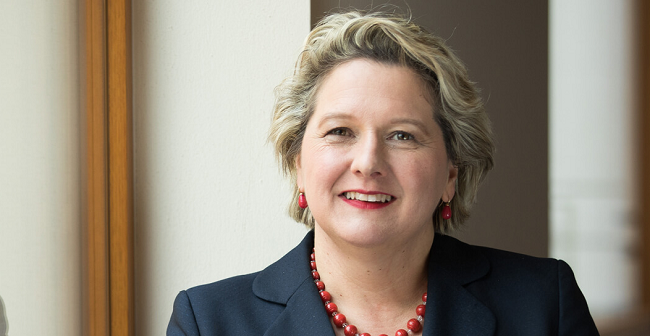
Environment Minister, Svenja Schulze, said: “The new
rules are concrete measures against the disposable society. They improve
the ability to repair and recycle products and encourage manufacturers to make
products more durable. In the future, consumers will be better able to
distinguish efficient appliances from energy guzzlers. This is not only
good for the environment, but for all consumers and also for the German
industry, which is a pioneer in this field.”
In household appliances such as dishwashers, washing
machines and refrigerators, the requirements for reparability, as in TV sets, stated
that spare parts availability must be made obligatory. This is
expected to be beneficial to consumers, repairers and
recyclers. Manufacturers and importers must largely comply with the new
rules in the European market from March 2021 onwards.
In addition, there will be increased demands on the energy
efficiency of these product groups in the future. A lot of energy can be
saved in the lighting, it was gathered. In Germany, the new requirements
will lead to halogen lamps being gradually replaced by much more efficient LED
lamps. Further savings are expected from new regulations for motors,
transformers, welding equipment, external power supplies and refrigerators in
supermarkets. These partially come into force before 2021.
Reviving damaged lands and the livelihoods of people
affected by desertification, land degradation and drought can be possible by
2030, according to participants who attended the intergovernmental committee
that reviews the implementation of the United Nations Convention to Combat
Desertification (UNCCD).
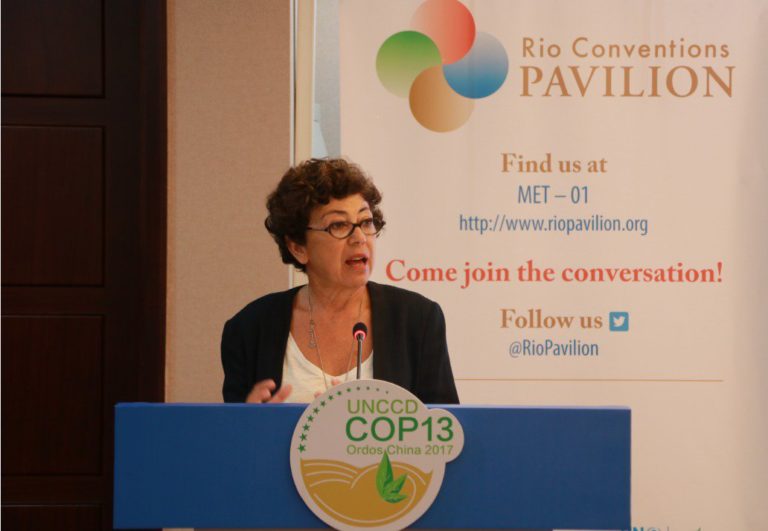
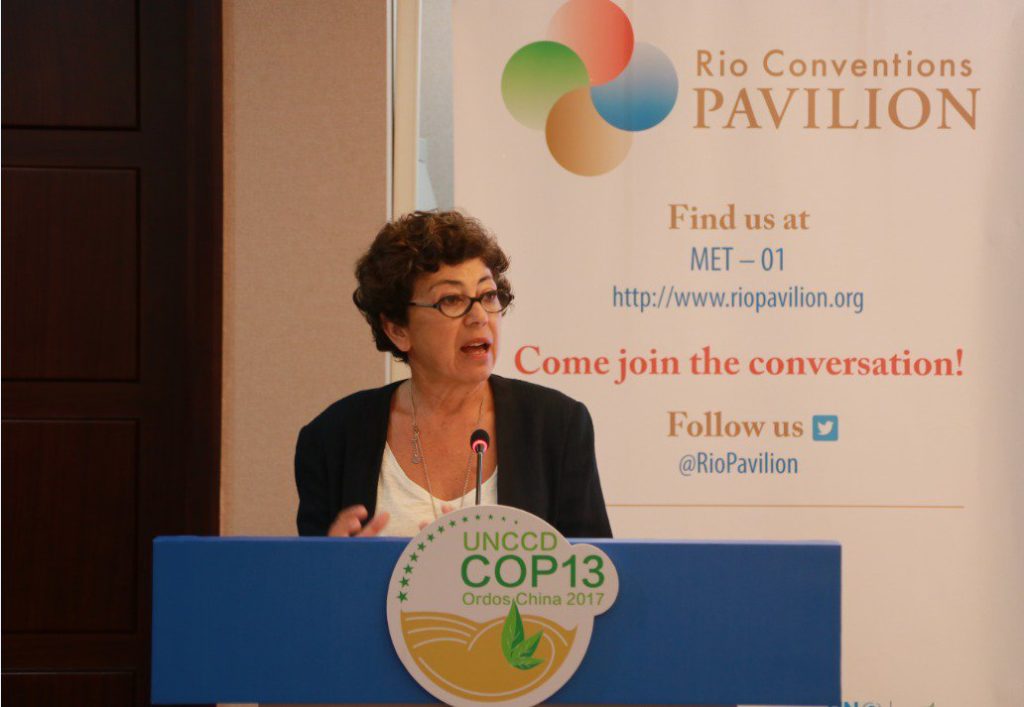
Monique Barbut, Executive Secretary, UNCCD. Her term as head of the Convention ends February 2019
Participants at the 17th Committee to Review the Implementation of the Convention
(CRIC17), which ended on Thursday, January 31, 2019 in Georgetown, Guyana,
stated that the speed at which countries are implementing the Sustainable
Development Goal target of land degradation neutrality puts it within reach,
and stated two other reasons. The process of setting the target at the country
level has drawn in other land-related sectors at the country-level and
triggering positive change. In addition, countries are spending more money on
activities to contain land degradation and desertification and to manage
drought effectively.
In the four years since countries reached the agreement to
achieve land degradation neutrality (LDN) by 2030, 120 of the 169 countries
affected by desertification, land degradation or drought have started
identifying where to reduce the risk of degradation and where to recover
degrading land. The process of setting the 2030 country targets for LDN has broadened action to
other land-related sectors.
As a result, the Committee was able to review the
first-of-its-kind global assessment of land degradation by governments, which
is based on quantitative earth observation data collected and analyzed in at
least 127 countries. The assessment’s uniqueness lies in that countries are
working to measure and monitor three essential indicators of land degradation
in the same way over the same period, so that the status of LDN can be determined
for the globe.
“We have seen a sea-change and huge progress” since the Convention was negotiated in 1994, said Monique Barbut, the UNCCD Executive Secretary, during the closing of the meeting.
“With a tiny budget we’re getting things done. We have the LDN fund up and running. We have LDN projects taking shape in more than hundred countries. A project preparation facility with the other Rio conventions is in the pipeline. Drought plans are being developed in nearly 50 countries. Land degradation and drought are recognised in the Global Compact on migration as key areas of concern,” Barbut said.
Countries said “LDN is a visionary target” and expressed
their satisfaction with this first collaborative analysis and assessment of
land degradation. Many countries praised the achievements in data gathering and
stressed the added value of the provided tools, which facilitated the use of
national data to derive the indicators of land degradation using
internationally standardised methodologies. However, many also called for the
improvement of the tools, training in their application and support to generate
more detailed national data.
Barbut, whose term as head of the Convention ends in
February, admitted she “was very suspicious and very tough about UNCCD and what
it could achieve” in the very early days when she was part of the team that
negotiated the three Rio Conventions on climate change, biodiversity and
desertification.
“But the potential of this convention has only just started to be realised,” she said, and urged countries to use their creativity and imagination to help amplify UNCCD and help it reach its full potential and stressed that “it is not an impossible ambition.”
The Committee thanked the outgoing Executive Secretary for her contribution to raising the visibility of the Convention at a global level.