Home Blog Page 1710

How COP24 helped to close gender gap

0

The 24th Session of the Conference of the Parties (COP24) to the UN Framework Convention on Climate Change (UNFCCC) held December 2018 in Katowice, Poland marked the half way point of the two-year UNFCCC Gender Action Plan (GAP) adopted by countries in November 2017. To mark the occasion and to highlight action taken to implement the GAP in 2018, the call to #ActOnTheGAP was launched during COP24 in Katowice.
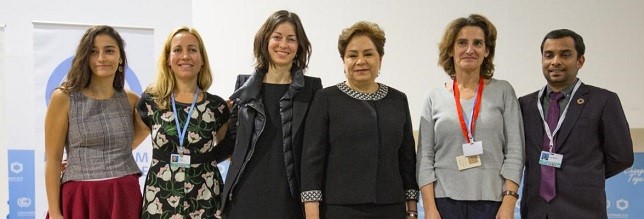
Gender Action Plan
Momentum is said to be building in support of the Gender Action Plan

From the #ActOnTheGap Action List, which highlighted  side-events that had achieved their commitment to ensuring a gender balanced panel, to the video messages of support and calls for more action – including from incoming COP25 president-designate, Chile’s Environment Minister Carolina Schmidt, Deputy Prime Minister of Ireland Simon Convey, First Minister of Scotland Nicola Sturgeon,  among others – it is clear that momentum is building in support of the Gender Action Plan.

A new format for the annual Gender Day included a dynamic set of events throughout the afternoon in the Action Hub, a Market Place and Exhibition showcasing how countries and organisations are implementing the plan.

High-Level Event explored the issue of access for women in the tech industry, before Momentum for Change Women for Results winners kicked off Gender Day activities at the Action Hub by providing insights into their projects and motivations for their various climate initiatives. Projects ranged from a replantation project in Sri Lanka to a bike project aimed at fighting discrimination against women in Syria.

Discussions continued throughout the afternoon, including a debate on integrating gender into National Adaptation Plans. Gender Day at the Action Hub closed with a poem titled “Rise” by Aka Niviâna and Kathy Jetnil-Kijiner that was a call to action to take environmental responsibility.

A clear message from these activities and exhibits is that when climate solutions are inclusive, women and girls are catalysts of change, delivering more sustainable and effective climate action. A message supported by the Executive Security in her #ActOnTheGAP video “women and girls must be empowered to be agents and leaders of climate action”.

COP24 also saw the first capacity building workshop for National Gender and Climate Change Focal Points, which was held in the inaugural Capacity-Building Hub with over 50 national representatives participating. The capacity building workshop provided delegates with the opportunity to exchange experiences as well as gain knowledge about the policy work that is being carried out on gender and climate change.

The discussions surrounding gender and climate change will not pause after the conference in Katowice, says the UNFCCC, adding that activities at COP24 demonstrated that many countries, organisations and individuals remain committed to achieving gender equality and the empowerment of women and girls through climate action. 
Namibia, others want ban on sale of ivory lifted

0

Namibia on Monday, February 11, 2019 joined South Africa, Zimbabwe and Botswana in calling for the removal of a ban on ivory trade, the country’s Ministry of Environment and Tourism said.

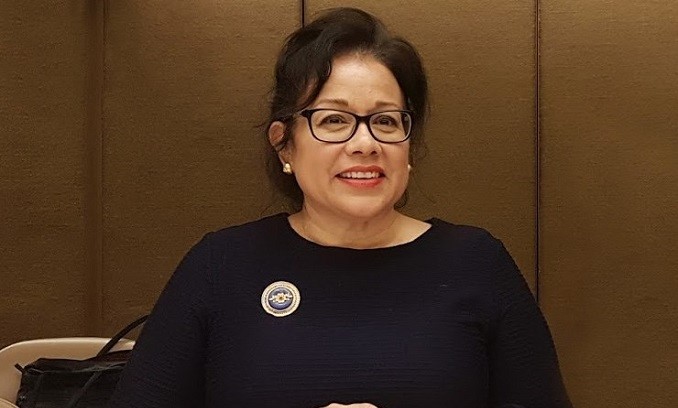
Ms. Ivonne Higuero CITES
CITES Secretary-General, Ivonne Higuero

The three countries that account for 61 per cent of the elephant population in Africa prepared a joint petition to be presented at the forthcoming Convention on International Trade in Endangered Species (CITES) in Sri Lanka in four months.

“CITES has acted as an inhibitor and not an enabler of progress.

“The conference of the parties has repeatedly discounted the importance of the southern African elephant population and its conservation needs against other regions in Africa.

“An end to the ban on ivory sale will give the three countries an opportunity to offload their ivory stockpiles that have been shelved for more than five years,’’ they said.

The countries also argued that they had laid strong modalities through establishment of conservancies that ensure that proceeds of sales from ivory benefit inhabitants in the conservancies financially and also through developmental projects.

“The proponents can no longer accept that their working conservation models are undermined by an international organisation that ostensibly recognises that people and states are.

“They should be the best protectors of their wild life,’’ the petition said. 

Agency says biosafety law can ensure robust food system for nation

0

The Director General/CEO, National Biosafety Management Agency (NBMA), Dr. Rufus Ebegba, has said that the NBMA ACT 2015 is strong enough to ensure a robust biosafety system for Nigeria.

NBMA
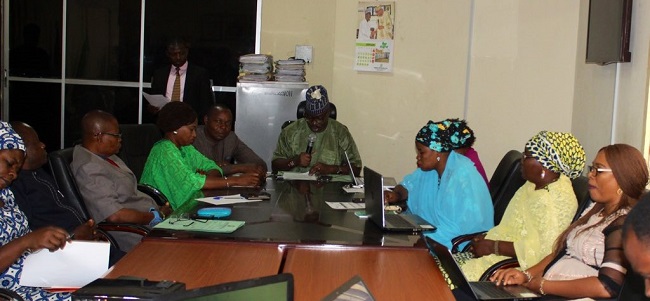
Officials of the National Biosafety Management Agency (NBMA) during the meeting with Clerks of the National Assembly

Dr. Ebegba said at an interaction with Clerks of relevant committees of the National Assembly on Monday, February 11, 2019 in Abuja that the Act establishing the agency was not cast in stone, adding that it is a living document that needs to be tested.

The meeting was organised to give Clerks, who are regarded as the engine room of the Assembly, an opportunity to understand the role of NBMA in national development as well as enhance their capacity and understanding on biosafety.

According to him, the sensitisation meeting for the Clerks is an important session which will help to educate them on issues of biosafety because they are permanent staff of National Assembly that advice the legislators.

“This interaction will help them to understand the Laws of Biosafety as well as to help the Agency to initiate amendment of the NBMA Act when necessary,” Ebegba stated.

The DG/CEO appealed to the clerks to continue to exact expedient action on the need to rid the country of unapproved GMOs and ensure that the agency is properly positioned to police any attempt to turn the country into a dumping ground for unregulated GMOs.

In a presentation, Mr. Eric Makwe, Clerk, House of Representatives Committee on Environment and Habitat, narrated the processes of lawmaking in Nigeria and how Acts and other laws of the federation can be amended.

According to him, the Clerks play vital roles in the passage of bills, adding that without vital information and understanding, the clerks will be handicapped when issues of biosafety surface on the floor of the Assembly.

NBMA Director, Environmental Biosafety and General Release, Ms Chinyere Nzeduru, said that the role of the agency is to ensure that the practice of modern biotechnology does not pose any threat to human or the environment.

The interaction, which saw the Clerks visiting the agency’s GMO Detection and Analysis Laboratory, also witnessed the presentation of papers including one on emerging techniques in modern biotechnology and safety techniques by Dr. Mathew Dore, Country Coordinator, Programme for Biosafety Systems (PBS).

Customs gets forensic toolkits to counter illicit wildlife trade

0

The Minister of Environment, Alhaji Suleiman Zarma, on Monday, February 11, 2019 handed over six forensic toolkits to Nigeria Customs Service (NCS) to detect and identify the source of illegal wildlife trade in the country.

Customs and FME
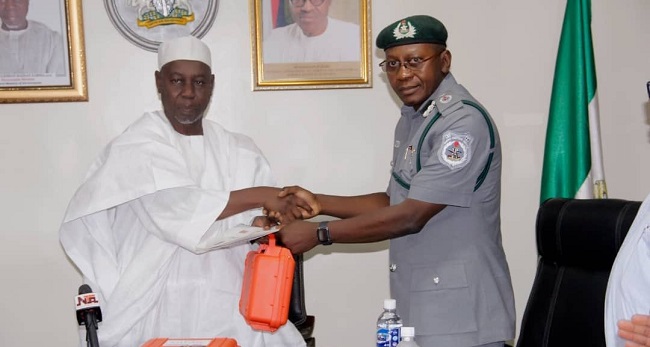
Minister of Environment, Alhaji Suleiman Zarma (left), handing over the toolkits to the Deputy Comptroller of the Nigeria Customs Service (NCS), Mr Hammi Swomen

Zarma, who gave the toolkits to Deputy Comptroller of NCS, Mr Hammi Swomen, in Abuja, said that the toolkits would also identify the finger prints of those responsible for illegal smuggling of ivory.

He recalled that the International Fund for Animal Welfare (IFAM) presented the toolkits at the International Wildlife Conference on illegal Wildlife Trafficking in October 2018.

“This aims at retrieving finger/palm marks evidence of ivory which has the forensic capability to detect and document finger prints/palms, including source of any person that has come into contact with an ivory illegally traded,’’ he said.

The minister urged Nigeria Customs Service to distribute the toolkits for use at the most susceptible exit points of the nation’s air and sea ports that had been associated with illegal wildlife trade.

He recalled that International trade in ivory was banned in 1989, adding that since then there had been a burgeoning illegal trade which contributed to the depletion of the elephants in the wild.

“I must say that Nigeria has been able to curtail activities of illegal poaching and thus, our elephants in their natural ecosystems are among the most protected in the world.

“Unfortunately, the impact of globalisation has predisposed us to being associated with this illegal trade as the country has become a thriving hub for this illegal export.

“The global community is aware that Nigeria is being used as a transit and it is willing to provide us with all the necessary support to stop these products from transiting through our country,’’ Zarma said.

He, therefore, urged Nigeria Customs Service and other relevant security agencies to plug all loopholes to protect Nigeria from being used as a transit hub.

Responding, Swomen, who said that Nigeria Customs Service would make good use of the toolkits, said that the service would train its staff to know how the toolkits would be handled.

The customs officer, who said that toolkits would be deployed to some nation’s exit points, requested for more toolkits to cover other relevant exits to address illegal wildlife trade and trafficking in the country.

By Deji Abdulwahab

WWF launches effort to halt oil and gas drilling in Greek waters

0

The WWF on Monday, February 11, 2019 published a report on the “Economic impacts of hydrocarbon exploitation in Greece” as part of the launch of its international campaign to halt oil and gas drilling plans in the country. The study, commissioned by WWF and conducted by eftec, finds that a major oil spill in Greece would devastate the country’s tourism and fishing industries, and cost the Greek economy over €7.5 billion.

Sperm Whale
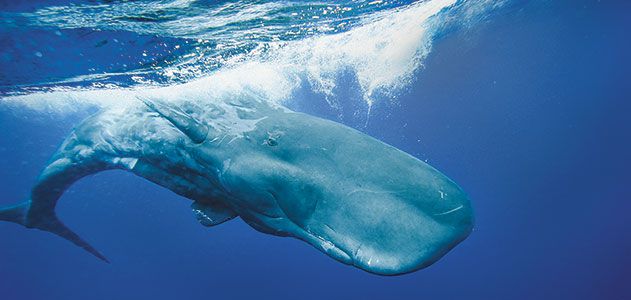
The Sperm Whale is a part of the diverse marine life in the Greek waters

The report and international campaign come in response to 25-year concessions being granted for offshore or onshore oil exploration and drilling in a marine and terrestrial area covering almost 75.000 square kilometres, from the North of Corfu to Southern Crete. Oil companies that have agreed concessions include Total, Repsol, Exxon and Eni.

The marine area, which is equal to 30% of the Greek mainland, is characterised by great depths and diverse marine life – including sperm whales, fin whales, Cuvier’s beaked whales, bottlenose dolphins, loggerhead sea turtles and monk seals – while the terrestrial area consists of numerous protected areas of unique ecological importance.

“Not in our worst nightmares would we ever imagine oil and gas rigs just miles off the shores of Crete, Zakynthos, Kefalonia and Corfu, next to loggerhead nesting beaches in the bay of Lagana and Kyparissia or in the pristine landscape of Epirus. Drilling in the very deep waters of Crete and the Ionian Sea poses a lethal threat to this natural paradise and makes no climate or financial sense,” said Dimitris Ibrahim, Marine Officer at WWF-Greece.

WWF’s report is the first ever analysis that forecasts and quantifies the economic impact of a major oil spill in Greece, thus documenting the very real risk of hydrocarbon exploitation. Due to lack of sufficient, available data, the negative impact of an oil spill incident on the environment of Greece, its constituent regions and other vital ecosystem services is not included in the report. However, experience from previous oil spills suggests that including environmental costs could increase the total cost of damage inflicted by 20% – 100%.

Greek tourism, marine ecosystems and local communities are at greatest risk

The report shows tourism is the sector most heavily impacted in the event of an oil spill. In the unfortunate, yet plausible, scenario of a single major oil spill occurring near Crete, the cost could reach €2.2 billion, while up to 45,000 jobs would be lost overnight. A similar event in the Ionian Islands would cost up to €1.78 billion and wipe out up to 25.000 jobs. 

WWF emphasises that the granting of new oil concessions does not align with the fast and deep cuts in greenhouse gas emissions necessary to meet the climate targets of the Paris Agreement and secure a climate safe future. WWF calls on the Greek Government to immediately ban new hydrocarbon exploration and drilling, following the recent examples of Spain, France, Italy, Portugal and New Zealand.

“Drilling in Greek waters places Greece’s marine environment and national economy at risk. An oil spill would have devastating impacts on wildlife, the tourism industry and local communities. The plans also move us further from achieving the climate targets set out under the Paris Agreement. The Greek government needs to immediately withdraw the concessions granted in the area and focus on sustainable development that would be beneficial to Greece and Mediterranean in general,” said Aslihan Tumer, Head of Campaigns at WWF-International.

The WWF also called on Greece’s friends from all over the world to join the campaign and protect the Greek seas, coasts and islands that for decades have been a dream destination for millions of people.

Kenya urged to adopt climate-smart seeds to boost food security

0

Kenyan farmers should adopt seed varieties that are resilient to climatic shocks in order to achieve food security and expand revenue streams, Joseph Mathooko, a UN Food and Agricultural Organisation (FAO) official said on Monday, February 11, 2019.

Jose Graziano da Silva
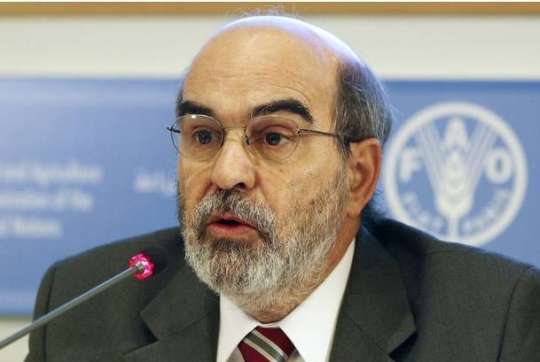
Jose Graziano da Silva, Director General of the FAO

Mathooko, a field monitoring officer, said during a field trip to the coastal county of Kilifi that “drought and pest tolerant seeds are fortunately available in the market to help farmers turn around their lives.’’

He noted that researchers had developed climate-smart seeds that resist drought and pests to help farmers improve their productivity and living standards.

The UN official reiterated that Kenyan farmers, especially those at the coastal region, are capable of producing food for domestic and foreign markets once they start growing improved hybrid seeds.

Mathooko noted that a survey on the performance of the seeds that FAO donated to farmers in the coastal region after April 2018’s floods found that farmers who planted the certified seeds realised bumper harvest.

“Besides planting for their own consumption, we found out that many farmers sold out their harvests and earned reasonable profit,’’ said the official. 

Namibia progressing in addressing climate change despite challenge, says minister

0

Namibian is making steady progress in combating the effects of climate change despite the challenge of lacking financial resources, Minister of Environment and Tourism, Pohamba Shifeta, said in Windhoek on Monday, February 11, 2019.

Pohamba Shifeta
Pohamba Shifeta

Shifeta said the country had taken the issue of climate change with seriousness and has established a cross-sectoral National Climate Change Committee (NCCC) to oversee all climate change related activities in the country.

“To be frank with you, resources are not enough at all.

“However, as a country, we are doing our level best to mobilise funding both at home and through multilateral climate financing windows,’’ Shifeta said.

He said they had secured funding of one billion Namibian dollars ($74 million) from the multilateral funding system, mostly from the Green Climate Fund, the Global Environmental Facility, the Special Climate Fund and the Adaptation Fund to drive their quest for combating climate change.

Shifeta said other crucial milestones achieved by Namibia include Cabinet approval of the National Policy on Climate Change in 2011 and the National Climate Change Strategy and Action Plan.

He said these were set out towards addressing climate change mitigation and adaptation.

“Policy implementation is a process in itself.

“Namibia continues to implement its climate change policy that was established in 2011 together with its implementation strategies (2013-2020) to address medium and longer-term climate change impacts that are projected,’’ he said.

UN Secretary-General, Antonio Guterres, on Saturday called for more coordinated international efforts to fight climate change.

“The international community need more political will to undertake climate change mitigation, adaptation and climate finance activities. “We are losing the race for climate change, which could be a disaster for Africa and the world,” the UN chief said on the sidelines of the 32nd ordinary session of the Assembly of the AU in Addis Ababa.

USAID bankrolls Ivorian coastal resilience scheme in Fresco

0

A new Initiative funded by the United States Agency for International Development (USAID) will be launched in Fresco, southern Côte d’Ivoire, on Wednesday, February 13, 2019 to promote the wellbeing of households living in an area that is vulnerable to the impacts of climate change, and an urgent need to increase the resilience to climate change for the area and its citizens.

Fresco
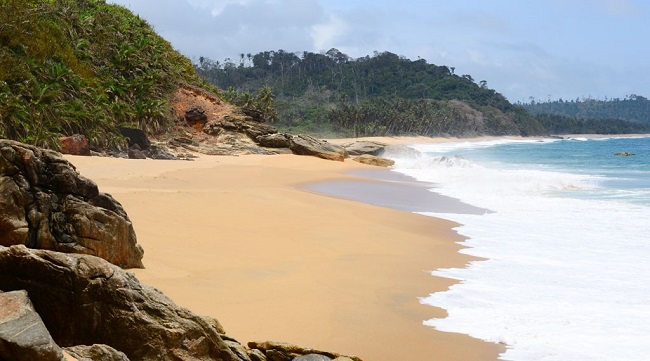
A coastline in Fresco

Fresco is a sub-prefecture of and the seat of Fresco Department in Gbôklé Region, Bas-Sassandra District.

Until about a decade ago the Fresco coastal landscape (201 kilometres from Abidjan), despite its rich biodiversity and the significance it holds for a fishing-based economy, was not considered a vulnerable area. Indeed, much attention was not paid to an area where local communities and the coastal ecosystems they depend on are exposed to extreme and harsh climate events such as storms, high winds and floods.

With an increased understanding of climate change impacts and how they interact with and exacerbate other drivers of environmental degradation and economic decline, such as deforestation and overfishing, solutions can be identified to turn the tide.

The activity getting underway in Fresco will bring together relevant stakeholder groups including the Ivorian Government, civil society and development partners, to support increased environmental and economic resilience in the landscape, especially for women and youth.

The Fresco coastal landscape includes the Fresco Lagoon and the upstream watershed consisting of the Bolo and Niouniourou rivers, which provide the lagoon with the fresh water, essential to maintaining a healthy balance of salt and fresh water. The lagoon has been classified as a Ramsar Convention site, defined as a wetland site of international importance. This is due to the richness of its animal and plant species, which include several endangered ones like the manatee, African grey parrots and several species of sea turtle. Bordered by mangroves, some of which have been severely degraded. The lagoon is said to be an important breeding ground for numerous species of fish, a key source of protein and income for surrounding communities.

Recent studies show a drastic decline in mangrove forests. The area covered by mangroves between the towns of Fresco and Grand Lahou, another lagoon-centred town 62 kilometres to the east, has fallen sharply from 15,000 hectares to around 6,000 hectares, and the mangroves are being replaced over time by grasses and shrubs, which reduce the habitat for fish and of no value to agriculture due to the high salt content of the soils.

The loss of these mangroves has led to a decline in the productivity of fisheries, which has in turn increased poverty among local populations, especially women and youth.

In response to these realities and the interest of local communities to work in concert with relevant stakeholder groups, USAID through its funded Programme, West Africa Biodiversity and Climate Change (WA BiCC), awarded a grant to IMPACTUM – a local non-governmental organisation, based in Abidjan, with a satellite office in Fresco, to implement interventions in the landscape.

This initiative will be implemented in collaboration with the Ivorian Government, relevant national institutions and local communities, and is expected to support sustainable livelihoods, maintain the capacity of ecosystem regeneration and enhance community resilience. This includes restorating Fresco’s mangrove and upland forests and biodiversity habitat.

To this end, Government authorities and development partners will work closely with local communities to implement different approaches to conserve and sustainably manage the mangrove and upland forests as well as the lagoon itself taking into account the area’s rich biodiversity. Activities are planned to facilitate local fishermen’s access to the tools necessary to manage resources at the Fresco Lagoon estuary in an efficient and sustainable way. Farmers upstream will be supported to use agroforestry techniques to improve the resilience of their plantations, and climate change related information will be integrated into local policies to mitigate and adapt to the effects of climate change over time.

The launch, according to the promoters, will benefit from the participation of high-level government officials from the Ministries of Environment, Water and Forests, Agriculture and Fisheries. Authorities from Fresco will receive stakeholders from the local communities and representatives of the relevant national institutions to review the programme implementation process, adopt, and provide collective support to ensure its success.

Participants will also embark on a field trip to the Fresco landscape to interact with the local people, and to see at firsthand, the issues pertaining to the landscape. Organisers are hopeful that this initial investment will raise awareness of the issues and the potential of sustainable natural resources management in Fresco, which will in turn interest other donors or private sector parties to keep the work going after the initial phase. Activities will be monitored regularly to show progress and to generate the lessons needed to improve the management not only of the Fresco Lagoon Landscape, but the imposing coastline of the Cote d’Ivoire.

Ethiopia enacts law to curb growing tobacco epidemic

0

Ethiopia’s parliament has approved a public health legislation that observers believe will become one of Africa’s strongest laws on reducing tobacco use. Passed unanimously by parliament, the Food and Medicine Administration Proclamation is expected to save lives and protect over 105 million people in Africa’s second most populous nation.

tobacco smoking
According to scientists, tobacco smoking is dangerous to health

The new law requires 100 percent smoke-free public and work places, bans tobacco advertising and promotions, restricts the sale of flavoured tobacco products and mandates pictorial warning labels covering 70 percent of the front and back of all tobacco products. The law also bans the sale of heated tobacco products, e-cigarettes and shisha, and prohibits tobacco sales to anyone under the age of 21.

The impact of Ethiopia’s new law cannot be overstated, says Bintou Camara, Director of Africa Programmes, Campaign for Tobacco-Free Kids, even as the group congratulates the Ethiopian government for the “public health victory”.

“As tobacco companies continue to set their sights on Africa, Ethiopia has set an example for what all African nations can and should to do curb tobacco use, the world’s leading cause of preventable death,” Camara says, adding:

“In Africa and around the world, tobacco companies fight hardest against the measures they know work to reduce tobacco use. The Ethiopian government must now move to implement the law as swiftly as possible and remain vigilant against attempts by tobacco companies to undermine this tremendous progress. “Around the world, tobacco use kills more than seven million people each year – and without urgent action by more African countries, nearly one third of the world’s smokers will live in Africa by 2100.”

BoI, AllOn to fund N1bn Niger Delta off-grid energy

0

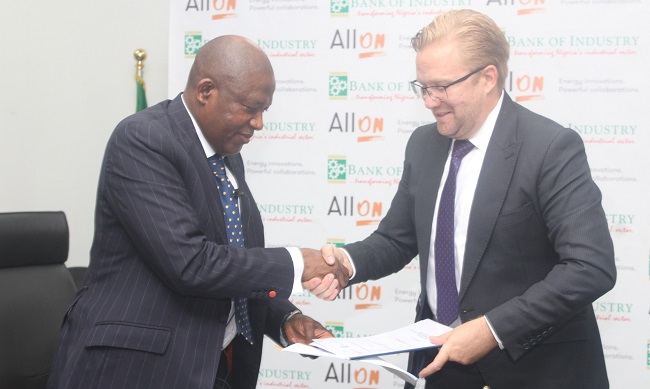
The Bank of Industry (BoI) and All On on Monday, February 11, 2019 signed a N1 billion partnership agreement to finance the Niger Delta Off-Grid Energy Fund to enhance access to clean, affordable and reliable power solutions.

BoI and All On
Mr Kayode Pitan, Managing Director, Bank of Industry (BoI), and Dr Wiebe Boer, Chief Executive Officer, All On, during the signing of a N1 billion Off-Grid Energy Fund on Monday in Lagos

Mr Olukayode Pitan, Managing Director, BoI, during the ceremony in Lagos, said the partnership was a result of the bank’s efforts in exploring strategic partnerships with reputable institutions in developing sustainable solutions to facilitate social and industrial development.

Pitan said that the fund would provide local currency debt financing to facilitate the deployment of energy solutions by access-to-energy companies in the Niger Delta at 10 per cent interest rate per annum, with a one-year moratorium, and seven years tenor.

“As you know, power is a critical resource towards achieving industrialisation, and is also a major cost driver for SMEs in Nigeria.

“We are therefore particularly pleased with this partnership as the deployment of this fund will provide clean energy at affordable interest rate and friendly conditions not only to SMEs, but also to households and communities in the Niger Delta region of the country,” he said.

Pitan said that the fund would stimulate the growth and geographic spread of off-grid energy businesses in the Niger Delta to enable households, SMEs and communities have access to clean, affordable and reliable power solutions.

“In the Niger Delta, the majority of the population resides in rural areas and only 34 per cent of these have access to reliable grid power.

“The result is that SMEs in the region use expensive and inefficient diesel and petrol generators, increasing their operational costs, families cook with firewood or kerosene while children study with flashlights or candles with the attendant negative health and safety concerns.

“The provision of clean, affordable, and reliable sources of energy is therefore essential for improved economic activity and livelihoods of the people of the region,” he said.

Also, Dr Wiebe Boer, Chief Executive Officer, All On, said that the partnership would encourage off grid energy companies to deploy in the Niger Delta and address the massive access to energy gap in the region.

“We are excited to partner with the Bank of Industry on the Niger Delta Off-Grid Energy Fund because of their reputation as Nigeria’s leading Development Finance Institutions and their deep experience as one of the earliest investors in the Nigerian off grid energy sector,” he said.

According to him, the company’s activities complement available grid power across Nigeria and help bridge the significant energy gap.

Boer said that the fund was provided equally by the two institutions but would be operated by the Bank of Industry.

All On is an independent impact investing company, seeded with funding from Shell, and works with partners to increase access to commercial energy products and services for under-served and un-served off-grid energy markets in Nigeria.

The company has a special focus on the Niger Delta and invests in off-grid energy solutions spanning solar, wind, hydro, biomass and gas technologies deployed by both foreign and local access-to-energy companies. 

By Oluwafunke Ishola