

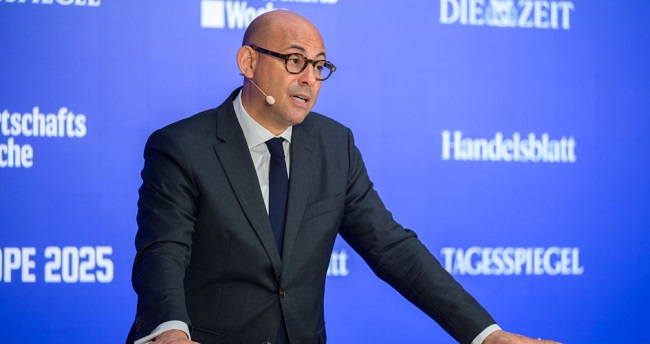
Address delivered by UN Climate Change Executive Secretary, Simon Stiell, at the start of Green Transformation (GX) Week on Monday, April 20, 2026, in tandem with UN Climate Week 3 (CW3), which kicks off on Tuesday, April 21. Both events – focused on helping drive forward practical climate solutions – are being held in Yeosu, Republic of Korea
Green Transformation – or GX – Week could not be more timely.
Conflict in the Middle East has unleashed a fossil fuel cost crisis in global energy markets, holding economies around the world in a chokehold.
National sovereignty and security ripped away, replaced by vulnerability and instability, with households and businesses paying the price.
War has – once again – revealed the soaring costs of fossil fuel dependency.
Asia is particularly hard hit. Including the Republic of Korea – which imports so much of its fuel.
Yet, amidst the chaos, President Lee is clear-eyed – saying that this crisis shows:
“The major shift to renewable energy, is no longer a national and historical task that can be postponed.”
I couldn’t agree with him more.
Clean energy is the antidote to fossil fuel cost chaos, because it is cheaper, safer and faster-to-market.
Wars don’t disrupt the supply of sunlight for solar power, and wind power does not depend on vulnerable shipping straits.
Renewables allow governments to regain control of their economies and their national security.
So, it is common sense to accelerate the transition to clean energy…
Taking care not to lock-in fossil fuels – particularly coal – when addressing immediate impacts of the crisis.
And at the same time, building resilience to the climate disasters – mega-floods, powerful storms and extreme heat – which are hammering economies and driving inflation, ruining lives and breaking businesses all around the world.
Strong climate action will be central to countries’ competitiveness.
The market for climate solutions will only grow. All the biggest Asian economies have signalled that clean energy is now central to their economic growth and security strategies.
The current crisis will create massive opportunities for energy and construction firms to create clean infrastructure all across Asia.
So, the global shift to clean energy can drive a multi-generational economic boom for the Republic of Korea, leveraging your high skilled workforce and prowess in technological innovation.
The faster the Republic of Korea meets and exceeds its climate targets, and the more Korean businesses invest in cleantech, the bigger the boom will be.
Promoting growth here in Korea. And building new markets all around the world…
You can lead global efforts by aligning public finance with the energy transition…
By contrast, countries that move too slowly on clean energy risk their economies becoming relics of a polluting past.
Through its GX strategy, the Republic of Korea is seizing the vast benefits of climate action, harnessing decarbonisation for growth, jobs and competitiveness. I applaud its leadership.
Together, we can turn climate commitments into projects on the ground – faster.
GX Week supports these efforts.
Likewise, UN Climate Week, happening in Yeosu this week – is about helping to drive forward real-world climate solutions.
Happening in tandem with Korea’s GX Week, this UN Climate Week will bring together negotiators and policy-makers with leaders, implementers, and innovators from business, governments, and civil society.
UN climate weeks are just one way we are working to help translate COP decisions and pledges into concrete outcomes in communities, bringing our process closer to the real economy.
It’s part of a wider effort to help spread the vast benefits of climate action to far more people all around the world: stronger economies, more jobs, better health, and more affordable and more secure energy and food, among many others.
This week and every week beyond, I urge you to seize the opportunities on offer.
Do what you can to build clean and resilient societies, industries, and economies.
Bank the immense dividends on offer from global decarbonisation and resilience-building.
And build a path to prosperity and security for all.