

A new report launched by C40 Cities, “Building the Financial Case for Urban Adaptation: Guidance and Case Studies,” provides practical guidance to help cities unlock private investment in climate adaptation, one of the most critical challenges to scaling urban resilience.
Drawing on real-world case studies, the report identifies what has enabled successful urban adaptation projects to mobilise private finance. It highlights the importance of clear revenue models, well-prepared project pipelines, and strong enabling conditions in attracting investment.
The findings show that adaptation projects can become investable when cities take a structured approach to project design, including engaging investors early, reducing risk, and aligning projects with market expectations.
By strengthening cities’ capacity to develop and present bankable projects, the report helps shift the perception of adaptation from a purely public expense to a credible investment opportunity. Ultimately, it aims to accelerate finance flows toward urban resilience, particularly in cities most exposed to climate risks.
Yvonne Aki-Sawyerr, mayor of Freetown, Sierra Leone, and C40 Cities’ co-chair, said: “Climate adaptation finance is falling dangerously short of what cities need, even as climate impacts accelerate. With strained public budgets and shrinking grants, cities must unlock new sources of finance to meet growing climate challenges. In Freetown, we are showing how innovative models like tree-planting linked to carbon finance can attract private investment for adaptation. This report helps cities speak the language of investors, turning adaptation projects into credible, investable opportunities.”
Claudio Castro, mayor of Renca, Chile, and member of the Mayors’ Forum of the Global Covenant of Mayors for Climate & Energy (GCoM) in Latin America, said: “Cities like Renca are already facing more intense heatwaves and droughts, with the most vulnerable communities hardest hit. Through public–private partnerships, we are delivering climate solutions that improve resilience and quality of life.
“Our Renca Hills project shows how innovative financing can secure sustainable water use while reducing urban heat. This report highlights how cities can turn collaboration into real, scalable climate action. Accelerating adaptation requires stronger cooperation between cities, businesses, and financiers at every level.”
Andrea Fernández, Managing Director for Climate Finance at C40 Cities, said: “Cities are the front lines of the climate crisis, yet the lack of accessible finance remains the single greatest barrier to action. With the launch of C40’s new report on urban climate finance adaptation, we are providing a roadmap to shift the narrative: adaptation is no longer just a public cost, it is a viable investment opportunity.
“By equipping cities with the tools to structure bankable projects and engage private investors early, we can unlock the private capital essential to meeting our global goals and ensuring a safer, more resilient future for urban residents.”
The publication outlines a clear set of recommendations for cities to mobilise private finance for adaptation climate projects:
- Align climate planning and finance functions and develop clear adaptation strategies and investment pipelines to create strong demand signals;
- Engage private investors early in project design to ensure bankability and scale;
- Build partnerships with private stakeholders to align on risks, returns and shared benefits;
- Develop viable monetisation pathways, including tariffs, land value capture and blended finance structures;
- Invest in project preparation capacity and strengthen transparency and reporting frameworks to bring projects to market and maintain investor confidence.
Examples of successful local climate initiatives highlighted in the report include:
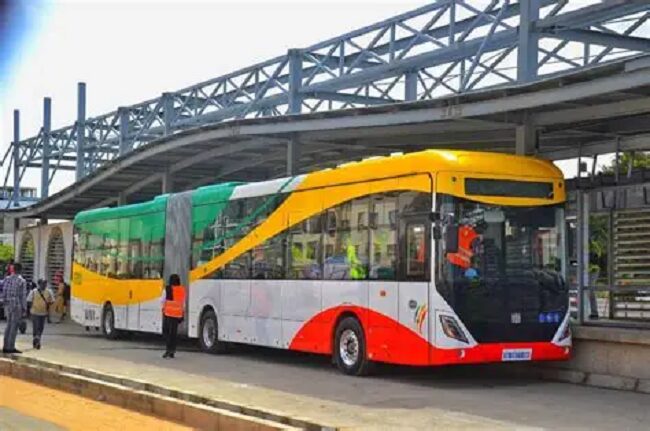
Dakar, Senegal, the Bus Rapid Transit (BRT) system integrates flood-resilient infrastructure with private sector participation through a public–private partnership financing electric buses and systems;
São Paulo, Brazil, implemented the Aquapolo wastewater reuse project securing private investment through long-term off-take agreements, and providing a drought-resilient water supply to industry;
In the Upper Tana Basin in Kenya, the Nairobi Water Fund mobilises private capital from downstream users to finance watershed restoration that enhances water security and climate resilience;
The Nhieu Loc–Thi Nghe canal restoration in Ho Chi Minh City, Vietnam, has catalysed private real estate investment by reducing flood risk and improving environmental conditions;
Bilbao’s Zorrotzaurre redevelopment project, in Spain, combines public investment in flood protection with private real estate financing to create a flood-resilient urban district.
Quintana Roo, Mexico, introduced an innovative coral reef insurance scheme that engages the private sector through insurance and tourism-backed financing to protect coastlines from storm impacts.
In Kuala Lumpur, Malaysia, the SMART Tunnel demonstrates how large-scale flood infrastructure can be delivered with private sector financing and expertise.
In the Netherlands, Afsluitdijk upgraded its flood defence mobilising private finance through a long-term public–private contract to strengthen climate resilience against extreme sea-level events.