

When people think about water insecurity in Africa, they often picture drought, failing rains, or dry riverbeds. They talk about infrastructure gaps, climate shocks and food insecurity. All of that matters. But one of the most important dimensions of the water crisis is still too often treated as secondary: Gender.
Across Africa, women and girls are disproportionately affected when water systems fail. In many communities, they are the ones who walk long distances to fetch water, manage household use, care for children and the sick, and keep food production going under increasingly difficult conditions. When water is scarce or far away, the costs are not only physical. Time is lost. Girls miss school. Women lose opportunities to earn income, rest, participate in community decisions, or build more secure futures.
But to tell only that part of the story is to miss the larger truth.
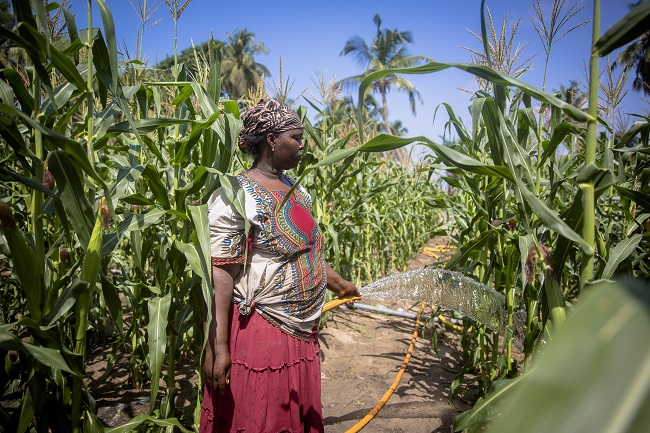
Women are not only among those most affected by water insecurity. They are also among the most important actors in solving it. Across the continent, women are managing irrigation, restoring landscapes, supporting household food systems, adopting new energy solutions, and helping communities adapt to climate stress. If Africa wants more resilient water systems, more inclusive growth and more effective climate adaptation, then women and girls must be placed at the centre of water solutions, not at the margins.
This is not simply a question of fairness. It is a question of effectiveness.
Research and field experience continue to show that water insecurity and gender inequality reinforce one another. In Ghana, for example, women play central roles in agriculture and natural resource management, yet many still face barriers to land, finance, agricultural inputs and decision-making.
Traditional land tenure systems often limit women’s control over productive resources, even when they are carrying much of the responsibility for food production and family well-being. Water scarcity deepens this inequality, because women are often expected to absorb the daily burden of finding and managing water for domestic and livelihood needs.
The result is a cycle that holds communities back. When women lack access to water, land, tools and influence, productivity suffers. Family nutrition suffers. Resilience suffers. And when policies recognize women’s participation but fail to change the structural conditions that exclude them, progress remains limited.
Evidence from gender and social inclusion work in landscape management shows that while policy frameworks may acknowledge the importance of inclusion, they often stop short of ensuring equitable access to resources, services and decision-making power.
That is why inclusion must go beyond representation. Participation without power is not transformation.
For donors, governments and development institutions, this should be understood clearly: investing in women in water systems is not a side issue. It is a high-return development strategy. Gender-responsive water investments can improve agricultural productivity, reduce time poverty, strengthen household well-being, support girls’ education and build stronger local institutions. In an era of climate disruption, they also increase adaptive capacity where it is needed most.
This becomes even more urgent in fragile and displacement-affected settings.
Across Africa, many refugee settlements are located in dryland and ecologically fragile areas already facing erratic rainfall, degraded soils and low vegetation cover. Refugees often settle alongside host communities that are themselves coping with limited land, water and energy resources.
Under these conditions, pressure on shared resources can quickly deepen vulnerability and tension. But these contexts also reveal something important: when women and youth are equipped with practical, locally adapted skills, they can help transform fragile systems into more resilient ones.
Recent work by the International Water Management Institute (IWMI) and partners in refugee settings in Ethiopia, Kenya and Uganda has shown the value of circular bioeconomy approaches that place women’s needs and experiences at the centre. Women learned to grow food at home, integrate trees into farming systems, use sustainable cooking methods, build stoves from local clay and make fuel briquettes from organic waste and locally available biomass.
These are not abstract interventions. They are practical solutions that improve food security, reduce pressure on natural resources, support cleaner energy and open pathways for income generation for both refugees and host communities.
Just as importantly, they strengthen social cohesion. When projects invest in local champions, include both refugee and neighboring communities, and tailor training to age, language, culture and daily responsibilities, they help shift the narrative. Refugees are no longer seen only as people in need, but also as part of the solution. That is the kind of long-term development thinking Africa increasingly needs.
This is especially relevant as some settlements evolve from temporary camps into more permanent communities. Humanitarian response alone is no longer enough. We need approaches that support livelihoods, ecological restoration, local governance and inclusive planning. Water sits at the heart of all of these.
So what should happen next?
Governments should integrate gender more meaningfully across water, agriculture, climate and land-use policy, with concrete commitments on access, leadership and accountability. Donors should prioritise investments that support women not only as beneficiaries, but as farmers, technicians, entrepreneurs, organisers and decision-makers. And development actors should back approaches that are locally grounded, climate-smart and designed to last beyond a single project cycle.
At IWMI, we see every day that when women are trusted, trained and supported, the benefits extend far beyond water. Households become more food secure. Communities become more resilient. Resource use becomes more sustainable. Social cohesion improves. Opportunity grows.
Where water flows, equality grows.
This World Water Day, Africa has an opportunity to move beyond rhetoric and invest in water solutions that are not only technically sound, but socially transformative. Putting women and girls at the heart of those solutions is not just the right thing to do. It is the smartest development decision we can make.
Kehinde Ogunjobi is the IWMI Country Representative for Ghana covering West and Central Africa, leading partnerships and research uptake on water security, climate resilience and inclusive agricultural development across the region