

As global demand for critical minerals surges to power the clean energy transition, feminist advocates are raising urgent concerns about who truly benefits from the boom – and who is left behind.
Across mineral-rich regions in Africa, women are calling for a radical shift in how extractive industries operate, demanding justice, equity, and meaningful participation in decision-making.
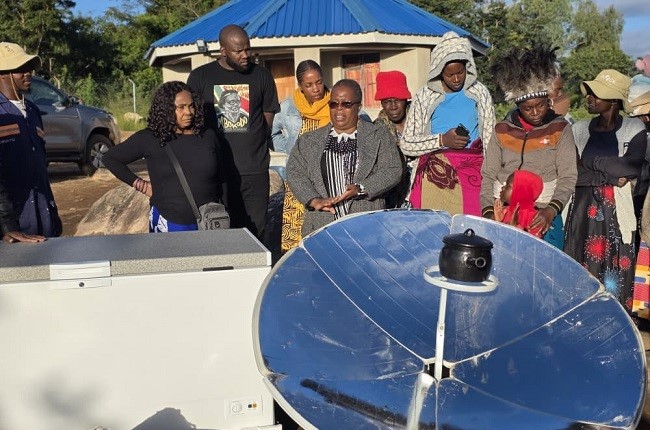
At the forefront of this conversation is Dr Mela Chiponda, a prominent eco-feminist scholar and activist who has been vocal about the gendered impacts of mining and energy transitions. She argues that while the world celebrates a “green future,” the realities on the ground for many African women remain deeply unequal.
“The transition to clean energy cannot be built on the same extractive logic that has historically marginalised women,” said Dr Chiponda. “If anything, this moment demands that we rethink power – who holds it, who benefits from it, and how women, particularly at the grassroots, can shape these systems.”
Drawing learning lessons from a renewable energy project in Bikita, Zimbabwe, Dr Chiponda noted the central role women play in driving renewable energy adoption at the grassroots level,
However, across countries in the Southern African Development Community (SADC) and the Great Lakes region, women living in mineral-rich communities continue to face displacement, environmental degradation, and loss of livelihoods. Despite being central to local economies and natural resource management, they are often excluded from negotiations, compensation frameworks, and ownership structures.
Feminist groups argue that the current model of mineral extraction replicates colonial patterns – where resources are extracted for global markets while local communities, especially women, bear the social and environmental costs. Issues such as land rights, unpaid care work, and gender-based violence are often exacerbated in mining zones.
Dr Chiponda emphasised that a just transition must go beyond technical solutions and economic gains to address structural inequalities.
“We cannot talk about sustainability without justice,” she noted. “Women are not just victims of these systems – they are leaders, innovators, and knowledge holders. But their voices must be recognised, resourced, and respected.”
Civil society organisations, including eco-feminist networks, are now pushing for policies that centre women in critical mineral value chains. Their demands include gender-responsive budgeting, community ownership models, protection of land rights, and investment in women-led enterprises. They will be taking the debate at the Women Deliver 2026 conference set to take place from April 24-28 in Melbourne Australia.
There is also growing pressure on governments, multilateral development banks, and private sector actors to adopt feminist principles in their climate and energy strategies. This includes ensuring transparency, accountability, and inclusive participation in all stages of mineral extraction and processing.
While global powers compete for access to Africa’s critical minerals—essential for technologies such as electric vehicles, solar panels, and batteries—the question of justice is becoming impossible to ignore.
Evidence from mineral-rich contexts such as the Democratic Republic of the Congo shows mining is linked to pollution, displacement, child labour, and sexual violence, disproportionately affecting women and children.
For many advocates, the path forward is clear: a transition that is not only green, but also feminist.
“A truly just transition is one where African woman are not an afterthought,” Dr Chiponda said. “They must be at the centre – shaping the future, not surviving its consequences.”