

The African Union (AU) says the continent needs at least $30 billion by 2030 to close its water and sanitation gap and accelerate progress towards Sustainable Development Goal 6 on universal access to clean water and sanitation.
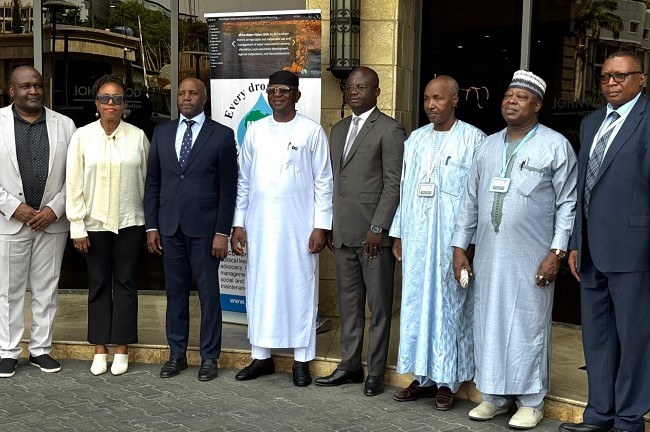
Mr. Francis Mtitu, Advisor on Transboundary Water Management and Investment at the AU, said this at the ongoing Western Africa Sub-Regional Ministerial and Technical Advisory Committee consultation in Abuja on Tuesday, April 21, 2026.
He said the continent remained significantly off track in meeting its water and sanitation targets, noting that disparities in access persisted across regions.
According to him, more than 400 million people in Africa still lack access to safely managed drinking water services, while nearly 700 million people do not have access to basic sanitation facilities.
He said those gaps continued to undermine public health, education outcomes, labour productivity and broader economic development across the continent.
“The African continent remains significantly off track in achieving the Sustainable Development Goals, particularly Goal 6,” Mtitu said.
He identified persistent infrastructure deficits in the Water, Sanitation and Hygiene (WASH) sector as one of the major constraints, adding that many communities still lacked functional water supply systems and adequate sanitation facilities.
Mtitu stressed that closing the gap would require not only substantial financial investment but also stronger governance systems, policy reforms and improved coordination mechanisms.
“It is estimated that at least 30 billion dollars is needed annually across the region to transform the sector and change the current narrative,” he said.
He added that effective delivery of water and sanitation services would depend on enabling legislation, regulatory frameworks, accountability systems and stronger institutional coordination to ensure investments translate into sustainable outcomes.
Mtitu also highlighted the central role of water in Africa’s long-term development agenda under Agenda 2063, noting that it underpined agriculture, energy, industrialisation and job creation.
“Water is the foundation of prosperity, sustainability and economic growth,” he said, adding that the African Union was increasingly elevating water and sanitation to the highest political level, with Heads of State now taking greater ownership of the agenda.
He further pointed to ongoing efforts to mobilise investment and develop bankable projects, noting that many countries still faced challenges in preparing viable project pipelines that met investor requirements.
Speaking on the Africa Water Vision 2063 and Policy Framework, AMCOW representative, Mr. Nelson Gomondo, said the continent was working towards a “water-secure and resilient Africa with safe sanitation for all”.
He said the framework was built around four interconnected pillars: economic and social transformation; political cooperation and security; climate resilience; and innovation, capacity development and technology.
Gomondo explained that the first pillar focused on leveraging water and energy infrastructure to support agriculture, industrial development and urbanisation, while also promoting investment in resilient infrastructure and sustainable resource management.
He said the second pillar emphasised regional integration and water governance as a tool for peace, cooperation and stability among African states.
According to him, the third pillar addresses climate-related challenges such as droughts and floods, with emphasis on adaptation strategies including improved water storage, groundwater management and water quality protection.
He added that the fourth pillar focused on strengthening institutions, expanding skills development and promoting appropriate technologies to improve water management across member states.
Gomondo said that unequal access to technology and limited digital penetration in rural areas remained key challenges, calling for increased awareness and behavioural change in water use practices.
He said simple actions, such as reducing water wastage at household and community levels, could collectively improve water efficiency across the continent.
He also emphasised inclusion and equity, noting that the framework sought to strengthen grassroots participation while empowering women, youth and marginalised groups in water governance.
Gomondo said the vision also highlighted the need to build resilience in small island developing states, which faced heightened risks from sea-level rise and other climate impacts.
He added that achieving water security in Africa would require stronger political commitment, sustained investment, innovation and deeper collaboration between governments, development partners and the private sector.
“The success of Africa Water Vision 2063 will depend on collective action to ensure that no one is left behind,” he said.
The Africa Water Vision 2063 is a strategic framework guiding continental water policy under the AU.
It builds on the earlier Africa Water Vision 2025, expanding the horizon to 2063 to align with the AU’s Agenda 2063.
The vision promotes equitable, sustainable management of Africa’s water resources to drive development, peace, and resilience.
By Tosin Kolade