

From the Sustainable Development Goals (SDGs) to the African Union’s Agenda 2063, the continent has mapped out an ambitious pathway for inclusive growth, industrialisation and climate resilience.
Nonetheless, stakeholders say what remains uncertain is how to fund the plan.
The United Nations Sustainable Development Goals (SDGs), adopted in 2015, represent a universal call to end poverty, protect the planet and ensure prosperity for all by 2030.
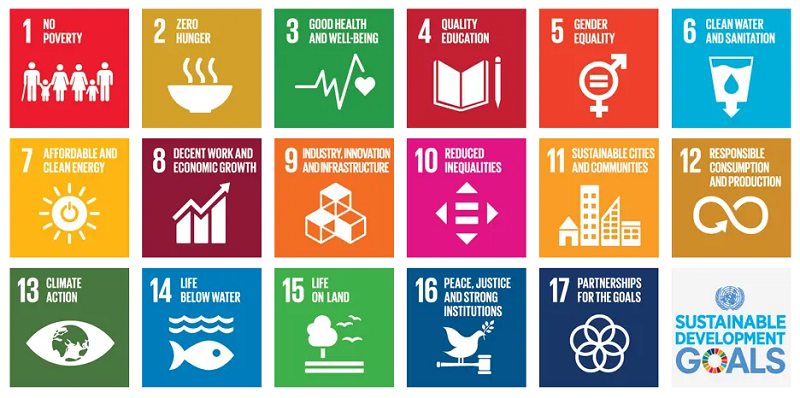
Comprising 17 goals, they provide a comprehensive framework addressing critical areas such as health, education, clean energy, climate action and inclusive economic growth.
Complementing this global framework is African Union Agenda 2063, Africa’s long-term development blueprint adopted in 2013.
The agenda outlines the continent’s vision for inclusive growth and sustainable development over a 50-year period, anchored on aspirations such as economic prosperity, regional integration, good governance, peace and security.
Both frameworks are closely aligned and mutually reinforcing. While the SDGs provide a global roadmap, Agenda 2063 reflects Africa’s specific priorities and development context.
As a result, African countries are encouraged to integrate the two into national development plans to drive coherent and coordinated implementation.
In spite this alignment, progress towards achieving both agendas remains uneven across the continent, with financing gaps, climate shocks and structural constraints continuing to slow implementation and limit impact.
These issues dominated discussions at the twelfth session of the Africa Regional Forum on Sustainable Development (ARFSD-12), where policymakers, economists and development partners converged to assess Africa’s progress.
Across sessions at the ARFSD-12 forum, one message stood out: Africa’s problem is no longer vision, but delivery. And delivery is constrained by financing.
Mr. Claver Gatete, Executive Secretary, Economic Commission for Africa (ECA) at the forum, reiterated the importance of protecting climate and development investments on the continent.
According to him, unlocking capital will depend largely on reducing risks that discourage investment.
“We must protect climate and development investments even under fiscal pressure.
“Reducing currency risk, climate risk and policy risk is central to mobilising both domestic and private capital.”
He emphasised that Africa must reposition its financing strategy to match the scale of its ambitions.
“Africa’s challenge is not ambition, but delivery,” he added, stressing the need to move from commitments to measurable results.
The ECA executive secretary underscored the need for a shift in approach saying, we cannot continue with fragmented, project-based delivery when the scale of the challenge demands coordinated and structured investment.
For many African countries, the cost of borrowing remains significantly higher than in other regions, limiting their ability to invest in infrastructure, energy and social services.
Experts at the forum linked this challenge to structural issues in the global financial system, including credit rating methodologies and risk assessments that often disadvantage developing economies.
Ethiopia’s Foreign Minister and COP32 President-designate, Gedion Timothewos, warned that rising debt and declining investment flows were already eroding development gains.
While pointing to financing gaps and high capital costs as key constraints, Timothewos said Africa’s experience underscored persistent structural barriers.
According to the forum, climate finance adds another layer to the challenge.
While Africa contributes minimally to global emissions, it remains one of the most vulnerable regions to climate change. Yet, funding for adaptation and resilience continues to lag behind.
Participants noted that most climate finance was directed towards mitigation, leaving critical areas such as disaster risk reduction and loss-and-damage support underfunded.
To bridge the gap, stakeholders reiterated the importance to increasingly turn to innovative financing mechanisms.
They identified blended finance, green bonds and debt-for-climate swaps as tools that could help mobilise private capital at scale.
However, experts cautioned that finance alone was not enough as many African countries still lacked pipelines of bankable projects and well-structured investment opportunities that met investor expectations.
This gap, they said, reflected limited technical capacity in project preparation, risk structuring and public-private partnerships.
Gatete emphasised the importance of strengthening these pipelines.
“It is not enough to have strategies; we must develop credible, investment-ready projects that can attract financing,” he said.
Meanwhile, some countries are beginning to address these issues.
Rwanda, for instance, has shifted from fragmented projects to coordinated investment platforms aligned with national priorities, helping to attract more structured financing.
Beyond external financing, the forum also highlighted weaknesses in domestic systems.
More so, stakeholders say low tax revenues, inefficiencies in public financial management and limited capacity to track spending has continued to constrain governments’ ability to fund development.
Dr Mthuli Ncube, Zimbabwe’s Finance Minister, emphasised the need to strengthen domestic resource mobilisation while safeguarding long-term investments.
He said balancing debt obligations with development spending would be critical in the years ahead.
Another recurring theme was the need for stronger coordination, both within countries and across the continent.
Participants pointed to the African Continental Free Trade Area (AfCFTA) as a platform that could link climate finance with industrialisation and regional value chains.
They argued that fragmented, project-based approaches must give way to integrated, large-scale programmes.
Gatete reinforced this position, stressing that Africa must act collectively to maximise impact.
“Coordinated action at scale is what will enable Africa to translate its ambitions into tangible outcomes,” he said.
Civil society groups also called for greater transparency and accountability, stressing that financing must translate into tangible benefits for citizens.
They urged governments and partners to ensure that resources were used efficiently and equitably.
In spite of the immense challenges, a sense of cautious optimism prevailed, with speakers agreeing that Africa possesses the necessary policy frameworks, institutional structures, and experience to achieve its goals
The said what was required now, is alignment between national priorities and global financing systems, between public and private capital, and between ambition and implementation.
As Africa moves closer to the 2030 deadline, the stakes are rising; without significant changes in how development is financed, the continent risks falling short of its goals.
Experts say that with the right mix of reforms, innovation and partnerships, Africa can still turn ambition into reality.
They say the crucial, unresolved issue facing Africa’s growth is navigating its complex financial landscape.
By Lucy Ogalue, News Agency of Nigeria (NAN)