

A Public Health Practitioner and Environmentalist, Dr Akingbehin Akinbodunwa, on Thursday, February 26, 2026, identified air pollution as a major quantifiable threat to life and productivity in the country.
Akinbodunwa, also the National President, Environmental Health and Public Health Practitioners Association of Nigeria (EPHPAN), made the assertion in an interview in Lagos.
He said national analyses showed that air pollution was the third leading risk factor for premature death in Nigeria in 2019; responsible for roughly 198,000 premature deaths that year.
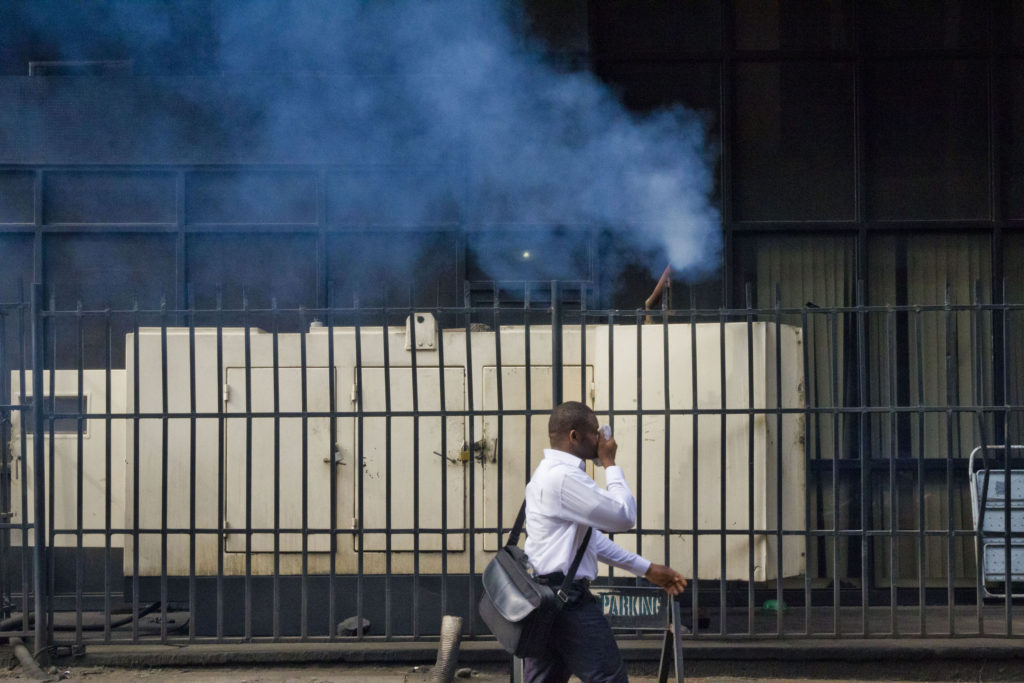
He added that it caused more deaths than were caused by some familiar infectious diseases, saying that this burden reflects both outdoor (ambient) and household air pollution acting together to harm the citizens.
According to him, clean air as an indispensable prerequisite for a productive healthy nation.
“Air pollution in Nigeria is not an abstract hazard; it is a major, quantifiable threat to life and productivity.
“In major urban areas the situation is even starker. For example, Lagos – our largest city and economic engine – has an estimated 23,900 premature deaths attributable to air pollution in 2019 alone.
“These are not nameless statistics; they are mothers, fathers, workers, students and children lost prematurely because the air around them was toxic.
“When our children breathe clean air, their brains and lungs develop; when our workers breathe clean air, they are healthier and more productive; when our aged individuals breathe clean air, they live longer and healthier lives.
“The data are clear: air pollution shortens lives and undermines the development goals,” Akinbodunwa said.
Akinbodunwa explained that particulate matter with a diameter smaller than 2.5 micrometres (PM2.5) was the pollutant most strongly linked to mortality from heart disease, stroke, chronic lung disease, lung cancer and acute respiratory infections in children.
He said that Nigeria’s population-weighted average particulate pollution had increased over the past two decades – reported increases of about 24 per cent from 1999 to 2021; eroding life expectancy and worsening health across the country.
According to him, in many Nigerian cities and hotspots, short-term PM2.5 readings routinely exceed levels recommended by global health authorities.
“For perspective, the World Health Organisation’s (WHO) updated air quality guidance places the annual safe level for PM2.5 at a very low threshold.
“Compliance with this guidance would protect millions of lives globally.
“The reality is that the vast majority of Nigerians are exposed to PM2.5 levels well above the WHO recommendation.
“Which translates directly into higher risks of cardiovascular and respiratory disease, adverse pregnancy outcomes, and lost childhood development,” he said.
The health environmentalist decried the economic implications of air pollution, saying that it imposes large health-care costs and reduces labour productivity – a double blow to families and to the nation’s development trajectory.
According to him, multiple sources feed Nigeria’s polluted air including vehicular emissions, inefficient combustion of biomass for cooking in households, open waste burning, generator fumes, industrial emissions, brick kilns and agricultural burning.
“Rapid urbanisation and increasing vehicle fleets without commensurate transport planning only magnify exposures; these sectors are where targeted policy and programmatic action will yield measurable health gains.
“Globally, fine particulate pollution (PM2.5) is estimated to contribute millions of deaths annually; nationally, the toll in Nigeria is already tragically high and rising,” Akinbodunwa said.
On remedial approaches to mitigate air pollution and safeguard Nigeria environment, Akinbodunwa recommended surveillance and data-driven action, household energy transition, clean transport and fuels, control of industrial and waste emissions.
Others, he said, were health system readiness and public education, as well as cross-sectoral governance and financing.
He emphasised that safety of the environment/air was a collective responsibility of everyone in the society and should not be left to the government alone.
By Lilian U. Okoro