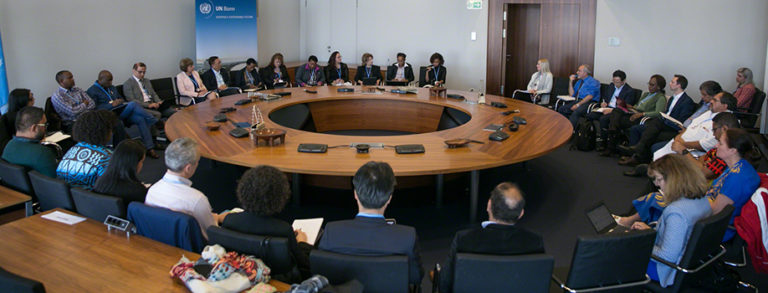
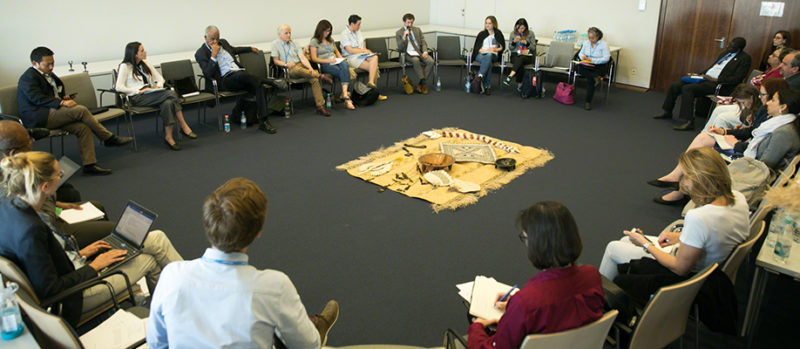
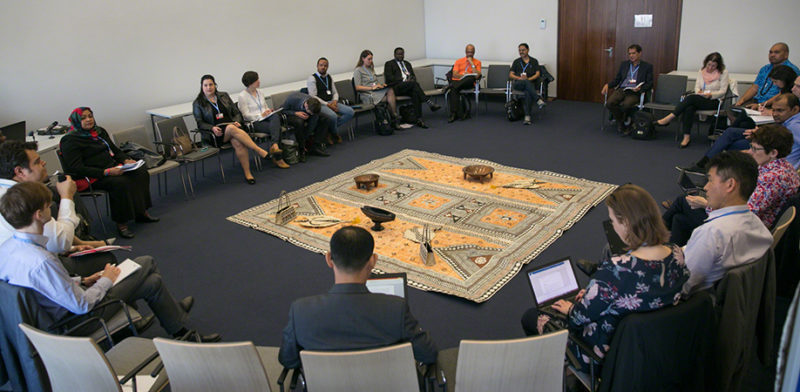
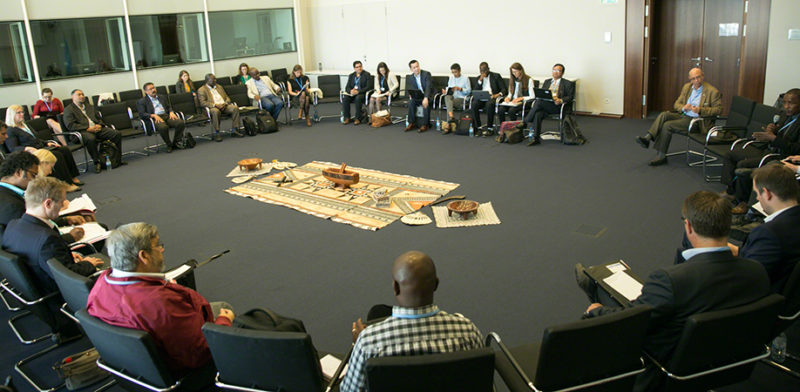
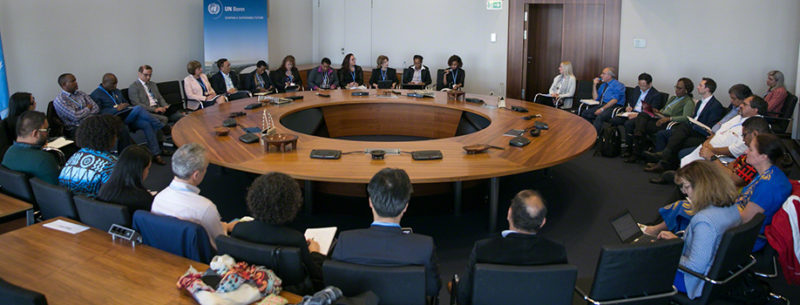
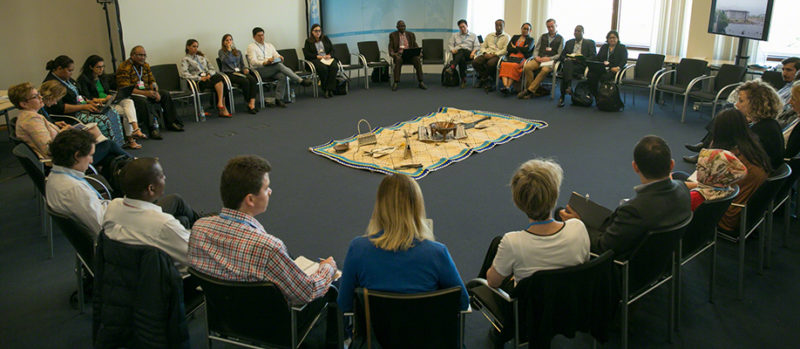
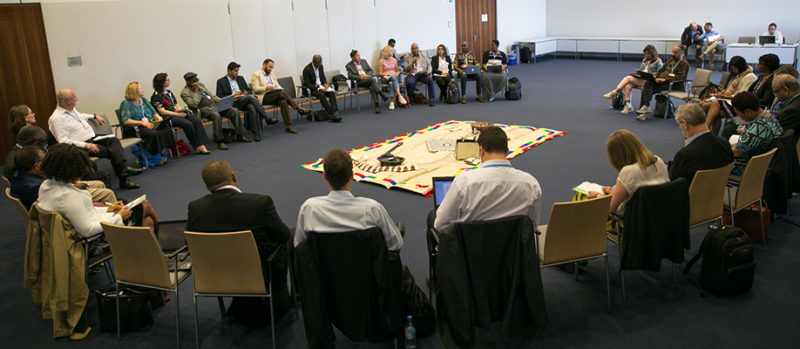
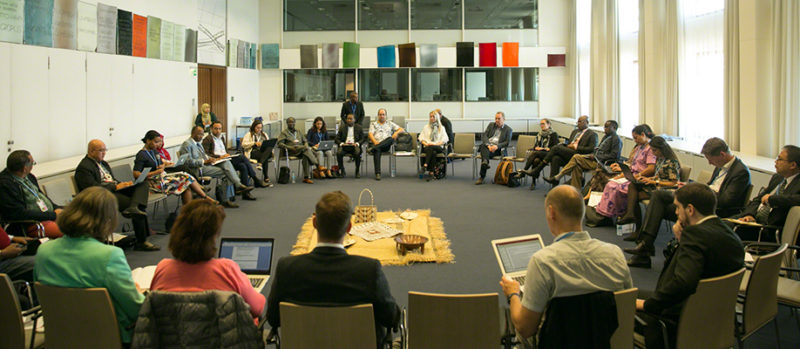
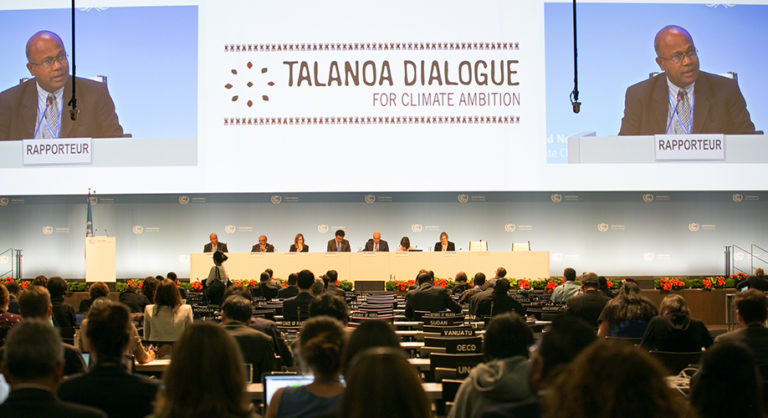
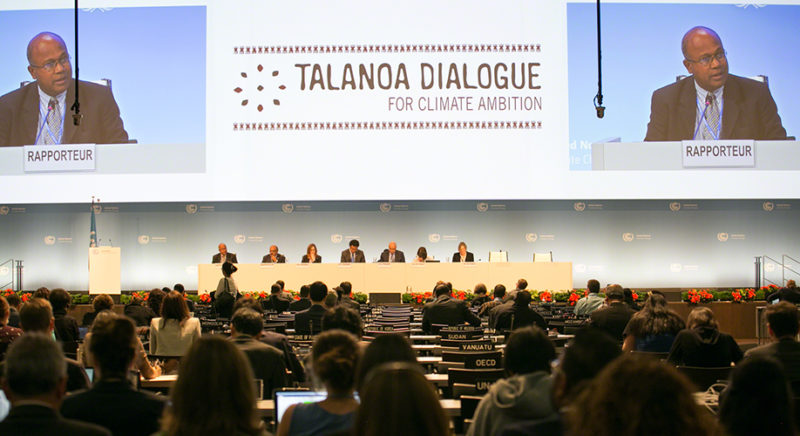
On Sunday, May 6, 2018, seven Talanoa groups (“Talanoas”) met in an informal setting as part of the Talanoa Dialogue during the intercessional UN climate negotiations session in Bonn, Germany.
Launched at the Fiji / Bonn Climate Change Conference in November 2017 (COP 23), the Dialogue is a global conversation about efforts to combat climate change, involving both UNFCCC parties and non-party stakeholders.
The Dialogue is mandated to take stock of collective efforts towards progress on the Paris Agreement’s long-term mitigation goal. It will also inform the preparation of parties’ Nationally Determined Contributions (NDCs), the second round of which are expected in 2020.
Following the Pacific region’s Talanoa tradition, the Dialogue’s goal is to share stories to find solutions for the common good. To this end, participants discussed three central questions: Where are we? Where do we want to go? How do we get there?
Sunday’s meeting was part of the Talanoa Dialogue’s “preparatory phase,” which precedes a “political phase” that will take place at the Katowice Climate Change Conference in December 2018 (COP 24). Each of the seven Talanoas was named after an area in Fiji that is affected by climate change.
In addition to sharing stories during Sunday’s Dialogue, parties and non-party stakeholders participated by submitting inputs.
Participants at the Koro RoomParticipants at the Ba RoomParticipants at the Rakiraki RoomParticipants at the Bua RoomParticipants at the Tailevu RoomParticipants at the Lakeba RoomParticipants at the Kadavu Room. Photos: IISD
Front-runner countries and civil society representatives have presented a concrete road-map of how they are enhancing climate plans by 2020 in an attempt to push other states to commit to doing the same at the upcoming UN Climate negotiations (COP24) that will be held in December 2018 in Katowice, Poland.
Participants during the report back of the Talanoa Dialogue. Photo credit: IISD
This came during an event organised on the sidelines of the intercessional UN climate negotiations session in Bonn, Germany.
The negotiations underway in the German city have witnessed the first meeting of the Talanoa Dialogue launched by the Fijian Presidency of COP23 to spur an outcome for enhanced ambition at the end of this year at COP24.
Year 2018 can make it or break it for climate change, experts say, adding that the main pillar of the accord the ratchet up mechanism of the Paris Agreement passes through its first test. They insist that countries need to send a clear signal in COP24 that they will enhance their Nationally Determined Contributions (NDCs) by 2020 if the goal to keep warming below 1.5C is to be reached.
Angeline Heine, National Energy Planner, Ministry of Resources & Development, Republic of the Marshall Islands: “As the Paris Agreement requires, every country must update their targets every five years and we agreed to come back to the table in 2020 to do just that. If we are to keep the goals of the Paris Agreement alive then every country must step up their ambition, and the Talanoa Dialogue provides us a unique opportunity to understand how to do just that.
“The Marshall Islands is committed to leading by example. We are already working on a new and more ambitious NDC, informed by a transformational 2050 Strategy that will set us on a clear path to net zero emissions.
“Like us, every country should now be doing the hard work back home to assess what is possible, with a particular eye to the UN Secretary-General’s Climate Summit in September 2019 which must focus on raising ambition of NDCs and production of 2050 decarbonisation strategies by all countries.”
Stephanie Lee, Special Advisor on Climate Change, Ministry of Foreign Affairs & New Zealand: “One of my takehomes from Talanoa was how great it was to hear stories of ambitious climate action and comprehensive policy-making coming from across the spectrum of parties and non-state actors. The process validated the efforts, perhaps even celebrated them. I believe this kind of dynamic is really important to inspiring greater action and ambition. We know the gap between where we are and where we need to be is stark. But visibility and positive reinforcement of what is already happening can provide new ideas and inspire greater effort.
“In New Zealand, the effort now is on developing policies both to ensure that we meet our target, and to set New Zealand on a long-term trajectory. We see the future as one of transformational change, moving to an economy that is sustainable, inclusive and productive. The concept of a just, well-managed transition is at the heart of this, and is the focus of a significant work programme that reaches across government including into our economic strategy. Why I mention this in terms of achieving ambitious commitments, is that without a just transition that brings people and business along with it, the political consent environment for ambition won’t be sustainable.
“A major focus for New Zealand policy makers this year is to develop a Zero Carbon Act to set us on the path to a low emissions and climate resilient future. The objective is to set a 2050 target which is consistent with the IPCC’s findings and with the Paris Agreement objectives, and demonstrates that we are taking the lead as a developed country. We’re also working on long-term low emission pathways which will inform the communication or update of our NDC is 2020, in line with the Paris Agreement. Having a clear eye on the long term target can help countries genuinely assess their 2025 or 2030 target to see if they are in line with the long term transition pathway.”
Rolf Smeets Director of Global Public & Government Affairs Philips Lighting: “Energy efficiency offers significant potential, making it an indispensable component of all NDC’s. All sectors combined (appliances, buildings, industry and transport), energy efficiency can contribute to at least half of the mitigation commitment of all countries that signed the Paris Agreement. The global transition to LED lighting alone will bring an annual reduction in carbon emissions of 1400 megaton and reduce energy bills by over 270 billion Euros.”
Marcel Beukeboom, Climate Envoy, Kingdom of the Netherlands: “The science is clear: we need to get into higher gear to reach Paris goals and we need to have the courage to go beyond traditional politics. Meeting in the middle is no option this time”
Senator Loren Lagarda Chief of Delegation – Philippines: “A low carbon economy is critical to reaching inclusive development goals and reducing climate vulnerability. We need to use tools we already have by fostering truly competitive markets that can deliver more affordable, secure and more reliable renewable power for all.”
Paula Caballero Global Director Climate – World Resources Institute: “The Talanoa Dialogue is beginning to lay the groundwork for the constructive political discourse that we need leading up to the UN climate summit in Poland. At the UN summit, countries need to send a clear signal that they will enhance their national climate plans by 2020. We are looking to the Polish presidency to demonstrate leadership by rallying countries towards achieving this outcome which will propel the world towards a much safer world.”
Alden Meyer, Director, Strategy and Policy, Union of Concerned Scientists: “I would say that COP24 in Katowice is probably the most critical meeting since Paris. The world will be watching to see if countries are serious about implementing and strengthening the Paris Agreement. We have a mandate to adopt a package of rules to implement the Paris agreement across a range of issues. Those rules are essential to build confidence and trust in the system and facilitate greater ambition by both developed and developing countries.
“Second, we need some clear political signals and a process going forward from COP24 on ways to enhance the ambition of the nationally determined contributions that countries have submitted under Paris. We don’t’ have to wait for the IPCC special report in October to know that what’s on the table now and being implemented falls far short of what’s needed to stay on track with temperature goals that countries agreed to in Paris. And we have to figure out how to capture the very constructive spirit of the Talanoa Dialogue groups here on Sunday going into the political phase of the Talanoa Dialogue process in Katowice. “
While the Bonn meetings have seen countries engaging substantially on all fronts, actual progress on some issues seem to be lagging. This includes the vital question of finance.
Tracy Carty, Climate Change Policy Lead, Oxfam International: “At the end of this year there is going to [need to] be agreement on finance accounting rules. It’s very technical but what we’re talking about there is the rules that will govern what counts towards the $100 billion commitment and these rules really need to build confidence that that commitment will be met in a way that is fair and in a way that is robust. And one of the key things on that front is it needs to include a commitment to grant equivalent accounting. And that’s a major issue because loans make up a massive portion of climate finance. In 2016, Oxfam estimates it was around two thirds and the vast majority of that was being counted at face value not taking account of repayments or interest paid and our estimate is that essentially amounted to an overstatement of the net assistance to developing countries by around $20 billion per year.”
There are still sharp political differences to be overcome that have a potential to be carried forward in upcoming ministerial moments.
Li Shuo, Senior Climate & Energy Policy Officer, Greenpeace: “As negotiations enter the second week, the progress and challenges for various rulebook issues are becoming clear. In general, Bonn has managed to advance these issues, but the different features of these issues also require tailor-made solutions. Finance and NDC would benefit from higher level political attention. Transparency will require more negotiation time. Other issues such as compliance and Global Stocktake are ready to move into text based negotiations.
“As the session approaches its conclusion, a way forward is needed to transition the process from a technical to a political phase. The COP Presidencies have a unique role here in steering Parties out of the technical ‘forest’ towards a clear agenda for next session and a shared vision for Katowice.”
Over 60 representatives from 24 countries across Africa, Asia, Europe and North America and from intergovernmental and non-governmental organisations met in Maputo, Mozambique, from May 1 to 4, 2018 to discuss the development and implementation of National Ivory Action Plans (NIAPs).
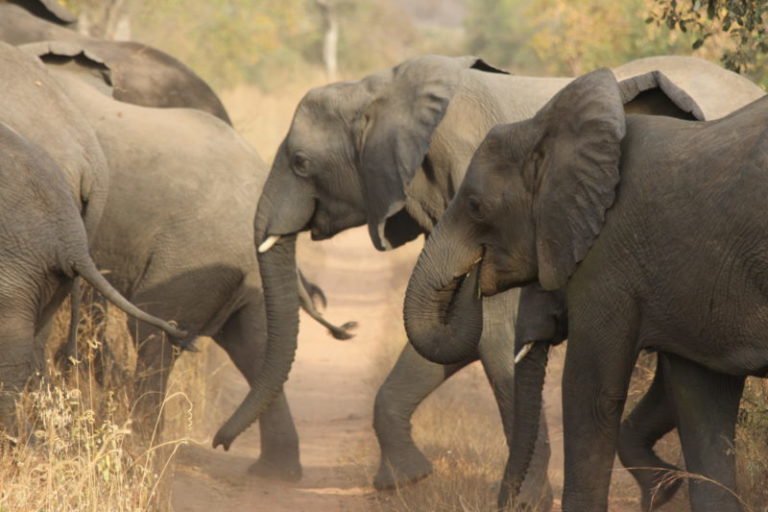
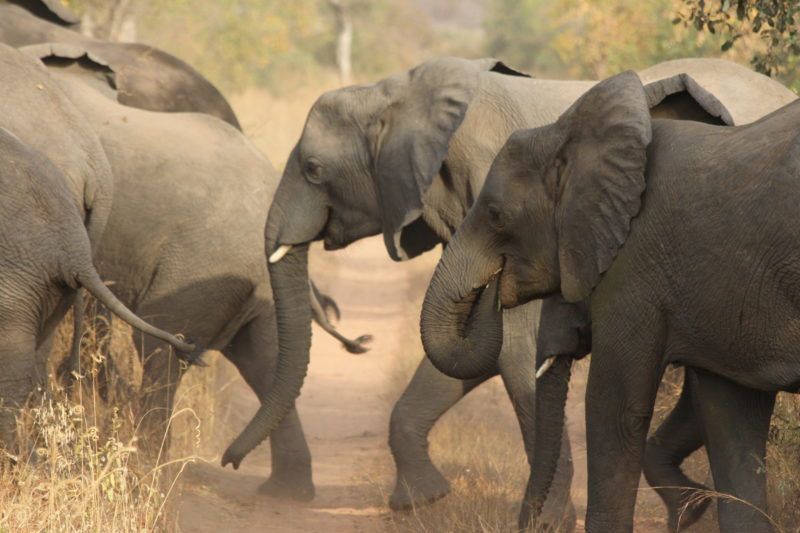
Poaching: Forest elephants are poached for their ivory and skin, and threatened with extinction
The Convention on International Trade in Endangered Species of Wild Fauna and Flora (CITES) requires from a number of its Parties that they develop and implement NIAPs to strengthen their controls of trade in ivory and ivory markets, and help combat illegal trade in ivory. Each NIAP outlines the urgent measures that the Party commits to deliver – including legislative, enforcement and public awareness actions as required – along with specified time frames and milestones for their implementation. The Parties concerned are those most affected by illegal trade in ivory, either as source, transit or destination countries.
The CITES Secretariat convened the meeting in Maputo in close cooperation with the Ministry of Land, Environment and Rural Development of Mozambique, and the Secretariat’s partners in the International Consortium on Combating Wildlife Crime (ICCWC), and with generous funding from the United Kingdom. It provided an important opportunity to review the development and implementation of NIAPs, and to exchange experiences and best practices among NIAP countries.
The meeting also served to identify opportunities for long-term collaboration among enforcement authorities, cross-border and regional cooperation, joint actions, and resource mobilisation. It gave the opportunity to participants to discuss shared challenges and technical assistance needs. The meeting on the last day comprised a Regional Investigative and Analytical Case Management (RIACM) meeting, facilitated by INTERPOL. The RIACM provided a platform for representatives to share information and intelligence with regard to modus operandi, smuggling routes, and other information relevant to targeting the criminal networks involved in ivory trafficking.
David Morgan, Officer-in-Charge of the CITES Secretariat, said: “The relentless collective efforts of the international community to stop the surge in poaching of elephants in Africa, which saw an estimated 100,000 African elephants illegally killed between 2010-2012, has now started to yield some successes. Since reaching a high point in 2011, overall poaching rates in Africa have fallen for five consecutive years. However, the need for urgent actions to address high levels of elephant poaching and illegal trade in their ivory continues to exist. This meeting of NIAP Parties enabled us to bring together key agencies involved in the fight against elephant poaching and illegal trade in ivory.”
The Minister of Land, Environment and Rural Development of Mozambique, HE Mr. Celso Correia, said: “The fight against elephant poaching and illegal trade in ivory will be won through concerted and integrated action, including through strong cooperation between range and destination States.”
The British High Commissioner to Mozambique, HE Ms. Joanna Kuenssberg, said: “Elephants are a part of Mozambique’s and other countries natural heritage. I’m delighted that the UK has been able to support our partners from many countries to develop and implement national ivory action plans. Only through international collaboration will we succeed in beating the poachers and organised criminal networks who exploit vulnerable communities. At this event we have shared ideas for developing human livelihoods in and around habitats rich in wildlife.”
Henri Fournel, Coordinator at the INTERPOL Organised and Emerging Crime Sub-Directorate, said: “This initiative demonstrates the commitment of the NIAP countries to unite their efforts in tackling the organised crime networks active in environmental crime through an intelligence-led law enforcement approach. INTERPOL acknowledges the continued dedication of the global law enforcement community as well as the efforts deployed by Member Countries with the support of ICCWC in their fight against international ivory trafficking.”
Representatives from Parties implementing NIAPs highlighted that formalising collaboration between law enforcement agencies at national level by establishing appropriate structures was an essential step in the fight against ivory trafficking. Identified as equally important is legislation that enables addressing wildlife crime as a serious crime, and makes provision for strong deterrent penalties.
The urgent need to further strengthen collaboration across range, transit and destination countries and the increased use of tools such as Mutual Legal Assistance treaties were discussed, as well as how the sharing of information and intelligence can facilitate further strengthening risk profiles and indicators used to detect illegal ivory consignments.
Other matters discussed include the need to closely review poaching and trafficking trends to ensure that new crime trends are swiftly identified and addressed, using new methods developed to enable ivory fingerprinting, the establishment of electronic fingerprint databases, and the collection of samples from large-scale ivory seizures for forensic analyses, in support of investigations and prosecutions.
The meeting also considered how technical and financial support could be more effectively mobilised to support NIAP implementation, and opportunities for such support, as well as private sector and civil society organisation engagement in support of combating illegal trade in ivory.
Progress with the development and implementation of NIAPs will be evaluated at the 70th meeting of the CITES Standing Committee (SC70), to be held in Rosa Khutor, Sochi, Russia, from October 1 to 5, 2018.
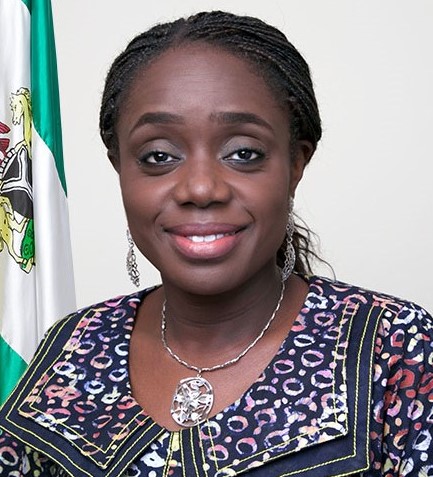
The Nigeria Tobacco Control Alliance (NTCA) has commended the Minister of Finance, Mrs. Kemi Adeosun, for the newly-announced excise duty on tobacco which is expected to take effect from June 4, 2018.
Minister of Finance, Mrs. Kemi Adeosun
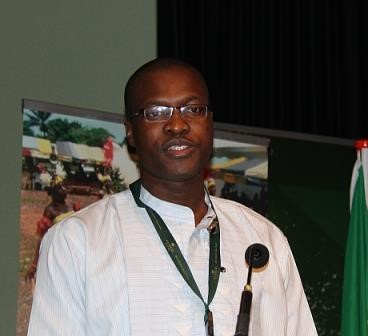
The NTCA, in a letter signed by Chair of its Board, Akinbode Oluwafemi, said that the swift response of the government to the group’s December 2017 request for implementation of the National Tobacco Control Act 2015 as it relates to tariffs and the 2018 fiscal policy was commendable and should be applauded by Nigerians.
In the letter, the NTCA urged the government to stand firm in its resolve to ensure that tobacco excise taxes are progressively adjusted upwards in conformity with the global tobacco convention standard of achieving an excise burden of 70 per cent of the retail price per pack of 20 cigarettes.
It explained that, contrary to tobacco industry arguments, the policy would be of immense benefit to public health and the Nigerian economy, as evidence points to tobacco taxation as the most cost effective strategy to reduce tobacco consumption and ensure that young people do not pick up the deadly habit.
“Tobacco, being a leading cause of cancers and other deadly diseases worldwide; raising taxes for tobacco is expected to raise the retail price which will decrease desirability and demand for tobacco especially amongst young people. Revenue accrued from these can be channelled to the development of our country.”
The NTCA however asked that the excise tax on tobacco be increased in three years’ time so that Nigeria can derive all that could be benefited from tobacco excise tax in line with World Health Organisation (WHO) standard.
The NTCA is a network of civil society organisations (CSOs), non-governmental organisations (NGOs), community-based Organisations (CBOs), faith-based organisations (FBOs), and professional groups working on tobacco control, human rights, public health and cancer with a view to ensuring qualitative health, sustainable development and good governance for all Nigerians.
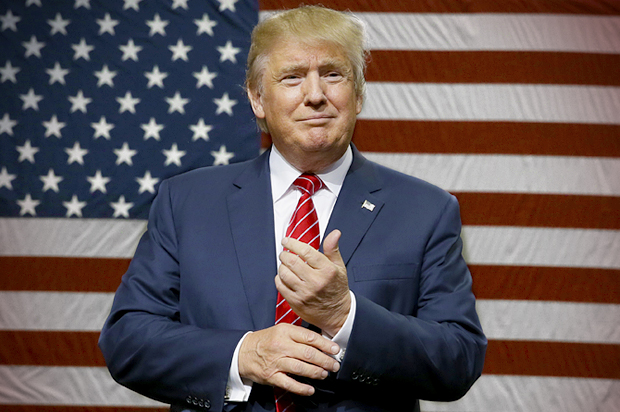
A new study has revealed that, since Fall 2017, Republican registered voters have become more convinced that human-caused global warming is happening, are more worried, and are more supportive of several climate policies.
US president, Donald Trump
The disclosure is contained in a report released by the Centre for Climate Change Communication of the George Mason University in the US on Tuesday, May 8, 2018. It is titled “Politics & Global Warming”.
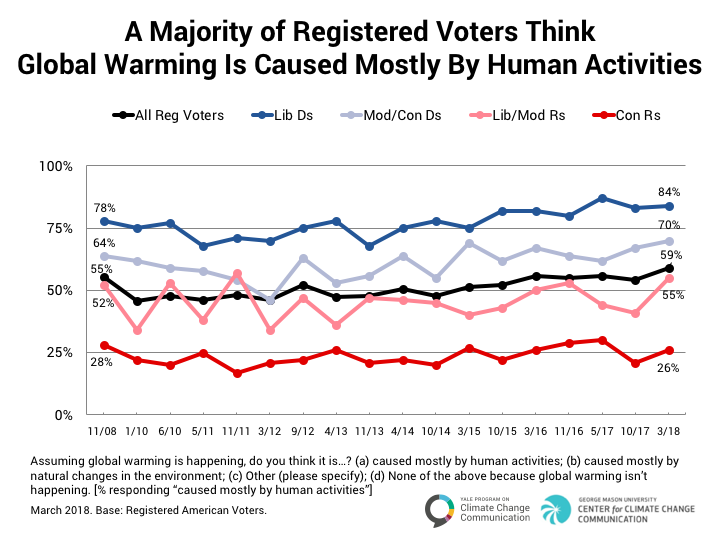
The report says that, among Republican registered voters, belief that global warming is happening has increased 4 percentage points, while belief that it is mostly human-caused has increased 9 percentage points since the Fall of 2017. Republicans are also more worried about global warming than they were in the Fall (+5 points).
It appears that the “Trump Effect” – in which Republican opinions on climate change declined after the 2016 election – has bottomed out. Republican opinions have rebounded – in some cases to new record highs. Republican support for strict carbon dioxide limits on existing coal-fired power plants increased nine points and support for requiring fossil fuel companies to pay a revenue-neutral carbon tax rose seven points since Fall 2017.
More broadly, public support for a variety of climate and clean energy policies remains strong and bipartisan. Large majorities of registered voters support:
Funding more research on renewable energy (87% support), including 94% of Democrats, 83% of Independents, and 79% of Republicans.
Generating renewable energy on public land (86% support), including 91% of Democrats, 82% of Independents, and 81% of Republicans.
Providing tax rebates to people who purchase energy-efficient vehicles or solar panels (85% support), including 91% of Democrats, 82% of Independents, and 77% of Republicans (+6 points since Fall 2017).
Regulating carbon dioxide as a pollutant (81% support), including 91% of Democrats, 80% of Independents, and 69% of Republicans (+8 points since Fall 2017).
Few registered voters think the United States should use more coal (12%; 6% of Democrats, 14% of Independents, and 18% of Republicans) or oil in the future (11%; 7% of Democrats, and 16% of both Independents and Republicans).
By contrast, solid majorities of registered Democrats, Independents, and Republicans say the United States should use more solar energy (80%; 84% of Democrats, 80% of Independents, and 75% of Republicans) and wind energy in the future (73%; 82% of Democrats, 75% of Independents, and 62% of Republicans).
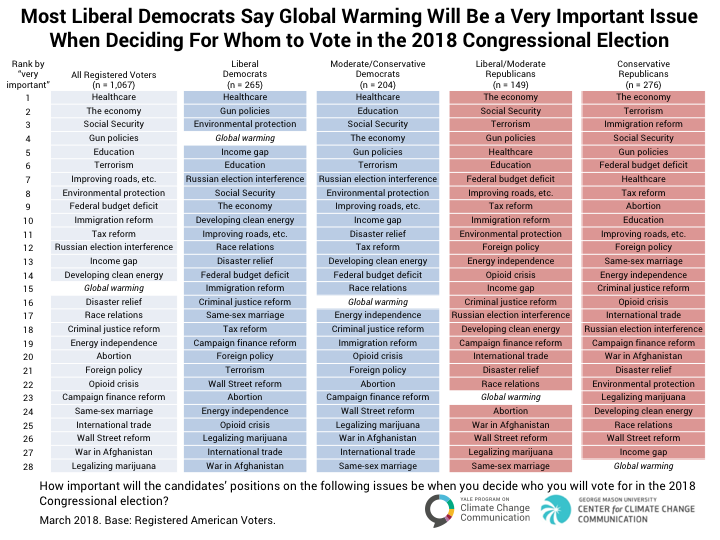
Regarding the 2018 Congressional election, 38% of registered voters say a candidates’ position on global warming will be very important when they decide who they will vote for. When asked how important 28 different issues would be in determining who they vote for in the 2018 election, registered voters ranked global warming 15th overall. But among liberal Democrats, global warming was voting issue number 4, after healthcare, gun policies, and environmental protection more generally.
Global warming is now a leading issue among the Democratic base. Despite the increase in Republican beliefs and attitudes over the past 6 months, however, it remains a low priority issue among Republicans.
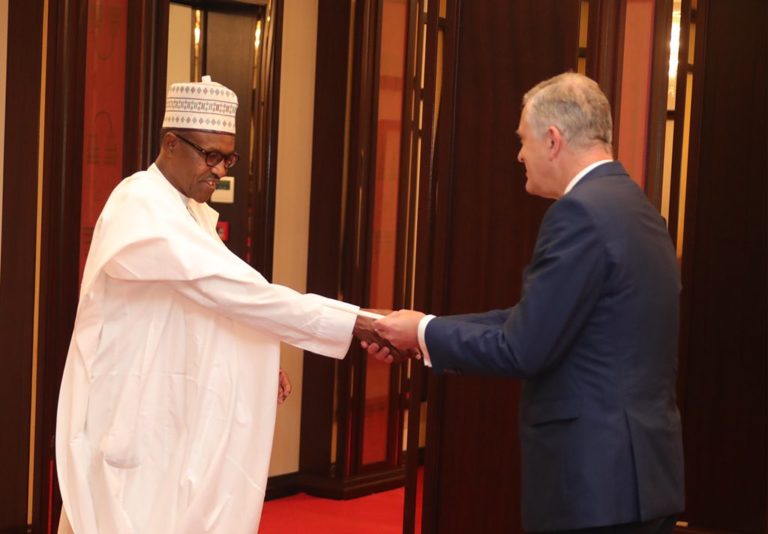
President Muhammadu Buhari of Nigeria on Tuesday, May 8, 2018 reiterated the need for sustained financial, technical and capacity building support from the international community to mitigate the adverse effects of climate change in the country.
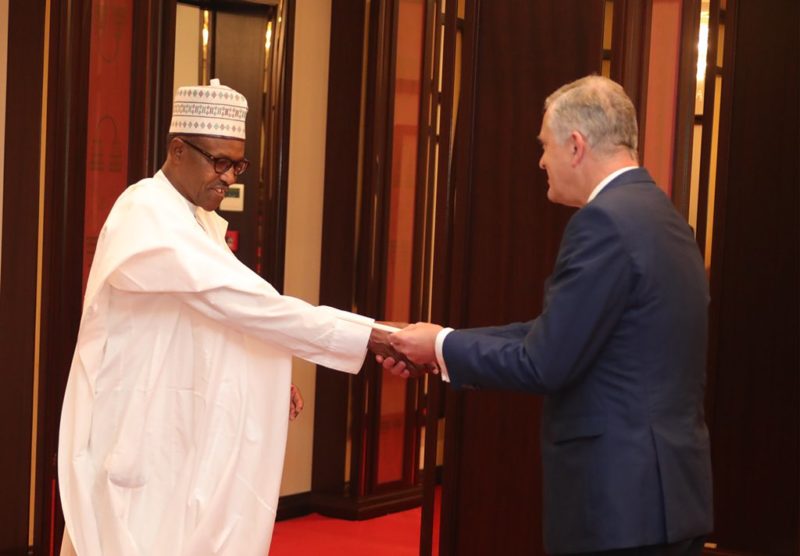
President Muhammadu Buhari receiving Letter of Credence from Mr Robert Jan Petri, the Ambassador of Netherlands to Nigeria
The President made the call when he received Letter of Credence from Mr Robert Jan Petri, the Ambassador of Netherlands to Nigeria.
President Buhari said Nigeria would continue to vigorously pursue the replenishment of the Lake Chad Basin, which had dried up to 10 percent of its original size.
”With the population growth in Nigeria and the drying up of the Lake Chad, we have to move faster and adapt to the impacts of climate change through technological solutions,” he said.
The President told the Dutch Ambassador that following Nigeria’s active participation in UN-organised climate change conferences in 2015, 2016 and 2017, the Nigerian government successfully hosted a high-level international conference on Lake Chad in February 2018.
He noted that the high-level conference provided an opportunity to push further options to restore the Lake Chad, including the inter-basin water transfer project from Ubangi River in Central Africa to the Lake.
On agriculture, the President welcomed the interest by some Nigerian doctoral students studying in the Netherlands on developing the sector through research and innovation, particularly the livestock sector.
In separate remarks, while receiving the Letter of Credence from the High Commissioner of the Republic of Botswana, Mr Pule Mphothwe, Buhari commended the Southern African country for its consistent support to Nigeria in the international forum.
While recounting Nigeria’s leadership role in the liberation of African countries from colonial domination, the President expressed the readiness of Nigeria to continue to support fellow African nations in their time of needs.
”It is a national duty to support our African brothers in their time of need.”
The President, who also received Letter of Credence from Mr Houssam Diab, Ambassador of Lebanon to Nigeria, commended Lebanon for successful parliamentary elections, commitment to stability and security in the Middle East, as well as assistance to Syrian refugees.
In their separate remarks, the Ambassadors while highlighting the existing and cordial relations between Nigeria and their countries, called for increased trade and economic cooperation.
The Dutch Ambassador said: “We are in the process of intensifying our cooperation, particularly on agriculture where we can offer our expertise, being the second largest exporter of food after the United States.”
Also in his remarks, the Botswana High Commissioner told President Buhari that several companies from his country had indicated interest to invest in Nigeria’s mining, agriculture, sports and creative arts sectors.
”Sequel to the visit to my country (Botswana) by your predecessor in 2011, there is a great desire for my President to visit Nigeria,” Amb. Mphothwe said.
The Lagos State Waste Management Authority (LAWMA) on Tuesday, May 8, 2018 urged residents to always bag their wastes to ensure effective evacuation.
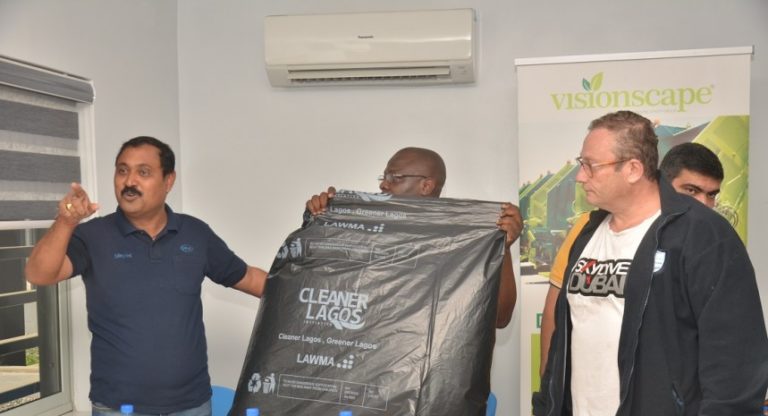
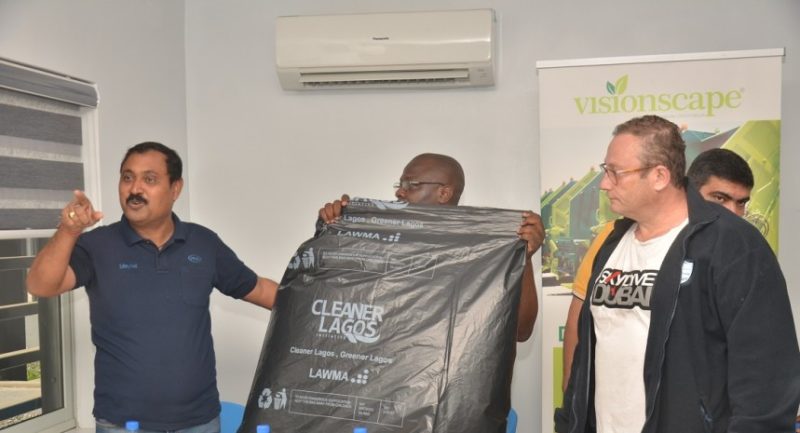
Officials of Visionscape demonstrate the use of the Cleaner Lagos Initiative (CLI) waste bag
LAWMA General Manager, Segun Adeniji, told the News Agency of Nigeria (NAN) in Lagos that the state government’s Cleaner Lagos Initiative had been distributing garbage bags to residents for easy waste evacuation.
“We have noticed that nylon bags did not get to certain areas, but areas where they get to, they are being used.
“Areas where they have not got to, people are expected to even buy the nylon; a roll of nylon is N250.
“People can buy this to ensure the cleanliness of the environment, you buy to complement what is available,” the general manager said.
He said that the March 2017 Lagos Environmental Sanitation and Protection Law clearly stated the role of LAWMA as a regulator.
Adeniji said that, before the law, LAWMA was a fully operational organisation directly in charge of refuse collection all over the state but, with the new law, it became a regulator.
According to him, LAWMA’s role is to make policies, monitor and supervise all those in Lagos that waste management has been concessioned to.
“What we have found out is that the job is going gradually and there is still much to be done. As a regulator we have seen a few gaps here and there and we are adjusting the gaps.
“The gaps showed that the equipment is not enough, they are arriving in batches. On a monthly basis, a good number of trucks are arriving.
“As soon as the concessionaire, that is Visionscape Sanitation Solution, has full complement of trucks, then you will see the whole places will be very clean,” he said.
Special Adviser to the Gov. Akinwunmi Ambode on CLI, Adebola Shabi, had said that as at March this year, Visionscape distributed over eight million garbage bags and over 400,000 garbage bins across Lagos.
“What we want from people living in Lagos is to generate your waste, bag your waste and drop them in front of the houses for effective cleaning and preventive blockage of our drainage and canals.
“The garbage bags and bins are meant for the waste generated, so please ensure that the wastes are packaged and kept at the front of the houses,” Shabi said.
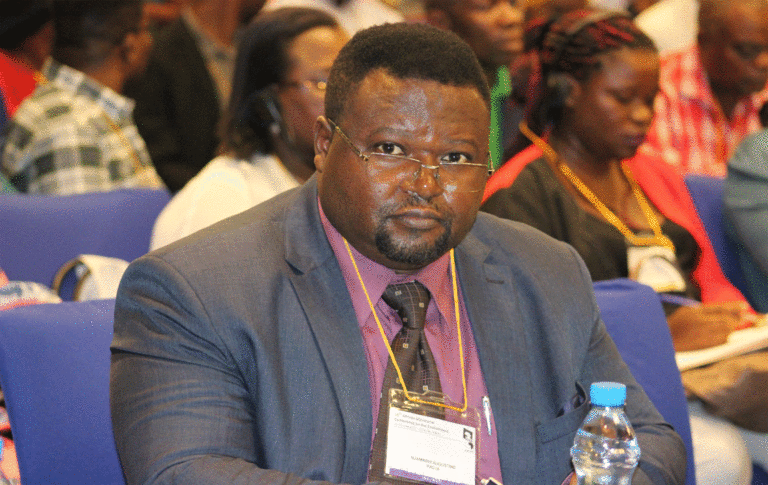
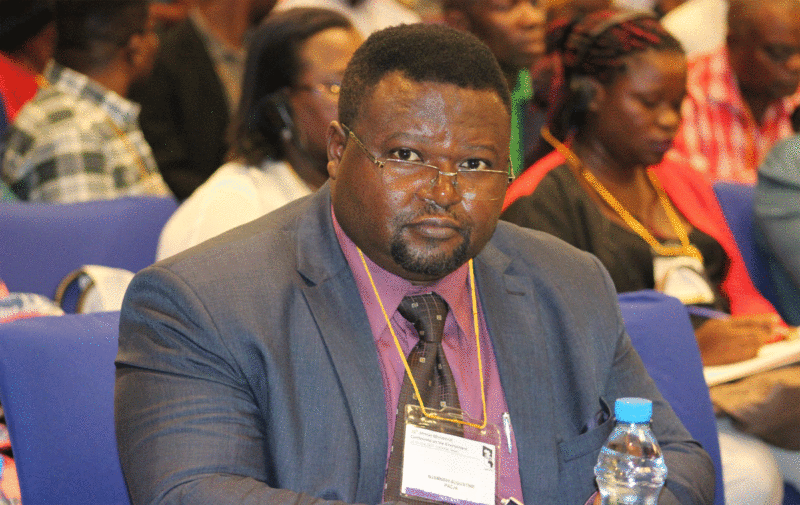
Experts at the Civil Society Organisation (CSOs) Forum on Monday, May 7, 2018 in Abidjan said that renewable energy remained the best way to consolidate Africa’s industrialisation
Augustine Njamnshi
The experts spoke on the topic: “Bridging the energy access gap for Africa industrialisation: challenges and Opportunities”.
Mr Augustine Njamnshi, the Executive Secretary, Bioresources Development and Conservation Programme Cameroon, said renewable energy remained cheap and affordable for industrialisation.
He said that governments in the region and its supporting financial institutions should focus on the use of renewable energy in the industrialisation plan of the region.
He said that with that the potentials of rural communities and people living in the remote areas would be tapped.
He said that South Africa currently had 45 per cent of energy stored in the region, 30 per cent in North Africa, while 24 per cent in sub-Saharan Africa.
This, he said, would not drive the industrialisation revolution in Africa.
“It is true that Africa’s industrialisation revolution drive is late, but we must do the right things to get it done well.
“We must develop in the way that we will accommodate everybody, so our focus must be on how do we carry along women, those in rural areas as agent of development,’’ he said
He said that Africa must make access to energy a human right issue to subject leaders to deliver it to the citizens.
Mr Benson Ireri, Regional Coordinator, Climate Change and Sustainable Energy, said that there would not be any industrialisation without energy.
He said that access to energy was very important in the rural communities to drive growth and development.
He said that, currently, sub-Saharan Africa had 13 per cent of the world’s population but 66 per cent of the population had no access to electricity.
He said that about 80 per cent rely on bio-gas and mainly firewood for cooking, adding that 66 per cent of energy investment in the sub-Saharan Africa was for export rather than for internal utilisation.
“Modern renewable energy accounts for less than two per cent of primary energy mix. Unless access to electricity is increased, the region’s GDP can never increase,’’ he said.
He said that, for Africa to achieve industrial revolution, the 66 per cent of non-access to power must be reversed and government must show political will to drive the revolution.
He further noted that access to finance and need for establishment of facilitating environment remained very important.
Also, Ms Thuli Makama, Africa Senior Adviser, Oil Change, said that financing access to energy remained a major challenge in the region.
She described the African Development Bank (AfDB) drive on “Light up Africa” as one of its priority projects was a step in the right direction.
She called for the bank’s continuous collaboration with CSOs to achieve its goal in the region.
Negotiators and other interest groups at the ongoing UN climate change talks in Bonn, Germany, have been attempting to answer three questions – Where are we? Where do we want to go? How do we get there?
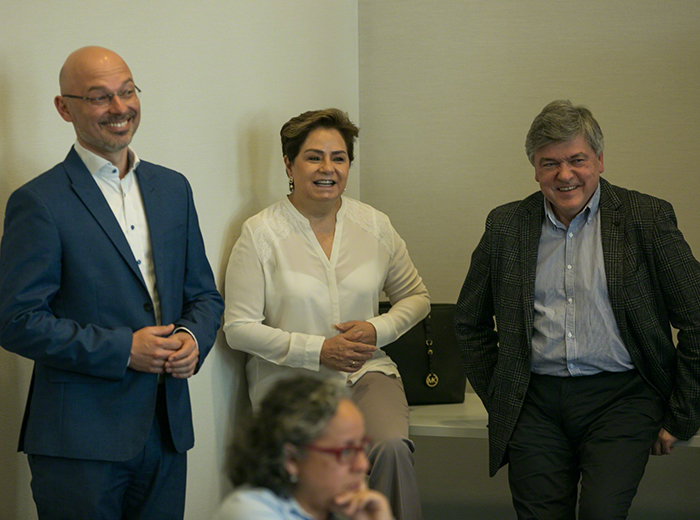
Incoming COP 24 President Michal Kurtyka, Poland, UNFCCC Executive Secretary Patricia Espinosa, and Tomasz Chruszczow, COP 24 Presidency, Poland, attend the Talanoa Dialogue. Photo credit: IISD
The process of answering these questions has been termed the “Talanoa Dialogue”, a Fijian concept of non-confrontational approach to finding solutions to deliver on the Paris Agreement on climate change.
UN climate chief, Patricia Espinosa, at a media round-table, described progress at the talks as mixed, though “the general atmosphere is very positive”.
She observed that “people have come to the negotiations with the willingness to engage in the substantive issues that are before them”.
Climate finance is emerging as one the biggest issues in the negotiation process, in the quest to answer the question of “how do we get there?”
In addition to national emissions reduction targets, developed countries have made a collective promise of $100 billion a year of climate finance by 2020.
But poor and developing countries have their skepticism in the commitment to deliver on the promises to enable their vulnerable economies adapt to the impacts of climate change and redress the damages.
“Countries who have done the most to cause the climate problem must step up to deliver action and finance. They mustn’t delude themselves that distant technologies will solve the climate problem in the future, letting them off the hook for climate action now,” said Teresa Anderson of ActionAid International.
The Africa Group of Negotiators has submitted that “we need to go to a world where developed countries stop making promises but live up to their promises”.
According to the group, financial support should include access to clean technology and expertise, and a significant increase in money from public sources and not simply offload finance to the private sector.
“We call on governments to lay the ground for stronger ambition to honour the Paris climate pact,” said Kimbowa Richard of Uganda’s Coalition for Sustainable Development.
Three years after the adoption of the Paris Agreement, there are expectations among many countries for clear indications how the $100billion climate finance will be delivered.
Patricia Espinosa acknowledged there are technical issues in negotiating climate finance but “I don’t see any denial of the commitments that have been made”.
She noted: “The principle that developing countries need to be supported in order to deliver on their commitments under the Paris Agreement is absolutely unquestioned”.
Investors are using the climate risk assessment as guideline for the decisions they will be taking, says the UNFCCC.
“Now the truth is that even those 100 billion will not be enough to financing the big transformation that is required in this agenda,” said the Executive Secretary of the UNFCCC.
Espinosa therefore believes the willingness for compliance will need to move beyond the UNFCCC process, by exploring the bigger picture in the implementation of the roadmap.
Climate change impacts are already visible in communities and exacerbating poverty in developing countries.
Outcomes of the Bonn Climate Talks would define progress to be made at the COP24 climate summit in Katowice, Poland later this year.
The pioneer post graduate students at the Marine and Offshore Engineering Centre of Excellence have commenced studies at Rivers State University, Port Harcourt, involving 18-month academic and field work that will lead to the award of Masters degrees in Marine Engineering (Power Plants), Naval Architecture and Offshore and Subsea Engineering. A Diploma in Marine and Offshore Engineering will also be awarded by the Centre which was established last year by the Shell Petroleum Development Company of Nigeria Limited (SPDC) operated Joint Venture.
Shell Petroleum Development Company of Nigeria Limited (SPDC) General Manager, External Relations, Igo Weli
“We are pleased that the Centre of Excellence has taken off with students eager to achieve their dreams using hydrodynamic equipment that can simulate offshore/marine situations,” said SPDC’s General Manager External Relations, Igo Weli, as he led a Shell team to witness the historic commencement of classes.
“The Centre of Excellence is another powerful testimony on the educational initiatives of SPDC which began with the Shell scholarship scheme since the 1950s,” he added.
The Centre of Excellence in Marine and Offshore Engineering – said to be the first in Nigeria – offers a programme that covers lectures, practical sessions, term project modules and a six-month internship in the oil and gas industry. The Board of Trustees for the Centre which is chaired by the Vice Chancellor of Rivers State University, Prof. Blessing Didia, also held its inaugural meeting on the day the Shell team visited. Prof. Didia thanked SPDC and her partners for establishing the Centre of Excellence in the university, calling on undergraduate students in Marine Engineering and other Engineering disciplines to study harder as to qualify for enrolment into the programme.
Director of the Centre, Dr. Ibiba Douglas, stated that 10 students were admitted to the programme after a rigorous selection process, and commenced studies in April this year. Speaking at a lecture organised by the centre titled “An enabling business environment – implications for future careers in the oil and gas industry,” Mr. Weli called on youths in the Niger Delta to support the creation of a business environment that will attract investments to the region.
He said: “The way we act, speak and manage conflict will help to create an environment where peace, investments and prosperity will thrive for the benefit of all stakeholders including communities.”
Mr. Weli echoed the same sentiments at a dinner which he later hosted to mark the take-off of the Centre which was attended by several stakeholders including the President of The Ship Owners Association of Nigeria (SOAN) Capt. Greg Ogbeifun, Managing Director of the Naval Ship-Yard Limited Commodore Abolaji Orederu and the Executive Secretary of the Nigerian Content Development and Monitoring Board, Simbi Wabote (represented by Dr. Patrick Obah).
In other support for tertiary education, SPDC JV funds a Centre of Excellence in Geosciences and Petroleum Engineering at University of Benin, and endowed six Professorial Chairs at Obafemi Awolowo University, Ile Ife; University of Nigeria, Nsukka; University of Port Harcourt; Ahmadu Bello University, Zaria; University of Uyo; and the Federal University of Petroleum Resources (FUPRE), Effurun. The Chairs are in Geophysics, Environmental Management and Control, Petroleum Engineering, Mechanical Engineering, as well as Climate Change and Biodiversity Conservation.
The Chair in Light Weight Automobile Engine Development at FUPRE is the most recent endowment and is expected to contribute to the growth of local content in Nigeria’s automobile industry.