Close to 500 organisations and 140 leading economists on Wednesday, May 9, 2018 in Bonn, Germany called on parties gathered for the latest round of climate negotiations to address fossil fuel production and financing in order to ensure success in meeting goals enshrined in the Paris Agreement.
Bonn, Germany. Photo credit: destination360.com
In a submission to the UN’s “Talanoa Dialogue,” civil society organisations from around the world have highlighted their demands in the Lofoten Declaration, adopted in 2017 and since endorsed by some 600 organisations worldwide. The Declaration states “that it is the urgent responsibility and moral obligation of wealthy fossil fuel producers to lead in putting an end to fossil fuel development and to manage the decline of existing production.”
While the Paris Climate Agreement was largely hailed as marking the “end of the fossil fuel era” by journalists after the 2015 Paris climate summit, fossil fuel production has thus far been left out of the official discussions of its implementation. Meanwhile, research has shown that existing production of fossil fuels, if left unchecked, is not compatible with achieving the Paris Agreement’s goals.
“The Pacific Islands Development Forum is proud to be a signatory of the Lofoten Declaration that seeks an end to fossil fuel development and to manage the decline of existing production. Technologically, we are now in a position to wean off fossil fuels well before 2050. The only reason why fossil fuel exploration continues is because of powerful people with vested interests and the political influence that they wield.
“The Lofoten Declaration is sending the message that there is no future for fossil fuels in a planet experiencing the current level of climate change. It stands to reason that fossil fuel exploration, and eventually production, must come to an end if we are to fulfil the commitments of the Paris Agreement which almost all countries in the world have now ratified,” said Pacific Islands Development Forum Secretary General François Martel.
In a parallel move, the “Not a Penny More” declaration focused on finance sectors has also been submitted to the Talanoa Dialogue, recommending an end to new fossil fuel investments and a dramatic increase in investments in renewable energy. The declaration is signed by over 140 economists from around the globe.
While world leaders have spoken out about the need for increased financing for climate solutions, they have remained largely silent about the other, dirtier side of the equation: the ongoing finance of new coal, oil and gas production and infrastructure. We inherit the world we invest in, and the world’s public and private funds continue to pour capital into new extraction and carbon emitting fossil fuel projects.
“The Talanoa dialogue asks us where do we want to be and how we get there. Our answer is that we want to be in a world free of fossil fuels and to get there we need to put an end to financing of coal, oil and gas and also nuclear power plants,” said Anu Muhammad, Professor of Economics, Jahangirnagar University, Dhaka, Bangladesh.
The global economy will lose a whopping $23 trillion by 2050 through land degradation, a review by the United Nations Convention to Combat Desertification (UNCCD) warns. To take urgent action now and halt these alarming trends would cost $4.6 trillion – only a fraction of the predicted losses.
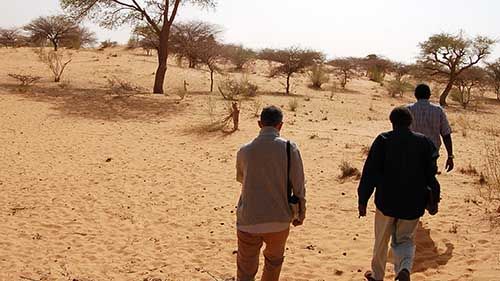
Desertification in Nigeria
The outcomes of the review have been assembled into comprehensive and easy-to-use Land Degradation Neutrality (LDN) Country Profiles, of which 21 are already available online. The LDN Country Profiles reveal that average losses for these 21 countries are equivalent to 9% of GDP. This figure is even higher for some of the planet’s worst affected countries, such as the Central African Republic, where the total losses are estimated at a staggering 40 percent. Asia and Africa bear the highest costs, estimated at $84 billion and $65 billion per year respectively.
“Healthy land is the primary asset that supports livelihoods around the globe – from food to jobs and decent incomes. Today, we face a crisis of unseen proportions: 1.5 billion people – mainly in the world’s most impoverished countries – are trapped on degrading agricultural land. This reality is fuelling extreme poverty, particularly in areas such as the Sahel and South Asia, where extreme and erratic weather events are on the rise due to the impacts of climate change,” says Juan Carlos Mendoza, Managing Director of the UNCCD Global Mechanism.
The LDN Country Profiles aim to help guide policy decisions on land use management. The profiles are based largely on the analytical work undertaken by the Centre for Development Research of the University of Bonn, the Economics of Land Degradation Initiative and the International Food Policy Research Institute.
Target 15.3, on Land Degradation Neutrality (LDN), encourages countries to halt land degradation in order to ensure the quantity of productive land remains stable. The target is now also recognized as vital for accelerating other SDGs, such as: Goal 1 (No poverty), Goal 2 (Zero hunger), Goal 5 (Promote gender equality), Goal 6 (Clean water and sanitation), Goal 8 (Decent work and economic growth), and Goal 13 (Climate action).
The 21 countries whose profiles were released on Wednesday, May 9, 2018 are also engaged in the LDN target setting process, formulating targets and associated measures to avoid, reduce and reverse land degradation. For example, the Central African Republic has committed to restoring more than one million hectares of degraded land – equal to 15 percent of its territory – which will limit its potential losses and economic burden nationwide.
“The LDN Country Profiles provide policy-makers with easily accessible and scientifically sound information that can help estimate the value of their investments in land restoration and make informed choices on the economic returns they can expect from taking assertive action now. Moreover, the profiles illustrate the equivalent monetary value of land degradation and its impact on the international community, while providing strong incentives for cooperation among countries,” Mendoza adds.
A broader picture of the economic costs of failing to act decisively and restore available land resources will emerge as additional country profiles are released.
“Unifying our Voices for Bird Conservation” is the theme of World Migratory Bird Day 2018. Among the significant, but often underestimated threats to migratory birds across the African-Eurasian Flyways – the major bird migration corridors which links Europe, Africa and Western Asia – is lead poisoning. The UN Convention on Migratory Species (CMS) and the Agreement on the Conservation of African-Eurasian Migratory Waterbirds (AEWA), two international environment treaties behind World Migratory Bird Day are said to be driving international efforts to tackle the global threat.
Migratory birds
Lead poisoning is caused when lead is released into the environment. Lead is a highly toxic heavy metal that is used for both fishing weights and hunting. When fired from a shot gun, hundreds of lead pellets fall into the wider environment putting wildlife at risk.
Between 400,000 and 1.5 million waterbirds alone die in Europe annually from ingesting this lead. The number of additional birds suffering health problems because of poisoning by lead ammunition is at least as large as the number killed by lead shot every year.
Waterbirds and other birds see lead shot or lost fishing weights and pick them up either as food or mistaking them for grit. They die directly from poisoning or the ingested lead affects their immunity, behaviour and reproductive capacity. Raptors and scavengers pick up the lead shot or fragments of bullets in the prey or carrion they eat. Lead left in the environment contaminates soils, and people are exposed when they consume lead-shot game.
CMS Executive Secretary, Bradnee Chambers, said: “Lead poisoning the world over is not only killing millions of birds. Lead in our environment is also an issue of human health which urgently needs to be addressed.” While habitat loss, pollution, unsustainable harvest and agricultural practices, illegal killing and trapping as well as collision and electrocution by power lines are among the greatest dangers to migratory birds, lead poisoning is one of the threats, for which there is a practical solution.
Lead-free ammunition is now available and has been demonstrated by research and in practice to be effective. Many hunters already use non-toxic ammunition. Some countries such as Denmark and the Netherlands have completely phased out all lead shot more than 20 years ago.
Changing to non-toxic alternatives could benefit nature conservation and human health. A ban on lead ammunition resulting in reduced lead emissions, secondary poisoning of vultures and other raptors and risks to human health, would bring substantive economic benefits to society in terms of healthy people and a healthy environment.
AEWA was the first international treaty to focus on addressing the problem of lead ammunition. AEWA Executive Secretary, Jacques Trouvilliez, said: “The treaty has called for a political commitment to phase out lead in wetlands and many countries responded to the appeal. Now we need legally binding measures at country level to stop hunting with lead shot.”
CMS addressed lead poisoning to prevent the risks to migratory birds and called for lead ammunition to be phased out across all habitats. While many countries in North America and Europe have made progress to ban lead in wetlands, CMS wants to take the issue to a global level and extend it to all habitats. To support this effort, CMS has formally established the Lead Task Group, a multi-stakeholder expert group bringing together the industry, the hunters and conservationists to help Member States facilitate concerted efforts to minimize poisoning of migratory birds from lead ammunition and fishing weights.
World Migratory Bird Day is celebrated each year to highlight the need for the conservation of migratory birds and their habitats. More than 300 events in more than 60 countries to mark World Migratory Bird Day 2018 will include bird festivals, education programmes, media events, bird watching trips, presentations, film screenings and a benefit concert to raise funds for international nature conservation.
The raging floods that have engulfed Kenya since March have claimed 132 lives and displaced 222,456 people, the government said on Wednesday, May 9, 2018.
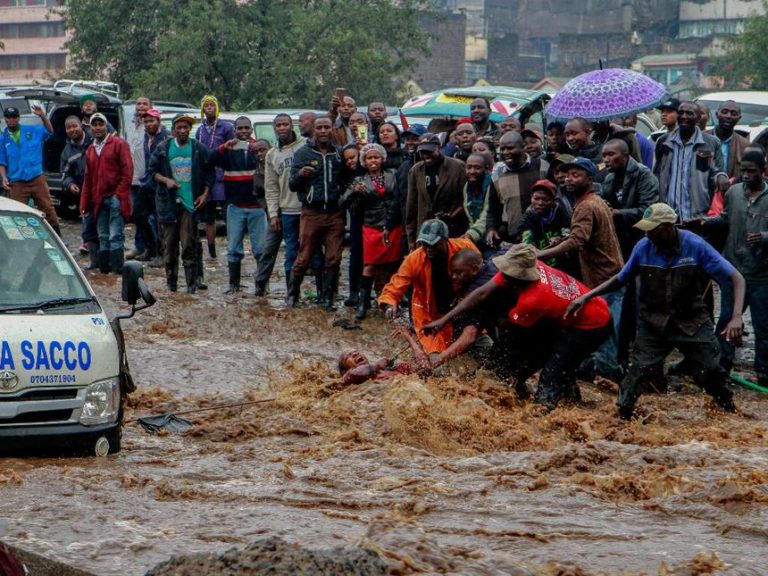
A passenger is rescued from a submerging Matatu along Grogon area, near Kirinyaga Road following heavy down pour witnessed in Nairobi and its outskirts on March 15, 2018. Photo credit: Enos Teche
Karanja Kibicho, the Principal Secretary in the Ministry of Interior, called on Kenyans to exercise caution and extreme care during heavy rains in flood prone areas.
“Latest statistics indicate that 222,456 people have been displaced by floods while, sadly, another 132 lives have been lost in the floods,” Kibicho said in a statement issued in Nairobi.
He said a multi-sectoral team which had been formed since the onset of the rainy season in March has been working round the clock to rescue flood victims as well as to provide food and medicines to citizens in all the affected 32 counties in the country.
Kibicho said the government had so far distributed food worth $6 million and large quantities of essential medicines to prevent or contain outbreak of water borne diseases.
“The government will continue to carry out various mitigation activities across the floods affected parts of the country to rescue marooned citizens, distribute food and medicines.
“Others are water, restore water and sanitation systems to ensure hygienic conditions,” Kibcho said.
The East African nation has been experiencing unprecedented flooding in recent days as torrential rains pound the country shortly after it had come out of a severe drought season marked by hunger and water scarcity.
The low lying plains have borne the brunt of floods as evidenced by massive destruction of homes, farms, infrastructure and basic amenities like schools and hospitals.
Many schools in the arid and semi-arid regions are already submerged in floods hence putting uncertainties on resumption of studies after the April holiday.
Major cities have also been affected by flooding that is to blame for gridlock and clogged drainage system.
It is feared that an epidemic could erupt in big cities like Nairobi and Mombasa due to contamination of drinking water.
No fewer than 695,000 people have been affected by flash floods and river floods, caused by ongoing heavy rainfall in Somalia, the World Health Organisation (WHO) said.
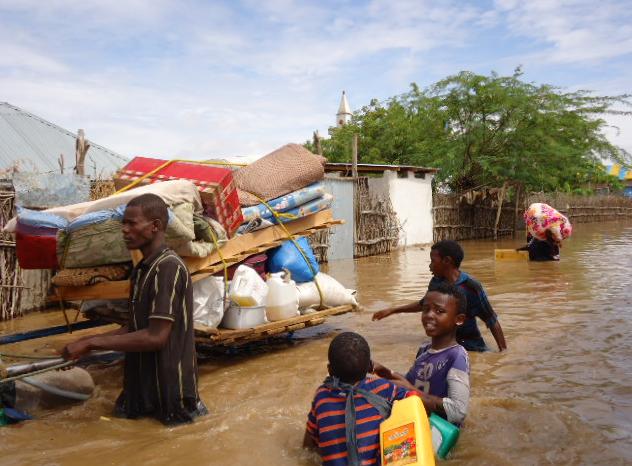
Victims of flooding in Somalia
According to the WHO, out of the figure, nearly 215,000 people have been displaced in the past few days as most flooding occurred in the regions of Bakool, Banadir, Bay, Hiraan, Lower Juba, Middle Juba and Middle Shabelle.
“Urgent needs of the afflicted communities include shelter, food, health, nutritional supplies, access to water and sanitation, latrines, mosquito nets and tents,’’ WHO said in a statement released on Wednesday, May 9,2018 in Mogadishu, Somalia.
The UN agency warned that flooding can trigger the transmission of water-borne and vector-borne diseases, such as cholera, malaria and dengue fever and contaminate water sources.
It said health authorities and WHO had alerted the Early Warning System in Somalia and agency’s communicable disease surveillance officers to look out for the emergence of any waterborne or vector-borne diseases to respond to and manage any resulting disease outbreaks in a timely manner.
WHO said in its close collaboration with the ministry of health said it has airlifted and pre-positioned 30.1 tonnes of emergency medical supplies to Belet Weyne, Baidoa and Kismayo to treat illnesses commonly spread during emergencies as part of an immediate response.
“These provisions include basic, essential, medical drugs Oral Re-hydration Supplies, water-testing kits and cholera treatment supplies. Similar medical supplies will soon be sent to the South West and Jubaland States,’’ it said.
However, the UN health agency estimates an additional 2 million U.S. dollars will be required to purchase and distribute emergency supplies to other flood-affected areas.
These resources, it said, would also fund staff needed to deliver services; monitoring and response to disease outbreaks; and the coordination of all these efforts.
According to WHO, one of the worst-hit areas includes BeletWeyne, Hiraan, in the Hirshabelle State, where more than 120 000 people some of whom have already been displaced from their original homes were forced to flee riverine villages after the Shabelle River burst its banks, destroying houses and crops.
Somalis have suffered from natural calamities and civil strife over the years and endured drought, disease outbreaks, and insecurity among other challenges.
This, according to WHO, has resulted in malnutrition, poor access to health, and prevalent poverty all across the country.
Ghulam Popal, WHO Representative for Somalia, however, warned that the needs are outrunning the support available and called for urgent action to respond to this emergency.
“A well-coordinated response by authorities, and local and international organisations averted a cholera epidemic in 2017.
“We need a similar response again, now, to save livelihoods and prevent the spread of diseases among an already vulnerable society,’’ said Popal.
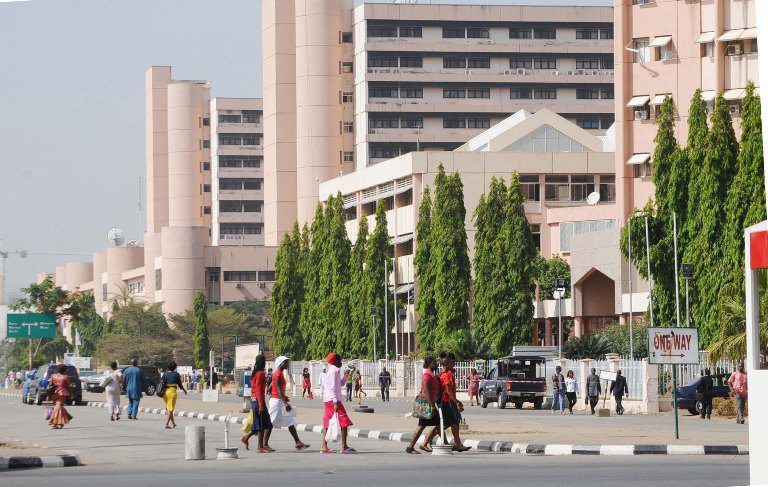
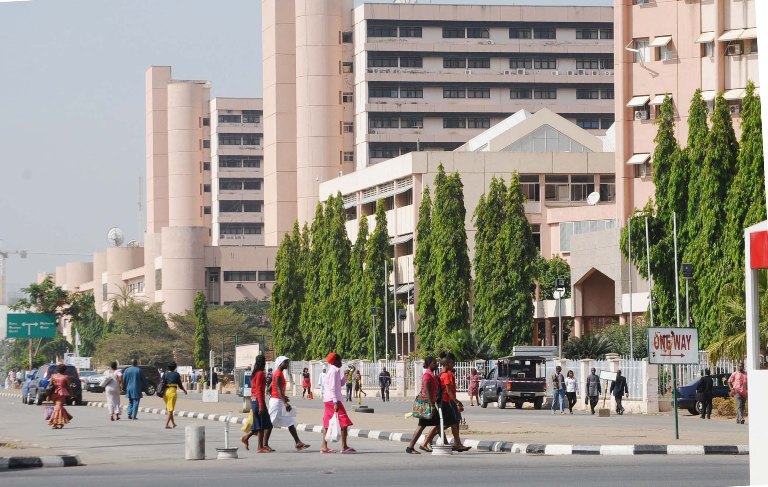
Environmental Health Officers from relevant organisations, in collaboration with the Federal Ministry of Environment, on Wednesday, May 9, 2018 began the inspection of Federal Government’s premises in Abuja to ensure clean and healthy environment.
Federal Secretariat Complex, Abuja
Mr Charles Ikeah, the Director, Pollution Control and Environmental Health, Federal Ministry of Environment, inaugurated the commencement of the inspection in the federal capital city.
Ikeah said his department, in collaboration with Environmental Health Officers Registration Council of Nigeria (EHORECON) and Abuja Environmental Protection Board (AEPB), would be inspecting Federal Ministries, Departments and Agencies (MDAs).
He said the purpose of the exercise was to prevent diseases such as lassa fever, Cholera, Malaria, Typhoid, toilet infection and other preventable diseases.
“We are embarking on a Routine Sanitary Inspection/Environmental Health Assessment exercise of Federal Government establishments within the FCT, which will be extended to other states in due course,’’ the director said.
Ikeah said Federal MDAs were enormous in the FCT and environmental health conditions of the establishments had deteriorated due to lack of adequate sanitary facilities, unattended heaps of refuse and junks within the office premises.
He said that sanitary health officers would inspect MDAs’ premises to identify lapses and make necessary recommendations to avoid the spread or outbreak of diseases.
Ikeah urged the authorities of MDAs to grant sanitary health offers access to their premises and support the exercise.
He appealed to the environmental health officers at the state and local government levels to embark on their regular routine of house-to-house inspection to keep Nigeria clean, green and healthy.
The Registrar, EHORECON, Dr Dominic Abonyi, said sanitary inspection of office premises was a good step in a right direction because it offered a veritable platform for detecting and correcting defects.
“It will create better understanding of the profession of environmental health among relevant stakeholders.
“This will enable stakeholders to support the need to create a pool in the public service, from where environmental health professionals can be posted to MDAs requiring their services,’’ Abonyi said.
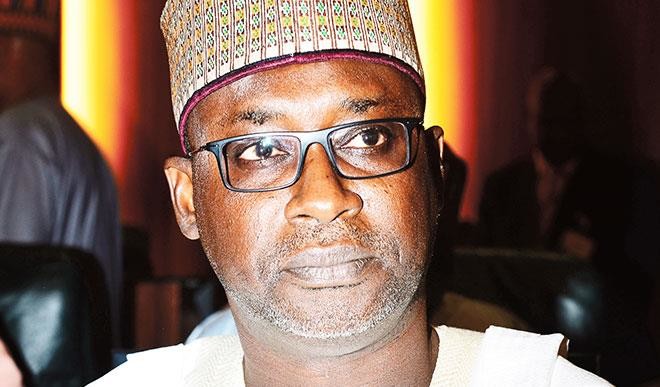
The Director of Water Quality Supply and Sanitation in the Federal Ministry of Water Resources, Mr Emmanuel Awe, says the ministry has proposed a N30 billion fund to tackle open defecation in the country.
Suleiman Adamu, Minister of Water Resources
Awe said this in Abuja on Wednesday, May 9, 2018 when he received a delegation from the Water Supply and Sanitation Collaborative Council (WSSCC) led by its Executive Director, Mr Rolf Luyendijk.
According to him, the fund which will be part of the National Campaign to End Open Defecation is also to encourage state governments to begin to set aside funds through budgets for sanitation and hygiene.
He said this became necessary to reverse the trend in the country, adding that the current data on open defecation practice was unacceptable.
The director noted that there were currently low investments on Water, Sanitation and Hygiene (WASH) from all stakeholders, calling on private individuals to begin to invest in scaling up access to WASH.
Awe said the ministry in its 2018 budget set aside funds for sanitation and hygiene scale up, noting that advocacy was currently being carried out to all state governments to make budgetary provisions for sanitation.
He cited conflicts in some parts of the country as some of the challenges to low attainment of Open Defecation-Free (ODF) societies in local government areas.
The Deputy Director, Sanitation, in the ministry, Mr Emmanuel Eze, highlighted the current emerging issues in sanitation such as impact of climate change and non-availability of a workable roadmap.
Eze urged state governments to evolve a roadmap to scale up access to water, sanitation and hygiene in the country.
Luyendijk, in his remarks, noted that access to sanitation and hygiene remains crucial in breaking the poverty cycle.
According to him, poor health and loss of income is fuelled by lack of WASH in countries.
“It is absolutely critical; think how critical it is in emergency situation when there are displaced persons; the very first response that people do is to provide water and sanitation and this is because it is to prevent an already bad situation from deteriorating.
“Water supply and sanitation is so key to people’s heath, wellbeing; if we don’t have that in place, it is sickness, it is huge health expenditure, poverty, nutrition for families,’’ he said.
Luyendijk called for more commitment from all tiers of government in policies and programmes toward improving the lives of its populace.
WSSCC is s a UN membership organisation that advocates for improved sanitation and hygiene for the most vulnerable and marginalised people around the world.
WSSCC facilitates multi-stakeholder collaboration around sanitation and contributes to the international community’s broader goals of poverty eradication, health and environmental improvement, gender equality and long-term social and economic development.
The innovative Talanoa Dialogue (TD) took place on Sunday, May 6, 2018 in Bonn, Germany and was sandwiched between the first and second weeks of climate negotiations. After the dialogue everyone was somewhat upbeat about how useful the experience was. Indeed, a delegate from the Democratic Republic of Congo was quoted to have said that the TD offered representatives of countries the space to speak like humans and not as parties (to the United Nations Framework Convention on Climate Change – UNFCCC). Another delegate said that TD was an inclusive and open process creating a new space for international diplomacy. Some said the process should continue beyond COP24.
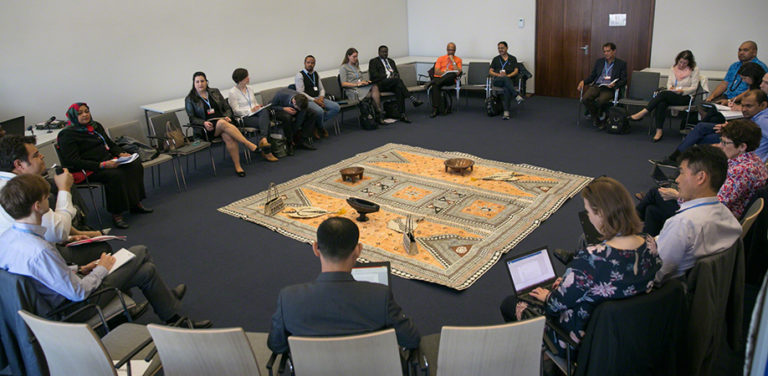
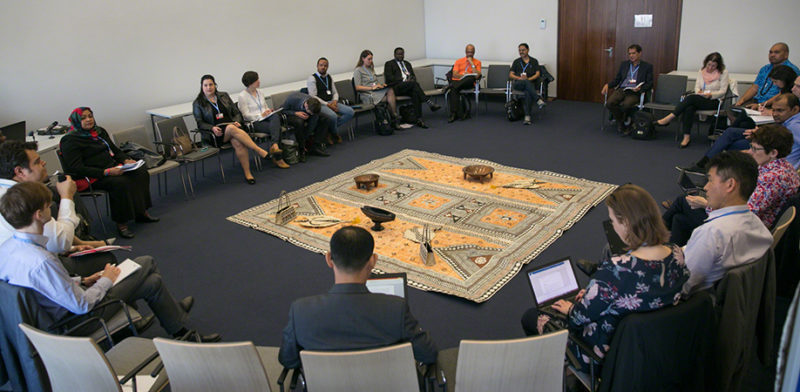
Participants at the Ba Room, one of the seven Talanoa Dialogue sessions
The TD was a facilitative dialogue proposed by the Fijian President of COP23 to reflect the “Pacific spirit” of “story-telling, problem solving and decision-making for the collective good.” The Dialogue encouraged parties to speak freely to each other on three questions about the global climate crisis: Where are we? Where do we want to go? How do we get there?
Parties and non-state actors including businesses, youths, indigenous peoples, labour, women, and other civil society organisations gathered in three spaces for storytelling, echoing the Pacific pattern of conflict resolution and building consensus.
At the report back session from the Dialogue on Tuesday May 6, the leader of the Nigerian delegation, Dr Peter Tarfa, stated that the TD had a positive outcome and that Nigeria would plan to replicate it at the national level. He stressed that the answer to the question of How do we get there can only be fashioned on trust and transparency.
A Dream Dialogue
On the whole, the fact remained that the dialogue aimed to prepare the hearts of the parties to the hard tasks of negotiations – to bring everyone to the point of hearing one another and understanding that we can only go far when we walk together. It reminds us of the saying by Martin Luther King Jnr that “It may be true that the law cannot change the heart but it can restrain the heartless.” Hopefully the TD could soften some hearts.
While moderating a side event that took place before the TD, Meenakshi Raman of Third World Network, spoke the mind of many observers with regard to the blind side of the TD. She pointed out that a critical question was not on the table and that is how did we get here? That is the question that some parties are unwilling to talk about. It has to do with historical responsibility, with the core principles of the climate convention – that of equity and the common but differentiated responsibility and respective capacities.
Meenakshi Rama further stated: “Asking this question will point to historical emissions responsible for global warming. However, historical responsibility seems like a dirty word that is not being allowed to be mentioned in this space. We cannot ignore the historical perspective.”
The first week of the negotiations had already raised concerns among some delegates with regard to aspects of the Paris Agreement such as: loss and damage, climate finance and the levels of ambition among the industrialised nations. Discussions on the matter of finance were testy as parties looked at how to identify information to be provided by Parties in accordance with Article 9.5. The Article provides that developed countries “shall biennially communicate indicative quantitative and qualitative information” related to the provision and mobilisation of financial resources “including as available, projected levels of public financial resources” to be provided to developing countries.
The Wake of the Dialogue
The report back session from the TD had plenty of bright as well as poignantly dark spots. The bright spots were the many stories of hope, trust, readiness to offer political support and commitment to be fair and to comply. It was also said that indigenous peoples and their knowledge would not be ignored. It was also interesting to hear the presentation of the TD as a storification of the Paris Agreement, with an emphasis on the fact that the story has just started. That makes a lot of sense when it is considered that most of what is being negotiated will only come into effect in 2020, two years down the stormy road.
The dark sports of the Dialogue etched in running conclusions from the various rapporteurs who brought word back from the dialogues. The dialogue on where we are complained that too much attention was paid to technicalities and too little to human values. However, it could actually be said that since voluntary emissions reduction pledges took the place of required emissions reduction based on science, technicalities are actually taking the back seat, except if we are talking of technicalities of semantics.
The TD brought up over 700 stories, but there were running threads in the summaries that should catch our attention. The first was that by 2050 the world should have negative or zero emissions achieved through technologies and forests as carbon sinks. Negative emissions through technologies and forests as carbon sinks imply carrying on with polluting technologies and merely “eliminating” the pollution through sinks. It also suggests that forest dependent communities would be compelled to bear the burden of climate action and get dislocated from Nature’s gifts to them. The second statement said that the question of how do we get there will be answered by technology which was presented as the ultimate solution to tackle global warming.
If those are the takeaways from the Talanoa Dialogue, and if the technologies include geoengineering and the like, it does appear that the stories from the grassroots and from the streets are yet to be heard.
A civil society organisation based in Ouagadougou, Burkina Faso, the Collectif Citoyen pour l’Agroecologie (CCAE), has said the planned release of genetically modified mosquitoes (GMMs) in Burkina Faso, Mali and Uganda should not see the light of the day.
The National Biosafety Agency of Burkina Faso is under pressure not to release the sterile genetically modified male mosquitoes as planned
According to the group, GMM eggs were imported with the approval of the National Biosafety Agency (NBA) in Burkina Faso as part of the Target Malaria project. These eggs are said to be confined in the laboratory of the Research institute of Health Sciences (IRSS) in Bobo Dioulasso, even as breeding is underway to reach 10,000 genetically modified sterile male mosquitoes.
A first release in nature is expected in the coming months but, according to the CCAE, several questions remain unanswered surrounding the potential risks to the environment, human and animal health.
The CCAE lists the concerns to include:
Risk of spreading 50 females that could bite a person infested with malaria and could mate with local males;
Risk of changing mosquito populations and allowing other species to multiply and become more virulent for malaria and other diseases;
Genetically modified mosquitoes are a technical solution and will never replace a good public health policy;
Around the world, experiments on the spread of genetically modified mosquitoes have yielded little convincing results. Worse, this technology requires a steady and almost continuous process of releases involving huge costs;
From an ethical point of view: The expensive cost of this project (37 billion CFA francs for Burkina Faso, Mali and Uganda) to the most uncertain results with major risks and uncertainties could be used in a more useful way to sanitise the environment and reduce the mosquito population;
A research on a malaria vaccine was progressing in Burkina Faso: where are we standing?
Are people well informed about the issues and risks of this upcoming release?
The group adds: “Regarding all these questions, we ask the National Biosafety Agency not to allow the release of sterile male mosquitoes to the IRSS. The results of this petition will be communicated and forwarded to the NBA on Saturday, May 26, 2018 during the march against GMOs organised by the CCAE. They will be annexed to the GMOs Memorandum, which will be sent to the Government of Burkina Faso.”
Genetically modified mosquitoes are being created and released in an effort to reduce mosquito diseases such as malaria and Zika. The genetic modification only targets male mosquitoes. Scientists create genetically modified mosquitoes by inserting what is called a self-limiting gene into their DNA sequence.
The Nigerian government recently reviewed the excise duty rate and structure applicable to tobacco products and alcoholic beverages. Specifically, the government approved an additional ₦1 specific tax on each stick of cigarette (₦20 per pack), which would increase to ₦2 per stick in 2019 (₦40 per pack) and eventually ₦2.90 per stick in 2020 (₦58 per pack) while maintaining the current 20% ad valorem rate on unit cost of production.
According to scientists, tobacco smoking is dangerous to health
The increase on tobacco products which amounts to a tax burden of 16.4% is still way below the World Health Organisation (WHO) recommended 75% excise tax burden. Other African countries currently impose higher excise duty rates on unit cost of production: Ghana (175%), Senegal (45%), and Gabon (32%). The excise duty imposed on tobacco products is not only aimed at increasing government revenue, but also improving public health given the well-known fatal effects of tobacco use.
However, concerns have been raised about the negative economic impacts that increasing taxes on tobacco may have, particularly on tobacco industry revenue and employment. The Manufacturers Association of Nigeria (MAN) cautioned that the new policy would have drastic effects on employment and productivity, leading firms to shut down operations. This was followed by a call to the government to reverse the changes made.
In an earlier article, we demonstrated how the new excise policy on tobacco products would impact health and financial outcomes using the Tobacco Excise Tax Simulation Model (TETSiM). In this short article, we examine the likely impact of the new policy on tobacco industry productivity, competitiveness and employment.
Economic Implications of the Recent Tobacco Tax Policy
In order to examine the economic impact of the change in tobacco tax policy, we draw from the findings of a TETSiM carried out using the new excise duty rates, labor data obtained from the National Bureau of Statistics (NBS), and income data sourced from the World Bank.
On Tobacco Industry Revenue
With the new excise tax, industry revenue is expected to decrease by about 3.3% to ₦98.7 billion after the three-year period which the new policy is to be implemented. Nigerian cigarette manufacturers currently sell cigarette worth ₦119 billion annually. The tax increase will lead to an increase in sales worth ₦17 billion to about ₦136 billion. Most of the increase will be accrued to the government as tax revenue over the policy implementation period.
The increase in tobacco tax would lead to a reduction in cigarette consumption and inadvertently, a reduction in industry revenue. It is expected that money not spent on tobacco products will be spent on other goods and services, hence increasing revenues in other sectors of the economy. However, on the basis of a cost-benefit analysis, the increase in excise tax revenues more than compensates for the decrease in revenue of tobacco industry.
On Employment
Job losses for people in direct employment are very unlikely because the implication of the excise tax is paltry (₦2.90 per pack spread over three years) to cause significant changes. In terms of indirect employment, tobacco farmers and distribution value chain, the new policy is also very unlikely to severely impact livelihoods because most tobacco farmers practice mixed farming, making it easier to switch to alternative crops if there is a reduced demand for tobacco.
Furthermore, players in the distribution value chain (e.g. retailers) do not solely market tobacco products. If the new policy effectively reduces the demand for tobacco products, smokers will re-allocate the finances previously spent on tobacco to spending on other consumer goods, which will benefit the value chain of alternative sectors.
At the aggregate (macroeconomic) level, we expect to see no significant net job losses. In fact, the reallocation of spending away from tobacco products will lead to productivity gains and job creation by the Government in alternative sectors.
Tobacco Industry Competitiveness
The tobacco industry in Nigeria is essentially a near-monopoly with British America Tobacco (Nigeria) Ltd (BATN) accounting for 79% of total retail volume. The rest of the market is dominated by other local players, International Tobacco Co Inc., Leaf Tobacco Company and Philip Morris International Nigeria Ltd. Tobacco firms in Nigeria make supernormal profits when juxtaposed with their cheap production costs and market power. According to the Nigeria Customs Service, the Unit Cost Analysis (UCA) for a pack of cigarettes is ₦60 (the ad valorem duty rate) relative to an average retail price of ₦194.9 for the most sold brands, signaling huge mark-up by the industry.
This implies that higher tax level is unlikely to significantly affect productivity and employment in these firms, as they can pass on the burden of tax to consumers and still maintain their market share and profitability. Moreover, the new tax increase is relatively small; an additional ₦2.90 per stick spread across three years – allowing the firms to adjust. Their market power, supernormal profits, economies of scale, and the gradual policy implementation will ensure little or no negative impact on productivity, hence tobacco firms are unlikely to shut down.
Conclusion
The new tobacco policy is not significant enough to bring about serious negative economic consequences or threaten the existence of tobacco firms in the short, medium or long term. The direct financial benefit, in terms of fiscal revenues (₦29.5 billion), far outweighs any potential losses.
Additionally, the public health benefits of reduced tobacco-related deaths as well as the indirect economic benefits, in terms of medical care costs savings, productivity gains due to a healthier population, reallocation of resources (labour and money) from tobacco to other sectors are invaluable.
The government’s will to implement tobacco control measures is commendable. However, complementary tobacco control measures will need to be taken to realise maximum benefits from the tax policy. Also, the government should earmark the realised revenues from tobacco taxes to fund priority tobacco control activities in the country and assist tobacco farmers to cultivate alternative crops.
By Joseph Ishaku, Precious Akanonu and Chukwuka Onyekwena