Antarctica’s ice sheet is melting more rapidly than previously expected, a scientific study published in the scientific research journal Nature has revealed, adding to the sense of urgency to act on climate change and to finalise the rulebook of the Paris Agreement at the end of 2018.
Melting Antarctic ice
The study, funded by NASA and the European Space Agency ESA, concludes that losses from the continent have tripled since 2012, with meanwhile 180 billion tonnes of ice pouring into the ocean every year.
Scientists fear that if climate change is not controlled swiftly, the ice sheets in Antarctica could collapse because of climate change, leading to a rise in sea levels which would have disastrous consequences for low-lying cities and communities.
Apart from the flooding of the coastal areas, rising sea levels contaminate freshwater sources, and saltwater interferes with agriculture by stunting crop growth.
Time is running out to cut greenhouse gas emissions
The results of the Ice Sheet Mass Balance Inter-Comparison Exercise (IMBIE), that comprised 80 scientists from 42 international organisations, underscores that time is running out and nations must act now to cut greenhouse-gas emissions in line with the objectives of the Paris Agreement.
Even though the ice sheet would not melt overnight, the rate at which it is melting will contribute to at least six inches (15 centimeters) to sea-level rise by 2100, says the study.
Using 24 satellite surveys of Antarctica, this latest IMBIE is said to be the most complete assessment of Antarctic ice mass changes ever conducted.
“This is the most robust study of the ice mass balance of Antarctica to date,” assessment team co-lead Erik Ivins at NASA’s Jet Propulsion Laboratory (JPL) said. “It covers a longer period than our 2012 IMBIE study, has a larger pool of participants, and incorporates refinements in our observing capability and an improved ability to assess uncertainties.”
The team looked at the mass balance of the Antarctic ice sheet from 1992 to 2017 and found ice losses from Antarctica raised global sea levels by 0.3 inches (7.6 millimeters), with a sharp uptick in ice loss in recent years.
The scientists attributed the threefold increase in ice loss from the continent since 2012 to a combination of increased rates of ice melt in West Antarctica and the Antarctic Peninsula, and reduced growth of the East Antarctic ice sheet.
Antarctica’s potential contribution to global sea level rise from its land-held ice is almost 7.5 times greater than all other sources of land-held ice in the world combined. The continent stores enough frozen water to raise global sea levels by 190 feet (58 meters), if it were to melt entirely. Knowing how much ice it’s losing is key to understanding the impacts of climate change now and its pace in the future.
The Intergovernmental Panel on Climate Change (IPCC) disclosed on Monday, June 18, 2018 that registration is now open to review the second order draft of the “2019 Refinement to the 2006 IPCC Guidelines for National Greenhouse Gas Inventories (2019 Refinement)”.
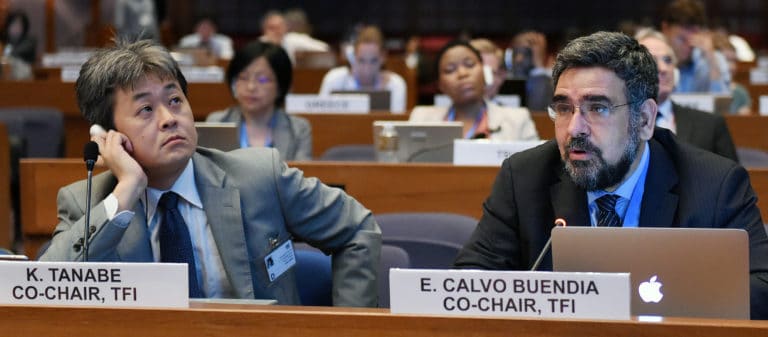
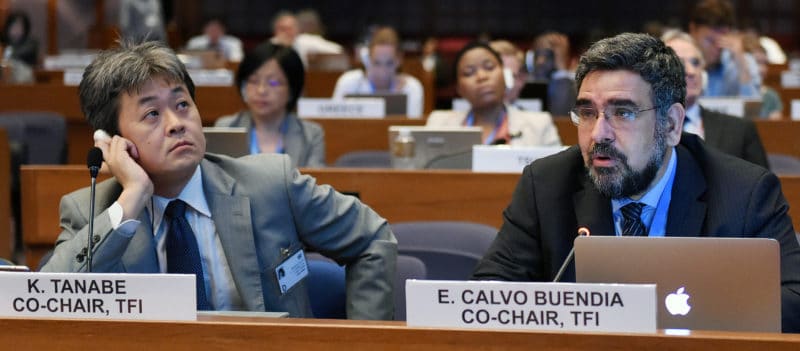
Co-Chairs of the IPCC’s Task Force on National Greenhouse Gas Inventories (TFI), Kiyoto Tanabe and Eduardo Calvo Buendia
The “2019 Refinement” is an update to the guidelines or methodologies that countries use to estimate their anthropogenic emissions by sources and removals by sinks of greenhouse gases. The IPCC says the refinement of its previous guidelines published in 2006 is necessary to provide an updated and sound scientific basis for supporting the preparation and continuous improvement of national greenhouse gas inventories.
IPCC reports go through multiple stages of review to ensure an objective and comprehensive assessment of the latest science. The first draft is reviewed by experts, the second draft by governments and experts and the final draft by governments only. The second draft of methodology report is reviewed alongside a first draft of the Overview Chapter.
The Co-Chairs of the IPCC’s Task Force on National Greenhouse Gas Inventories (TFI), Kiyoto Tanabe and Eduardo Calvo Buendia, stressed the importance of the review in the IPCC process. Therefore they invite governments and experts from all over the world to comment on the accuracy and completeness of the draft’s scientific information as well as its overall balance.
The preparation of the methodology report is managed by two Co-Chairs, coming from a developed and a developing country, and supported by an international staff known as Technical Support Unit.
The government and expert review will start on July 2, 2018 for a 10-week period, ending September 9. Review Editors will make sure that all comments submitted are afforded appropriate consideration by the authors of the report. All comments together with responses by the authors will be published along with the report when it is finalised, according to the IPCC.
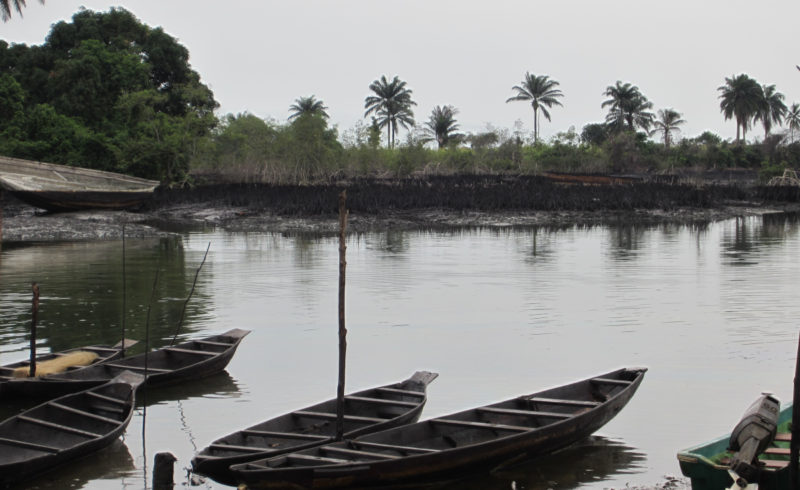
Residents of Agoro Community in Ekeremor Local Government Area of Bayelsa State on Monday, June 18, 2018 berated what they consider a poor and slow response to an oil spill from Shell’s oilfield in the area.
A water body in the Niger Delta polluted by crude oil
They appealed to the Federal and Bayelsa State governments to come to their aid over the spill incident and compel Shell Petroleum Development Company (SPDC) to be alive to its responsibility in spill response.
The community alleged that, several weeks after the spill that destroyed and polluted their farmlands and waterways early in May 2018, Shell had yet to commence clean-up in the impacted areas.
Secretary of Agoro Community Development Committee, Justin Gbagbiri, told the News Agency of Nigeria (NAN) in an interview that they were still counting the losses incurred as a result of the incident.
“The river supports our fishing vocation, and it is one of our major sources of drinking. If we want to cook we use water from the river.
“But since the crude oil polluted our river, we can no longer use water from the river anymore, we have been in distress.
“We cannot use it to bath anymore, just as we cannot use it to clean up after using the toilet.
“So, the spill has affected most of our activities here. Fishing which is our major occupation has been adversely affected, as we cannot go to the river again to fish as we used to.
“What the company has done so far is that they have come around to do some recovery of spilled crude oil but no other major thing has been done. They have not even sent us relief materials.
“What they said was that, it is when the ruptured spots have been brought out and cause of spill identified, they would know if Shell will take responsibility.
“Shell also said they would do the needful only if the cause of spill is identified as equipment failure and not third party interference.
“So, we are waiting for them to come and expose the pipe for observation but nothing has been done to that effect.’’ he said.
The community alleged that SPDC is deliberately delaying the Joint Investigation (JIV) which would ascertain the cause of the oil leak.
Reacting to the development, Dr Alice Aje, Manager, Stakeholder Relations at SPDC, said the oil firm was responding to the spill incident and sought the understanding of the community.
“We regret the spill because it has adversely affected our operations and business, we have shut operations and stopped the spill and we are in talks with our relevant stakeholders.
“It is our responsibility to clean up the spill and if it was found to be case by equipment failure, we shall pay compensation to those affected, that is our process,” Aje said.
She described the spill as “regrettable and unfortunate”, adding that efforts were underway to convene a joint investigative visit with community representatives to probe the cause of the spill.
Deputy Governor of Bayelsa State, retired Rear Admiral John Jonah, on Monday, June 18, 2018 criticised Shell Petroleum Development Company (SPDC) over the frequent spills on oilfields in the state.
Retired Rear Admiral John Jonah
He spoke at one of the spill sites at Agoro community in Ekeremor Local Government Area following the leak of the SPDC River Ramos pipeline.
Jonah urged SPDC to conduct an integrity test on its pipelines in the Niger Delta region, saying many of them were laid a long time ago and may have suffered from corrosion.
The News Agency of Nigeria (NAN) reports that the leak resulted in discharge of crude oil into the river, affecting Agoro community and others in the council area.
The deputy governor also criticised SPDC for the delay in carrying out remediation activities and provision of relief materials to the people in the impacted communities since the incident happened a month ago.
Jonah urged the oil major to expeditiously convene the Joint Investigation Visit (JIV) to ascertain the cause of the spillage.
The deputy governor equally advised SPDC to ensure that all the relevant parties must be involved in the JIV in accordance with international best practices.
He commended the people of Agoro for their patience and for maintaining peace.
Mr Charles Ebulu, a representative of SPDC, however, said that the oil firm was doing all that was necessary to contain further spread of the spilled crude.
Ebulu, who led the deputy governor round the spillage sites, pleaded for understanding from all stakeholders.
He gave an assurance that the issues raised by the deputy governor would be communicated to the appropriate quarters for necessary action.
In his remarks, the Amananaowei of Agoro, Ibamua Ojukonsin, said it took SPDC two weeks to respond after the incident was reported on May 17.
He regretted the delay by SPDC in taking action to contain the spill, adding that the community was yet to receive any form of assistance from the oil firm.
The monarch also decried the recourse of SPDC to always promptly effecting repairs on pipelines in order to resume production without ameliorating the sufferings of residents in impacted communities.
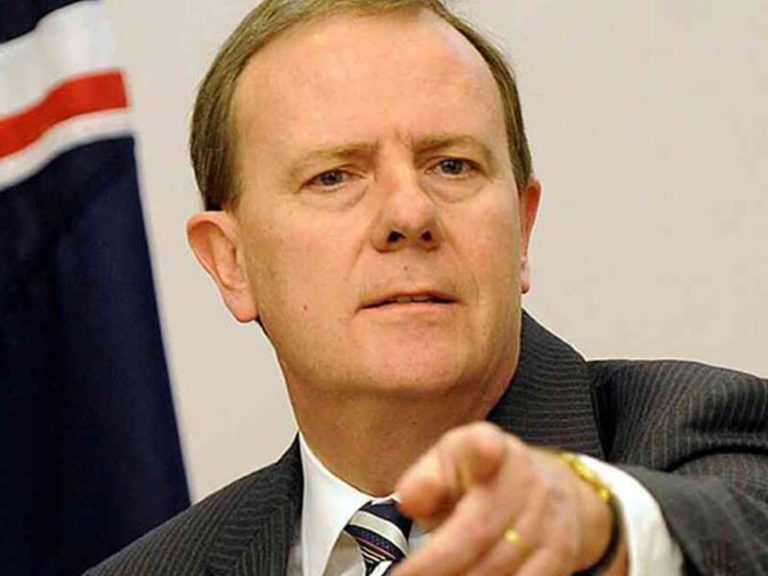
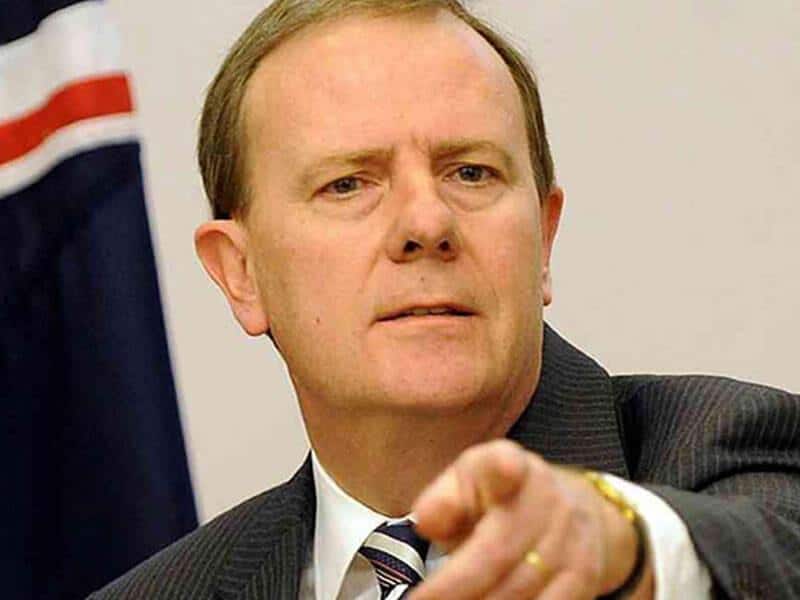
Vice President of Shell Companies in Nigeria (SCiN) and Gabon, Peter Costello, has charged contractors working for and with Shell Companies in Nigeria to prioritise safety and be relentless in discussing the challenges and dilemmas. He noted that Shell is poised to help improve safety performance throughout the energy industry.
Peter Costello
“Safety is our top priority. Everyone who works for us, or with us, has an important part to play in making SCiN a safer place to work. We cannot succeed in isolation and we must share the challenges by building strong partnerships to further improve our safety culture,” Costello said at the 7th edition of annual SPDC JV Contractor CEO Safety Leadership Conference held in Lagos last week.
He added: “We expect our staff and contractors to comply with safety rules and regulations relevant to their work; to intervene to prevent unsafe conditions; and to respect fellow workers and the communities in which we work.”
In his remarks, Managing Director of The Shell Petroleum Development Company of Nigeria Limited (SPDC) and Country Chair, Shell Companies in Nigeria, Osagie Okunbor, described the annual event as an opportunity to share learnings and ensure alignment, common ground and shared commitments on Health, Safety and Environment (HSE) in Shell’s joint operations.
“We cannot be too careful with safety issues. Through engagement, we ensure that the right competence is in place and we create opportunities for our staff and contract staff to speak openly about dilemmas. The collaboration must be continually strengthened so as to make Shell a safety model in the Nigerian oil and gas industry,” Okunbor said, adding that the SPDC, “more than ever before, is committed to delivering energy responsibly and safely, with total prevention of harm to our employees, contractors, local communities and the environment.”
While setting the conference scene, General Manager, Safety and Environment of Shell Companies in Nigeria, Chidube Nnene-Anochie, said the two-day conference was informed by SCiN’s mission to constantly work in partnership with contractors, regulators, industry trade associations and professional bodies to share Shell’s global safety experience, standards and knowledge.
She said the conference had over the years helped to increase safety awareness among contractors working for SCiN particularly in the areas of safety hazards that are peculiar to oil exploration and production activities.
Highpoint of the conference was the presentation of the 2018 SCiN Safety Leadership Awards to contractors who have distinguished themselves as safety champions in the areas of personal, process and transport safety, among others.
The conference was attended by SCiN including the Managing Director, Shell Nigeria Exploration and Production Company (SNEPCo), Mr. Bayo Ojulari; Managing Director of Shell Nigeria Gas, Mr. Ed Ubong; and the CEOs and representatives of over 83 contractor companies.
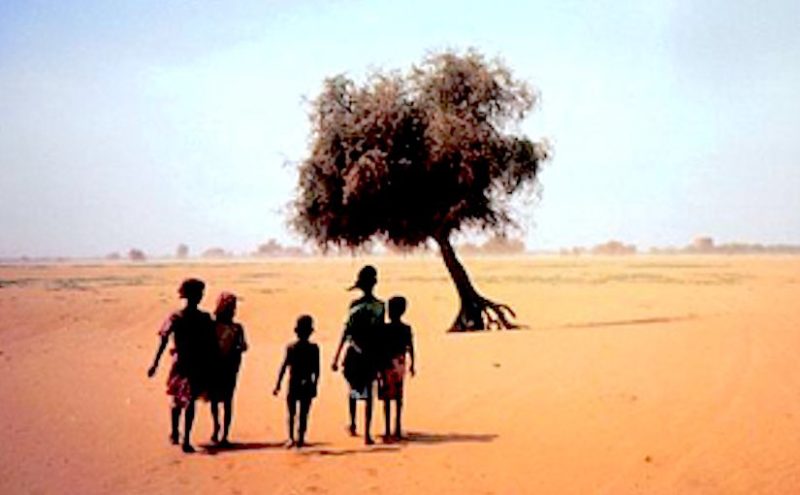
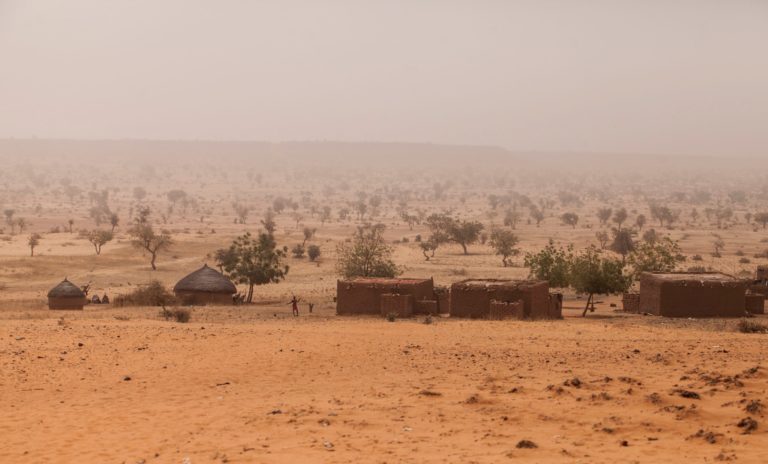
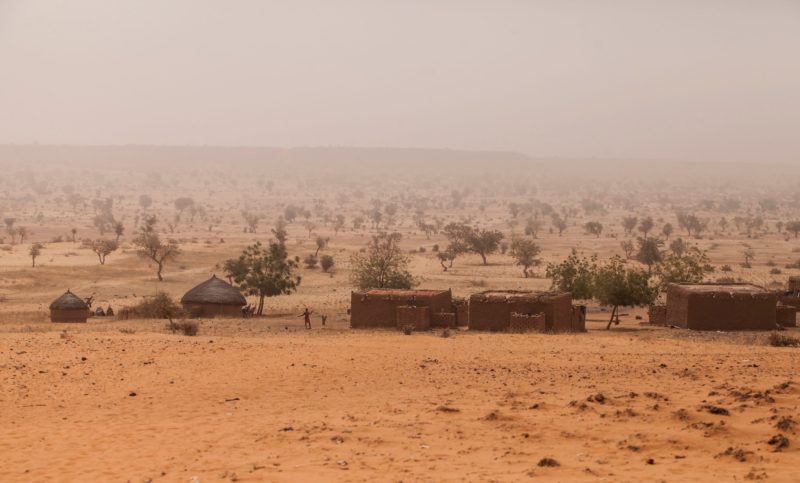
More than 3.2 billion people, or two in every five people, are impacted by land degradation today and up to 143 million people could move within their countries by 2050 to escape water scarcity and falling crop productivity due to the slow onset impacts of climate change.
Desertification
To avoid these threats, Monique Barbut, Executive Secretary of the UN Convention to Combat Desertification (UNCCD), has called on consumers and the private sector to join governments to save healthy land. She added that lack of preparedness for future droughts in particular, could lead to massive social and political upheavals.
“Everything we produce and consume has a land footprint. A bicycle requires 3.4 square metres of land. Ten square meters of land are used to produce a laptop. Producing one kilogramme of beef takes 22 square metres,“ but few people give thought to these daily processes “because the losses are not visible – or at least not accounted for – in the products we consume,” Barbut stated.
“We are all decision-makers because in our daily lives, our choices have consequences. Our small decisions transform the world,” she stressed, and called on consumers to make choices that reward land users whose practices protect the land from degradation.
Barbut, who heads the international agreement that deals with desertification, land degradation and drought effects, also warned that it is dangerous to reduce the true value of healthy land to its economic value alone.
She made the remarks in observance of the World Day to Combat Desertification on Sunday, June 17, 2018. The global observance event took place in Quito, Ecuador.
Ecuador, it was gathered, promotes a bio-economy among its agriculturalists in order to diffuse sustainable land management technologies, which maintain the land’s productivity.
The country is also pursuing the Sustainable Development Goal target of achieving land degradation neutrality, which means avoiding, reducing and reversing land degradation to ensure the amount of healthy land it had in 2015 is the same in 2030, and stays stable thereafter.
Barbut also underlined the need to “go beyond conscious consumerism” to engage the private sector and governments in better land uses because “the real value of the land is not just economic.”
“Land is worth so much more than the economic value we attach to it. It defines our way of life and our culture – whether we live in the city or the villages. It purifies the water we drink. It feeds us. It surrounds us with beauty. But, we cannot meet the needs and wants of a growing population if the amount of healthy and productive land continues to decline so dramatically,” Barbut said.
Tarsicio Granizo, Minister of Environment, Ecuador, said: “Desertification is a matter that not only has to do with the environment, but also with food sovereignty and with protection of the agricultural soil.”
The Global Land Outlook (The GLO) of 2017 states that 45% of the food consumed globally comes from the world’s dryland areas, and that falling productivity, food shortages and water scarcity in these regions is creating insecurity. The GLO warns that about 20% more productive land was degraded from 1983 to 2013, and that Africa and Asia face the greatest threats, going forward.
“We must do far more to recognise the immense value of healthy and productive land in strengthening the resilience of the world’s poorest communities, which are facing more drought and other slow-onset climate disasters,” said António Guterres, UN Secretary-General, in marking the Day.
Five of the eight slow onset events identified by the Climate Change Convention as potential future sources of huge losses and damage are manifestations of declining land productivity. These are desertification, salinization, land and forest degradation, biodiversity loss and rising temperatures. Globally, about two billion hectares of land are degraded. Most of it can be restored back to health.
“Science has given us the knowledge and tools we need for managing land to build resilience to drought and the impacts of climate change. Governments and the communities whose lives and livelihoods depend on the land can take steps now to prepare for future drought,” Guterres said.
The sustainable land management technologies needed to minimise and reverse many of these effects exist, but the policy instruments and investments to promote their spread are non-existent. As a result, some of the most land-dependent communities are exposed to the growing powerful and adverse weather effects, such as recurrent droughts, unpredictable rainfall and disappearing ground water sources.
Barbut highlighted three critical actions that consumers and the private sector can take to encourage land users and governments to save healthy land from further degradation and to recover nearly barren lands.
First, changing consumer behavior and unsustainable production patterns. Second, adopting more efficient land use planning. Third, creating mechanisms like the LDN Fund that will motivate the private sector to invest in land restoration.
“The public needs to be empowered. If they know that the choices they make every day can make a difference in terms of how the land is used – whether it is abused or nurtured – I am sure they will choose and consume more wisely,” she said.
“Governments must create incentives that can encourage the private sector to see that sustainable management of the land and the restoration of degraded land is the socially responsible thing to do. The UNCCD is ready to help initiatives that can restore degraded land at scale,” she said.
She called on countries to formulate the targets to be achieved by 2030, which signals that “a country has a systematic plan to ensure sufficient high quality land is available in the long-term to meet the demand for essentials like food and water.”
Minister Granizo said: “The Government of Ecuador is proud to host, for the first time in Latin America, the celebration of this international day, which was attended by prominent authorities of the Convention to Combat Desertification.”
World Day to Combat Desertification is observed every year on June 17 to raise awareness about the status of the land resources, especially at country level, and to mobilise required actions.
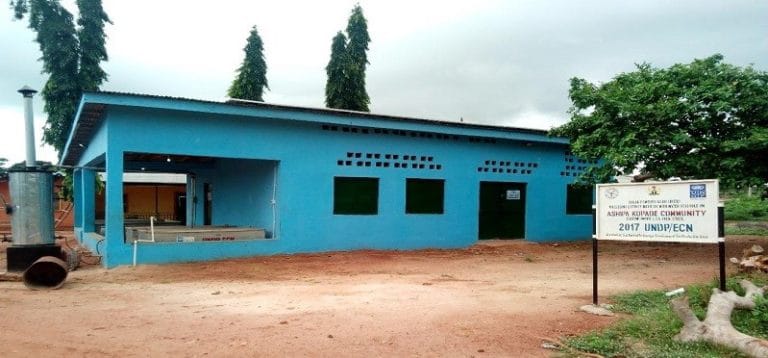
Ofada rice, the popular delicacy, may get to dining tables at even cheaper prices, thanks to an initiative aimed at enhancing its production via solar energy.
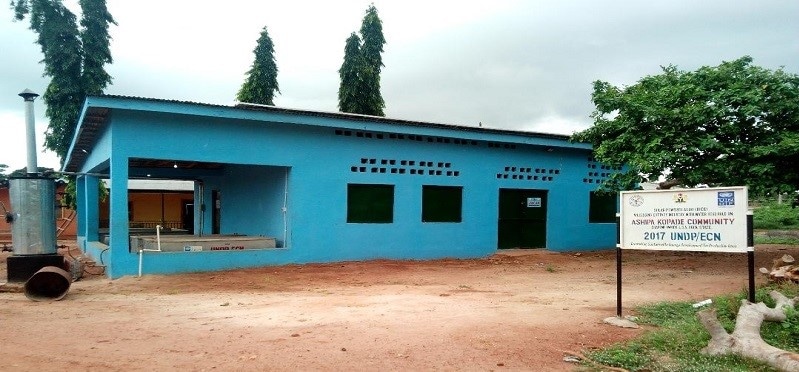
Ofada Rice Agro-processing Mill in Ogun State
Courtesy of a collaboration involving the United Nations Development Programme (UNDP) Nigeria Country Office and the Energy Commission of Nigeria (ECN), off-grid solar powered commercial agro-processing is transforming the rice processing industry.
A three-month construction period that ended April 2018 saw the installation of solar energy systems and equipment such as pre-cleaner, per boiler, dryer, miller and de-stoner to boost the processing of Ofada rice in Moloko Asipa, an agrarian community in Obafemi Owode Local Government Area of Ogun State.
The project has reportedly increased the production capacity of the mill, which hitherto ran on diesel. Besides reducing production cost, the scheme has created employment opportunity especially among the youth in the community. A borehole was also constructed to supply water to the community at no cost.
Chief Executive Officer of Ofada Rice Agro-processing Mills Limited, operator of the facility, Mr. Ayodele Adenekan, said that since the solar plant was completed in April, all the equipment have been working round the clock on solar power.
He disclosed that, prior to the realisation of the project, the mill spent from N18,000 to N20,000 every month on diesel depending on the volume of rice to be processed. He added however that all that stopped since the project was completed.
“It has greatly increased our production, I now produce more at less cost,” he added.
Adenekan said the gesture has also led to job creation for youth in the community who have been engaged in the Ofada rice processing. He attributed this to the fact that the equipment installed doubled the capacity of what existed in the mill before.
He disclosed the equipment installed had also help to enhance the quality of Ofada rice processed at the mill. He commended the UNDP/ECN for bringing such an initiative to the community.
Asked on the next line of action after the UNDP/ECN gesture, Adenekan said he is now looking at how to export Ofada rice because of the high demand by Nigerians in the diaspora who cherish the delicacy.
Corroborating him, Mrs. Janet Adegboye who processes her rice harvest in the mill, commended the initiators of the project, saying processing her rice has become easy with the completion of the project.
“We are very happy with what UNDP/ECN has done for us,” she stressed.
Baale-General of Moloko Asipa, Mr. Nureni Kolawole Adesina, commended UNDP and ECN for the equipment installed that has made rice processing faster and cheaper. He said the facility has also provided employment opportunities for youth in the community who have been engaged in the mill.
He also expressed appreciation for the borehole provided for the community which, he stated, has eased water shortage challenges in the community.
“Water has been scarce in the community before now, we used to go long distances to fetch water to the palace, but this has stopped. It has been a blessing to the community and we are happy about it.”
The Nigerian rice sector has experienced some remarkable developments and growth in recent years. Both rice production and consumption in Nigeria have vastly increased. With rice now being a structural component of the Nigerian diet and rice imports making up an important share of Nigerian agricultural imports, there is considerable political interest in increasing the consumption of local rice.
One of the major constraints that have affected the development of Nigerian rice sector is the inability of the local rice to match the quality of imports. While majority of the mills (85%) are powered with fuel engines, 10% are using electric engines and four mills (5%) have invested in both types. Operators recognise that it is cheaper to run electric-powered mills than fuel-powered equipment but the erratic supply of electricity jeopardises the workshop operations.
There appears to be confusion regarding the actual employers of the 300 street sweepers’ supervisors that were recently sacked in Lagos State.
A street sweeper in Lagos
Environmental utility firm, Visionscape Sanitation Solutions Ltd (VSS), told the News Agency of Nigeria (NAN) on Sunday, June 17, 2018 in Lagos that the supervisors were employed for the Lagos State Government, under the Cleaner Lagos Initiative (CLI).
Mr Adebola Shabi, the Special Adviser to the Governor on CLI, said the government had nothing to do with the news making the rounds that it had sacked the 300 supervisors.
Shabi said that the CLI contracted Standard Street Manpower Ltd. (SSML) on the employment of street sweepers.
According to him, Cleaner Lagos is a government initiative, not a contractor, while Visionscape is the contractor, hence, government can decide it does not want Visionscape but Cleaner Lagos will remain.
“Maybe it is Visionscape that sacked them; Cleaner Lagos has not sacked anybody.
“SSML is a consultant to the state government on engagement of sweepers but we have told them that, at the end of June, all sweepers should be handed over to the Ministry of Environment.
“We don’t know any issue about the sack; I have been trying to get the information from Visionscape and they are directing me to their head office.
“The sack has nothing to do with Cleaner Lagos because we did not employ and we did not sack. Lagos State does not believe in sacking people,’’ he said.
The Head, Corporate Communications, VisionScape, Mrs Motunrayo Elias, told NAN that the company was not the only contractor under the CLI.
Elias said that when the structure for waste management was put in place, government said it wanted street sweepers to clean the inner streets, among other arrangements.
She said that the structure for street sweepers’ supervisors was also put in place, that was the arrangement between CLI, VSS and SSML, which was the company managing the street sweepers.
Elias said that the supervisors were hired by SSML but were trained by VSS and worked with VSS Area Managers, to ensure the synergy of sweeping and packing the refuse.
“Now, with the controversy about PSP operators wanting to go back to work, government said that the street sweepers should revert to them.
“So if you have taken the street sweepers, what are you going to do with their supervisors?
“When we had a meeting, the issue was brought up and government asked how much was the salary. That was where the problem started.
“Government said it cannot afford the salary, which was between N80,000 to N120,000 but can only pay N25,000 per month.
“So the company paid the supervisors their disengagement bonuses, with Visionscape paying them two months’ salaries, while government was trying to decide.
“For fact, the supervisors were supposed to be transferred to the Ministry of Environment. It was a labour contract from the CLI,’’ she said.
Elias said that the structure that was put in place for waste management in the state injected income to the economy, as people were better off.
She said that it was essential to take the good with the bad, as nobody talked about the good that the whole system was doing when it was creating employment.
NAN reports that the disengagement letters to the supervisors were signed by the Head, Human Resources and Administration, SSML, Oluwatoyin Ayoola.
The letter reads: ‘“In light of the recent review of the implementation of the Cleaner Lagos Initiative and the impact of these changes on our operational requirements as discussed at our meeting held on the 2nd of June 2018, we regrettably write to inform you that it affects your employment with Standard Street Manpower Ltd.
“As discussed, the transfer of Ward Level Sanitation Programme (community sanitation workers) to the Lagos State Government has rendered your position as Sanitation Supervisor redundant and your services will no longer be required with effect from 14th of June, 2018.’’
The Katsina State Rural Water Supply and Sanitation Agency (RUWASSA) says it is collaborating with traditional institutions to put an end to open defecation in the state.
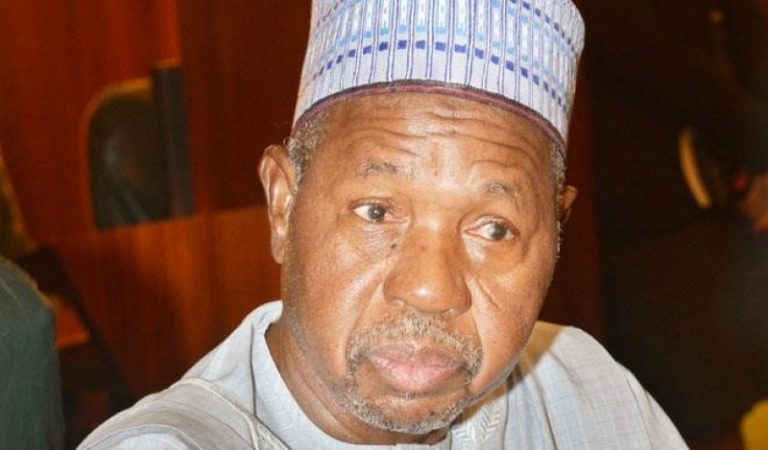
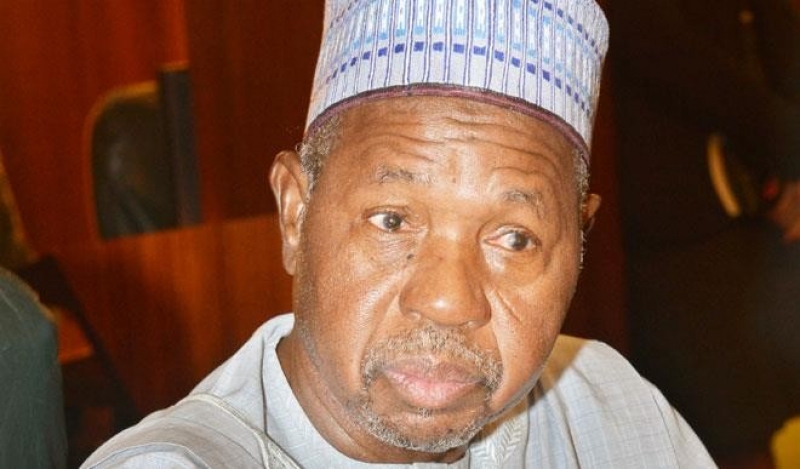
Alhaji Aminu Bello Masari, Governor of Katsina State
Alhaji Aminu Dayyabu, the Executive Director of the agency, disclosed this in an interview with the News Agency of Nigeria (NAN) on Sunday, June 17, 2018 in Katsina, the state capital.
Dayyabu said that decision was aimed at the state to achieve Open Defecation-Free (ODF) status and improved sanitation, by 2025, under the Sanitation Hygiene and Water in Nigeria (SHWAN) project supported by the United Nations Children’s Fund (UNICEF).
The executive director noted that the programme would also assist to reduce water and sanitation related diseases particularly in rural areas of the state.
He said that agency has already held meeting with 44 District Heads under the Katsina Emirate and 13 in Daura Emirate Councils, respectively, on modalities to achieve the set objective.
Dayyabu said the traditional leaders agreed to prosecute any household who failed to construct a latrine for use of the family within a given time frame.
The executive director added that local government councils on the other hand would provide land to enable entrepreneurs construct latrines around market areas and other public places in the state.
He further said that UNICEF would provide water and sanitation facilities to enhance hygiene in such places through the agency.
‘’People will pay little amount of money after using the latrine which will be used for its regular maintenance,’’ he said.
He also revealed that RUWASSA has so far linked about 1,000 households in the state with Micro Finance Institutions (MFI) who provided the households with loans to construct latrines.
According to him, a minimum of N40,000 loan facility was given to each beneficiary to construct an improved latrine under the Sanitation Marketing programme.
Dayyabu said that the latrines were constructed through Toilet Business Owners who linked the households with experts in the construction of improved latrines.
He said that the agency would continue to join hands with UNICEF to enhance water supply and sanitation in the state.
‘’The state government is determined to continue supporting us to join hands with UNICEF to improve rural water supply and sanitation.
‘’It is in view of that now we have 26 local governments participating in SHAWN project, that make Katsina as the state with the highest number of participating local governments in the country,’’ he said.
On World Day to Combat Desertification and Drought observed on Sunday, June 17, 2018, the UN has called for effective land preservation to combat desertification.
Desertification and land degradation are said to be very serious challenges that lead to hunger and poverty
According to a statement by the UN Convention to Combat Desertification (UNCCD), land is not a limitless resource and ignoring its role in our everyday lives threatens food and water supplies, biodiversity and the security of us all.
The UNCCD urged everyone to recognise the true value of land.
“I would ask you: when you choose what to eat, what to wear or what to drive, think about how your choice impacts the land – for better or for worse,” said Ms Monique Barbut, UNCCD Executive Secretary.
In her message for the day, Barbut said land-grabbing, unplanned urban sprawl, unsustainable agriculture and over-consumption could yield quick economic gains.
However, such short-sightedness eventually causes degradation and loss of critical ecosystem services due to unsustainable land use, she warned.
“As a result, a third of the world’s usable land has already severely degraded over the last 30 years, with 75 billion tonnes of soil from arable land lost annually,” she said.
According to her, everyone can contribute to, and benefit from, investing in sustainable land management – as consumers, producers, corporations or governments.
Barbut said: “Farmers can invest in smart agriculture with higher yields but reduced pesticides.
“Policymakers and land managers can invest in sustainable land management while consumers can choose to spend on organic and fair-trade products that avoid ruining the land.
“Let us work together to transform the way we consume, produce, work, and live together without compromising our current or future social, economic or environmental security without compromising the land on which it all depends”.
The UN General Assembly established the World Day in 1994 to promote public awareness of land degradation and to draw attention to the implementation of the UNCCD – the sole legally binding international agreement linking environment and development to sustainable land management.
The World Day is observed annually on June 17, the date the UNCCD was adopted, while the 2018 theme for the Day is “Land has true value – invest in it”.
The campaign hopes to promote changes in behaviour and adoption of more efficient planning and practices, to ensure there are sufficient land resources for the world’s long-term sustainability and economic prosperity.