Home Blog Page 1873

Cross River communities seek review of operational agreement with oil plantation

0

Communities in Cross River State have demanded for the review of memorandum of understanding (MOU) on Wilmer Oil Palm Plantation estates operating in their communities.
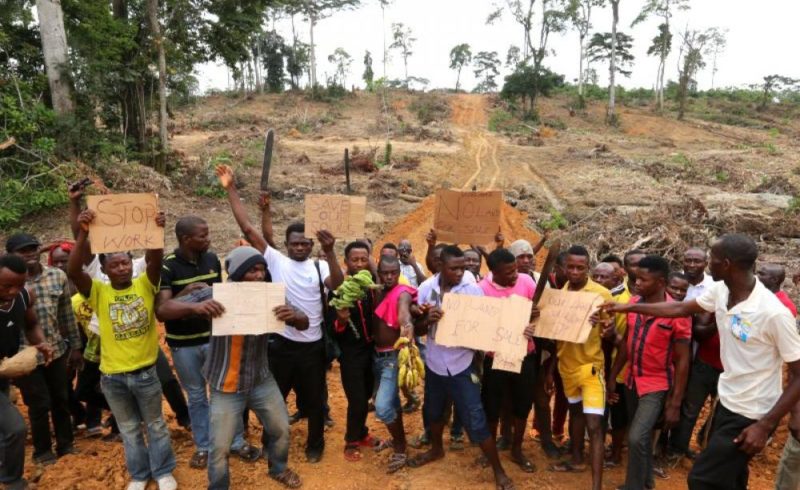
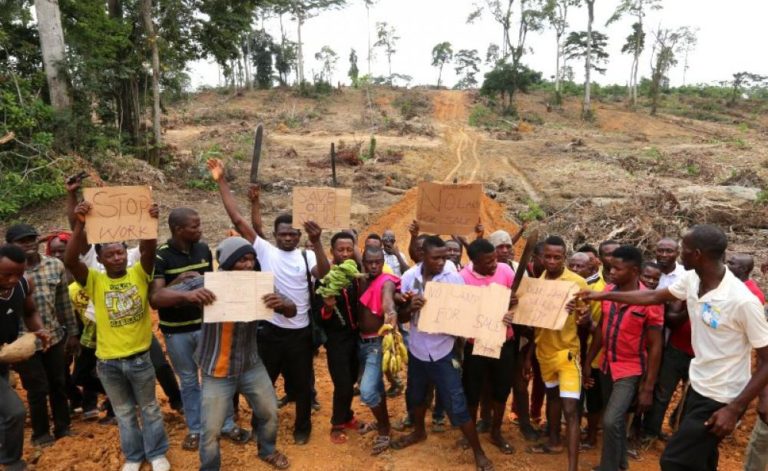
Wilmer protest
Protesters accuse Wilmer of deforestation, exploitation and land grab

They also called for a review of the Environmental Impact Assessment (EIA) reports if they ever existed.

The communities made these demands in Calabar, the Cross River State capital, during an interactive section with journalists during a forum on Community Land Rights in Forested Landscapes, organised by the Environmental Rights Action/Friends of the Earth Nigeria (ERA/FoEN), a civil society organisation.

Some of the communities affected in Akamkpa and Biase local government areas alleged that Wilmer, which owns the oil palm estates in the communities, has failed to keep to agreements in the MOU. They therefore called for a review.

Coordinator of the group, who is a native of Akampka, said, “We see this as a new form of colonialism and that is what is happening. We think it is not right and we think it is necessary for us to discuss those things and it is necessary to carry out a review, not just of the MOU but a review of the EIA if they exist at all.

“There is need to also check if, in the process of carrying out EIA, processes are followed. If women were involved in the processes because the environment impact on women is different but we don’t know. Today we have issues where women are talking about infertility because of the pollution of the environment.”

Speaking earlier, the Executive Director of ERA/FoEN, Dr. Godwin Ojo, said it was discovered that the multinational company and the state government entered into an MOU alongside communities but alleged that such agreement was yet to be made public.

He said the locals, especially those from communities like Ekong-Anaku, Akwa Ikot, Effanga, Iboko, Umai, Betem, Uwet, Atan and Odot, are only employed as labourers and provided with unskilled jobs.

He therefore recommended that “Wilmer should enter fresh consultation with the community people on how to implement the mandatory corporate social responsibility (CSR) scheme for Cross River State and for the benefit of the people.

“They should also halt further expansion into individual, family and communities lands and conduct FPIC before any expansion commences.”

Ojo also demanded that government should ensure that the communities’ customary land rights are protected and should likewise conduct periodic monitoring and compliance to the existing MOU.

His words: “The government and the companies develop deaf ears to the cry of the people. Protest from communities, voice of reasoning and silence are flooded under the carpet, not just swept, they are hidden under the carpet.

“What we are saying is that the MOUs that are entered into, with government and the companies, the communities have not been carried along. The lines of demarcations as we speak have now become source of conflicts.

“Wilmer claimed that they are maintaining their boundaries and that they are not infringing but the communities are claiming that they have already infringed on communities lands and this is one of the sources of conflict. Even the national bars as we state have delved into the matter but yet to come up with their findings.”

One of the affected persons that hails from Uwet community who lost her family land to Wilmer, Mrs Nkoyo Effiom, complained, “Mine is not an exception. Wilmer stepped into Uwet community last year and they have started their exploit which eventually has affected the women mostly because our farmlands have been taken and, in most cases, the women are not carried along.

“The women are not aware of what is going on. No source of portable water exists, so I really think that government should look into the problems of the communities most especially that of Uwet.

“Apart from this, other social amenities are not there so the little one we have, we have to preserve them to be useful to us,” she said.

By Tina Ezin, Calabar 
Nigeria to transform to major driver of global growth – Mohammed

0

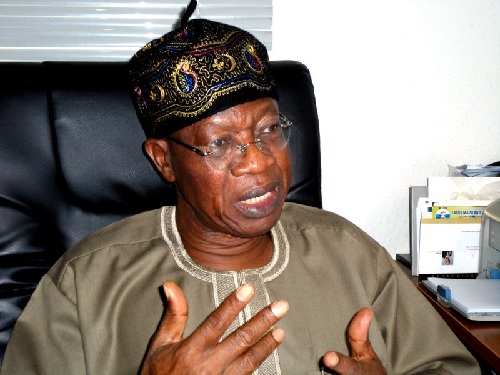
Minister of Information and Culture, Alhaji Lai Mohammed, says Nigeria will transform to major driver of global growth with its pool of vibrant, energetic youths and government’s repositioning policies.

Lai Mohammed
Alhaji Lai Mohammed

The minister said this in a keynote address he delivered at the 2018 “Africa Together Conference” at the University of Cambridge in the UK on Saturday, June 16.

A text of the minister’s address was made available to newsmen on Sunday in Abuja by his Special Adviser, Mr Segun Adeyemi.

The minister was speaking on the global projection of Africa’s population which is said to double by 2050.

According to him, the anticipated development would not be a threat to the continent and the member states if proper things are done.

Mohammed specifically said that the administration of President Muhammadu Buhari was implementing the right policies to maximise the projection for national development.

“To some, this is a ticking time bomb. What if there is no opportunity? What will youths without jobs do, mobilise, destabilise?

“True in Africa, urbanisation has not correlated with poverty reduction as it has in other regions.

“However, where some see looming clouds, I see a concentration of energy,’’ he said.

The minister added: “The number of people reaching working age will be larger than the rest of the world combined by 2035. And they will be young.

“This great pool of vibrant and energetic labour has the potential to transform the continent’s development.

“If there is one country that is emblematic of this, it is perhaps Nigeria. Indeed, it will be largest contributor to this surge.

“We shall move from being the 7th largest nation on earth to the 3rd. And among the ten largest nations on earth, Nigeria will be the fastest growing,’’ he said.

The minister said the Buhari administration was steadily transforming Nigeria through innovative measures that were yielding positive results and repositioning the country for greatness.

He listed investment in people, changing the business environment and building national infrastructure as some of the areas in which the administration had made an impact.

According to him, by focusing on education and skills acquisition, the administration is addressing the need to create opportunities for the country’s teeming youth population.

To address the challenge of school enrolment and high number of out-of- school children, he said 8.2 million are being fed daily free meals in 45,000 schools.

He said the Home-Grown School Feeding programme had yielded other results, including the employment of more than 80,000 cooks and a ready-made market for food crop farmers.

The minister said skills shortages in the labour pool were being addressed through several measures, including the four-pronged N-Power programme.

He said the administration was also changing the business environment for good, focusing especially on removing the red tape that makes it cumbersome for business and stifles innovation.

The minister noted that the challenge of access to credit was also being frontally addressed by making it possible for MSMEs to register their movable assets, such as vehicles and equipment for collateral, to raise loans and finance.

Mohammed told his audience that the two most critical impediments against business, decent transport connections and a reliable power supply, were also being tackled.

“For instance, Nigeria earmarks 30 per cent of its annual national budgets for capital expenditure.

“That means 2.7 trillion Naira has gone toward our infrastructure in the last two years – unprecedented in our history,’’ he said.

By Rotimi Ijikanmi

Windstorm, downpour, wreak havoc in Bauchi

0

Heavy rainfall and windstorm on Saturday, June 16, 2018 destroyed property in Bauchi metropolis, the Bauchi State capital, reports the News Agency of Nigeria (NAN).

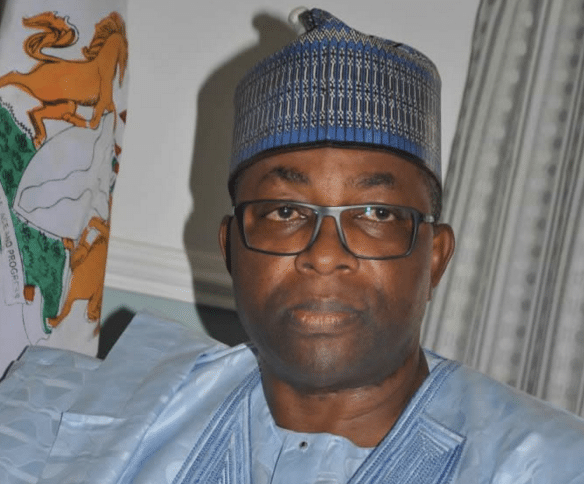
Mohammed Abdullahi Abubakar
Mohammed Abdullahi Abubakar, Governor of Bauchi State

Although there were reports of injuries, the authorities are yet to ascertain whether or not some people had lost their lives.

The downpour, which started at about 4pm, lasted for about two hours, uprooting trees, removing roofing sheets and destroying buildings

A NAN correspondent who went round reports that pieces of roofing sheets, fallen trees and electricity poles, as well as debris of destroyed houses, littered the town. Some people were also rendered homeless.

Areas worst affected are Yakubu Wanka, Makwalla, Bakin Kura, Wuntin Dada, Fadaman Mada, Federal Low Cost, Zango and Old Airport areas of the metropolis.

In Fadaman Mada, the windstorm removed a substantial part of the roofing of the Bauchi Zonal office of NAN.

Contacted for comments on the incident, Permanent Secretary, Bauchi State Emergency Management Agency (SEMA), Malam Shehu Ningi, told NAN that they were still collating facts on casualties and property destroyed.

He however said that their preliminary findings indicated that the destruction was enormous, adding that details would be presented to newsmen soon.

By Mohammed Ahmed Kaigama

Constant dialogue, key to peace in Niger Delta, says Dokubo

0

Coordinator, Presidential Amnesty Porgramme, Prof. Charles Dokubo, has identified constant dialogue with critical stakeholders in the Niger Delta as a critical factor in ensuring peace in the region.

Prof. Charles Dokubo

Dokubo made this known while speaking at the News Agency of Nigeria (NAN) Forum in Abuja.

“Let me tell you what I did in the first two months, the critical stakeholders in the region especially those militants and their group leaders to hold a meeting with them in Lagos.

“To tell them the purpose of my appointment and to see how we can  drive this programme and  to maintain the security that  we already have and all of them bought into my own plan.

“After that I met with the field commanders, phase one, two, three commanders in Abuja here and they also bought into my own plan.

“My reason for bringing them in is that if they agree to work with you, that peace that has been there will continue to be there, you can neither work against them nor can you work irrespective of them.

“You have to work with consent with them; let them see the benefits of working together in a stable environment so that they could fit in and also help their people.

“If you claim to represent a particular part of the country and if you cannot maintain peace in that area there then there is a problem.

“If you should represent them and you should make sure they have all it takes to stay in that place and have peace.

“For them, the most important thing is to talk to them, to relate with them, understand and feel their pulse so that you can know exactly what they want and this is exactly what they want and this is what I did.

“I believe the peace that has been there will continue to be there.’’

The professor, however, said there was a need to be alert in order to respond rapidly to maintain the peace and security being enjoyed in the region because something small could ignite and threaten the peace in the region.

The amnesty boss stressed that maintaining peace and securing the environment was for the benefit of all Nigerians especially those in the region.

He therefore advised the militants and agitators to work with government so that lasting peace could be achieved in the region.

“My advice has always been that if the environment is secure, it is also secure for all of us.

“Also If you go on bursting pipes and all that, that that environment which you say you are protecting is going to create a problem for people who are staying there even for children yet unborn.

“I put it before them; it is not just about going to burst pipes because the pipes are not in Kaduna, the pipes are in your place and that is the place where your fishing and farming will be disturbed.

“So that is my own  plan let them see the benefit of working together with government  and let them see that  with government  what we were not able to achieve before , we can now get it.

“Because they are also part of the system, they discuss with me, they exchange idea with me so that with that we can move forward.”

Dokubo, however, said the major challenge of the programme was working with people who are used to working in a faulted environment, a dynamic environment.

According to him, these people have been so used to a particular way things have been moving so when you bring a new thing they challenge that concept.

“It worries their sense of entitlement in that programme; so you  will continue to work,  you do not have to rest, you either make sure you change them to adopt and adapt or they live you to work on your  programme.

He assured Nigerians that the amnesty programme would definitely achieve its purpose and attain the heights set for it under his administration.

By Okeoghene Oghenekaro and Jacinta Nwachukwu

Nigerians advised on proper waste disposal

0

An environmental scientist, Mr George Ebisike, has advised Nigerians to dispose of waste properly to avoid environmental degradation as well water and airborne diseases.

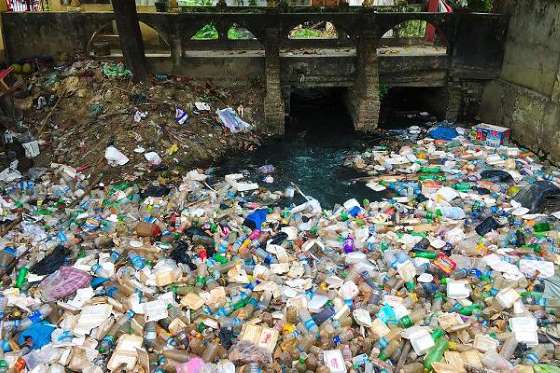
Myanmar Plastic waste
Plastic clogs up a waterway

Ebisike, who doubles as a researcher, gave the advice in an interview with the News Agency of Nigeria (NAN) on Saturday, June 16, 2018 in Abuja.

He identified micro-plastics as one of the biggest dangers to man and animals hence Nigerians should be more cautious of proper waste disposal.

The expert said that in the course of humanity advancement, it was important that civilised citizens handle the challenges of waste in their environment in an ideal way.

He stressed that micro-plastics such as plastic bottles, water sachets and polythene bags had become extremely dangerous for the marine and human lives as all spheres of the environment are interconnected.

“Human activities such as littering of plastic containers, water sachets and polythene bags after use have led to blockage of drainages, flood, and air pollution when burnt leaving an unhealthy environment.

“Research has shown that lots of bio-plastics have been consumed by birds, fishes and livestock which are dangerous to the health of the species.

“Unfortunately science has not been able to carry out a research of what the effect or health implication will be when humans consume such livestock waste,’’ he said.

Ebisike also urged Nigerians to manage the use of plastics while imbibing the culture of reducing single use plastics, whereby people purchase bottle or sachet water, drink it once and trash them.

He said countries around the world are changing the culture by encouraging people to carry their personal water bottles or water flask, to reduce the consistent use and disposal of several plastics.

He added that the recycling process of plastics usually takes a long time while most of such substances end in landfills or water bodies which in turn become harmful to aquatic animals.

Ebisike said this has however underscored the need for Nigerians to become more conscious of environmental health, as an unhealthy environment has several health implications to humans and animals likewise.

He said activities of man in industrial health, product longevity and management of bye products of industrialisation allowed the release of excess carbon in the environment in the past 200 to 300 years.

The environmentalist said the surplus carbon in the environment cannot be controlled as such has adverse effect on society with health implication on man and sustainability of certain species of animals.

Ebisike said governments at all levels have roles to play in terms of policy direction, behavioural change among citizens and creating the consciousness to drive technological transfer among young engineers.

“Through recycling, waste products can be converted into bio-fume which adds to the fuel we have from petro-chemical processes, thereby taking away lots of plastics from the environment.

“The end products will be put back into the system, reducing the cost of kerosene, creating opportunities for research in universities, while creating jobs for citizens.

“It is of utmost importance that the younger generation understands their responsibility to the environment while keeping abreast with modern technology used in managing waste products.

“Parents and teachers must inculcate the culture of separating wastes in an ingenious way, while discouraging burying at landfills as such becomes poisonous to the water table underneath the earth,’’ Ebisike added.

By Talatu Maiwada

World Day to Combat Desertification: You are more powerful than you think!

0

Are you overwhelmed by the depressing news coming at you daily? Conflict, forced migrants, famine, floods, hurricanes, extinction of species, climate change, threats of war … a seemingly endless list.  It might surprise you, but you can really make a difference on many of these issues.

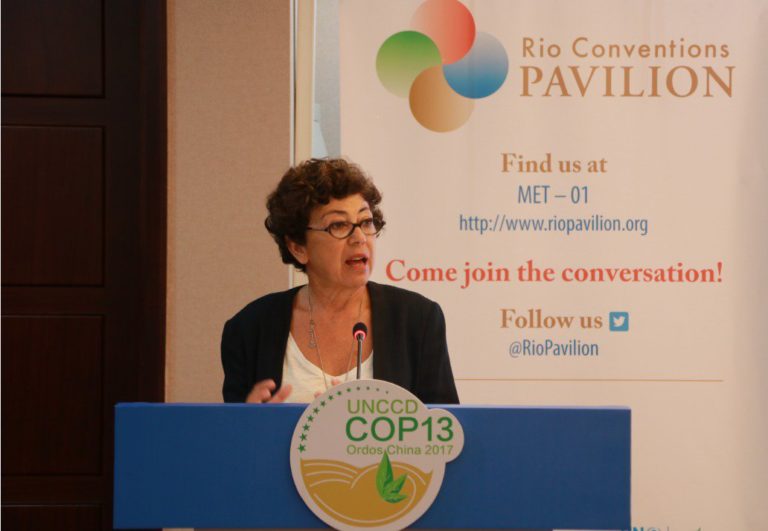
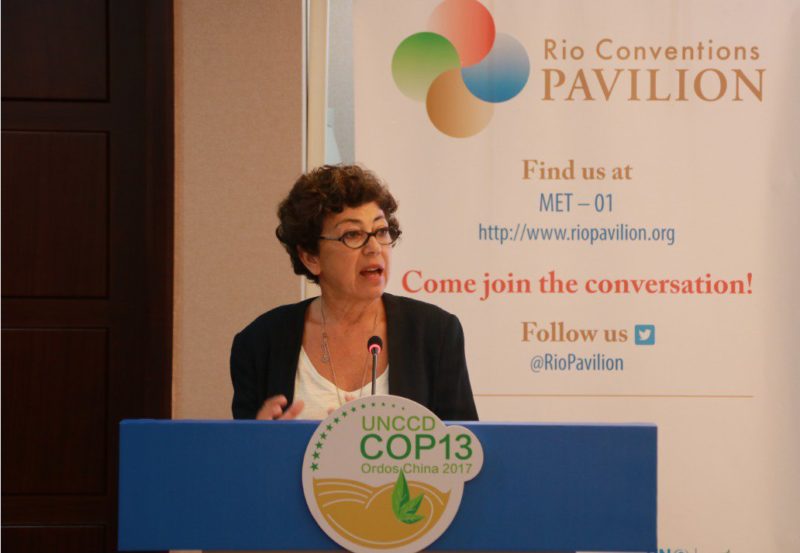
UNCCD COP13
Monique Barbut, Executive Secretary, UNCCD

Just like every raindrop counts towards a river and every vote counts in an election, so does every choice you make in what you consume. With every produce you consume, you strengthen the river of sustainability or of unsustainability. It is either a vote in favour of policies that spread social goods like peace and poverty eradication or social evils like conflict or grinding poverty.

We look up to governments a lot, forgetting that governments set up policies to encourage us to make specific choices. That’s how powerful our lifestyles choices are.

Imagine, what would happen if the world’s over seven billion consumers committed, every year, to just one lifestyle change that will support the provision of goods from sustainably managed land.

Every year, we make New Year resolutions about change. Why not include as one of those resolutions, a change of habit leading that will lead to a smart sustainable consumer lifestyle? Without any government intervention, you can make choices that will help to end deforestation, soil erosion and pollution or reduce the effects of drought or sand and dust storms.

However, to make the right lifestyle change, each of us must first find out where the goods we consume are cultivated and processed. For instance, if they are linked to conflict in regions with rapidly degrading land or forests or polluted water or soils, then chose an alternative that is produced sustainably. It is a small, but achievable change to make every year.

Every country and product has a land footprint. What we eat. What we wear. What we drink. The manufacturer or supplier of the products we consume. The brands related to these suppliers that we will support. We prioritise buying from the local small farm holders to reduce our global land footprint. Consumers have plenty of options.

But a vital missing link is the informed consumer.

Through mobile phone apps, it is getting easier and easier to track where the goods we consume come from. It is also getting easier to find alternative suppliers of our choice, as the private sector embraces the idea of ethical business. The information you need is literally in the – mobile phone in the – palm of our hand.

But you must believe in your own power to change the world. The global effect on the market may surprise you.

We will reward the food producers, natural resource managers and land planners struggling against all odds to keep the land healthy and productive. This is cheapest way to help every family and community in the world to thrive, and avoid the damage and loss of life that comes from environmental degradation and disasters.

Make June 17, the celebration of the World Day to Combat Desertification and Drought, your date with nature. It’s the mid-point of the year and a good moment to review the progress you are making towards your New Year resolution of a sustainable lifestyle.

In 2030, when the international community evaluates its achievement of the Sustainable Development Goals, you can point to positive changes that you have contributed in favour of present and future generations.

You are more powerful than you think. Take your power back and put it into action.

By Monique Barbut (Under-Secretary General of the United Nations, and the Executive Secretary of the United Nations Convention to Combat Desertification)

Climate finance by development banks rose 28% in 2017

0

Climate financing by the world’s six largest multilateral development banks (MDBs) rose to a seven-year high of $35.2 billion in 2017 – an increase of 28 per cent on the previous year. The sharp increase is said to have come in response to the ever more pressing challenge of climate change.

Akinwumi Adesina
Dr. Akinwumi Adesina, President of the African Development Bank (AfDB)

Calls to galvanise climate finance were at the heart of events such as the One Planet Summit in Paris in December 2017, two years after the historic Paris Climate Change Agreement was adopted.

Climate finance is crucial to enable developing countries green their economies and adapt to the inevitable impacts of climate change.

The MDBs’ latest joint report on climate financing said $27.9 billion, or 79 per cent of the 2017 total, was devoted to climate mitigation projects that aim to reduce harmful emissions and slow down global warming in line with the objectives of the Paris Agreement.

“For the World Bank Group, 2017 was a record-setting year on climate finance as a result of a deliberate effort over the past few years to mainstream climate considerations into our operations. This upward trend is continuing,” said World Bank Senior Director for Climate Change John Roome.

“The Multilateral Development Banks are also playing a key role in leveraging private sector finance which will be critical to meeting the objectives of the Paris Agreement. Last year alone, the WBG crowded in $8.6 billion in private financing for climate change, which is up 27% from 2016,” he added.

The remaining 21 per cent, or $7.4 billion, of financing for emerging and developing nations was invested in climate adaptation projects that help economies deal with the effects of climate change such as unusual levels of rain, worsening droughts and extreme weather events.

In 2016, climate financing from the MDBs had totalled $27.4 billion.

The latest MDB climate finance figures are detailed in the 2017 Joint Report on Multilateral Development Banks’ Climate Finance, combining data from the African Development Bankthe Asian Development Bank, the European Bank for Reconstruction and Development, the European Investment Bankthe Inter-American Development Bank Group and the World Bank Group (World Bank, IFC and MIGA). These banks account for the vast majority of multilateral development finance.

In October 2017, the Islamic Development Bank joined the MDB climate finance tracking groups, and its climate finance figures will be included in joint reports from 2018 onwards.

Climate funds such as the Climate Investment Funds (CIF), the Global Environment Facility (GEF) Trust Fund, the Global Energy Efficiency and Renewable Energy Fund (GEEREF), the European Union’s funds for Climate Action, the Green Climate Fund (GCF) and others have also played an important role in boosting MDB climate finance. As well as the $35.2 billion of multilateral development finance, the same adaptation and mitigation projects attracted an additional $51.7 billion from other sources of financing last year.

Of the 2017 total, 81 per cent was provided as loans. Other types of financial instruments included policy-based lending, grants, guarantees, equity and lines of credit.

Latin America, Sub-Saharan Africa and East Asia and the Pacific were the three major developing regions receiving the funds. The report contains a breakdown of climate finance by country.

Multilateral banks began publishing their climate investment in developing countries and emerging economies jointly in 2011, and in 2015 MDBs and the International Development Finance Club agreed joint principles for tracking climate adaptation and mitigation finance.

Climate finance addresses the specific financial flows for climate change mitigation and adaptation activities. These activities contribute to make MDB finance flows consistent with a pathway towards low greenhouse gas emissions and climate-resilient development, in line with the Paris Agreement. The MDBs are currently working on the development of more specific approaches to reporting their activities and how they are aligned with the objectives of the Paris Agreement.

Cloudy skies, thunderstorms, rains to prevail on Saturday – NiMet

0

The Nigerian Meteorological Agency (NiMet) has predicted cloudy weather conditions over the central states of the country in the morning of Saturday, June 16, 2018.

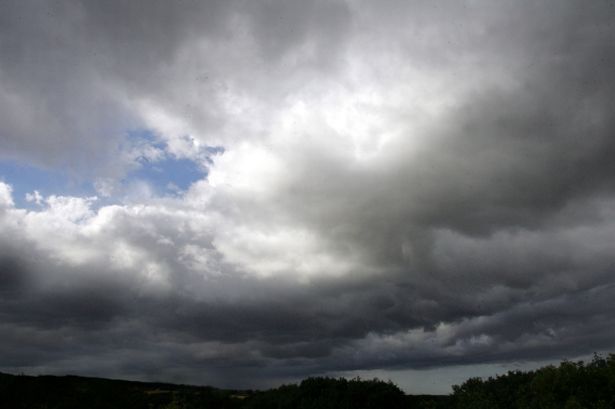
weather
cloudy weather

NiMet’s Weather Outlook by its Central Forecast Office in Abuja on Friday also predicted possibilities of isolated thunderstorms over Ilorin, Bida and Mambilla Plateau during the period.

It predicted day and night temperatures in the range of 27 to 38 and 20 to 26 degrees celsius in the central states.

It added that parts of Niger, Nassarawa, Kaduna, Jos, Abuja, Lafia, Mambilla Plateau, Yola and Jalingo were expected to experience isolated thunderstorms during the afternoon and evening hours.

The agency predicted that the southern states would experience rains over places like Calabar, Port Harcourt, Warri and Eket during the morning hours.

It also predicted cases of isolated rain showers over the entire region in the afternoon and evening with day and night temperatures of 31 to 32 and 23 to 25 degrees celsius.

According to NiMet, Northern States will experience cloudy conditions over the north-eastern part of the country with possibilities of morning thunderstorms over Sokoto, Yelwa, Gusau, Katsina and Kano axis.

According to the forecast Maiduguri and Yelwa have likelihood of isolated thunderstorms later in the day with day and night temperatures in the range of 35 to 41 and 25 to 27 degrees celsius.

It also predicted that “thunderstorms and rains are likely within the country in the next 24 hours”.

By Sumaila Ogbaje

World Rivers Day: Groups seek legal rights for rivers

0

The duo of Foundation for Conservation of Nigerian Rivers and River Ethiope Trust Foundation (RETFON) has disclosed that it is partnering the Earth Law Centre USA to celebrate the 2018 World Rivers Day (WRD) by launching an advocacy campaign for the rights of rivers in Nigeria.

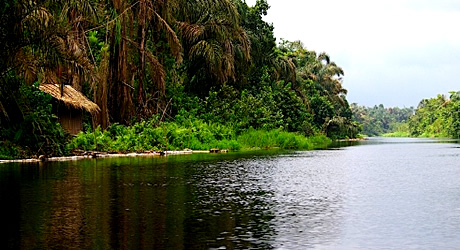
river_ethiope
The River Ethiope in Delta State. Nigeria is said to be one of the countries in the world with the worst rivers degradation conditions

Founder of RETFON, Irikefe Dafe, disclosed that this would be actualised through advocacy visit to the country’s legislative houses (Senate and House of Representatives), as well as official presentation of the Draft River Ethiope Rights Act 2018 to the Parliament for passage into law.

World Rivers Day is a global celebration of rivers that occurs on the last Saturday of every September. The 2018 edition will be observed on September 29.

World Rivers Day is a celebration of the world’s waterways. Running since 2005, it highlights the many values of rivers and strives to increase public awareness and encourages the improved stewardship of rivers around the world.

“Rivers in every country face an array of threats, and only our active involvement will ensure their health in the years ahead,” stated Dafe, adding that the legislation was informed by the realisation of the fact that the only permanent method to restore the Ethiope River to health is to give it legal rights that are equivalent to those enjoyed by humans and other entities.

“And considering the immense ecological, religious and cultural significance of the river, it is a prime candidate to be the first river in Africa to have its inherent rights recognised,” he said.

According to him, the river, as a legal entity possessing rights, will have a broad suite of recognised legal rights that would set it on a path to permanent restoration. It will also have standing to utilise the court system as a plaintiff in search of injunctive relief or damages, as necessary, he noted.

The River Ethiope is an inland river flowing across several communities within Delta State, in Nigeria’s south-south geo-political zone.

IPCC meetings go carbon-neutral

0

The Intergovernmental Panel on Climate Change (IPCC) achieved carbon neutrality at its last plenary session in France, according to the organisation.

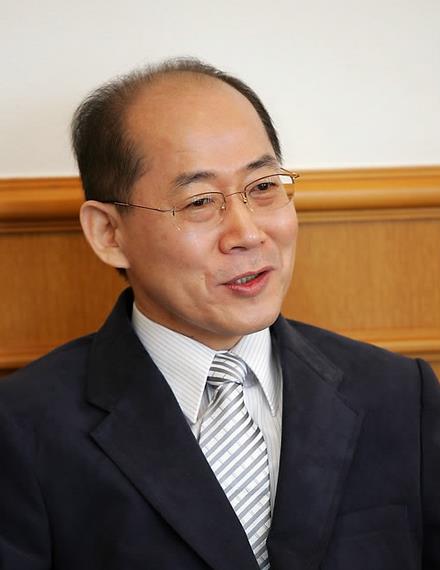
Hoesung Lee
Hoesung Lee, IPCC chair. Photo credit: reneweconomy.com.au

The 47th Session of the IPCC, held in Paris from March 13 to 16, 2018, is thus the first climate-neutral meeting of the UN scientific and intergovernmental body.

The IPCC worked with the Climate Neutral Now initiative of the United Nations Framework Convention on Climate Change (UNFCCC) to offset carbon emissions involved in participant travel to the meeting and arising from the meeting itself at the conference location.

“I would like to recognise the leadership and commitment of the Government of France, which enabled us to reach this important goal,” said IPCC Chair, Hoesung Lee. “The IPCC is walking the talk, and I hope that with the support of our members we can continue to be climate-neutral at future meetings.”

Nicolas Hulot, France’s Minister for the Ecological and Inclusive Transition, welcomed the offset of emissions from the IPCC’s 47th Session.

“This is a first for a plenary session of the IPCC. I hope this will become standard usage for international events, and a priority for those interested in protecting the climate system,” said Mr Hulot. “Every opportunity must be seized to raise our awareness about the choices we make and their impacts on our future climate.”

A carbon offset is a reduction in emissions of carbon dioxide or other greenhouse gases made in order to compensate for (“offset”) an emission made elsewhere. The Climate Neutral Now platform works by compensating unavoidable emissions with credits in the Clean Development Mechanism, supporting projects in developing countries.

“By making use of our Climate Neutral Now initiative, the IPCC is demonstrating how this valuable tool can be practically deployed to help achieve the Paris Agreement climate action goals,” said Patricia Espinosa, Executive Secretary of the UNFCCC. “I hope many others will be inspired to do the same – including governments, organizations, companies and citizens, who all need to take climate action to safeguard the future of our planet.”

Travel to IPCC meetings for participants from developing countries and economies in transition supported by the IPCC Trust Fund has been offset since 2014 in line with the policies of the World Meteorological Organisation (WMO), which is one of the IPCC’s two parent organisations along with UN Environment, which manages the Trust Fund on behalf of the IPCC.

For the IPCC’s 47th Session, the French government covered the costs of offsetting travel by participants not supported by the Trust Fund, and offset other emissions from local travel and the meeting venue, the headquarters of the United Nations Educational, Scientific and Cultural Organisation (UNESCO).