The International Labour Organisation (ILO) has called for urgent action to address persistent gender inequality in the oil and gas industry, calling for inclusive leadership and equitable opportunities for women.
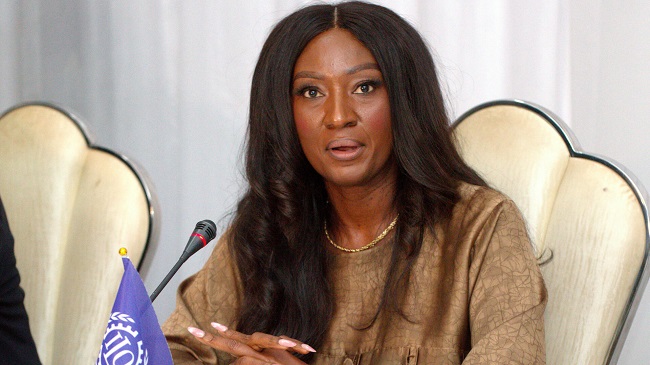
Mrs. Vanessa Phala-Moyo, Country Director of the ILO to Nigeria, made the call on Thursday, April 16, 2026, at the ongoing Third Edition of the Petroleum and Natural Gas Senior Staff Association of Nigeria (PENGASSAN) Women Convention in Abuja.
The theme of the convention was “The Dynamic Woman: Shaping Tomorrow; Influence, Impact and Legacy”.
Vanessa Phala-Moyo, Country Director of the ILO to Nigeria
Phala-Moyo said women remained underrepresented and undervalued in key decision-making positions despite ongoing global conversations on gender equality.
She described gender equality in the oil and gas sector as “more illusion than reality,” noting women still face systemic barriers to leadership and technical roles across the industry.
“Gender equality in the oil and gas sector remains more of an illusion than reality, as women continue to face systemic barriers to leadership and technical roles.
“Women are still largely underrepresented in decision-making positions, and their contributions in the industry are often undervalued.
“Without deliberate and sustained action, the energy sector will continue to exclude women from opportunities that shape its future,” Phala-Moyo said.
According to her, women are largely underrepresented in decision-making roles, while their contributions remain undervalued.
She warned that lack of deliberate action would continue to exclude them from shaping the sector’s future.
“Structural barriers still limit women’s access to technical, leadership, and high-paying roles, identifying occupational segregation, restrictive norms, wage inequality, and weak labour law enforcement as key challenges.
“Women are often confined to administrative roles, while leadership and technical positions remain dominated by men, limiting their participation in critical decision-making processes.’’
Phala-Moyo said even when women secured roles in the sector, they faced unequal pay and slower career progression compared to their male counterparts.
According to her, the global energy transition presents both opportunities and risks. Women and young people could face disproportionate job losses if inclusion is not prioritised.
“The energy transition must not leave women behind. Inclusive leadership is essential for fairness, better policy outcomes, and building resilient institutions,” she said.
She called for stronger legislative frameworks, enforcement of anti-discrimination laws, and adoption of gender-responsive policies, while urging increased participation of women in Science, Technology, Engineering and Mathematics (STEM) fields.
Phala-Moyo also urged trade unions and industry players to adopt gender-responsive collective bargaining to tackle inequalities and ensure safer, more inclusive workplaces.
Also, Mrs Ada Mbanaso, National Chairperson of the PENGASSAN Women Commission, urged women to prioritise impact over titles and embrace leadership that drives meaningful, lasting change.
She encouraged women to use their influence to uplift others, promote mentorship, inclusion, and amplify their voices in shaping decisions across workplaces, communities, and nation in general.
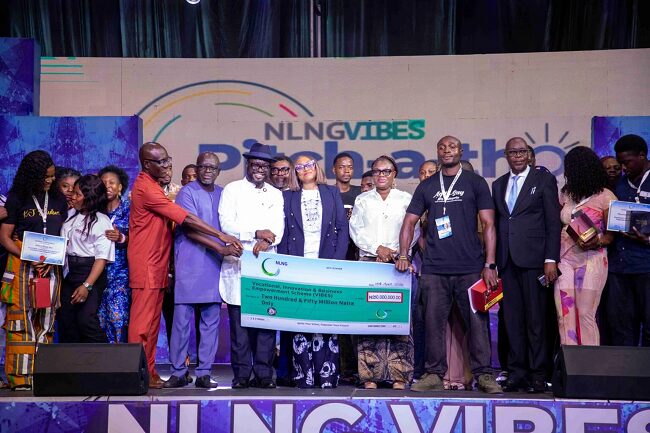
Nigeria LNG Limited (NLNG) has disbursed N250 million in grants to 51 entrepreneurs under its 2026 Vocational Innovation and Business Empowerment Scheme (VIBES).
The company disclosed this in a statement issued by its Manager, Corporate Communication and Public Affairs, Mrs. Anne-Marie Plamer-Ikuku.
According to the statement, 103 participants from NLNG host communities were inducted into the programme.
51 entrepreneurs receive N250 million grant under NLNG sponsored Vocational Innovation and Business Empowerment Scheme (VIBES) at the closing ceremony in Port Harcourt
Speaking at the event, NLNG General Manager, External Relations and Sustainable Development, Dr Sophia Horsfall, said beneficiaries emerged after a competitive pitch-a-thon.
Horsfall said participants presented business ideas and funding needs before a panel with selections based on viability, scalability and sustainability.
“What we are doing with this funding is bridging the gap between learning and execution.
“Many small businesses struggle at the stage where they have knowledge but lack capital to move forward,” she said.
She explained that the grants would enable entrepreneurs to implement ideas, stabilise operations, and position their businesses for growth.
Horsfall said the initiative aligned with NLNG’s commitment to sustainable community development through capacity building and financial support.
“The scheme will strengthen businesses, create economic value, and provide sustainable livelihoods in host communities,” she added.
In his remark, NLNG Manager, Community Relations and Sustainable Development, Mr. Yemi Adeyemi, commended participants for their dedication.
Adeyemi said the funding would help beneficiaries expand operations, improve productivity, and create jobs.
He reaffirmed NLNG’s commitment to supporting enterprise development and building local capacity in its host communities.
The pitch-a-thon concluded a four-week intensive business training programme.
Participants were equipped with practical skills in financial management, business strategy, marketing and operations to strengthen their enterprises.
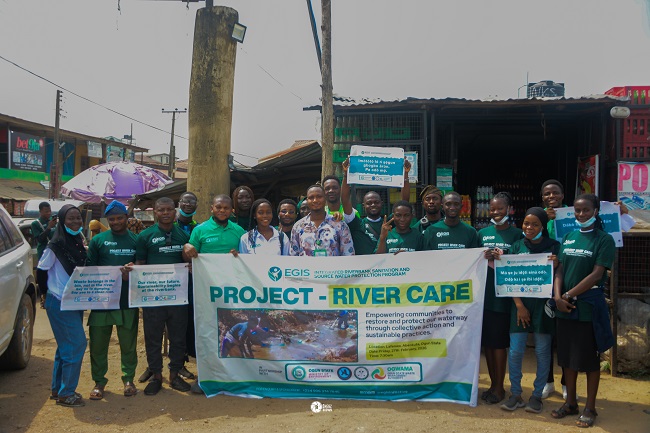
In what appears to be a bold step toward environmental restoration and community-driven sustainability, the Environmental and Green Initiative for Sustainability (EGIS) on Friday, April 10, 2026, led a transformative riverbank clean-up exercise in Lafenwa Community, Abeokuta, Ogun State.
The project, tagged “Project River-Care”, focused on tackling riverbank pollution and safeguarding the Ogun River, one of the community’s vital water sources.
The exercise mobilised 50 volunteers, alongside stakeholders from government ministries, environmental organisations, and recycling partners.
Participants at the transformative riverbank clean-up exercise in Lafenwa Community, Abeokuta, Ogun State
Participants included representatives from the Ogun State Ministry of Environment, the Ogun State Waste Management Authority (OGWAMA), the YALI Network Ogun, the Nigerian Youth Council, and private-sector partner Orange Strategy Waste Value.
Volunteers were deployed to four riverbank locations around Lafenwa, where they collected and evacuated roughly 530 kilogrammes of waste, including plastics and other solid materials. The activity not only cleared the riverbank but also raised crucial awareness among residents about proper waste disposal and its link to flooding, water contamination, and public health risks.
According to Surajdeen Alabede, Chairman and Founder of EGIS, the initiative marks “a significant step in restoring environmental sanitation and promoting community accountability for waste management.”
He commended the efforts of the EGIS team, volunteers and expressed appreciation to the Ogun State Ministry of Environment, most importantly, Mrs. Mary Durojaye, Director of Environmental Conservation and Resource Management, and Mrs. Abosede Siyanbola, Head of Market Sanitation and Special Duties Unit under OGWAMA, for their support.
Other important personalities present at the site included Oluwadamilare Oladotun, EGIS Executive Director; Titilayo Falaiye, representative of Orange Strategy Waste Value; and environmental advocates Michael Adefioye, Moyosoreoluwa Adebiyi, Yunuz Olashiji, and Priscilla Ohere. Their shared vision emphasised the power of grassroots collaboration to drive measurable environmental impact.
One of the volunteers, Alabi Olawale, a final-year student of Environmental Management and Toxicology, said that “the exercise was more than just a clean-up; it was an opportunity to drive environmental change and inspire collective responsibility. It was fulfilling to engage the community and highlight that careless waste disposal harms us all. Real change begins when we take responsibility for our environment.”
Beyond its immediate results, Project River-Care lays the foundation for ongoing efforts to protect water sources and promote sustainable waste management. EGIS plans to sustain the momentum through a multi-stakeholder dialogue webinar that will convene government representatives, recycling partners, environmental experts, and local advocates to explore long-term strategies for riverbank sanitation and water resource protection.
The initiative aligns with the United Nations Sustainable Development Goals (SDGs) – notably SDG 6 (Clean Water and Sanitation), SDG 11 (Sustainable Cities and Communities), SDG 13 (Climate Action), and SDG 14 (Life Below Water) – by fostering cleaner environments, improving waste management systems, and strengthening community resilience.
With Project River-Care, EGIS and the people of Lafenwa have shown how small collective actions can make a lasting environmental impact, proving that community effort remains at the heart of a sustainable future.
The developers for the 175 Park Avenue in New York City have submitted permits for the proposed supertall skyscraper by SOM in Midtown Manhattan, which would become the third tallest in the city if completed.
Developers RXR Realty and TF Cornerstone have brought attention back to the project, which was originally announced in 2019.
The skyscraper would replace a Hyatt hotel next to Grand Central Station, taking advantage of 2010 zoning changes that allowed adjacent buildings to reuse the air rights of the station.
The proposed SOM skyscraper in New York City
KFP’s 1 Vanderbilt supertall skyscraper sits on the other side of the station. SOM‘s design, originally released in 2021, has been preliminarily approved by the city, with a reduced height of 1,545 feet with 83 storeys of hotel and office programming.
Because of the extremely complicated building conditions, with very few available points for ground penetration, the structure features an external steel lattice support system that comes together at condensed points at the base.
“The metal columns intertwine into two bundles on 42nd Street; below ground, they navigate a multistory tangle of underground rail tracks and anchor into the limited available bedrock,” said SOM.
Smaller steel cables would run between the large columns, coming together in “bundles” at the base.
“At street level, the bundles are set away from the edge of the property line, a configuration that widens the sidewalk to improve circulation outside Grand Central,” SOM said.
The tower steps back with the steel lattices running parallel along the facade and coming to V-shaped supports at each setback, culminating in another lattice form at the bulkhead.
At the setbacks, the outdoor amenity space would be tucked under the slanting steel columns, and the studio has said that the interior would be mostly column-free.
Part of a more overarching restoration of the space around Grand Central, the building would come down right next to the storied transit terminal, with a partially covered entry programme connecting directly to the facade of the station.
The base would connect with a “new transit hall” featuring retail.
As of now, the studio has 2032 as the official completion date on the website, but no signs of construction or demolition are apparent at this time.
The Hyatt Grand Central New York, which replaced the historic Commodore Hotel in the late 1970s, was a joint venture of the Hyatt Hotels Corporation and the Trump Organisation. Trump was bought out in the late 1990s.
This structure would need to come down before any construction could start, a demolition which could take months if not years to carry out in the busy heart of Manhattan.
As of now, the hotel’s website appears to be taking bookings through April 2027. The SOM skyscraper developers are still working to secure funding and tenants for the proposed building.
If completed, the skyscraper would be the third tallest in the city. Central Park Tower at 1,550 feet tall (472 metres tall) is currently the second tallest.
The Midtown rezonings of the 2010s have led to an explosion of skyscraper production, with a skyscraper by Russian studio Meganom being built just south of the SOM site on Park Avenue.
Nearby, JPMorganChase recently completed its Foster + Partners-designed supertall skyscraper headquarters, which was built after the demolition of an SOM structure.
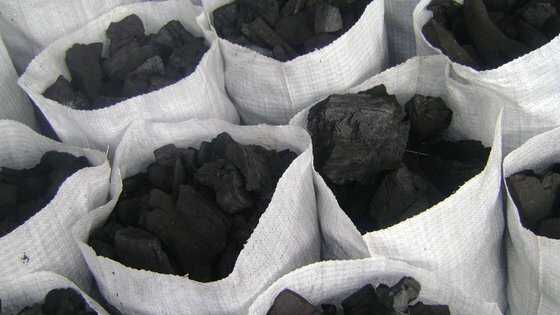
The National Association of Charcoal Producers, Dealers, Exporters and Afforestation of Nigeria (NACPDEAN) has called for urgent and coordinated engagement following the recent ban on charcoal export.
The newly elected President of the association, Mr. Edu Babatunde, made the call in his acceptance speech after the election of the National Executive Committee (NEC) in Abuja on Wednesday.
Babatunde, who described his victory as a collective achievement, said it comes with renewed responsibility and a clear call to action.
Charcoal
“Our industry is at a critical turning point. Recent developments, particularly the ban on charcoal export, require urgent and strategic engagement,” he said.
He urged producers, dealers, exporters and other stakeholders to unite and engage government authorities with a common voice.
According to him, the goal is not only to address immediate challenges arising from the ban, but also to establish a sustainable framework that balances economic survival with environmental responsibility.
Babatunde emphasised that a new era of strict compliance was imminent, noting that weak enforcement and unregulated activities would no longer be tolerated.
He said the association would introduce firm monitoring systems, enforce standards and ensure accountability across the industry.
The NACPDEAN president said the measures were necessary to restore credibility in the sector, protect legitimate operators and secure the long-term future of the charcoal business in Nigeria.
While underscoring the importance of enforcement, he stressed that collaboration remained critical.
“Plans are underway to deepen engagement with state governments to ensure inclusive participation and effective regulation,” he said.
He added that the association would promote afforestation initiatives, strengthen regulatory frameworks and create an enabling environment for sustainable charcoal production and export activities.
Babatunde, who was re-elected for a second term, said priority would be given to establishing and activating state chapters in Lagos, Ogun, Oyo, Kwara, Kogi and Bauchi states.
He also pledged to enforce compliance with the 2022 Federal Executive Council (FEC) resolution prohibiting foreign operators from purchasing charcoal directly at the farm gate.
“This policy is designed to protect local businesses, and we will ensure full compliance,” he said.
On deforestation, Babatunde said the association would prioritise sustainability through structured initiatives.
“All stakeholders; producers, dealers and exporters must embrace tree planting as a core responsibility. Afforestation will remain central to our strategy,” he said.
He added that the association was introducing structured economic forestry programmes across regions to ensure tree planting was both sustainable and economically beneficial to communities, states and the Federal Government.
Also speaking, Mr. Basiru Lukman, Schedule Officer in charge of the Charcoal Value Chain at the Ministry of Industry, Trade and Investment, said the ban was necessitated by the country’s growing forest deficit.
He said the measure was aimed at protecting natural resources and promoting sustainability.
Lukman urged stakeholders to take deliberate steps toward aggressive afforestation, stressing that sustainable production must remain a collective priority.
He also called for self-regulation within the subsector to ensure compliance with environmental standards and responsible business practices.
In his remarks, Dr Bello Dogondaji, General Secretary of the Federation of Agricultural Commodity Association of Nigeria (FACAN), described the election as free, fair and credible.
He said the process reflected inclusiveness, with representation from all six geopolitical zones.
Dogondaji advised the new executives to uphold unity, integrity and continuity in the discharge of their responsibilities.
The newly elected NEC includes Mr. Abdulsalami Rijana as National Deputy President, Mr. Kayode Animashaun as National Zonal Vice President (South-West), and Mr. Ojei Uche as National Secretary-General.
The Federal Government has inaugurated a high-level 18-member committee to investigate the Zurak Mines gas poisoning incident in Wase Local Government Area of Plateau State.
The incident, which occurred on Feb. 18, 2026, at a mining site in Kampani Zurak, left 37 people dead and 25 others hospitalised after exposure to gaseous emissions.
The Minister of Solid Minerals Development, Dele Alake, had ordered the immediate closure of the affected area, Mining Licence 11810, operated by Solid Unit Nigeria Limited pending investigations.
From right: The Director-General, Mining Cadastre Office, Mr. Obadiah Nkom, Mr. Faruk Yabo, Permanent Secretary, Ministry of Solid Minerals Development, and the ministry’ s Director of Special Duties, at the inauguration of a High-level Committee to investigate the Zurak Mines gas poisoning incident in Wase Local Government Area of Plateau, on Wednesday at ministry’s headquarters in Abuja
Speaking at the inauguration, Alake mandated the committee to examine technical, environmental, regulatory and community factors and submit recommendations within 21 days.
His address was read by the Permanent Secretary of the Ministry, Mr. Faruk Yabo.
He described the incident as painful and a wake-up call for strict adherence to global safety standards in mining.
Alake said the incident was rare and required a comprehensive investigation to determine its immediate and remote causes.
He said preliminary findings indicated poor safety compliance, weak regulatory enforcement, operator negligence and involvement of community youths in the ceded lease area.
The minister directed the committee to ensure transparency and make clear recommendations to prevent future occurrences.
“In view of the seriousness of this incident and the need to safeguard lives and preserve the integrity of the investigation, I wish to formally restate that Solid Unit Mining Company has been placed on immediate suspension.
“This covers all mining operations at ML 11810 and any other associated site,” he said.
He added that the suspension would remain until the investigation was concluded and recommendations adopted.
Alake said the move reflected the administration’s zero tolerance for negligence and commitment to safe mining practices, stressing that unsafe operations deter investment.
“The committee is to provide a detailed technical description of the incident, including gaseous emissions, geological conditions, ventilation status and any prior occurrences within the lease area.
“Identify technical experts engaged by the company and their role in supervision and determine minerals mined under ML 11810, transport methods and buyers.
He said the committee would also examine compliance with royalty and other statutory obligations.
Other terms of reference include reviewing security challenges in the Wase/Zurak axis, proposing regulatory safeguards for community ceding arrangements and improving financing mechanisms for regulatory agencies.
He said the committee would also review community relations, environmental compliance, as well as all statutory obligations, and would be supported administratively and technically by the ministry.
Earlier in his remarks, the Ministry’s Permanent Secretary, Faruk Yabo, said the Zurak incident underscored the urgent need to strengthen security and safety measures at mining sites.
Yabo said the inauguration of the committee was a demonstration of the Federal Government’s resolve to safeguard lives, ensure accountability and promote sustainable mining practices.
He said the committee was expected to provide clear, evidence-based findings and actionable recommendations that would be instrumental in forestalling future occurrences.
The committee is chaired by the ministry`s Permanent Secretary and co-chaired by Mr Peter Gwom, Plateau`s Commissioner for Environment, Climate Change and Mineral Development.
Other members include the Emir of Wase, the Director-General of the Mining Cadastre Office, the Chairman of Wase Local Government Council and the GOC, 3 Division of the Nigerian Army, among others.
The Nigeria Centre for Disease Control and Prevention (NCDC) has alerted 10 states to a high risk of cholera and other disease outbreaks.
The alert follows forecasts by the Federal Ministry of Environment and the Nigerian Meteorological Agency (NiMet), which indicated that parts of Adamawa, Enugu, Kaduna, Kogi, Niger, Osun, Oyo, Plateau, Taraba and Kwara states may experience heavy rainfall and flooding between April 13 and April 17, 2026.
Dr Jide Idris, the Director-General of the NCDC, said this in a statement on Wednesday, April 15, in Abuja.
Director-General of NCDC, Dr Jide Idris
Idris reiterated that early action, community vigilance, and prompt care-seeking could prevent outbreaks and save lives, noting that the forecast coincides with the seasonal period when cholera cases typically begin to rise in the country, warning that flooding could worsen disease transmission.
According to him, recent surveillance data already show increasing cholera activity across multiple states, raising concern that flood conditions could accelerate outbreaks.
He explained that flooding increases public health risks by contaminating drinking water sources, disrupting sanitation systems, and exposing communities to unsafe environmental conditions.
Idris warned that, beyond cholera, other risks include malaria and other mosquito-borne diseases, infections from contact with contaminated floodwaters, injuries such as drowning and snakebites, as well as disruption of access to healthcare services.
However, he stressed that the risks remain preventable with early action and community vigilance.
He advised residents in at-risk areas to use only safe water for drinking and cooking, including boiling, chlorination, or bottled water, while also maintaining strict hand hygiene practices.
Idris further urged the public to avoid contact with floodwaters where possible, ensure proper sanitation and waste disposal, and store food safely to prevent contamination.
“Residents are also advised to sleep under insecticide-treated nets and seek immediate medical attention at the nearest health facility if they experience symptoms such as diarrhoea, vomiting, fever, or general illness,” he said.
He called on community leaders and local authorities to support environmental sanitation, drainage clearance, and the dissemination of accurate public health information to prevent outbreaks.
Idris added that it is working closely with State Ministries of Health and partners to strengthen surveillance systems and enhance preparedness for rapid response in affected areas.
State governments, he said, were also being supported to activate multisectoral response mechanisms, particularly in water, sanitation, and emergency management sectors.
Cholera is an acute diarrhoeal disease caused by drinking water or eating food contaminated with Vibrio cholerae.
It spreads quickly in areas with unsafe water, poor sanitation, and during flooding, and can cause severe dehydration and death if not treated promptly.
In Nigeria, cholera is endemic and seasonal, with outbreaks occurring almost every year, especially during the rainy and flood seasons.
The disease affects multiple states, often spreading rapidly in communities with limited access to clean water and sanitation.
Its burden is driven by unsafe water sources, poor sanitation infrastructure, flooding, and overcrowding, particularly affecting children, rural communities, and displaced populations.
While preventable and treatable, cholera continues to strain Nigeria’s health system during peak outbreak periods.
The Senate, through its Committee on Public Accounts, has given the management of Nigerian National Petroleum Company Limited (NNPCL) up till April 29, 2026, to appear before it to account for the N210 trillion flagged in audit reports from 2017 to 2023.
The committee directed the Group Chief Executive Officer (GCEO) of NNPCL, Mr. Bayo Ojulari, to appear alongside the immediate past GCEO, Mr. Mele Kyari, on the scheduled date unfailingly.
Also expected to appear are former Chief Financial Officer, Umar Ajia; Dr Bala Wunti and the external auditors of the national oil company.
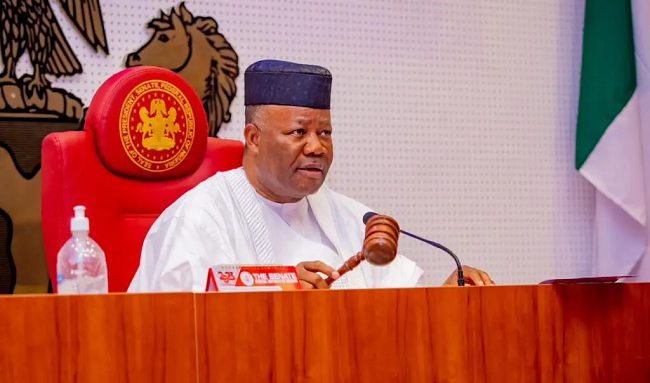
Senate President, Godswill Akpabio
The committee’s resolutions followed a motion moved by Sen. Osita Izunaso (Imo West) and seconded by Sen. Adams Oshiomhole (Edo North).
Chairman of the committee, Sen. Aliyu Wadada (Nasarawa West), said that the N210 trillion in question, as contained in the audit reports, must be fully accounted for by the company’s management.
Wadada said that the explanations provided by NNPCL to the 19 audit queries were unsatisfactory, noting that Nigerians deserved clear, detailed and convincing responses.
“This committee, and by extension, the Senate, is not satisfied with the blanket explanation given by NNPCL on N103 trillion, which it claimed represents liabilities.
“Liabilities have components such as retention fees, legal fees and audit fees. Specific amounts spent on each of these components must be clearly stated and explained.
“Detailed explanations are also required for the N107 trillion which NNPCL said was expended on joint venture cash calls as well as funds allegedly owed by some defunct banks whose identities were not disclosed.
“Consequently, it is resolved that NNPCL is given an additional two weeks to appear before this committee unfailingly.
“The deadline for compliance is Wednesday, April 29,” Wadada said.
Earlier, a member of the committee, Sen. Abdul Ningi (Bauchi Central), had called for the invocation of the National Assembly’s powers to compel the appearance of NNPCL officials, citing repeated failures to honour invitations.
“We must treat this matter with utmost seriousness. The strength of democracy rests significantly on the authority of the legislature.
“Unfortunately, there appears to be a growing reluctance to honour invitations from the National Assembly, leaving members feeling helpless in enforcing compliance,” he said.
The Standards Organisation of Nigeria (SON) in collaboration with the Sustainable Research and Action for Environmental Development (SRADeV) on Wednesday, April 15, 2026, held an inception/validation workshop on Minimum Energy Performance Standards for electric motors.
The workshop, held in Lagos, had the support of CLASP.
Speaking at the event, the Director-General, SON, Dr Ifeanyi Okeke, reaffirmed the agency’s commitment to advancing energy efficiency through new standards for electric motors in Nigeria.
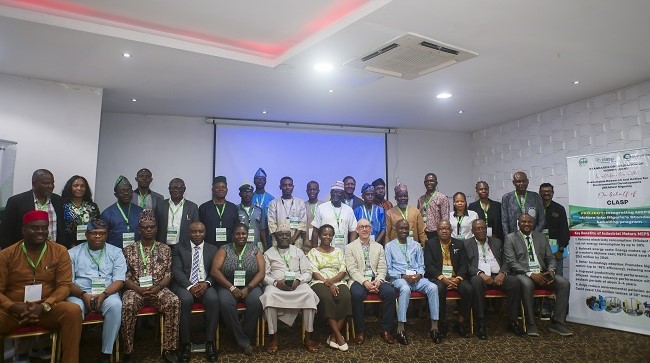
Participants and facilitators pose for a group photograph during the Inception/Validation Workshop on Minimum Energy Performance Standards for Electric Motors (MEPS) in Nigeria, as part of the efforts to strengthen MEPS implementation. April 15, 2026. Lagos, Nigeria. Photo credit: CLASP/Oluwayemisi Onadipe
Represented by the Head, Standards Department of SON, Mr. Yunusa Mohammed, Okeke said the initiative was supported by CLASP and SRADeV Nigeria, alongside other development partners.
According to him, the workshop builds on earlier Minimum Energy Performance Standards (MEPS) developed for lighting products in 2021 and 2024.
He noted that energy efficiency remained a cost-effective pathway to achieving Nigeria’s energy transition goals and sustainable economic growth.
Okeke said many industries still rely on outdated equipment, leading to high energy consumption and increased production costs.
He described electric motors as critical to industrial productivity, accounting for a significant share of electricity use in the sector.
He said improving motor efficiency would reduce energy waste, cut costs, and support Nigeria’s climate commitments.
He cited global estimates showing efficient motors could reduce electricity demand by up to 30 per cent and lower emissions significantly.
Okeke said SON was developing a comprehensive framework for standards, implementation, and compliance.
He added that existing MEPS for appliances would be included in the fourth phase of SON’s energy labelling scheme in 2026.
He said electric motors would be incorporated in subsequent phases to expand efficiency across industrial applications.
Also speaking, the Executive Director, SRADeV, Dr Leslie Adogame, welcomed the participants to the workshop.
Adogame said SRADeV had over 15 years’ experience promoting environmental sustainability and supporting policy development.
He said the organisation previously supported MEPS for lighting, helping phase out inefficient technologies and reduce mercury pollution.
According to him, the lighting initiative is projected to save about $2.47 billion in energy costs by 2050.
He said electric motors were projected to consume about 8.6 terawatt-hours of electricity by 2025.
Adogame said efficient motor systems could save 3.34 terawatt-hours and avoid 1.7 million tonnes of emissions by 2050.
He described the workshop as a platform for stakeholder engagement, policy development, and validation of technical findings.
In an interview, CLASP Programme Manager, Ms. Angellah Wekongo, highlighted the organisation’s role in advancing MEPS globally.
Wekongo said CLASP provides technical support, including data analysis, modelling, and capacity building for energy policies.
She said MEPS for electric motors would reduce energy use, ease pressure on the national grid, and lower industrial costs.
According to her, the standards would improve competitiveness and support job creation through operational savings.
She added that the initiative would contribute to environmental sustainability and Nigeria’s economic development.
The workshop featured goodwill messages presented by relevant ministries, department and agencies of the government, such as Federal Ministries of Industry, Trade and Investment; Power; and Environment, as well as Energy Commission of Nigeria (ECN), Manufacturers Association of Nigeria (MAN), UNIDO and GIZ-Nigeria.
The Anambra and Enugu State Governments say they are doing everything possible to tackle erosion and other ecological problems in their states ahead of the rainy season.
The duo made the vow in separate interviews on efforts to mitigate ecological challenges especially erosion in their various states.
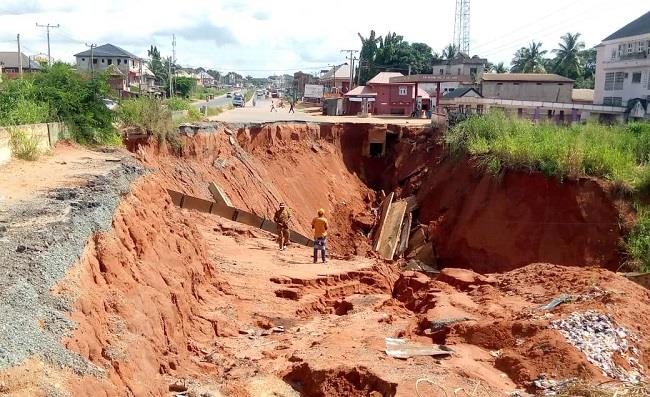
In Anambra, the Ministry of Environment disclosed that there were over 1,000 gully erosion sites across the state.
An erosion site in Anambra State
The Permanent Secretary in the ministry, Mr. Tochukwu Obodogha, disclosed that the state government was doing everything possible to tackle the issue with the financial resources available to it, as the menace required huge amount of money to control.
“Anambra has over 1,000 gully erosion sites and about 160 communities have been affected, out of the 179 communities in the state,” he said.
According to him, the state government is working hard to mitigate these ecological problems in our communities.
He noted that the state government had five priority development agenda, with environment as the fifth.
“This is the reason government is working very hard to mitigate the problem of erosion and heavy flooding before the next rain sets in,” he said.
The permanent secretary said that the state had concluded arrangements to deal with the issue of gully erosion and flooding together.
“Right now we are trying to clear our water ways before April 20 to help us control erosion and flooding in the state,” he said.
On the issue of ecological fund, Obodogha said that it was the Commissioner who was competent to speak on the issue.
He appealed for the Federal Government and international donors intervention as the menace of gully erosion required huge financial resources to combat.
The reelected Governor of the state, Prof. Chukwuma Soludo, has yet to form a new cabinet for his second term, after over three weeks of inauguration.
Also speaking, former Commissioner for Agriculture in the state, Dr Forster Ihejiofor, said a structured investment in bamboo and establishment of bamboo plantation clusters across the three senatorial zones in the state would reduce erosion impact across vulnerable communities.
According to him, Bamboo is “Anambra’s green gold”, with wide applications ranging from erosion control and land restoration.
“The opportunities in bamboo alone can reposition the state economically while addressing pressing environmental concerns,” he said.
On March 12, 2025, the Nigeria Climate Adaptation Erosion and Watershed Project through the European Investment Bank (NEWMAP-EIB) named the state as one of the beneficiaries of an intervention aimed at addressing erosion and land degradation challenges in Nigeria.
Mr. Anda Ayuba-Yalaks, National Project Coordinator, NEWMAP-EIB, made the disclosure when he led the Federal Project Management Unit of the project on an assessment tour of five erosion sites in the state last year.
Ayuba-Yalaks said that the intervention project would be carried out through EIB’s NEWMAP-EIB, following the payment of the state’s counterpart fund of N500 million by the state government.
According to NEWMAP, the delegation has conducted an on-the-spot assessment of uncompleted five selected erosion sites within the state, in collaboration with Anambra government.
They visited Ndi Agu, Ikenga Ogidi, Nkpor Flyover, Ugamuma Obosi and Abagana erosion sites.
“This project is to provide long-term sustainable land degradation control measures and to provide support to the state project management unit to accelerate the project implementation.
“We will further explore best practices and interventions to mitigate the challenges of erosion in Anambra.”
Efforts to reach the NEWMAP officials in the state to ascertain the extent of implementation failed due to some bureaucracies.
In Enugu State, Mr. Ifeanyi Nwodo, Head of the Ecology Department at the State Ministry of Environment, said the government had taken steps to address environmental challenges, particularly erosion and flooding.
According to Nwodo, the state works through the Nigeria Erosion and Watershed Management Project (NEWMAP), which handles erosion-related issues.
He explained that complaints from communities were forwarded to the agency for action.
“We have an agency responsible for erosion control, and interventions have already been carried out in areas such as Udi and other communities,” he said.
Nwodo also highlighted efforts by the ecology department to mitigate flooding across the state.
He noted that, in 2025, the government conducted extensive clearing and sorting of drainages within the state capital to ensure free flow of waterways and reduced flood risks.
“In the last two years, we have received thousands of petitions from residents regarding flooding and improper channeling of water into homes. We have addressed most of these concerns,” he added.
He further stated that the state operated its own ecological fund management structure through a dedicated unit based at the Government House, which oversees the application of ecological funds.
However, a human rights lawyer, Nnadume Offorkansi, criticized the current system, describing the ecological fund as lacking accountability.
“The ecological fund, like the security fund, is open to abuse. Governors spend it as they like without accountability,” Offorkansi alleged.
He questioned the visible impact of such funds in Enugu, pointing out that the only notable intervention he had observed was along the 9th Mile-Nsukka Old Road, which he claimed was handled by the federal government rather than the state.
“Erosion is ravaging many parts of the state, yet there is little evidence of state-funded intervention,” he argued.
Offorkansi also blamed both government and society for the lack of transparency, noting that the public was often unaware of how much governors received and how the funds were spent.
He advised that governors should engage more closely with local communities through town unions and their president-generals to better identify and address ecological challenges.
“Community leaders understand the real issues on the ground. If properly engaged, they can help prioritize ecological problems such as flooding and erosion,” he said.
He cited examples of flood-prone border communities between Enugu and Anambra State, as well as erosion-affected areas like Iwollo, Oghe, and other parts of Ezeagu council area, which he said, had received little attention.
Similarly, Mr. Ozor Ugonna, Executive Director of the Rural Engagement and Development Foundation, criticised what he described as widespread mismanagement and lack of public awareness surrounding the funds.
He said that many citizens and even some professionals were unaware that ecological funds were being disbursed to states for environmental and infrastructure-related challenges.
“The coordinated answer would be no,” he said, when asked whether the funds are being effectively utilised.
“There are no clearly designated funds that are transparently used for the purpose they were meant for.
“What we see instead is direct misappropriation. Ecological funds are intended to address pressing environmental issues such as erosion, flooding, and other natural disasters,” he said.
He argued that their impact was largely unfelt across communities.
Ugonna further criticized elected officials – including governors and members of legislative bodies, for failing to communicate with their constituents about funds secured and how they were spent.
The executive director highlighted a broader systemic issue, alleging that a lack of accountability mechanisms allowed funds to be siphoned without scrutiny.
“The citizenry are not aware, and when people demand accountability, no one is willing to listen,” he said.
“The system enables continuous embezzlement.”
He added that in spite of frequent reports of funds flowing from the federal level to states, there is little or no public disclosure on how the money was ultimately spent.