Home Blog Page 9

Dangote, Pope Leo XIV, Trump, Xi Jinping, others named in TIME 100 Most Influential People for 2026

0

Renowned African industrialist and philanthropist, Aliko Dangote, has been named among TIME Magazine’s 100 Most Influential People in the World for 2026, reaffirming his standing as one of the most successful and iconic business leaders of his generation.

Dangote joins global influential figures from multiple sectors, including political leaders such as U.S. President Donald Trump, Chinese President Xi Jinping, Israeli Prime Minister Benjamin Netanyahu, Canadian Prime Minister Mark Carney, revered Pope Leo XIV, current head of Catholic Church as well as business and technology leaders including Google CEO Sundar Pichai and YouTube CEO Neal Mohan.

Aliko Dangote
Aliko Dangote

The annual TIME100 list, published on April 15, 2026, recognises global figures whose leadership, ideas, and actions are shaping the future across business, politics, culture, and society. Dangote’s inclusion places him alongside prominent international figures drawn from diverse spheres of global influence.

This marks Dangote’s second appearance on the prestigious TIME100 list, following his first recognition in 2014, when he was honoured for his exceptional impact on business and philanthropy. His return to the list more than a decade later underscores the consistency and scale of his influence on the global stage.

Dangote, who is being recognised for his African industrial drive, is the only Nigerian on the list and featured in the titan and innovators category. Other prominent honorees named alongside Dangote in the titan category are Reid Wiseman, Commander of the Artemis II mission to the moon; Sundar Pichai, CEO of Google and Alphabet and Neal Mohan, CEO of YouTube.

Also featuring prominently under the titan category are Michael and Susan Dell, the high-profile American tech billionaires and philanthropists best known as the founders of the Michael & Susan Dell Foundation, a global non-profit that focuses on improving the lives of children living in urban poverty. Included here also is the American designer and billionaire, Ralph Lauren, best known for founding the global lifestyle empire Ralph Lauren Corporation.

Recognised in the Pioneer category are individuals with breakthroughs in Science and Social Advocacy such Kiran Musunuru and Rebecca Ahrens-Nicklas, both of whom were cited for medical breakthroughs in genetic therapy as well as Aaron Williams, recognised for advancements in heart transplant readiness.

Influential figures recognized in global entertainment and culture include Ranbir Kapoor, prominent Indian actor; Dakota Johnson, recognized as an actress and cultural icon and Kate Hudson, included for her cultural influence.

As Founder and President of Dangote Group – Africa’s largest indigenous industrial conglomerate – Dangote has played a central role in advancing industrialisation across the continent. Under his leadership, the Group has made landmark investments spanning cement manufacturing, sugar and food processing, agriculture, infrastructure, and lately energy, significantly reducing Africa’s reliance on imports while creating millions of direct and indirect jobs.

In its citation, TIME Magazine highlighted Dangote’s vision of building African industries with local resources for global competitiveness, noting his recent investments in large‑scale energy and manufacturing infrastructure as emblematic of his long‑term commitment to Africa’s economic transformation.

Beyond business, Dangote is widely acclaimed for his philanthropic leadership through the Aliko Dangote Foundation (ADF), one of Africa’s largest private philanthropic organisations. The Foundation supports critical initiatives across healthcare, nutrition, education, disaster relief, and economic empowerment, contributing to improved outcomes for vulnerable communities across the continent.

The 2026 TIME100 recognition further reflects a broader global acknowledgement of African leadership, innovation, and enterprise, with Dangote standing as a symbol of the continent’s growing influence in shaping global economic and development narratives.

This latest honour consolidates Aliko Dangote’s legacy as a visionary industrialist and philanthropist, whose work continues to drive sustainable development, inclusive growth, and long‑term value creation- both within Africa and beyond.

Under his leadership, Dangote Group recently launched Vision 2030, with which Dangote Industries aims to transform from a regional $30 billion conglomerate into a $100 billion global powerhouse by 2030.

This strategy focuses on industrial self-sufficiency for Africa, moving the group from “regional dominance to global relevance”. 

Dangote said the roadmap to vision 2030 is divided into phases to “supercharge” the group’s expansion; with phase one spanning 2025-2028 focused on scaling existing businesses – cement, fertiliser, and energy – and optimizing assets for international competitiveness.

The Phase two running from 2028-2030 is for the deployment of new businesses and ventures into global markets to drive the final leap to the $100 billion revenue target. The Dangote Group plans to venture into steel manufacturing, power, and deep-sea ports to tackle industrial bottlenecks across Africa. 

This recognition by TIME Magazine underscores the growing global acknowledgment of African leadership and innovation, and highlights Aliko Dangote’s enduring influence as a visionary leader committed to sustainable development and inclusive growth.

The 2026 list underscores the expanding global visibility of African leadership and Dangote’s continued influence as a leading industrialist and philanthropist.
Study ranks Hawaiian monk seal most at risk of extinction from plastic pollution

 A new study released in Conservation Biology on Wednesdy, April 15, 2026, and co-authored by scientists at Ocean Conservancy, Arizona State University and Shaw Institute is said to be the first to rank marine mammals based on their vulnerability to macroplastic pollution.

Macroplastic implies any plastic piece larger than 5mm, roughly the width of a pencil eraser.

The study, A global ranking of the relative vulnerability of marine mammals to macroplastic pollution, found that Hawaiian monk seals, African manatees, Australian sea lions, vaquita porpoises, and Mediterranean monk seals are the five marine mammals most at risk of population declines from plastics ingestion or entanglement.

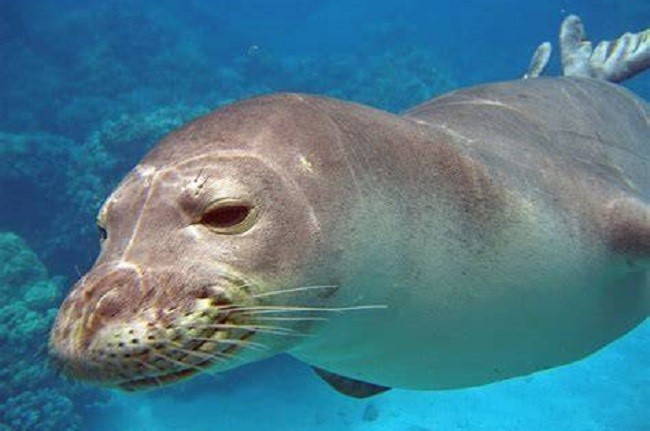
Hawaiian monk seal
Hawaiian monk seal

When the results are assessed at the level of order instead of individual species, sirenians, which include manatees and dugongs, are the most vulnerable to plastic pollution.

The International Union for Conservation of Nature (IUCN) classifies 125 species as marine mammals, of which eight were excluded from the study because they live primarily in freshwater habitats (like hippopotamuses) or live most of their life on land (like polar bears).

Of the 117 marine mammals evaluated, more than 1 in 3 are red-listed as vulnerable, endangered, or critically endangered, according to the IUCN; and of the 22 marine mammals in the highest-risk group, 17 are vulnerable, endangered, or critically endangered. 

“All marine mammals are affected by plastic pollution, but we wanted to understand: which ones should we be most worried about? Which populations are most at risk?” said Dr. Erin Murphy, Ocean Conservancy’s manager of ocean plastic research and co-author of the study. “Knowing the answer to these questions can guide our efforts and add urgency where it’s needed most.”

To get their results, the researchers scored species according to 11 different traits reflecting the animals’ likelihood of exposure, relative sensitivity to plastics, and population resilience (the ability to bounce back from stressors); then ranked their vulnerability as high, medium-high, medium, medium-low and low. 

The following specific species across mammal types and geographies landed on the highest risk list:

  1. Hawaiian monk seal 
  2. African manatee 
  3. Australian sea lion
  4. Vaquita (porpoise) 
  5. Mediterranean monk seal
  6. West Indian (Florida) manatee 
  7. Indo-Pacific bottlenose dolphin
  8. Sei whale 
  9. North Atlantic right whale
  10. Hector’s dolphin
  11. Indo-Pacific humpback dolphin
  12. Dugong 
  13. Gray whale 
  14. North Pacific right whale
  15. Irrawaddy dolphin
  16. Atlantic spotted dolphin
  17. Atlantic humpback dolphin
  18. Risso’s dolphin 
  19. Common bottlenose dolphin
  20. Baird’s beaked whale 
  21. Arnoux’s beaked whale
  22. Indo-Pacific finless porpoise

“It is not surprising that Hawaiian monk seals emerged at the top of this list because they are curious fish-eaters that have been found tangled in fishing gear,” said Murphy. “They also have a small population located near the Great Pacific Garbage Patch, exposing them to a lot of plastic. Local organizations have been conducting targeted debris removal programs to help protect the Hawaiian monk seal, and studies have shown that this has helped the population rebound. This gives us a lot of hope for how to protect the species at the top of the list.”

Murphy, alongside Ocean Conservancy colleagues, Dr. Britta Baechler and Nicholas Mallos, co-authored a complementary study published in November 2025 that quantified the extent to which a range of plastic types result in the death of seabirds, sea turtles, and marine mammals that consume them.

Drawing on data from more than 10,000 necropsies, or animal autopsies, the study found that even relatively small amounts of plastics can be deadly when ingested: ingesting less than a sixth of a soccer ball’s worth of plastics kills one in two harbor porpoises, the smallest of marine mammal species. Out of approximately 7,000 marine mammals in the study that had plastics in their guts at their time of death, 72% had consumed fishing debris, 10% soft plastics, 5% rubber, 3% hard plastics, 2% foam, and 0.7% synthetic cloth.

“You can’t fix a problem you don’t understand and that’s why Ocean Conservancy is committed to not only solving the ocean plastics crisis through prevention and cleanup but also advancing research,” said Dr. Britta Baechler, Ocean Conservancy’s director of ocean plastics research. “And it’s been energizing to see the impact our research has made, from inspiring volunteers to influencing policymakers to take action.”

An estimated 11 million metric tons of plastics enter the ocean each year, the equivalent of one garbage truck’s worth every minute. In addition to conducting original plastics research, Ocean Conservancy advocates for solutions to plastic pollution that prevent it from reaching beaches and waterways in the first place.

Ocean Conservancy has advocated for policies at the local, state, federal and international levels such as California’s SB54, Florida’s balloon release ban, the Farewell to Foam Act, the UN Plastics Treaty and more.

Makoko community rejects relocation from ancestral home, seeks inclusion in UN project

About three months since the eviction of an estimated 30,000 from the Makoko waterfront, the community says it stands firmly united to reject any forced relocation away from the ancestral home and to insist on full inclusion as the primary beneficiaries of the United Nations-supported Water Cities project.

It will be recalled that the demolition of thousands of homes and businesses at Makoko waterfront from December 2025 to January 2026 was brought to a halt through a series of demonstrations and a petition from the community to the Lagos State Governor and the Lagos State House of Assembly. Once the demolition was halted, the community was invited for a series of engagements with the Lagos State House of Assembly.

Makoko
Makoko demolition

Despite demanding a stop to the demolition, immediate humanitarian assistance and emergency shelter for the displaced, and the rebuilding of illegally demolished homes, government reportedly failed to honour the request.

“Not even the most modest form of palliatives,” community members stated, adding: “Instead, we were surprised to hear the Lagos State House of Assembly recommending that our community should be relocated to an empty land at Agbowa, the far side of Lagos State.”

They added: “We firmly reject this recommendation and insist that we should remain in our ancestral home where we have lived for well over one 100 years. This is moreso our right since the Lagos State Government has announced its intention to proceed with the Water Cities project in our community.

“The Water Cities project was first invited by we, the residents of Makoko, to help put forward an alternative to demolition to the Lagos State Government. Based on our invitation, support for the project was sought and obtained from the United Nations. The idea that we, the residents and intended beneficiaries, should now be forcibly evicted and relocated so that another group of people can come to enjoy this project is completely unacceptable.

“We are aware of some statements made by some purported leaders of Makoko that would seem to welcome the proposed relocation. We state firmly and clearly today that those purported leaders may be representatives of the Oloto Royal Family, but they do not represent Makoko community. We firmly deny their statements as we make the position of the community clear.

“Thank you to the people of Lagos State, the people of Nigeria, and the people of the world who are standing with our community today as we struggle to ensure the survival of our community.

|We appeal to the President of the Federal Republic of Nigeria, the Governor of Lagos State, all our elected leaders, and the United Nations to head our call and ensure a just outcome in line with our original demands – relief and emergency shelter for evictees in situ here at Makoko, the rebuilding of our homes, businesses and schools in situ here at Makoko, and a Water Cities project that can ultimately exemplify people-centered development despite all the destruction.”

Flood expected in 33 states, Abuja, says Minister

0

The Minister of Water Resources and Sanitation, Prof. Joseph Utsev, says no fewer than 33 states and the Federal Capital Territory (FCT), Abuja, will experience flooding in 2026, with 14,118 communities identified as high-risk nationwide.

Utsev disclosed this in Abuja on Wednesday, April 15, at the public presentation of the 2026 Annual Flood Outlook (AFO) by the Nigeria Hydrological Services Agency (NIHSA).

He said the high-risk communities are located in 266 Local Government Areas (LGAs) based on scientific forecasts and hydrological assessments.

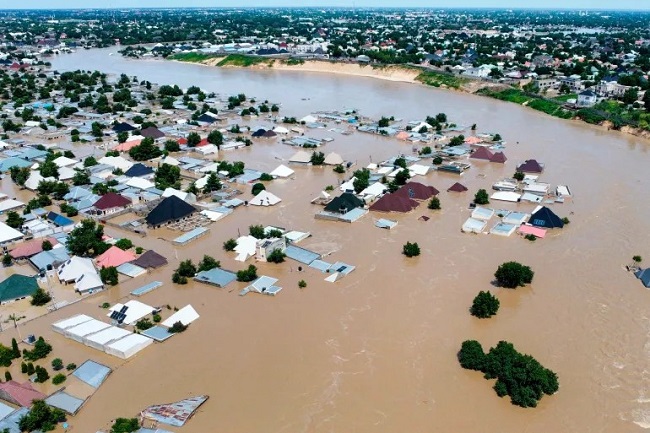
Flooding
Flooding in Nigeria

The affected states, according to him, are Abia, Adamawa, Anambra, Bauchi, Bayelsa, Benue, Borno, Cross River, Delta, Ebonyi, Edo, Enugu, Gombe, Imo, Jigawa, Kaduna and Kano.

Others include Kebbi, Kogi, Kwara, Lagos, Nasarawa, Niger, Ogun, Ondo, Osun, Oyo, Plateau, Rivers, Sokoto, Taraba, Yobe and Zamfara, including the FCT.

The minister said that 15,597 communities in 405 LGAs across 35 states would face moderate flood risk, while Ekiti remained the only state not affected.

He added that 923 communities in 77 LGAs across 24 states fell within the low flood risk category.

”States in this category include Adamawa, Anambra, Bauchi, Bayelsa, Benue, Borno, Cross River, Delta, Ebonyi, Edo, Jigawa, Kaduna, Kano, Kebbi, Kogi, Nasarawa, Niger, Ogun, Ondo, Osun, Oyo, Sokoto, Taraba and Zamfara,” he said.

He warned of possible flash and urban flooding in major cities, including Abuja, Lagos, Port Harcourt, Ibadan and Kano.

He said coastal and riverine flooding is expected in Bayelsa, Cross River, Delta, Lagos, Ogun, Rivers and Ondo due to rising sea levels and tidal surges.

”The AFO is not just a scientific report; it is a call to action. Early warning saves lives and reduces economic losses,” he emphasised.

Utsev attributed increasing flood incidents to climate variability, rapid urbanisation, inadequate drainage infrastructure and poor land-use practices.

He revealed that the Federal Government was strengthening hydrological monitoring through improved data systems, automated river gauges and advanced modelling techniques.

He added that collaboration with the Nigerian Meteorological Agency (NiMet) and the National Emergency Management Agency (NEMA) were being enhanced to improve forecast accuracy and early warning dissemination.

The minister urged state governments to integrate flood risk considerations into land-use planning, urban development and infrastructure design.

He also called for improved drainage systems, effective floodplain management and stronger community preparedness to minimise impacts.

Earlier, President Bola Tinubu, represented by the Minister of Environment, Balarabe Lawal, said flooding remained a major national challenge, with recurring incidents recorded since 2012.

Tinubu said his administration had initiated policies and programmes, including flood control projects, to address the persistent threat.

He said that the 2024 Maiduguri flood marked a turning point toward proactive flood and disaster management.

According to him, the Anticipatory Action initiative, led by the Office of the Vice-President, is strengthening early warning, preparedness and coordinated response.

Tinubu described the AFO as a key planning document guiding early action, mitigation and evacuation strategies nationwide.

He urged stakeholders to utilise the forecasts to protect lives, livelihoods and critical infrastructure.

The president also emphasised the need to harness water resources to drive economic diversification and sustainable development.

Also speaking, the Director-General of NIHSA, Umar Mohammed, said the forecast was based on comprehensive, data-driven analysis of flood-prone areas.

Mohammed said the AFO served as an early warning tool to support planning and coordinated disaster response nationwide.

He added that the agency had upgraded its forecasting system to a hybrid AI-integrated model to improve accuracy and lead time.

He also said that the Flood Dashboard now enabled real-time monitoring and dissemination of alerts to stakeholders.

He urged residents in vulnerable areas to heed early warnings and adopt preventive measures to reduce risks.

The NIHSA director general called for wider dissemination of the outlook to strengthen preparedness and resilience in communities.

He appreciated the Federal Government and development partners for their support in the preparation of the 2026 outlook.

Goodwill messages were delivered by representatives of the World Meteorological Organisation, NiMet, NEMA, the Minister of Livestock Development, Dr Idi Maiha, and other stakeholders.

By Tosin Kolade

Africa must prioritise water availability, safe sanitation – Pan-African group

The President of the Pan-African AU Agenda 2063 Diplomatic Mission, Dr Steven Ben-Joel, has called on AU member countries to prioritise sustainable water availability and safe sanitation system.

He said that these are the corner stone of the continent’s development agenda.

Ben-Joel made the call at a news conference unveiling the 2026 African Day Celebration Programme and the Inauguration of the Local Organising Committee (LOC) in Abuja on Tuesday, April 14, 2026.

Pan-African AU Agenda
Dignitaries at the Pan-African AU Agenda 2063 Diplomatic Mission news conference in Abuja

He said the event was a continental call to action on a subject that speaks directly to the future of Africa and the responsibility all Africans share in shaping it.

“The African Day is commemorated every May 25, because the Organisation of African Union (OAU) was set up on May 25, 1963.

“It stands as a powerful reminder of our collective journey; one rooted in unity, resilience and a shared vision for a prosperous and an integrated continent as articulated in Agenda 2063 – The Africa We Want.

“This year, we are proud to host a three-day continental celebration from May 23 to May 25, 2026,” he said.

The 2026 African Day celebration will be marked with the theme, “Assuring Sustainable Water Availability and Safe sanitation System to Achieve the Goals of Agenda 2063”.

Ben-Joel said that the theme was not only timely but urgent, “because water is life, water is dignity and water is development.

“Yet, across our continent, millions still lack safe drinking water and adequate sanitation. This challenge continues to affect health outcomes, education, economic productivity and human dignity.”

He said that his organisation was making a clear policy statement through its platform as a non-state actor for Africa to fulfil the corner stone of its development programmes under Agenda 2063.

He therefore called on governments, development partners and the private sector to scale up investment, innovation and collaboration in the water and sanitation sector.

He also called for the empowerment of local communities to enable them take ownership of sustainable development.

NAN reports that activities lined up for this year’s African Day celebration are expected to attract over 5,000 participants from across the continent and the global community to be hosted in Abuja, Nigeria’s Federal Capital Territory.

Ben-Joel said the programme was designed as a fusion of policy engagement, and cultural celebration, featuring several activities.

The organisation will also unveil the Africa Day Essay Competition 2026 for primary and secondary school students with the theme: “Reimagining Africa: Lessons from History; Pathway to the Future”.

The organisers said the essay competition would provide a platform for young Africans to express their ideas, creativity and vision for the continent.

They also said the initiative was designed to encourage critical thinking among young people, as well as deepening their understanding of African history and development trajectory that align with Agenda 2063.

In her closing remark, the Director General of the diplomatic mission, Dr Elizabeth Emeka-Onwuchekwa, said the task of developing Africa lies in the hands of Africans.

She said that although the AU Agenda 2063 might outlive its initiators, it is the responsibility of the rest of Africans to see that the dream of an “Africa we want” turns from a development framework into reality.

At the event, Mr. Philip Nwachukwu was inaugurated as the African Day LOC chairman, while Emeka-Onwuchekwa will serve as the secretary.

The Pan-African AU Agenda 2063 Diplomatic Mission said it remains committed to advancing policies, partnerships and platforms that drive real impacts across the continent.

The AU Agenda 2063 is a 50-year framework (2013-2063) for transforming Africa into a global powerhouse through inclusive, sustainable development, with focus on inclusive growth, high standards of living, job creation and poverty eradication.

By Kayode Adebiyi

TotalEnergies strikes new oil discovery offshore Congo

0

Energy major, TotalEnergies, has announced a new hydrocarbon discovery on the Moho license offshore the Republic of Congo, marking a strategic milestone for a country rapidly pursuing 500,000 barrels per day (bpd) in oil production.

Led by TotalEnergies as operator (63.5%) alongside Société Nationale des Pétroles du Congo (SNPC) – which is led by Managing Director, Raoul Ominga – and Trident Energy, the discovery targeted the Moho G structure at the broader Moho complex, reinforcing the country’s position as a leading mature producer with untapped upside.

Raoul Ominga
Raoul Ominga, Managing Director, Société Nationale des Pétroles du Congo (SNPC)

The African Energy Chamber (AEC) commends TotalEnergies for this latest achievement, recognising the company’s long-term commitment to Congo’s upstream sector. The Chamber also acknowledges the vital role played by the SNPC and Minister of Hydrocarbons, Bruno Richard Itoua, in fostering an investment-friendly environment that enables international operators to thrive.

According to the organisation, their collaborative approach continues to position Congo as a competitive destination for exploration investment as well as a home for foreign operators. 

Situated within the prolific Moho complex – which represents more than half of Congo’s total oil production – the Moho G structure encountered a hydrocarbon column of approximately 160 meters in good quality Albian reservoirs. The find complements the previous Moho F discovery, which combined feature estimated recoverable resources of 100 billion barrels.

The new find is particularly significant given its proximity to existing production infrastructure, allowing for cost-effective tie-backs and accelerated commercialisation. This includes the Alima and Likouf FPSO facilities which have a combined current production capacity of 90,000 bpd. 

For TotalEnergies, this latest discovery aligns closely with the company’s plans to expand production capacity across key licenses in the Congo. The company committed over $500 million in 2025 to expand the Moho Nord complex, with the latest find showcasing the viability of infrastructure-led exploration.

By leveraging existing FPSO facilities, the Moho G discovery will unlock additional resources at Congo’s biggest oil producing block while enhancing overall project economics and long-term resilience.

“TotalEnergies’ latest discovery in Congo sends a strong message to the market – this is a country where infrastructure, policy and partnership come together to unlock real value. Congo is proving that exploration is not just about frontier basins, but about maximising what you already have and doing it smarter, faster and more efficiently,” states NJ Ayuk, Executive Chairman, AEC.

Beyond Moho Nord, Congo’s exploration landscape continues to evolve as operators pursue additional volumes across both offshore and onshore margins. Major campaigns include Perenco’s February 2026 launch of the Kombi 2 platform – a $200 million facility targeting additional reserves of 10 million barrels at the Kombi-Likalala-Libondo II field. The new-generation infrastructure will host a six-well drilling campaign starting in 2026, aimed at bolstering production and optimising field efficiency.

Congo’s energy ambitions transcend the oil sector, with the start of the Eni-led Nguya FLNG unit in December 2025 signaling the second phase of the Congo LNG project. The 2.4 million-ton-per-annum (mtpa) facility complements the operational 0.6 mtpa Tango vessel, bringing total project capacity to 3 mtpa. The integrated development processed gas from the Nené and Litchendjili fields at the Marine XII license, making the country Africa’s fifth biggest LNG exporter.

As Congo continues to align policy, infrastructure and investment, the country is entering a new era of exploration – one defined not only by scale, but by strategic execution. With global demand evolving and capital becoming more selective, Congo’s model offers a compelling blueprint for sustainable upstream growth.

Almost half of European freshwater fishes at risk of extinction – IUCN

The updated European Red List of Freshwater Fishes – the most comprehensive assessment in 15 years – reveals little evidence of species recovery and calls for urgent action to protect Europe’s aquatic biodiversity.

Nearly six in 10 native European freshwater fish species are now of elevated conservation concern, according to the assessment, which evaluated all 558 native species. The findings show that 42% are threatened with extinction, while an additional 18% are classified as Near Threatened.

Freshwater fish
Freshwater fish

A warning for Europe’s freshwater ecosystems

Freshwater fishes are the most diverse vertebrate group on Earth and act as key indicators of ecosystem health. The deteriorating status of freshwater fishes signals broader ecosystem decline. Without urgent, coordinated action to tackle habitat loss, pollution, invasive species, and climate change, Europe risks losing a significant portion of its aquatic biodiversity within a generation.

“Europe’s rivers and lakes are sending a clear warning: nearly two thirds of freshwater fishes are at risk, and many show no recovery over the past 15 years. Strengthening data collection, research and evidence-based management is essential to safeguard these species and the freshwater ecosystems we all rely on,” said Matthew Ford, lead author of the report and member of the IUCN Species Survival Commission Freshwater Fish Specialist Group.

“The report proves once again that conservation action works. The recovery of species such as the Pearlfish (Rutilus meidingeri) demonstrates that when science, policy and coordinated conservation efforts come together, declines can be reversed. This European Red List should therefore serve both as a wake-up call and as a roadmap for policymakers to accelerate the protection and restoration of Europe’s freshwater ecosystems and maintain strong policy guardrails,” said Boris Erg, IUCN European Regional Director.

Key findings of the European Red List

Produced through the collaboration of over 135 experts from more than 30 countries, the European Red List of Freshwater Fishes provides a scientifically rigorous, evidence-based assessment of extinction risk. The proportion of threatened species has risen by 5% since 2011, and the results show little evidence of recovery across the region. 

Migratory species face particularly acute pressures. Approximately 39% of migratory freshwater fishes are declining, compared to around 14% of non-migratory species – a disparity that points to the devastating effect of barriers to fish movement such as dams and weirs.

The assessment identifies karst systems as the most imperilled habitat, with over 90% of resident fish species threatened. Freshwater springs and intermittent rivers and streams – each hosting around 54% of threatened species – are also under severe pressure. Many of these sensitive systems are concentrated in Mediterranean Europe, where water stress and accelerating climate change are compounding existing threats.

The drivers of decline are wide-ranging and often overlapping. Habitat modification in the form of dams and other physical barriers affects 69% of assessed species, making it the most pervasive threat. Pollution impacts more than 65% of species, while invasive species affect 56%. Climate change, though already affecting 35% of species, is expected to grow as a driver in coming decades, particularly in southern Europe.

A timely resource for policy 

Europe’s rivers, lakes and wetlands are among the continent’s most valuable yet most threatened ecosystems. This new European Red List of Freshwater Fishes arrives at a pivotal moment, as inland waters are finally gaining the recognition they deserve in global and European biodiversity agendas. With the recent publication of the European Water Resilience Strategy, this report offers timely guidance to help strengthen the integration of biodiversity considerations into water management and restoration efforts.

The findings provide robust scientific evidence to support the implementation of the EU Biodiversity Strategy for 2030, the Nature Restoration Regulation, and the Kunming–Montreal Global Biodiversity Framework. 

Repeated Red List assessments over time provide a long-term biodiversity indicator. Improvements or declines in abundance and diversity of fish communities are also captured by biological indicators under the Water Framework Directive, but the Red List of Freshwater Fishes specifically addresses the situation species by species.

Therefore, assessment under the Water Framework Directive at water body level, and the Red List of Freshwater Fishes at species level are necessary to design impactful restoration and mitigation measures.

Ottmar Edenhofer re-elected Chair of EU climate advisory board

The European Scientific Advisory Board on Climate Change, which began its second four-year term at the end of March 2026, will continue to be chaired by Ottmar Edenhofer, Director of the Potsdam Institute for Climate Impact Research (PIK).

Edenhofer was elected for the full term on Tuesday, April 14, 2026, at the board’s meeting in Brussels. Laura Díaz Anadón (University of Cambridge) and Suraje Dessai (University of Leeds) have been elected Vice-Chairs for a two-year mandate.

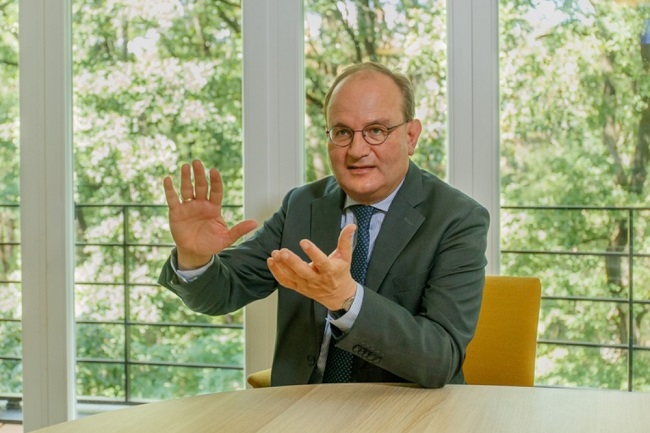
Ottmar Edenhofer
PIK Director and Chair of EU climate advisory board, Ottmar Edenhofer. Photo credit: PIK/Karkow

The EU climate advisory board, established under the European Climate Law, consists of 15 high-level scientific experts covering a wide range of relevant fields. Highlights during the board’s first term have included scientific recommendations for an ambitious EU climate target for 2040, an analysis of the action needed to achieve climate neutrality, and a study on scaling up atmospheric carbon removals.

Edenhofer, who is also Professor for The Economics and Politics of Climate Change at the Technische Universität Berlin, commented on his re-election as Chair of the EU climate advisory board.

He said: “We are operating in a very different context from four years ago. With growing economic and geopolitical pressures, the Advisory Board will ensure its advice remains firmly grounded in science and supports Europe’s broader strategic priorities.”

In the coming months, the Advisory Board will define its priorities for 2026 and continue to deliver recommendations on key aspects of EU climate policy.

The Advisory Board gives independent advice and produces reports on EU policies, and their coherence with the Climate Law and the EU’s commitments under the Paris Agreement. It consists of 15 high-level scientific experts covering a wide range of relevant fields.

The other members of the Advisory Board in the second term are:
•    Annela Anger-Kraavi – University of Cambridge
•    Constantinos Cartalis – National and Kapodistrian University of Athens 
•    Suraje Dessai – University of Leeds’ School of Earth, Environment, and Sustainability 
•    Laura Díaz Anadón – University of Cambridge
•    Vera Eory – Scotland’s Rural College 
•    Lena Kitzing – Technical University of Denmark 
•    Kati Kulovesi – University of Eastern Finland
•    Lars J. Nilsson – Lund University
•    Åsa Persson – KTH Royal Institute of Technology’s Climate Action Centre
•    Keywan Riahi – International Institute for Applied Systems Analysis 
•    Jean-François Soussana – French National Research Institute for Agriculture, Food and the Environment 
•    Giorgio Vacchiano – University of Milan
•    Detlef van Vuuren – PBL Netherlands Environmental Assessment Agency
•    Zinta Zommers – University of Toronto.

NORS 2026 to accelerate Nigeria’s shift to refining self-sufficiency

0

The Crude Oil Refinery Owners Association of Nigeria (CORAN) has officially announced the Nigeria Oil Refining Summit (NORS) 2026, scheduled to take place from September 28 to 29, at the Eko Hotels & Suites in Lagos.

Now in its third edition, the summit continues to solidify its position as Nigeria’s foremost platform for driving conversations and action around refining capacity expansion, downstream integration, and the country’s ambition to emerge as Africa’s leading energy hub.

“The future of Nigeria’s refining sector lies in collaboration, investment, and execution at scale. NORS 2026 provides the platform to consolidate these gains, attract critical partnerships, and position Nigeria as a net exporter of refined petroleum products,” said Momoh Jimah Oyarekhua, CORAN Chairman.

NORS 2026
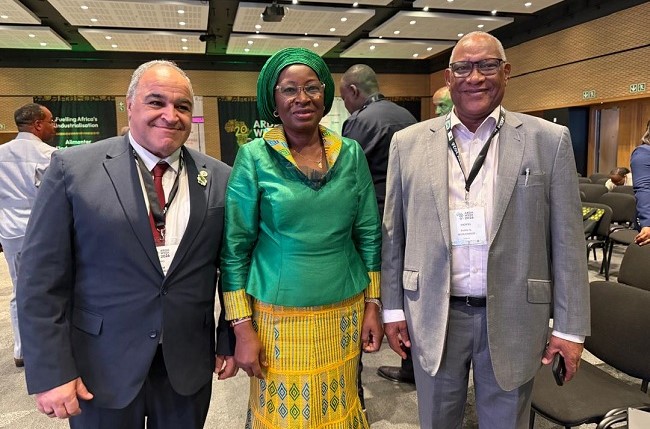
L–R: Farid Ghezali, Secretary General of the African Petroleum Producers Organization; Marie-Josephine Sidibé, President of the African Refiners and Distributors Association; and Saidu Mohammed, Authority Chief Executive of the Nigerian Midstream and Downstream Petroleum Regulatory Authority, during proceedings at ARDA Week 2026, currently underway in Cape Town, South Africa

Framed under the theme “Refining for Value: Linking Upstream Supply to Downstream Demand,” the 2026 gathering is set to convene a powerful mix of policymakers, regulators, refinery operators, global commodity traders, investors, and technology providers.

The focus will be on addressing one of the most pressing imperatives in Nigeria’s evolving energy landscape: achieving seamless coordination across the entire petroleum value chain, from crude production to refined product distribution.

Nigeria stands at a pivotal moment in its refining journey. The emergence of large-scale infrastructure projects such as the Dangote Refinery, alongside the rapid growth of modular and indigenous refineries, marks a decisive shift away from decades of dependence on imported petroleum products. This transformation signals a new era defined by self-sufficiency, increased domestic value retention, and the potential to compete in regional and global export markets.

Against this backdrop, the summit will explore critical industry priorities shaping the future of the sector, including strategies to secure sustainable crude feedstock supply, optimize refining capacity utilization, strengthen midstream infrastructure and logistics networks, and unlock investment opportunities across the refining ecosystem.

Through a blend of high-level keynote addresses, policy dialogues, investment forums, and technical sessions, participants will engage directly with leading institutions such as NNPC Limited, NMDPRA, NUPRC, as well as major global trading firms.

The summit is structured to deliver both strategic insight and practical engagement. The first day will focus on policy direction, crude supply security, and global market dynamics, setting the stage for deeper discussions. The second day will shift attention to financing mechanisms, infrastructure development, and export strategies necessary to sustain growth.

Attendees will also have the opportunity to participate in an exclusive guided refinery facility visit, providing firsthand exposure to operational excellence within Nigeria’s rapidly advancing refining sector.

“Our focus this year is on outcomes. We want attendees to leave not just informed, but better positioned to act, partner, and invest within Nigeria’s rapidly evolving refining landscape,” said Kunle Odusola-Stevenson, Chief Strategist, Legend and Legacy Group, the NORS 2026 event producers.

“NORS 2026 represents more than just an industry event; it is a critical convening point for stakeholders committed to shaping the future of Nigeria’s energy landscape and driving long-term value creation across the downstream sector,” he added.

The promoters are inviting organisations across the value chain to engage as sponsors, partners, speakers, and exhibitors, positioning themselves at the heart of Nigeria’s refining transformation and the broader evolution of Africa’s energy market.

Expert warns declining bats population may affect food security in Nigeria

A bat biologist, Dr. Benneth Obitte, has warned that the declining bats population in Nigeria may affect food security.

Dr. Obitte warned that Nigeria may be losing one of its most underappreciated environmental allies, largely out of superstition and neglect.

He said this while addressing journalists during a webinar organised by Wild Africa on Monday, April 13, 2026, ahead of the International Bat Appreciation Day, which is observed on April 17.

Dr. Benneth Obitte
Dr. Benneth Obitte

The Perception about Bats

For some Nigerians, bats are not just animals, they are symbols of fears driven by unverified beliefs passed across generations. In some communities, their sudden appearance is still tied to stories of witches, dark forces and disease, a belief passed down so often that it now feels like fact.

But while the myths linger, something far more real is unfolding.

Across Nigeria, bat populations are quietly shrinking. New research points to intense, widespread hunting as a major driver, pushing these animals toward a dangerous tipping point.

What makes this decline alarming isn’t just the loss of the bats themselves, but the ripple effect it could have on ecosystems, agriculture, and food security.

Bats and Crop Production

Behind their shadowy reputation lies a powerful ecological force.

Bats are natural pest controllers, consuming vast quantities of insects that would otherwise devastate crops. They are also vital pollinators and seed dispersers. In parts of Nigeria, species of bats play a crucial role in the propagation of economically important plants like shea and dawadawa also known as locust beans.

“They save farmers the cost of pesticides and insecticides,” Obitte says. “Without bats, some of these plants and the livelihoods tied to them could decline.”

According to Obitte, Nigeria is home to over 100 species of bats, including fruit bats (often called flying foxes), nectar-feeding bats, and insectivorous species that dwell in caves and tree hollows. Globally, there are more than 1,400 species, making bats one of the most diverse groups of mammals on Earth.

The suspicion surrounding bats is not uniquely Nigerian. It appears to be a global perception problem, shaped by centuries of folklore and reinforced by their nocturnal nature.

“Animals that operate at night, bats, owls, even cats have historically been grouped as evil in many African cultures, because they are nocturnal,” Obitte explained.

But that narrative is slowly shifting. As education and ecological awareness spread, more people are beginning to understand that bats are not omens, they are essential.

Hunting and Habitat Loss

Despite their ecological importance, bats face mounting threats.

Habitat loss from deforestation and urban expansion is one factor, though difficult to quantify. However, more visible and more immediate is hunting.

Across parts of southern Nigeria, bats are widely consumed as bushmeat and used in traditional medicine. In some communities in Edo State, Obitte estimates that up to 50 percent of residents consume bats. In Cross River and beyond, their “distinct taste” keeps them in demand.

This level of exploitation is not without consequence.

“Hunting is redistributing bat species across the landscape,” he said. “Some populations are being pushed out entirely.”

Nigeria has already lost more than half of its forest cover, compounding the crisis. With fewer places to roost and reproduce, and increasing pressure from hunters, bat populations are being squeezed from both sides.

COVID-19 and the Burden of Blame

The COVID-19 pandemic further complicated public perception. While some people suggested a link between bats and the virus, Obitte is clear: there is no direct evidence that humans contract COVID-19 from bats.

“The virus likely passed from bats to another species before reaching humans,” he explained. “But there is no data confirming direct transmission from bats to people.”

Still, the association has deepened fear, making conservation efforts even more challenging.

Conservation enforcement

In Nigeria, wildlife conservation remains largely underfunded and under-prioritized.

Obitte recounted witnessing bats openly sold at a police checkpoint, an image that underscored weak enforcement. While new wildlife laws have introduced stricter penalties for hunting endangered species, implementation remains inconsistent.

“For every seizure made, there are dozens that pass through,” he says.

Much of the real work is being carried out by non-governmental organisations. These groups train customs officers to identify trafficked species, support national park rangers, while the organisation he co-founded, Small mammal conservation organization (SMACON) conduct field monitoring in places like Abuja, Jos, Benin, and Benue.

But without strong institutional backing, their impact is limited.

“Nigeria treats wildlife as an afterthought,” Obitte says. “Conservation is not yet seen as a national priority.”

Bat Day and the Call to Action

International Bat Appreciation Day, marked every April 17, was created to change exactly this kind of narrative.

It is a day dedicated to educating the public about the ecological importance of bats, correcting harmful myths, and encouraging conservation efforts worldwide. For countries like Nigeria, where misunderstanding runs deep and threats are immediate, the day carries added urgency.

Obitte believes the path forward is clear, even if it is not easy.

He said Nigeria must begin by acknowledging what has already been lost, over 50 percent of its forest cover, and take decisive steps to protect what remains. That includes properly funding conservation agencies, equipping forest guards, and enforcing a strict ban on hunting in protected areas.

“Protected areas must actually be protected,” he insisted.

He explained that countries like Kenya, Rwanda, and Uganda have built thriving tourism industries around wildlife, stressing that Nigeria, with its rich biodiversity, has similar potential, but only if it begins to value what it still has.

As dusk falls across Nigeria’s forests and cities, bats still take to the skies, quiet, and sometimes unseen.

Their survival may depend on something as simple, and as difficult, as changing perception.

Saving bats is not just about protecting a misunderstood animal, it is about sustaining the society.

By Omowumi Abraham