

A new study released in Conservation Biology on Wednesdy, April 15, 2026, and co-authored by scientists at Ocean Conservancy, Arizona State University and Shaw Institute is said to be the first to rank marine mammals based on their vulnerability to macroplastic pollution.
Macroplastic implies any plastic piece larger than 5mm, roughly the width of a pencil eraser.
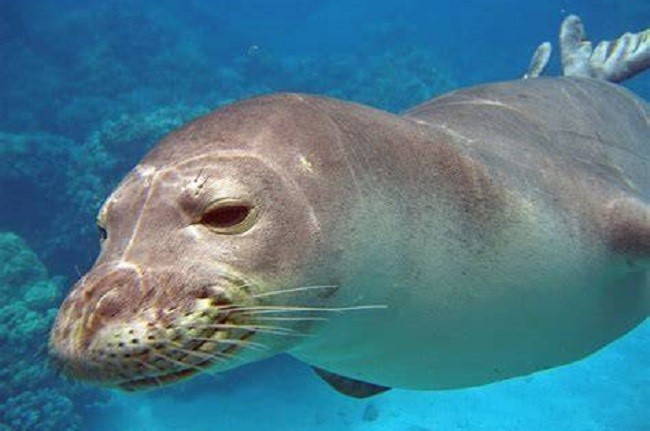
The study, A global ranking of the relative vulnerability of marine mammals to macroplastic pollution, found that Hawaiian monk seals, African manatees, Australian sea lions, vaquita porpoises, and Mediterranean monk seals are the five marine mammals most at risk of population declines from plastics ingestion or entanglement.
When the results are assessed at the level of order instead of individual species, sirenians, which include manatees and dugongs, are the most vulnerable to plastic pollution.
The International Union for Conservation of Nature (IUCN) classifies 125 species as marine mammals, of which eight were excluded from the study because they live primarily in freshwater habitats (like hippopotamuses) or live most of their life on land (like polar bears).
Of the 117 marine mammals evaluated, more than 1 in 3 are red-listed as vulnerable, endangered, or critically endangered, according to the IUCN; and of the 22 marine mammals in the highest-risk group, 17 are vulnerable, endangered, or critically endangered.
“All marine mammals are affected by plastic pollution, but we wanted to understand: which ones should we be most worried about? Which populations are most at risk?” said Dr. Erin Murphy, Ocean Conservancy’s manager of ocean plastic research and co-author of the study. “Knowing the answer to these questions can guide our efforts and add urgency where it’s needed most.”
To get their results, the researchers scored species according to 11 different traits reflecting the animals’ likelihood of exposure, relative sensitivity to plastics, and population resilience (the ability to bounce back from stressors); then ranked their vulnerability as high, medium-high, medium, medium-low and low.
The following specific species across mammal types and geographies landed on the highest risk list:
- Hawaiian monk seal
- African manatee
- Australian sea lion
- Vaquita (porpoise)
- Mediterranean monk seal
- West Indian (Florida) manatee
- Indo-Pacific bottlenose dolphin
- Sei whale
- North Atlantic right whale
- Hector’s dolphin
- Indo-Pacific humpback dolphin
- Dugong
- Gray whale
- North Pacific right whale
- Irrawaddy dolphin
- Atlantic spotted dolphin
- Atlantic humpback dolphin
- Risso’s dolphin
- Common bottlenose dolphin
- Baird’s beaked whale
- Arnoux’s beaked whale
- Indo-Pacific finless porpoise
“It is not surprising that Hawaiian monk seals emerged at the top of this list because they are curious fish-eaters that have been found tangled in fishing gear,” said Murphy. “They also have a small population located near the Great Pacific Garbage Patch, exposing them to a lot of plastic. Local organizations have been conducting targeted debris removal programs to help protect the Hawaiian monk seal, and studies have shown that this has helped the population rebound. This gives us a lot of hope for how to protect the species at the top of the list.”
Murphy, alongside Ocean Conservancy colleagues, Dr. Britta Baechler and Nicholas Mallos, co-authored a complementary study published in November 2025 that quantified the extent to which a range of plastic types result in the death of seabirds, sea turtles, and marine mammals that consume them.
Drawing on data from more than 10,000 necropsies, or animal autopsies, the study found that even relatively small amounts of plastics can be deadly when ingested: ingesting less than a sixth of a soccer ball’s worth of plastics kills one in two harbor porpoises, the smallest of marine mammal species. Out of approximately 7,000 marine mammals in the study that had plastics in their guts at their time of death, 72% had consumed fishing debris, 10% soft plastics, 5% rubber, 3% hard plastics, 2% foam, and 0.7% synthetic cloth.
“You can’t fix a problem you don’t understand and that’s why Ocean Conservancy is committed to not only solving the ocean plastics crisis through prevention and cleanup but also advancing research,” said Dr. Britta Baechler, Ocean Conservancy’s director of ocean plastics research. “And it’s been energizing to see the impact our research has made, from inspiring volunteers to influencing policymakers to take action.”
An estimated 11 million metric tons of plastics enter the ocean each year, the equivalent of one garbage truck’s worth every minute. In addition to conducting original plastics research, Ocean Conservancy advocates for solutions to plastic pollution that prevent it from reaching beaches and waterways in the first place.
Ocean Conservancy has advocated for policies at the local, state, federal and international levels such as California’s SB54, Florida’s balloon release ban, the Farewell to Foam Act, the UN Plastics Treaty and more.