The Rural Electrification Agency (REA) said it completed and deployed over 200 mini-grids under the Nigeria Electrification Project (NEP), providing electricity to underserved communities nationwide between January and December.
The REA Managing Director, Alhaji Abba Abubakar-Aliyu, disclosed this during a media briefing in Kano, while reviewing the agency’s achievements in 2025.
He said that the completion of the NEP marked a major milestone in efforts to bridge Nigeria’s electricity access gap, and improve the reliability of power supply in line with the Renewed Hope Agenda of President Bola Ahmed.
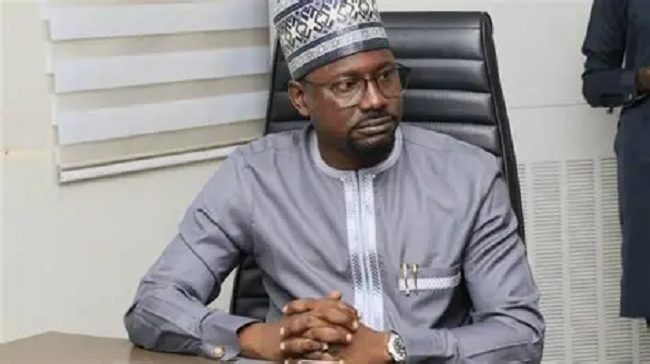
REA Managing Director, Alhaji Abba Abubakar-Aliyu
The MD said that REA recorded significant achievements in renewable energy deployment within the year under review..
He said that the implemention of $750 million Distributed Access through Renewable Energy Scale-Up (DARES) project, was approved by the President, to deploy 1,350 mini-grids to provide electricity to 17.5 million Nigerians.
He explained that the DARES project targets the deployment of 1,350 mini-grids nationwide, including 250 interconnected mini-grids.
“We are currently building over 900 mini-grids across the country; our target is to build 1,350,” he said.
The REA boss said that the agency engaged 21 states through state-by-state roundtable meetings, describing same as an unprecedented initiative that provided states with data, partnership frameworks and details of ongoing electrification projects.
According to him, REA also completed a nationwide electrification mapping exercise, identifying over 150,000 communities without electricity or with unreliable supply, to enable the adoption of least-cost electrification solution.
“REA also completed 15 mega hybrid mini-grid projects in federal universities and commenced project development in eight additional universities expected to be completed by March or April 2026,” he said.
He added that the agency promoted localisation of renewable energy manufacturing, thereby increasing Nigeria’s manufacturing capacity from about 120 megawatts to over 600 megawatts.
According to him, investments worth over $435 million have been signed for new renewable energy manufacturing plants in Lagos, Akwa Ibom, Kano and Abuja.
He noted that Nigeria had begun exporting manufactured solar panels to Ghana, following a reduction in the importation of finished photovoltaic panels.
“In 2026 the agency would focus on completing the 1,350 mini-grids under the DARES project; We are looking at galvanising more funds.
“The country requires about $23 billion to be able to address the entire electricity access challenge,” he said.
Abubakar-Aliyu also reaffirmed the agency’s commitment to ensuring a sustainable power supply for rural and underserved communities.
Mrs. Oritsemeyiwa Eyesan has officially taken charge as the Commission Chief Executive (CCE) of the Nigerian Upstream Petroleum Regulatory Commission (NUPRC).
Eyesan, whose nomination by President Bola Ahmed Tinubu was confirmed by the Senate earlier in December 2025 following the resignation of the previous CCE, emphasised her commitment to making NUPRC a proactive business enabler rather than just a regulator. She pledged to reignite investor confidence, accelerate digitisation, transparency, and efficiency, and position the Commission as the gold standard regulator in Africa.
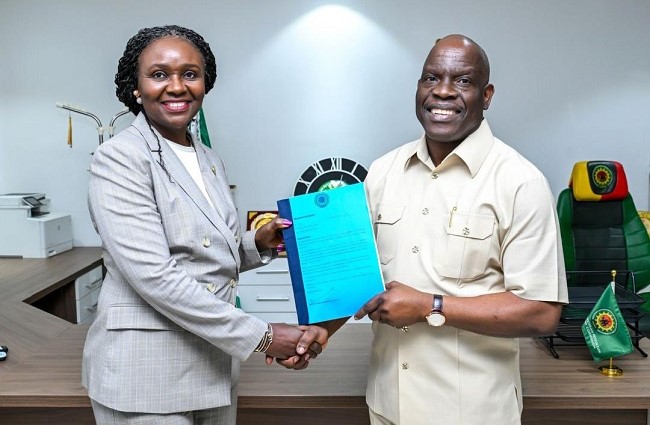
Mrs. Oritsemeyiwa Eyesan (left) officially taking charge as the Commission Chief Executive (CCE) of the NUPRC
In a statement issued by Eniola Akinkuotu, Head of Media & Strategic Communications at NUPRC, she expressed a firm ambition to increase Nigeria’s crude oil production and significantly boost gas output to support national energy security and economic growth.
Eyesan said she plans to foster stronger stakeholder engagement, including with industry players, unions, professional bodies, and the public, as well as an open-door leadership style with frequent staff interactions and capacity-building initiatives to enhance technical expertise.
She said, “The goal is that we must enable the industry, we are regulators. We must enable the industry from our interactions with the stakeholders, from our interactions with everybody.
“If we work together, we can unleash opportunities, I don’t see impediments only opportunities.”
The Federal Government has inaugurated the Enterprise Content Management (ECM) System at the Ministry of Petroleum Resources.
The ECM System is a digital system to strengthen efficiency, accountability and digital governance in the Federal Public Service.
The ECM system “Go-Live” programme was unveiled on Wednesday, December 24, 2025, in Abuja, by Mrs. Didi Walson-Jack, Head of the Civil Service of the Federation (HCSF), alongside Sen. Heineken Lokpobiri, Minister of State, Petroleum Resources (Oil).
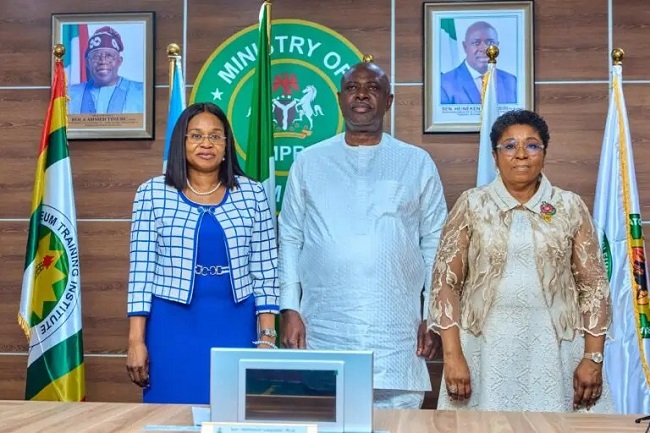
R-L: Mrs. Didi Walson-Jack, Head of the Civil Service of the Federation (HCSF), Sen. Heineken Lokpobiri, Minister of State Petroleum Resources (Oil) and Mrs. Patience Oyekunle, Permanent Secretary, Ministry of Petroleum Resources at the inauguration of the Enterprise Content Management (ECM) System at the Ministry of Petroleum Resources on Wednesday in Abuja
Also in attendance were Mrs. Patience Oyekunle, Permanent Secretary, Ministry of Petroleum Resources, top management officials of the ministry, HCSF, and the Galaxy Backbone Limited, the custodian of the 1Government Cloud platform.
Speaking, Walson-Jack said the initiative placed the ministry on track to comply with the Federal Government’s directive on the full digitalisation of work processes by Dec. 31, 2025.
According to her, the system will advance Pillar Five of the Federal Civil Service Strategy and Implementation Plan 2021–2025 (FCSSIP 2025), which prioritises digitalisation across Ministries, Departments and Agencies (MDAs).
Walson-Jack said the ECM system deployment would fast-track work processes, secure records management and a significant reduction in reliance on paper-based operations, particularly in a ministry with a strategic role in Nigeria’s economic stability and energy security.
She said the ministry occupied a critical position in national development through its responsibility for policy formulation, coordination and oversight of the energy sector, while its operational efficiency directly affected revenue generation, investment and national planning.
According to her, the system represents a deliberate shift in how work is organised, records are managed and decisions are supported, especially given the ministry’s extensive engagement with regulatory agencies, operators and other MDAs.
Walson-Jack commended the leadership and staffers of the ministry for embracing digital transformation, saying that its success depends on discipline, professionalism and sustained commitment to new work processes.
“With this deployment, the ministry joins other institutions across the Federal Civil Service already using the ECM system to ensure secure records, clear audit trails, efficient workflows and a reliable institutional memory,” she said.
She explained that the system, deployed on the 1Gov Cloud platform, supports electronic approvals, automated workflows and interoperability across government, shifting decision-making from the physical movement of files to timely access to accurate information.
Walson-Jack added that the project aligned with the Renewed Hope Agenda of President Bola Tinubu, which calls for an efficient, accountable and digitally enabled Public Service.
She emphasised that digital transformation goes beyond system deployment, requiring consistent use, adherence to established processes and effective utilisation of complementary digital tools, including Service-Wise GPT and the Compendium of Federal Circulars.
She also acknowledged the Galaxy Backbone Limited, custodian of the 1Gov. Cloud, for its technical expertise and continued partnership in advancing Public Service digitalisation.
Going forward, Wilson-Jack said paper-based processing in the Ministry of Petroleum Resources should progressively give way to disciplined digital practices, with official correspondence routed through designated registry email platforms.
In his remarks, Lokpobiri described the initiative as a major step towards ending delays associated with manual and analogue work processes, noting that government transactions often suffer setbacks due to physical documentation and in-person approvals.
The minister commended Walson-Jack for championing the digitalisation of government processes and said the initiative would help the Federal Government meet the Dec. 31, 2025 deadline for full digitalisation of work processes.
Lokpobiri, while calling for continuous training of civil servants and other stakeholders to ensure effective use of the system, especially among those who are not technologically inclined, congratulated the permanent secretary for the improvements recorded under her leadership.
Earlier, Oyekunle, while describing the ECM as a major milestone in the ministry’s transition from manual, paper-based operations to a modern digital work environment said its deployment would enhance efficiency, transparency, accountability and service delivery across the ministry.
She said the initiative aligned with the ongoing public service reforms being championed by the Federal Government, particularly the drive towards the digitalisation of work processes in the Federal Civil Service.
The permanent secretary commended the Head of the Civil Service of the Federation for her guidance, leadership and commitment to public service reform, noting that her strategic direction made initiatives such as the ECMS possible.
In his remarks, Managing Director, Galaxy Backbone (GBB), Prof. Ibrahim Adeyanju, reaffirmed its commitment to supporting the Federal Government’s digital transformation agenda following the go-live of the Enterprise Content Management System at the Ministry.
Adeyanju, represented by Mr. Akintayo Bamisaiye, Acting Group Head, Research digital innovation and skills GBB, described the occasion as historic, noting that the programme was following a proven approach that guarantees long-term success and measurable impact.
According to him, the personal involvement of the HCSF has ensured the full buy-in of senior government officials, including ministers and permanent secretaries, which he said was consistent with global best practices for large-scale digital transformation.
He said Galaxy Backbone, as a government-owned ICT infrastructure and services provider, remained fully committed to supporting the Federal Government’s digital transformation objectives in line with the Renewed Hope Agenda of President Bola Tinubu.
The highlight of the event was the presentation of the key features, digitalisation programme and implementation framework of the system by Mr. Ayodeji Bakare, Programme Manager, GBB 1 Gov Cloud.
According to Bakare, 158 standard operating procedures have been automated, 14 offices, departments and units keyed in, while 500 accounts have been provisioned on the ECM system.
Mr. Saidu Mohammed on Tuesday, December 23, 2025, resumed office as the Authority Chief Executive of the Nigerian Midstream Downstream Petroleum Regulatory Authority (NMDPRA), replacing Farouk Ahmed, who resigned from the position.
The Authority, in a statement on Tuesday, said that the handover which held in Abuja, underscored its commitment to institutional continuity, accountability, and effective leadership.
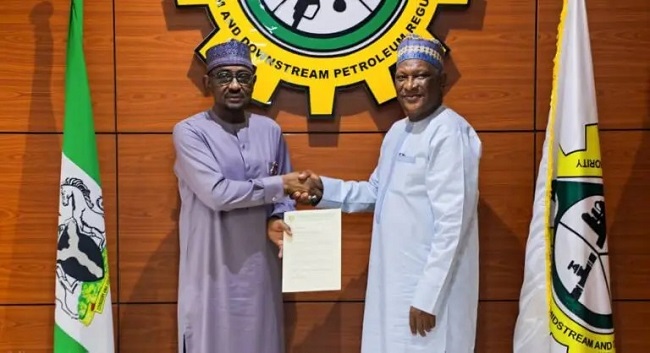
Mr Saidu Mohammed, new Authority Chief Executive, Nigerian Midstream Downstream Petroleum Regulatory Authority (NMDPRA) (right) during handover by the outgoing Authority Chief Executive, Mr Farouk Ahmed
It said the ceremony concluded with the symbolic transfer of documents and responsibilities witnessed by the Executive Directors, Senior Management and Staff, signalling a seamless and orderly transition in line with public service rules and corporate best practices.
President Bola Tinubu had appointed Mohammed, following the resignation of Farouk Ahmed on Dec. 17, 2025.
The Federal Government of Nigeria has signed a Memorandum of Understanding (MoU) with RSE Energy Nigeria to provide off-grid and embedded power solutions for industrial clusters across the country.
During the signing ceremony on Tuesday, December 23, 2025, in Abuja, the Minister of State for Industry, Sen. John Enoh, said that the agreement marked the culmination of engagements that began before his posting to the ministry.
“We are at a point where an MoU can be signed between our government and RSE.
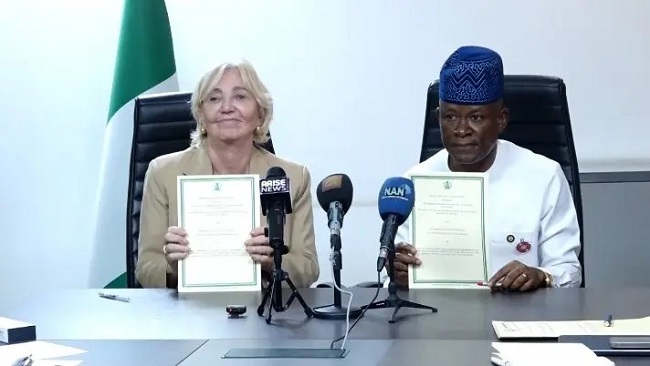
R-L: The Minister of State for Industry, Sen. John Enoh and the Chief Executive Officer of RSE Energy Nigeria, Olena Nedryhailo, during the MoU signing in Abuja on Tuesday
“This journey started even before I was posted here, and I am glad that a year after that, we have made progress to a point where we can get this signed,” Enoh said.
He said the timing of the agreement aligned with ongoing policy efforts to address energy challenges facing industries.
“Just about two weeks ago, I convened my first in a series of ministerial roundtables, and that first roundtable focused on energy as the biggest challenge of industry in our country,” he said.
Enoh explained that the MoU outlined mutual commitments and would support the deployment of off-grid and embedded power solutions.
“An MoU has commitments from both parties, with expectations from RSE and from the Ministry of Industry, Trade and Investment, representing our country,” he said.
He said that the proposed solutions, including biomass and gas, were aimed at providing reliable energy for industrial clusters, special economic zones and agro-processing establishments.
“The solution that you are coming with is off-grid, embedded power solutions, biomass and gas, that are supposed to provide a pathway to reliable energy,” he said.
The minister said the Idu Industrial Cluster in Abuja was being considered as a pilot project.
According to him, the hope is that the company will be amongst the solution providers for the Idu Industrial Cluster, because it will be used as a test case.
Earlier, the Permanent Secretary, Federal Ministry of Industry, Trade and Investment, Ambassador Nura Rimi, said that the partnership was in the overall interest of the country.
“We have come to the conclusion that it is in the overall interest of the Federal Government of Nigeria to go into this partnership,” Rimi said.
He said that the MoU aligned with the Renewable Hope Agenda of President Bola Tinubu and the ministry’s flagship programmes.
“Taking into consideration the Renewable Hope Agenda of Mr President and the flagship programme of the Minister of State for Industry, we are here today to sign the MoU,” he said.
In her remarks, the Chief Executive Officer of RSE Energy Nigeria, Olena Nedryhailo, said that the partnership was based on long-term commitment and practical experience.
“For us, the partnership is first and foremost about responsibility and long-term thinking,” Nedryhailo said.
She said that the company had deployed decentralised co-generation systems under challenging conditions.
“Over the past three years, we have been directly involved in the development and deployment of co-generation solutions under several stress on the energy system in Ukraine,” she said.
According to her, more than 1,020 co-generation units were deployed to support industrial communities.
“This experience taught us how systems integrate into networks, scale and remain reliable over time,” Nedryhailo said.
She said that the company was ready to serve as a long-term partner in building a decentralised energy system for Nigeria.
“We see ourselves, not simply as a supplier, but as a long-term partner in building a stable decentralised energy system for Nigeria,” she said.
Heritage Energy Operational Services Ltd. (HEOSL) says it committed not less than N101 billion to community development projects across its host communities under Oil Mining Lease (OML) 30.
Dr Adesola Adebawo, General Manager, Government, Joint Venture and External Relations, HEOSL, said the company also awarded N217 million in scholarships to 3,011 beneficiaries.
Adebawo made the disclosure on Tuesday, December 23, 2025, at the OML 30 media stakeholders’ engagement in Lagos.
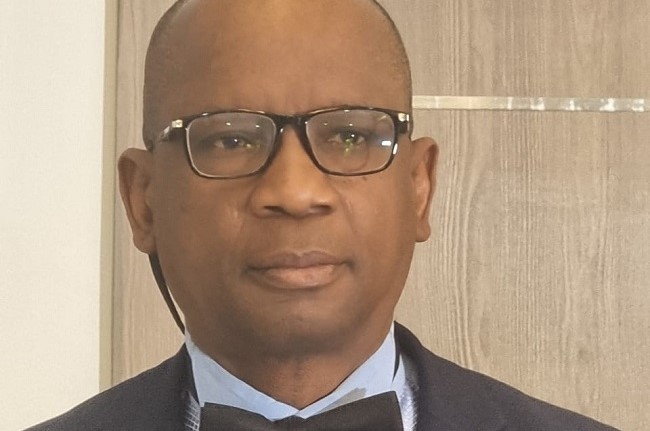
Dr Adesola Adebawo, General Manager, Government, Joint Venture and External Relations, Heritage Energy Operational Services Ltd. (HEOSL)
He said community contracts worth $66.47 million had been awarded to about 300 local vendors, underscoring its growing investment in local participation and inclusive growth.
He said the scale of investment reflects HEOSL’s deliberate strategy to create sustainable value that goes beyond hydrocarbon production.
“We invested in people, infrastructure, digital tools and capability.
“Together with our joint venture partners, we aligned around a vision to operate a world-class independent energy company with the technical.
“Commercial and financial strength needed to deliver long-term value,” Adebawo said.
He described OML 30 as one of Nigeria’s largest onshore assets, noting its record of responsible value delivery to shareholders, partners, employees and host communities.
Adebawo revealed that in 2024 alone, HEOSL supported 126 local content participants from indigenous companies, while providing skills training and empowerment programmes for 237 youths and women.
He said, “The company also invested more than N27 million in the Industrial Training and Work Experience Scheme, enabling students to gain practical industry exposure.”
In the area of healthcare, he said HEOSL supported two health facilities that collectively delivered 34,168 medical incidences of care across four local government areas, improving access to essential health services for host communities.
According to Adebawo, the initiatives highlight the shared commitment of HEOSL and its joint venture partner, Nigerian Exploration and Production Ltd. (NEPL) and Shoreline Natural Resources Ltd. (SNRL) to inclusive and sustainable development.
“These initiatives are not just about corporate responsibility.
“They reflect a shared commitment with NEPL and SNRL to ensure that the benefits of OML 30 extend well beyond production metrics,” he added.
Seplat Energy Plc, a Nigerian independent energy company, says its subsidiaries have completed the conversion of their operated onshore assets to the Petroleum Industry Act (PIA) fiscal regime.
This was revealed through a corporate disclosure on the Nigerian Exchange Ltd., on Tuesday, December 23, 2025.
The company said that Seplat West Ltd. and Seplat East Onshore Ltd. concluded the conversion from the Petroleum Profit Tax regime in line with the PIA.
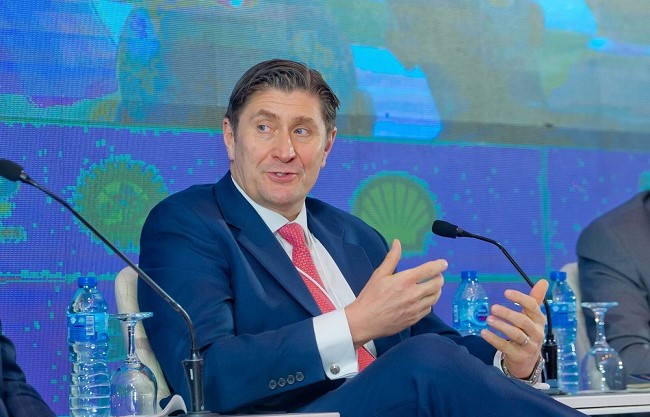
Chief Executive Officer, Seplat Energy Plc, Roger Brown
The conversion covered assets formerly held under Oil Mining Leases (OMLs) 4, 38, 41 and 53, which averaged working interest production of 42,591 barrels of oil equivalent per day in the first nine months of 2025.
According to Seplat, the output represents about 31 per cent of the company’s total production during the period.
The firm said the PIA framework supports increased investment, production growth and improved operational efficiency, in line with its corporate strategy.
It noted that the anticipated impact of the conversion was incorporated into its medium-term guidance presented at its Capital Markets Day in September 2025.
Seplat also said it was targeting the conversion of its offshore assets to the PIA fiscal regime by 2027.
The company explained that following the execution of conversion contracts in February 2023, the company and its joint venture partners had completed all technical and regulatory requirements with the Nigerian Upstream Petroleum Regulatory Commission.
It added that new Petroleum Mining Lease and Petroleum Prospecting Licence numbers had been issued, with operations under the PIA expected to start from Jan. 1, 2026, subject to regulatory guidance.
Commenting, Mr. Roger Brown, Chief Executive Officer of Seplat Energy, said, “Conversion to the PIA fiscal regime has been an important focus for Seplat.
“We are delighted to have delivered, along with our respective JV partners, the conversion of our onshore operated assets to the PIA regime within the timeline outlined at our recent Capital Markets Day.
“We recognise the enhanced value creation opportunities that we can benefit from, post conversion.
“PIA conversion was factored into our recent medium-term guidance and lays a path to improved profitability and cashflow margins in our onshore business.”
The Group Chief Executive Officer of Nigerian National Petroleum Company Limited (NNPC Ltd.), Bashir Bayo Ojulari, has reaffirmed the company’s commitment to peace, dialogue, and responsible energy development in Ogoniland, describing the Federal Government’s renewed engagement as a demonstration of hope and a new beginning built on partnership and understanding.
Ojulari disclosed this while speaking during a Federal Government delegation’s visit to Ogoniland, in Rivers State, on Monday, December 22, 2025.
“This visit is a demonstration of hope. It affirms the commitment of the Federal Government, under the leadership of President Bola Ahmed Tinubu, to peace, dialogue, and rebuilding trust. For NNPC Limited, it marks a new beginning – one grounded in partnership, mutual respect, and shared responsibility,” Ojulari stated.
R-L: GCEO NNPC Ltd, Bashir Bayo Ojulari (2nd right), with the National Security Adviser, Mallam Nuhu Ribadu; Rivers State Governor, Sir Siminalayi Fubara; Minister of Works, Dave Umahi; and Minister of Environment, Mallam Balarabe Lawal, during a Federal Government delegation’s visit to Ogoniland, in Rivers State, on Monday
While acknowledging the painful history of Ogoniland, the GCEO emphasized that recognising the past is essential to building a different future.
He commended the Presidential Committee on Ogoni Re-entry, led by Professor Don Baridam, and the National Security Adviser, Mallam Nuhu Ribadu, for their steady leadership in building confidence and trust.
According to the Group CEO, NNPC Ltd.’s mission in Ogoniland goes beyond resource extraction, but one that places people, livelihoods, and the environment at the centre of its operations. “We believe wholeheartedly that energy development must go hand in hand with environmental protection and community wellbeing,” he said.
Reaffirming NNPC Ltd.’s responsibility to host communities, the Group CEO offered assurances on welfare, security, and opportunity.
“I am delighted to share that one of our commitments to the people of Ogoni is becoming a reality. The process for the full-time employment of 30 Ogoni indigenes has reached its final stage, with employment offers already issued. We look forward with pride to welcoming them as they resume work in January 2026, marking a meaningful step toward shared progress and opportunity for our communities,” he stated.
On his part, the Governor of Rivers State, Sir Siminalayi Fubara, expressed gratitude for President Tinubu’s unwavering commitment to finding lasting solutions to a decades-long, recurring issue in Ogoniland, which is now beginning to yield positive results.
“We had our first meeting with Mr. President, and certain commitments were made to improve the quality of life in Ogoniland. He has begun to fulfill those promises, starting with road construction. We were assured of confidence-building efforts, the establishment of a University of Environment, hospitals, an industrial park, employment opportunities, and several other initiatives. As of today, 30 young men and women of Ogoni origin have already been employed by NNPC Ltd.” he concluded.
In his remarks, National Security Adviser of Nigeria, Nuhu Ribadu, who represented President Tinubu during the engagement, thanked the Governor of Rivers State and stakeholders from Ogoniland for their cooperation and collective efforts in addressing long-standing challenges inherited in the region.
“We have worked as one, and we are here today because of the Ogoni people, to thank them on behalf of Nigeria. Rivers State is now one of the most peaceful states in the country, and that’s largely due to the leadership of a responsible Governor and the good people of Ogoniland,” the NSA added.
Located in Ogoniland and operated by the NNPC Exploration and Production Limited (NEPL), a flagship upstream subsidiary of NNPC Ltd, OML-11 is Nigeria’s largest onshore block, with Ogoniland holding over 40% of its recoverable reserves.
The Lagos State Government has stated that it is set to take decisive steps to regulate and administer informal spaces across the state, in line with its physical planning mandate.
Commissioner for Physical Planning and Urban Development, Dr. Oluyinka Olumide, made this known on Tuesday, December 23, 2025, while outlining the Ministry’s strategic direction for the coming year.
He explained that the Ministry would invoke the powers conferred on it by the Lagos State Urban and Regional Planning and Development Law, 2019 (as amended) to ensure orderly use of land and sustainable urban growth.
Commissioner for Physical Planning and Urban Development, Dr. Oluyinka Olumide
His words: “The Law vests the Ministry with the statutory responsibility for physical planning, land-use management, development coordination, and the regulation of spatial activities across the State, mandates that clearly encompass the administration of informal spaces.”
He stated that informal spaces were public open areas not designated for permanent use but increasingly occupied without planning approval, adding that the uncontrolled use of road setbacks, walkways, under-bridge areas, drainage corridors, and undeveloped government land posed risks to safety, mobility, and the environment.
According to him, the planned assumption of full administrative control over informal spaces was aimed at strengthening land-use planning, achieving integrated urban development, and curbing unregulated activities in key corridors, gateways, and transitional zones across the State.
The Commissioner disclosed that plans had been concluded to embark on extensive sensitisation and engagement of internal and external stakeholders, including government agencies, market associations, transport unions, community leaders, and other interest groups, as such engagement would be critical to ensuring cooperation, compliance, and shared ownership of the initiative.
He emphasised that the intervention was not merely regulatory but strategic, as it sought to promote orderliness at the frontiers of the state, enhance urban aesthetics, improve functionality of public spaces, and protect the integrity of the physical environment.
He further stated that effective control of informal spaces would contribute to improved mobility, safety, environmental quality, and the overall liveability of Lagos, while aligning with the State’s vision for a resilient, inclusive, and well-planned megacity.
The Commissioner reaffirmed the commitment of the Ministry to deploy professional planning tools, inter-agency collaboration, and community participation to ensure that the exercise was carried out in a transparent, lawful, and sustainable manner.
The Nigerian National Committee of the International Press Institute (IPI Nigeria) has condemned the arrest and detention of Mrs. Adenike Atanda and her nine-month-old baby by operatives of the Nigeria Police Force.
Mrs. Atanda was detained for several hours on Monday, December 22, 2025, at Owutu Police Station, Ikorodu, Lagos, in place of her husband, Mr. Sodeeq Atanda, a journalist with the Foundation for Investigative Journalism (FIJ).
IPI Nigeria understands that police officers tracked Mrs. Atanda and her infant to their neighbourhood and arrested them while Mr. Atanda was not at home. Neither Mrs. Atanda nor her nine-month-old child is a journalist, a suspect, or accused of any offence.
Inspector-General of Police, Mr. Kayode Egbetokun
The arrest, according to IPI Nigeria, constitutes a clear and unlawful arrest by proxy, in violation of Section 7 of the Administration of Criminal Justice Act (ACJA) 2015 and Section 36 of the Nigeria Police Act 2020, both of which unequivocally prohibit the arrest of any person in place of a suspect.
Beyond the illegal arrest, Mrs. Atanda was subjected to harassment and psychological pressure.
Officers coerced her into falsely telling her husband that their infant was gravely ill in order to lure him out, effectively using a nursing mother and her baby as bait. The child was subjected to needless trauma and distress.
Their only “offence” was their relationship to a journalist.
“That this egregious violation of the law was carried out by officers attached to the IGP Monitoring Unit is particularly disturbing, coming barely weeks after IPI Nigeria listed the Inspector-General of Police, Mr. Kayode Egbetokun, in its Book of Infamy for violations of press freedom,” IPI Nigeria said in a statement.
Following that listing, the Inspector-General initiated engagement with IPI Nigeria and expressed commitment to improving police–media relations. He further mandated the IGP Monitoring Unit to engage with IPI Nigeria to address the growing pattern of harassment of journalists nationwide.
Ironically, the very unit designated for that engagement is said to have executed one of the most brazen violations of journalists’ rights witnessed in recent times.
In protest against this abuse of power, IPI Nigeria has suspended all engagements with the Nigeria Police Force until there is clear evidence of accountability, respect for the rule of law, and an end to hostility towards journalists.
Mrs. Atanda and her baby were released only after Mr. Atanda presented himself to the police. He was subsequently arrested, handcuffed, and detained, and was released only after the intervention of IPI Nigeria.
IPI Nigeria therefore demands the following:
– A public apology by the Nigeria Police Force to Mrs. Adenike Atanda and her nine-month-old baby;
– Adequate compensation for the unlawful arrest, detention, and trauma inflicted on them;
– The immediate arrest, investigation, and prosecution of all officers who instigated and carried out this illegal action;
– The dismissal from service of those officers, as a deterrent to future abuses.
IPI Nigeria further insists that Mr. Sodeeq Atanda be allowed to carry out his legitimate journalistic duties without intimidation or harassment.
“The police must refrain from meddling in civil or commercial disputes properly within the jurisdiction of the courts and should advise complainants to seek redress through lawful judicial processes.
“The persistent abuse of power by police officers thrives largely because acts of misconduct are rarely punished. Instead, officers who violate the law are often shielded and, in some cases, rewarded.
“This culture of impunity incentivises further violations and continues to erode public confidence in the Nigeria Police Force.
“IPI Nigeria observes with grave concern that indiscipline is too frequently tolerated in the Nigeria Police. Officers who have no business wearing the uniform continue to operate unchecked, worsening the already battered image of the police.
“We, therefore, call on the Inspector-General of Police to act decisively by purging the Force of officers unfit to serve and by demonstrating, through concrete action, a genuine commitment to reform, accountability, and respect for press freedom.”