27.5 C
Lagos
Wednesday, December 31, 2025
Home Blog Page 5

A non-exhaustive look back at 2025 – CBD

0

At the Convention on Biological Diversity (CBD) Secretariat, 2025 has been an eventful, busy and rewarding year. It started with the preparations for the resumed session of COP 16/NP-MOP-5/CP-MOP-11 in Rome, where Parties to the Convention completed what they had started at the COP de la gente in Cali.

With 10 months away from COP17 and as the new year approaches, the CBD hopes that 2026 will be a year of “Taking Action for Nature” as called for by Armenia with its slogan for the 2026 UN Biodiversity Conference.

As the Convention bids farewell to 2025, it looks back at a year that saw important moments and collective achievements for nature and for people.

Astrid Schomaker
Astrid Schomaker, Executive Secretary of the Convention on Biological Diversity

Off to a good start in Rome

In Rome, Parties adopted a roadmap for resource mobilisation and reached agreement on the Planning, Monitoring, Reporting and Review mechanism, thus paving the way for the first global review of collective progress in the implementation of the Kunming-Montreal Global Biodiversity Framework (KMGBF), at COP17 in Yerevan in 2026.

Rome also saw the launch of the Cali Fund, a mere three months after it was operationalised, making 2025 truly a defining year for the collective quest to ensure the fair and equitable sharing of benefits from the use of Digital Sequence Information on Genetic Resources. The Guide to the Cali Fund, issued in June, provides essential information that can help boost the Fund’s capitalisation in 2026, building on the first contribution to the Fund in October.

Biodiversity meetings in Panama City

Eight months and several bureau meetings after the Rome meetings, Parties reconvened in Panama for the twenty-seventh meeting of the Subsidiary Body on Scientific, Technical and Technological Advice (SBSTTA-27). They adopted recommendations on 10 key topics, including on the scientific and technical elements of the global report that will be the basis of the review of the implementation of the KMGBF next year in Yerevan.

 In addition, SBSTTA-27 adopted important recommendations on aligning the programmes of work of the Convention with the KMGBF, on potential new areas of work, and on strengthening the response to the threat of invasive alien species. The critical contribution of soil biodiversity to agriculture was also in focus as was progress in the implementation of the Convention’s new Biodiversity and Health Action Plan and expanded voluntary guidelines on design and implementation of approaches on the use of biodiversity and ecosystem services for climate change adaptation and disaster risk reduction.

SBSTTA also discussed ways of encouraging synergies between the implementation of biodiversity, climate change and desertification policies at national level (more on such synergistic approaches below), deliberated on the risk assessment and risk management of living modified organisms, and  successfully piloted some key approaches for improving the effectiveness of processes under the Convention, some of which have been adopted for the upcoming SBI-6.

In the margins of SBSTTA-27, we were happy to benefit from the strong engagement of our IPBES colleagues and lead authors of their seminal nexus and transformative change assessments. A two-day seminar provided the opportunity to Parties to discuss their findings and what they may mean for national policy making. And there was a moment of buzzy celebration as we marked the International Pollinators Initiative’s 25th anniversary.

Immediately after SBSTTA-27, also in Panama, was the inaugural meeting of the Convention’s new Subsidiary Body on Article 8(j) and Other Provisions of the Convention Related to Indigenous Peoples and Local Communities (SB8j-1), marking a new chapter in the Convention’s history. This first meeting of SB8(j) was a truly special moment. In the words of Irene Vélez Torres (Colombia), COP President and Co-Chair of the inaugural meeting of SB8(j), this was “an unprecedented step toward greater environmental democracy within the United Nations”.

Adopting six recommendations and holding an in-depth dialogue on resource mobilisation and access to finance for indigenous peoples and local communities, the meeting took the CBD closer to giving SB8(j) everything it needs to adequately elevate and protect the role and contributions of the custodians of a sizeable portion of the planet’s biodiversity in the work of the Convention.

Striking the right balance between maintaining the principle of a Party-led process and the full and effective participation of indigenous peoples and local communities proved challenging, meaning that, in the run-up to and at COP17, more discussions will be needed so that the Subsidiary Body’s Modus Operandi can be adopted.

More discussions will also be needed on the proposed guidelines in relation to protecting the rights of indigenous peoples and local communities in the implementation of the KMGBF’s restoration and conservation targets (Targets 2 and 3) and on how to recognise traditional lands and resource use in spatial planning processes and environmental impact assessments.

Increased momentum for crucial synergies

Throughout the year, culminating at UNEA-7, there were lively discussions on synergies. Symbiosis among MEAs was seen as a must for increased policy impact. The launch of the Rio Conventions website, the joint contribution to the GEF-9 replenishment by the Liaison Group of Biodiversity-related Conventions, and the CBD SBSTTA-27 discussions in Panama City, followed by the UNFCCC COP30 in Belém, contributed to building that momentum.

At SBSTTA, Parties recommended strengthening cooperation with the other two Rio Conventions, UNFCCC and UNCCD, including by strengthening the Joint Liaison Group and working together with the Secretariats and the current and incoming COP Presidencies of all three Rio Conventions towards the development of a multilevel roadmap with short-, medium-, and long-term actions, for discussion at COP17.

On the sidelines of COP30, the current and incoming Presidencies of the Rio Conventions issued a joint statement recognising the interconnected nature of biodiversity loss, climate change, and land degradation and drought, and affirming the imperative of complementary approaches towards implementing the goals and targets of the three Conventions.

The upcoming entry into force of the BBNJ Agreement, which reached enough ratifications earlier this year in September, provided an opportunity to reflect on synergy and areas of confluence between the CBD and this landmark treaty.

Business and finance: Stepping up action for nature

Cognisant of the importance of their role in bringing about the transformative change the world needs, CBD sought new ways of engaging with businesses and financial institutions around the world in 2025, including at the 4th International Conference on Financing for Development, meetings of the Coalition of Finance Ministers for Climate ActionCity Week 2025Climate Week NYC 2025, and at the Finance for Biodiversity Summit 2025. In a major collective step forward, ISO launched the new Biodiversity Standard (ISO 17298:2025) – a significant milestone for business engagement in biodiversity action.

Given the size of the finance gap, innovative approaches are needed. A very encouraging development – which was welcomed as a trailblazing financial innovation showing how finance can thrive in harmony with nature – came from the heart of the Brazilian Amazon with the launch of the Tropical Forests Forever Facility in the margins of UNFCCC COP30.

All hands on deck for biodiversity

Listing every important happening would be a challenge, but the Secretariat would like to express its heartfelt gratitude for the extraordinary engagement from Parties and members of the public in the context of the celebration of the International Day for Biological Diversity 2025, which examined how action on biodiversity underpins the SDGs.

Beating the drum for the KMGBF implementation beyond “Biodiversity Day,” the Secretariat engaged in many of the year’s defining meetings, from the United Nations General Assembly and the IUCN World Conservation Congress to Conferences of the Parties to the Ramsar, BRS, Minamata, CITES and Climate Conventions, and regional ministerial forums as well as high-level environmental gatherings in Africa, Europe and Latin America and the Caribbean. We conveyed a message of urgency to act for biodiversity to the first Africa Biodiversity Summit and to Summits of the G7 in Canada and the G20 in South Africa.

Around the world, it has been heartening to see the strong commitment from youth, women, cities, and other stakeholder groups to accelerating the tempo of implementation of the KMGBF, demonstrating the whole-of-society approach that the world needs for its full implementation. Actions showcasing the importance of biodiversity and what can be done to halt and reverse its loss were plentiful, with Cali Biodiversity Week, happening one year after COP 16, serving as an outstanding example.

Commitments from actors other than national governments will be a crucial contribution to strengthening the implementation of the KMGBF. In October, the CBD issued this notification enabling them to submit such commitments through the CBD Online Reporting Tool.

Biosafety in focus

This year, biosafety was an area where important progress was made, despite difficult discussions at SBSTTA-27. Strengthening collective commitment to the detection and identification of living modified organisms and highlighting the role of customs officials in implementing the Cartagena Protocol were among the areas the Secretariat focused on. The publication of the COP-MOP 11 Booklet and of the Technical series issue 7 took the CBD all a little closer to fulfilling the vision of a biosafe world.

From global commitment to regional action

The Convention’s Technical and Scientific Cooperation Mechanism is crucial for facilitating and increasing Parties’ access to relevant information, tools, advice, technical support and additional resources. Since COP16 welcomed the selection of 18 organisations around the globe to serve as the Convention’s subregional technical and scientific cooperation support centres (TSCCs) and mandated the Secretariat to host and operationalise the Global Coordination Entity, we have worked hard to bring this novel and promising mechanism to life.

Bolstered by the strong response, commitment and enthusiasm of the designated centres, the CBD concluded eight host agreements and are looking forward to the first biennial workplans of the TSCCs. It is also looking forward to the workshop of all the TSCCs to be held in Montreal in mid-January 2026 (as well as to building some snow(wo)men).

CBD also organised nine regional and sub-regional dialogues on NBSAPs and national reporting throughout 2025 to support Parties in accelerating the implementation of the 23 action targets and accounting for their work.

NiMet forecasts three-day sunshine, cloudiness from Friday

0

The Nigerian Meteorological Agency (NiMet) has predicted sunshine and cloudiness from Friday, December 26 until Sunday, December 28, 2025, across the country.

NiMet’s weather outlook released on Thursday, December 25 in Abuja, predicted sunny skies on Friday over the northern region throughout the forecast period.

According to the agency, sunny skies with patches of clouds are anticipated over the central  region throughout the forecast period.

cloudy weather
Cloudy weather

The agency predicted sunny skies with patches of clouds over the southern region during the morning hours.

It anticipated isolated thunderstorms with light rains over parts of Ondo, Ogun, Lagos, Rivers, Delta, Cross River, Akwa Ibom, Edo and Bayelsa states later in the day.

“For Saturday, sunny skies are anticipated over the northern region throughout the forecast period while sunny skies with patches of clouds are anticipated over the central region during the forecast period.

“Sunny skies with patches of clouds are anticipated over the southern region during the morning hours.

“The isolated thunderstorms with light rains are anticipated over parts of Edo, Ogun, Ondo, Delta, Lagos, Rivers, Akwa Ibom, Cross River and Bayelsa states later in the day,” it said.

NiMet envisaged sunny skies over the northern region throughout the forecast period on Sunday, while anticipating sunny skies over the north central region throughout the forecast period.

According to NiMet, sunny skies with patches of clouds are anticipated over the southern region during the morning hours.

NiMet urged motorists driving under rain to drive with caution while airline operators should get airport-specific weather reports (flight documentation) from NiMet for effective operations.

“Residents are advised to stay informed through weather updates from NiMet. Visit our website (www.nimet.gov.ng),” it said.

By Gabriel Agbeja

Strengthening Nigeria’s disaster response amid epidemics

On a rainy evening on a Nigerian highway, a tanker overturned, blocking the road.

As a result, some victims died immediately, while others later died in crowded hospitals, leaving families in grief and confusion.

Such incidents therefore reveal why Nigeria is reassessing its disaster and epidemic preparedness.

Zubaida Umar
Director-General of NEMA, Zubaida Umar

Moreover, recurring emergencies continue to expose gaps in coordination, response capacity, and the humane management of mass fatalities.

Across the country, floods, explosions, road crashes, and disease outbreaks have repeatedly tested emergency systems.

Consequently, families are often left struggling with loss and unanswered questions.

Questions such as who identifies the dead, ensures bodies are handled with dignity, and supports survivors have long exposed weaknesses in Nigeria’s response framework.

Data further highlight the scale of these challenges.

Between 2020 and 2024, Nigeria recorded over 150 infectious disease outbreaks, including cholera, Lassa fever, and measles, revealing gaps in rapid response, according to the Nigeria Centre for Disease Control (NCDC).

In addition, the Federal Road Safety Corps (FRSC) reports that Lagos, Kano, and Rivers states account for nearly 35 per cent of road fatalities, with unsafe practices such as fuel scooping and overloading contributing heavily.

Similarly, surveys by the West African Society of Parenteral and Enteral Nutrition (WASPEN) indicate that malnutrition affects up to 45 per cent of patients in surgical and paediatric wards in northern tertiary hospitals, increasing recovery times, infections, and readmissions.

Albeit these challenges, authorities say the gaps are now being addressed.

In Abuja, the National Emergency Management Agency (NEMA) inaugurated Nigeria’s first National Mass Fatality Response Plan.

The framework is designed to improve coordination, clarify responsibilities, and ensure dignified handling of victims during large-scale disasters.

According to NEMA’s Director-General, Mrs. Zubaida Umar, the plan was developed in response to lessons drawn from previous emergencies.

“This document is a response to what we saw in past disasters.

“We now have clear procedures, defined responsibilities, and the right tools to manage mass fatalities with compassion and professionalism,” Umar said.

She noted that mass fatality incidents, ranging from explosions and floods to building collapses and epidemics, have become increasingly common across the country.

Umar attributed the trend to climate change-induced flooding, rapid urbanisation, strained infrastructure, and rising insecurity.

She added that each incident leaves behind not only casualties, but families searching for answers and closure.

Moreover, she explained that the new response plan prioritises coordinated action across federal, state, and local governments to address past challenges of fragmented responses and overlapping mandates.

“In the past, overlapping mandates and unclear chains of command often resulted in confusion, duplication of efforts or neglect,” Umar said.

Unlike previous emergency responses, where bodies were sometimes mishandled, poorly documented, or left unaccounted for, she said NEMA now has standard operating procedures, trained personnel, and essential resources, including body bags.

According to her, the plan establishes clear protocols for identification, documentation, storage, and burial or release of remains, while taking cultural and religious sensitivities into account.

“The goal is dignity for the dead and hope for survivors,” Umar said, saying the initiative was a shift from reactive to proactive disaster management.

Developed through stakeholder consultations and evidence-based processes, the framework assigns responsibilities across all tiers of government and relevant agencies.

Running from 2025 to 2029, Umar said the plan is designed as a living document that will be periodically reviewed and adapted as new risks and lessons emerge.

Beyond policy formulation, she stressed that the document must guide training, simulations, and real-time operations to restore public confidence and improve outcomes during emergencies.

While natural disasters and epidemics often dominate public attention, officials say road traffic crashes remain Nigeria’s most persistent source of mass fatalities.

Mr. Hyginus Omeje, Assistant Corps Marshal of the Federal Road Safety Corps (FRSC), said Nigerian roads have effectively become the country’s most consistent disaster zone.

“In 2024 alone, more than 5,400 people were killed on Nigerian roads, a seven per cent increase from the previous year.

“This is in spite of a reduction in the total number of crashes and injuries,” Omeje said.

He added that tanker explosions, highway collisions, and urban road accidents occur daily, overwhelming emergency responders and devastating families.

Omeje also identified fuel scooping from fallen tankers as one of the most dangerous practices, noting that poverty and desperation continue to drive the activity.

According to him, more than 400 people died in 2024 alone while attempting to scoop fuel from overturned tankers.

Human factors, he said, remain central to the crisis.

“Reckless driving, speeding, overloading, fatigue and poor road discipline continue to fuel Nigeria’s high fatality rates,” Omeje said.

In spite of the progress in reducing crash numbers, he noted that Nigeria remains among countries with the highest road accident rates globally, contributing nearly 10 per cent of road fatalities worldwide.

Omeje called for the declaration of a state of emergency on Nigerian roads, warning that without sustained intervention, road traffic deaths would continue to overshadow other disasters.

“Daily on Nigerian roads, lives are lost. We don’t need to wait for another tragedy before identifying that there are gaps,” he said.

He added that road crashes are one of the most frequent sources of mass fatalities, reinforcing the need for a comprehensive national response framework.

Nigeria’s renewed commitment to humane disaster response has drawn support from international partners.

Dr Latifa Arfaoui, Field Coordinator for Health Emergencies at the World Health Organisation (WHO), noted that the National Mass Fatality Response Plan was a “critical milestone” in strengthening Nigeria’s emergency preparedness.

She emphasised that managing the dead with dignity is not merely a technical issue, but a deeply human one.

According to her, respectful handling of remains supports family grieving, community healing, and reduces the long-term psychological toll of disasters.

Furthermore, Arfaoui added that the plan adequately addresses cultural and religious considerations, ensuring that emergency responses do not deepen trauma.

She reaffirmed WHO’s commitment to providing continued technical support to strengthen readiness at national and subnational levels.

Similarly, Ms. Nourane Houas, Protection Coordinator at the International Committee of the Red Cross (ICRC), stressed that implementation would determine the success of the plan.

“The impact of this document lies specifically in execution.

“We stand ready to play our part to ensure it achieves the purpose for which it was created,” Houas said.

She emphasised the importance of wide dissemination to ensure that all agencies and stakeholders understand and apply the framework consistently.

According to her, the ICRC will support training, systems, and tools that improve coordination and uphold the dignity of human remains during mass casualty incidents.

Emergency response, experts say, extends beyond disaster sites to hospitals and military medical facilities.

In Kaduna, the Chief of Air Staff, Air Marshal Hasan Abubakar, underscored the role of healthcare professionals while addressing Nigerian Air Force nurses during a Mandatory Continuing Professional Development Programme.

“In an era marked by epidemics, disasters and tumultuous conflicts, the role of healthcare professionals, especially nurses, has never been more critical.

“Your expertise forms the backbone of our medical response capabilities,” Abubakar said.

He added that nurses play a vital role in caring for the injured, maintaining operational continuity, and supporting humanitarian and disaster relief operations.

The training, organised in collaboration with the Nursing and Midwifery Council of Nigeria, focused on emergency preparedness and disaster response within the Nigerian Air Force.

According to Abubakar, such programmes help build resilience, encourage innovation, and strengthen collaboration among healthcare workers.

Even when disaster victims survive and reach health facilities, another challenge often threatens recovery.

Dr Teresa Pounds, President of WASPEN, described hospital malnutrition as a “silent epidemic”.

Speaking during the 2025 Malnutrition Awareness Week, Pounds said that globally, between 20 and 50 per cent of hospitalised patients suffer from malnutrition.

She added that emerging studies from tertiary hospitals in Nigeria suggest inpatient malnutrition rates of 30 to 45 per cent, especially among surgical, paediatric, oncology, and elderly patients.

Pounds cited findings from Nasarawa, Borno, and Enugu states, noting high levels of malnutrition among hospitalised children and elderly patients.

“Malnutrition in the community and in hospitals are two sides of the same coin,” she said.

She called for the integration of clinical nutrition into national health strategies, stressing that addressing malnutrition is essential for improving patient outcomes, reducing healthcare costs, and strengthening resilience during emergencies.

Stakeholders say initiatives such as the National Mass Fatality Response Plan, road safety advocacy, military healthcare training, and increased attention to hospital nutrition reflect a growing recognition that preparedness saves lives and preserves dignity.

For NEMA, the focus is ensuring the new plan does not remain a document on the shelf; it must become “a living tool,” guiding daily operations, inter-agency collaboration, and training.

By Abiemwense Moru, News Agency of Nigeria (NAN)

Experts charge oil, gas regulators on full implementation of PIA

0

Oil and gas experts have urged Nigeria’s newly appointed petroleum regulators to make the full and faithful implementation of the Petroleum Industry Act (PIA) the central focus of their leadership.

The experts, who made these submissions in separate interviews in Lagos on Friday, December 26, 2025, described the law as too critical to be diluted after two decades of legislative struggle.

The interviews serve as part of agenda-setting expectations for the new leadership of the Nigerian Upstream Petroleum Regulatory Commission (NUPRC) and the Nigerian Midstream and Downstream Petroleum Regulatory Authority (NMDPRA).

Bola Tinubu
Mrs. Oritsemeyiwa Amanorisewo Eyesan (top) of NUPRC Chief Executive and Mr. Saidu Aliyu Mohammed, NMDPRA Chief Executive

They also called for decisive enforcement of a “Nigeria First” policy framework, including concrete measures to reverse the country’s long-standing dependence on imported petroleum products.

The experts also called for the mandatory implementation of at least 30 per cent value addition to raw materials before export.

Prof. Ken Ife, an Energy Development Economist, congratulated Mrs. Oritsemeyiwa Eyesan, Chief Executive of NUPRC, and Mr. Saidu Mohammed, Chief Executive of NMDPRA, describing their appointments as a rare opportunity to steer Nigeria through a difficult but pivotal phase of energy-sector industrial transformation.

According to Ife, the overriding task before both regulators is the uncompromising implementation of the PIA, particularly provisions designed to strengthen domestic refining capacity and deepen local value creation.

“The critical focus of their leadership must be the full implementation of the PIA law that took us 20 years to pass,” he said.

“This must be anchored on a Nigeria First policy – reversing import dependency and enforcing a minimum of 30 per cent value addition to our raw materials before export.”

For the upstream regulator, Ife urged strict enforcement of Domestic Crude Obligations (DCO), the naira-for-crude framework, and reforms to make upstream operations more efficient and attractive to investors.

He also proposed the introduction of a five per cent non-DCO compliance tax and insisted on backward integration, arguing that oil marketers should be compelled to invest in modular refineries or take over existing NNPC refineries.

“Developing strategic petroleum reserves to stabilise supply across the value chain must also be prioritised,” he added.

Turning to the downstream regulator, Ife advised the NMDPRA leadership to begin with a fact-finding visit to the Dangote Refinery to establish its existing production capacity, inspect Compressed Natural Gas (CNG) logistics and distribution systems, and assess laboratory facilities.

He further recommended independent testing of imported fuels suspected to be substandard, establishment of mutual cooperation with local refiners, and a clear determination of Nigeria’s actual daily fuel consumption.

“NMDPRA should urgently build its own internationally accredited laboratory in Nigeria and advise NUPRC on domestic supply capacities.

“The importation of petroleum products that drain foreign exchange, damage public health, and destroy machinery must stop,” he said.

Ife also called for the immediate implementation of the 15 per cent ad valorem levy on imported fuels, noting that facilitating the emergence of an oil and gas processing and refining hub should be a core mandate of the authority.

In his submission, Prof. Wumi Iledare, Professor Emeritus of Petroleum Economics at Louisiana State University, said expectations for the new regulators should be anchored not on personalities, but on leadership mindset and institutional loyalty to the PIA.

“Nigeria does not need transactional regulators who merely administer routines, manage optics, or negotiate influence.

“What this moment demands is transformational regulatory leadership, one that strengthens institutions, restores credibility, and applies the law without fear, favour, or political convenience.”

Using what he described as the QUAD-E framework, Iledare stressed the need for efficiency, effectiveness, equity, and ethics in regulation.

He urged regulators to reduce discretion-driven delays, eliminate regulatory frictions, and ensure predictable, time-bound approvals that lower transaction costs across the oil and gas value chain.

“Regulation must translate into measurable outcomes such as investment confidence, infrastructure development, domestic capacity growth, and energy security, not just compliance statistics,” he said.

Iledare further cautioned against regulatory capture, stressing that competitive neutrality must be maintained among state, private, domestic, and foreign operators.

“Above all, credibility will rest on transparency, rule-based decision-making, and strict adherence to both the spirit and letter of the PIA.

“Without ethical guardrails, efficiency and effectiveness quickly become instruments of exclusion,” he added.

According to him, the true measure of success for the new leadership is not early announcements or enthusiasm, but whether the institutions evolve into strong, predictable, and law-governed regulators, which he says is the real test before them.

An energy lawyer, Dr Ayodele Oni, said both regulators should jointly publish accurate monthly production data to boost transparency, policy clarity and investor trust.

Oni urged practical and lasting solutions to the Domestic Crude Oil Supply Obligation, alongside stronger institutional backing for domestic refiners.

He said the NUPRC should conclude the licensing round and tighten compliance to reduce leakages and improve fiscal discipline.

According to Oni, the NMDPRA should prioritise safety, environmental standards and effective market oversight to guarantee fuel availability and quality.

He also advised the new leadership to consolidate areas where the outgoing management delivered strong performance.

MEMAN Chief Executive, Dr Clement Isong, praised the outgoing NMDPRA leadership for integrating key petroleum agencies into a single authority.

“That integration was no mean feat,” Isong said, noting it helped stabilise downstream regulation and policy coordination.

He said steady stakeholder engagement during petrol price deregulation helped prevent supply disruptions and improved industry transparency.

Isong described Mohammed as a seasoned professional and pledged industry support for policies that deepen regulatory effectiveness.

He added that sustained investment in staff skills, safety systems, automation and customer service would strengthen downstream regulation.

CPPE Chief Executive, Dr Muda Yusuf, said domestic refining and energy security must anchor Nigeria’s new petroleum regulatory era.

Yusuf urged deliberate support for locally refined products to cut imports and align downstream policy with the Nigeria-First agenda.

He said fair competition requires equal regulatory and fiscal conditions for imported and locally refined petroleum products.

Yusuf added that domestic refining drives jobs, foreign exchange savings and long-term economic stability.

On the upstream segment, he called for urgent investment to raise crude output amid tightening global energy transition timelines.

Yusuf urged the NUPRC to target at least two million barrels daily through investment facilitation, security improvements and industry collaboration.

By Yunus Yusuf

UN ‘deeply saddened’ by Maiduguri suicide bombing attack – Fall

0

Nigeria Resident and Humanitarian Coordinator, Mohamed Fall, on loss of lives in a suspected suicide attack in Gamboru, Maiduguri, Borno State

I am deeply saddened by yesterday evening’s reported loss of life in a mosque in Gamboru Market, Maiduguri, in Borno State in north-east Nigeria, following a suspected suicide bombing attack.

The attack, which took place during evening prayers, led to the loss of lives and left scores injured.

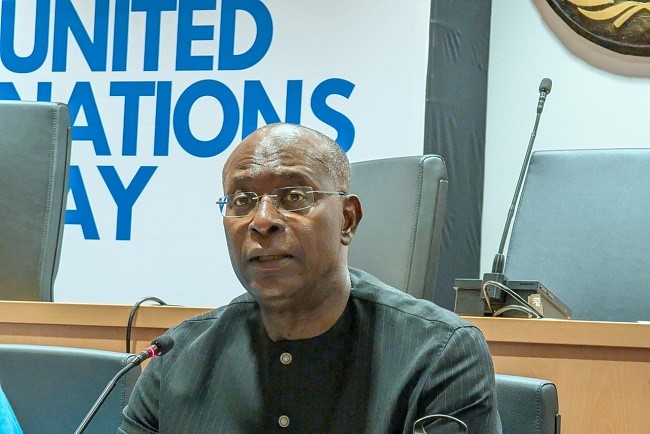
Mohamed Mallick Fall
Mohamed Malick Fall, the UN Resident and Humanitarian Coordinator in Nigeria

I join the Governor of Borno, Professor Babagana Umara Zulum, in strongly condemning this heinous attack in a place of worship.

On behalf of the United Nations in Nigeria, I convey my heartfelt condolences to the families of those who were killed, and to the Government and the people of Borno State. I wish the injured a speedy recovery.

I also echo the Borno Governor’s call for increased vigilance and enhanced security measures during this festive period and beyond.

This alleged suicide attack is yet another horrific reminder of the deadly toll of violent attacks in Borno State this year. On September 5, more than 50 civilians were killed when suspected members of a non-state armed group attacked Darajamal, in Bama Local Government Area.

Other incidents have ranged from targeted attacks on communities to attacks on internally displaced persons camps, using improvised explosive devices, suicide bombings and other tactics targeting farmers, fishermen, travelers and traders.

I reiterate my call to parties to the conflict to protect civilians, including those gathered in places of worship, as well as their property, and to adhere to international humanitarian and human rights law.

To complement Government efforts, the United Nations reaffirms its commitment to continue supporting people affected by the conflict in north-east Nigeria.

CITES at UNEA-7: Strengthening multilateral action for a resilient planet

0

Biodiversity loss continues to accelerate, driven by multiple interconnected pressures including unsustainable use, illegal trade, habitat degradation and the broader impacts of environmental change.

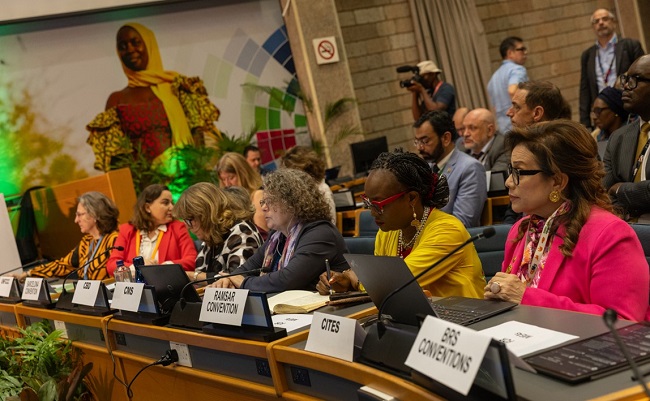
It was within this evolving landscape that the seventh session of the United Nations Environment Assembly (UNEA-7) convened in Nairobi, Kenya under the theme “Advancing sustainable solutions for a resilient planet”, where the Secretariat of the Convention on International Trade in Endangered Species of Wild Fauna and Flora (CITES) engaged in a wide range of activities, highlighting the Convention‘s role in ensuring the legality, sustainability and traceability of international wildlife trade within the context of the triple planetary crisis.

CITES
CITES at UNEA-7. Photo credit: Kiara Worth, IISD/ENB

UNEA-7 concluded with the adoption of 11 resolutions, three decisions and a Ministerial Declaration, reaffirming Member States’ commitment to multilateral solutions to address the triple planetary crisis of climate change, biodiversity loss and pollution. CITES engagement underscored the essential role of multilateral environmental agreements (MEAs) in effective multilateralism, translating global commitments into effective, coordinated action on the ground.

During UNEA-7, CITES Secretary-General, Ivonne Higuero, delivered three key interventions and contributed to a joint statement through the Biodiversity Liaison Group (BLG), highlighting the essential role of multilateral environmental agreements (MEAs) in addressing the triple planetary crisis, stating: “As we look ahead and, reinforced by our CITES CoP20 last week, our priority commitment is clear: strengthen multilateralism and work with Parties, other MEAs and partners across society so that MEAs act as catalysts for sustainable development. Leveraging these synergies will help us collectively deliver on the [Sustainable Development Goals] SDGs for planet and people.”

At the UNEA Plenary the Secretary-General underscored that biodiversity is deeply interconnected with global trade, culture, and economies, and cannot be treated in isolation. She highlighted the unique mandate of the Convention and reflected on the outcomes of the recently-concluded 20th World Wildlife Conference (CITES CoP20) in Samarkand, Uzbekistan – including 82 new species listings, decisions to further strengthen effective implementation of the Convention, Resolutions on jaguars and eels, and stronger measures against wildlife crime – calling for breaking governance silos and investing in practical tools to turn commitments into results.

During MEA Day, the Secretary-General Higuero stressed the 50-year legacy of CITES as a legally binding mechanism supporting conservation and sustainable trade. She called for integrated approaches linking biodiversity with supply chains and finance and urged Parties to align policies and leverage UNEA’s convening power to foster cooperation and digital innovation, concluding: “Partnership is not a choice – it is the key to a future where progress benefits everyone.”

CITES joined seven other biodiversity-related conventions of the BLG in welcoming UNEA-7’s focus on sustainable solutions. The statement called for moving “from silos to systems” to address interconnected challenges and highlighted practical steps such as harmonized reporting and digital platforms to ease burdens on countries, reaffirming readiness to support Parties in achieving shared objectives for a sustainable future.

Youth engagement was also highlighted during UNEA-7, with the CITES Secretariat underscoring the importance of meaningful youth participation in strengthening biodiversity action and implementation across multilateral environmental agreements. The Secretariat also highlighted the growing recognition of youth engagement within CITES, including at CITES CoP20, where Parties amended the CITES Youth Resolution to recognize the CITES Global Youth Network, which brings together more than 100 young people from 73 countries.

The CITES Secretariat contributed to a range of official MEA side events and associated events held throughout UNEA-7, reinforcing its commitment to collaboration, innovation, youth engagement and science-based policy. These included:

  • Joining Forces: How MEAs Drive Compliance and Enforcement Against Illegal Traffic (video recording available here)
  • Leveraging AI for better cooperation, collaboration and impact for MEAs (video recording available here)
  • GEF-MEA Exchange on Financing: From synergies to solutions – achieving a resilient, nature-positive, pollution-free future through GEF-9 (video recording available here)
  • Integrated Actions for a Resilient Planet: ACP-MEAs III Achievements and Pathways forward (video recording available here)
  • Youth Leadership for Biodiversity: Supporting MEA Collaboration for a Resilient Planet (video recording available here)
  • Bridging Science and Policy: Strengthening Resilience to Tackle the Environmental Crisis.

As UNEA-7 came to an end, discussions underscored the importance of environmental agreements and institutions working together to address the interconnected challenges of biodiversity loss, pollution and climate change.

Exchanges in Nairobi highlighted the growing recognition that coordinated and complementary action across these three crises is essential, including through species conservation and sustainable trade, to deliver practical solutions that benefit both people and the planet.

Recipe for fixing the planet, by UNEP report

0

When the seventh edition of the Global Environment Outlook (GEO-7) – a sprawling report on the state of the natural world – came out early in December 2025 its warnings were stark.  

Humanity is pushing the Earth to its environmental breaking point, the report’s authors warned, with potentially dire consequences for everything from human health to the global economy. 

But GEO-7, produced by the United Nations Environment Programme (UNEP), says it is not too late for humanity to change course. Within its pages is a recipe for a healthier planet that focuses on transforming five key systems: economic and financial; materials and waste; energy; food; and the environment. 

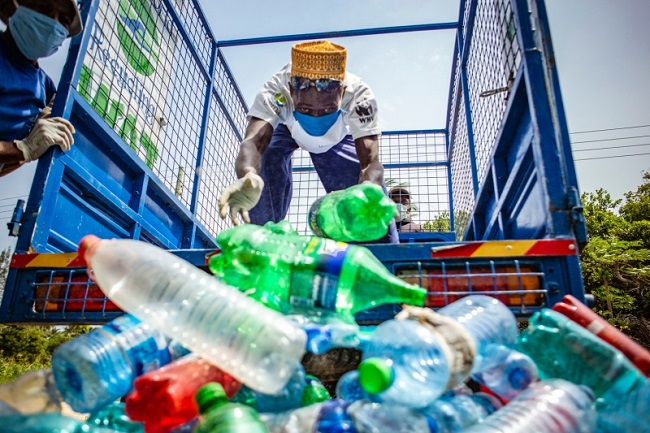
Plastic bottles
Plastic bottles, obsolete electronics, hazardous chemicals – many parts of the world are being swamped by pollution and waste. Photo credit: Florian Fussstetter

These reforms would have a host of advantages, the GEO-7 authors say. By 2050, they could prevent 9 million premature deaths, lift 100 million people out of poverty and provide 200 million people with relief from undernourishment, They could also create US$100 trillion annually in economic benefits by the end of the century.  

“Remaking the five systems will take a whole-of-government, whole-of-society effort the likes of which the world has never seen before,” says Maarten Kappelle, Chief of Service in UNEP’s Office of Science. “But that is absolutely vital if we are going to build a better, fairer, more sustainable planet.” 

In the second of three stories exploring the findings of GEO-7, here are the report’s recommendations for forging a global economy that’s better for both people and the planet. 

Move beyond gross domestic product  

For decades countries have relied on gross domestic product (GDP) as a barometer of their wealth. But GDP doesn’t account for important things, like the long-term financial fallout of environmental degradation. 

That’s why GEO-7 argues countries should take a broader view of their fiscal well-being. One way to do that is through something called natural capital accounting, which places a dollar value on the resources and the services that nature provides. This type of measurement can give nations a truer picture of their wealth, helping them make decisions that are better for the environment and their bottom lines.

Overhaul the incentives that govern the global economy 

Right now, the global economic system too often rewards practices that harm the planet, say the GEO-7 authors. 

To change that, they recommend several things, including repurposing US$1.5 trillion a year in environmentally damaging government subsidies for the energy, mining and food sectors. In some cases, countries should also consider taxes on goods and services that damage the environment. For example, food and energy production often swallow natural spaces and generate pollution, but those costs aren’t reflected in market prices. The revenues from any taxes should support the most vulnerable. 

The report also urges governments to align their budgets and economic policies with the goals of major environmental accords, like the Paris Agreement. As well it says countries should promote investments in green technology, encourage their citizens to make environmentally friendly choices and compel businesses to cover the full costs of the damage they do to the planet. 

Improve waste management and embrace circularity 

Plastic bottles, obsolete electronics, hazardous chemicals – many parts of the world are being swamped by pollution and waste. That’s why, GEO-7 says, it’s critical that countries adopt circular economic models. The concept emphasises keeping resources in use for as long as possible by redesigning, reusing, repairing and recycling things already made. 

To promote circularity, countries and business can adopt design standards that make products last longer and easier to repair. Governments can require businesses to be responsible for what happens to products at the end of their lives while creating rules that compel companies to disclose their impact on the natural world. Finally, states can reform their tax codes to incentivise the development of circular products, redirect subsidies from extractive sectors to circular endeavours, and work together to expand international agreements that tackle waste and pollution. 

At the same time, nations can make circularity part of school curriculums, offer incentives for consumers that make more sustainable choices, and implement laws that phase out short-lived and one-time-use products.  

The report concludes that circularity is a cross-cutting enabler of food, energy, and material system transformations, essential for aligning economic and financial systems with the environment.

Pour money into renewable energy 

In 2023, just over 80 per cent of the world’s energy came from the burning of fossil fuels, feeding a climate crisis that is already sparking droughts, floods, superstorms and other calamities.  

To avoid a full-fledged climate breakdown, the report said countries need to scale up the generation of renewable energy, like wind and solar power. They should also electrify fossil-fuel-dominated sectors, like transport, and explore alternative fuels, including hydrogen, for industries that are hard to electrify. 

At the same time nations need to reduce the demand for power by making buildings more efficient, encouraging people to walk and cycle more, and planning cities that are relatively compact. 

While doing these things it’s important for countries to make sure the extraction of so-called energy transition minerals, like the heavy metals used in solar panels, is done in a way that doesn’t damage the environment or deprive communities of their rights. 

Rethink how food is made and consumed 

The way the world produces food is unsustainable. It drives climate change, generates pollution and swallows up natural spaces, leading to biodiversity loss. 

To change that, GEO-7 focuses on five key things. First countries, especially wealthy ones, need to shift to more environmentally friendly diets, which in many cases means eating less meat and more plant base food. Second, crop and livestock farming need to become more efficient, use less land, and be gentler on the environment, while fisheries need to become more sustainable. Third, governments, businesses and consumers should work together to reduce food waste, which puts needless pressure on the planet. Fourthly, countries need to explore novel types of foods, like lab-grown meat, and production methods, including vertical farming, which often have a smaller environmental footprint. 

Finally, countries can reform their food systems, emphasising locally grown fare and diversifying agribusiness supply chains.

Do everything possible to protect the natural world 

A triple planetary crisis of climate change, nature, land, and biodiversity loss, and pollution and waste, is whittling away at nature and in the process, threatening the future of billions of people. 

Ending nature’s decline will be crucial to building a more sustainable future, GEO-7 found. To do that, its authors urged countries to expand protected areas, like nature reserves, restore ecosystems that have been damaged by development, and find more sustainable ways to manage the resources on land and at sea. 

As well, the report called for the scaling up of natural solutions to environmental problems, like the planting of trees to reduce temperatures in cities facing extreme heat because of climate change. It also recommended countries develop what are known as bioresources, a growing field when materials from plants, animals and other organisms are used to do things like generate energy or make products.  

Finally, the report said it was important to make the management of shared resources – from forests to fisheries – more transparent and more equitable. 

Katsina reclaims 30,000 hectares of degraded land, supports 2.5m beneficiaries through ACReSAL – Radda 

0

The Katsina State Government has recovered 30,000 hectares of degraded land and supported about 2.5 million people through the World Bank supported-project, Agro-Climate Resilience in Semi-Arid Landscapes (ACReSAL).

Gov. Dikko Radda stated this on Wednesday, December 24, 2025, in Katsina, at the launch of the distribution of farm inputs, waste disposal trucks, and 4,000 energy efficient stoves to women in the state.

Radda revealed that some of the interventions included construction of Katsina town stormwater management phase II, construction of riverbank for Jibia flood control phase II.

Dikko Radda
Governor Dikko Radda of Katsina State

Others were purchase of 36 tractors, waste disposal modern equipment, power tillers, improved seeds, insecticides, herbicides, sprayers, swamp buggy machine for dragging of dams and distribution of three million tree seedlings, among others.

He noted that the waste disposal equipment would enhance sanitation, reduce pollution and improve the quality of life of the people.

“Through the intervention, we are addressing critical challenges like desertification, flooding, poor waste management, food security and degradation of our ecosystem,” he said.

Radda commended the World Bank through the ACReSAL project for their support to the environment, health, and prosperity of the future of the state.

The Programme Coordinator, Mr. Yushau El-Sunais-Sani, said that under the community resilience building component of the project, they distributed over three million tree seedlings across the state.

He added that in order to ensure protection of the trees, the government, through the project, resorted to distribution of the 4,000 energy efficient stoves.

El-Sunais-Sani said that they also distributed waste disposal equipment for effective waste management and prevention of flood in the state.

The Commissioner of Environment, Alhaji Hamza Sule-Faskari, said that the procurement of the equipment was not only about improving sanitation, but also about safeguarding the dignity of people.

He revealed that the state had recorded tremendous achievements through the project, and that was why the state was awarded by the World Bank and the Federal Management Unit of the project during a review meeting recently in Jos.

By Zubairu Idris

NUPRC under Komolafe not a den of corruption – ICPC report

0

An Independent Corrupt Practices and Other Related Offences Commission (ICPC) report has ranked the Nigerian Upstream Petroleum Regulatory Commission (NUPRC), under Mr. Gbenga Komolafe the most transparent and ethics-compliant agency in Nigeria.

This is contained in the 2025 Ethics and Integrity Compliance Scorecard (EICS) report released in Abuja on Wednesday, December 24, 2025.

The report said that contrary to speculations, the “commission is not a den of corruption”.

Gbenga Komolafe
Gbenga Komolafe, former Chief Executive of NUPRC

According to the report, NUPRC, with 91.83 points, came tops after the evaluation of 357 Ministries, Departments, and Agencies (MDAs).

“The score reflects ‘Substantial Compliance’ with ethics, internal control mechanisms, and statutory requirements.

“This audit covers the very period Komolafe was accused of ‘diverting revenues’.

“It is statistically and procedurally impossible for an agency to operate ’33 secret bank accounts’ and ‘conceal $20 billion’ while simultaneously passing the ICPC’s rigorous forensic audit of its internal control,” the report said.

“This data paints a clear picture: The regulator (NUPRC) was enforcing strict compliance and maintaining watertight books, while other players in the sector struggled with transparency.

“The narrative that Komolafe was the problem in the sector has been inverted by the facts.

“It appears his strict regulatory oversight – which likely earned him the NUPRC’s high integrity score – may have been exactly what made him a target for those resisting reform,” it said.

The report evaluated MDAs on Financial Management: Guidelines for funds and timely retirement of advances, and Procurement Processes: Adherence to the Public Procurement Act.

Others indices included internal audit: verification of payments and projects.

“By scoring 91.83, the NUPRC demonstrated that its financial pipes were not leaking; they were among the most secure in government.

“While 99 other MDAs lacked guidelines for funds and 114 failed to submit financial reports, Komolafe’s NUPRC stood apart as a model of fiscal responsibility.

“The allegations of a ‘$20 billion diversion’ have now been exposed for what they likely always were: a coordinated hit job designed to tarnish a reformer’s exit. But data does not lie.

“As Komolafe bows out, he does so not with the stain of scandal, but with a badge of honour provided by the ICPC itself.

“He leaves behind an agency that is officially rated as the most ethically compliant institution in Nigeria. The smear campaign has failed. The scoreboard speaks for itself,” it said.

By Aderogba George

CPPE sets agenda for new petroleum regulators

0

The Centre for the Promotion of Private Enterprise (CPPE) has outlined key imperatives to guide Nigeria’s new petroleum regulators towards sustainable growth and industrialisation.

CPPE founder, Dr Muda Yusuf, disclosed this in a statement issued on Thursday, December 25, 2025, in Lagos.

Yusuf commended President Bola Tinubu for resetting the petroleum regulatory architecture through appointing new chief executives at NMDPRA and NUPRC.

Muda Yusuf
CPPE founder, Dr Muda Yusuf

He said the appointments offered a strategic opportunity to align regulation with commitments to energy sovereignty, security, self-reliance and accelerated production growth.

Yusuf said the new leadership must urgently cut import dependence, expand domestic capacity and boost investment across the oil and gas value chain.

According to him, domestic refining support in the downstream sector must be an immediate and non-negotiable priority.

“Government policy should clearly favour locally refined petroleum products through targeted fiscal, regulatory and infrastructural support,” Yusuf said.

He added that Nigeria must end distortions allowing imports to compete unfairly with locally refined products.

“This does not constitute fair competition. Genuine competition exists only when operators function under the same policy, tax and regulatory environment,” he said.

Yusuf urged NMDPRA to place domestic refining at the centre of its framework, aligned with the Nigeria-First policy and industrialisation agenda.

He said the approach would safeguard Nigeria’s long-term economic interests, not merely protect investors.

On the upstream sector, Yusuf said Nigeria must urgently ramp up crude oil and gas production to attract fresh onshore and offshore investments.

“This is critical as the global energy transition accelerates. Nigeria must maximise its hydrocarbon value while the opportunity exists,” he said.

Yusuf said NUPRC should target production growth and security, aiming to raise crude output to at least two million barrels per day.

By Rukayat Moisemhe

×