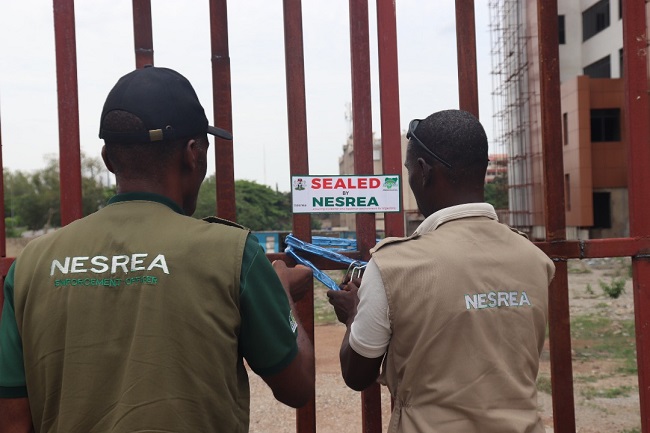
The National Environmental Standards and Regulations Enforcement Agency (NESREA) has sealed Bond Chemicals Industries Ltd. in Oyo over violations of national environmental regulations.
Mrs. Nwamaka Ejiofor, NESREA’s Assistant Director of Press, disclosed this in a statement issued on Thursday, March 19, 2026, in Abuja.
Ejiofor said the enforcement action followed a public complaint, which was corroborated by independent verification, regarding the discharge of untreated effluent into the environment.
Officials of the National Environmental Standards and Regulations Enforcement Agency (NESREA) during an enforcement operation
She explained that a compliance inspection conducted by officials of the agency’s South-West Zonal Office on Feb. 18 revealed that the facility lacked a functional Effluent Treatment Plant.
According to her, the company was discharging untreated wastewater with offensive odour directly into the environment, in contravention of applicable environmental standards and regulations.
“Following the inspection, the facility was duly notified and issued directives to immediately abate the environmental nuisance by installing and operating an effluent treatment system in line with regulatory requirements, and also to obtain the required permits.
“However, a follow-up inspection revealed that the facility failed to comply with the agency’s directives.
“Consequently, NESREA, in exercise of its statutory mandate, sealed the facility to prevent further environmental degradation and to safeguard public health,” she said.
The statement quotes Director-General of NESREA, Prof. Innocent Barikor, as reiterating that all industry operators must fully comply with environmental regulations, including the installation and proper operation of pollution control equipment.
It added that the agency would intensify monitoring and enforcement activities nationwide and would not hesitate to apply appropriate sanctions against violators.
NESREA stated that the facility would remain shut until full compliance with its directives is achieved, adding that further investigations and compliance monitoring are ongoing.
The Health Services and Environment Secretariat of the Federal Capital Territory Administration (FCTA) has clarified its mandate on public and environmental health regulations in the nation’s capital.
The clarification is contained in a statement obtained from Mr. Idris Suleiman, a legal officer of the FCTA attached to the Public Health Department.
Idris said the clarification became necessary following recent concerns over compliance with public and environmental health regulations by some stakeholders.
FCTA
Members of the National Association of Proprietors of Private Schools (NAPPS), FCT chapter, on March 18, 2026, staged a protest at the Wuse Zone 2 Magistrate Court, alleging multiple taxation.
The association accused the FCTA Public Health Department and the Abuja Municipal Area Council (AMAC) of imposing overlapping charges on private schools.
NAPPS, through its lawyer, Mr. Alexander Ogboo, had called on both authorities to harmonise their roles and clarify which agency was responsible for collecting such levies.
Responding, Idris stated that the Public Health Department of the FCTA is statutorily mandated to oversee and implement public and environmental health services across the FCT.
He explained that, in line with this responsibility, demand notices were issued to regulated premises, including private schools.
These notices were to facilitate services such as premises inspection, certification of fitness for use or continued use, as well as public health pest control and disinfection.
“It has come to our attention that some schools operating under the platform of NAPPS, AMAC chapter, have declined to comply with these notices.
“Their position, as conveyed by a representative, indicates a preference to engage solely with AMAC authorities on matters relating to public health services.
“For the avoidance of doubt, a subsisting judgment of the FCT High Court has affirmed that area councils, including AMAC, do not possess the legal authority to carry out key public and environmental health functions.
“Such functions include premises inspection, certification for habitation, and monitoring of continued use of facilities.
“These responsibilities fall squarely within the mandate of the FCTA Health Services and Environment Secretariat,” he said.
Idris added that the department had made several efforts to engage NAPPS leadership, including convening meetings to address the legal and public health implications of the matter.
He, however, noted that follow-up meetings scheduled by the department were not honoured, in spite of initial assurances from the association.
He emphasised that the issue was not one of multiple taxation but compliance with public health regulations aimed at safeguarding residents, especially school children.
According to him, non-compliance undermines disease prevention efforts and poses risks of infectious disease outbreaks within the FCT.
Idris advised private school proprietors and operators of regulated premises to comply with directives and demand notices issued by the secretariat.
He added that the FCTA remained committed to dialogue, collaboration, and enforcement of standards to ensure a safe and healthy environment.
He warned that the administration would not hesitate to take necessary legal and administrative actions to ensure compliance with its statutory mandate.
The United Kingdom and Nigeria have signed three landmark agreements during the State Visit of President Bola Tinubu, deepening cooperation on migration, border security and trade.
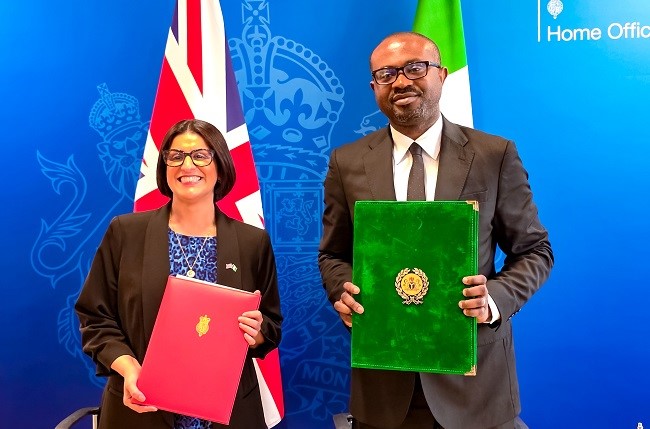
The agreements – two Memoranda of Understanding and a Statement of Intent – reflect both nations commitment to building a transparent, safe and mutually beneficial migration system, while removing barriers to trade and investment between the two countries. They were signed by UK Home Secretary Shabana Mahmood, UK Trade Envoy Florence Eshalomi, and Nigeria’s Minister of Interior, Dr Olubunmi Tunji-Ojo.
UK Home Secretary Shabana Mahmood and Nigeria’s Minister of Interior Dr Olubunmi Tunji-Ojo
For Nigeria, the agreements represent a significant step towards the socio-economic development President Tinubu has made central to his reform agenda. The business visa Statement of Intent removes trade barriers and creates new pathways for Nigerian and British businesses to access each other’s markets, a move Nigeria’s Interior Minister described as essential to building a trillion-dollar economy. Africa’s largest economy stands to benefit from deeper investment ties with the United Kingdom, one of the world’s leading financial centres.
For the United Kingdom, the agreements strengthen a migration partnership grounded in fairness and the rule of law. Nigeria will for the first time recognise UK Letters as valid identification, simplifying a shared administrative process and reflecting the trust both governments have built. Annual returns to Nigeria have nearly doubled to 1,150, part of a broader effort by both governments to maintain the integrity of their immigration systems.
Both countries have also committed to dismantling the international criminal networks that prey on victims in Nigeria and the UK alike. A new fraud fusion cell, bringing together law enforcement, banks, tech firms and communications companies from both countries, will enable rapid intelligence sharing to disrupt romance fraud, investment scams and cryptocurrency schemes that damage individuals and economies on both sides. Existing collaboration has already resulted in more than 400 arrests and £7.5 million seized, with joint National Crime Agency and Nigerian Police operations uncovering significant fraud networks.
UK Home Secretary, Shabana Mahmood, said: “Nigeria is a vital partner for the UK. These agreements reflect a shared commitment to managing migration fairly and firmly, while opening up trade and investment opportunities that will benefit both our economies.”
UK Minister for Border Security and Asylum, Alex Norris, said: “Anyone who abuses our systems, breaks our laws, or tries to cheat their way into Britain will be stopped and removed. Today’s agreements are another step in our mission to restore order to the border by ensuring those with no right to be here are swiftly removed. Nigeria is a key partner in this work, as the UK’s largest African visa market and home to thousands of Nigerians who have built their lives here.”
Nigeria’s Minister of Interior, Dr Olubunmi Tunji-Ojo, said: “This partnership is a testament to our shared determination to build a migration system that is safe, orderly, and mutually beneficial. Hopefully this strengthened partnership will be a template for other bilateral understandings.”
UK High Commissioner to Nigeria, Dr Richard Montgomery, said: “These agreements mark a significant step forward in the UK-Nigeria partnership, built on mutual respect, shared interests, and a commitment to working together on the issues that matter most to both our countries.”
Separately, on the margins of the State Visit, UK Home Office Minister for State Rt. Hon. Lord Hanson of Flint met with Nigeria’s Attorney General and Minister of Justice Chief Lateef Olasunkanmi Fagbemi and National Security Adviser Nuhu Ribadu at Lancaster House, London on Thursday, March 19.
The meeting, held almost a year on from the signing of the UK-Nigeria Memorandum of Understanding on fraud prevention, provided an opportunity to review progress under the agreement and discuss next steps in the two countries’ shared effort to combat fraud.
When people think about water insecurity in Africa, they often picture drought, failing rains, or dry riverbeds. They talk about infrastructure gaps, climate shocks and food insecurity. All of that matters. But one of the most important dimensions of the water crisis is still too often treated as secondary: Gender.
Across Africa, women and girls are disproportionately affected when water systems fail. In many communities, they are the ones who walk long distances to fetch water, manage household use, care for children and the sick, and keep food production going under increasingly difficult conditions. When water is scarce or far away, the costs are not only physical. Time is lost. Girls miss school. Women lose opportunities to earn income, rest, participate in community decisions, or build more secure futures.
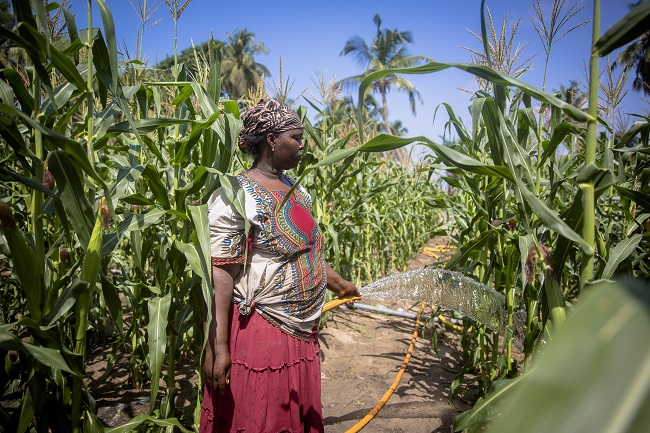
Patience Wussah, (44 years) and her daughter Mary Pecku (24 years) farm on their ancestral lands in Ada, using irrigation as their main means of watering their plants
But to tell only that part of the story is to miss the larger truth.
Women are not only among those most affected by water insecurity. They are also among the most important actors in solving it. Across the continent, women are managing irrigation, restoring landscapes, supporting household food systems, adopting new energy solutions, and helping communities adapt to climate stress. If Africa wants more resilient water systems, more inclusive growth and more effective climate adaptation, then women and girls must be placed at the centre of water solutions, not at the margins.
This is not simply a question of fairness. It is a question of effectiveness.
Research and field experience continue to show that water insecurity and gender inequality reinforce one another. In Ghana, for example, women play central roles in agriculture and natural resource management, yet many still face barriers to land, finance, agricultural inputs and decision-making.
Traditional land tenure systems often limit women’s control over productive resources, even when they are carrying much of the responsibility for food production and family well-being. Water scarcity deepens this inequality, because women are often expected to absorb the daily burden of finding and managing water for domestic and livelihood needs.
The result is a cycle that holds communities back. When women lack access to water, land, tools and influence, productivity suffers. Family nutrition suffers. Resilience suffers. And when policies recognize women’s participation but fail to change the structural conditions that exclude them, progress remains limited.
Evidence from gender and social inclusion work in landscape management shows that while policy frameworks may acknowledge the importance of inclusion, they often stop short of ensuring equitable access to resources, services and decision-making power.
That is why inclusion must go beyond representation. Participation without power is not transformation.
For donors, governments and development institutions, this should be understood clearly: investing in women in water systems is not a side issue. It is a high-return development strategy. Gender-responsive water investments can improve agricultural productivity, reduce time poverty, strengthen household well-being, support girls’ education and build stronger local institutions. In an era of climate disruption, they also increase adaptive capacity where it is needed most.
This becomes even more urgent in fragile and displacement-affected settings.
Across Africa, many refugee settlements are located in dryland and ecologically fragile areas already facing erratic rainfall, degraded soils and low vegetation cover. Refugees often settle alongside host communities that are themselves coping with limited land, water and energy resources.
Under these conditions, pressure on shared resources can quickly deepen vulnerability and tension. But these contexts also reveal something important: when women and youth are equipped with practical, locally adapted skills, they can help transform fragile systems into more resilient ones.
Recent work by the International Water Management Institute (IWMI) and partners in refugee settings in Ethiopia, Kenya and Uganda has shown the value of circular bioeconomy approaches that place women’s needs and experiences at the centre. Women learned to grow food at home, integrate trees into farming systems, use sustainable cooking methods, build stoves from local clay and make fuel briquettes from organic waste and locally available biomass.
These are not abstract interventions. They are practical solutions that improve food security, reduce pressure on natural resources, support cleaner energy and open pathways for income generation for both refugees and host communities.
Just as importantly, they strengthen social cohesion. When projects invest in local champions, include both refugee and neighboring communities, and tailor training to age, language, culture and daily responsibilities, they help shift the narrative. Refugees are no longer seen only as people in need, but also as part of the solution. That is the kind of long-term development thinking Africa increasingly needs.
This is especially relevant as some settlements evolve from temporary camps into more permanent communities. Humanitarian response alone is no longer enough. We need approaches that support livelihoods, ecological restoration, local governance and inclusive planning. Water sits at the heart of all of these.
So what should happen next?
Governments should integrate gender more meaningfully across water, agriculture, climate and land-use policy, with concrete commitments on access, leadership and accountability. Donors should prioritise investments that support women not only as beneficiaries, but as farmers, technicians, entrepreneurs, organisers and decision-makers. And development actors should back approaches that are locally grounded, climate-smart and designed to last beyond a single project cycle.
At IWMI, we see every day that when women are trusted, trained and supported, the benefits extend far beyond water. Households become more food secure. Communities become more resilient. Resource use becomes more sustainable. Social cohesion improves. Opportunity grows.
Where water flows, equality grows.
This World Water Day, Africa has an opportunity to move beyond rhetoric and invest in water solutions that are not only technically sound, but socially transformative. Putting women and girls at the heart of those solutions is not just the right thing to do. It is the smartest development decision we can make.
Kehinde Ogunjobi is the IWMI Country Representative for Ghana covering West and Central Africa, leading partnerships and research uptake on water security, climate resilience and inclusive agricultural development across the region
Since time immemorial, forests have been a vital pillar for human sustenance. Covering about 32% of the Earth’s land surface, or about 4.14 billion hectares, forests provide critical ecosystem services including food, medicine, fresh water, air purification, and climate regulation among others.
These ecosystems are home to about 80% of global terrestrial biodiversity, including nearly two thirds of all bird species. Further, 1.6 billion people around the world rely on forests for livelihoods.
According to the International Labour Organisation (ILO), the forestry sector employs about 33 million people worldwide, and for every 100 jobs in the sector, an additional 73 jobs are supported across the broader economy, underlining its importance.
George Ilebo, Africa Forests Programme Coordinator, BirdLife International
However, forests are disappearing at an alarming rate. According to the 2025 FAO Global Forest Resources Assessment, an estimated 489 million hectares of forest has been lost worldwide through deforestation since 1990. Between 2015-2025, the deforestation rate was estimated at 10.9 million hectares per year. Africa has the second highest deforestation rate globally, after South America. Since 2015, the continent has lost about 2.96 million hectares per year. Major drivers of deforestation on the continent include expansion of subsistence and commercial agriculture, infrastructure development, and mining.
Every year, the world celebrates International Day of Forests (IDF) on 21st March, to raise awareness on the importance of these critical ecosystems. This year’s IDF theme Forests and Economies highlights the vital role forests play in supporting livelihoods and driving economic prosperity. Yet too often, development decisions treat forests and economies as competing interests.
Short-term extractive approaches can produce headline Gross Domestic Product (GDP) growth while hollowing out the very natural capital that supports sustained prosperity. This results in long-lasting economic consequences including declining crop yields leading to reduced household incomes and food insecurity, higher disaster recovery costs, lost market opportunities, and deeper poverty.
Thus, to protect forests, requires concerted efforts from governments, private sector, local communities, civil society, and the academia. Healthy forests are not a luxury or a backdrop to development, but rather they are infrastructure that sustain the economies on which communities and nations depend. Recognizing this is not just an environmental argument; it is an economic imperative.
Across Africa, BirdLife International the world’s largest Nature Conservation partnership is working with partners to protect and conserve forests through restoration; scaling of locally led Nature‑based Solutions (NbS) that generate jobs and incomes. BirdLife partners are involved in the African Forest Landscape Restoration Initiative AFR100 Initiative which aims at addressing deforestation to fight climate change while boosting food security and improving livelihoods for local communities.
In Mount Bero, Guinea and Rusizi, Rwanda, over 2,000 hectares of degraded forest land restored by communities is improving soil productivity, increasing climate resilience and expanding tree-based income opportunities. In Burkina Faso, an initiative dubbed Birds, Bees and Business (BBB) promoted the sustainable use of Non-Timber Forest Products (NTFPs) and beekeeping, becoming a stable source of income for local communities. This further demonstrates that sustainable exploitation of NTFPs can provide a pathway for economic development, while improving access to natural resources, and promoting conservation efforts.
Close collaborations with local communities who are custodians of these forests is a critical element of this work. In the Guinean Forests of West Africa, BirdLife and Partners have resulted strengthened protection of 15 Key Biodiversity Areas (KBAs); over 500,000 hectares of forests under improved management; and building capacity of 25 local Civil Society Organizations (CSOs) in sustainable forest management.
In Liberia and Sierra Leone, BirdLife is working with local communities to promote ecotourism as a strategy to conserve the 370,000‑ha of Gola Forest, which straddles Sierra Leone and Liberia, thus improving livelihoods for local communities while enhancing conservation. Further, we are working with the private sector to promote green value chains and responsible sourcing of agricultural commodities to support landscape restoration and the livelihoods of smallholders.
These forest protection and conservation initiatives are not endpoints but proof points: demonstrating what is possible when investment, innovation, and community leadership converge around nature. On this International Day of Forests, as we celebrate the abundant ways forests fuel economies, there is need for a mindset shift from viewing forests as a resource to be exhausted for short-term gain, to valuing them as foundational assets that deliver sustained returns: food security, jobs, climate resilience and cultural heritage.
With the right policies, financing, and partnerships, forest-based economies can be engines of resilient, inclusive and sustainable economic development across Africa. This International Day of Forests, let us commit to making forest economies a reality: for people, for nature, and for posterity.
George Ilebo is Africa Forests Programme Coordinator at BirdLife International. Email: george.ilebo@birdlife.org
The World Bank Group has called for a global rebalancing of water use in agriculture, a move critical to meeting future food demand sustainably.
The group said the move could also generate up to 245 million long-term jobs, particularly in Sub-Saharan Africa.
This is contained in a statement issued by the World Bank Online Media Briefing Centre on a report titled “Nourish and Flourish: Water Solutions to Feed 10 Billion People on a Livable Planet” unveiled on Thursday, March19, 2026.
Ajay Banga, World Bank President
The report noted that current agricultural water management practices, characterised by overuse in some countries and underuse in others, could only sustainably support food production for less than half of the world’s population.
It said it had been projected that by 2050, 10 billion people would need to be fed.According to the report, addressing both excessive water use in stressed regions and inadequate utilisation in water-abundant areas will be key to meeting this future demand.
The report introduced a framework linking water availability with food production and trade by categorising countries based on water stress levels and their food import or export status.
“The framework identifies areas where expanding rain-fed agriculture can boost food production, where irrigation investments can unlock jobs and growth, and where water use must be rebalanced to protect ecosystems.
“It also highlighted the role of trade as a more sustainable alternative to local production in certain contexts.”
Mr Paschal Donohoe, Managing Director and Chief Knowledge Officer of World Bank Group, was quoted as saying, “the way we manage water for food will have profound implications for jobs, livelihoods, and economic growth.
“By making smarter choices about where crops are grown, how water is allocated, and how trade supports food security, we can strengthen resilience, expand opportunity, and safeguard critical resources.”
The report emphasised the need for increased private sector participation and financing alongside public investment, supported by effective policies, institutions, and regulations to boost food production, create jobs, and support sustainable growth.
It noted that public funding alone would be insufficient to deliver the innovation, scale, and services required to expand irrigation, improve performance and maintain results.
Mr Guangzhe Chen, Vice- President for Planet at the World Bank Group, was quoted as saying, “when investments in infrastructure, business-enabling policies, and private capital mobilisation come together, the impact can be greater than the sum of its parts.
“By linking global evidence with country realities, this framework can help policymakers navigate trade-offs and adapt food production to today’s water and climate realities – delivering food, jobs, and resilience together.”
The report estimated that expanding and modernising irrigation systems, where water is available, would require an additional 24 to 70 billion dollars annually through 2050.
It added that governments already spend about 490 billion dollars yearly on agricultural support, largely on subsidies, suggesting that redirecting part of this funding could attract private investment.
“Redirecting a portion of current spending, combined with regulatory reform, use of blended finance, and public-private partnerships will crowd in private capital, including co-investment by farmers themselves, and support financially sustainable water and food security.”
The World Bank Group said it remained committed to supporting countries through policy reforms, public investment, and private capital to strengthen food systems, create jobs and protect natural resources.
It said the group had committed to double its annual agribusiness financing to nine billion dollars by 2030 and mobilise an additional five billion dollars annually under its AgriConnect initiative to support smallholder farmers.
“Through the Water for Food and Water for the Planet pillars of its Water Strategy Implementation Plan, the World Bank Group addresses the twin challenge of water and food security by strengthening food production systems and improving farmer livelihoods.”
The Minister of Power, Mr Adebayo Adelabu, says the Federal Government has taken decisive steps to address persistent gas supply challenges affecting electricity generation.
Adelabu said this on Thursday, March 19, 2026, in his Eid-el-Fitr message made available by Mr Bolaji Tunji, his Special Adviser on Strategic Communication and Media Relations.
He expressed optimism that these interventions were already yielding gradual improvements and would significantly enhance power supply in the near future.
Minister of Power, Chief Adebayo Adelabu
“Concrete measures are being implemented to ensure more reliable and sustainable electricity for homes, businesses, and industries.
”The reforms initiated by President Bola Tinubu are beginning to take root, and Nigerians will soon witness the full benefits,” the minister said.
According to him, sustained public trust and cooperation are critical to the success of the administration’s reform agenda.
He said the president was actively repositioning Nigeria on the global stage to attract investment and foster development.
“As we celebrate, we take pride in the strides being made under Mr President’s leadership, including his recent engagements in the United Kingdom, which promise significant gains in investment, bilateral relations, and economic cooperation.
”These milestones underscore a new direction for our nation. I urge all Nigerians to continue supporting these efforts, so that the gains can be consolidated for the benefit of all,” he said.
Adelabu also urged Nigerians to carry forward the spirit of sacrifice cultivated during the 30 days of Ramadan into sustained commitment to national development.
He said that collective discipline and selflessness remained vital to unlocking the nation’s vast potential.
The minister said that through continued personal and national sacrifice, the transformative agenda of President Tinubu would increasingly translate into tangible progress across key sectors of the economy.
“Let me warmly felicitate with Nigerians, particularly our Muslim brothers and sisters, on this auspicious occasion.
“The past 30 days have been devoted to spiritual renewal, self-denial, and a recommitment to faith and righteousness.
”As we have individually sought purification and growth, we must now extend that same spirit of sacrifice to our nation through unwavering dedication to its progress.
”The challenges we face today are, without doubt, the building blocks of a more prosperous tomorrow,” he said.
Adelabu called for unity, patience, and shared responsibility, noting that enduring national progress could only be achieved through collective sacrifice and steadfast commitment to a common vision.
In the heart of Midtown Manhattan, United for Wildlife and the CITES Secretariat hosted leaders from the finance, technology, and transportation sectors, as well as governments, international organisations, and conservation organisations to celebrate United Nations World Wildlife Day 2026 at Deloitte’s office at 30 Rockefeller Plaza, calling for stronger cross‑sector action to conserve wildlife and combat wildlife crime.
Observed each year on March 3, World Wildlife Day commemorates the signing of the Convention on International Trade in Endangered Species of Wild Fauna and Flora (CITES) in 1973.
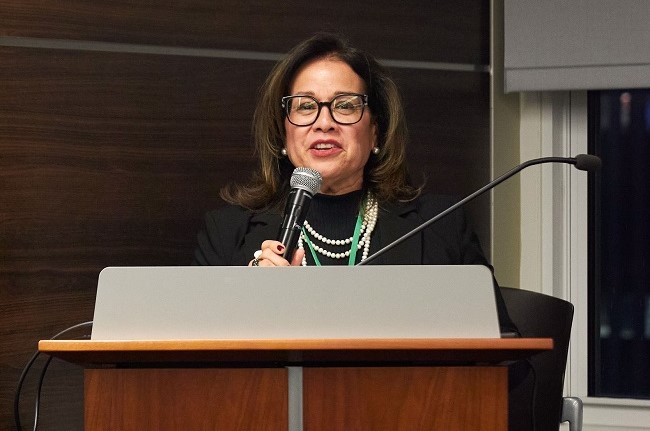
Ivonne Higuero, Secretary-General of CITES
This year’s World Wildlife Day celebration spotlighted Medicinal and Aromatic Plants (MAPs), a group of 50,000 to 70,000 plant species used worldwide for the support of many healthcare systems, millions of local livelihoods and cultural heritage. Ensuring that international trade in MAPs remains sustainable, legal, and traceable is therefore essential for both conservation and human wellbeing.
In keynote remarks, Ms. Ivonne Higuero, Secretary-General of CITES, highlighted the growing global demand for medicinal and aromatic plants and the need for meaningful stakeholder engagement such as supporting sustainable harvesting practices and recognising the knowledge and contributions of the communities who depend on and care for these species.
Ms. Higuero emphasised: “Only through strong partnerships across governments, enforcement authorities, the private sector and conservation organisations can we effectively safeguard the wild plants that support our health, heritage and livelihoods.”
The programme featured a moderated panel discussion titled “Stories of Hope: Working Together to End the Illegal Plant and Wildlife Trade,” which highlighted three case studies on American ginseng, shea and licorice, all considered medicinal and aromatic plants. Panelists from the U.S. Fish and Wildlife Service, the International Fund for Animal Welfare, The Nature Conservancy, the FairWild Foundation and the Wildlife Conservation Society shared perspectives on strengthening enforcement, supporting Indigenous knowledge, promoting sustainable supply chains and advancing collaborative solutions to conserve MAPs and combat wildlife trafficking in general.
Mr. Robert Campbell, Director, United for Wildlife, said: “Events like this are more than just an awareness day, they are opportunities to celebrate wins, highlight best practices, develop and build relationships both transnationally and across sectors, and even share challenges that we can work to resolve together.”
The evening also featured a conservation ballet performance by Vildwerk, highlighting the connections between culture, nature and conservation.
An outreach exhibition showcased the work of organizations including the World Wildlife Fund / HSBC, Conservation X Labs, the International Fund for Animal Welfare, the Wildlife Conservation Society, the Pan African Sanctuary Alliance, the Saiga Conservation Alliance, Vildwerk, Quantifind, the U.S. Fish and Wildlife Service, wildlife artist Nayana Rathmalgoda, and the Jane Goodall Institute.
The event concluded with a networking reception, generously sponsored by Quantifind, reinforcing the importance of partnerships across governments, international organisations, the private sector and civil society to ensure that MAPs – and the communities that depend on them – can continue to thrive.
Kia Corporation and TotalEnergies Lubrifiants have renewed their global partnership for an additional five-year term effective April 1, 2026. The agreement builds on a 15-year collaboration dedicated to delivering high-quality lubricants across Kia’s global network.
Under the renewed partnership, Kia dealerships worldwide will continue to offer Quartz high-performance engine oils. The cooperation also leverages TotalEnergies’ expertise in lubricant technology, marketing support and electric mobility solutions.
“We are truly honoured to extend our longstanding partnership with Kia as we embark on a fourth consecutive global term, continuing to build together a trusted collaboration dedicated to excellence and to creating meaningful value for customers worldwide,” said Elodie Luce, Vice President Automotive Business Unit at TotalEnergies Lubrifiants.
Kia and TotalEnergies in a fourth contract renewal
“This renewed commitment strengthens our ability to accelerate the development of cutting-edge lubricant solutions tailored to the rapidly evolving demands of modern powertrains, including the latest hybrid and electric technologies.”
Dong-Hwan Hwang, Head of Ownership Management Subdivision at Kia Corporation, added, “TotalEnergies has been a valued partner for the past 15 years. The renewed agreement will enable us to explore new opportunities together, further enhancing the ownership experience for Kia drivers and improving service competitiveness in the changing market.”
Beyond lubricants, this new chapter also opens avenues for deeper collaboration in electrification, mobility services, and sustainability – areas that reflect both companies’ shared dedication to cleaner technologies, enhanced performance, and innovation that truly serves customers.
Support for developing countries on climate transparency is entering a new phase, following decisions adopted by Parties at COP30 in Belém and new plans agreed by the Consultative Group of Experts (CGE) in Bonn.
The CGE convened its 8th Informal Forum and 14th meeting earlier this month in Bonn, Germany, reinforcing support for developing country Parties on climate transparency as implementation of the Paris Agreement advances.
The meetings took place following key transparency-related decisions adopted in Belém, where Parties recognised the CGE’s achievements and agreed to make it a permanent body serving both the Convention and the Paris Agreement, while also adopting revised terms of reference and updating the group’s composition.
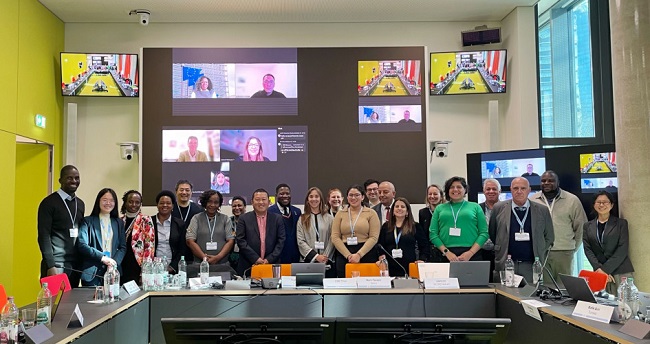
Participants at the 14th Consultative Group of Experts (CGE) meeting on March 3, 2026
Sharing lessons from the first cycle of ETF implementation
The 8th Informal Forum brought together CGE members, national transparency experts and Biennial Transparency Report (BTR) reviewers from Cuba, Finland, Georgia, Ghana, Kazakhstan, Malawi, Panama and South Africa, as well as partner organisations including the IPCC, UNDP, UNEP, CBIT-GSP and ICAT.
A total of 127 participants attended the event to exchange experiences and lessons learned from participating in the Enhanced Transparency Framework (ETF). Discussions focused in particular on experiences with the technical expert review (TER) of BTRs and the facilitative multilateral consideration of progress (FMCP).
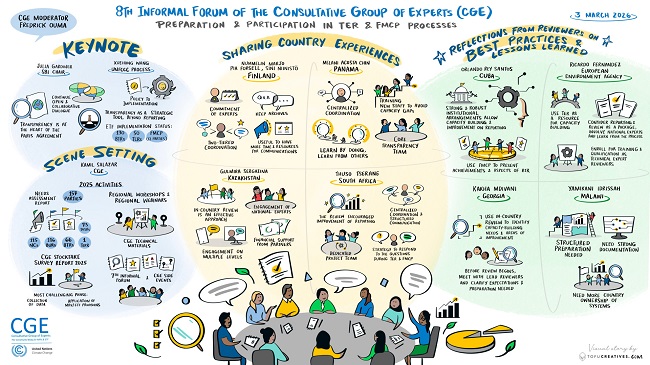
Participants actively shared questions, challenges and practical insights drawn from their own involvement in the processes. Key highlights from these exchanges are illustrated in the visual summary below.
CGE visual summary. Photo credit: UN Climate Change
In her keynote remarks, Julia Gardiner, Chair of the Subsidiary Body for Implementation (SBI), emphasised that transparency lies at the heart of the Paris Agreement and that BTRs play a crucial role in tracking progress and informing processes such as the Global Stocktake.
Xuehong Wang, Director of Transparency at UN Climate Change, noted that developing countries are now moving into full ETF implementation through BTR preparation and participation in the TER and FMCP processes. She reaffirmed the secretariat’s commitment to continue supporting the CGE and developing country Parties in strengthening their national transparency systems.
Setting the direction for the CGE’s work
Following the Informal Forum, the CGE held its 14th meeting from March 3 to 5, 2026. Members considered outcomes from Belém, findings from the group’s annual capacity-building needs assessment, and feedback collected through CGE activities in 2025 to help shape the next phase of its work.
The 2026-2029 work programme reflects the evolving support needs of developing countries as they move into full implementation of the ETF. The CGE will continue to promote, support and enable transparency arrangements in developing countries while helping improve reporting over time.
The group will also continue to assess gaps, needs, lessons learned and areas for improvement, with the aim of providing targeted technical advice and support to developing countries. Collaboration with key partners and stakeholders will remain central to strengthening and scaling up this support.
The 2026 workplan outlines a range of activities for the year ahead, including the development of technical materials, regional hands-on training workshops and webinars tailored to regional priorities, as well as continued collaboration with partner organizations.
Through the outcomes of the Informal Forum and its 14th meeting, the CGE reaffirmed its central role in supporting developing countries to implement transparency arrangements under the Convention and the Paris Agreement, helping strengthen trust and collective climate action.