The Eko Electricity Distribution Company (EKEDC) on Monday, December 29, 2025, said that there was a system collapse at 2.01 which has resulted to loss of power supply across their network.
The information was made known by EKEDC on its official X (Twitter) handle.
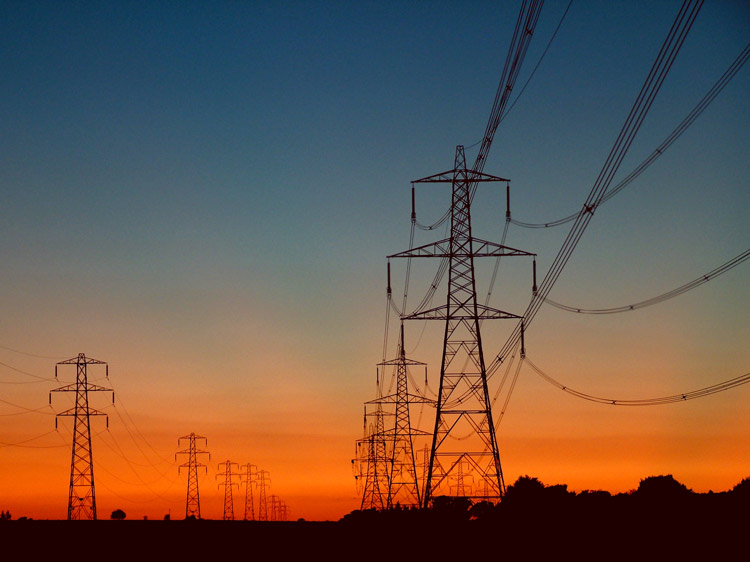
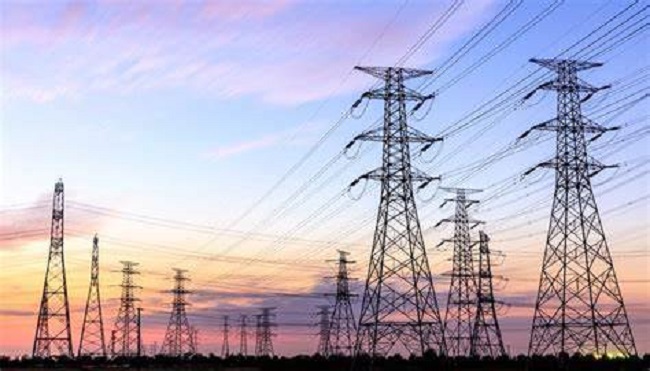
A power grid
It said: “Kindly be informed that there was a system collapse at 2.01 which has resulted to loss of power supply across our network.
”We are currently working with our partners as we hope for the speedy restoration of the grid.
”We will keep you updated as soon as power is restored.”
Confirmation is being awaited from the Nigerian Independent System Operator (NISO).
A coalition of civil society organisations (CSOs) has called for compensation for communities affected by the recent U.S. strike in Sokoto State.
President Donald Trump of U.S. on Christmas Day in a Truth Social post announced what he described as a devastating airstrike on terrorists mobilising for assault missions in Nigeria.
The CSOs coalition in a statement issued in Abuja on Monday, December 29, 2025, also advocated an independent investigation into the strike and public disclosure of the findings from the probe.
US President Donald Trump addresses the 80th United Nations General Assembly
The group comprises no fewer than 80 organisations including Yiaga Africa, Civil Society Legislative Advocacy Centre (CISLAC), Accountability Lab Nigeria, ACE-Nigeria, and African Centre for Media and Information Literacy (AFRICMIL).
The group said doing so would deepen public trust and calm communal tensions.
The group said the incident raised serious questions about Nigeria’s sovereignty, constitutional governance, civilian protection and democratic accountability.
The CSOs criticised what it described as the absence of public explanations from the President Bola Tinubu, Service Chiefs and the National Assembly.
They further decried the lack of transparency surrounding the operation, including its legal basis and rules of engagement and safeguards for civilians.
The group said this was amid reports that debris from munitions fell on farmlands in Sokoto State and near a hotel in Kwara State.
Kebbi State Government has attracted five landmark investments valued at over $200 million and N220 billion in renewable energy, electric mobility and agro-industrial development.
Dr Muhammad Kamba, Director-General of the Kebbi State Investment Promotion Agency, disclosed this on Monday, December 29, 2025, in Abuja.
He said the investments include a $120 million, 100-megawatt off-grid solar power project by Fused Vision.
Governor Nasir Idris of Kebbi State
According to Kamba, the project is among the largest off-grid solar initiatives undertaken by a subnational government in Nigeria.
“It is designed to address energy shortages in underserved communities and support manufacturing and agro-processing activities,” he said.
Kamba said Karlot Energy would deploy distributed off-grid solar systems across the state to expand access to clean and reliable power.
“They will leverage Kebbi’s strong solar potential and investor-friendly policies,” he added.
In the transport sector, Kamba said WE CAN Electric Cars had received approval to begin electric vehicle operations statewide.
“This introduces sustainable mobility options for urban and rural routes, aligning with global shifts towards green transportation,” he said.
He said TAWI Research Limited plans to establish an agriculture-focused innovation centre to boost productivity through technology adaptation.
Kamba added that Think-Lab Group is developing the ₦220 billion Kebbi Agro Food Industrial Hub integrating farming, processing, logistics and market access.
“The hub will link smallholder farmers to markets, reduce post-harvest losses and increase incomes.
“These investments reflect Kebbi’s advantages in agriculture, energy infrastructure and facilitation,” Kamba said.
He reaffirmed the state government’s commitment to timely project execution to position Kebbi as a long-term investment destination.
The Federal High Court in Abuja has refused to grant an application seeking to stop Mr. Heineken Lokpobiri, Minister of State for Petroleum Resources (Oil), and others from allocating some oil fields.
Justice Emeka Nwite, in a ruling on an ex-parte motion filed by Hi-Rev Oil Limited and Hi-Rev Exploration and Production Ltd but moved by their lawyer, Ambrose Unaeze, rather ordered that the respondents be put on notice.
“The respondents are hereby ordered by this honourable court to show cause why the application should not be granted,” Justice Nwite ruled.
Heineken Lokpobiri, Minister of State for Petroleum Resources (Oil)
Justice Nwite, a vacation judge, adjourned the matter until Jan. 5, 2026, for the respondents to show cause.
The 2nd and 3rd respondents in the ex-parte motion, marked: FHC/ABJ/CS/2678/2025, are the Attorney-General of Federation (AGF) and Nigeria Upstream Petroleum Regulatory Commission (NUPRC).
The motion, dated and filed on Dec. 11 by a team of lawyers led by Unaeze, sought a relief.
The oil and gas companies are seeking an order of interim injunction restraining the defendants or whomsoever is acting on their behest from selling, assigning or allocating the Yorla South (Petroleum Prospecting Licence (PPL) 2A32 – OML 11) located in Rivers.
The order is to also restrain the defendants from allocating Akiapiri (PPL 2A48 – OML 25) located in Bayelsa; Diebu Creek East (OML 32) also located in Bayelsa and Idiok (PPL 2A41 – OML 67) located in Akwa Ibom, “same being direct replacements for Utapate Oil Field (formerly part of OML 13) and OPL 2002, previously allocated to the plaintiff but was later withdrawn by the defendants, pending the hearing of the interlocutory application in this suit.”
Giving four grounds why their application should be granted, the lawyer said the companies were previously allocated the Utapate Oil Field (formerly part of OML 13) and OPL 2002, but were unreasonably withdrawn by the Federal Government.
He said parties had a settlement agreement for the replacement of the Utapate Oil Field, which was accepted or adopted and it became consent judgement.
Unaeze stated that the firms had taken substantial steps and offered consideration in respect of the grant of the licence to operate OPL and licence to establish a petroleum refinery.
He argued that the companies’ legal right is being threatened by the defendants, pursuant to the threat to sell or allocate the oil fields at Yorla South, Akiapiri, Diebu Creek East, and Idiok to third parties via the defendants’ offer to the public for round bid, hence, the need for the interim order.
In the affidavit in support of the motion, the companies’ Director, Chief Felix Ezeamama, averred that in 2007, the firms won the bid for OPL 2002, but the exercise was suspended following a lawsuit filed by Shell Petroleum Development Company of Nigeria Limited (SPDC), the former operator of OML 13 as at then.
“However, the plaintiffs subsequently filed an action against the defendants over lack of access to the oil field in Suit No. FHC/CS/1077/2007, which led to an out of court settlement in 2015 between the plaintiffs and the defendants,” he said.
Ezeamama said this led to the adoption of the terms of settlement as a consent judgment.
According to him, the settlement agreement confirmed and declared the plaintiffs as the rightful winner of OPL 2002 and provided for the issuance of a 50,000 BPD modular refinery license at Iko Community, Eastern Obolo L.G.A., Akwa Ibom State.
“And following this act, the DPR (now NUPRC) issued the plaintiffs with both the award letter (Offer of Oil Prospecting License – OPL 2002) and License to establish Petroleum Refinery, and based on that act of the defendants, the plaintiffs made part payment of the signature bonus while liaising with the Central Bank of Nigeria (CBN) on exchange rate arrangements for the balance.
He said consequent upon the said award/offer of Oil Prospecting License — OPL 2002 and license to establish petroleum refinery by the defendants, the plaintiffs submitted a detailed engineering design as per statutory compliance for the construction of 50,000 BPSD Refinery at Iko Community, Eastern Obolo L.G.A. of Akwa Ibom.
He said the defendants, in their wisdom after series of review, approved the detailed engineering design and construction as submitted and further advised the plaintiffs to proceed to the next phase of the project.
“That a subsequent high-level stakeholders meeting chaired by the then AGF, on-behalf of the defendants, wherein he proposed a settlement offering the plaintiffs either two oil fields from OPL 2002.
“This, is a with a complete data for each of the fields, or three (3) other marginal fields of its choice with complete data for the fields elsewhere from the Government Basket, under sole risk terms with a nominal signature bonus.”
Ezeamama said owing to the facts as stated above, the plaintiffs selected the Obuzo, Uzoaku, and Ofemini Oil Fields, which were approved for implementation by the defendants.
“However, the fields were later included in a marginal field bid round and sold to other operators, leaving none available as alternatives for the plaintiffs,” he said.
According to him, the matter remained unresolved for years, and each time the plaintiffs approached the defendants for the replacement of their oil fields, the defendants would always make promises and undertakings to the plaintiffs that they will provide them with other viable oil fields of equivalent value to the earlier ones as granted to them which were unjustifiably withdrawn.
The director averred that they are entitled to the allocation of the said Yorla South – PPL 2A32 – OML 11; Akiapiri: PPL 2A48-OML 25; Diebu Creek East – OML 32 and Idiok: PPL 2A41-OML 67 and grant of license of same as alternative to the earlier oil fields which were unreasonably withdrawn by the defendants.
He said this was so because they had fulfilled the conditions for the grant and also particularly in-line with the consent judgement of the court.
Ezeamama said irreparable loss would have been visited on the plaintiffs and a state of hopelessness would be foisted on the court, if the application was not granted and the defendants go ahead to deal adversely with the plaintiffs’ interest on the selected oil fields.
“That the plaintiffs have suffered grave financial loss and emotional torture in the hands of the defendants, who have continued to dribble the plaintiffs at will,” he alleged.
A U.S. State Department official on Monday, December 29, 2025, said the U.S. has made a $2 billion pledge for UN humanitarian aid following major foreign aid cuts by the Trump administration.
The U.S. slashed its aid spending this year, and leading Western donors such as Germany also pared back assistance as they pivoted to increased defense spending, triggering a severe funding crunch for the United Nations.
The U.S. State Department official said the U.S. was pledging to commit $2 billion in funding to the UN for humanitarian aid.
UN Secretary-General, António Guterres
No further details were provided on how the money would be allocated or if additional pledges would follow.
UN data showed total U.S. humanitarian contributions to the UN fell to about $3.38 billion in 2025, equating to about 14.8 per cent of the global sum.
This was down sharply from $14.1 billion the prior year, and a peak of $17.2 billion in 2022.
Earlier in December, the United Nations launched a 2026 aid appeal for $23 billion to reach 87 million people at risk half the $47 billion sought for 2025, reflecting plunging donor support despite record global needs.
UN aid chief Tom Fletcher has said the UN’s humanitarian response was overstretched and underfunded, meaning “brutal choices” had to be made to prioritise those most in need.
The Nigerian Independent System Operator (NISO) says power generation has increased nationwide following the repairs and restoration of the vandalised Lagos-Escravos gas supply infrastructure.
The management of NISO made this known in a statement on Friday, December 26, 2025, in Abuja.
NISO is established to manage electricity grid with reliability, efficiency, and transparency, enabling a sustainable and competitive power sector that drives economic growth and improves quality of life.
National grid lines
It disclosed that the Nigeria Gas Infrastructure Company (NGIC) accomplished the feat that has translated into improved power generation and enhanced gas supply to several key thermal power plants across the country.
”This development is a positive step towards stabilisng the electricity supply and improving grid reliability for consumers nationwide,” it said.
According to NISO, gradual power offtake is being carried out by the affected plants to ensure a smooth recovery and maintain the stability of both the gas supply network and the national electricity grid.
The system operator said that the approach would prevent system stress and ensure reliable supply of electricity for industries, businesses, and households.
It also said that other thermal power plants remain available and on standby, awaiting confirmation of gas supply from their respective suppliers on Saturday.
”Once confirmed, these plants will be integrated into the national grid to further strengthen generation capacity and reduce the risk of outage.
”NISO continues to work closely with relevant stakeholders, including power generation companies, gas suppliers, and regulatory bodies, to monitor developments and address any operational challenges in real time,” it said.
The system operator also urged all consumers to continue practicing energy conservation where possible, as the coordinated efforts to stabilise power supply progresses.
The governments of Kenya, Norway and the United States, and the International Energy Agency (IEA) will next year hold the second major international Summit dedicated to providing clean cooking access to the 1 billion people in Africa who currently lack it, bringing together the public and private sectors to accelerate the momentum generated by the landmark 2024 Summit held by the IEA and partners in Paris.
The 2026 Summit will take place in Nairobi and be co-chaired by President William Ruto of Kenya, Prime Minister Jonas Gahr Støre of Norway, United States Secretary of Energy Chris Wright and IEA Executive Director Fatih Birol.
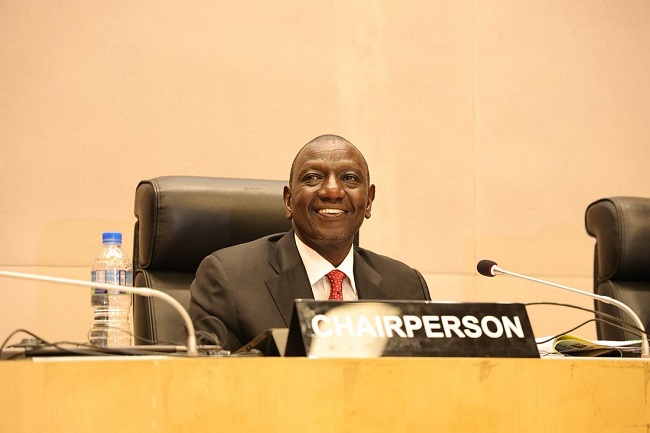
Kenyan President, William Ruto, will co-chair the 2026 Summit in Nairobi
The first Summit on Clean Cooking in Africa took place in Paris in May 2024, mobilising $2.2 billion in financial pledges from governments and the private sector. Close to 60 countries took part, including leaders from several African governments; heads of international organisations, notably the African Development Bank Group; and CEOs of major energy companies.
In July 2025, the IEA published an update showing that more than $470 million of the commitments from the Paris Summit had already been disbursed – and also set out a new roadmap for a cost-effective pathway to reaching universal access to clean cooking across sub-Saharan Africa by 2040.
The report was launched by Dr Birol with African Union Commissioner for Infrastructure and Energy, Lerato Mataboge, and Special Representative of the President of Tanzania for Clean Cooking, Jacqueline Kawishe. Ms. Mataboge and Ms. Kawishe highlighted the value of the cooperation with the IEA on advancing clean cooking access in Africa and how local policy efforts were helping to rapidly expand the domestic clean cooking market.
Socio-Economic Rights and Accountability Project (SERAP) has filed a lawsuit against Nigeria’s governors and the Minister of the Federal Capital Territory, Abuja, Mr. Nyesom Wike, “over their failure to account for the spending of the N14 trillion fuel subsidy savings they collected from Federation Account Allocation Committee (FAAC) allocations, including details of projects executed with the money, and the completion reports on the projects.”
The suit followed reports that the 36 governors and the FCT minister have collected trillions of naira from FAAC allocations as fuel subsidy savings since mid-2023. But the increased allocations have not translated into improved access to quality healthcare and education for poor and vulnerable Nigerians.
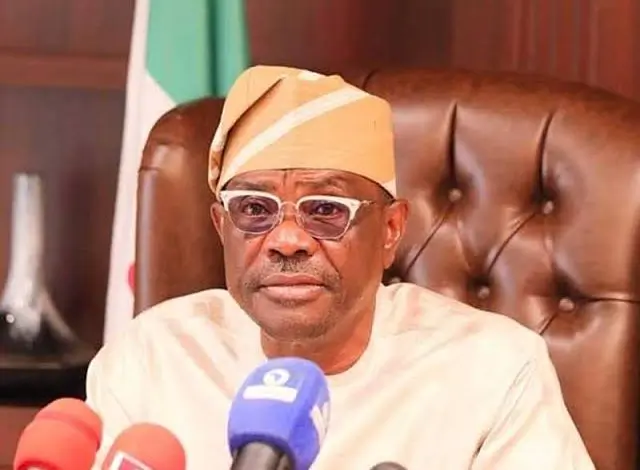
Minister of FCT, Nyesom Wike
In the suit number FHC/L/MSC/1424/2025 filed Friday, December 26, 2025, at the Federal High Court, Lagos, SERAP is asking the court to “direct and compel the governors and Mr. Wike to disclose the details of the spending of the increased FAAC allocations being savings from the removal of fuel subsidy in May 2023.”
SERAP is also asking the court to “compel the governors and Mr. Wike to disclose details and the location of the projects executed, if any, with the increased FAAC allocations from the savings from the removal of fuel subsidy.”
In the suit, SERAP is arguing that, “Nigerians ought to know in what manner public funds including fuel subsidy savings, are spent by the governors and FCT minister.”
According to SERAP, “The constitutional principle of democracy also provides a foundation for Nigerians’ right to know the spending details of the money collected from the savings from the removal of fuel subsidy.”
SERAP is arguing that, “Citizens’ right to know promotes openness, transparency, and accountability that is in turn crucial for the country’s democratic order.”
SERAP is also arguing that, “There is a legitimate public interest for the governors and the FCT minister to urgently explain how they have spent the money they have so far collected from the subsidy savings.”
SERAP said, “Opacity in the spending of the increased FAAC allocations from fuel subsidy savings collected by the governors and Mr Wike would continue to have negative impacts on the fundamental interests of the citizens.”
SERAP is also arguing that, “The savings from the removal of fuel subsidy ought to be spent solely for the benefit of the poor and vulnerable Nigerians who are bearing the brunt of the removal. Transparency in the spending of the money would help to avoid a morally repugnant result of double jeopardy on these Nigerians.”
The suit filed on behalf of SERAP by its lawyers, Oluwakemi Agunbiade and Valentina Adegoke, reads in part: “There is a significant risk of mismanagement or diversion of funds linked to the increased FAAC allocations collected by the states and FCT.
“The spending details of the money collected by several states and the FCT from fuel subsidy savings have been mostly shrouded in secrecy.
“Millions of poor and vulnerable Nigerians have not benefited from the trillions of naira collected by the governors and FCT minister from as a result of the subsidy savings. Nigerians continue to face a worsening poverty crisis.
“Several states are also reportedly spending public funds which may include fuel subsidy savings to fund unnecessary travels, buy exotic and bulletproof cars and generally fund the lavish lifestyles of politicians.
“There are continuing reports of widespread poverty, underdevelopment and lack of access to public goods and services in several states.
“Directing and compelling states and FCT to disclose the details of the spending of the money collected as fuel subsidy savings would allow Nigerians to scrutinise them, and to public officials to account on the spending of public funds.
“The states and FCT may have failed to transparently and accountably manage the allocations collected from the fuel subsidy savings.
“Nigerians have the right to know how their states and FCT are spending the savings from the removal of fuel subsidy as part of their human right to information.
“Combating the corruption epidemic in the spending of the money collected would alleviate poverty, improve access of Nigerians to basic public services, and enhance the ability of states and FCT to effectively and efficiently discharge their responsibilities.
“The Federation Account Allocation Committee (FAAC) in 2024 distributed N28.78 trillion from the removal of subsidy on petrol to the three tiers of government, representing a 79 per cent increase from the previous year.
“State governments’ allocations increased by 45.5 per cent to N5.22 trillion. Monthly distributions in 2025 have reportedly exceeded N1.6 trillion.
“However, despite the increased allocations of public funds to states and FCT, millions of poor and socially and economically vulnerable Nigerians have not benefited from the savings.
“Many states reportedly owe civil servants’ salaries and pensions. Several states continue to borrow to pay salaries. Millions of Nigerians resident in several states and the FCT continue to be denied access to basic public services.
“Several years of allegations of corruption and mismanagement in the spending of public funds by several states and entrenched impunity of perpetrators have undermined public trust and confidence in governments at all levels.
“Section 15(5) of the Nigerian Constitution 1999 (as amended) requires public institutions to abolish all corrupt practices and abuse of power. Section 16(2) of the Nigerian Constitution further provides that, ‘the material resources of the nation are harnessed and distributed as best as possible to serve the common good.
“Section 13 of the Nigerian Constitution imposes clear responsibility on public institutions including states and FCT to conform to, observe and apply the provisions of Chapter 2 of the constitution.
“Nigeria has made legally binding commitments under the UN Convention against Corruption to ensure accountability in the management of public resources. Articles 5 and 9 of the Convention also impose legal obligations on states and FCT to ensure proper management of public affairs and public funds.
“The Supreme Court in a groundbreaking judgment declared that the Freedom of Information Act ‘is applicable and applies to the public records in the Federation’, including those relating to the spending of the subsidy savings kept by states and FCT.
“With the landmark judgment, the Supreme Court has made clear that state governors can no longer hide under their unfounded claim that the Freedom of Information Act does not apply to them.”
No date has been fixed for the hearing of the suit.
As we come to an end of 2025, this is a perfect moment to look back at the final milestone year for the Africa Water 2025.
For us, the adoption of the Africa Water Vision 2063 and Policy, at the 14th General Assembly of the Governing Council of the African Ministers’ Council on Water (AMCOW) – hosted by the Republic of Senegal, is the main highlight for 2025. The Vision and Policy – of a water secure and resilient Africa with safe sanitation for all – is not merely aspirational. It is a blueprint for action within the context of assuring water security in pursuit of the goals of AU’s Agenda 2063.
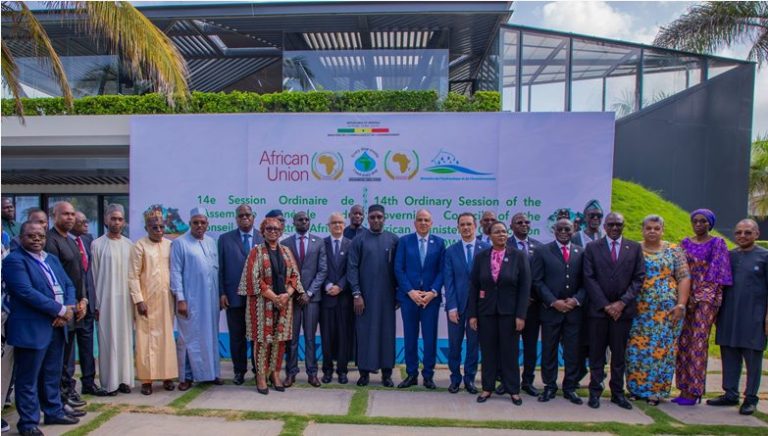
Delegates at the 14th Ordinary Session of the Governing Council of AMCOW, which held on September 29, 2025, in Dakar, the Republic of Senegal
The Africa Water Vision 2063 and Policy seeks to deliver on a set of eight vision statements, namely.
Universal access to safely managed water, sanitation and hygiene services
Sustainable water availability for transformed economies and growing, prosperous populations facing greater climate uncertainty
A thriving blue economy sustainably leverages Africa’s marine resources to drive prosperity, climate resilience, ecosystem protection and well-being
Water governance systems, institutions and transformative leadership grounded in international water law and the principles of subsidiarity, accountability and transparency
Water basins recognise as shared natural assets for enhancing regional integration, peace, social inclusion and political stability
People, economies, and ecosystems are resilient and adequately protected from risks of natural and man-made water-related disasters
Human capital development, technological empowerment and adaptive learning meet the requirements for effective management of Africa’s natural resources base
Investment into legitimised and integrated water information systems supporting science-based decision making for climate resilience and raising the profile of water management and sanitation in national systems for economic planning, investment and financial allocation
The process of formulating the Post-2025 Africa Water Vision and Policy is traced back to the 2022 WASSMO Report when an eight-step roadmap was outlined and adopted.
In February, as a part of the step to ensure high-level political ownership of the vision and commitment to its implementation, the African Union Commission appointed the Reference Group and Sherpas. The main task of the Reference Group was to advise on the central tenets and provide leadership to build broad political consensus on the new Africa Water Vision and Policy. At the technical level, the Reference Group was supported by a team of Sherpas who commenced their work with the formulation of for thematic papers to inform consultations.
Later in February, with strong support from Member States and the AUC, we secured landmark decisions on water and sanitation. During the 38th Ordinary Session of the Assembly, held from February 15 to 16 in Addis Ababa, Ethiopia, the Assembly of the Heads of State and Government of the Union took decisions:
Assembly/AU/Dec.912(XXXVIII) adopting “Assuring Sustainable Water Availability and Safe Sanitation Systems to Achieve the Goals of Agenda 2063” as the African Union Theme of the year 2026.
Assembly/AU/Dec.931(XXXVIII) acknowledging the Republic of Zambia’s leadership to host, from May 27 to 29, 2025, the third African Implementation and Partnership Conference on water and sanitation (PANAFCON-3).
In March and April, AMCOW Statutory Meetings of the Technical Advisory and Technical Experts Committees and Partners provided a platform for consultations at the sub-regional level. These meetings assured the involvement and contribution of all Member States in formulating the new vision and policy.
AMCOW’s leadership changes extended to its Executive Committee and Technical Advisory Committee, with Senegal taking a leading role. Egypt took over the role of chair of the Africa Water Facility (AWF) Governing Council. AWF is an AMCOW initiative hosted by the African Development Bank.
The third African Implementation and Partnership on Water (PANAFCON-3) convened from May 27 to 29, 2025, in Lusaka, Republic of Zambia, provided a platform for reviewing the initial draft of the Africa Water Vision 2063 and Policy. PANAFCON-3 reached consensus on the vision and policy goals. Collectively, political leadership undertook to promote the principles of valuing water and the circular sanitation economy to assure sustainable water availability and safe sanitation systems to achieve the goals of Agenda 2063.
In June, PANAFCON-3 outcomes informed an iterated version of the draft Africa Water Vision 2063 and Policy that was shared with Member States in July.
The months of July and August were dedicated to finalising the Africa Water Vision 2063 and Policy. To ensure continued input in finalising the draft vision and policy, virtual Member States’ meetings were conducted on July 24, 2025, and August 7, 2025. Further, a session on the draft Africa Water Vision 2063 and Policy was convened during the Africa Water Investment Summit, held from August 13 to 15, 2025, in Cape Town, Republic of South Africa. The main objective of the session was to create awareness on the vision and policy.
In September, our energy and focus were devoted to preparation of the 14th General Assembly of AMCOW hosted from September 27 to 29 in Dakar, the Republic of Senegal. Apart from adopting the new Vision and Policy, the General Assembly also approved:
the AMCOW Business Plan 2026 – 2030 to provide a strategic framework for ensuring AMCOW’s financial stability and long-term institutional sustainability;
the AMCOW Strategic Operational Plan 2026 – 2030 which positions AMCOW as a proactive, influential, and practical institution in efforts to achieve water security and sustainable sanitation outcomes in Africa; and,
the Strategic Programme on Groundwater for Water Security and Resilience in Africa 2026 – 2033 to accelerate implementation of APAGroP.
In October, we participated at the 6th Ordinary Session of the Specialised Technical Committee (STC) on Agriculture, Rural Development, Water and Environment (ARDWE) of AUC held from October 21 to 24, in Addis Ababa, Ethiopia. At the STC, AMCOW submitted the Africa Water Vision 2063 and Policy as well as the 2024 Annual Report of the Commission on the implementation of the July 2008 Assembly Declaration on the Sharm El Sheikh Commitments for Accelerating the Achievement of Water and Sanitation Goals in Africa. Consequently, the 6th STC on ARDWE took several decisions related to water and sanitation, as follows:
Took note of the Africa Water Vision 2063 and Policy as adopted by the Sectoral Ministerial Committee on Water and Sanitation (AMCOW) to provide strategic guidance to the resilience building within the water and sanitation sector
Further, took note the 2024 Annual Report of the Commission on the implementation of the July 2008 Assembly Declaration on the Sharm El Sheikh Commitments for Accelerating the Achievement of Water and Sanitation Goals in Africa (Assembly/AU/ Decl.1 (XI)). The report provides the agreed situation analysis and the baseline information for the Africa Water Vision 2063 and Policy.
Recommended the Africa Water Vision 2063 and Policy for endorsement by the 39th Ordinary Session of the Assembly of Heads of State and Government: (i) as a continental implementation framework for achieving the goals of Agenda 2063; and, (ii) as Africa’s Common Position and input to the UN 2026 Water Conference to accelerate the implementation of SDG 6.
Tasked the AMCOW Secretariat, working with the AUC; AfDB; AWF; and the United Nations Economic Commission for Africa (UNECA), and in consultation with Member States to: (i) to develop the First Implementation Plan 2026-2033 of the Africa Water Vision 2063 and Policy (FIP 2026-33) to launch efforts to realise the vision by 2063. And (ii) to organise – on the margins of the 2026 African Development Bank Annual Meeting – an International Conference on Financing the Africa Water Vision 2063 and Policy Implementation Plan 2026-2033.
Requested the President of the African Development Bank to facilitate the hosting of the International Conference on Financing the Africa Water Vision 2063 and Policy on the margins of the Bank’s Annual Meetings in 2026.
Further requested the AU Commission to facilitate the launch of the Africa Water Vision 2063 and Policy at the 39th Ordinary Session of the Assembly of African Heads of State and Government in February 2026.
Requested the AU Commission in collaboration with the AMCOW Secretariat and the African Development Bank to organise for the launch the Africa Water Vision 2063 and Policy Implementation Plan (2026 – 2033) at the International Financing Conference to be hosted on the margins of the AfDB’s Annual Meetings in 2026 for the purpose of mobilising resources.
Requested Member States to: (i) domesticate the Africa Water Vision 2063 and Policy into their national frameworks to facilitate implementation; and (ii) work with Regional Economic Communities to ensure standardisation and harmonisation.
We closed the month of October with an announcement of AMCOW’s appointment as a Regional Coordinator of the 11th World Water Forum Regional Process for Africa. The World Water Council appointed regional processes coordinating institutions for Africa, the Americas, Arab as well as Asia and the Pacific regions. The appointment was based on proven experience, collaboration capacity, and strong commitment to advancing regional perspectives in global water dialogue. AMCOW has always ensured stronger engagement of the AUC, AfDB and members states as well as partners in the preparation for the World Water Forum series.
In November, together with the African Union Commission, through the Directorate of Sustainable Environment and Blue Economy, we convened the 6th African Water and Sanitation Partners’ Coordination Platform (PCP) meeting. The meeting received updates from different eight clusters co-leads on the activities undertaken since 5th Ordinary Session of PCP. The meeting reviewed the draft Action Framework for the Implementation of the AU Theme for 2026 “Assuring Sustainable Water Availability and Safe Sanitation Systems to Achieve the Goals of Agenda 2063”.
A calendar of activities to commemorate the AU Theme for 2026 was also agreed by the partners. One of the key outcomes of the PCP was an agreement to establish a Task Team to facilitate the formulation of a draft First Implementation Plan 2026 – 2033 for the new Africa Water Vision 2063 and Policy.
Finally, in December, we closed the year with our participation at different high-level events at continental and global levels. These include the XIX World Water Congress convened by the International Water Resources Association (IWRA) from December 1 to 5 in Marrakech, Morocco and the International Water Association (IWA) Water and Development Congress and Exhibition 2025 from December 8 to 12 in Bangkok, Thailand. AMCOW used these events to present and create awareness on the new Africa Water Vision 2063 and Policy.
As we conclude the year, we would like to express our gratitude to AUC, through the Directorate of Sustainable Environment and Blue Economy, for the leadership provided in the process of formulating the new vision and policy. The achievements in this year were as a result of the tremendous support and invaluable contributions from:
Excellences the President, Vice Presidents, and Members of the council of Ministers.
the Member States that availed the data used to prepare the knowledge and information materials shared during the events convened.
the African Development Bank through the Africa Water Facility (AWF); the United Nations Economic Commission for Africa; the United States State Department through USAID; Gates Foundation (GF); the European Union and the German Federal Ministry of Economic Development and Cooperation through GIZ; the Global Environmental Facility through the FAO and IWMI; African Civil Society Network on Water and Sanitation (ANEW), AUDA-NEPAD Network of Water Centres of Excellence; the Embassy of Finland in Zambia, the Federal Institute for Geosciences and Natural Resources (BGR), the Limpopo Watercourse Commission (LIMCOM), National Water Supply and Sanitation Council (NWASCO), SARO Agro Industrial Limited, SNV, Sanitation and Water for All (SWA), UNESCO, UNICEF, WaterAid; Wonderful Group, Zambia National Commercial Bank (ZANACO), Zambia Sugar, the Zambezi watercourse Commission (ZAMCOM); and the Zambezi Water Authority (ZRA)
We are now looking forward to 2026, starting with the business of the Union to commemorate the AU Theme for 2026 “Assuring Sustainable Water Availability and Safe Sanitation Systems to Achieve the Goals of Agenda 2063”. The 39th Ordinary Session of the Assembly sets the stage for consideration and endorsement of the Africa Water Vision 2026 and Policy.
As we implement the activities in 2026, we will continue counting on the leadership and support of Member States and the collective ability with partners towards “A Water Secure and Resilient Africa with Safe Sanitation for All”.
Festive periods occupy a strategic place in the marketing calendars of Big Food corporations. National and religious holidays such as Christmas, New Year, Easter, Eid-el-Fitr and Eid-el-Kabir provide predictable moments of heightened consumption, social gathering and emotional openness.
Food and beverage advertising during these periods does not merely promote products. It systematically aligns ultra-processed foods (UPFs) and sugary drinks with socially valued ideas of celebration, convenience and family cohesion.
Across broadcast media, households are routinely depicted marking festive moments with bottles and cans of sugary drinks, otherwise known as Sugar-Sweetened Beverages (SSBs), presented as a natural accompaniment to communal meals.
Humphrey Ukeaja
Digital platforms extend this logic, with social-media influencers framing UPFs such as instant noodles and similar products as appropriate festive purchases or gifts. Outdoor advertising reinforces the message through slogans that equate celebration itself with branded, processed consumption.
Behind these images and cheerful scenes lies a coordinated commercial effort to expand sales and market dominance at the expense of consumers. For instance, in 2023, four of Nigeria’s most profitable beverage firms were also among the top ten spenders on advertising in the country. This sustained marketing investment has helped position Nigeria as one of the world’s largest beverages markets, while normalising soft drinks as part of everyday consumption.
The public health implications of this strategy are inseparable from its commercial success. The same advertising power that normalises frequent consumption also enables Big Food corporations to expand their reach particularly to children, adolescents, and young adults. Products that are high in sugar, salt, and unhealthy fats, nutritionally poor and heavily processed are consistently framed as affordable, convenient and suitable for daily consumption. Marketing narratives of celebration and ease thus function as conduits through which unhealthy dietary patterns are legitimised.
Over time, these patterns reshape consumer and household habits. Children grow up or learn to associate junk food with rewards, fun, and festivity. Similarly, parents facing economic pressure increasingly interpret ultra-processed foods as practical solutions rather than compromises. Traditional foods prepared from fresh ingredients and rooted foods are displaced by packaged alternatives designed for speed and shelf longevity. Meals lose their social and cultural depth and become acts of hurried consumption.
Few notice the trap being set.
The result is a worrying nutrition transition away from traditional, wholesome diets toward unhealthy dietary patterns that fuel the country’s rising burden of noncommunicable diseases (NCDs) such as hypertension, diabetes, cardiovascular disease, and kidney failure. No fewer than 30,000 Nigerians die annually from diabetes alone. The World Health Organisation (WHO) estimates that around 250 Nigerians die daily from diet-related NCDs. Overall, NCDs now account for almost 30 percent of annual deaths in the country, placing enormous strain on families and an already fragile health system.
Many public health experts and advocates now describe the situation as a public health emergency requiring urgent healthy food policies to protect public health and strengthen the health sector.
It is against this backdrop that the Senate’s public hearing on increasing the Sugar-Sweetened Beverage tax, with proposals to earmark the revenue for public-health interventions, becomes critically important. Supported by the Coordinating Minister of Health and Social Welfare, Professor Muhammad Ali Pate, the initiative represents a necessary step towards protecting population health.
At its current rate of N10 per litre, Nigeria’s SSB tax is far too weak to discourage excessive consumption. Evidence from countries such as Mexico shows that taxes set at 20–50 per cent of retail price can significantly reduce sugary-drink intake and contribute to lower rates of obesity and other NCDs. When properly earmarked, such revenue can strengthen primary healthcare, support nutrition education and fund long-term disease-prevention programmes.
Even so, taxation alone cannot address the full scope of the problem.
Nigeria must also adopt mandatory Front-of-Pack (FOP) nutrition labelling on ultra-processed foods, allowing consumers to quickly identify products high in sugar, sodium or unhealthy fats. Such clear and visible warnings are especially important during festive periods, when marketing pressure is at its peak and purchasing decisions are emotionally driven.
Restrictions on junk food marketing to children are equally urgent. This includes banning cartoon characters on packaging, prohibiting promotions in schools and child-focused events, and limiting festive giveaways aimed at young audiences. Countries such as Chile have implemented these measures with measurable success, significantly reducing children’s exposure to unhealthy food marketing.
Individual choices will always play a role. Traditional beverages can replace sugary drinks. Homemade snacks can displace packaged alternatives. Freshly prepared meals can reclaim space at the table.
But personal responsibility has limits.
Families cannot reasonably be expected to outsmart billion-naira marketing campaigns designed to exploit moments of faith, celebration and togetherness. When unhealthy products are cheaper, more visible and more aggressively promoted than nutritious food, the playing field is fundamentally unequal.
This is why decisive public policy is essential. Strengthening the SSB tax, introducing Front-of-Pack labelling and restricting junk-food marketing to children are not punitive measures; they are evidence-based tools to correct market failures and protect public health.
Nigeria already carries a heavy and growing burden of diet-related diseases. Without urgent action, today’s festive excesses will become tomorrow’s medical emergencies, paid for by families, communities and an overstretched health system.
Our holidays should nourish our bodies as much as they uplift our spirits. Government has both the authority and the obligation to ensure that corporate profit does not come at the expense of children’s health.
By Humphrey Ukeaja, healthy food advocate and Industry Monitoring Officer at Corporate Accountability and Public Participation Africa (CAPPA)