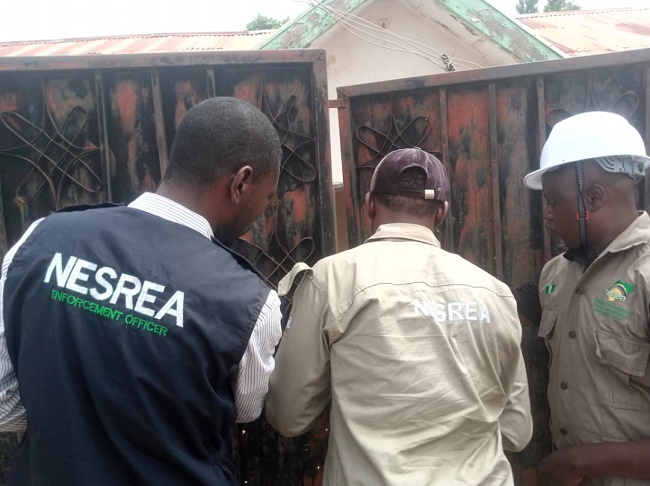
The National Environmental Standards and Regulations Enforcement Agency (NESREA) has sealed the Sunseed Oil facility in Zaria, Kaduna State, over excessive air emissions.
A statement issued on Tuesday, December 30, 2025, by Mrs. Nwamaka Ejiofor, Assistant Director of Press at NESREA, said the enforcement followed reports of persistent air pollution from the facility, in clear violation of the National Environmental (Air Quality Control) Regulations.
Ejiofor explained that the regulations require industries to install pollution abatement equipment and adopt cleaner production processes to minimise environmental harm.
Officials of NESREA during a shutdown operation
She noted that the severity of the emissions posed an immediate threat to the surrounding ecosystem and the health of nearby residents, necessitating the closure of the facility.
According to her, the action underscores NESREA’s commitment to ensuring industrial compliance and protecting the public from the hazardous effects of unregulated industrial discharges, including air pollutants and effluents.
Meanwhile, the Director-General of NESREA, Prof. Innocent Barikor, warned industrial operators to comply fully with national environmental regulations, stressing that activities that negatively impact public health and the environment would not be tolerated.
Many key events defined the outgoing year for Nigeria, affecting individuals, groups, and the nation at large.
Looking back, some Nigerians recall 2025 with mixed memories, as the high cost of living persisted, largely due to major economic reforms.
Others, however, noted glimmers of hope, suggesting that the worst of the economic pressures may be easing.
Aliko Dangote
On the domestic front, Nigeria experienced cautious economic recovery, with macroeconomic indicators showing modest improvement.
Industrial developments, most notably the ongoing impact of the Dangote Refinery, reshaped energy markets and fuel supply chains.
At the same time, the global stage remained turbulent, with trade tensions, geopolitical shifts, and international events influencing domestic policy and public sentiment.
‘Cautious economic recovery’, resurgence of insurgency
If 2024 was the year Nigeria had to swallow the bitter pill of economic reforms, some say 2025 was a year of “cautious economic recovery,” characterised by stabilising macroeconomic indicators.
Statistics show that the economy grew by 3.98 per cent in Q3 2025, a slight increase from 2024 but still below the government’s 4.6 per cent target.
Also, headline inflation saw a significant decline. By June 2025, it dropped to 22.22 per cent (down from over 34 per cent in 2024), according to the National Bureau of Statistics (NBS).
However, food inflation remained a primary concern for many households, as over 33 million people were projected to face “crisis-level” food insecurity during the 2025 lean season, a 32 per cent increase from 2024.
Mass kidnappings and insurgency saw many killed by terrorists and bandits, including in Kwara.
November 2025 saw over 200 students and teachers taken from a school in Niger, leading to the temporary closure of thousands of schools across the North-West.
Between June and October, flash floods affected 115 local governments, displacing 129,000 people and destroying roughly 761,000 hectares of cropland.
Dangote’s many battles with oil marketers, regulators
After beginning operations in 2024, the Dangote Refinery was initially forced to source crude from international markets following the dispute with the NNPCL over a crude supply deal.
For the first time in decades, Nigeria saw a dramatic collapse in its reliance on foreign fuel, but after the supply disagreement was resolved, another crisis regarding marketing and retail arose.
2025 was defined by a public and often heated “tug-of-war” over fuel pricing between the refinery, the NNPCL, and independent marketers.
A landmark agreement was reached for the refinery to supply PMS directly to the Independent Petroleum Marketers Association of Nigeria (IPMAN), which controls 80 per cent of retail outlets
The battle consumed the Chief Executive Officer of the Nigerian Midstream and Downstream Petroleum Regulatory Authority (NMDPRA), Farouk Ahmed.
It has also led to a “positive price war”, which has seen both Dangote and the NNPCL slash petroleum prices.
Mass defection to ruling party: One-party state?
In 2025, the Nigerian political landscape saw a significant “tsunami” of defections as the ruling All Progressives Congress (APC) aggressively expanded its control.
As of December, five sitting governors had officially decamped to the APC from opposition parties. This wave has shifted the balance of power, giving the APC control over 27 out of the 36 states.
The “gale of defections” also swept through the legislative arm, as 12 senators and 32 members of the House of Representatives decamped officially to the APC.
This migration primarily depleted the Peoples Democratic Party (PDP) and the Labour Party (LP), shifting the senate’s power balance from a simple majority to a “super-majority.”
While some say the action could lead Nigeria to becoming a one-party state and endanger democracy, others argue that it was the ruling party merely consolidating its popularity.
Eagles’ World Cup dream shattered spectacularly!
Nigeria’s senior men’s football team, the Super Eagles, failed to qualify for the FIFA 2026 World Cup to be hosted by the U.S., Canada, and Mexico.
After a dodgy and unconvincing qualifying campaign, the team managed to make it to the African playoff stage, having finished second in Group C behind South Africa.
Four teams – Cameroon, Gabon, Nigeria, and the Democratic Republic of the Congo – slugged it out to decide which nation would progress to the FIFA intercontinental playoff tournament in March 2026.
Having defeated Gabon 4-1 in their first playoff game in Morocco, the Super Eagles fell to the DRC on penalties after playing an uninspiring 1-1 draw in regulation time.
The result meant that Nigeria’s wait for its next World Cup participation since Russia 2018 continues.
Much ado about new tax laws
On June 26, 2025, President Bola Tinubu signed four landmark tax reform bills into law. The laws are expected to take effect from Jan. 1, 2026.
For many reasons, the laws have been one of the most controversial talking points of 2025.
Some companies, businesses, and individuals worry that it would lead to indiscriminate access to their bank accounts and finances.
However, the government said the laws aim to overhaul the Nigerian tax system to improve efficiency, streamline administration, and boost revenue.
On the continent of Africa, there was a surge in military takeovers, with notable coups in Guinea-Bissau and Madagascar.
Benin Republic thwarted an attempted coup in December, highlighting a broader trend of democratic erosion, insecurity, and political instability, especially in West Africa and the Sahel region.
It wasn’t all gloom and doom for the continent, though, as 2025 saw the continent host its first-ever G20 Summit, a heavy election calendar, and major steps towards continental integration.
Trump’s global trade war, Nigeria’s redesignation as CPC
In one of the most consequential turns of events in 2025, U.S. President Donald Trump kicked off his second coming with an unprecedented signing spree of executive orders.
Trump signed 46 documents, listed on the White House website, including 26 executive orders, 12 memoranda, and four proclamations on his first day in office.
He has since signed a total of 141 executive orders since returning to the presidency in January, including enacting steep tariffs, ending birthright citizenship, curbing DEI and “gender radicalism”, and pardoning January 6 rioters.
His orders on trade and the imposition of additional trade tariffs on friends and foes alike sparked a global trade war, which has not been completely resolved.
The American president sparked a bitter debate when he announced that he was redesignating Nigeria as a Country of Particular Concern (CPC) as a result of what he called serious violations of religious freedom.
A few days later, he threatened that he would consider potential military action to protect Nigeria’s perceived embattled Christians.
Trump might consider himself a dealmaker, and even promised to end the Russia-Ukraine conflict within 24 hours of his presidency.
However, he is yet to resolve both that and the Middle East conflict, which at various stages involved Israel, Palestine, Lebanon, and Iran.
In other parts of the world, following the death of Pope Francis, Cardinal Robert Francis Prevost was elected as Pope Leo XIV in May, becoming the first American to lead the Roman Catholic Church.
2025 also saw massive “Gen Z”- led protests across the globe, most notably in Nepal, where Prime Minister K.P. Sharma Oli was ousted.
One of the most tragic and significant global events of late 2025 was the Bondi Beach mass shooting in Sydney, Australia, on Dec. 14.
Two gunmen, identified as Sajid Akram (50) and his son Naveed Akram (24), initiated the assault, killing 15 people and injuring over 40 others.
The 2025 UN Climate Change Conference (COP30) in Belém, Brazil, attracted one of the largest turnouts in COP history, with over 56,000 registered delegates.
While the United States did not send an official federal delegation for the first time, state-level representatives attended in alternative capacities.
China, contrary to some reports, was represented by a sizeable, high-profile delegation, actively participating in negotiations and side events.
Observers noted that, albeit strong attendance, some political commitments; especially on fossil fuel phase-outs and climate finance, fell short of expectations.
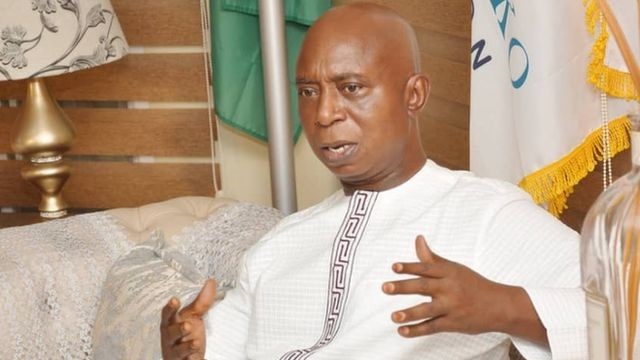
Sen. Ned Nwoko (APC-Delta) on Tuesday, December 30, 2025, tackled the management of the Niger Delta Development Commission (NDDC), over long-standing infrastructure deficit in Delta State.
The management of the NDDC led by its Managing Director, Dr Samuel Ogbuku, had appeared before the Senate Committee on Niger Delta Development Commission to defend its 2025 budget expenditure.
However, Nwoko, representing Delta North Senatorial District, used the opportunity to raise concerns over a critical road infrastructure project in Delta, which, in spite of being appropriated in the previous budget, had yet to take off.
Senator Ned Nwoko
“Mr. MD, when you last appeared before this committee, a matter of great importance to my constituents, and indeed Delta, was raised.
“I refer to the road project traversing Oko, Abala, Utchi, Okpai, Aboh, Asaba-Ase, down to Patani. This project was clearly captured in the last budget, yet to date, no tangible progress has been recorded,” he said.
He emphasised the strategic and humanitarian importance of the project, noting that it was conceived not merely as a transport corridor but as a flood-control intervention for vulnerable communities.
According to him, we are all aware of the strategic value of coastal roads. This particular design was meant to incorporate embankments capable of preventing floodwaters from encroaching into hinterland communities and endangering lives.
“This is a project with direct social impact, that would significantly improve livelihoods. Unfortunately, in spite of its inclusion in the budget, nothing has happened.”
The lawmaker further said that the issue would be raised during closed-door with the commission, as the committee subsequently resolved to continue deliberations in the executive session.
Earlier in his presentation, Ogbuku, disclosed that as of Oct. 31, the commission’s actual revenue stood at N1.985 trillion, surpassing the projected N1.911 trillion recorded between April 2024 and September 2025.
He explained that it represented a performance level of 104 per cent, and attributed the improved revenue outcome largely to the extension of the 2024 budget implementation to Dec. 31.
The MD also explained that the proposed 2025 budget, christened the “Budget of Consolidation,” was pegged at N1.75 trillion, reflecting a nine per cent reduction from the 2024 figure.
According to him, the downward adjustment is informed by a deliberate no-borrowing policy adopted by the commission.
At the commencement of the session, Nwoko drew attention to the recent passing of the former Chairman of the Committee, late Sen. Peter Nwaoboshi.
He moved a motion for a minute’s silence in his honour, which was adopted by the committee.
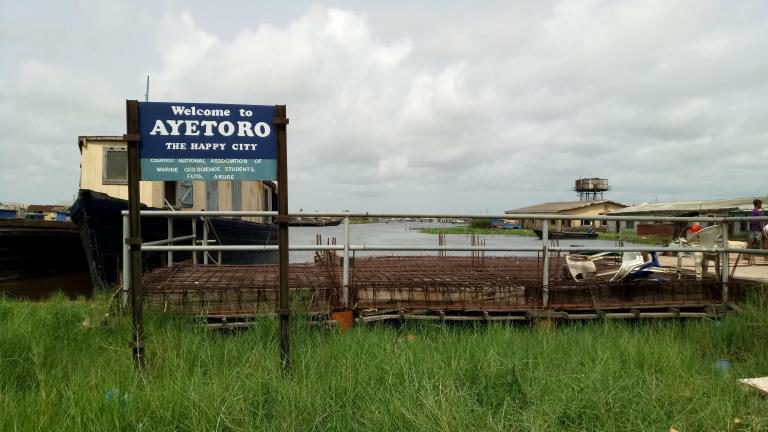
The Ondo State Oil Producing Area Development Commission (OSOPADEC) says it will intervene in the reclamation of Ayetoro community being ravaged by sea incursion if the Federal Government fails.
Chairman of OSOPADEC, Mr. Biyi Poroye, made the pledge on Tuesday, December 30, 2025, in Akure, the Ondo State capital, during a news conference on his six-month leadership at the commission.
Poroye said every community in the coastal area of Ilaje and Ese-Odo Local Government Area would be reclaimed.
The coastal city of Ayetoro in Ondo State has been ravaged by ocean surge
“Within three years, we can reclaim the entire area but we need more money and the sand we even need is in the sea.
“Reclamation of Ayetoro and other communities will be done. And there is no big deal about it since we know what to do.
“We are aware that Federal Government has interest in it and has been on this for sometimes.
“We are of the opinion to give them some time, but if they fail to implement what they have for us by next year, we will start the project.
“We have to save Ayetoro because if Ayetoro fails, the entire area is gone. Even our water project in Aboto is already tasting salty,
“So, we are cautious of this reality that Ayetoro must be saved and protected to save the entire area,” he stated.
The chairman said the reclamation project of Obe Nla Community in Ese-Odo Local Government Area had been approved by Gov. Lucky Aiyedatiwa.
Poroye added that the commission was in the process of awarding the project to a contractor.
According to him, it is incumbent on the commission to make its requests known to the governor for approval and disbursement.
“In the past, most governors did not spend the money meant for the commission and it was as if Ilaje and Ese Odo were not part of the state.
“It was only Adefarati and Agagu that were excepted.
“We now have a governor that has dedicated a bank account for the commission’s money.
“What we need to do is to make a request and he approves it. He ensures that what is fair to one is fair to all,” he said.
According to him, the commission will continue to partner with interventionist partners for seamless implementation of various projects in the coastal area.
The chairman explained that all achievements recorded in the last six months could be attributed to timely approval of all requests made available to the governor.
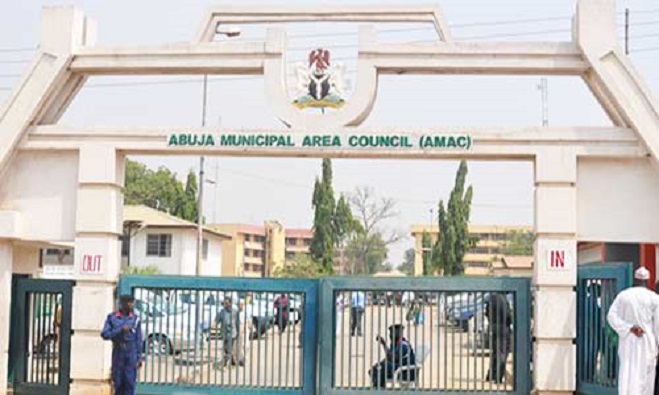
The Abuja Municipal Area Council (AMAC) has declared that payments for environmental health services to the FCTA or unauthorised bodies are invalid.
Mr. Kingsley Madaki, the Senior Special Assistant on Media and Public Affairs to the Executive Chairman of AMAC, said this in a statement in Abuja on Monday, December 29, 2025.
According to the statement, by this development, the council is asserting its exclusive legal right to collect these revenues from residents and businesses.
Abuja Municipal Area Council (AMAC)
It explained that the directive is rooted in the 4th Schedule of the 1999 Constitution, which vests the regulation of social and environmental services in local government authorities.
The statement stressed that AMAC retained the sole authority to manage and collect revenue for specific environmental activities.
These include sanitary inspections for facility fitness, pest control services like fumigation, and food and water safety protocols, including medical screenings for handlers.
Additionally, the Council oversees permits for car washes, laundries, and public conveniences.
AMAC raised the alarm over reports of impostors posing as FCTA agents to divert local government revenue.
“In response, the newly formed AMAC Environmental Cadet officials are launching comprehensive enforcement sweeps to eliminate these fraudulent activities.
”To stay protected, business owners are urged to verify the credentials of any inspector and immediately report individuals soliciting cash.
“The council stresses that all legitimate payments must be processed exclusively through authorised AMAC revenue accounts to ensure legal compliance,” the statement said.
It added that to combat fraud, AMAC had implemented a Single Account policy, which emphasized that payments must be made into the council’s designated bank accounts.
”Any payments made to the FCTA Public Health Department or any other organisation shall be rendered invalid.
“Such payments will not be recognised as proof of compliance, and the payer shall be liable for default,” it warned.
AMAC also warned that anyone paying unauthorised agents would do so at their own risk and would still be held liable for non-compliance under AMAC its bylaws.
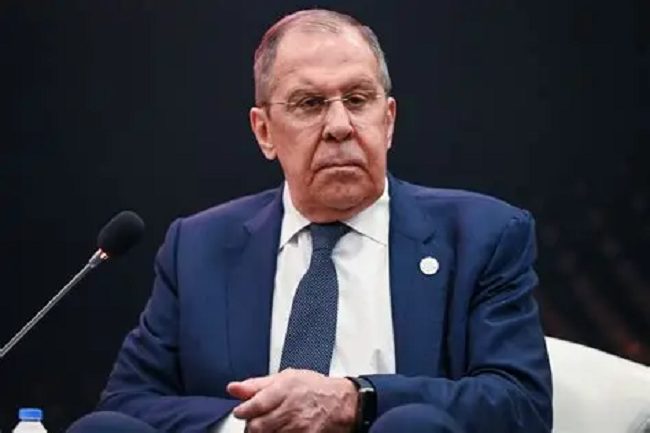
The Foreign Ministers of Russia and African states agreed on a joint action plan from 2026 to 2029 aimed at strengthening cooperation in trade and environmental protection.
The agreement was reached during the second ministerial conference of the Russia-Africa Partnership Forum in Moscow, according to a report on the website of the Ministry of Foreign Affairs of the Russian Federation, carried by TV BRICS.
The conference, the report said, was attended by heads and representatives of the foreign policy agencies of 52 African states and executive bodies of eight regional integration associations.
Head of the Russian Foreign Ministry, Sergey Lavrov
Key events of the forum included a meeting between the Head of the Russian Foreign Ministry, Sergey Lavrov, and the President of Egypt, Abdel Fattah El-Sisi, as well as a joint press conference by the Foreign Ministers of Russia and Egypt.
The conference was attended by heads and representatives of the foreign policy agencies of 52 African states and executive bodies of eight regional integration associations.
Key events of the forum included a meeting between the Head of the Russian Foreign Ministry, Sergey Lavrov, and the President of Egypt, Abdel Fattah El-Sisi, as well as a joint press conference by the Foreign Ministers of Russia and Egypt.
The ministers participating in the forum conference agreed on the implementation of joint projects and on strengthening cooperation in environmental protection and climate, education, healthcare, culture, sport, youth policy, trade and the media.
Following the conference, a joint statement was adopted reflecting common approaches to addressing global challenges.
A number of bilateral documents were also signed during the event.
“We have grounds to state that the conference held has created a solid foundation for the high-quality preparation of the third Russia–Africa Summit, scheduled for 2026,” Lavrov was quoted as saying on the social media accounts of the Russian Foreign Ministry.
Over two days of the forum conference, the Russian delegation took part in more than 20 meetings and events.
The Minister of Foreign Affairs of Russia held bilateral talks with his African counterparts from the Republic of the Congo, Burundi, Tanzania, Botswana, Namibia, Togo, Equatorial Guinea, and The Gambia.
The others are the Foreign Affairs ministers of Mauritania, Malawi, the Seychelles, Rwanda, Egypt, Algeria, Zimbabwe, Tunisia, South Sudan, and the Economic Community of West African States.
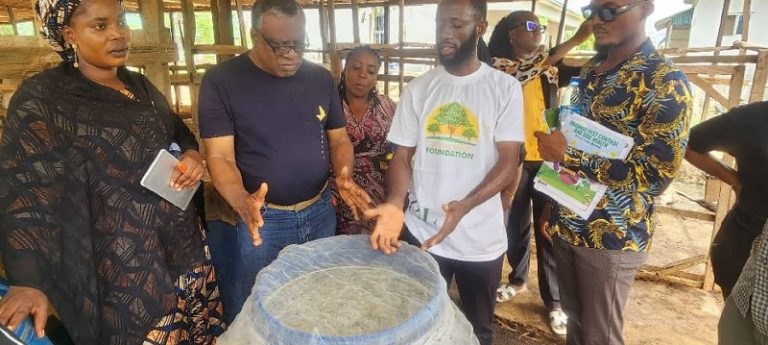
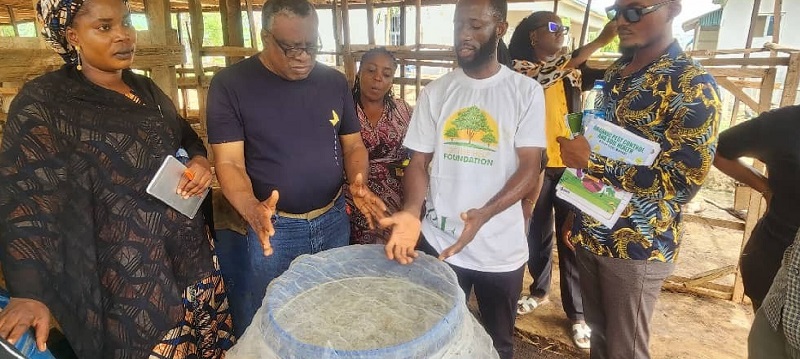
Across farming communities in the Federal Capital Territory (FCT), Benue, Kogi, Enugu and Imo states, a quiet but growing shift is taking place. Smallholder farmers many of them women are increasingly adopting organic pest control and soil health practices after participating in step-down agroecology trainings supported by the Heinrich Böll Stiftung (HBS).
The trainings, conducted between May and October 2025, were delivered by over 15 facilitators who had earlier undergone a Training-of-Trainers programme on an Organic Pest Control and Soil Health Manual. The facilitators then returned to their communities to translate the manual into practical, hands-on learning tailored to local realities.
Step-down agroecology trainings were supported by the Heinrich Böll Stiftung (HBS)
From Training Rooms to Farmlands
According to facilitator reports submitted across multiple states, the step-down trainings focused on composting, organic pest control using locally available materials such as neem and garlic, crop rotation, mulching, and liquid bio-fertilisers.
In Ajaokuta, Kogi State, Cynthia Shaibu, a vegetable farmer, reported early changes on her farm after adopting organic methods.
“The organic pest control did wonders for me,” Shaibu said. “My okro plant that usually experiences pest diseases was well taken care of after the application of our organic pesticides.”
Also in Ajaokuta, another beneficiary, Ibrahim Adejoh Arome, reported improvements in both yield and crop quality.
“The organic fertiliser did well for my corn this year,” he said. “The harvest improved and the quality of crops largely improved.”
In Aninri Local Government Area of Enugu State, a woman farmer who participated in the training described an outcome she said she had never experienced before.
“My corn was doing so good and had four cobs on a stem, which I have never experienced,” she said.
Interest Spreads Beyond Initial Trainees
Beyond direct participants, facilitators documented increasing interest from neighbouring farmers and community members who were not originally part of the target groups.
In Gasaki community along the FCT–Nasarawa axis, a retraining session originally meant for a small group expanded significantly after visible results were observed on beneficiaries’ farms. The retraining was led by a beneficiary and attracted more than 50 people, including observers from surrounding farms.
Participants from the Gasaki community reported that the accessibility of materials helped drive acceptance.
“The ingredients were familiar and easy to get, which made acceptance and adoption much easier,” beneficiaries said.
In Makurdi, Benue State, farmers began applying the manual even before in-person training sessions were held, after receiving soft copies through WhatsApp groups.
“We shared the manual with others on WhatsApp, and some people started using it even before the physical meeting,” participants in Makurdi reported.
In Shishipe Village, Bwari Area Council of the FCT, youth participants organised as Community Green Ambassadors reported that their improved farm performance drew interest from other villagers.
“After seeing the results, other farmers around us wanted to learn how to prepare the organic pesticides,” youth participants in Shishipe Village said.
Health, Cost and Safety Driving Adoption
For many women farmers, health and safety considerations were a major reason for adopting agroecological practices.
In Gwagwalada Area Council of the FCT, Yusuf Princess, a smallholder farmer, said organic solutions offered a safer alternative to chemicals.
“The neem-based solution was cost-effective and safer to handle compared to the synthetic pesticides I used before,” she said.
In Owerri, Imo State, a woman trainee reflected on the satisfaction of harvesting chemical-free produce.
“The joy in harvesting fresh produce without any chemical application was more than massive,” she said.
Farmers along the Chukuku–Kuje axis of the FCT also reported changes in crop performance and soil condition.
“We noticed obvious changes in the colour of the leaves, especially vegetables, and an increase in the size of cassava and maize stems,” women trainees in the area said.
Several beneficiaries also pointed to reduced production costs due to lower dependence on chemical inputs.
A Model Showing Signs of Scale
Facilitator reports indicate that several beneficiaries went on to train between two and ten additional farmers each, often family members, neighbours or members of cooperative groups. This peer-to-peer spread has emerged as one of the most notable outcomes of the programme.
In Enugu State, beneficiaries described a broader mindset shift associated with the transition.
“Eating healthy is all about having an organic farm,” a woman farmer in Aninri LGA said.
Similarly, women farmers across communities in the FCT reflected on initial scepticism about organic methods.
“At first we doubted organic methods because chemicals work faster,” they said. “But after seeing the results, we believed.”
Implications for Nigeria’s Food System
With smallholder farmers estimated to produce more than 70 per cent of Nigeria’s food, analysts say the methods used at household and community levels have far-reaching implications for national food security. Beyond commercial production, the ability of families to grow all or part of their food plays a critical role in improving nutrition, ensuring safer food, and cushioning households against rising food prices.
Facilitator reports from the agroecology trainings suggest that organic pest control and soil health practices are increasingly being adopted not only for income generation, but also for household consumption. Several beneficiaries reported prioritising chemical-free produce for their families, citing health concerns and the rising cost of synthetic inputs.
In Owerri, Imo State, a woman trainee described the satisfaction of harvesting food grown without chemicals.“The joy in harvesting fresh produce without any chemical application was more than massive,” she said.
Observers note that when such practices are adopted across households and communities, they help reduce exposure to harmful agro-chemicals, improve dietary diversity, and augment household food supply and income. In the aggregate, this can contribute to improved food availability, better nutrition outcomes, and greater resilience particularly in rural and peri-urban areas.
While the step-down trainings directly reached several hundred farmers, facilitators reported that interest now exceeds the scope of the initial programme, with increasing demand for follow-up sessions, demonstration farms and expansion to additional communities.
As Nigeria searches for more resilient and sustainable food systems, the changes unfolding quietly on farms across these states point to a growing grassroots movement led not by policy mandates, but by farmers themselves.
By Donald Ikenna Ofoegbu, Heinrich Böll Stiftung (HBS), Abuja
The Nigerian Meteorological Agency (NiMet) has predicted a sunny and cloudy atmosphere from Monday, December 29 to Wednesday, December 31, 2025, across the country.
The NiMet’s weather outlook released on Sunday, December 28, in Abuja, envisaged sunny skies over the northern region throughout the forecast period.
According to MiMet, sunny skies with a few patches of clouds are anticipated over the central region throughout the forecast period.
Cloudy weather
The agency anticipated sunny skies in the southern region with patches of clouds over the region.
It forecasts prospects of isolated thunderstorms with light rains over parts of Rivers, Bayelsa, Akwa Ibom, Cross River, Edo, Delta, Ondo, Lagos, Ogun, Oyo, Imo, Abia and Osun states later in the day.
”For Tuesday, sunny skies are anticipated over the northern region throughout the forecast period and sunny skies with a few patches of clouds over the central region during the forecast period.
”Sunny skies with patches of clouds are anticipated over the southern region with prospects of isolated thunderstorms.
”Light rains are anticipated over parts of Abia, Edo, Ogun, Ondo, Delta, Lagos, Rivers, Akwa Ibom, Cross River and Bayelsa states during the afternoon or evening hours of the day,” it said.
The agency envisaged a sunny and hazy atmosphere on Wednesday over parts of Jigawa, Yobe and Borno states of the northern region with the rest of the region to be sunny throughout the forecast period.
It also anticipated light rains over parts of Anambra, Oyo, Edo, Ogun, Ondo, Delta, Lagos, Rivers, Akwa Ibom, Cross River and Bayelsa states later in the day.
“Driving under rain should be with caution. Airline operators are advised to get airport-specific weather reports (flight documentation) from NiMet for effective planning in their operations.
“Residents are advised to stay informed through weather updates from NiMet. Visit our website (www.nimet.gov.ng),” it said.
UNESCO has reiterated its commitment to conserving Nigeria’s biosphere reserves, ensuring environment presevation and discouraging human activities that fuel climate change across communities.
Dr Jean-Paul Abiaga, Head of Office, UNESCO Abuja and the organisation’s representative in Nigeria, said this in an interview on Monday, December 29, 2025, in Abuja.
He said that UNESCO was conserving biosphere reserves, particularly Oban in Cross River, Omo in Ogun State, and Shere Hills in Plateau State.
UNESCO is conserving biosphere reserves in Ogun, Cross River and Plateau states
He explained that a biosphere referred to the global sum of all ecosystems, including all living organisms and their interactions with the environment. Abiaga added that UNESCO had engaged communities in the Oban, Omo and Shere Hills biosphere reserves in biodiversity business training.
A biosphere, according to the organisation, refers to the global sum of all ecosystems, encompassing all living organisms and their interactions with the environment.
The UNESCO representative said they had engaged in biodiversity business training for Oban Biosphere Reserve, Omo Biosphere Reserve and Shere Hills Reserve communities.
“The training is entitled Biodiversity Business in Oban Biosphere Reserve, Omo Biosphere Reserve and Shere Hills Reserve, Nigeria: A Means to Poverty Reduction, Biodiversity Conservation and Sustainable Development in Nigeria.
“UNESCO received $1 million from India-UN Partnership Fund to implement the Biodiversity Business Project in three sites across Nigeria.
“The objective of the project is to support youth, women and local communities to develop biodiversity-related businesses,” Abiaga said.
Speaking on the training for Omo communities, he recalled they selected ten communities to train them in piggery and fish farming biodiversity businesses.
According to him, the goal is to help them create alternative source of livelihood that generate income while protecting the environment.
Abiaga also said that the biodiversity businesses training aligned with UNESCO’s global priority to create a balance between biodiversity protection and sustainable livelihoods.
“This project combines environmental protection with income generation, which supports the UN target of protecting 30 per cent of global biodiversity on land and sea.”
He said UNESCO hoped to scale up the project and continue collaborating with the Ogun State government, other states and private sector who shared the same interest.
He mentioned that the programme which held between Nov. 10 and Nov 15 in Ogun, was implemented in collaboration with Forestry Research Institute of Nigeria, National Park Service, the Nigerian Committee of Man and Biosphere Reserve.
The biodiversity businesses training is part of UNESCO’s Man and the Biosphere (MAB) programme, an intergovernmental scientific programme aimed at establishing a scientific basis for enhancing the relationship between people and their environment.
The programme combines the natural and social sciences with a view to improving human livelihoods and safeguarding natural and managed ecosystems.
It promotes innovative approaches to economic development that are socially and culturally appropriate and environmentally sustainable.
Preliminary report on chronic kidney disease (CKD) research conducted in Yobe State has indicated heavy metal presence in samples of water consumed by residents of Gashua town.
Prof. Mahmoud Maina, the Lead Researcher and Director, Biomedical Research and Training Centre (BioRTC), Yobe State University, Damaturu, disclosed this in an interview in Damaturu, the state capital, on Monday, December 29, 2025.
Gashua, Jakusko and other communities along the Yobe River are badly hit by decades-old renal failure burden, which has resulted in high mortality and morbidity rates in the areas.
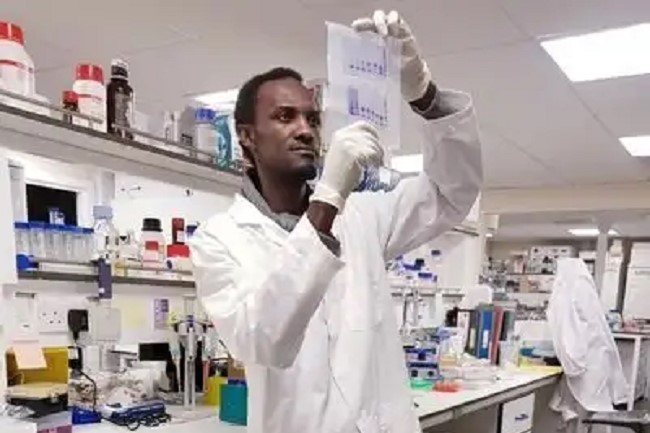
Prof. Mahmoud Maina, the Lead Researcher and Director, Biomedical Research and Training Centre (BioRTC), Yobe State University
Maina, a neuroscientist and Adviser to Gov Mai Mala Buni on Science, Research and Innovation, noted that metals like cadmium, lead and arsenic were potential triggers of CKD and should not be near the environment in normal circumstances.
“If you find them close to your environment, then know that they can result in not only kidney disease but also other conditions like cancer and dementia,” he said.
The director said the report also revealed that CKD was significantly driven by known conditions like diabetes and hypertension, adding that fishermen in the area were mostly affected by the disease as compared to others.
He said BioRTC, in collaboration with a 50-man team of scientists from US, UK, Ghana, among others, collected over 3,000 human and environmental samples, including urine, blood, food items, farm soil, river and borehole water for the research.
The director listed the experts who participated in the state government-sponsored research to include nephrologists, geologists, chemists, physicians, geneticists and environmental scientists.
Maina, the recently turbaned “Shettima Ilmube” of Damaturu Emirate Council, however, emphasised that a more detailed and comprehensive report on the research would be made available in January 2026.
On dementia research recently launched by the centre in Damaturu, he said, life style information, blood samples and skin biopsies of 1,200 high risk individuals were collected for genetic analysis and screening for biomarkers.
Dementia is a condition associated with memory loss that gradually progresses into confusion, hallucination and the inability to manage oneself.
According to Maina, although dementia is associated with aging, it is not a normal part of aging.
The director said through the Induced Plurepotent Stem Cells (iPSCs) technology, tissue samples could be used to analyse dementia, especially in the absence of brain donors.
“If you collect a small pinch of tissue or even blood, you can go into the laboratory and convert these into stem cells. We can then further convert these stem cells into brain cells.
“Then we can now grow the brain cells using those ones, and these brain cells will have similar biology and property as the individual that gave us the donation of the skin biopsy.
“This means that if a person is at risk of dementia, we can test in his cells how to understand the risk and to prevent it as if it is happening in him, but without him giving us his brain,” Maina said.
He described the iPSCs as an essential technology through which drugs could be developed and prescribed for the treatment of dementia and other conditions in the near future.
The director said the centre decided to embark on dementia research as a proactive measure against the condition, which, according to recent studies, could surge by 300 percent in Africa in the next 25 years.
“The financial burden of dementia, globally, is also over $3 trillion. It will be more crippling to Africa than the West.
“This is why some people say dementia is worse than cancer because you can still remember and pray even on your sick bed. You can say your prayer before you die.
“But for dementia, you can stop being in this world decades before you are gone,” Maina said.
He commended the Buni-led administration for providing operational funds to the BioRTC, sponsoring its staff for foreign training and constructing the centre’s permanent office accommodation, which would be inaugurated in January.
The director said BioRTC was founded by him in 2021 with support from officials of the university and state government, adding that the centre had trained over 1,000 scientists on research and innovation since its establishment.
Maina, a visiting Prof. at University of Sussex, England, said through his foreign contacts, BioRTC had attracted funds for research and N6 billion worth of equipment, including high-end laser confocal microscopes and circular dichroism machine.
He identified corruption within and outside academia, inadequate funding and equipment as some of the drawbacks of research and innovation in Nigeria and other African countries.
The director, therefore, called on government and philanthropists to embrace the culture of supporting research and innovation financially, and promote talented scientists whose inventions could attract funding and investments.
“This will lead to solving societal problems; showing the value of science, increasing the visibility of our impact and make us among the power houses,” he said.