Home Blog Page 3

Govt targets November completion of coastal highway section 2

Section Two of the Lagos-Calabar Coastal Highway is expected to be completed by November 2026, while Section One is substantially completed and ready for inauguration.

The Minister of Works, Sen. Dave Umahi, disclosed this while speaking with journalists during an inspection tour of the highway project on Wednesday, May 6, in Lagos.

He said that some ongoing works, including flyovers, underpasses and interchanges being observed on the corridor, belonged to section two of the project.

Dave Umahi
Minister of Works, Sen. Dave Umahi, addressing journalists at the handover of order for reconstruction of Carter Bridge to China Civil Engineering Construction Corporation, on Wednesday in Lagos

“Some of the works you are seeing, such as underpass, overpass and the interchange, belong to section two.

“Section one does not have any flyover. You may be asking why we say it is ready while flyover construction is still ongoing. Those works belong to section two,” Umahi said.

The minister also said that about 200m of pavement had been intentionally left unfinished due to soil settlement concerns.

“We have been checking settlement there, and it is settling very fast. We do not want to take chances.

“If after two weeks we are not satisfied with the settlement, we will put flexible pavement there temporarily for one year before replacing it with rigid concrete pavement,” he said.

According to him, rigid concrete pavement does not tolerate settlement because it can crack.

Umahi said that only minor works such as shoulders and landscaping remained on section one.

He expressed satisfaction at the quality of work by the contractor, Hitech Construction Company, and praised President Bola Tinubu for initiating legacy infrastructure projects across the country.

“We are doing the same in Sokoto, Kebbi, Badagry, Oyo, Cross River, Akwa Ibom, Ebonyi, Benue, Kogi, Jos, Gombe and Biu.

“These legacy projects are spread across the six geopolitical zones, and it shows that the president is fair,” he said.

Umahi added that by November, the coastal highway construction would have reached the Ogun/Lagos border.

He noted that the highway  construction was also progressing on the Ogun/Ondo axis.

“Before this time next year, motorists will be able to drive all the way to Ondo, while work on the Edo section will  commence,” he said.

He assured Nigerians that roads constructed under the current administration were designed to last  for between 50 years and 100 years.

The Federal Controller of Works in Lagos, Mr. Olufemi Dare, said that 47km Section One of the coastal highway was 98 per cent completed.

“The remaining works within the next two weeks are mainly tree planting and walkways.

“I can confidently say that this project is completed and ready for commissioning,” he said.

The Director of Bridges and Design in the Federal Ministry of Works, Mr. Musa Saidu, said that the construction met all engineering standards of the ministry.

“As you can see, from Victoria Island to Chainage 47, engineering-wise, the project is complete.

“What remains are aesthetics such as tree planting, solar installations and about 100 metres of continuously reinforced concrete pavement awaiting settlement,” he said.

The Senior Special Assistant to the President on Community Engagement (South-West), Mrs. Moremi Ojudu, described the highway as a major economic corridor for the South West and Nigeria at large.

Similarly, the Senior Special Assistant to the President on Community Engagement (South-East), Mrs Chioma Nweze, commended the Federal Government for extending legacy infrastructure projects to the South-East.

She cited ongoing work on the Trans-Sahara Road as evidence that no geopolitical zone  was left out.

The Chairman of House of Representatives Committee on Works, Mr. Akin Alabi, described the project as a dream come true.

He recalled that the coastal highway was envisioned by Tinubu when he was Governor of Lagos State.

He commended the president, Umahi and the National Assembly for supporting the project through funding and oversight.

Also, Sen. Osita Ngwu, a member of the Senate Committee on Works, said  that initial doubts about the project had disappeared following visible progress on it.

“It is difficult for anybody to come here and not be impressed.

“This is what we call a legacy project, and I encourage Nigerians to visit and see what the government is doing,” he said.

By Lydia Chigozie-Ngwakwe

PETAN boss advocates local capacity to secure Africa’s energy future

Chairman, Petroleum Technology Association of Nigeria (PETAN), Mr. Wole Ogunsanya, has urged African countries to strengthen local capacity and harness natural resources to secure their energy future amid global shifts

Ogunsanya said this in an interview with newsmen on the sidelines of the Offshore Technology Conference (OTC) 2026 in Houston, Texas, U.S.

Speaking on the conference theme, “Africa’s Energy Transformation: Scaling Investments, Technology and Local Capacity for Sustainable Growth”, Ogunsanya said Africa must take urgent steps to secure its energy future.

Wole Ogunsanya
Chairman, Petroleum Technology Association of Nigeria (PETAN), Mr. Wole Ogunsanya

“The world is changing rapidly. Countries are becoming more regional in their economic and energy priorities. Energy security is now a major global concern,” he said.

Ogunsanya pointed to major investments in shale gas in the U.S., Europe’s renewable energy push and China’s dominance in electric vehicle and battery technology as indicators of the changing global energy landscape.

According to him, Africa must leverage its abundant oil and gas resources to drive industrialisation, economic growth and energy independence.

“Africa cannot afford to be left behind.

“We may not yet dominate battery technology, but we have enormous oil and gas resources that the world still needs,” he said.

Ogunsanya said Africa holds more than 120 billion barrels of oil reserves and vast gas deposits, while Nigeria alone has over 200 trillion cubic feet of gas reserves.

“The resources are there. The challenge is how Africa can harness them for development,” he said.

He linked low energy consumption across Africa to poverty, weak industrial growth and lower life expectancy.

“People with access to energy preserve food better, process agricultural products, store medicine properly and ultimately live longer,” he said.

Ogunsanya stressed that closing Africa’s energy gap was critical to improving living standards and creating opportunities for millions of young people across the continent.

He said PETAN had continued to promote indigenous participation and regional collaboration through the African Local Content Association (ALCA).

According to him, Nigerian firms now possess the technical expertise and operational experience needed to support energy projects across Africa.

“The capacity Nigeria has today in oil and gas is greater than that of many African countries combined.

“We have a responsibility to support our African brothers and help transfer knowledge faster across the continent,” he said.

Ogunsanya credited Nigeria’s local content policy and the Nigerian Oil and Gas Industry Content Development Act 2010 for strengthening indigenous capacity in the sector.

He added that many successful Nigerian energy companies emerged from decades of experience acquired while working with multinational firms.

“What took Nigeria nearly 70 years to learn can now be transferred to other African countries within 10 to 15 years through collaboration,” he said.

Ogunsanya also welcomed plans for the launch of the African Energy Bank in July 2026, describing it as a significant step toward financing indigenous energy development.

“We have the people, the resources and the market.

“What we need now is financing, collaboration and the political will to build Africa for Africans,” he said.

He reiterated PETAN’s commitment to promoting policies and partnerships that support local participation, technology transfer and sustainable energy growth across Africa.

Similarly, Ogunsanya said that indigenous Nigerian companies are gaining stronger footholds in major oil and gas projects, including deepwater operations previously dominated by foreign firms.

He said PETAN members were now actively involved in strategic projects such as Bonga North, Ubeta, Zabazaba, Chevron deepwater operations and other major upstream developments across Nigeria.

According to him, after years of slow Final Investment Decisions (FIDs), Nigeria is finally witnessing the return of large-scale energy projects, creating fresh opportunities for indigenous companies.

“It has been difficult over the years for new projects to come on stream, but in the last two years we are seeing significant progress,” he said.

Ogunsanya disclosed that PETAN established a Business Strategy Committee to track indigenous participation in major industry projects and ensure local companies maximise emerging opportunities.

The committee, headed by industry executive, Val Ubadike, is compiling data on the level of PETAN members’ involvement across the sector.

“We are not resting on our oars.

“We are encouraging all indigenous companies to compete for these jobs, and our members are already at the forefront of many critical projects,” Ogunsanya said.

He revealed that PETAN member companies were handling specialised services in major offshore projects, including subsea operations, umbilical design, drilling, well services and rig supply.

“In the Ubeta gas project, the rig that will drill the gas wells belongs to a PETAN member.

“In Bonga North, our members are involved in underwater engineering and other technical services,” he said.

Ogunsanya said indigenous firms were succeeding because they now had world-class technical expertise and could deliver services at lower costs than many foreign competitors.

“There is no doubt that Nigerian companies can deliver services as efficiently as any company in the world.

“In many cases, we even deliver cheaper because our operating costs within Nigeria are lower.”

He noted that PETAN members continued to make deliberate sacrifices to support local industry growth, even when they can earn more from projects in other African countries.

“We are committed to building Nigeria’s energy sector,” he added.

“Our members are willing to offer competitive pricing because we understand the long-term value of developing local capacity.”

According to him, PETAN members are now actively competing and winning contracts in deepwater operations, an area previously dominated almost entirely by international oil service giants.

“We are not asking for favours or contracts on a platter of gold.

“Our companies go through the full tendering and due diligence processes. We compete professionally, and we are proving our technical capacity.”

Ogunsanya said PETAN aimed to secure between 25 and 30 per cent of total contract value in major projects, noting that the association already represented a substantial portion of Nigeria’s local oil and gas service capacity.

The PETAN chairman also urged the Federal Government to remove bureaucratic bottlenecks delaying the importation of critical oil and gas equipment into the country.

He lamented that prolonged port clearance procedures, customs delays and multiple regulatory bottlenecks continue to increase project costs and slow execution timelines.

“Some equipment spend several months at the ports before clearance,” he said.

“These delays add significantly to the cost of production and discourage investment.”

Ogunsanya called for emergency reforms similar to incentives already granted to sectors such as agriculture and healthcare.

According to him, Nigeria’s oil and gas industry requires special government support if the country hopes to achieve its production targets and strengthen energy security.

“We are in an emergency situation in the energy sector,” he said.

“The government must create faster clearance processes and provide import duty incentives for critical oil and gas equipment.”

He stressed that easier access to specialised equipment would accelerate project delivery, reduce operational costs and support Nigeria’s ambition of increasing crude oil production to about three million barrels per day.

Ogunsanya maintained that strengthening indigenous participation remains critical to Nigeria’s economic growth, job creation and long-term energy sustainability.

“The future of Nigeria’s oil and gas industry must be built by Nigerians.

“PETAN members are already proving that local companies can deliver at the highest global standard,” he said.

By Yunus Yusuf

Deforestation lowers threshold for Amazon degradation to below 2°C warming – Study

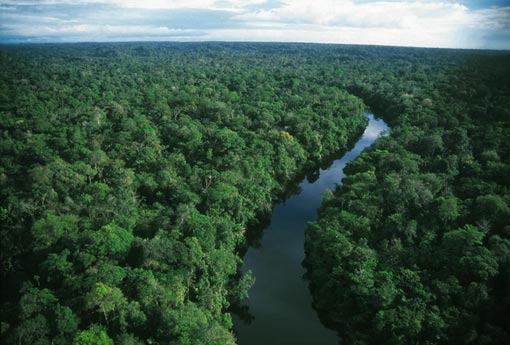
Around two-thirds of the Amazon rainforest could shift into degraded forest or savannah-like ecosystems at 1.5-1.9°C of global warming if deforestation increases to roughly 22-28 percent of the Amazon, according to a new study from the Potsdam Institute for Climate Impact Research (PIK) published in Nature.

Without additional deforestation, by contrast, such large-scale changes would likely occur only at much higher warming levels of around 3.7–4°C.

Amazon rainforest
The Amazon rainforest

“Deforestation makes the Amazon far less resilient than we previously anticipated. It dries out the atmosphere and weakens the forest’s own rainfall generation,” said Nico Wunderling, PIK scientist and lead author of the study. “Even moderate additional warming could then trigger cascading impacts across large parts of the forest.”

Around 17-18 percent of the Amazon forest has already been lost, placing the system close to the critical range identified in the study.

Climate change and deforestation interact to cascade impacts across the Amazon

The study provides the most detailed quantification yet of how warming and deforestation simultaneously impact the stability of the Amazon. It combines climate projections, hydrological modelling and a network approach of atmospheric moisture transport.

“Global warming and deforestation affect rainfall feedbacks across the Amazon system,” explained Arie Staal, Assistant Professor at Utrecht University in the Netherlands and co-author of the study. “When deforestation interrupts moisture transport in one area of the Amazon, entire regions hundreds or even thousands of kilometres away can also lose resilience through cascading drought effects.”

A key reason for forest degradation is that the Amazon is able to generate part of its own rainfall: up to half of its precipitation comes from water recycled by the trees themselves. Trees in the Amazon release water vapour into the atmosphere that later falls again as rain across the basin. When rainforest is lost, this moisture recycling weakens, drought stress increases and other forest regions become more vulnerable to degradation.

The scientists emphasised that halting deforestation and restoring forest cover could substantially strengthen the Amazon’s resilience to unavoidable warming.

“Until now, the Amazon rainforest has played a vital role in stabilising the Earth system as a carbon sink, regulator of moisture recycling and host of Earth’s richest biodiversity on land. Continued deforestation is undermining this stability, pushing the forest closer to a tipping point. This would not only be devastating for the region, but could have far-reaching consequences for the entire planet,” said Johan Rockström, PIK Director and co-author of the study.

“However, these changes are not inevitable. Stopping deforestation, together with ecologically restoring degraded forests and rapid emission cuts can still reduce the risks,” Rockström concluded.

African actors adopt Addis Ababa Declaration, call for transformative action for SDGs, Agenda 2063

African stakeholders, including ministers, senior officials, experts and experts and representatives of civil society, adopted the Addis Ababa Declaration entitled “Turning the Corner”, calling for urgent, coordinated and transformative action to accelerate the implementation of the Sustainable Development Agenda on the horizon 2030 and Agenda 2063.

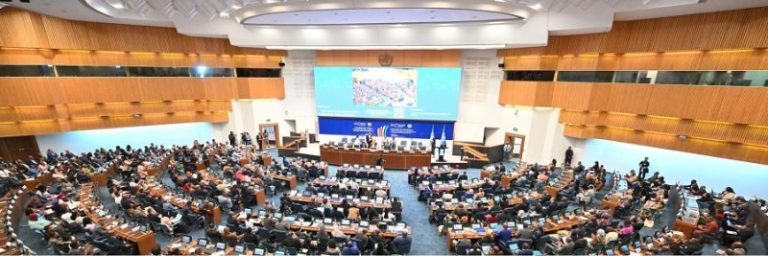
The Declaration was adopted at the end of the twelfth session of the African Regional Forum on Sustainable Development, held in Addis Ababa, from April 28 to 30, 2026, on the theme: “Turning the tide: transformative and coordinated actions for the 2030 Agenda and of Agenda 2063”.

The Forum brought together ministers, senior officials, parliamentarians, experts, representatives of the United Nations, the African Union Commission, the African Development Bank, regional organisations, civil society, academia, the private sector, youth, cultural institutions and religious communities.

Addis Ababa Declaration
Participants at the 2026 High-Level Political Forum on sustainable development

The participants noted with deep concern that Africa is still far from achieving the Sustainable Development Goals (SDGs), with 12 of them making slow progress and five in decline. The Declaration highlights important gaps, including limited access to clean water and sanitation, energy poverty that affects approximately 600 million Africans, insufficient industrialisation, rapid urbanisation, rising debt and an annual financing gap for the SDGs estimated at between $670 billion and $848 billion.

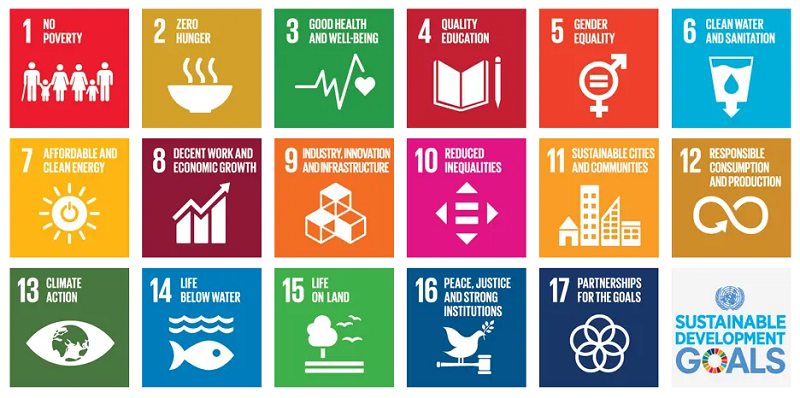
Through this Declaration, African countries urged to intensify their efforts in five areas of the SDGs, currently under review in 2026: Clean Water and Sanitation; clean and affordable energy; industry, innovation and infrastructure; sustainable cities and communities; and partnerships for the achievement of the goals.

On water and sanitation, ministers called for strengthened political leadership, sustainable financing, and better water governance, protection of ecosystems, reduction of pollution, expansion of wastewater treatment and greater recognition of the strategic role of water as a driver of jobs, growth, resilience and peacebuilding.

On the energy front, the Declaration calls for accelerating investment in decentralised renewable energy, clean cooking solutions, regional energy pools, energy efficiency, digitalisation and financing models that can expand access to affordable and reliable energy for households, industry and services essential social issues.

On industry, innovation and infrastructure, the ministers urged countries to adopt strategies to forward-looking industry solutions that respond to megatrends such as Artificial Intelligence, green transition, digital connectivity, evolving supply chains, and demographic shifts. They also pleaded for increased investment in climate-resilient infrastructure, digital skills, science and technology, and regional value chains under the African Continental Free Trade Area (AfCFTA).

The Declaration also calls for cities to be considered as engines of inclusive growth and structural transformation. It calls for increased investment in affordable housing, slum upgrading, resilient urban infrastructure, land-use planning, clean income generation, public infrastructure and safer urban environments for vulnerable communities, including children.

On financing and partnerships, ministers called for reforms to the Global Financial Architecture, increased domestic resource mobilisation, local currency capital markets, blended finance development, debt solutions, investment-ready project portfolios and operationalisation the African Credit Rating Agency to help reduce borrowing costs and improve investor confidence.

Addis Ababa Declaration turned out to be Africa’s regional contribution to the 2026 High-Level Political Forum on sustainable development, the 2026 United Nations Water Conference, the World Water Forum and other major global processes. It also sets out Africa’s priorities for the follow-up to the Fourth International Conference on financing for development, the Second World Summit for Social Development and the thirtieth session of the Conference of the Parties to the United Nations Framework Convention on Climate Change.

The Declaration also welcomes the upcoming hosting of COP32 by Ethiopia, seeing it as an opportunity for Africa to deliver on its commitments, promote African solutions for adaptation and resilience, and ensure climate outcomes that meet the continent’s development priorities.

Looking ahead to the post-2030 period, the ministers urged African countries to actively and collectively engage in the development of the next global framework for sustainable development, ensuring that Africa’s priorities, experiences and lessons learned are fully taken into account. They called for any post-2030 framework to be aligned with the Agenda 2063, strengthens accountability, goes beyond Gross Domestic Product as an indicator of progress, and prioritises finance, technology transfer, trade, capacity building, and inclusion.

The Declaration focuses on youth, women and vulnerable communities, recognising them not only as beneficiaries, but also as co-creators, leaders and drivers of sustainable development. It calls for increased participation, targeted investment, better access to finance and technology, and skills development for young women and men.

The forum was organised by the Economic Commission for Africa, in collaboration with the African Union Commission, the African Development Bank and the entities of the United Nations system.

How agriculture restored peace between farmers, pastoralists in Plateau

In nearly every community I have worked in across Plateau State, I have heard some version of the same sentence: “We used to live together peacefully.” The farmer says it. The pastoralist says it. The community leader says it.

And then the violence came; over land, over livestock corridors, over water; and what was once neighbourly became adversarial.

Through the implementation of the Women Livelihood Support Project, I have come to hold one conviction more firmly than ever: when people have something to lose together, they find a way to protect each other.

Victor Ohikere
Victor Ohikere

This is not a research paper. It is an account of what I observed, learned, and believe the development sector must do differently.

The Problem We Kept Getting Wrong

For years, the dominant response to farmer-herder conflict has followed a predictable pattern: convene a dialogue, sign a communiqué, deploy security, and wait for the next outbreak.

These interventions are not without value, but they address the symptom, not the structure.

The structure of farmer-herder conflict is fundamentally economic, and increasingly climatic. Shrinking grazing corridors, climate-induced pasture loss, and the collapse of traditional resource-sharing arrangements are the real drivers.

What I observed in the communities I worked in was the erosion of something that had once functioned: an informal but understood arrangement where herders could graze fallow land during dry seasons in exchange for naturally fertilising farmers’ plots. Neither side signed anything. But it worked, until the seasons themselves changed.

Extended dry seasons are now pushing Fulani herders further south and onto agricultural land for longer periods, breaking down those arrangements entirely. What was once a seasonal tension is becoming a year-round contest.

When a Fulani herder’s cattle destroy a Berom farmer’s crops today, it is not merely a cultural clash. It is two vulnerable people competing for survival in a system that has failed to provide enough for both, and in a climate that keeps shrinking what little there is.

You cannot talk people into peace when they are hungry and competing over the same shrinking resources. Dialogue is necessary, but it is not sufficient. Peace requires a shared stake, and climate-smart agriculture can help create it.

What We Did Differently and Why It Worked

The project was built on a simple but powerful premise: if you bring pastoralist and crop-farming women into the same economic structure (shared assets, shared goals, shared accountability) the social distance between them narrows. Trust follows function.

We did not run parallel programmes. We deliberately formed mixed cooperatives with equal representation and designed activities that required each group’s contribution to succeed. Compost production, for instance, required cattle dung from pastoralists and crop residue from farmers. Neither group could produce quality compost alone.

That practical interdependence did something that weeks of formal dialogue sometimes cannot: it made coexistence economically rational. It also reduced pressure on natural resources; when both groups could produce more from less through organic soil enrichment and drought-resistant cultivation, the zero-sum dynamic that drives violence began to loosen.

We also trained crop farmers in livestock feed formulation, so they could recognise a business opportunity in selling feed to their pastoralist neighbours. What had been a source of tension became a market transaction. Competition was converted into trade.

This is what an integrated model looks like in practice: livelihoods, climate resilience, and peacebuilding designed as a single system, not three separate workstreams. That integration is not a design luxury. In fragile settings, it is the only approach that holds.

The results were encouraging. Over 70% of trained women reported increased participation in community leadership and conflict resolution.

Three Things Every Practitioner Should Know

  • Design for interdependence, not just inclusion: Including both groups in a programme is not enough. The activities themselves must require their cooperation. Shared economic assets (grinding machines, irrigation pumps, livestock feed) create ongoing interaction that sustains relationships beyond any training session.
  • Economic formalisation is peace infrastructure: Registering cooperatives formally and linking them to financial service providers gives beneficiaries an institutional stake in a shared future. Our cooperatives began saving independently and generating income beyond project support. That is not just a livelihoods outcome; it is a sustainability signal for peace.
  • Women are the most underutilised peacebuilding asset in fragile communities: In every community I worked in, women were already informally brokering relationships across conflict lines through trade, through marriage networks, through shared spaces. What they lacked was institutional recognition and economic agency. When we provided cooperatives, training, and financial linkages, many were invited by traditional rulers to mediate formal disputes at the palace level; unprecedented in communities where women’s voices had been historically marginalised.

A Final Word

Agriculture cannot solve political violence or fix governance failures. But it can create the conditions under which peace becomes not just desirable, but economically rational; where both the farmer and the pastoralist have something to lose if the relationship breaks down, and something to gain if it holds.

Durable peace does not begin in a communiqué. It begins in a cooperative. Not in a conference hall, but in a field, shared.

By Victor Ohikere, Programme Officer at Sahel Consulting Agriculture and Nutrition, with experience managing high-impact projects reaching over 11,000 beneficiaries and engaging stakeholders across government, private sectors, and communities

SOS raises eco champion youths to drive gender-responsive climate action

SOS Children’s Villages Nigeria (SOSCVN) has unveiled the second phase of its Eco Champions Project to empower young people to drive gender-responsive and inclusive climate action across communities nationwide.

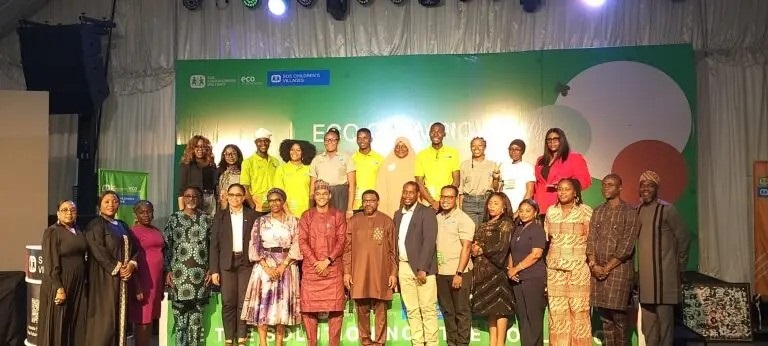
Country Director, Mr. Eghosa Erhumwunse, said this on Wednesday, May 6, 2026, in Abuja during the close-out ceremony of Phase I and the unveiling of Phase II, highlighting youth-led solutions for climate sustainability.

“The first phase of the Eco Champions Project showed us what is possible when we trust and invest in young people,” Erhumwunse said, noting the emergence of bold youth-led climate solutions.

SOS Children’s Villages Nigeria (SOSCVN)
Participants at the close-out ceremony of Phase I and the unveiling of Phase II of the SOS Children’s Villages Nigeria (SOSCVN) Eco Champions Project, in Abuja

“We saw young leaders rise with bold ideas, practical solutions, and unwavering determination.

“We saw young women take up space, speak with confidence, and lead conversations on sustainability and resilience,” he said.

He said the initiative proved that climate action began at the grassroots, adding that communities now understood that environmental action starts where people live, work and raise their families.

 “We witnessed communities begin to understand that climate action is not distant or abstract; it starts where we live, work, and raise our children,” he said.

Erhumwunse said that advocacy, awareness campaigns, capacity building and engagement had shown that young people were key drivers of development rather than passive beneficiaries of aid.

He said Phase II, themed “Empowering Youth for Gender-Responsive Climate Action,” would strengthen community-driven responses and deepen youth participation in environmental decision-making processes.

He described climate change as both an environmental and human issue affecting livelihoods, education, health, safety and the future of children and young people across communities.

“The new phase will empower young activists, particularly young women in vulnerable situations, to lead climate initiatives while engaging communities in decision-making processes.

“By placing young people at the centre of action and decision-making, this project seeks to change the reality that those most affected are often least represented,” he added.

He reaffirmed commitment to gender inclusion, emphasising that effective climate action could not exclude women, girls and vulnerable groups in society.

Erhumwunse urged government, civil society and the private sector to create enabling environments for youth participation and innovation in climate action and environmental advocacy.

Chief Programme Officer, Mr. Adelopo Ayodeji, said the first phase reached 18 million people through sensitisation, school-based education and media engagement, and encouraged youths to join the next cohort.

Dr Helen Idiong of Plan International said youth-led climate action strengthened girls’ rights, noting that modest funding could drive impactful community change and inspire sustainable initiatives nationwide.

Federal Ministry of Women Affairs representative, Mr. Kingsley Obiorah, Principal Community Development Officer, pledged continued support for initiatives promoting climate action and reducing environmental impacts on society.

Ms. Awele Ikobi-Anyali, Head of Legal, National Council on Climate Change representative, called for stronger awareness creation and implementation of environmental protection measures.

Lagos Environment Commissioner, Mr. Tokunboh Wahab, said environmental policies must be embedded in youth consciousness, urging adoption of waste-to-wealth initiatives.

Wahab, represented by Mrs. Monsurat Banire, said collective action, not policy alone, would determine environmental sustainability for future generations.

Outgoing Eco Champion representative, Miss Hannah Omokhaye, said the project trained more than 100 teachers to inspire students toward climate-related careers.

Other activities included panel discussions and awards presentation to beneficiaries of the first phase of the Eco Champions Project.

By Justina Auta

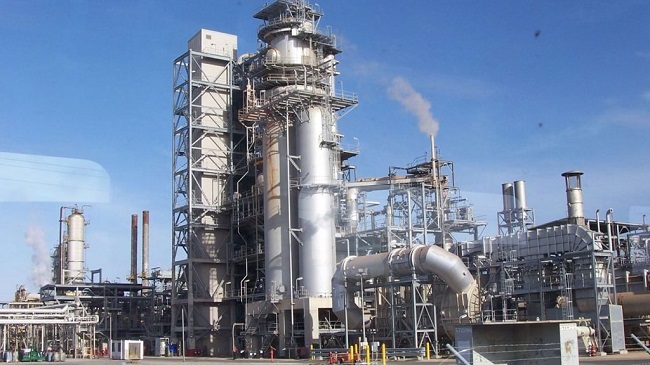
Amid hike claims, Dangote Refinery says petrol price remains at N1,275

0

Dangote Petroleum Refinery and Petrochemicals Limited has revealed that the price of Premium Motor Spirit (PMS) remains same, stating that its ex‑depot price is N1,275 per litre.

It was earlier reported that the Refinery had increased its ex-depot price of PMSt to N1,350 per litre, marking another upward adjustment in Nigeria’s downstream petroleum market.

The increase was confirmed on Wednesday, May 6, 2026, by a senior official of the organisation. It was also confirmed by pricing platform: petroleumprice.ng.

Dangote Refinery and Petrochemicals

The increase represents a N75 rise from the previous N1,275 per litre.

The adjustment comes barely a week after the refinery raised its ex-depot price from N1,200 to N1,275 per litre, reinforcing the rapid pace of price movements in the deregulated fuel market.

But, in a statement issued on Wednesday evening, the Refinery said that, by sustaining its current prices is reaffirming its commitment to supporting stability in the domestic energy market and cushioning the wider economy against external shocks.

“By absorbing prevailing cost pressures, the refinery continues to help moderate inflationary risks, promote energy affordability, and ensure uninterrupted supply amid ongoing global uncertainties,” the company submited.

Dangote Refinery reaffirmed its dedication to the steady supply of high‑quality petroleum products to the Nigerian market, while supporting national objectives of price stability and energy security.

It urged the public to rely solely on official statements from Dangote Petroleum Refinery and Petrochemicals Limited for accurate and up‑to‑date information on its operations and pricing.

Earlier, industry sources said the new gantry price had been implemented across all loading channels, prompting the marketers to review their pricing templates amid supply constraints and rising operational costs.

An official said: “The new pricing template has been activated across the board.

“All loading points have been updated, and marketers are already responding by adjusting their depot prices.

“This is not an isolated change; it reflects prevailing supply and cost pressures in the system.”

The latest adjustment is the second N75 increase within seven days.

The increase also follows a temporary suspension in the issuance of pro forma invoices earlier this week, a development market operators said contributed to product shortages and higher prices across the supply chain.

The official said: “The suspension of PFI created a short-term supply squeeze. When you combine that with international crude price movements and logistics costs, it becomes inevitable that depot prices will adjust upward.

“What we are seeing is a direct market response to those realities.”

Despite the recent increases, a senior management official of the Dangote Group had disclosed that the refinery was still subsidising the petrol and diesel supplied to the Nigerian market.

Within the past month, the refinery has adjusted petrol prices several times in response to crude sourcing costs, foreign exchange pressures and domestic distribution challenges.

The development highlights the refinery’s growing influence on local fuel supply and pricing as Nigeria’s market continues its transition from import dependence to domestic refining.

The latest increase is expected to trigger higher pump prices nationwide as marketers transfer the added costs to consumers already facing rising inflation and transportation expenses.

But the company has said that there were no increase and the PMS price per litre remains N1,275.

Funding Africa’s tomorrow: The race for SDGs and Agenda 2063

From the Sustainable Development Goals (SDGs) to the African Union’s Agenda 2063, the continent has mapped out an ambitious pathway for inclusive growth, industrialisation and climate resilience.

Nonetheless, stakeholders say what remains uncertain is how to fund the plan.

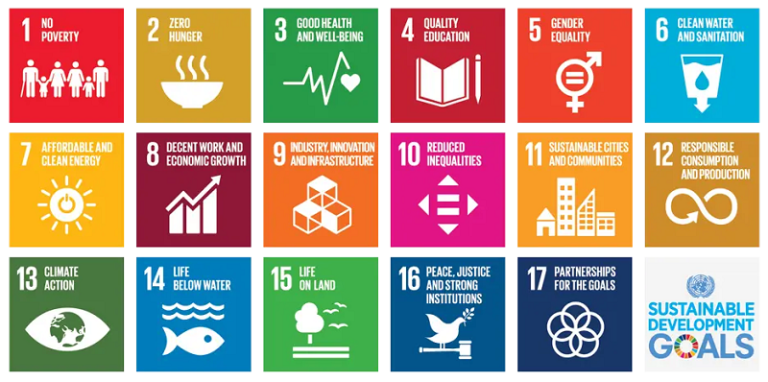
The United Nations Sustainable Development Goals (SDGs), adopted in 2015, represent a universal call to end poverty, protect the planet and ensure prosperity for all by 2030.

SDGs
The Sustainable Development Goals (SDGs)

Comprising 17 goals, they provide a comprehensive framework addressing critical areas such as health, education, clean energy, climate action and inclusive economic growth.

Complementing this global framework is African Union Agenda 2063, Africa’s long-term development blueprint adopted in 2013.

The agenda outlines the continent’s vision for inclusive growth and sustainable development over a 50-year period, anchored on aspirations such as economic prosperity, regional integration, good governance, peace and security.

Both frameworks are closely aligned and mutually reinforcing. While the SDGs provide a global roadmap, Agenda 2063 reflects Africa’s specific priorities and development context.

As a result, African countries are encouraged to integrate the two into national development plans to drive coherent and coordinated implementation.

In spite this alignment, progress towards achieving both agendas remains uneven across the continent, with financing gaps, climate shocks and structural constraints continuing to slow implementation and limit impact.

These issues dominated discussions at the twelfth session of the Africa Regional Forum on Sustainable Development (ARFSD-12), where policymakers, economists and development partners converged to assess Africa’s progress.

Across sessions at the ARFSD-12 forum, one message stood out: Africa’s problem is no longer vision, but delivery. And delivery is constrained by financing.

Mr. Claver Gatete, Executive Secretary, Economic Commission for Africa (ECA) at the forum, reiterated the importance of protecting climate and development investments on the continent.

According to him, unlocking capital will depend largely on reducing risks that discourage investment.

“We must protect climate and development investments even under fiscal pressure.

“Reducing currency risk, climate risk and policy risk is central to mobilising both domestic and private capital.”

He emphasised that Africa must reposition its financing strategy to match the scale of its ambitions.

“Africa’s challenge is not ambition, but delivery,” he added, stressing the need to move from commitments to measurable results.

The ECA executive secretary underscored the need for a shift in approach saying, we cannot continue with fragmented, project-based delivery when the scale of the challenge demands coordinated and structured investment.

For many African countries, the cost of borrowing remains significantly higher than in other regions, limiting their ability to invest in infrastructure, energy and social services.

Experts at the forum linked this challenge to structural issues in the global financial system, including credit rating methodologies and risk assessments that often disadvantage developing economies.

Ethiopia’s Foreign Minister and COP32 President-designate, Gedion Timothewos, warned that rising debt and declining investment flows were already eroding development gains.

While pointing to financing gaps and high capital costs as key constraints, Timothewos said Africa’s experience underscored persistent structural barriers.

According to the forum, climate finance adds another layer to the challenge.

While Africa contributes minimally to global emissions, it remains one of the most vulnerable regions to climate change. Yet, funding for adaptation and resilience continues to lag behind.

Participants noted that most climate finance was directed towards mitigation, leaving critical areas such as disaster risk reduction and loss-and-damage support underfunded.

To bridge the gap, stakeholders reiterated the importance to increasingly turn to innovative financing mechanisms.

They identified blended finance, green bonds and debt-for-climate swaps as tools that could help mobilise private capital at scale.

However, experts cautioned that finance alone was not enough as many African countries still lacked pipelines of bankable projects and well-structured investment opportunities that met investor expectations.

This gap, they said, reflected limited technical capacity in project preparation, risk structuring and public-private partnerships.

Gatete emphasised the importance of strengthening these pipelines.

“It is not enough to have strategies; we must develop credible, investment-ready projects that can attract financing,” he said.

Meanwhile, some countries are beginning to address these issues.

Rwanda, for instance, has shifted from fragmented projects to coordinated investment platforms aligned with national priorities, helping to attract more structured financing.

Beyond external financing, the forum also highlighted weaknesses in domestic systems.

More so, stakeholders say low tax revenues, inefficiencies in public financial management and limited capacity to track spending has continued to constrain governments’ ability to fund development.

Dr Mthuli Ncube, Zimbabwe’s Finance Minister, emphasised the need to strengthen domestic resource mobilisation while safeguarding long-term investments.

He said balancing debt obligations with development spending would be critical in the years ahead.

Another recurring theme was the need for stronger coordination, both within countries and across the continent.

Participants pointed to the African Continental Free Trade Area (AfCFTA) as a platform that could link climate finance with industrialisation and regional value chains.

They argued that fragmented, project-based approaches must give way to integrated, large-scale programmes.

Gatete reinforced this position, stressing that Africa must act collectively to maximise impact.

“Coordinated action at scale is what will enable Africa to translate its ambitions into tangible outcomes,” he said.

Civil society groups also called for greater transparency and accountability, stressing that financing must translate into tangible benefits for citizens.

They urged governments and partners to ensure that resources were used efficiently and equitably.

In spite of the immense challenges, a sense of cautious optimism prevailed, with speakers agreeing that Africa possesses the necessary policy frameworks, institutional structures, and experience to achieve its goals

The said what was required now, is alignment between national priorities and global financing systems, between public and private capital, and between ambition and implementation.

As Africa moves closer to the 2030 deadline, the stakes are rising; without significant changes in how development is financed, the continent risks falling short of its goals.

Experts say that with the right mix of reforms, innovation and partnerships, Africa can still turn ambition into reality.

They say the crucial, unresolved issue facing Africa’s growth is navigating its complex financial landscape.

By Lucy Ogalue, News Agency of Nigeria (NAN)

Reps move to regulate location of cooking gas stations nationwide

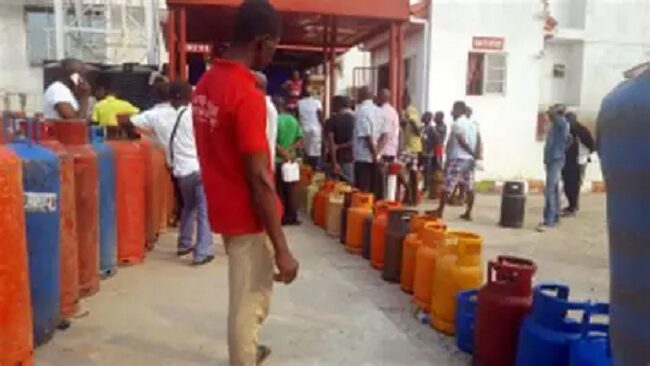
The House of Representatives has moved to enforce regulatory rules for location of gas stations across the country to prevent frequent explosions.

The resolution followed a motion of urgent national importance moved by Rep. Samuel Adedayo during plenary on Wednesday, May 6, 2026.

Adedayo, who represents Apapa Federal Constituency in Lagos State, expressed the regret over the recent explosion in his constituency which, he said, caused huge losses.

Cooking gas station
A cooking gas station

He said that the gas explosion occurred in the early hours of Tuesday on Adeleye Street in Apapa.

The lawmaker said that the explosion took place at a site where construction activities were ongoing, leading causing extensive damage to nearby structures as well as huge financial losses.

He also said that the incident caused serious injuries of varying degrees to five individuals, one of whom was a student who was on his way to school.

Adedayo expressed concern about the recurring incidence of gas explosions in such high density, low-income residential areas and the attendant huge loss of lives and property.

He, however, urged the house to mandate the regulatory bodies to be stricter in the enforcement of location rules for gas stations across the country.

The lawmaker also urged the lower chamber to mandate the National Emergency Management Agency (NEMA) and other relevant agencies to urgently provide relief materials to the victims of the gas explosioin.

By Ikenna Osuoha

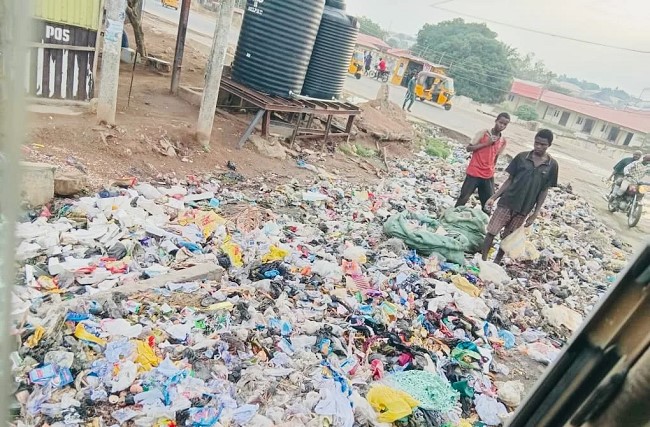
Refuse takeover in Suleja sparks health, environmental concerns

Residents of Suleja Local Government Area in Niger State have lamented the poor and inadequate services of the waste management authorities in the area.

They said the situation has led to mounting refuse heaps, environmental pollution and growing health concerns within the community.

Speaking on Wednesday, May 6, 2026, the residents said the situation had worsened over time, especially around designated dumping points within residential areas.

Suleja
A waste dump site in Suleja, Niger State

Mr. Abass Tijani, a resident, said those living close to the dumpsite are the worst affected.

“As our houses are close to the place, when breeze blows, the dirt comes back into our houses, littering the environment and forcing us to keep cleaning our surroundings all over again,” he said.

He also raised concern about the persistent stench from decaying waste.

“The smell is another major problem because everything dumped here starts to decay, thereby polluting the whole place. Even when we burn it, it pollutes the air we breathe in,” Tijani added.

He warned that the situation could pose serious health risks, especially for vulnerable persons.

“I pity people battling asthma because this can trigger an attack and can lead to serious issues or even death,” he said.

Tijani further noted that the area, now used as a dumpsite, was originally a road used by both vehicles and pedestrians.

“There was a road there before people started pouring dirt there. This situation now hinders vehicle owners from accessing the route,” he said.

Mrs. Justina Dantani, a trader, described the dumpsite as “a shame”, saying Suleja, as a commercial centre, should have an effective waste management system.

“The truck meant to come and pack all this trash never comes here. Even the ones at the expressway are not always evacuated,” she said.

“They leave it until it starts spilling onto the road before they come to clear it. How much more are the places that are far from the road?”

She added that residents are often left with no option but to tolerate illegal dumping.

“We can’t even stop people from dumping refuse here because there is no alternative place to chase them to. This is really affecting us internally and externally,” she said.

Mrs. Rebecca Owolabi, a businesswoman, said the situation had led to frequent disputes with people who dump refuse near her uncompleted building.

“I have stopped people from pouring dirt here, but they refused to yield, resulting in quarrels and even fights,” she said.

“I have decided to let them be and started burning it, but the smell affects my family and neighbours, which is not good for our health”.

She blamed the situation on poor enforcement and inconsistency in waste management.

“If the government had been consistent with the management and control of waste, people would not be dumping refuse just anywhere,” she said.

Mr. Oluwanifemi Adeduji, a student, said the situation had deprived families of outdoor relaxation due to the unbearable stench.

“We like sitting outside at night to get fresh air because of the heat inside, especially when there is no electricity, but we can’t because the smell is unhealthy,” he said.

“The odour is so terrible that at times we just go back inside. It is unbearable.”

The residents appealed to the government to strengthen waste management policies and ensure strict enforcement to curb indiscriminate dumping in the area.

Residents in parts of Abuja have consistently complained about delayed evacuation of refuse, indiscriminate dumping, and the environmental and health risks linked to blocked drainage channels and the accumulation of waste in public spaces.

The situation is more severe during the rainy season, when improper waste disposal worsens flooding and increases the risk of water contamination.

Although the FCT Administration continues to operate through its environmental and sanitation agencies to improve waste collection services, challenges such as limited coverage, inadequate equipment, and poor public compliance persist.

Environmental stakeholders have therefore called for stricter enforcement of sanitation laws, increased investment in waste management infrastructure, and sustained public awareness campaigns to promote proper waste disposal across the capital territory.

By Adesewa George