Ahead of the upcoming 28th Ordinary Session of the Assembly of the African Union holding 30th and 31st January 2017 in Addis Ababa, Ethiopia, the African Ministers’ Council on Water (AMCOW) has activated the online portal of the continent’s water sector and sanitation reporting system.
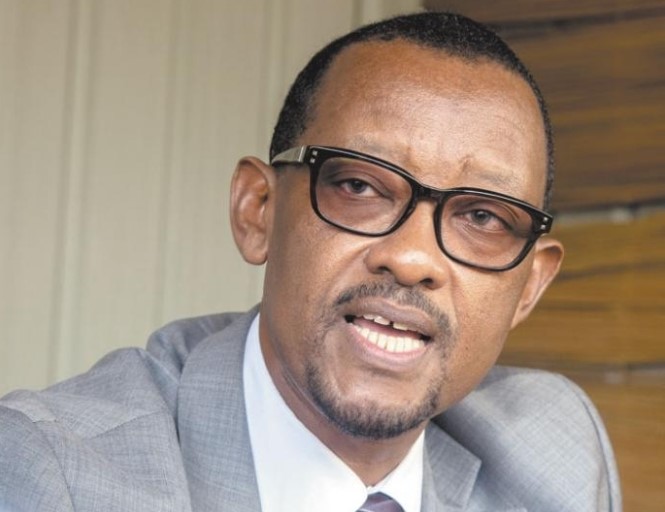
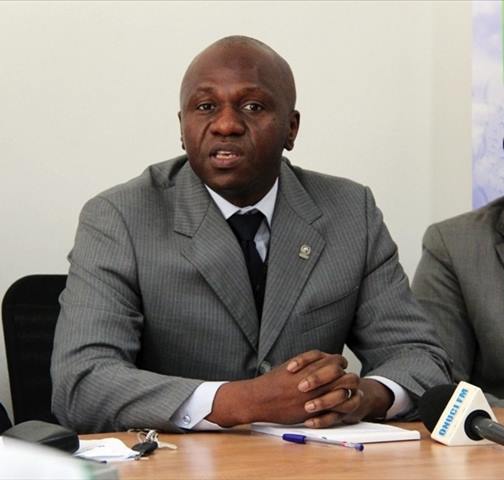
Dr. Canisius Kanangire, AMCOW Executive Secretary
The new Pan African Monitoring and Reporting System serves as a platform to report progress on the implementation of the AU Heads of States and Government Sharm el Sheikh Commitments to accelerate the achievement of the Africa Water Vision 2025, as well as the global high level political commitments on the Sustainable Development Goals (SDGs) on water and sanitation. Considered as one of the most ambitious attempts at tracking sectoral progress, the system represents Africa’s readiness to learn from past mistakes in monitoring the implementation of the MDGs as well as efforts being made toattain Africa’s Agenda 2063.
Speaking on the successful activation, the AMCOW President and Minister for Water and Irrigation, Tanzania, Gerson Lwenge, stated: “The AMCOW Monitoring and Reporting System helps to address Africa’s longstanding challenges in producing harmonised water and sanitation monitoring data”.
He recalled that lack of credible national and regional water sector and sanitation monitoring and reporting systems in Africa was widely recognised as a critical constraint to making informed policy and investments decisions on the development and effective use of water resources and sanitation in the continent.
Commenting, the AU Commissioner for Rural Economy and Agriculture, Rhoda Peace Tumusiime, said: “Ongoing actions such as this ensures Africa’s readiness to monitor and report on progress towards achieving the SDGs while providing a great opportunity to establish baselines not just for the global indicator framework, but also for the African commitments for which efforts to monitor progress towards attainment are constrained by the lack of baseline data.”
The system, developed by AMCOW working with the AU Commission, captures the harmonised monitoring and reporting indicators for the continent and links with other global monitoring and reporting processes. The AMCOW Executive Secretary, Dr Canisius Kanangire, believes “the system provides African Member States an opportunity to own and manage the water sector and sanitation data”.
Dr Kanangire reiterated that the issue of water sector and sanitation monitoring and reporting gained momentum in July 2008 with the AU Sharm El-Sheikh Declaration requesting AMCOW to report annually on the state of the continent’s water resources and sanitation to the Summit.
The web-based reporting system was developed with funding from the African Water Facility (AWF), and supported by the M&E Task Force, the German Cooperation as well as the Bill and Melinda Gates Foundation (BMGF) and with technical assistance from UNEP-DHI.
The highlight of the portal, which can be accessed at http://www.africawat-sanreports.org, is the 2016 Status Report of 42 African member states submitted using an online reporting framework. It also contains the 2013 and 2014 data submitted by Member States using a temporary paper based template.
The system, which serves as database on water and sanitation for Member States in Africa, is expected to promote cross-sector learning and knowledge dissemination within the water, sanitation, food, energy and climate nexus while supporting joint sector reviews. The online portal comes with maps and tabular view options which makes it easy to compare progress on various indicators across Member States in Africa.
Launched by AMCOW Ministers during the 2016 World Water Week Africa Focus Day in Stockholm, the online portal supports AMCOW’s efforts in developing regular progress reports for submission to the African Union Heads of State and Government Summit.
A new analysis of the World Bank’s $5-billion-dollar policy loans shows lender supporting investment incentives for coal and other fossil fuel projects in Southeast Asia, South America, Africa and the Middle East, threatening climate change efforts, indigenous groups and natural resources
World Bank Group President, Jim Yong Kim
World Bank policy loans are creating subsidies for coal, gas and oil projects and undercutting initiatives to build wind, solar and geothermal power infrastructure and protect vulnerable rainforests, including the Amazon, a new report by the Bank Information Centre (BIC) and worldwide partner organisations finds.
The study, which examines seven World Bank policy operations from 2007 to 2016 totaling $5 billion in four countries – Indonesia, Peru, Egypt and Mozambique – reveals that funds intended to boost low-carbon growth are instead supporting investment incentives for projects that put the climate, forests and people at risk.
The report sheds light on the Bank’s Development Policy Finance (DPF) operations, which account for approximately a third of all World Bank funding – equal to more than $15 billion in 2016. The DPF operations provide funding in exchange for national policy and institutional reforms mutually agreed to by the Bank and the borrowing government. As part of its Climate Action Plan, the World Bank identifies DPF operations as the main instrument for incentivising countries to transition to low-carbon economies. To meet national commitments to reduce greenhouse gas emissions, new investments in low-carbon infrastructure, especially in the energy sector, are critical. The BIC study therefore examines DPF-funded policy reforms involving investment incentives for large-scale infrastructure projects.
“The World Bank has pledged to help countries adopt a low-carbon development path specifically by phasing out fossil fuel subsidies and promoting a carbon tax,” said Nezir Sinani, Europe and Central Asia Manager at BIC. “However, the Bank’s policy lending does the opposite by introducing tax breaks for coal power plants and coal export infrastructure.”
The report was published by BIC in collaboration with Derechos, Ambiente y Recursos Naturales (DAR) Peru, Egyptian Initiative for Personal Rights (EIPR), Greenpeace Indonesia, Friends of the Earth Mozambique, and 11.11.11 Belgium.
Key findings are listed to include:
In Peru, World Bank DPF measures provide subsidies to government-proposed public-private partnerships (PPP) that will develop: a liquid petroleum gas pipeline, a diesel/gas power plant and, in the Amazon, three natural gas pipeline networks and 26 new oil and gas concessions. They will also support two energy efficient street lights and the development of hydropower. No solar or wind power projects are planned.
In Indonesia, the World Bank DPF established subsidies for PPP infrastructure projects, which include four coal power plants and three coal transport railways (on the forest-rich islands of Kalimantan and Sumatra). There are no geothermal, solar or wind PPP projects in the works.
In Egypt, upcoming infrastructure projects targeted to receive DPF-supported subsidies include: more than a dozen oil and gas projects, 12.5 gigawatts of new coal power plants and 12 pending oil and gas exploration agreements.
In Mozambique, Bank DPF-supported subsidies are slated to benefit four coal power plants, three coal port terminals and two coal transport railways. Other planned projects include one hydropower plant and one natural gas plant. No geothermal, solar or wind projects are targeted by the subsidies.
The report points to several substantial climate change concerns and measures that appear to contradict the World Bank’s climate change pledges.
Introduction of new fossil fuel subsidies. The DPFs introduced subsidies for coal in three (Indonesia, Egypt and Mozambique) of the four countries studied. Bank-supported subsidies for coal infrastructure in Indonesia have helped the country become one of the world’s top coal exporters. By propping up coal infrastructure with subsidies in Mozambique, the Bank’s DPF is turning the country, highly vulnerable to climate change due to droughts, floods and cyclones, into a major coal producer.
In addition, Bank-supported subsidies benefitting new investments for coal power plants in Indonesia and Egypt contribute to the planned significant rise in coal’s share of the power generation mix for these countries – from 35 to 66 percent and from zero to 20 percent by 2022, respectively.
According to the Intergovernmental Panel on Climate Change’s (IPCC) Fifth Assessment Report (2014), meeting the internationally agreed goal of limiting global average temperature increase to 2 degrees Celsius requires at least two-thirds of existing fossil fuel reserves must be left in the ground. BIC’s study shows that World Bank policies supporting oil and gas exploration subsidies directly contradict the 2-degree goal.
Specifically, in Mozambique, the Bank supports an accelerated rate of depreciation for oil and gas exploration, which significantly reduces the overall tax rates, and thus, government revenue, associated with these fossil fuel investments. Not only is this a significant fossil fuel subsidy but the loss to government coffers further threatens Mozambique’s debt sustainability crisis.
Inadequate support for renewable energy. Each country examined in the study has potential to develop renewable energy, including vast solar and wind resources in Egypt and geothermal resources – among the world’s largest – in Indonesia. The assessment found that in Indonesia, Egypt and Mozambique, the DPFs did contain actions on new renewable energy laws with feed-in tariffs for one or more forms of renewable energy. However, the report finds that, when effectively used, the World Bank DPFs could have removed further barriers to renewable energy investments. These barriers include, among others, inadequate legal frameworks, a lack of feasibility studies and a lack of incentives for geothermal exploration.
Undermining environmental governance and threatening forests. In three of the case study countries (Indonesia, Peru and Mozambique), the DPF operations ushered in expedited licensing and land acquisition procedures for infrastructure investments. These changes exacerbate already-existing weak environmental governance, ineffective land tenure rights and pressures on forests. Indonesia and Peru have the third and fourth largest, respectively, extent of rainforest in the world. Their forests are of paramount importance not only to the many indigenous peoples that depend upon them for their livelihoods, but also to the climate. Indonesia is the world’s sixth largest emitter of greenhouse gases due to deforestation; the forests of Peru store more carbon than the US emits every year.
Many of the upcoming PPP infrastructure projects in Indonesia and Peru examined in the study include components that could damage forests. These include oil, gas, coal and mining; large hydropower; and roads. As much as 84 percent of the Peruvian Amazon has been granted as oil and gas concessions. The study shows that licensing and land acquisition reforms prompted under DPFs undermine efforts to improve the governance structures critically needed in Indonesia and Peru and to abate forest loss and climate change.
In Indonesia, for example, the DPFs sped up land acquisition procedures that undermined the ability of local communities to protect their lands from development. One particular project, the Central Java coal-fired power plant, had been delayed for over four years due to local landowners’ refusal to give up their land. A law propped up by the Bank gave the government the power to ultimately evict them.
Kate Geary, BIC’s forest campaign manager and a report contributor, said, “Rather than using its development policy lending muscle to protect forests and combat climate change, the Bank is helping to weaken vital environmental laws and governance and undermine local communities’ rights to the resources they rely on for their livelihoods.”
The report urges the World Bank to heed its own advice on confronting climate change by providing the right incentives for a clear pathway to low-carbon development. The report argues that the Bank must go beyond supporting some incentives for renewable energy to steer developing countries towards a low-carbon transition.
“The climate crisis and staying under 2 degrees Celsius warming not only requires increasing investments in renewable energy but also drastically decreasing fossil fuel investments,” Sinani said.
The report calls on the World Bank to support incentives for more renewable energy through DPFs, and to be transparent about the measures and incentives tied to DPFs, as well as the projects that DPFs are slated to support.
“We also want a more rigorous climate- and forest-related assessment of DPFs before they are approved,” Nezir Sinani said. “This call has resonated with several World Bank Executive Directors who believe that the Bank’s approach to environmental and social safeguards should be applied to all types of its lending. At present, the Bank’s DPF falls outside the social and environmental safeguards applied to direct project lending.”
The BIC partners with civil society in developing and transition countries to influence the World Bank and other international financial institutions (IFIs) to promote social and economic justice and ecological sustainability. BIC is an independent, non-profit, non-governmental organisation that advocates for the protection of rights, participation, transparency, and public accountability in the governance and operations of the World Bank Group and regional development banks.
The German government has officially recognised the International Union for Conservation of Nature (IUCN) as an intergovernmental organisation, a move observers believe reaffirms the Union’s role on the global environmental and development stage.
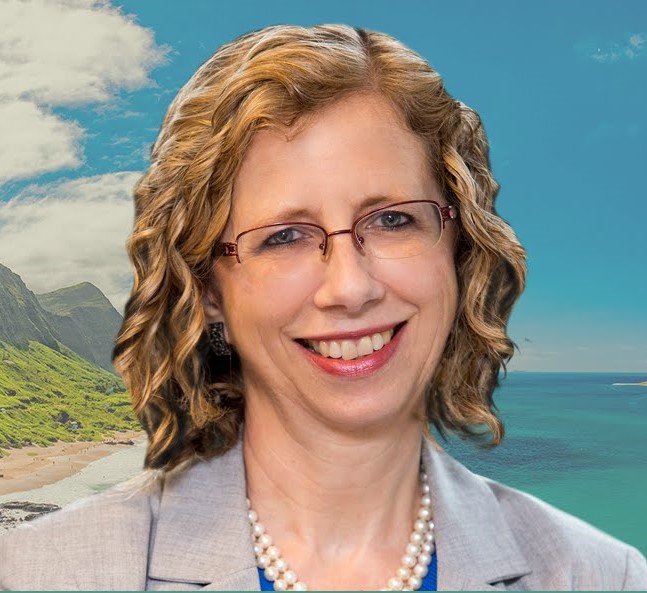
IUCN Director General, Inger Andersen
On Wednesday, 25 January 2017, the German Cabinet passed a regulation defining the legal status of IUCN as an “organisation created by intergovernmental agreement”. This decision recognises the official functions IUCN carries out on behalf of its Member States and affords the Union a range of rights and benefits. The new legal status will allow IUCN to build on its strong presence in the city of Bonn, home to the IUCN Environmental Law Centre. The regulation will now go to the “Bundesrat”, a legislative body that represents the 16 Länder (federal states) of Germany at the national level, for ratification in March 2017.
“IUCN is grateful to the German government and warmly welcomes this important recognition,” says IUCN Director General, Inger Andersen. “This opens up new opportunities to boost international cooperation on environmental issues. IUCN’s new legal status will reinforce IUCN’s already strong relationship with Germany. It will also allow us to strengthen our collaboration with key international partners based in Bonn, such as the UNFCCC, the UN Convention to Combat Desertification and the Convention on the Conservation of Migratory Species.”
“This decision recognises IUCN’s important role in global efforts to conserve nature. It also reaffirms the position of the city of Bonn as a hub of international cooperation and the headquarters for international institutions and organisations,” says the German Minister for the Environment, Barbara Hendricks.
Founded in 1970, the IUCN Environmental Law Centre in Bonn is recognised as a leading global centre of excellence in environmental law. The Centre houses a joint initiative between the United Nations Environment Programme (UNEP), Food and Agriculture Organisation of the United Nations (FAO) and IUCN, providing web-based access to the three organisations’ environmental law information as well as two extensive libraries.
“This decision reaffirms Germany’s commitment to IUCN and to the Environmental Law Centre,” saysAlejandro Iza, Director of the IUCN Environmental Law Centre. “Germany and the city of Bonn have been excellent hosts for over four decades, and this recognition opens up new avenues of collaboration.”
IUCN and Germany have a long history of very close collaboration. The German government has been an IUCN State Member since 1958 and has provided significant support for IUCN’s work on issues including tiger conservation and protected areas.
In 2011, IUCN and Germany launched the Bonn Challenge – a global effort to restore 150 million hectares of the world’s degraded and deforested lands by 2020. With over 136 million hectares pledged, the Challenge is within close reach of achieving its 2020 target.
IUCN’s work focuses on valuing and conserving nature, ensuring effective and equitable governance of its use, and deploying nature-based solutions to global challenges in climate, food and development. IUCN supports scientific research, manages field projects all over the world, and brings governments, NGOs, the UN and companies together to develop policy, laws and best practice.
IUCN is considered the world’s oldest and largest global environmental organisation, with almost 1,300 government and NGO members and more than 15,000 volunteer experts in 185 countries. IUCN’s work is supported by almost 1,000 staff in 45 offices and hundreds of partners in public, NGO and private sectors around the world.
As the National Council on Health meets in Umuahia, the Abia State capital, it is anticipated that major issues confronting Nigerians and particularly the health sector will dominate discussions. It is anticipated that the Council will discuss the implementation of the National Health Policy which is expected to strengthen Nigeria’s health system to deliver qualitative, efficient and comprehensive healthcare services.
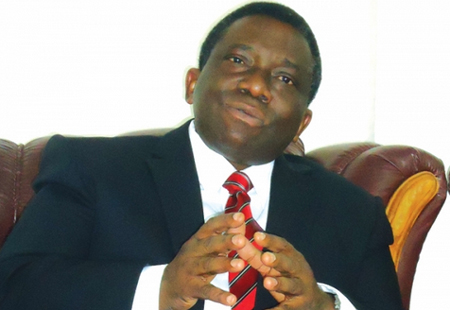
Minister of Health, Professor Isaac Adewole. He will chair the National Council on Health
The Council will also be pressing hard for the implementation of guidelines for administration, disbursement and management of the Basic Healthcare Provision Fund, which it developed in September 2016. The success of the Council in pushing through these initiatives particularly in the last one year has been complemented with the stepping up of campaign for states to develop their own strategic health plans including the recommendation that they allocate 15% of their annual budget to the health sector in line with Abuja declaration. While these strides can be described as commendable, Nigerians still yearn for action on the disease front, particularly cancer – a silent killer which has suddenly become an epidemic in Nigeria.
Tobacco, a product that the World Health Organisation (WHO) says currently kills about six million people annually, is the leading cause of cancer, necessitating the first global public health treaty, the Framework Convention on Tobacco Control (FCTC) by the WHO.
According to the WHO, unless Parties (Nigeria is one) take drastic policy measures to regulate tobacco transnationals through policies by the year 2030, about eight million deaths will be recorded annually from exposure to tobacco smoke. About 80% of these deaths are expected to occur in low- and middle-income countries (LMICs).
Of Nigeria’s 36 states, only Abuja (the federal capital territory), Ekiti, Lagos, Osun and Abuja have smoke-free laws in place. These laws are to safeguard the health of non-smokers from the harms of exposure to tobacco smoke. The Lagos law, for instance, prohibits residents from smoking in all public places such as libraries, museum, public toilets, schools, hospital, day care centres, public transportation and restaurants among others.
As far reaching as measures by these few states are, they pale in significance when viewed in the light of no form of regulation in about 30 states of the federation and the free hand that multinational tobacco companies are given to operate.
Tobacco companies in Nigeria target particularly the youths who are bombarded with all forms of marketing gimmicks that portray smoking as hype and socially-acceptable. Indeed, the growing number of underage smokers in Nigeria portends an unwelcome burden of smoking-related illnesses including cancer.
A report released last week by the U.S. National Cancer Institute (NCI) and the WHO notes that tobacco use remains one of the world’s leading causes of preventable premature death. The report, titled: “Economics of Tobacco and Tobacco Control”, was authored by an international consortium of more than 60 experts on tobacco control and policy including physicians, public health experts, and scientists, among others. It was also peer-reviewed by more than 70 reviewers.
Such conclusions makes it imperative that if the goal of the National Council on Health that Nigerians attain the highest health standards, it must be in the fore in ensuring all states of the federation take tobacco control seriously. A stitch in time saves lives.
Millions of people along Africa’s Atlantic seaboard stand to benefit from an agreement between the International Atomic Energy Agency (IAEA) and the United Nations Environment Programme (UNEP) aimed at improving the analysis of contaminants in the Abidjan Convention area.
The agreement, which focused on “Practical arrangements on Cooperation in the Strengthening of Data Quality Assurance in the Analysis of Contaminants in the Abidjan Convention Area Marine Environment”, was finalised on Monday, 23 January 2017.
The agreement provides for cooperation in activities such as the organisation of proficiency tests and interlaboratory comparison exercises to assess the performance of laboratories in measuring pollutants such as trace elements, organic contaminants and radionuclides1 in marine samples.
It also provides a framework for training scientists on analysing these pollutants in marine samples and on techniques to assess the state of the marine environment, seafood safety and ocean acidification.
Further, the Practical Arrangements enable the provision of marine matrix reference material from the IAEA to laboratories in countries party to the Abidjan Convention for Cooperation in the Protection, Management and Development of the Marine and Coastal Environment of the Atlantic Coast of the West, Central and Southern Africa Region.
“The agreement stands to be of great benefit to the Abidjan Convention and its member countries,” Abou Bamba, Executive-Secretary of the Convention, noted. “The importance of accurate, high-quality data in the fight against marine pollution and other threats to the coastal and marine environment can in no way be overstated.”
The Convention, which entered into effect in 1984, aims to protect, conserve and develop the coastal and marine environment of the Convention area for the benefit and well-being of its more than 400 million inhabitants.
The Abidjan Convention is a legal tool for Cooperation in the Protection and Development of the Marine and Coastal Region of West, Central and Southern Africa. The Convention applies to the 22 coastal countries from Mauritania to the Western shores of South Africa.
A High Court in London has dismissed a suit by Bille and Ogale communities seeking to sue Royal Dutch Shell (RDS) in English courts for spill incidents in the Niger Delta. The communities had, on May 2015, through their UK solicitors, Leigh Day, brought oil spill litigation against The Shell Petroleum Development Company of Nigeria Limited (SPDC), and also filed claims against RDS as an “anchor defendant” to bring the claims in England. RDS and SPDC challenged the jurisdiction of the English court to hear these claims.
Shell Petroleum Development Company of Nigeria Limited (SPDC) General Manager, External Relations, Igo Weli
In his ruling on Thursday, 26 January 2017, the judge rejected Leigh Day’s claim that RDS owed a duty of care to the Nigerian claimants allegedly impacted by SPDC, and consequently that there was no anchor defendant for the case against SPDC to be brought in England.
“The court rightly decided these claims should be dealt with by the Nigerian courts and confirmed longstanding principles of corporate law, which are critically important for multinational companies headquartered in the UK,” said Igo Weli, SPDC’s General Manager, External Relations.
“Both Bille and Ogale are areas heavily impacted by crude oil theft, pipeline sabotage and illegal refining, which remain the main sources of pollution across the Niger Delta. The judge correctly decided that the holding company, Royal Dutch Shell, had no legal responsibility for harm to the communities in the Niger Delta caused by criminal interference in Nigeria with the operations of a joint venture in which the Nigerian government owns a majority interest.
“We hope the strong message sent by the English court today ensures that any future claims by Nigerian communities concerning operations conducted in Nigeria will be heard in the proper local courts. Nigeria is a core part of the Shell Group’s upstream business. We see considerable potential for growth in Nigeria and are determined to help Nigeria unlock its energy potential over the long term.
“Litigation in courts unfamiliar with the law and realities on the ground ultimately does nothing to address the real problem in the Niger Delta: widespread pipeline sabotage, crude oil theft and illegal refining. SPDC continues to play an active role in the search for solutions to these complex issues.
“Examples of recent initiatives include a 2016 campaign against crude oil theft which highlighted the dangers of crude oil theft and sabotage of pipelines to more than 40 communities in Ogoniland and a programme which ran with the objective of providing alternative means of livelihood for young people in Ogoniland in 2014.”
A court has described the plan by the Lagos State Government to demolish all waterfront informal settlements as inhuman and degrading, and that it violates the law of the land.
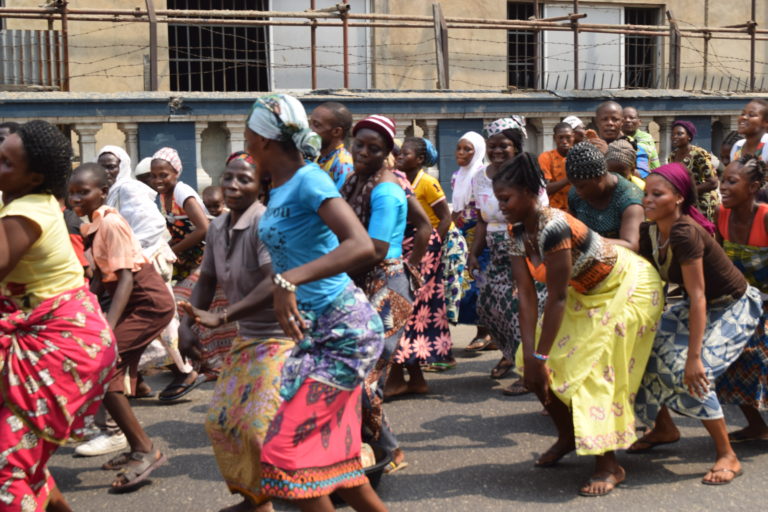
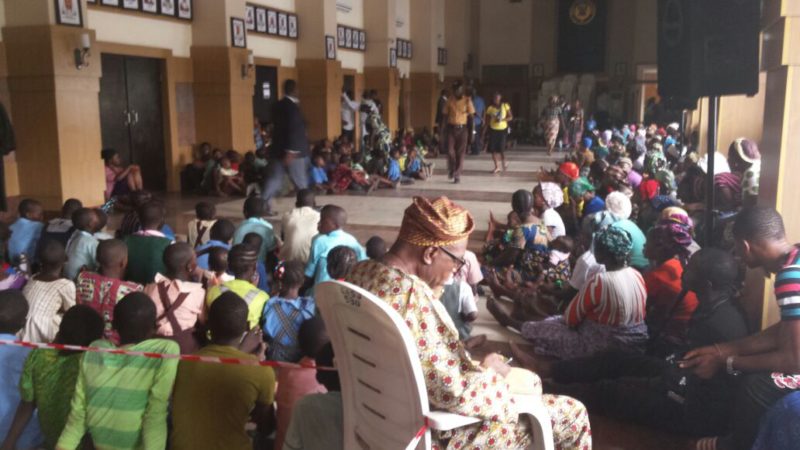
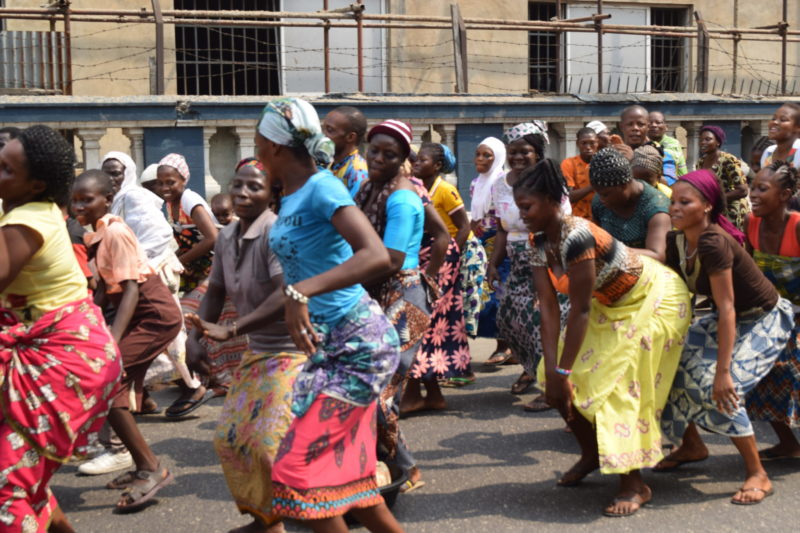
Women, children, young and old: Thousands of residents of waterfront communities across the state wait patiently inside and outside the courtroom
Honourable Justice Onigbanjo of the Lagos State High Court gave the decision on Thursday, 26 January 2017 in a fundamental rights enforcement case brought in October 2016, after the Lagos State Government stated its intention to demolish all waterfront informal settlements.
The judge delivered his decision while hundreds of urban poor residents – men, women, and children – from waterfronts across the state waited patiently inside and outside the courtroom. Relying on the Fundamental Rights (Enforcement Procedure) Rules, 2009, his Lordship said that he found these demolitions to be inhuman and degrading treatment in violation of the right to dignity enshrined in Section 34 of the 1999 Constitution of the Federal Republic of Nigeria and Article 5 of the African Charter on Human and Peoples’ Rights.
Celebration time after the court decision
Balancing his responsibility to protect the fundamental rights of citizens against the duties of the state government, Justice Onigbanjo then ordered the parties to attempt mediation through the Lagos State Multi-Door Courthouse and report back to his court in one month’s time.
It will be recalled that the threat to the Lagos waterfronts began when Lagos State governor, Akinwunmi Ambode, announced last October government’s intention to “start demolishing all shanties on waterfronts across the state within seven days,” citing recent kidnapping incidents as the purported justification.
Based on mapping and profiling done by the Nigerian Slum / Informal Settlement Federation, it was identified at least 40 communities that fell under this threat and estimated over 300,000 residents were at risk of imminent eviction.
Accordingly, more than 20 member communities of the Federation joined together to write to Governor Ambode, calling for a retraction of the threat and requesting for dialogue to explore alternatives to eviction. Two peaceful protests brought thousands of waterfront residents to the gates of the Governor’s Office and the State House of Assembly, but to no avail. To the contrary, elements alleged to have links with government proceeded to demolish Ilubirin on 15 October 2016. Finally, the threatened waterfronts had no option but to proceed to court to enforce their fundamental rights.
On 7 November 2016, Justice Onigbanjo granted a temporary injunction restraining the Lagos State Government and the Nigerian Police Force from proceeding with any demolition of the waterfronts or eviction of their inhabitants. Despite this order, Otodo Gbame community – an ancestral Egun fishing settlement in Lekki – was demolished and over 30,000 residents forcibly evicted on 9-10 November 2016 by arson and a bulldozer working in the dead of night.
The demolition of Otodo Gbame has been broadly condemned as a forced eviction and a gross violation of human rights, including by the United Nations Special Rapporteur on Adequate Shelter, Amnesty International, and countless others. Evictions that use arson and take place during the night – such as what occurred at Otodo Gbame – also constitute violations of the United Nations Convention Against Torture, especially when they are discriminatory in nature.
Officials of the Justice & Empowerment Initiatives – Nigeria (JEI) and the Nigerian Slum / Informal Settlement Federation have been celebrating the court decision.
Megan Chapman, co-founder of JEI, said in a statement: “We are overjoyed that the Honourable Justice Onigbanjo has aligned himself with such established jurisprudence to find that such evictions constitute inhuman and degrading treatment.
“We also welcome the opportunity for the threatened waterfront communities to enter into dialogue with the state government to explore amicable settlement to find win-win solutions to any legitimate concerns the state has that can be settled through alternatives to eviction. We firmly believe that partnership and collaboration between communities, civil society, and the government is the best way of solving social and developmental problems that face the city. Just as firmly, we know that demolition and forced eviction are not the answer to any social problems.
“As we approach the court-ordered mediation, we fervently hope that the Lagos State Government and the Lagos State Command of the Nigerian Police Force will distance themselves from the recent smear campaign that has attempted to misrepresent waterfront residents as criminals and spread lies that waterfront communities are full of Boko Haram, Niger Delta militants, and kidnappers. As members of these communities and civil society organisations working in the waterfronts on a daily basis, we decry these false allegations and condemn those who stoop to spreading such falsehoods in order to try to justify land grab.”