Home Blog Page 2166

Economically sustainable seed businesses to transform cassava production

0

Nigeria is the largest producer of cassava in the world with a production of about 54 million tons, but its yield per hectare of cassava roots is about eight tons, less than half of the realisable yields of more than 20 tons per hectare
IITA-Cassava
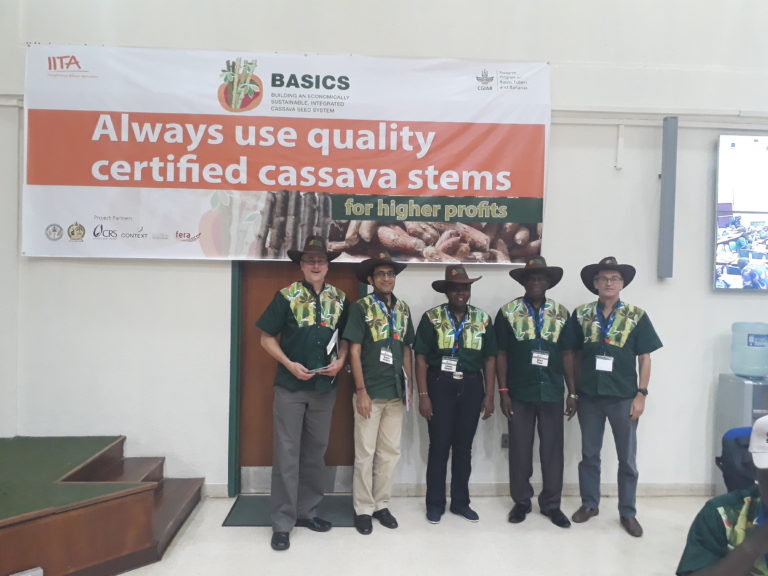
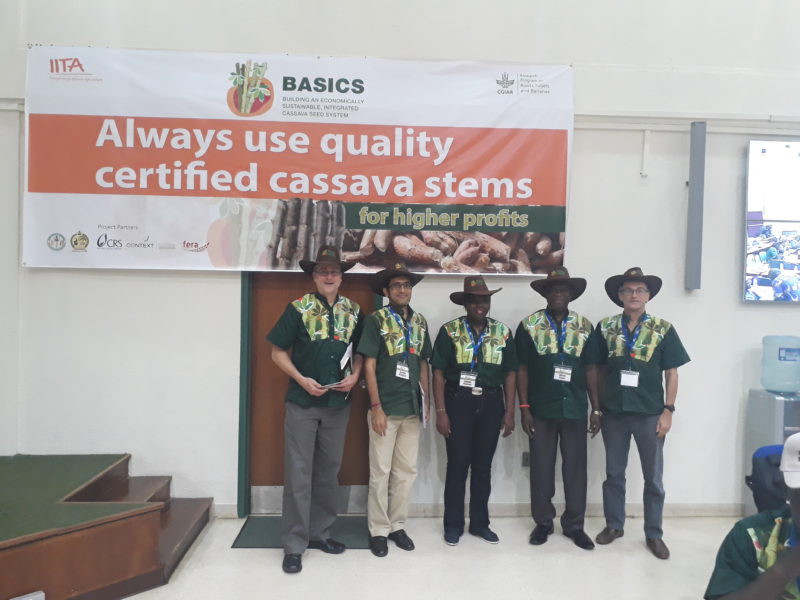
L-R: Lawrence Kent, Senior Programme Officer, Bill & Melinda Gates Foundation; Hemant Nitturkar, Programme Director of BASICS; Folusho Olaniyan, Chief Executive Officer of Contact Consulting Nigeria; Alfred Dixon, IITA Director for Development and Delivery; and Graham Thiele, Director of the CGIAR Research Programme on Roots, Tubers and Bananas, during the annual meeting of BASICS in IITA Ibadan, Oyo State

Seed sector professionals have said that businesses selling improved varieties and high quality cassava stems for cultivation could help African farmers significantly raise their productivity. This will mean more Naira from the same land, inputs and effort. The benefits of this raised productivity will be enjoyed by all the stakeholders across the value chain in a sustainable way.

This was part of the resolutions from a national stakeholder conference on cassava seed system organised by the project, “Building an Economically Sustainable Integrated Cassava Seed System” (BASICS) that was held at the Institute of Tropical Agriculture (IITA), Ibadan, Oyo State, on Thursday, March 30, 2017.

The meeting, which reflected on the experiences of BASICS in 2016 and refined the project plan for 2017 and beyond, brought together national and international researchers, academics, policymakers, the private sector, non-governmental organisations and farmers to a roundtable.

Making the case for urgent need for all the stakeholders to work towards a sustainable seed system in Nigeria, Hemant Nitturkar, Project Director for BASICS, reminded the participants that Nigeria is the largest producer of cassava in the world with a production of about 54 million tons, but its yield per hectare of cassava roots is about eight tons, less than half of the realisable yields of more than 20 tons per hectare. Researchers say one of the factors responsible for the low yield of cassava is the low adoption of clean and healthy seeds of improved varieties of cassava by farmers.

“We have to start with the right planting material and nurture it with good agronomy and weed management practices. Each of these three components has the potential to raise the productivity of cassava by 30 percent. If we do not improve our practices in seed, weed and agronomy, we are incurring a lost opportunity of about N200 billion annually from each of the three issues,” he explained.

BASICS is commercially piloting two distinct pathways of seed delivery. In one, called Village Seed Entrepreneur (VSE) model, in partnership with Catholic Relief Services (CRS) in Benue and with National Roots Crop Research Institute (NRCRI), in Abia, Imo, Cross Rivers and Akwa Ibom states, the project is helping develop a network of 130 community based seed enterprises.

These VSEs will source certified stems of improved varieties of cassava from NRCRI and IITA to multiply and sell to the farmers in their vicinity. This way, the farmers will not have to go far to source quality stems for planting. In the second pilot called Processor Led Model (PLM), in partnership with Context Global Development, the project is working with large processors of cassava who will then make available quality stems to their outgrowers with a buy back arrangement for the roots produced.

Slow and low multiplication ratio has been a key constraint in cassava seed system. The project is piloting a new technology called Semi-Autotrophic Hydroponics (SAH) for vastly rapid seed multiplication. Once this technology from Argentina is adapted and perfected in Nigeria by the Project, it is expected to have a significant impact on the ability of early generation seed businesses to quickly bring suitable varieties within reach of farmers. The project is also working with National Agricultural Seed Council (NASC) and Fera of UK to improve the quality certification system in Nigeria.

Lawrence Kent, a senior programme officer at the Bill & Melinda Gates Foundation, said the aim of the Project is to build an economically sustainable seed system that is profitable both to the sellers of quality stems and to the farmers who purchase and plant those stems. He encouraged all to create reusable bridges to continuously link technology developers with farmers through business oriented approaches, like the one being implemented under BASICS.

Graham Thiele, Director for the CGIAR Research Programme on Roots, Tubers and Bananas led by the International Potato Center (CIP); Alfred Dixon, IITA Director for Development and Delivery, and Project Leader for the Cassava Weed Management Project; Amin Babandi, Director of Agriculture, FMARD, represented by Segun Ayeni, Deputy Director, Roots and Tuber crops, FMARD; Folusho Olaniyan OON, CEO, Contact Consulting Nigeria and Programme Director, AgraInnovate West Africa; Emmanuel Okogbenin, Director of Technical Operations, AATF and Robert Asiedu, Director R4D, IITA-West, all shared perspectives and added their voice for all stakeholders to jointly build a strong and sustainable seed system for cassava in Nigeria and wished all the stakeholders well.


Orangutans threatened by forest fire, deforestation in Borneo

0

On a typical day, veterinarians of International Animal Rescue (IAR) make their way through choking smoke, weighed down with medical supplies, a safety net, animal carrier and face masks. They are called out almost daily to rescue orangutans and other animals trapped by forest fires and attend to their medical needs.

Orangutans
Orangutans

The forest had been burning for five days and the flames were creeping closer. On the brink of collapse, an orangutan desperately tried to protect her baby from the acrid smoke.

Finally, help arrived: nearby villagers had alerted International Animal Rescue Indonesia. The veterinarians tranquilised the two apes sitting in the tree, broke their fall with a net and treated them. “The mother was emaciated and suffering dehydration,” explains IAR coordinator Ayu. The baby was in better shape, and both were soon released into the safety of a nearby forest.

“We’re very worried that the fires won’t stop and that the orangutans will die if we don’t reach them in time,” says veterinarian Karmele Llano-Sanchez. “The fires are also endangering our treatment centre.”

More than a thousand orangutans live in the peat swamp forests of Sungai Putri on Borneo, a location so remote that researchers only documented the population in 2007. This large orangutan colony is described as a glimmer of hope for the survival of the critically endangered primates.

Sungai Putri’s unique forests stand on a peat layer several meters thick – a massive carbon sink. Leaving such peat swamp forests untouched is said to be the best protection against forest fires, carbon emissions and climate change.

In the wake of the disastrous fires of 2015, the Indonesian government outlawed the clearing of peat swamps and other primary forests for plantations.

“Yet that is exactly what a timber company is doing in Sungai Putri. Workers are digging canals to drain the peat – the first step toward replacing priceless orangutan habitat with a pulp plantation,” says Reinhard Behrend of the Rainforest Rescue, which has taken up a campaign to impress it upon the Indonesian government “to stop this crime against the planet”.

Seeking support for the IAR team’s rescue efforts as well as patrols to protect the forests in which the animals are returned to the wild, Behrend adds: “We have been supporting the orangutan guardians of International Animal Rescue in West Kalimantan for many years. The IAR team is called on almost daily to bring injured, helpless or orphaned animals to safety and provide veterinary care at its rescue centre.

“Robbed of their habitat, desperate orangutans often look for food on oil palm plantations. Plantation workers consider them to be a pest, driving the orangutans away or killing them. The remaining orphans are often sold as pets. Besides coordinating helpers who fight fires and work to protect remaining intact forests, IAR also holds workshops for local villagers on how to deal with wandering orangutans – and on the value of our wild cousins who are on the brink of extinction.”

The orangutans are the two exclusively Asian species of extant great apes. Native to Indonesia and Malaysia, orangutans are currently found in only the rainforests of Borneo and Sumatra.

GEF, UNIDO to enhance industrial energy efficiency in 15 countries

0

The Global Environment Facility (GEF) on Monday, April 3, 2017 confirmed its support for the Sustainable Energy for All (SEforALL) Industrial Energy Efficiency Accelerator led by the United Nations Industrial Development Organisation (UNIDO) and the Carbon Trust.

naoko_ishii
GEF CEO and Chairperson, Naoko Ishii

The announcement was made at the SEforALL Forum, where over 1,000 high-level representatives from government, business, civil society and international organisations have gathered in New York to drive action towards a sustainable energy system.

“Industrial energy efficiency is a no regret investment,” said CEO and Chairperson of GEF Naoko Ishii. “It helps our client countries meet their sustainable development goals, create jobs, and enhance economic security. We are pleased to be working with UNIDO, the Carbon Trust and many private sector partners to accelerate the adoption of energy management systems in key industry sectors.”

Through the Accelerator, UNIDO and the Carbon Trust will work in cooperation with a number of partners on disseminating and sharing best practices, policies, and toolkits to fast-track the rate of energy efficiency deployment in the industrial sector.

The Accelerator is a platform, which supports engagement between leading government officials, business leaders, trade associations, research agencies and investors to create a clear vision of how to further mobilise energy efficiency in the key industrial sectors. It delivers across a number of Sustainable Development Goals (SDGs) by creating a multi-stakeholder partnership that promotes large scale initiatives to deliver more significant impacts across a range of different countries and industrial sectors. It also delivers multiple benefits from increased productivity as well as reductions in energy demand and related greenhouse gas (GHG) and local pollutants.

“GEF’s support for the Accelerator is very timely, as it will allow starting up in-country actions in at least 15 countries over the coming eight years to rapidly drive higher energy productivity in industry, a major segment with the potential to reduce energy use by a quarter by 2030 – or the equivalent of almost 4 billion tons of carbon dioxide. This makes a real impact in achieving SDG 7 – the goal of delivering affordable and clean energy,” said Philippe Scholtès, Managing Director of the Programme Development and Technical Cooperation at UNIDO.

James Wilde, Director of Policy and Innovation at the Carbon Trust, added: “We’re delighted to be working with two global partners, GEF and UNIDO. This will help amplify our ability to simultaneously improve industrial efficiency and tackle climate change. The Accelerator will help share experience and best practices in critical areas such as delivering financing solutions for energy efficiency deployment, broadening private sector engagement and building in-country technical capabilities.”

Expected investments and interventions by the accelerator will address barriers to energy efficiency by fostering enhanced access to information, skills, and methods to assess the costs and benefits of industrial energy efficiency policies and measures; building institutional capacity for policy design, development and implementation; reforming of distorted tariff structures and market incentives; and improving regulatory and legal frameworks to support energy service companies.

Scotland, California collaborate to tackle climate change

0

A joint agreement committing the Scottish Government and the Government of California to work together to tackle climate change has been signed.

Scotland-California
Scottish First Minister, Nicola Sturgeon (right), with the Governor of California, Edmund G. Brown, in Sacramento sign a joint agreement committing the Scottish Government and the Government of California to work together to tackle climate change

First Minister, Nicola Sturgeon, met with the Governor of California, Edmund G. Brown, in Sacramento (in California State) on Monday, April 3, 2017 to discuss how the two administrations can work together to achieve the ambitions set out in the Under2 MoU, and provide a model for other governments to follow.

They also discussed the importance of offshore wind in tackling climate change and considered how the two governments could share knowledge and best practice in developing this technology.

The Scottish Government signaled its continued commitment to the Under2 MoU, which makes a number of key commitments towards reducing emissions. It committed to pressing ahead with plans to both set and deliver ambitious domestic measures to reduce carbon emissions and provide leadership and example in the spirit of the MoU and the historic Paris Agreement.

Following the meeting, the First Minister said: “Scotland is making huge progress in delivering our climate change ambitions, but we are not complacent and there is still much to achieve.

“Today’s meeting strengthened our relationship with the Government of California and I’m confident we can work together to achieve the targets set out by the Under2 MoU.

“We have also offered to help the Under2 Coalition, representing over 1 billion people, to prepare for a major summit in 2018 which will bring together the public and private sectors, alongside NGOs, to build support and action aimed at persuading national governments to increase their efforts to tackle climate change, in what will be an important year for taking stock against progress of the Paris Agreement.”

In 2018, Parties to the United Nations Framework Convention on Climate Change (UNFCCC) will take stock of the collective efforts in relation to progress towards the goal set in the Paris Agreement and to inform the preparation of Nationally Determined Contributions.

World Water Day: Wastewater should be treated as valuable resource – Ghanaian minister

0

A fortnight ago, on Wednesday March 22 2017, Ghana joined the international community to celebrate the World Water Day (WWD). The focus was on raising general awareness of the potential of waste water or sewage as a resource, which if properly handled will immensely benefit nations. Fact is, as society uses more water, the demand on natural water resources is becoming greater. And aspects of this increasing demand for water, especially for agriculture and aqua-culture, can be met by reusing properly treated sewage.

David-Duncan-UNICEF
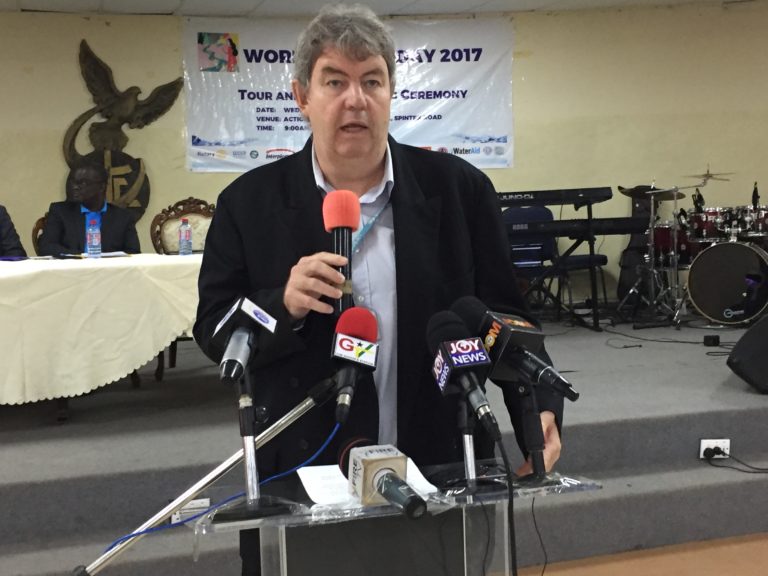
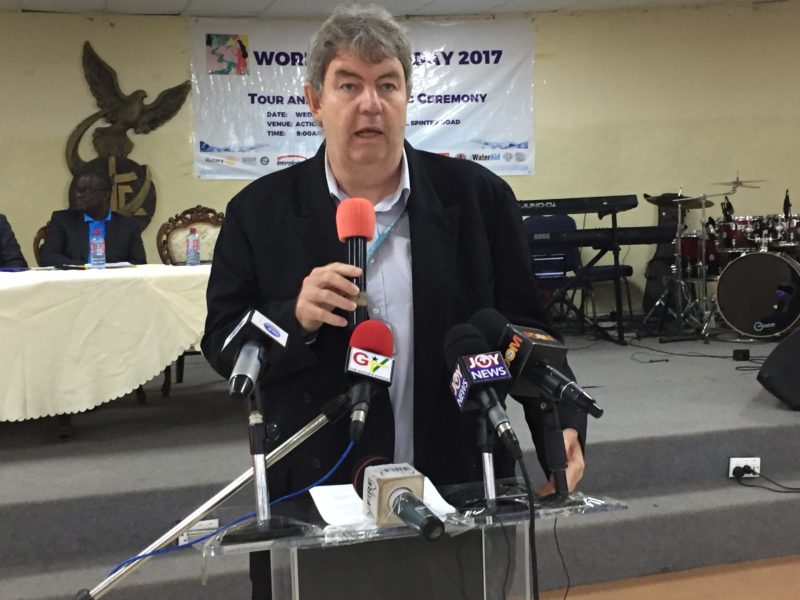
UNICEF Chief of WASH, David Duncan, delivering the message of the UN Resident Coordinator in Ghana at a briefing to climax WWD 2017 in Accra, Ghana

The need for a national realisation and action to transform this “waste to wealth,” was echoed in the statements and messages delivered at a stakeholders briefing session and flag hoisting ceremony to climax the Day’s celebration in Ghana. A statement read on behalf of the Minister for Sanitation and Water Resources, Kofi Ada, called for a “reframing of waste water from being a problem to be disposed of, to being a resource to be valued and exploited.”

The statement hinted that one way of tackling the problem, “is to prioritise closing the gender gap through the promotion of water and waste water efficient technologies that will safeguard the well-being of domestic users particularly women and children because of unequal access to services and resource inputs.”

The statement also alluded to portions of the National Water Policy on the need for interdisciplinary and participatory research that recognises the need for water related technologies, including those for waste and waste water management for the benefit of communities and the environment. It said the government intends to give meaning to these policy directives through practical actions.

These include to employ science and technology as the most economic and efficient ways to recycle waste; ensure that the sanitation and water sector gets the needed investment to upgrade obsolete systems and put in place new systems that will address the many facets of safe water and sanitation delivery; and manage waste in ways as to reduce pollution of water bodies.

In her commemoration message to Ghanaians, the UN Resident Coordinator, Ms. Christine Evens-Klock, said this year’s celebration of World Water Day is a reminder that Ghana can move a step further in reaching all the targets of the Sustainable Development Goal on water by “paying closer attention to the way we treat and dispose of waste water in our homes, farms and industries.”

The Sustainable Development Goals (SDGs), provide a broader global sustainability agenda by 2030. They go further than the Millennium Development Goals (MDGs) they succeeded, in addressing the root causes of poverty and the universal need for development that works for all people.

The targets of the Goal on Water are to achieve universal and equitable access to safe and affordable drinking water for all; attain access to adequate and equitable sanitation and hygiene for all, and end open defecation, paying special attention to the needs of women and girls and those in vulnerable situations; and improve water quality by reducing pollution, eliminating dumping and minimising release of hazardous chemicals and materials, reducing by halve the proportion of untreated wastewater, while increasing recycling and safe reuse.

The others are substantially increase water use efficiency across all sectors and ensure sustainable withdrawals and supply of freshwater to address water scarcity and sustainably reduce the number of people suffering from water scarcity; implement integrated water resources management at all levels including trans-boundary cooperation; and protect and restore water related ecosystems, including mountains, forests, wetlands, rivers, aquifers and lakes.

The UN Resident Coordinator’s message, observed that, “in Ghana, three out of every five persons drink waters contaminated with faeces, risking disease diseases including diarrhoea and cholera.” Her message, which was delivered on her behalf by the UNICEF Ghana’s Chief of WASH (Water, Sanitation and Hygiene), David Duncan, further observed that “diarrhoea causes the death of 3,600 children in Ghana every year and cholera outbreaks frequently occurs in our cities.”

The message noted that while people know the importance of treating water before drinking, “we also need to focus on treating it before disposing of it.”  This is because the continual discharge of untreated waste water pollutes water bodies, ground water and coastal water, while the costs associated with wastewater management, “are greatly outweighed by the benefits that include protection of human and public health, environmental sustainability and economic development.”

The message again cited the more direct benefits of waste water management as “biogas, organic fertiliser, industrial cooling water, treated water for irrigation for farms, landscapes, public parks, and residential lawns.”

The chairman for the event was the Director of the Water Research Institute, Dr. Osmund Ansah Asare. He identified part of the problem of waste water as inefficiency and poor management of water systems. Dr. Ansah Asare said disposal of untreated waste water poses sustainability challenges and undermines water security. He called for “an integrated approach to water resources management that can balance different needs in a just manner.”

As part of the climax event, participants at the briefing session also toured the waste water treatment facility at the headquarters of the Action Chapel International Church, in Accra. Rev. Nana Kofi Ahenkorah briefed them about the facility, which has been functioning since its completion in 2015. He listed the benefits as including the use of relatively smaller land space for construction; fast rate digestion of sewerage; treated waste water for irrigating lawns, assuring all year round greenery; generation of biogas that is supplementing LPG in cooking and electricity; and zero emptying of septic tanks, among other things.

The Church’s wastewater treatment facility is one of the few around the country that depicts the feasibility of such facilities on the premises of schools, hospitals, churches, estates, communities, and even in the houses of individuals. As has been stated already, the benefits of this facility greatly outweigh the associated costs, which will depend on the model, size and type of items to be used in the construction.

By Ama Kudom-Agyemang in Accra, Ghana

Kwesi Appiah returns as Black Stars coach

0

After interviewing 65 football coaches from all over the world, the Ghana Football Association (GFA) has picked Kwesi Appiah to become coach of the Black Stars of Ghana, albeit for the second time.

Kwesi-Appiah
Kwesi Appiah

Appiah comes back two years after he was fired from the same job.

The GFA has announced Appiah will replace Avram Grant from May 1, 2017, after the Executive Committee of the body endorsed the decision of the six-man search party.

Appiah, a former Ghana capital and assistant, will now quit his role with Sudan side Al Khartoum and return to the job he left two years ago.

He took Ghana to the 2014 World Cup finals with stunning victories over Egypt and Zambia, but the team’s poor showing in Brazil and squabbles in camp derailed most of the games from that time.

He took charge of 28 matches in that period, winning 15, drawing five and losing eight, including two at the World Cup, as Ghana failed to progress beyond the group stage for the first time.

His core mandate will be to win the 2019 Nations Cup, but he will also be required to resurrect the country’s ailing 2018 World Cup qualifying campaign.

By Felix Simire

Odemwingie signs for Indonesian club, Madural

0

Nigerian forward Peter Odemwingie is set to show his wealth of experience in Indonesia this week.

Peter-Odemwingie
Peter Odemwingie

The veteran player, who represented the Super Eagles at the 2010 and 2014 World Cup finals, has been without a club after leaving English championship side, Rotherham, earlier this year.

The 36-year-old credited the influence of Michael Essien, who plays for the rival club Persib Bandung, for making the move to Southeast Asia.

“I had no idea what it’s like here, but I had a brief chat with Michael Essien and he gave me positive feedbacks.

“To be regarded as a marquee signing is huge – I’ve played in different European countries but this place is really beautiful – and the people are very friendly.

“These are exciting times for Indonesian football and I’m happy to be a part of it,” said Odemwingie.

Madural United finished third in the Indonesian Liga 1 last season, and the 2017 campaign starts on April 15, 2017.

By Felix Simire

Cricket team leaves for South Africa

0

About 16 Nigerian Cricket players and officials have departed the country for South Africa, ahead of the International Cricket Council African division one qualifiers.

Cricket-Nigeria
The Nigeria Senior male Cricket team, the Yellow Greens, in action

The senior men national team has been in camp for over a month in preparation for the qualifiers.

Before their departure, the captain of the team, Chimezie Ewuzurinke, said the team was ready to give the country a good representation in South Africa.

“Mentally, psychologically and physically, we are up to the task right now. For what I have seen, the spirits of the boys in camp have been high. We are sure of getting to the next stage.”

President of the Nigeria Cricket Federation, Emeka Onyeama, is optimistic that the Nigerian team will come out tops from the qualifiers.

“Cricket is about perseverance, and since Team Nigeria is going to a more conducive natural environment, they will make qualification. I wish them luck as I believe the outing will be a beginning to Nigerian Cricket.”

Nigeria will be competing in the African qualifiers against Ghana, Sierra Leone, Tanzania and Botswana for a place in the World Cricket League division five.

By Felix Simire

Ogoniland clean-up yet to commence, five years after UNEP report

0

Over five years after the United Nations Environment Programme (UNEP) recommended that Ogoniland in South-South Nigeria should be cleaned of the last drop of spilled oil, not a single drop has been removed from the beleaguered community.

ERA-Ogoni-UNEP
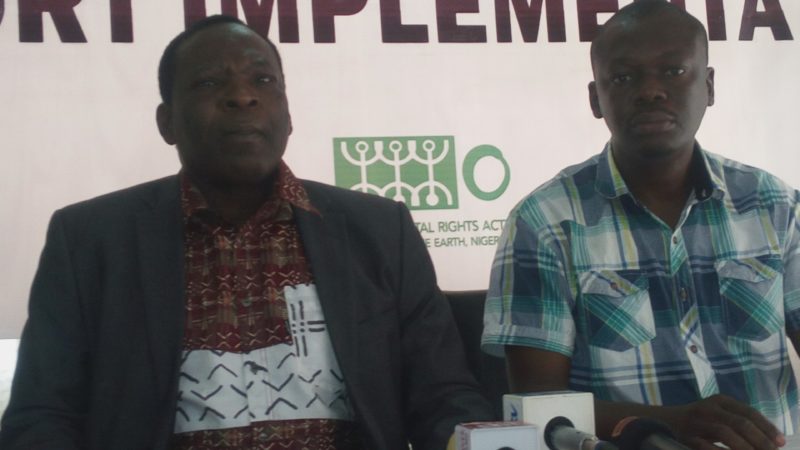
Executive Director of Environmental Rights Action/Friends of the Earth Nigeria (ERA/FoEN), Dr. Godwin Ojo (left); with the ERA/FoEN Head of Media, Philip Jakpor, at the media briefing

Executive Director of Environmental Rights Action/Friends of the Earth Nigeria (ERA/FoEN), Dr. Godwin Ojo, disclosed this at a press briefing on the issue on Tuesday, April 4, 2017 in Lagos.

The United Nations Environment Programme (UNEP) released its Environmental Assessment of Ogoniland in August, 2011. The report, delivered to the Federal Government, recommends to the government, the oil and gas industry, and communities to begin a comprehensive clean-up of Ogoniland, restore polluted environments and put an end to all forms of oil contamination in the region.

The clean-up is expected to last 30 years, from 2011. Initial $1 billion was to be released by Shell Petroleum Development Company (SPDC) for the project.

However, no verifiable effort was made in that line until 2015 when President Muhammadu Buhari promised to start the implementation of the UNEP report.

“It took exactly five years after the report was submitted to the Federal Government before acceptance of responsibility by Shell Oil Company and the Federal Government. With pressure from civil society groups, the clean-up exercise proper was flagged-off in 2016 in Bodo City, Rivers State, by Vice President Yemi Osinbajo.

“The expectation that greeted that ceremony, which had the Ogoni people and hundreds of civil society groups in support, has however dimmed barely a year after, as the promised clean-up exercise is still bogged down in bureaucracy and controversies. The plan for the clean-up is still shrouded in secrecy and has not been formally subjected to public scrutiny.”

ERA added that, even with the inauguration of the Governing Council to provide for an institutional framework to drive the process, no verifiable progress has been made as, according to the organisation, “not a drop of oil has been cleaned from Ogoni”.

Again, ERA fears that “Shell is bound to compromise the process, if it continues to be a member of the Governing Council with oversight functions for the clean-up of its own mess”.

While these go on, the environment and people of Ogoni are at the receiving end. They suffer impoverishment and misery, says the activist.

In November 1995, Kenule Saro Wiwa and eight other members of Movement for the Survival of Ogoni People (MOSOP), who were fighting against the degradation of Ogoniland, paid the supreme price, when the military government led by General Sani Abacha took them to the gallows. Even till date, people of the area drink benzene-polluted water and farm on hydrocarbon-soaked soil, according to Ojo.

To “add insult to injury”, he adds, “the pre-clean-up emergency relief measures recommended by UNEP such as access to clean water, rather than the benzene-polluted water sources they rely on, has not been addressed. Similarly, healthcare delivery and compensation for lost livelihoods continue to suffer neglect and inaction. Poverty is rife in Ogoni and the life expectancy of the people (reportedly put at 41 years) now considered the shortest in Nigeria.”

ERA said that as the clean-up remains in limbo, damning disclosures of wilful exposure of oil-producing communities to hazards continue to mount against Shell which, says the group, “continues to operate with impunity in the Niger Delta”.

“The most recent is from Kay Holtzman, a leading oil spill expert previously employed by Shell Nigeria. Holtzman revealed that Shell tried to conceal data on the potential health effects of its oil spills on Bodo community. Shell had lied to the court in the Bodo versus Shell case held in London and had no option than to withdraw the case for an out-of-court settlement for $83 million,” Ojo said.


ERA’s demands

In view of the foregoing, the Federal Government and relevant agencies are mandated to, among others:

  • Draw up and publish firm timelines through a participatory and transparent process, and publicise the step-by-step of the planned implementation of the clean-up process in conjunction with all interested parties.
  • Abrogate or amend the HYPREP (Hydrocarbon Pollution Remediation Project) gazette to provide the legal backing to the clean-up process. To this end, (they should) establish the Ogoni Environmental Restoration Authority as a means of empowering the Ogoni as recommended by the UNEP report.
  • Commence emergency relief measures and ensure the clean-up process is comprehensive, including environmental remediation such as biodiversity restoration, and compensation for loss of livelihoods.
  • Set up a new structure called Technical Partners Unit headed by UNEP and other interested institutions with expertise in complex multi-disciplinary clean-up process.
  • Empower NOSRA (National Oil Spill Environmental Agency) that currently lacks the capacity to detect spills, to be able to conduct proper clean-up process, or monitor clean-up independently through the joint investigation visits currently dominated by the oil companies.
  • While the UNEP report had recommended a $1 billion initial restoration fund for Ogoni, ERA/FoEN recommends $100 billion clean-up and restoration fund to cover the entire Niger Delta. This will pave way for conflict resolution in the Niger Delta.

Climate action: Young ambassadors cycle across Europe

0

Two young people from Wellington, New Zealand, are cycling across Europe in an epic endeavor to raise awareness for climate action and showcase projects related to the UN’s Climate Neutral Now and Momentum for Change initiatives.

Europe-on-four-wheels
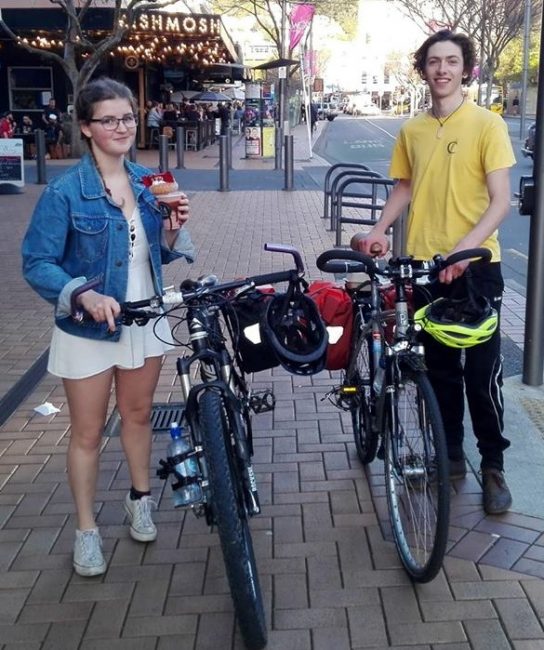
Young climate ambassadors: Inka Vogt and Fabian Beveridge

The climate ambassadors plan to cycle approximately 10,000 km across Europe to show that traveling can be climate neutral, visiting projects and interviewing key people active in climate protection on their way. One stop will be at the secretariat of the UN Framework Convention on Climate Change (UNFCCC) in Bonn, Germany.

“We’ll be featuring the video interviews they do visiting local champions, and you can follow their climate neutral journey on social media,” says the UNFCCC secretariat in a statement on Tuesday, April 4, 2017.

Inka Vogt and Fabian Beveridge are both 18 years old, and have just completed secondary school. They began their trip in Porto, Portugal and are heading towards Munich, Germany. The trip will take them via Greece and Serbia.

“The most important thing we want to contribute to with our trip is awareness about climate change and climate action, so people know it is possible and affordable to travel like we are”, they say about the project, dubbed “Europe on four wheels”.

“We want everyone to know the true ramifications of their actions when CO2 emissions are concerned, and attempt to provide and use alternatives”.

The carbon emissions from their flights, totaling about six tonnes, have been offset by helping fund a project in Thailand via the UN’s Climate Neutral Now initiative.

The Climate Neutral Now initiative enables individuals, companies and governments to measure their carbon footprints, reduce emissions where possible and offset the rest with UN-certified emission reductions, while at the same time investing in sustainable development projects in developing countries.

As climate ambassadors, Inka and Fabian will be visiting NGOs and Climate Neutral Now participants along their route, as well as Momentum for Change Lighthouse Activities. These are practical, scalable and replicable examples of what people, businesses, governments and industries are doing to tackle climate change. Momentum for Change is an initiative spearheaded by the UN Climate Change secretariat.

Niclas Svenningsen, Manager for the Strategy and Relationship Management at UNFCCC, expects that their trip can bring climate action to people’s attention and inspire them to cut carbon emissions.

“We are proud to have Inka and Fabian as UNFCCC’s Climate Neutral Now and Momentum for Change ambassadors! Their initiative to go around Europe by bike to visit, and tell the world about, good projects, ideas and organisations walking the talk on climate action will hopefully inspire others to follow suit – both to take climate action, and to take the bicycle when they are heading somewhere. I look forward to follow their progress, and to meet them along the way,” said Svenningsen.