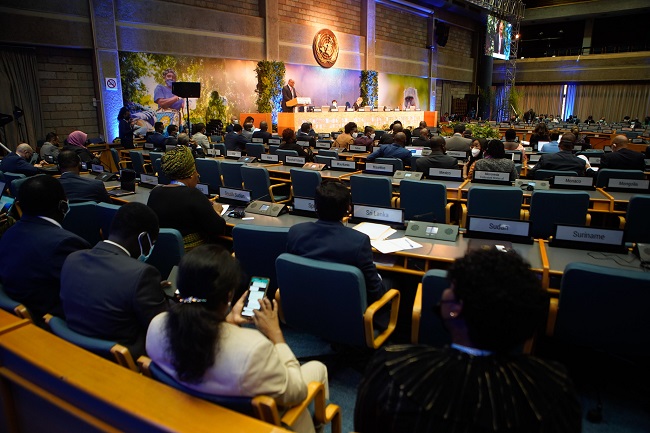
Saving the world’s glaciers. Reining in massive seaweed blooms. Reducing the environmental impact of artificial intelligence. These are just a few of the issues that are expected to be front and centre this week as representatives from more than 170 countries gather in Nairobi, Kenya, for the seventh session of the United Nations Environment Assembly (UNEA-7).
The assembly is the world’s top decision-making body on the environment and this year’s session comes at what experts call a critical time for the Earth. The three planetary environmental crises of climate change, nature, land and biodiversity loss, and pollution and waste are pushing natural systems to their breaking point, with potentially dire consequences for humanity.
UNEA-7
UNEA-7 runs from December 8 to 12, 2025. It will focus on how countries can, in the words of UN Environment Programme (UNEP) Executive Director, Inger Andersen, find “real solutions to real-world problems.
“This is also a year in which the world remained off track on efforts to slow climate change, to halt biodiversity loss and land degradation, to deal with plastic pollution,” Andersen said in the lead up to the assembly. “So, this is what we must do: deliver solutions that spark stronger, faster action on the three planetary environmental crises.”
Representatives are slated to discuss 15 draft resolutions and three draft decisions, including those calling on countries to protect fast-disappearing glaciers, better manage the production of minerals and metals, and end the scourge of seaweed blooms, which are swamping beaches around the world.
Perhaps one of the most-watched resolutions will be one that urges countries to reduce the environmental footprint of artificial intelligence. A growing body of research has found the data centres that house the technology consume vast amounts of power and water, churn out electronic waste and rely on minerals that are often mined unsustainably.
While not legally binding, UNEA-7 resolutions help countries find common ground and have in the past laid the groundwork for precedent-setting international agreements.
Alongside the debate over the resolutions, UNEA-7 will feature three high-profile discussions, exploring why environmental sustainability is critical to industry, global finance and human health.
National leaders, including heads of state and government, will gather on UNEA-7’s penultimate day for a series of speeches and meetings. The talks come amid rising conflicts and simmering trade tensions. But leaders are hopeful those perturbations will not derail the UNEA-7 discussions.
“It is clear that even in times of geopolitical shifts and challenges to multilateralism, Nairobi remains the strong, beating heart of environmental diplomacy,” said UNEP’s Andersen.
The first UNEA was held in 2014, ushering in a new era of international cooperation in which countries vowed to work together on environmental challenges, much like they do on other global concerns, like security and trade. Over the last 11 years, UNEA has passed resolutions on everything from combating wildlife trafficking to ending plastic pollution.
More than 4,800 people have registered for this year’s session, which will take place at the UN Office in Nairobi, a 56-hectare complex that is the only UN Secretariat headquarters in the Global South. Alongside the formal discussions, there will be a series of official side events, UNEA-linked associated events and exhibitions put on by representatives from Multilateral Environmental Agreements, bodies that work closely with UNEP and UNEA to address the three planetary environmental crises.
UNEA-7 will also feature the launch of the seventh Global Environment Outlook, a landmark report on the state of the planet. The winners of the 2025 Champions of the Earth award, the UN highest environmental honour will be announced while a gala will celebrate several pioneering efforts to restore the natural world.
The UN children’s agency on Monday, December 8, 2025, said the Democratic Republic of the Congo is battling its worst cholera outbreak in 25 years which has killed almost 2,000 people since January.
According to UNICEF, in one case, a quarter of the children in a Kinshasa orphanage 16 out of 62 died days after the disease swept through.
UNICEF spokesperson, John Agbor, said: “Congolese children should not be so gravely affected by what is a wholly preventable disease.”
UNICEF spokesperson, John Agbor
Cholera is a severe and potentially fatal diarrhoeal disease that spreads quickly when sewage and drinking water are not adequately treated.
African health authorities in November raised the alarm over a surge in the disease in Angola, Burundi and other parts of the continent, with an overall 30 per cent increase on cases recorded in 2024.
In Congo, conflict and a lack of access to clean water were exacerbating the crisis, and more funding was needed for sanitation, hygiene and health services, UNICEF said.
Since January, authorities have recorded 64,427 cases and 1,888 deaths, including 14,818 infections and 340 deaths among children, UNICEF said.
Seventeen of the country’s 26 provinces are currently impacted, the agency added.
According to the statement only 43 per cent of people in Congo have access to at least basic water services, the lowest rate in Africa, and just 15 per cent use basic sanitation.
The government has a cholera elimination plan with a proposed budget of $192 million, but that remains severely underfunded, UNICEF said.
UNICEF is appealing for about six million dollars in 2026 to sustain its rapid response work. “Without additional funds and coordinated action, many more lives could be lost,’’ Agbor said.
The Okomu National Park in Edo State, on Monday, December 8, 2025, said that a baby elephant which was rescued from an oil palm plantation on Nov. 30, is currently undergoing rehabilitation.
Conservator of the park, Mr. Osaze Lawrence, disclosed this in an interview at the park in Ovia Southwest Local Government Area of Edo.
The Okomu National Park in collaboration with the Africa Nature Investors (ANI) Foundation, had rescued the male calf, which is about two months old, while it was wandering alone inside the Okomu Oil Palm Company plantation.
The rescued elephant calf
The conservator said that workers had quickly stabilised the animal and alerted park authorities.
“It was a very young elephant less than two months old; they gave it water, tried to revive it and immediately called us,” he said.
He said that rangers and African Nature Investors (ANI) Foundation personnel had retrieved the calf and attempted to reunite it with its herd inside the elephant home range, but it still roamed.
“It walked some metres into the wild on its own and we thought it had returned to the family.
“But a commercial motorcyclist later reported seeing the disoriented calf alone by the roadside.
“At that point, it became clear it could not find its herd; the best option was for us to rescue, rehabilitate and stabilise it,” he said.
He noted that the calf, which had slipped into a health crisis, is now under 24-hour veterinary care at an ANI camp within the park.
“We are feeding it with the recommended milk, giving medication and monitoring its strength; it is stabilising and doing very well,” he added
He praised the synergy among national authorities, ANI, Okomu Oil Palm Company, veterinarians, as well as the international experts.
The rescue had drawn international attention, including that of a UK-born wildlife rescue specialist, Liz O’Brien, who had flown in from Zambia, to join the efforts.
O’Brien who had gathered about 15 years of experience rescuing elephants across Africa, described the case as historic.
“In Nigeria, they have never rescued an elephant like this before; this is the first of its kind,” she said.
According to her, she had travelled to Nigeria because the baby elephant required expert’s intervention, adding that hands-on training for local conservation teams, will help build long-term capacity.
“My main reason for coming was to train people here, so the knowledge stays in the country.
“You cannot always rely on people flying in; We must develop the next generation of wildlife rescuers,” she said.
Meanwhile, on the future of the calf, O’Brien advised that it would require at least two years of milk feeding and several more years of supervised exposure to the wild.
“Wild animals belong in the wild; the aim should be to return him to the area he came from when he is strong enough,” she said.
She noted that elephants needed vast spaces and zoos were not suitable.
On his part, ANI’s Project Manager at Okomu, Peter Abanyam, said that the rescue had revealed a growing conservation awareness among communities around the park.
According to him, the level of local engagement has risen significantly, with more community members showing interest in conservation employment and training.
“When the calf wandered to the main road, community members immediately alerted our gate; this. shows how much the awareness has grown,” he said.
He said that the rescue was intriguing because it involved an Africa rainforest elephant, which is on the list of wildlife on extinction.
He however, warned that increased elephant movement, could escalate human–wildlife conflict unless an urgent demarcation of park boundaries is completed.
“We will soon grow into a crisis if boundaries are not marked, especially in the southern part where farms are expanding.
“Communities must know where the park begins,” he added.
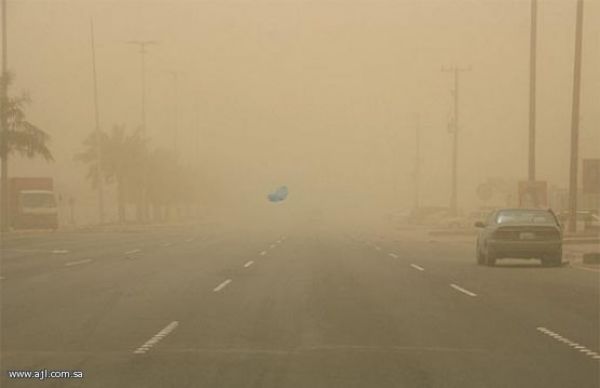
The Nigerian Meteorological Agency (NiMet) has predicted dust haze and cloudiness from Monday, December 8 to Wednesday, December 10, 2025, across the country.
NiMet’s weather outlook released on Sunday, December 8, in Abuja envisaged moderate dust haze on Monday in northern region with visibility range of 2 km to 5km over parts of Katsina, Kano, Jigawa, Gombe, Bauchi, Adamawa, Taraba, Borno and Yobe states.
The agency said the rest of the region would possibly experience slight dust haze throughout the forecast period.
Low visibility caused by dust haze
“For the central region, slight dust haze is anticipated over the region throughout the forecast period.
“For the southern region, a cloudy atmosphere with sunshine intervals is anticipated over the region with chances of isolated thunderstorms over parts of Cross River and Akwa Ibom during the morning hours.
“Later in the day, isolated thunderstorms with light rains are anticipated over parts of Rivers, Delta, Ondo, Lagos, Edo, Ogun, Bayelsa, Cross River and Akwa Ibom,” it said.
According to NiMet, moderate dust haze with visibility range of 2km to 5km is anticipated over the northern region throughout the forecast period on Tuesday.
It anticipated slight dust haze over the region central throughout the forecast period.
NiMet predicted a cloudy atmosphere with sunshine intervals over the southern region with prospects of isolated thunderstorms over parts of Bayelsa, Rivers, Delta, Cross River and Akwa Ibom later in the day.
The agency envisaged moderate dust haze on Wednesday over the northern region with a visibility range of 2km to 5km over the region throughout the forecast period.
“Moderate Dust haze with visibility range of 2 to 5km is anticipated over the central region throughout the forecast period.
“Cloudy atmosphere is expected over southern region during the morning hours. Isolated thunderstorms with light rains are anticipated over parts of Akwa Ibom, Cross River, Lagos, Edo, Ogun and Ondo later in the day,” it said.
NiMet urged the public to take necessary precaution as dust particles could be in suspension over the northern region.
According to it, people with asthmatic health conditions and other respiratory issues should be cautious of the present weather condition.
“Driving under rain should be with caution.
Airline operators are advised to get airport-specific weather reports (flight documentation) from NiMet for effective planning in their operations.
”Residents are advised to stay informed through weather updates from NiMet. Visit our website www.nimet.gov.ng,” it said.
Nigeria’s premier gas distribution company, Shell Nigeria Gas Limited (SNG), is expanding its operations in Ogun State with an agreement to provide gas to SG Industrial FZE, a leading steel company in the Guandong industrial zone in the state.
The agreement adds to a growing list of clients for SNG which has developed as a dependable supplier of gas through distribution pipelines of some 150km, serving over 150 clients in Abia, Bayelsa, Ogun, and Rivers states.
The company recorded the achievements working in close collaboration with NNPC Gas Marketing Limited (NGML).
Managing Director, Shell Nigeria Gas, Ralph Gbobo
“Our commitment is clear – to build, operate, and maintain a gas distribution system that is not only reliable, but resilient, transparent, and designed to fuel growth,” Managing Director, SNG Managing Director, Ralph Gbobo, said at the signing ceremony. “The agreement reflects our commitment to expanding access to cleaner and more reliable energy to support Nigeria’s growth agenda.”
Vice General Manager SG Industrial FZE, Moya Shua, said: “We are thrilled to partner with SNG on this transformative journey. This collaboration marks a major step forward in securing reliable energy that will power our growth and long-term ambitions.”
SNG was incorporated in 1998 as a fully Shell-owned company. It had also increased access to its natural gas pipeline network, connecting new customers like Reliance Chemical Products Limited II, Ultimum Limited, Nigeria Distilleries Limited III and Rumbu Industries Nigeria Limited, reinforcing its commitment to boosting domestic gas utilisation across Nigeria.
The milestones support the Federal Government’s Decade of Gas initiative and the broader gas development agenda.
The UN and partners on Monday, December 8, 2025, launched their global humanitarian appeal to save millions of lives where shocks hit hardest – in wars, climate disasters, earthquakes, epidemics and where crop failures occur.
The immediate priority is to save 87 million lives with $23 billion in funding, the Office for the Coordination of Humanitarian Affairs (OCHA) said. Ultimately, in 2026, the aim is to raise a total of $33 billion to support 135 million people through 23 country operations and six plans for refugees and migrants.
Tom Fletcher, United Nations Under-Secretary-General for Humanitarian Affairs and Emergency Relief Coordinator, OCHA
“This appeal sets out where we need to focus our collective energy first: life by life,” said UN Humanitarian Chief, Tom Fletcher. “The Global Humanitarian Overview 2026 is grounded in reform, evidence and efficiency. We’re shifting power to local organizations, putting more money directly into the hands of the people who need it, and behind it all, we are renewing and reimagining humanitarian action with idealism, humility and hope.”
The highly prioritised appeal follows a year when humanitarian lifelines strained and, in some places, snapped due to brutal funding cuts. Funding for the appeal in 2025 – $12 billion – was the lowest in a decade and humanitarians reached 25 million less people than in 2024. The consequences were immediate: hunger surged, health systems came under crushing strain, education fell away, mine clearance stalled and families faced blow after blow: no shelter, no cash assistance, no protection services.
Amidst this devastation, civilians were exposed to utter disregard for the laws of war and more than 320 aid workers were killed, the vast majority local staff.
In 2026, the largest individual response plan is for the Occupied Palestinian Territory where $4.1 billion is needed to reach 3 million people who have experienced shocking levels of violence and destruction. In Sudan, the world’s largest displacement crisis, $2.9 billion is needed for 20 million people. The largest of the regional plans is for Syria at $2.8 billion for 8.6 million people.
As aid groups concentrate resources where crises are worst, they are also cutting duplication and supporting markets by buying locally, making sure every dollar works for the people they serve.
The UN will now take the appeal to the Member States and ask for their backing. Countries will also be urged to use their influence to increase the protection of civilians, including humanitarians, in armed conflict by holding perpetrators – and those arming them – to account.
“I will then share the amounts committed and answer a simple question: did governments show up?” Mr. Fletcher said. “The answer will define who lives and who falls through the cracks.”
Coinciding with the International Day of Soils, the meeting marking the halfway point between the United Nations land conferences in Riyadh and Ulaanbaatar came to a close in Panama on Friday, December 5, 2025, after five days of engaged dialogue on progress in addressing the global loss of fertile soils, land degradation and drought.
The 197 parties convening at the 23rd session of the Committee for the Review of the Implementation of the Convention (CRIC23) to the United Nations Convention to Combat Desertification (UNCCD) prepared the groundwork for the upcoming land conference that will take place in Mongolia in 2026, where nations will be called to protect the world’s precious land and water resources as the global demand for food and energy continues to soar.
Andrea Meza Murillo, Deputy Executive Secretary, UNCCD; Rajeb Boulharouf, UNCCD Secretariat; and CRIC23 Chair Philippine Dutailly, at the closing plenary of the 23rd session of the Committee for the Review of the Implementation (CRIC 23) of the UN Convention to Combat Desertification (UNCCD)
As part of the road from Riyadh to Ulaanbator, delegates and non-state actors exchanged on how to advance the Action Agenda that emerged from COP16, including the Riyadh Global Drought Resilience Partnership and the Drought Resilience Investment Facility. At the center of discussions was how best to leverage new cooperation and financial frameworks to mobilize private and bilateral funding for land and drought action on the ground.
Additionally, they laid the foundation for the resumption of the negotiations of a global drought framework at the 17th Conference of the Parties (COP17), which will take place in August 2026. The Tafa’ul process, the first of three informal and voluntary dialogues on the matter led by the COP16 presidency, made progress in building the trust between the Parties ahead of the talks in Mongolia.
CRIC23 also saw progress in the operationalisation of the Riyadh Global Drought Resilience Partnership, which approved its governance system and presented an action plan to support around 70 countries in reducing their vulnerability to one of the world’s most deadly and costly hazards.
Other highlights were the meeting of the Gender Caucus, created at COP15 in Abidjan and included in the official agenda for the first time this year as a space for shaping gender-responsive land policy; the Youth
Caucus, and the first official meeting of the Indigenous Peoples Caucus, created at COP16, which called for meaningful involvement in land and drought policy and programmes at the multilateral and national levels.
During CRIC23, parties assessed progress on issues like capacity building, reporting, gender, land tenure and the implementation of voluntary Land Degradation Neutrality (LDN) targets.
UNCCD Executive Secretary, Yasmine Fouad, underscored the power of multilateralism and, speaking on behalf of the UNCCD Secretariat, reaffirmed the determination to help countries translate political commitments into clear outcomes for people and the planet: “National drought and land degradation neutrality plans without finance remain words on paper. Our mission now is to unlock financing and investments for protection, restoration and resilience, including from the private sector, so countries can deliver real change on the ground. From Panama to Ulaanbaatar, we must keep the momentum and ensure that commitments translate into action.”
Indigenous and women’s voices
Participants in the first meeting of the Indigenous Peoples Caucus emphasized their role as land stewards. Together, representatives from around the world called for a say in decision making, for a recognition of their millennial wisdom, and for access to finance. Meanwhile, work is underway to convene the first Local Communities Caucus, created at COP16.
“Indigenous peoples gathered here know what we want from COP17,” said Hindou Oumarou Ibrahim, Coordinator of the Association for Indigenous Women and Peoples of Chad (AFPAT). “We want to be heard in the process – not as observers, but as participants. We want to have direct access to finance to implement COP17 decisions in our territories. We want our ancestral knowledge to be integrated into science discussions. Indigenous people are not a box to check. We are an essential voice in ensuring that the land will continue sustaining humanity in the years to come.”
The Women Caucus brought attention to the leadership of Indigenous women in sustainable land management and the gendered impacts of sand and dust storms with a view to informing gender-responsive recommendations emerging from UNCCD processes. Additionally, women from developing countries hit by drought received negotiation training in preparation for COP17 through the Women Delegates Fund (WDF) – a step forward since women represented only 33 per cent of delegates at the last CRIC session.
All meetings were supported by UN Volunteers, who will also facilitate COP17 as the world marks the 2026 the International Year of Volunteers for Sustainable Development (IVY 2026) to recognise their contributions.
Small islands, vast rangelands
A new UNCCD information brief highlighted that every inch of land is vital for the survival of Small Islands Developing States (SIDS), which are facing growing impacts from drought and the loss of arable land. The SIDS’ land area affected by at least six months of extreme drought per year has increased to 17 per cent in the 2014–2023, up from 2 per cent between 1961–1970.
Meanwhile, urbanisation, unsustainable agriculture and extractive industries are fueling land degradation in some of the world’s smallest, more isolated and poorest territories, which are among the most vulnerable to climate change.
Another brief revealed that restoring rangelands delivers some of the strongest returns of any ecosystem investment, with benefits reaching up to $35 for every dollar invested, according to preliminary findings of a global cost–benefit analysis by the Economics of Land Degradation (ELD) Initiative.
Both reports will be presented in full at COP16 in Mongolia, coinciding with the International Year on Rangelands and Pastoralists (IYRP) and as SIDS are coming together to speak with a unified voice in the UNCCD process about their unique challenges and opportunities.
From Riyadh to Mongolia
In December 2024, at COP16 in Riyadh, parties adopted the first major decision on agricultural lands; emphasised the need to engage the private sector through the Business4Land initiative; and mobilised billions for land and drought action in the world’s most vulnerable countries. That legacy is being carried onwards to COP17.
For example, the gathering in Panama advanced the FAO-led consultation to develop guidance on COP’s landmark decision on avoiding, reducing and reversing land and soil degradation of agricultural lands. The document, which will target decision-makers and practitioners, will offer nations context-specific pathways to addressing the loss of fertile land – crucial to achieve LDN goals, since around 60 per cent of degradation occurs in agricultural lands.
Osama Faqeeha, Deputy Minister of Environment, Water and Agriculture of the Kingdom of Saudi Arabia, UNCCD COP16 Presidency, said: “As UN Secretary-General António Guterres said, ‘We live on land and we live off land, but we treat it like dirt.’ It is high time we value it for what it is worth. CRIC23 has been an opportunity to maintain the momentum for land and drought on the road from Riyadh to Ulaanbaatar, and to align efforts on innovation and finance for present and future generations.”
Mr. Batmunkh Dondovdorj, Special Advisor to the Minister and Chairman of upcoming COP17 Presidency National Office, declared: “Looking ahead, our goal as the incoming Presidency is to help deliver a COP that is inclusive, balanced, scientifically informed, and oriented toward practical solutions.
“A COP that reflects regional diversity, strengthens cooperation across sectors, brings together governments, scientists, youth, women, Indigenous Peoples, communities, and partners, and advances tangible progress toward land degradation neutrality and drought resilience.”
Landlords in Port Harcourt, the Rivers State capital, have called on government to take urgent action to prevent the collapse of some newly constructed internal roads, following what they described as poor drainage system.
The landlords spoke under the aegis of “Rumuokania 11, New Layout Landlords Association by Location, Ada George, Port Harcourt”, at a media chat in Port Harcourt.
They expressed worries that the situation mày cause harships if left unchecked, and appealed to goverment to come to the rescue.
Gov. Siminalayi Fubara of Rivers State
Chairman of the association, Mr. Joel Gbandi, who read the appeal, noted with dismay the worrisome impact of a blocked water canal on the newly constructed Internal roads.
He expressed fear that the blockage could expose affected areas to erosion and subject residents and their livelihoods to threat, if not tackled.
While commending Gov. Siminalaye Fubara’s for his commitment to infrastuctural development following solutions to community-based problems, he underscored the need to prevent a collapse of infrastructures.
”While we commend the governor for this impactful project, we wish to draw his attention to an emerging issue that poses a threat to the durability of this critical road infrastructure.
“There is a major canal which is currently blocked; it used to be a vital waterway, traversing several communities, including Rumuokania, Mgbraja, Ogbogoro, Egbelu, Elioparanwo, Mini-Orlu, Rumue-vorlu amongst others.
“We urge the government to fast-track desilting of affected canal and protect the roads from being washed away by flash flood during the rains,” he said.
Meanwhile, the Chairman of Ikole Local Government Area of Ekiti State, Mr. Bayo Omojola, on Sunday, December 7, 2025, warned residents to desist from indiscriminate dumping of refuse in drains, or prepare to face sanctions.
Omojola gave the warning when he paid an unscheduled visit to the Oja Oba’s market and motor parks in Ikole-Ekiti.
Adressing the media after taking a tour round the market, the Chairman warned residents against disposing and burning of refuse in the drainage, adding that culprits will be made to face the law.
He noted that some of the refuse being dispose in the drains, often blocked the waterways, thereby causing flood in the community.
“Any individual caught dumping refuse in drains or dredged waterways, will be punished according to the State Environmental Law.
“The State Governor, Mr. Biodun Oyebanji, worked hard to ensure that every part of Ekiti does not experience flood during the rainy season.
“It is our duty as good indigenes of Ekiti, to curb indiscriminate dumping of refuse so that whenever the rainy season comes, we will all have peace of mind.
“I want all the local Environmental officers to be vigilant, any shop owner who dumps refuse in any of the drains should be punished according to the State Environmental Laws,” he said.
He, consequently, urged residents to always dispose their refuse in the waste bins or register with the Waste Management Board, for regular collection of their refuse at affordable cost.
Renaissance Africa Energy Company Limited has inaugurated its Southern Swamp Associated Gas Solutions (SSAGS) Project in Delta State, injecting approximately 100 million standard cubic feet of gas per day (MMScf/d gas) to the domestic market and about 820 million barrels of oil equivalent (MMboe), in an implementation of the company’s strategy for ending routine flaring in its Tunu Node operations and boosting industrialisation.
When used for electricity, 100 million standard cubic feet of natural gas will power about 6,700 Nigerian households for one year, with an expected ripple effect that benefits businesses, creating thousands of direct and indirect jobs across different phases of the gas supply chain.
Managing Director and Chief Executive Officer, Renaissance Africa Energy Company Limited, Mr. Tony Attah (left); with the Chief Production Officer, Mr. Mesh Maichibi, on an inspection tour of the company’s new Southern Swamp Associated Gas Solutions (SSAGS) Project …recently
Managing Director and Chief Executive Officer, Renaissance, Mr. Tony Attah, described the inauguration as “a milestone that marks a significant achievement in our commitment to delivering sustainable energy solutions and advancing associated gas utilisation. It highlights our vision to ensure energy security and industrialisation in the nation delivered through our core values of Collaboration, Respect, Integrity, Safety, and Performance”.
Attah said, “The SSAGS project was initiated to provide Associated Gas Gathering (AGG) infrastructure to eliminate routine flaring from the Tunu producing nodes comprising our operations in Opukushi, Benisede, Ogbotobo and Tunu, for power generation, industrial use, and economic growth. Renaissance is very proud to deliver this strategically significant project that will generate jobs and prosperity in the Nigerian economy.”
The project is within oil mining leases 35 and 46 fields, located in the coastal swamp region, south of Warri, and establishes anchor infrastructure necessary for future development of substantial discovered and undiscovered potential within the node, currently estimated at about 820 million barrels of oil equivalent.
“This project is more than infrastructure – it is a symbol of innovation, resilience, and collaboration,” Attah said, adding that the project was the first under the Renaissance identity “but given this company’s antecedents and our vision, this is just the beginning.”
According to Attah, the project was a further demonstration of the commitment of Renaissance to its Nigeria content development goal. “Over 90% of the work was done in-country, leading to upskilling of Nigerian expertise and community content development,” he said.
Speaking on the significance of the project to environmental performance of Renaissance, the company’s Chief Production Officer, Mr. Mesh Maichibi, noted the SSAGS project would route all production into four flow stations in Tunu, Ogbotobo, Benisede, and Opukushi, and evacuate oil via the Trans Ramos Pipeline to the Forcados Export Terminal, thereby providing Nigeria with the latest success story in the country’s commitment to ending flaring in oil and gas operations.
Maichibi added: “The project will sustain the domestic gas network with over 30% contribution, creating huge value to Nigeria and Renaissance’s domestic gas aspiration. The gas is predominantly designed for domestic gas utilisation, with a normal export route delivered to the Escravos–Lagos Pipeline System (ELPS), with an alternative route to the Nigeria LNG in Bonny for continuous oil production without flaring in the event of the DomGas export route (ELPS) unavailability.”
Speaking on behalf of the SSAGS host communities, the Amanana-Owei of Egbemo-Anagalabiri domain, King Jacob Isreal Monday Ogbolo, commended the success of the project, applauding the employment opportunities that it is providing for members of the host communities. “Anytime we come in here, we see indigenes of host communities and non-indigenes working together peacefully.”
Since the start of the project, SSAGS has successfully exported a cumulative volume of approximately 158 billion scf gas to both the domestic network and NLNG, with about 98 billion scf supplied to the domestic gas network and 60.1 billion scf to the Nigeria LNG, Bonny.
The Edo State Government has vowed to fully enforce its new Sanitation and Pollution Management Law to safeguard public health and the environment.
Commissioner for Environment and Sustainability, Mr. Nosa Adams, gave the assurance during a meeting with stakeholders on Sunday, December 7, 2025, in Benin City, the state capital.
Adams said the law would strengthen efforts to keep communities clean while addressing pollution and environmental degradation across the state.
Gov. Monday Okpebholo of Edo State
He stressed the importance of remediation, regeneration, and restoration programmes aimed at reversing years of environmental damage.
According to him, the ministry will intensify advocacy campaigns to enlighten residents on the value of environmental protection and proper waste habits.
“The law is geared toward creating a safe and clean environment for all residents,” Adams said.
He added that environmental cleanliness begins with personal responsibility, starting from individual homes and neighbourhoods.
The commissioner highlighted the mandates of the six agencies under the ministry, including the Forestry Commission and Waste Management Board.
He said coordination among agencies remained central to delivering improvements in sanitation and pollution control across Edo.
Adams assured stakeholders that the ministry had begun wider engagements, including with the media, to promote consistent public awareness.
“The Edo State Sanitation and Pollution Management Law is a comprehensive legislation that addresses key aspects of environmental protection,” he noted.
Some stakeholders expressed concerns about overlapping responsibilities among agencies involved in implementing the law.
They also stressed the need for stronger enforcement to ensure the law delivers meaningful environmental improvements.
Adams said the ministry was already working to harmonise agency roles and strengthen cooperation to avoid duplication.
He reaffirmed the government’s commitment to ensuring the law meets its objectives and enhances environmental governance.
The meeting offered stakeholders a platform to raise issues and seek clarifications.
Participants welcomed the opportunity to discuss the broader environmental challenges confronting Edo communities.
They also acknowledged the need for active collaboration between citizens and government institutions.
The implementation of the new law is expected to improve environmental quality and support sustainable development across Edo.
Officials believe the law will create cleaner, safer spaces while tackling harmful environmental practices.
Residents were encouraged to embrace environmentally friendly habits to complement government initiatives.
Environmental advocates at the meeting called for continuous monitoring to ensure compliance with the law.
They also urged the government to sustain its public education campaigns throughout urban and rural areas.
Adams said the ministry is committed to transparency and will provide updates on enforcement measures.
He reaffirmed the government’s belief that environmental protection is essential to Edo’s long-term development.
Stakeholders agreed that the law represents an important step towards a cleaner and healthier state.
They also emphasised that collective participation would determine the success of the legislation.
The meeting ended with a shared commitment to support the enforcement of the Sanitation and Pollution Management Law.