25.9 C
Lagos
Friday, January 2, 2026
Home Blog Page 20

‘From flares to value’ – NNPC/Heirs Energies lead gas commercialisation, eliminate flaring

0

The NNPC/Heirs Energies OML 17 Joint Venture on Tuesday, December 9, 2025, advanced Nigeria’s gas commercialisation and environmental stewardship agenda with the symbolic signing of Gas Flare Commercialisation Agreements under the Nigerian Gas Flare Commercialisation Programme (NGFCP) and approved Non-NGFCP frameworks.

The ceremony marks a significant transition from regulatory approvals to structured commercial execution, enabling flare gas volumes across OML 17 to be captured and deployed for productive use, including power generation, industrial applications, LPG and CNG, in alignment with Nigeria’s gas development priorities and energy-transition objectives.
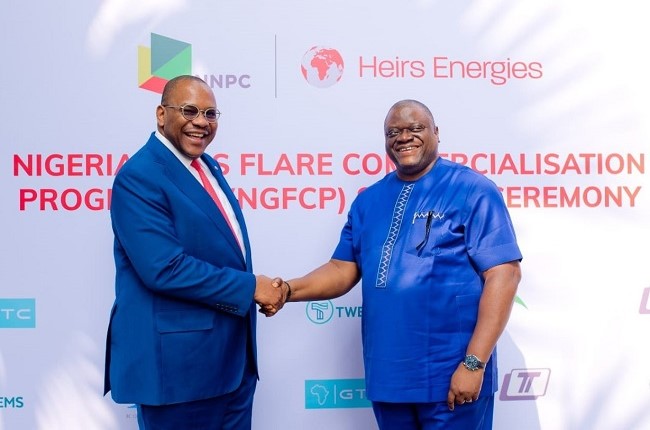
Heirs Energies
Engr. Seyi Omotowa, Chief Upstream Investment Officer (CUIO), NUIMS, and Osa Igiehon, Chief Executive Officer, Heirs Energies, during the NGFCP/Non-NGFCP Gas Flare Commercialisation Signing Ceremony for OML 17 – reflecting strong JV alignment to transform routine flares into productive gas for power and industrial use, in line with NUPRC’s regulatory framework

The agreements bring together Heirs Energies, as operator of the OML 17 Joint Venture, and approved flare gas offtakers – AUT Gas, Twems Energies, Gas & Power Infrastructure Development Limited (GPID), PCCD and Africa Gas & Transport Company Limited (AGTC) – under frameworks designed to eliminate routine flaring while converting previously wasted resources into economic value.

Speaking at the ceremony, the Chief Upstream Investment Officer of NUIMS, Seyi Omotowa, representing NNPC Limited, described the milestone as a practical demonstration of Nigeria’s commitment to gas-based development.

“For us at NNPC Limited and NUIMS, flare gas commercialisation is not a compliance exercise; it is a strategic pathway to improving energy availability, deepening gas-based industrialisation and strengthening Nigeria’s position as a responsible energy producer. OML 17 has become a practical model of this vision, moving decisively from approval to delivery.”

He commended Heirs Energies for disciplined execution and investment, noting that the JV continues to set benchmarks for operational delivery and gas development within Nigeria’s upstream sector.

The Nigerian Upstream Petroleum Regulatory Commission (NUPRC), represented at the event on behalf of the Commission Chief Executive, Gbenga Komolafe, reaffirmed the Commission’s support for the project, describing flare gas commercialisation as a cornerstone of Nigeria’s decarbonisation pathway under the Petroleum Industry Act (PIA) 2021.

“This ceremony demonstrates Heirs Energies’ commitment to eliminating routine gas flaring across OML 17 and aligns fully with the Commission’s Gas Flare Commercialisation Programme and national energy and emission-reduction objectives,” the NUPRC representative said.

Heirs Energies’ Chief Executive Officer, Osa Igiehon, noted that the agreements reflect the company’s broader gas-led strategy and brownfield excellence approach, focused on creating long-term value for Nigeria.

“Gas sits at the heart of Nigeria’s development journey. Through disciplined investment, partnership with regulators and credible offtakers, and a clear execution focus, we are converting waste into value, strengthening domestic energy supply and supporting responsible operations across OML 17,” he said.

The NGFCP and Non-NGFCP flare gas projects build on recent operational progress by the OML 17 Joint Venture, including a significant increase in gas delivery to the domestic market through brownfield interventions and infrastructure optimisation. The JV has also continued to deepen its host-community partnerships through targeted healthcare interventions, education support and skills-development programmes across its areas of operation.

With the symbolic signing completed, the flare gas offtakers are expected to progress into full project implementation, working closely with the JV, regulators and communities to deliver commercial, environmental and social outcomes.

According to Heirs Energies, the OML 17 NGFCP initiative reinforces Nigeria’s position as a gas-led economy, supporting domestic power generation, industrial growth and responsible resource development while advancing the country’s energy-transition objectives.

European bison, wild horses help store tonnes of carbon in soil yearly, research finds

0

European bison and other large herbivores help significantly with soil carbon storage. This was the finding of scientific research in the reserve of large herbivores called the European Serengeti located in the Czech Republic near Prague.

The results are said to have been confirmed by research in other reserves where large herbivores live.

“Soils in all large herbivore reserves contained more organic carbon, a higher proportion of stable humus and showed more intense microbial activity than in the control areas. Natural grazing thus contributes to the storage of carbon in the form of stable organic matter, increases the potential fertility of soils and also increases the ability of soils to retain water,” points out Eva Kastovska from the University of South Bohemia, lead author of the research.

European bison
European bison. Photo credit: Michal Köpping

According to her, it is thanks to large wild ungulates that black earths, the most fertile soils on the planet, were created.

Scientists estimate that about 390 tonnes of carbon are stored in one-third of the European Serengeti reserve per year. This makes the natural grazing of large ungulates significantly different from that of livestock, which contribute to carbon emissions into the environment and thus to climate change. Moreover, according to research from around the world, grazing by domestic animals leads to soil compaction, loss of organic matter, a decline in soil recovery, and leaching of nitrogenous substances into surface and groundwater.

“For millions of years, large ungulates were part of a balanced system that was carbon neutral. Moreover, they were one of the main factors that brought the necessary dynamism to the landscape and thus played a key role in creating high biodiversity,” added Dalibor Dostal, director of the conservation organisation European Wildlife, which established the European Serengeti large herbivore reserve in collaboration with scientists in 2015. It is home to herds of European bison, wild horses and back-bred aurochs.

Current research from the Czech Republic has confirmed the findings of international research in Romania. A herd of 170 European bison released into the wild in Romania’s Tarcu Mountains could help store CO2 emissions equivalent to removing nearly two million cars from the roads per year. In their research, the scientists used a new model developed by experts from Yale University.

This calculates the additional amount of atmospheric CO2 that wildlife species help to capture and store in the soil through their activity in ecosystems.

The European bison herd in the Tarcu Mountains, which covers an area of nearly 50 square kilometres, captures two million tonnes of carbon per year. This is approximately 9.8 times more than the same area would capture without European bison. The difference is equivalent to the annual CO2 emissions of around 1.88 million average US cars running on petrol.

New modeling tool provides UN with opportunity to achieve environmental goals

The Eric and Wendy Schmidt Centre for Data Science & Environment has launched Kigali Sim, a free and open-source modeling tool designed to help global policymakers achieve environmental and climate goals, with a focus on reducing greenhouse gas emissions.

At the Executive Committee of the Multilateral Fund for the Implementation of the Montreal Protocol held on Friday, December 5, 2025, United Nations, the Multilateral Fund Secretariat and researchers at the University of California, Berkeley debuted an open-source modeling tool that provides global policymakers with unprecedented analytical and computing power to reach environmental and climate goals.

The Eric and Wendy Schmidt Centre for Data Science & Environment (Schmidt DSE) co-designed the tool, dubbed Kigali Sim, in partnership with the United Nations, as well as numerous countries and supporting organisations.

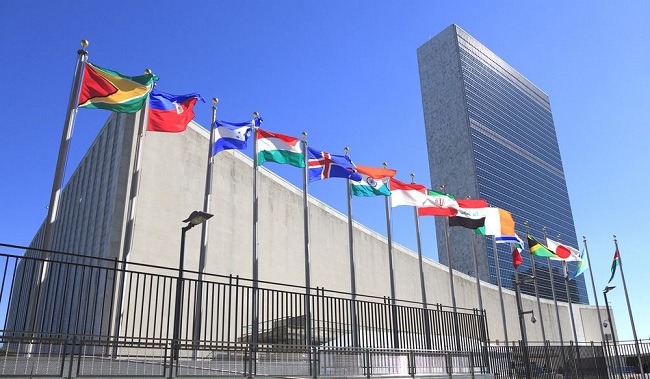
UN Headquarters
UN Headquarters, New York

Watch an introductory video and brief simulation here.

“Kigali Sim improves global regulation of highly-potent greenhouse gases such as hydrofluorocarbons,” said Sam Pottinger, Senior Research Data Scientist at Schmidt DSE and lead developer of Kigali Sim. “The tool simulates possible outcomes of policy interventions with greater efficiency and ease than previously possible. Kigali Sim is designed for those without programming expertise to access advanced modeling techniques, including optional AI features, and can work in a web browser.”

In order to achieve environmental goals set by the United Nations’ Montreal Protocol, policymakers need more powerful analytical tools to assess consumption trends and evaluate policy interventions. The Montreal Protocol, signed in 1987, is the most successful global environmental treaty in history and is ratified by all UN member states. Historically, the agreement sidestepped a potential catastrophe with the ozone layer by regulating ozone-depleting substances and greenhouse gases.

Since 2016 the treaty’s focus is to phase down the most detrimental greenhouse gases like hydrofluorocarbons (HFCs) in refrigeration, air-conditioning, and the food system. To date the UN’s Multilateral Fund has facilitated more than $4.3 billion to support developing nations (also known as “Article 5” countries) in reducing production and consumption of HCFs and ozone-depleting substances. 

Using conservative estimates, Kigali Sim could help a hypothetical, middle-income nation formulate policies that could reduce overall greenhouse gas emissions by about 5% by 2040. For context, this would be the equivalent of the US cutting half of all agriculture-related emissions.

The 5% estimated reduction would represent around 10% of that country’s target for emissions reductions under the Paris Agreement given past commitments, long term goals, and expected cooling pressures. These approximations do not factor in additional co-benefits from reductions, including a country’s transition to more sustainable energy usage, which will likely produce greater environmental benefits overall. 

Schmidt DSE and the Multilateral Fund Secretariat designed Kigali Sim in partnership with officials from UN member countries and supporting organizations tasked with environmental policy decisionmaking. The tool provides an easy-to-use interface, where users can enter country-level modeling data to analyse HFC consumption trends.

They can compare policies under consideration to quickly simulate potential impacts on emissions, consumption, and equipment across multiple scenarios. Users can choose to bring in an AI assistant to more quickly process input data from various sources and formats, explore policy ideas with the computer as a partner, and rapidly analyze simulation results using simple language questions and answers. 

“Kigali Sim offers an exciting opportunity to use cutting-edge data science tools like AI to guide funding implementation under the Montreal Protocol,” said Balaji Natarajan,
Secretariat of the Multilateral Fund for the Implementation of the Montreal Protocol, United Nations Environment Programme. “This tool provided a depth of policy analysis in under three hours that would have previously taken me three days to produce.”

“With this new resource, we can make greater strides to preserve our global environment,” said Tina Birmpili, Chief Officer of the Multilateral Fund. “It’s a compelling example of how we can bridge the innovation brought by university research centers like Schmidt DSE with international policy making.” 

During the beta testing phase earlier this year, delegates and other experts from more than 12 countries actively used Kigali Sim and provided critical feedback for improvements. This community represented Article 5 nations, donor countries (which financially contribute to the Multilateral Fund), international nonprofits and agencies, and private consultants.                                                                                                     

Kigali Sim is free and open-source, and does not require previous coding experience. The tool can run locally in web browsers or on a desktop while allowing users to maintain privacy over their data. 

“Kigali Sim is incredibly unique in that it democratises access to rigorous modeling techniques and puts the latest in data science directly into the hands of decisionmakers,” said Douglas McCauley, Schmidt DSE Faculty Director & Associate Professor at the University of California, Berkeley. “Moreover, users with a variety of technical backgrounds can perform complex simulations and arrive quickly at results.”

Schmidt DSE leverages the power of modern data and environmental science to address pollution, the biodiversity extinction crisis, and other urgent climate change-caused challenges. This is the third open-source policy tool that the team has developed to date; others include a model that predicts the global production, use, and fate of plastics through 2050, and a tool to help depict future corn yields in the US amidst a changing climate. Schmidt DSE is part of the College of Computing, Data Science, and Society and the Rausser College of Natural Resources at UC Berkeley.

Enugu and Climate Governance Ranking: Progress made, impact delivered, more work ahead

0

The rise of Enugu State in the recently released 2025 Subnational Climate Governance Performance Ranking offers a powerful encouragement for progress made by Governor Peter Ndubuisi Mbah in confronting the escalating climate-related risks across our communities but also serves a as clear evidence that deliberate climate governance reforms, when properly implemented, can deliver tangible economic, social and environmental benefits for the people.

In the 2025 ranking, Enugu State emerged among the top-performing states nationwide, recording one of the most notable improvements in the federation – rising from 18th position in 2024 with 85 points to 5th position in 2025 with 270 points.

Enugu State
Prof. Chukwumerije Okereke. of the SPP (left) presenting the Climate Governance Ranking award to Governor Peter Mbah of Enugu State

This independent assessment, conducted by the Society for Planet and Prosperity (SPP) in partnership with the Federal Ministry of Environment’s Department of Climate Change (DCC) and the UK FCDO under the PACE programme, evaluates all 36 states across five core pillars of climate governance: institutional arrangements, climate policy, budgeting and finance, project implementation, and online visibility.

Our improved ranking was not accidental. It is the direct outcome of the intentional reforms triggered by the first edition of the ranking, which clearly diagnosed the gaps in Enugu’s climate governance architecture and provided a practical roadmap for improvement. We took that diagnosis seriously.

Following the first ranking, Enugu moved decisively to strengthen governance at the highest level. We undertook a rigorous and deliberative process to drafting a comprehensive Enugu State Climate Policy and Climate Action Plan which was tendered to and approved by the Enugu State Executive council. Our climate policy and action plan contains qualitative assessment of emission profile of the state, scenarios and pathways to emission reduction up to 2060.

It also contains a detailed energy auditing of key public instructions of the state including the government building, the state secretariat, the Enugu State University and the State government hospital Park Lane) showing detailed expenditure of energy and potential for savings.

Equally critical to our rise in the ranking has been a deliberate effort to improve public communication and citizen engagement on climate action. Enugu’s enhanced online visibility reflects a broader shift towards transparency, climate education and public accountability. Through the Smart Green Schools Initiative, climate learning is now embedded within the education system, equipping teachers and students with the skills to understand environmental risks and champion local solutions. This is preparing a new generation of environmentally conscious citizens while strengthening community-level climate literacy.

Beyond institutional reform, Enugu has pursued bold, multisectoral implementation, carefully aligned with the governance incentives created by the ranking. A central pillar of this effort is our statewide reforestation and urban greening campaign, focused on carbon sequestration, ecosystem restoration and improved urban transport and liveability. These interventions have transformed streetscapes, restored degraded corridors and reduced urban heat stress – all of which directly affect public health, productivity and quality of life.

These sustained efforts have earned Enugu national recognition as Nigeria’s cleanest city. Speaking at the National Green Nigeria Challenge, where Enugu received the ₦100 million prize for environmental excellence, the First Lady of Nigeria, Senator Oluremi Tinubu, remarked: “They earned it. It is not only in planting trees, but in environmental cleanliness. If you go to Enugu, Enugu is clean.”

This award has since been channelled into further greening and waste-management improvements, reinforcing a virtuous cycle of governance and impact.

Our climate-conscious transformation has also extended decisively into the transport sector. In August 2025, Enugu launched a landmark clean-mobility initiative with the acquisition of about 200 Compressed Natural Gas (CNG) buses. Beyond emissions reduction, this intervention is projected to generate over 20,000 direct and indirect jobs across operations, maintenance, fueling infrastructure and supporting services.

It also delivers immediate cost savings for commuters and reduces the air-pollution burden that disproportionately affects urban workers, traders and schoolchildren. At the flag-off of the project, Governor Mbah rightly observed: This initiative demonstrates how climate governance, when properly structured, can simultaneously address jobs, mobility, public health and emissions reduction.

In the energy sector, Enugu has partnered with international development partners to expand renewable infrastructure with a focus on health-system resilience. Under a ₦4.33 billion flagship project co-financed with the European Union, more than 25 primary healthcare centres are being electrified with solar power.

This intervention is already ensuring uninterrupted service delivery, protecting vaccines, powering maternal health services and reducing diesel expenditure – a direct social and economic dividend of climate-aligned investment.

While the progress recorded in the 2025 ranking is substantial, we recognise that more work lies ahead. Resource mobilisation remains a pressing priority, and climate resilience must be further embedded into infrastructure, urban development, health and education planning.

The Governor has always showed a determination to move Enugu further up the ranking by inaugurating climate policy and action implementing committee comprising distinguished experts from the public and private sector with a mandate to expedite the operationalization of the action plan. By virtue of this, the state now operates a formal and functional climate coordination mechanism. This implementation committee is chaired by the Secretary to the State Government the honourable commissioners of Finance and Environment as co-vice chairs.

By inaugurating a multi-disciplinary team of experts to oversee implementation of the climate action Plan – ensuring that climate policy would not remain on paper, but translate into measurable outcomes, His Excellency, Governor Dr. Peter Ndubuisi Mbah, further demonstrated commitment to systematically integrated into development planning across key sectors.

The 2025 Subnational Climate Governance Ranking has demonstrated something profoundly important: when clear evidence, political leadership and institutional reform come together, rapid progress is possible. Enugu’s rise from mid-table to top-five performance reflects not just improved scores, but real improvements in environmental quality, public services, clean mobility, renewable power and green job creation.

We are proud of what has been achieved. Yet we remain conscious that this ranking is not the destination – it is a milestone on a much longer journey. With sustained collaboration, innovation and citizen engagement, Enugu is positioning itself not only as a top-ranked state in climate governance, but as a genuine leader in Nigeria’s transition to a climate-resilient, inclusive and environmentally secure future.

By Professor Sam Chijioke Ugwu, Commissioner for Environment and Climate Change, Enugu State

Environmental protection: Communities in Ghana can resist illegal mining without losing their livelihoods

0

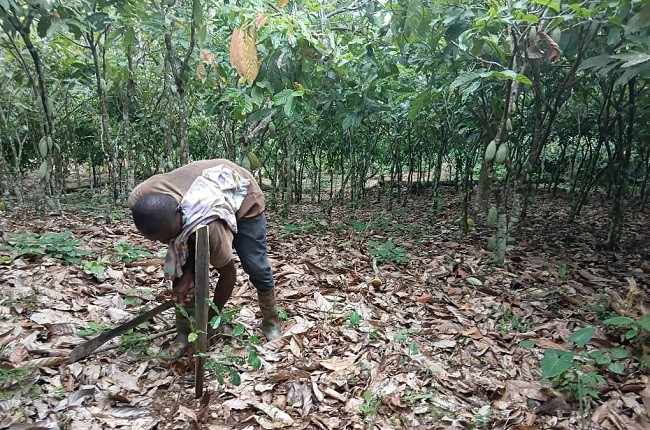
Awakwai is a farmer in the Sika Nti community at Asankragua in Ghana’s Western Region. When he migrated to the community to work on a cocoa farm to make a living, he entered into a land tenure arrangement to farm his cocoa. But he will soon lose the land as the owner sold the land out for mining.

Without a farm and any alternative source of income, the young man was faced with a dilemma: the choice to either to live on empty stomach or take up employment at an illegal mining site, locally known as “Galamsey”.

The Chief of Jomoro, Nana Kwame Ketebu II, acknowledged that “any survival that affects the environment is unsustainable.”

Ghana
A farmer in Ghana

He also observed “the current situation of galamsey is seen in the nature of our rivers; in the nature of our forests; in the nature of destruction of the environment”.

Two years ago, Preferred by Nature, a global non-profit organisation, started working with partners on its first cocoa project called “Wassa Amenfi Cocoa Landscape Initiative (WACLI)” in Ghana to support farmers facing low-income levels, climate change, market pressure and declining yield.

“In doing so, the same question always kept coming back to us from many different actors across many different sectors; how can you work with cocoa without addressing the issue of galamsey?” said Jakob Nordborg Ryding, Senior Director of Strategic Projects at Preferred by Nature.

He noted that galamsey is currently one of the most severe risks to farmers, communities and Ghana’s cocoa future. “It’s contaminating rivers, it’s degrading soils, it’s dividing communities,” he said.

With over 30,000 hectares of cocoa farms lost, Ghana’s environmental and agricultural destruction through illegal mining is driving socio-economic collapse. There is high farmer displacement and social fragmentation, and most young people are dropping out of schools to work in mining.

Rikolto and Preferred by Nature are mobilising cocoa communities against Galamsey destruction for long-term livelihoods and health. They are adopting a three-pronged approach in community mobilisation, alternative livelihoods, rehabilitation and alliances to halt and reverse the Galamsey crisis.

“Together with Rikolto, we will strengthen communities to advocate and organise against galamsey; we will create income and business opportunities that help vulnerable farmers resist galamsey and improve the long-term viability of cocoa farms; and we will begin the phytoremediation and agroforestry to restore the damaged mining areas and ensure the land is productive again,” explained Jakob at the project launch in Accra.

The project is described as a starting point, a platform to test real solutions on the ground through the direct involvement of the communities, while expecting all stakeholders to act.

According to Abdulahi Aliyu, Global Director, Sustainable Cocoa and Coffee Programme at Rikolto, the communities are aware of the negative effects of galamsey, especially when they are compelled to buy sachet water to irrigate their crops. And he believes these communities are willing to stop the menace of galamsey.

“Children are abandoning school to look for jobs on galamsey sites,” he observed. “If we want to talk about descent income for smallholder farmers, do we factor the issue that farmers buy water to apply chemicals on their farms which adds up to the cost of production?”

Mr. Aliyu noted that Ghana is losing its pride in the golden bean as cocoa is under the threat of illegal mining, known popularly as “galamsey”, hence the need for urgent action.

In turning the tide through the mobilisation of cocoa communities against Galamsey, the project will introduce citronella cultivation and the setting up of processing plants to build resilient local economies.

The path to sustainable change will involve the establishment of three pilot processing plants, expansion of citronella cultivation, initiation of phytoremediation trials and full community ownership before project exit.

Some 3,000 farmers, including 1,500 women and 1,500 men from 12 communities in three districts, will be targeted, and the focus area will the proactive inclusion of women and youth in citronella processing ownership.

The five-year (2025-2030) initiative titled “Turning the tide: Mobilising cocoa communities against galamsey destruction for long-term livelihoods and health” with support from the Civil Society in Development (CISU) Denmark, has the overall goal to empower vulnerable cocoa-dependent communities to resist, consolidate, and sustainably reverse the advance of Galamsey.

The Head of Cooperation of the Danish Embassy in Ghana, Ms. Rikke Enggaard Olsen, believes the project is important as it empowers the local communities and builds partnerships to take action against galamsey.

“For a country that supplies around 20% of the world’s cocoa, the stakes couldn’t be higher faces by an issue such as galamsey. Cocoa is not just an export commodity; it represents jobs, community identity and multi-generational aspirations.

“When farmlands are destroyed and water sources contaminated, communities lose their resources that they need for sustainable growth,” she stated.

By Kofi Adu Domfeh

Seventh UN Environment Assembly opens, aiming to advance solutions for planetary resilience

0

The seventh session of the UN Environment Assembly (UNEA-7) kicked off on Monday, December 8, 2025, in the Kenyan capital, Nairobi, bringing together Ministers of Environment, intergovernmental organisations, multilateral environmental agreements, UN system entities, civil society, young people, and the private sector from across the globe to advance solutions for a resilient planet through multilateralism.

The UN Environment Assembly is the world’s highest decision-making body on the environment – its membership includes all 193 UN Member States. It meets biennially to set priorities for global environmental policies; decisions and resolutions then taken by Member States at the Assembly also define the work of the UN Environment Programme (UNEP). 

UNEA-7
Dr. Deborah Mlongo Barasa, Kenya’s Cabinet Secretary for the Environment, Climate Change and Forestry, officially opened UNEA-7 at the UN Complex in Nairobi

“Today we reaffirm our shared responsibility: to transform our determination into tangible results for people, ecosystems, and our planet’s stability,” said Abdullah Bin Ali Al-Amri, President of UNEA-7 and President of the Environment Authority of the Sultanate of Oman.

“We convene at a decisive moment. Around the world, communities continue to endure the intertwined impacts of climate change, land, nature and biodiversity loss, and pollution and waste, challenges that test not only our economies and societies but the very trust in our collective will,” he added. “Our success this week depends not only on the outcomes we adopt but also on how we reach them, through trust, transparency, the spirit of compromise, and inclusiveness.” 

This year’s Assembly will be negotiating 15 draft resolutions on issues ranging from saving the world’s glaciers to reining in massive seaweed blooms and reducing the environmental impact of artificial intelligence. While not legally binding, UNEA-7 resolutions help countries find common ground and have in the past laid the groundwork for precedent-setting international agreements. 

“This Assembly must dig deeper than ever, because environmental challenges are accelerating. The rise in average global temperatures will likely exceed 1.5°C within the next decade, bringing escalating consequences with every fraction of a degree. Ecosystems are disappearing and land is degrading. Dust storms are intensifying. Toxins continue to pollute our air, water and land,” said Inger Andersen, Executive Director of UNEP.

“And this Assembly must dig deep, because the world is in turbulent geopolitical waters, which adds stresses and strains to multilateral processes. We all want the same thing: a better future for ourselves and for our families. This means a stable climate; a safe, clean and sustainable environment; and a pollution-free future,” she added.

UNEA-7 was preceded by a Major Groups and Stakeholders Forum, a Cities and Regions Summit and Youth Environment Assembly that saw more than 1,000 youth delegates from across the world come together to agree and issue the Global Youth Declaration that puts forward youth priorities to UNEA. Alongside discussion over the draft resolutions, UNEA-7 will feature three high-profile discussions, exploring why environmental sustainability is critical to industry, global finance and human health. Global leaders, including heads of state and government, will gather on UNEA-7’s penultimate day for the high-level segment, where Kenya’s President William Ruto, other participating Heads of State and Government and Ministers will address the Assembly.

In addition, UNEP will launch the seventh edition of its UNEA-mandated Global Environment Outlook (GEO-7) on December 9, on the sidelines of the Assembly, and will name five climate trailblazers from around the world as its Champions of the Earth for 2025.

“A resilient planet is much more than protecting ecosystems; it means using our resources wisely, building just and inclusive societies, ensuring that economic growth respects the boundaries of our planet, and embracing innovation to foresee and prevent harm before it happens,” said Dr. Deborah Mlongo Barasa, Kenya’s Cabinet Secretary for the Environment, Climate Change and Forestry.

“As we come together in the world’s environmental home, a place where the gifts and vulnerabilities of nature are felt deeply, we offer not just our challenges but also our solutions. Kenya is ready to partner with governments, civil society, the private sector, academia, and local actors. Because today, partnership is not optional, it is absolutely essential,” added Barasa.

UNEA-7 has just over 6,000 registered participants from over 180 countries, including 79 Ministers and 35 Vice-Ministers; it takes place under the theme, “Advancing sustainable solutions for a resilient planet”

Nigeria moves to update national biotechnology policy

The National Biotechnology Research and Development Agency (NBRDA) has convened a multi-stakeholder review and validation workshop to update and strengthen the National Biotechnology Policy and reposition Nigeria for participation in the global bioeconomy.

The two-day workshop holding from Dec. 8 to 9, 2025, in Abuja, gathered government officials, researchers and experts to review existing frameworks and ensure the revised policy aligned with scientific priorities.

Opening the workshop on Monday, Dec. 8, the Minister of Innovation, Science and Technology, Dr Kinsley Udeh, emphasised that an effective biotechnology policy requires adaptive and forward-looking implementation capable of responding to emerging scientific developments.

Biotechnology
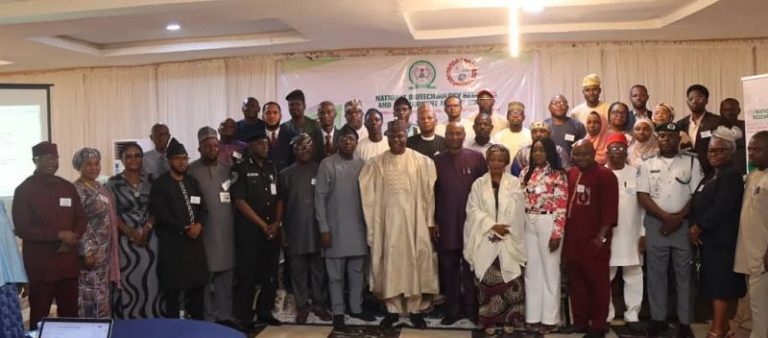
Participants at the National Biotechnology Policy stakeholder review and validation workshop in Abuja

He described the review process as a national call to renew commitment, strengthen coordination and ensure that policy actions translated into tangible socio-economic benefits for Nigerians.

He urged participants to strengthen the biotechnology ecosystem by boosting research investment, upgrading laboratories and establishing a trusted regulatory framework that ensured safety and accelerates translation of scientific discoveries into solutions.

Director General, Abdullahi Mustapha, said the National Biotechnology Policy, first approved in 2001, must now reflect sweeping advances in genomics, editing, synthetic biology, bio-manufacturing and climate-smart technologies shaping the global bioeconomy.

He highlighted participants’ tasks, including reviewing the zero draft, harmonising inputs and validating the 2025 policy to ensure support for food security, healthcare innovation, industrial competitiveness, environmental sustainability and bioinformatics capacity.

Dr Shakirat Ajenifujah-Solebo outlined the review methodology and affirmed that Nigeria must integrate emerging biotechnologies into the policy, noting the global bioeconomy and the country’s effort to strengthen its competitive position.

Day one featured goodwill messages and harmonisation sessions on priority implementation areas, ensuring diverse stakeholder perspectives guide development of a comprehensive biotechnology policy aimed at strengthening resilience and advancing innovation nationally.

By Sylvester Thompson

ACReSAL reviews its progress across 19 participating states

The Agro-Climatic Resilience in Semi-Arid Landscapes (ACReSAL) project has commenced its pre-midterm review to evaluate progress recorded since its implementation across the 19 participating states in Nigeria.

Dr Ibrahim Kabir, Chairman of State Coordinators of ACReSAL, said the review was a means of assessing and reviewing their performances and giving inputs to the federal project management unit for onwards communication to the World Bank.

Kabir stated this on Monday, December 8, 2025, in Jos, at the commencement of an eight-day pre-midterm review meeting.

Abdulhamid Umar
Abdulhamid Umar, National Project Coordinator, Agro-Climatic Resilience in Semi-Arid Landscapes (ACReSAL)

The chairman, who is also the state coordinator of ACReSAL in Bauchi, said that the project, which commenced three years ago, has a six-year project lifespan.

He explained that it was pertinent that a pre-midterm review to assess achievements, challenges, and key indicators related to land restoration, climate-resilience interventions, watershed management, and community-level environmental improvements be held.

“These pre-midterm reviews are procedures for all World Bank implementation projects to enable us to review if set targets in the 19 states and the FCT had been achieved.

“It is meant to identify gaps and how such would be tackled and align emerging issues as regards agriculture, environment and water resources with current issues on ground,” he said.

According to him, 70 per cent of the $700 million earmarked for the project had been expended.

Similarly, Mr. Garba Gonkol, Project Coordinator, Plateau ACReSAL, said the project since its implementation in Plateau, had significantly impacted the lives of people.

Mr. Peter Gwom, Plateau Commissioner for Environment, in his remarks, said the ACReSAL project was already delivering significant benefits to participating states.

Gwom listed the benefits to include restoration of degraded landscapes, improved water resources and watershed management and strengthened agricultural productivity.

The commissioner further said that the project had also created green jobs and increased environmental awareness, among other things.

He commended ACReSAL for aligning perfectly with the Plateau government’s vision of building a greener, safer, and more prosperous state.

Mr. Abdulhamid Umar, ACReSAL National Project Coordinator, was represented by Mr. Abdulaziz Abubakar.

The pre-midterm review commenced on Dec 8 and would end on Dec 13.

By Blessing Odega

NLNG outlines path to sustainable LNG at World Summit

0

NLNG has called for a new era of global collaboration to strengthen LNG supply, improve affordability for emerging markets, and safeguard energy expansion in a world increasingly shaped by geopolitical fragmentation and trade uncertainty.

Managing Director and Chief Executive Officer of NLNG, Philip Mshelbila, made this call while speaking at the panel titled “Energy Expansion in a Challenging Global Trade Environment” at the World LNG Summit & Awards holding in Istanbul, Turkey.

Mshelbila emphasised that only coordinated effort across the LNG value chain can prevent a widening energy divide and keep natural gas central to a balanced, lower-carbon global future.

NLNG
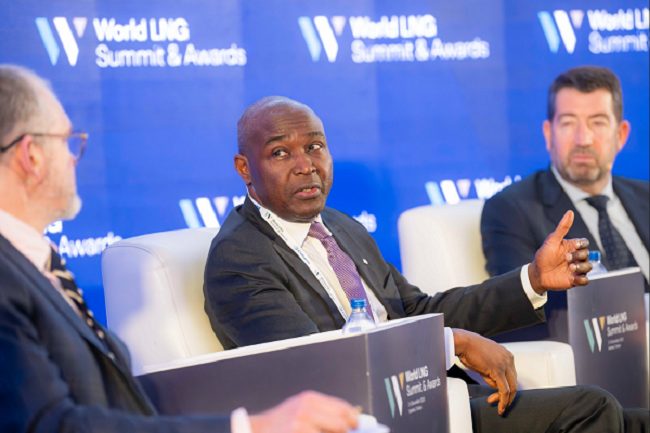
Philip Mshelbila, NLNG’s MD/CEO, speaking on the panel “Energy Expansion in a Challenging Global Trade Environment” at the 25th World LNG Summit in Istanbul, Turkey

In his words: “In order to safeguard global energy security from the risks of geopolitics and unilateral (national and regional) policies and sanctions, LNG contracts must evolve from merely defining volume and price to actively managing sovereign risk, through diversification of supply sources, delivery routes and contract terms.”

He stated that global energy expansion would stall unless structural bottlenecks in LNG supply, pricing, financing, and decarbonisation are urgently addressed and warned of the negative implications of retaining the status quo.

While speaking on shifting trade dynamics in the industry, Mshelbila noted that the LNG market had moved from a period dominated by short-term contracting to heightened interest in long-term commitments after the 2022 supply shock, emphasising that both contract types are now in strong demand, driven by elevated global risk and uncertainty.

Addressing the broader question of how LNG can continue to meet rising global energy demand, Mshelbila stated that several foundational elements like availability, affordability, and decarbonisation must be in place.

He explained that while many still regard natural gas as a transition fuel, its relevance will extend well beyond the next few decades. For this to be realised, he said the industry must secure more supply, ensure improved affordability, and accelerate decarbonisation across the entire natural gas and LNG value chains.

Mshelbila referenced major capacity expansions in the United States and Qatar, alongside NLNG’s own Train 7 development, which will add eight million tonnes per annum of new production as examples of the supply growth needed to meet future global demand. However, he cautioned that affordability remains the most challenging dimension of LNG’s future, noting that high prices have repeatedly pushed developing markets back to coal and other cheaper but environmentally dirtier alternatives.

The World LNG Summit, now in its 25th edition, continues to serve as the industry’s foremost global gathering, bringing together policymakers, producers, buyers, financiers, and innovators to shape the future of LNG.

NDPHC restores additional 450MW of generation capacity to national grid

The Niger Delta Power Holding Company (NDPHC) has successfully restored additional 450 Megawatts (MW) of generation capacity to the national grid.

Mr. Emmanuel Ojor, Head, Corporate Communications and External Relations, NDPHC made this known in a statement on Monday, December 8, 2025.

According to him, the restoration of the additional megawatts followed the completion of scheduled maintenance on the Geregu NIPP plant in Ajaokuta, Kogi State.

Jennifer Adighije
Managing Director of NDPHC, Jennifer Adighije

Ojor said that the four-week extended minor inspection, undertaken by Siemens Energy, was executed to enhance the facility’s operational reliability, performance, and efficiency, thereby extending the plant’s Equivalent Operating Hours (EOH) and operational life span.

According to him, the Managing Director of NDPHC, Jennifer Adighije, confirmed that in the last one year the company had recovered six previously dormant gas turbines across its fleet of gas turbines.

Adighije listed the turbines to include GT4 at the Calabar NIPP, GT1 at Omotosho II, GT1 and GT2 at Benin NIPP, GT4 at Sapele NIPP.

“And currently GT3 and GT4 at Alaoji NIPP on standby for pre-commissioning after gas supply remedial works.

“These restored units collectively would have cumulative 875MW additional capacity to NDPHC’s mechanical available generation; adding significant boost to national power generation capacity,” she said.

Adighije also announced the commencement of restoration works on the 225MW Gbarain NIPP plant in Bayelsa State, which has been out of service since 2020.

She described the restoration works as a major step toward recovering dormant national power in a bid to commercialise the output of the plant to serve critical commercial and industrial clusters within the Niger Delta region.

“In spite of persistent sector-wide challenges, NDPHC has recorded several operational and financial milestones.

“These include: Recovery of 110 containers with critical turbine parts and HRSG components, abandoned at Onne Port for over nine years.

“Commencement of the Light Up Nigeria-Agbara industrial cluster project to connect the Agbara Industrial Estate to the grid and a 10MW embedded solar project for an industrial area in Kano.

“Completion of key transmission and distribution projects in Borno and Delta States, as well as the completion of Afam–Ikot Ekpene 330kV double circuit transmission line,” she said.

Adighije also listed other success stories of NDPHC to include recovery of over 10 million dollars in legacy debts from bilateral customers, securing 15 million dollars in insurance claims for the Alaoji plant fire incident.

“Advanced engagements with  Nigerian Electricity Regulation  Commission (NERC)  on recovering NDPHC’s investments in TCN’s transmission expansion projects, resolution of longstanding commercial issues with ACCUGAS, leading to an amendment of gas supply agreement which reduces government’s exposure,” she said.

Adighije  also said that to strengthen accountability and staff welfare, the management of NDPHC has introduced a procurement benchmarking desk for streamlining procurement practices, Computer-Based Testing (CBT) for enhanced staff performance management.

She said that a management support allowance to cushion the impacts of fuel subsidy removal was also introduced.

Adighije, however, reaffirmed NDPHC’s commitment to “restoring dormant capacity, stabilising operations, and supporting Nigeria’s goal of a more reliable and sustainable power supply value chain.

She also that NDPHC’s management remains committed to transparency, accountability and constructive engagement with stakeholders in its quest for unlocking universal access to electricity for powering businesses and households across the country.

×