Scientists in Australia have identified how human immune cells detect bacteria, a discovery that could lead to effective vaccines and therapies for many diseases.
Researchers at Australia’s Peter Doherty Institute for Infection and Immunity found that macrophages, immune cells known for engulfing pathogens act as “couriers” that alert the immune system to bacterial presence.
A media release from the Doherty Institute on Wednesday, December 10, 2025, said: “This activates the immune system and helps our body stay in balance with the good bacteria that live within us (forming the microbiota) while protecting us from dangerous bacteria.’’
University of Melbourne, Australia
According to Deng Jieru from the University of Melbourne, who conducted postdoctoral research at the Doherty Institute said the study shows macrophages carry the highest amount of a molecule called MR1.
The MRI which captures chemical signals from bacteria and presents them to specialised immune cells known as MAIT cells.
Deng, who led the study published in Science, said: “By using glowing ‘chemical messages’ we showed that macrophages were the most efficient cells at picking messages and to use this to engage MAIT cells to fight infections.’’
She said this discovery is important because MAIT cells can rapidly switch on powerful immune responses, adding that by understanding how macrophages control this process; this discovery paves the way for better vaccines and treatments.
The Federal Government says Nigeria must prioritise industrialisation and dependable energy supply to stop exporting raw materials and strengthen local value chains.
Minister of State for Industry, Sen. John Enoh, stated this at the Industrial Revolution Work-Group Premier Ministerial Roundtable on Energy, Security and Industrial Infrastructure on Wednesday, December 10, 2025, in Abuja.
Speaking on the theme, “Beyond Power: Building the Backbone of the Industry – Energy, Infrastructure and Sovereignty in Action,” Enoh described industrialisation as an economic imperative.
Minister of State for Industry, Sen. John Enoh
He also stressed the need to boost productivity through value addition and processing.
Enoh said the programme aimed to ensure Nigeria became more productive by reducing raw material exports and enhancing economic management.
He added that discussions within the Industrial Revolution Workgroup had identified energy security and weak industrial infrastructure as major barriers to growth.
Enoh said the roundtable series would begin by tackling power supply issues in industrial clusters, noting that energy was central to industrial development.
Strengthening clusters, he said, remained the most practical way to deliver energy and infrastructure efficiently.
While acknowledging the importance of the national grid, Enoh said alternative energy sources must complement it.
He explained that blended power, gas, solar and others, was needed, especially where grid supply was unreliable.
Enoh said the forum was designed to produce actionable solutions, including identifying priority industrial clusters and the quickest ways to supply them with power.
He also cited obstacles such as right-of-way delays affecting transmission projects and called for faster implementation.
The minister added that consensus had been reached on the need for stronger collaboration between the Ministry of Power and the industrial sector to tackle challenges systematically, cluster by cluster.
Minister of Power, Mr. Adebayo Adelabu, said economic growth depended on a vibrant industrial sector powered by reliable and affordable electricity.
He noted that ongoing reforms in legislation, policy and infrastructure had improved grid stability and boosted generation and consumption.
Adelabu said government was strengthening transmission, distribution, regulation and investment to ensure sustainable electricity supply and reduce grid disturbances nationwide.
President of the Manufacturers Association of Nigeria (MAN), Mr. Francis Meshioye, said the roundtable addressed critical issues, including alternative power sources to ensure independent and reliable electricity supply for industries.
He said discussions covered options such as independent power and dual international connections, guided by cost-benefit analysis.
He expressed confidence that practical power solutions for industrial clusters would emerge in the coming months.
As the world moves to slow climate change and create a more sustainable future, the UN Environment Programme (UNEP) on Wednesday, December 10, 2025, named five climate forerunners as its 2025 Champions of the Earth. These five extraordinary leaders, who work on issues ranging from climate justice to sustainable cooling and forest protection, show that bold action can drive real change for people and planet.
“As the global impacts of the climate crisis intensify, innovation and leadership across every sector of society have never been more essential,” said Inger Andersen, Executive Director of UNEP.
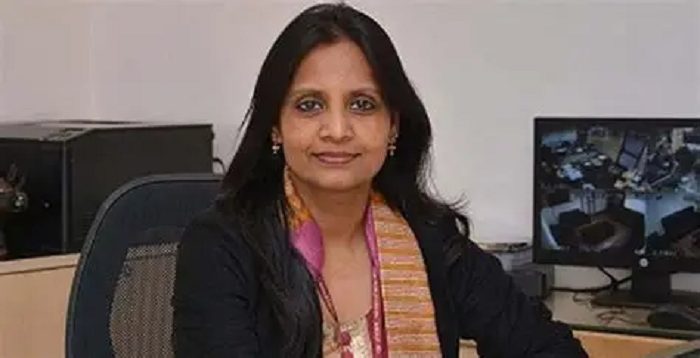
Supriya Sahu, Additional Chief Secretary, Environment, Climate Change & Forests, Tamil Nadu
“Young students demanding climate justice, subnational governments and architects leading on sustainable cooling and smart building design, research institutes slowing deforestation, and passionate individuals driving methane emissions reductions – this year’s Champions of the Earth show the kind of leadership that will inspire the world to face down the challenge of climate change,” added Andersen.
Now in its 20th year, UNEP’s Champions of the Earth award is the UN’s highest environmental honour, celebrating environmental leaders who deliver important solutions in their fields. This year’s laureates – announced on the margins of the seventh session of the UN Environment assembly – are tackling some of the most urgent challenges of our time: climate justice, methane emissions, sustainable cooling, resilient buildings, and forest conservation. Since 2005, the award has recognised 127 leaders whose vision and courage inspire global action.
UNEP’s 2025 Champions of the Earth are:
Pacific Islands Students Fighting Climate Change – Policy Leadership A youth-led NGO that secured a landmark opinion from the International Court of Justice affirming states’ legal obligations to prevent climate harm and protect human rights, their campaign is reshaping global climate law and empowering vulnerable nations.
Supriya Sahu, Additional Chief Secretary, Government of Tamil Nadu – Inspiration and Action A pioneer in sustainable cooling and ecosystem restoration, Ms. Sahu’s initiatives have created 2.5 million green jobs, expanded forest cover, and integrated heat adaptation into infrastructure, benefiting 12 million people and setting a model for climate resilience.
Mariam Issoufou, Principal and Founder, Mariam Issoufou Architects, Niger/France– Entrepreneurial Vision By grounding her architecture in local materials and cultural heritage, Ms. Issoufou is redefining sustainable, climate-resilient buildings across the Sahel and inspiring a new generation of designers shaping Africa’s built environment. Through projects like the Hikma Community Complex in Niger, she pioneers passive cooling techniques that keep buildings up to 10°C cooler without air conditioning.
Imazon, Brazil – Science and Innovation A research institute combining science and AI-driven geospatial tools to curb deforestation, Imazon’s work has strengthened forest governance, supported thousands of legal cases, and revealed the scale of illegal deforestation – driving systemic change in the Amazon.
Manfredi Caltagirone (posthumous) – Lifetime Achievement Former head of UNEP’s International Methane Emissions Observatory, Mr. Caltagirone championed transparency and science-based action on methane, influencing the EU’s first regulation on methane emissions and shaping global energy policy.
The work of this year’s laureates focuses on the crisis of climate change: global temperatures are on track to exceed 1.5°C within the next decade, and current pledges fall short of Paris Agreement goals. Adaptation costs for developing countries could reach $310–$365 billion annually by 2035, 12 times current funding levels. Yet, these Champions prove that action is possible – and powerful.
Cutting methane today can cool the planet within years, improve air quality, and create jobs. Restoring forests safeguards water, reduces disasters, and protects biodiversity. Sustainable cooling and resilient buildings save lives, preserve food and vaccines, and keep economies productive. Climate justice ensures that vulnerable communities have a voice and legal protection.
The African Solar Industry Association (AFSIA) has announced the winners of the AFSIA Awards 2025, held in partnership with REFA 2025 and with the support of Dutch & Co. The Awards ceremony took place on December 3 in Accra, bringing together leaders and innovators from across the continent to celebrate outstanding achievements in the African solar and storage industry.
This annual event recognises the most innovative, impactful, and transformative contributions driving Africa’s clean energy transition forward, and relies on a fully independent selection process that combines the expertise of a high-level jury of industry professionals with the participation of a public vote, ensuring both credibility and broad industry engagement.
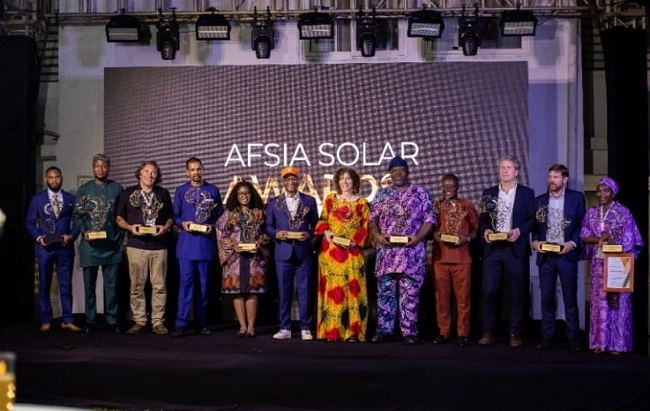
All the winners of the AFSIA Awards 2025
The “Innovation of the Year” award went to Instollar, whose launch of Africa’s first solar freelance platform, mobilising more than 700 freelance solar installers across Nigeria, is bridging a critical talent and last-mile delivery gap in the industry.
The distinction for “Public Administration of the Year” went to Rural Electrification Agency (REA) Nigeria, which has dramatically improved reliable clean energy access through the Energising Education Programme (EEP) Phase II by electrifying seven federal universities and two teaching hospitals across all six geopolitical zones.
The “Solar Technology Provider of the Year” award was presented to Infibranches Technologies for its Fazipay platform and Single Point of Integration (SPOI) APIs, which streamline demand generation, distribution, and payment collection between solar providers, financial institutions, and last-mile customers.
In the “Mini-Grid Project of the Year” category, the jury and public voting declared a tie, honouring both Husk Power and TramaTecno Ambiental for their exceptional achievements. Husk Power was celebrated for commissioning an impressive 53 new mini-grids within a single year in Nigeria’s Nasarawa and Plateau states, averaging 4.4 deployments per month and accelerating rural electrification.
TramaTecno Ambiental was equally recognised for bringing clean, reliable power to three island villages on the Volta River in Ghana, demonstrating outstanding impact in remote and underserved communities.
The award for “SHS Company of the Year” went to Izili (formerly Baobab+), whose pioneering “PAYGo 2.0” approach is redefining impact and customer experience in Africa’s solar home system sector.
In the category “Utility-Scale Solar Project of the Year,” AMEA Power was honoured for its groundbreaking 300 MWh battery storage expansion at the Abydos project in Egypt, which will become the country’s first utility-scale solar-plus-storage facility and significantly enhance grid stability and renewable energy integration.
In the category “Storage Project of the Year,” Africa REN secured top recognition for the Walo project in Senegal, a 16 MWp solar plant paired with a 10 MW / 20 MWh storage system that demonstrates excellence in hybrid infrastructure deployment.
The award for “C&I Project of the Year” was presented to KYA-Energy Group for its large-scale solarisation of 314 healthcare centers across Togo, a milestone that is significantly advancing reliable energy access for essential services.
The distinction for “Visual of the Year” was awarded to AM Power, recognising outstanding creativity and communication through visual media.
In the category “Advisor of the Year,” Studio Santi was recognised for its Owner’s Engineer role in the construction of the 15 MWp Twiga Cement solar plant in a disused quarry in Tanzania, demonstrating excellence in technical leadership and project supervision.
The award for “Storage Technology Provider of the Year” went to Freedom Won, which has built Africa’s broadest and most scalable LiFePO₄ battery portfolio and now operates South Africa’s largest battery manufacturing plant with the capacity to produce up to 3.5 GWh annually.
In the “Deal or Financing Programme of the Year” category, Acumen was recognised for successfully closing the Hardest-to-Reach (H2R) Program, securing more than $245 million across two investment vehicles dedicated to expanding energy access in underserved African markets.
The prestigious award for “African Company of the Year” was presented to CrossBoundary, whose development of a 223 MWp / 526 MWh baseload solar and BESS facility for the Kamoa-Kakula Mining Complex in the DRC marks the largest captive C&I PPA ever signed in Africa and the first baseload solar-plus-storage system of its kind on the continent.
Finally, the Lifetime Achievement Award was bestowed upon Dr. Laura Stachel, whose tireless commitment to integrating solar energy into African healthcare systems has transformed service delivery in rural clinics. Her pioneering Solar Suitcase has become a globally recognized model for scalable, cost-effective humanitarian innovation.
Held alongside REFA 2025 and supported by Dutch & Co, this year’s ceremony once again highlights the depth of talent, innovation, and ambition driving Africa’s solar and storage transformation. AFSIA congratulates all winners and applauds their exceptional contributions to advancing sustainable energy across the continent.
A former Minister of Power, Prof. Bart Nnaji, has says Nigeria urgently needs scientific breakthroughs to drive sustainability for a better future.
Nnaji, a Professor of Robotics and Engineering, said this at the 2025 Nigeria Prize for Science (NPS) Roadshow, with the theme, “Innovation in ICT, AI and Digital Technologies for Development” on Tuesday, December 9, 2025, in Abuja.
The NPS is sponsored by Nigeria LNG Limited (NLNG), in partnership with Ventures Park.
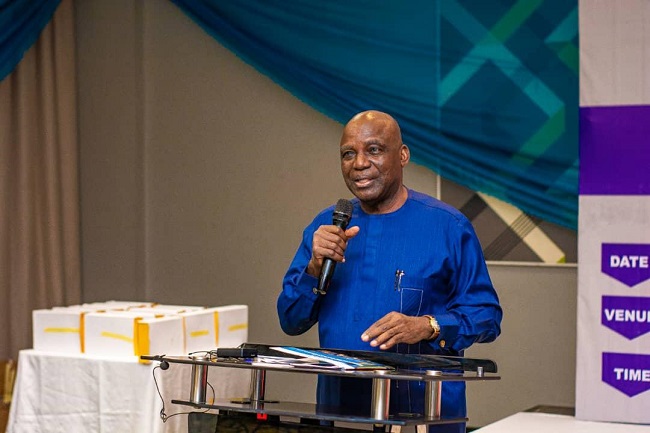
Prof. Bart Nnaji, former Power Minister
Nnaji, who is the Chairman, Advisory Board for NPS, said that, since its establishment, it had stimulated Nigerians’ potential to contribute to knowledge and fundamental advancemwent in different aspects of life.
He said that NLNG established the prize in 2004 to stimulate interest in scientific research and the innovation of solutions to social problems, and to create tangible improvement in the everyday life of Nigerians.
“We need innovation, not as a luxury, but as a lifeline. We need knowledge that solves problems, ideas that spark transformation and research that directly improves lives and livelihoods.
“It is within this context that the NPS becomes a national rallying point for thinkers, researchers and innovators who can reshape our technological advancement and general wellbeing.”
The former minister said that submissions were reviewed annually with rigorous standards, adding that the judging process is guided by evidence, functionality, applicability, demonstrable impact and long-term value.
“That standard is non-negotiable, as excellence is in this process.
“This prize is evaluative. It recognises solutions that have achieved discernible impact, that endure, scale, and translate into measurable benefit for our society,” he said. .
He said that one hundred and twelve submissions were received for the 2025 cycle with each entry undergoing multi-layered evaluation criteria.
According to him, the criteria includes academic track record, quality, recognition, uniqueness, innovation, impact, commercialisation, soundness and patent.
“Unfortunately, the 2025 edition produced no winner.
“I urge those who submitted works not to feel discouraged. They should see it as a calibration, as great science requires refinement, iteration and patience.
“Some may hear this and think of absence or failure, but for us, it represents something important.
“It is an opportunity to dig deeper. It also shows our commitment to scientific excellence is rational and real,” he said.
“When a year produces no winner, it is not because there is no intelligence in Nigeria or even in the broader world; it is because the Advisory Board chooses not to lower the bar. This is how credibility is preserved. Scientific recognition must be earned.
“To those who submitted work this year, I say do not see this as discouragement, see it as calibration. Great science often requires refinement, iteration, and patience,” he said.
The General-Manager, External Relations and Sustainable Development, NLNG, Dr Sophia Horsfall, said that Nigeria needed more hands, minds and passion in the science and technology space.
Horsfall said that that the NPS had recognised Nigerian scientists whose work goes beyond theory and actually solved real problems by benefitting humanity.
She said that the NPS had consistently celebrated and rewarded excellent research findings in innovations in healthcare, to energy generation and conservation, agriculture, climate change, and optimisation of artificial intelligence.
“It is one of the few prizes in the country and the most prestigious in sub-Saharan Africa that places science at the centre of national conversation.
“It determines our competitiveness as a nation and our ability to create jobs, improve education, strengthen infrastructure and protect our environment.
“This roadshow goes beyond awareness. It is a call to action.
“We want you to see this Prize as an open invitation to bring forth ideas and innovations that have the power to transform lives directly and positively,” she said.
Earlier, the General-Manager of Ventures Park, Ifeanyi Iloh, said that the future of Africa would be built through creativity and innovation.
Iloh said that it was not a one-off event but a culture, lifestyle and a continuous process of discovery, experiment and bold ideas.
The NNPC E&P Limited (NEPL), the flagship upstream subsidiary of NNPC Ltd., has on Dec. 1, 2025, achieved a record production level of 355,000 barrels of oil per day (bpd).
According to the company, the production was the highest daily output since 1989.
The milestone marked a significant step forward for Nigeria’s upstream sector and reflected the company’s ongoing transformation anchored on efficiency and discipline.
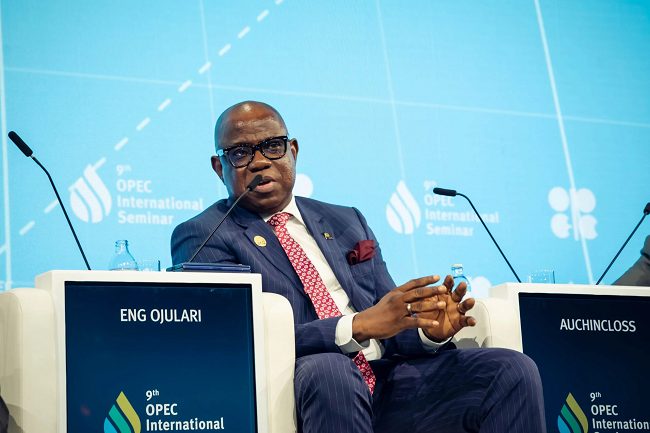
Bayo Ojulari, GCEO, National Petroleum Company (NNPC) Limited
Speaking on the development, Mr. Bashir Ojulari, the Group CEO of NNPC Limited, in a statement on Tuesday, December 9, 2025, said the milestone was a proof that Nigeria’s energy revival was not a dream, but a reality.
Ojulari said the figures showed genuine transformation, adding that average daily production surged by 52 per cent, rising from 203,000 bpd in 2023 to 312,000bpd in 2025.
“This record growth is no coincidence; it stems from a clear strategy anchored on operational excellence, strong asset management, and structured field development.
“NEPLs performance demonstrates that with the right leadership, strengthened systems, and a committed workforce, Nigeria’s upstream sector can overcome years of instability.
“The achievement converts national ambition into measurable momentum.
“The presidential targets of two million bpd by 2027 and three million by 2030 have often appeared aspirational. NEPLs delivery brings them closer to reality.
“By showing its ability to exceed its own production benchmarks, NEPL confirms that the essential building blocks for scaling national output are being firmly established,” he said.
The GCEO said the achievement signalled that the machinery of production equipment, processes, capabilities, and partnership could be driven with commercial discipline to produce real and positive outcomes.
He said that the achievement reinforced confidence nationally and across the global energy landscape, assuring partners and investors that Nigeria was committed to reaffirming its role as a dependable energy supplier.
Also speaking, Udy Ntia, the Executive Vice President, Upstream, observed that the milestone goes beyond the 355,000 bpd figure.
“In a sector where shortcuts can yield short-term wins but long-term damage, NEPL is making a different point: sustainable progress must rest on responsible operations.
“This ensures that scaling production does not compromise worker safety, community wellbeing, or environmental protection,” Ntia added.
Nicolas Foucart, Managing Director, NEPL also said that NEPL’s record-setting performance showed the broader transformation unfolding across NNPC Limited.
“This is a story shaped by leadership that charts a clear course; by partnerships built on alignment and accountability; and by a workforce whose hard work is turning goals into measurable progress.
“Our people, our processes, and principles are the real engines behind this success. We are building for tomorrow, not just celebrating today,” Foucart said.
NNPC E&P Limited is a wholly owned subsidiary of the Nigerian National Petroleum Company (NNPC) Limited involved in the exploration and production of oil and gas resources.
The West African Gas Pipeline Company (WAPCo), says it has achieved record-breaking operational performance for 2025, with gas delivery reaching all-time high of 217,000 mmbtu per day in November, the highest in the company’s history.
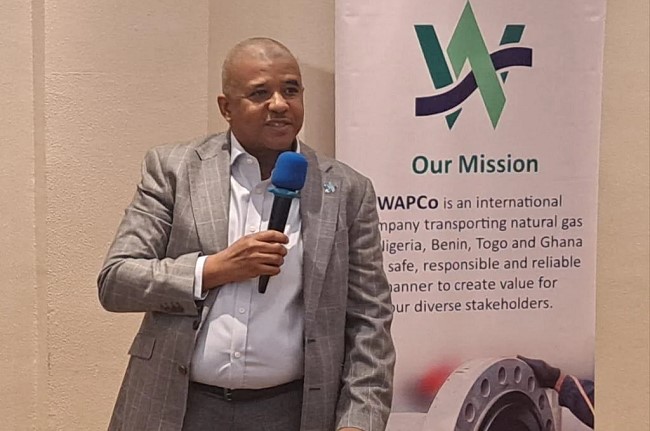
The company’s Managing Director, Mr. Abiodun Bodunrin, made this known during a media interactive session in Lagos on Tuesday, December 9, 2025.
He said that the company also achieved an unprecedented 99 per cent asset availability, reflecting significant gains in efficiency and system reliability.
Managing Director, West African Gas Pipeline Company (WAPCo), Mr. Abiodun Bodunrin
Bodunrin described the achievement as the company’s best performance to date, representing a 22 per cent year-on-year increase in gas delivery.
He attributed the success to major engineering and asset integrity projects completed during the year, including cleaning and inspection of the offshore segment of the pipeline.
He added that “this report marks a major milestone in our sustainability journey. It captures the progress we have made and outlines our aspirations for the future.
“Our achievement is rooted in our commitment to safety and operational excellence.”
WAPCo, operator of the first regional natural gas transmission system in sub-Saharan Africa, started pipeline construction in 2005 and completed its offshore component in December 2006.
Bodunrin also revealed that the company recorded 11 years and 13.5 million workforce hours without any recordable injury, reiterating that “safety remains WAPCo’s top priority.
“As of November 2025, we achieved 13,528,543 workforce hours without injury involving staff or contractors,” he said.
The managing director noted that beyond achieving record delivery volumes, WAPCo also made significant contributions to regional economic development, impacting communities, families, industries and businesses across West Africa.
He highlighted the publication of WAPCo’s first-ever sustainability report, describing it as “another key milestone for the organisation.”
Bodunrin said WAPCo is poised for an even stronger performance in 2026, with plans to increase use of available pipeline capacity and to deepen partnerships to exploit growth opportunities.
He said the company also plan to scale up value delivery for shareholders, strengthen maintenance operations to address ageing assets and improve cost efficiency and asset integrity
“We will maximise revenue by using available pipeline capacity and enhance value for our shareholders.
“We are also deploying stronger maintenance team to optimise costs while preserving safety and reliability,” he added.
The company boss also said that amendments to the fiscal and regulatory framework are progressing across WAGP member states.
He explained that the amendments were at the National Assembly in Nigeria, before the parliament in Togo and also awaiting re-presentation of a cabinet memo in Ghana
He said such amendments had already been passed in Benin, noting that harmonisation of the frameworks is critical to unlocking the next phase of pipeline utilisation.
“We are actively engaging leadership in Ghana, Togo and Nigeria, with support from the ministers of Petroleum Resources (Gas), Energy and Green Transition in Ghana, and Energy in Togo,” he said.
Bodunrin affirmed that the success of the West African Gas Pipeline (WAGP) demonstrates the potential of public-private partnerships in delivering regional energy infrastructure.
“WAGP has come a long way, from near collapse to becoming a source of hope for millions across Ghana, Togo and Benin.
“Its success is vital for future expansion and deeper regional integration,” he said.
He explained that WAPCo’s strategic objectives include; ensuring uninterrupted pipeline availability through safe, incident-free operations.
Other objectives, he said, are: to create shareholder value through cost optimisation and profitable growth, strengthen advocacy and stakeholder engagement and building world-class organisational capability.
He added that “WAPCo remains committed to supporting regional economic growth and attracting foreign investment through stable energy supply.
“We must grow and utilise WAGP at full capacity, deliver value for shareholders and create value for our diverse stakeholders.
“Our goal is sustained returns, improved services and stronger regional energy future.”
Senior Technical Adviser to the Senior Special Assistant to the President on Sustainable Development Goals (SDGs), Dr Bala Inusa, has urged Nigerians to intensify efforts toward achieving the 2030 climate-related targets.
Inusa made the call on Tuesday, December 9, in Abuja at the 2025 Nigeria SDG Awards and Symposium organised by the African Cleanup Initiative, in partnership with the United Nations Information Centre (UNIC).
With the theme “Scaling Up Actions: Accelerating Nigeria’s Journey Towards the 2030 Agenda,” the event aimed to strengthen awareness and advocacy around the implementation of the SDGs.
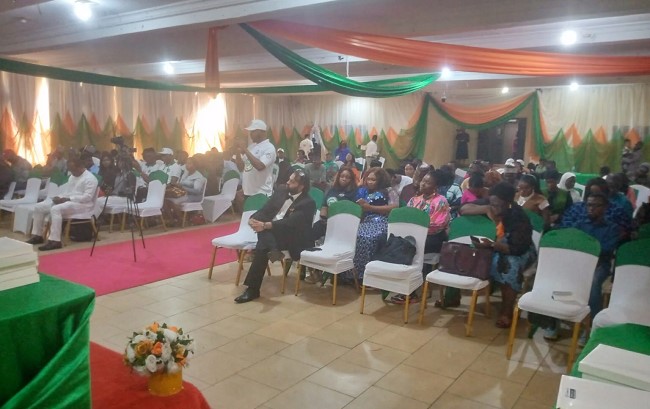
Participants at the 2025 Nigeria SDG Awards and Symposium in Abuja
Inusa said the awards formed part of ongoing advocacy to encourage Nigerians to “key into” all SDG components, especially climate action, noting that government, the private sector and civil society groups were already working to meet the targets.
“Nigeria cannot achieve the climate action goals without collective support. Everyone must join the effort,” he said.
Mrs. Ibironke Olubamise, Global Environment Specialist, Small Grants Programme of the UN Development Programme (UNDP), and an award recipient, expressed gratitude for the recognition.
She encouraged Nigerians to remain committed to excellence in their various fields, saying they may not know who is observing their work.
Olubamise said her organisation was supporting communities and civil society groups to address environmental challenges and strengthen environmental protection.
“If environmental issues are not addressed, they will fight back and affect everyone,” she said.
Mr. Iduh Otene, Executive Director of the Alliance for Positive Environmental Impact and Reforestation (APEARE), also an award recipient, said the recognition would motivate the organisation to deepen its work, particularly on climate-related issues.
“To whom much is given, much is expected. We want to increase our impact at the grassroots and get more Nigerians involved,” he said.
Otene called for broader knowledge sharing among stakeholders to tackle climate change adaptation and mitigation challenges.
Ezegwoya Joseph, North Central Operations Coordinator of APEARE, also expressed appreciation for the award, adding that it would spur the organisation to intensify its efforts.
He urged Nigerians to play their part in achieving the SDGs by 2030.
The most comprehensive assessment of the global environment ever undertaken has found that investing in a stable climate, healthy nature and land, and a pollution-free planet can deliver trillions in additional global GDP, avoid millions of deaths and lift hundreds of millions of people out of poverty and hunger.
The Global Environment Outlook (GEO-7), released on Tuesday, December 9, 2025, during the seventh session of the United Nations Environment Assembly in Nairobi, is the product of 287 multi-disciplinary scientists from 82 countries.
The United Nations Environment Programme (UNEP) report finds that climate change, biodiversity loss, land degradation, desertification, and pollution and waste have taken a heavy toll on the planet, people and economies – already costing trillions of dollars each year. Following current development pathways will only intensify this toll.
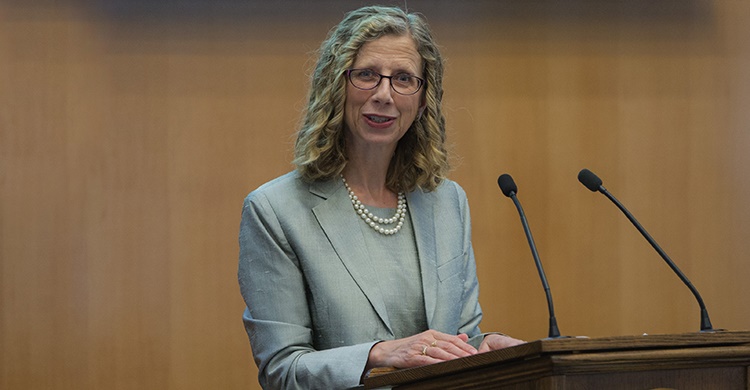
United Nations Environment Programme (UNEP) Executive Director, Inger Andersen. Photo credit: Eric Bridiers
However, whole-of-society and whole-of-government approaches to transform the systems of economy and finance, materials and waste, energy, food and the environment would deliver global macroeconomic benefits that could reach $20 trillion per year by 2070 and continue growing.
A key enabling factor of this approach is moving away from GDP to indicators that also track human and natural capital – incentivizing economies to move towards circularity, decarbonisation of the energy system, sustainable agriculture, ecosystem restoration and more.
“The Global Environment Outlook lays out a simple choice for humanity: continue down the road to a future devastated by climate change, dwindling nature, degraded land and polluted air, or change direction to secure a healthy planet, healthy people and healthy economies. This is no choice at all,” said Inger Andersen, UNEP Executive Director.
“And let us not forgot the world has already made so much progress: from global deals covering climate change, nature, land and biodiversity, and pollution and waste, to real-world change in the booming renewables industry, global coverage of protected areas, and the phasing out of toxic chemicals,” she added. “I call on all nations to build on this progress, invest in planetary health and drive their economies towards a thriving, sustainable future.”
A better path
The report presents two transformation pathways, looking at behavioural changes to place less emphasis on material consumption, and changes in which the world relies primarily on technological development and efficiency gains.
The transformation pathways predict that the global macroeconomic benefits will start to appear in 2050, grow to $20 trillion per year by 2070 and boom thereafter to $100 trillion per year. The pathways project reduced exposure to climate risks, reduced biodiversity loss by 2030 and an increase in natural lands.
Nine million premature deaths can be avoided by 2050, through measures such as cutting air pollution. By 2050, almost 200 million people could be lifted out of undernourishment and over 100 million people out of extreme poverty.
To achieve net-zero emissions by 2050 and ensure adequate funding for conserving and restoring biodiversity, annual investment of about US$8 trillion is needed until 2050. However, the cost of inaction is far higher.
Sweeping transformations required
Following the transformation pathways would require sweeping changes across five key areas. The report outlines recommended measures for each area, including:
Economy and finance: Move beyond GDP to comprehensive inclusive wealth metrics; price positive and negative externalities to value goods correctly; and phase out and repurpose subsidies, taxes and incentives that result in negative impacts on nature.
Materials and waste: Implement circular product design, transparency and traceability of products, components and materials; shift investments to circular and regenerative business models; and shift consumption patterns towards circularity through changing mindsets.
Energy: Decarbonise the energy supply; increase energy efficiency; back social and environmental sustainability in critical mineral value chains; and address energy access and energy poverty.
Food systems: Shift to healthy and sustainable diets; enhance circularity and production efficiency; and reduce food loss and waste.
Environment: Accelerate conservation and restoration of biodiversity and ecosystems; back climate adaptation and resilience, leaning on Nature-based Solutions; and implement climate mitigation strategies.
The report calls for a parallel co-development and co-implementation of such solutions. Considering diverse knowledge systems, especially Indigenous Knowledge and Local Knowledge, is crucial to just transitions that address both environmental sustainability and human well-being.
The report calls on governments, non-governmental and multilateral organisations, the private sector, civil society, academia, professional organisations, the public and Indigenous Peoples to acknowledge the urgency of the global environmental crises, build on progress made in recent decades, and collaborate in the co-design and implementation of integrated policies, strategies and actions to deliver a better future for all.
Growing degradation
Drawing on multiple sources, the report also lays out in detail the current and future consequences of business-as-usual development models.
Greenhouse gas emissions have increased by 1.5 per cent each year since 1990, reaching a new high in 2024 – raising global temperatures and intensifying climate impacts. The cost of extreme weather events attributed to climate change over the last 20 years is estimated at $143 billion annually.
Between 20 and 40 per cent of land area worldwide is estimated to be degraded, affecting over three billion people, while one million of an estimated eight million species are threatened with extinction.
Nine million deaths are attributable annually to some form of pollution. The economic cost of health damages from air pollution alone was about $8.1 trillion in 2019 – or around 6.1 per cent of global GDP.
The state of the environment will dramatically worsen if the world continues to power economies under a business-as-usual pathway. Without action, global mean temperature rise is likely to exceed 1.5°C above pre-industrial levels in the early 2030s, exceed 2.0°C by the 2040s and keep climbing. On this path, climate change would cut 4 per cent off annual global GDP by 2050 and 20 per cent by the end of the century.
Land degradation is expected to continue at current rates, with the world losing fertile and productive land the size of Colombia or Ethiopia annually – at a time when climate change could reduce per-person food availability by 3.4 per cent by 2050.
The 8,000 million tonnes of plastic waste polluting the planet will continue to accumulate – driving up the estimated health-related economic losses of $1.5 trillion attributable annually to exposure to toxic chemicals in plastics.
Trade union and civil society organisations from Nigeria, Kenya and Uganda have frowned at alleged intimidatory acts of the management of Senegalese water company, SEN’EAU, against union members in the country’s public water sector.
They are bothered by the “bullying and unrelenting pressure” being mounted particularly on Mr. Oumar Ba, General Secretary of the Autonomous Union of Water Workers of Senegal (SATES), who has been at the fore of agitation for fair and equitable public water services and the rights of workers.
“We find it very disturbing that the management of SEN-EAU has decided to victimise Oumar Ba for refusing to accept their double dealing and attempt to sideline his union, a vocal advocate for workers right, while negotiating multi-year agreements with three other unions within SEN’EAU.
Oumar Ba, General Secretary of the Autonomous Union of Water Workers of Senegal (SATES)
“The attempt by SEN’EAU to introduce divide and rule tactics among the unions within it through the sidelining of SATES is totally unacceptable and cannot be allowed to stand in a system that must be transparent and accountable to the people,” the groups said in a statement.
According to them, more disturbing is the fact that, even with the growing outrage over what is being unleashed on workers by SEN’EAU, the Senegalese government has maintained a complicit silence, allowing the management to undermine freedom of expression which is guaranteed in Articles 8 & 10 of that country’s Constitution.
Article 8 of the Constitution guarantees all citizens fundamental individual freedoms, economic and social rights, and collective rights, including freedoms of opinion, expression, association, movement, enterprise, property, work, health, and a healthy environment, all exercised under conditions set by law.
“No one individual or organisation and not even the government has the right to prevent workers from exercising these rights and liberties,” the groups noted, adding:
“In the face of the very disturbing developments we have observed, we stand in solidarity with Oumar Ba and other victimized unionists and encourage them to remain resolute in advocating for their rights to fair treatment and improved work conditions.
“We are calling on the government of Senegal to rein in on the anti-people and anti-workers actions of the management of SEN’EAU and carry out an independent, detailed and transparent review of its managerial practices to ensure they are in line with the principles of justice and public accountability.”
The organisations include Amalgamated Union of Public Corporations Civil Service Technical and Recreational Services Employees (AUPCTRE) (Nigeria), National Union of Electricity Employees (Nigeria), Citizens Free Service Forum (Nigeria), Ecumenical Water Network Africa (Nigeria), Renevlyn Development Initiative (Nigeria), Help initiative for Social Justice & Humanitarian Development (Nigeria) and New Life Community Care Initiative (Nigeria) Child Health Organisation (Nigeria).
Others are Environmental Defenders Network (Nigeria), Country Government Workers Union (CGWU-K) (Kenya), Union of Kenya Civil Servants (UKCS) (Kenya). Kenya Electrical Trade and Allied Workers Union (KETAWU) (Kenya), Kenya Union of Commercial Food and Allied Workers (KUCFAW) (Kenya), Global Outlook Trade Union School Alumni Network (GOTUSA) (Kenya) and Uganda Public Employees Union (UPEU) (Uganda).
As the world marks International Human Rights Day on Wednesday, December 10, 2025, the Our Water Our Right Africa Coalition (OWORAC) has condemned the repression intensifying across Senegal’s water sector, saying that the management of Senegalese water company, SEN’EAU, has sustained a campaign of intimidation against Comrade Oumar Ba, General Secretary of the Autonomous Union of Water Workers of Senegal, an affiliate of Public Services International (PSI), and a member of the coalition.
“SEN’EAU’s actions are a direct violation of fundamental trade union freedoms and basic human rights,” submitted the coalition.
OWORAC, PSI, and Corporate Accountability say they stand in solidarity with Ba and call on the company and Senegalese authorities to immediately halt all punitive measures against him, respect lawful representation, and uphold international labour standards.
“Comrade Ba’s latest ordeal follows his questioning of SEN’EAU’s attempt to negotiate a multi-year agreement with representatives of three unions while excluding SATES, the union he leads. SATES is contesting in court a digital voting process that led to the election of trade union representatives in SEN’EAU. The process, according to workers, violates Senegalese labour laws and lacks transparency. For refusing these irregularities, Ba now faces illegitimate sanctions.
“SEN’EAU’s actions are not occurring in a vacuum. The company is effectively controlled by French private water multinational giant, Suez, which adds to the power imbalance between its management and workers.
“Sadly, this ongoing assault is unfolding on the eve of International Human Rights Day 2025, which carries the theme Human Rights: Our Everyday Essentials. Few essentials are more fundamental than water, and few rights deteriorate more rapidly when control over water is ceded to private actors with limited accountability. A day dedicated to everyday essentials cannot be meaningfully observed where workers are punished for exercising the very rights the day is meant to honour.
“SEN’EAU’s conduct exposes how fragile those rights become when private interests govern public goods.
“The consequences of this crackdown are already grave. On November 28, Ba embarked on a hunger strike after years of harassment and targeted attacks from SEN’EAU’s management. His circumstances reveal the growing sense of despair within SEN’EAU and the broader conviction among workers that their rights, health and safety are being traded away for a model of water governance driven by private power rather than public interest.
“This deterioration inside the company mirrors a wider crisis that communities across Senegal continue to describe, one marked by poor service delivery, rising costs and a steady erosion of trust under the privatised SEN’EAU regime. Unfortunately, the negative impacts of privatised water regimes are not limited to SEN’EAU’s control in Dakar. Similar patterns have been reported and documented in other privately-run water schemes across the country.
“Yet even in the middle of this crisis, there remains an opening for decisive change. With major rural water contracts set to expire in 2027 and 2028, Senegal has an opportunity to recalibrate its water governance model and restore accountability by returning decision-making power to the communities and workers who depend on water as a public resource rather than a corporate asset.
“OWORAC, PSI and Corporate Accountability align themselves fully with Ba, with SATES, and with every Senegalese water worker who refuses to surrender their rights to a process designed to erode democratic participation and concentrate power in hands that have already failed the public.
They called for:
An immediate end to all disciplinary and retaliatory actions against Oumar Ba
The withdrawal of all threats and intimidation directed at water workers, and
The cancellation of the unlawful digital election that has already cast a long shadow over the sector.
“SEN’EAU must adopt procedures that respect Senegalese labour law and open the door to transparent and lawful dialogue with legitimately elected representatives, including SATES, whose mandate cannot be erased by administrative manoeuvres.
“We also insist on urgent medical care and robust protection for Ba, whose wellness and safety have become a matter of national and moral concern as this crisis deepens. Human Rights Day will carry little meaning if those who defend public accountability are victimised and attacked for doing so.”
The coalition comprises: Water Citizens Network / Revenue Mobilisation Africa (Ghana), Public Service International (Africa and Arab Region), Corporate Accountability and Public Participation Africa (Nigeria), Biodiversity and Biosafety Association Kenya (BIBA Kenya), Disability Not a Barrier Initiative (Nigeria), Cheriehomes Global Initiatives (Nigeria), Africa Water Justice Network, Voices for Water (Zimbabwe), Senegalese Water Justice Network (Senegal), Syndicat National Autonome des Travailleurs de l’Energie, de l’Eau et des Mines du Cameroun SYNATEEC (Cameroon), African Centre for Advocacy (Cameroon), Corporate Accountability (USA)and La Confédération des Syndicats Aitonomes du Sénégal (CSA-Sen).