25.1 C
Lagos
Friday, January 2, 2026
Home Blog Page 22

How Lagos traders struggle as styrofoam gradually disappears in markets

0

Traders have continued to count their losses about five months after the Lagos State Government banned styrofoam products in the state.

The ban has created two opposing camps between taders, whose businesses were heavily hit, and environmentalists, who insist that the policy is necessary to protect public health and the environment.

A survey across markets and food vending points in Lagos revealed concerns over rising packaging costs, limited alternatives, and gaps in enforcement and public awareness.
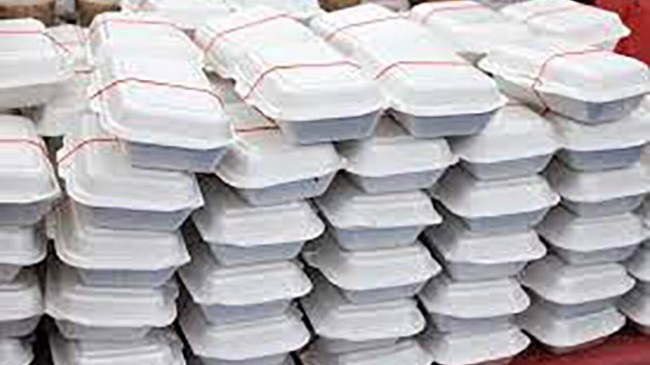
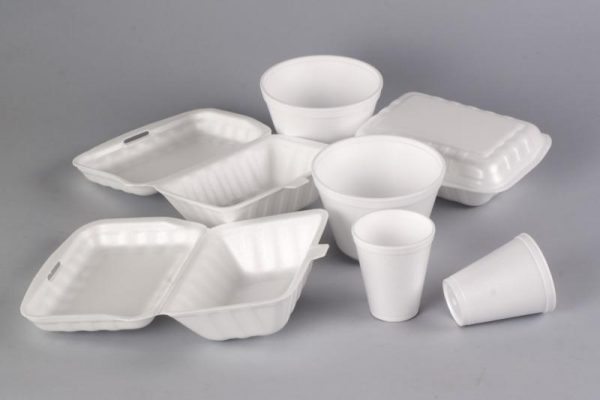
Styrofoam
Styrofoam

Mrs. Cynthia Ofoji, a trader dealing in foam and plastic food packs, said the ban has severely affected her business.

According to her, a pack of 100 pieces of Styrofoam previously sold for ₦3,800, while the cheapest plastic alternatives now range from ₦11,000 to ₦14,000.

“The small plastic pack is ₦11,000 and the normal size is ₦14,000. The ban has led to a drop in sales.

“Customers prefer the cheaper styrofoam, but the government does not want us to sell it,” she said.

At a popular night market in Ikorodu, a food vendor, Mrs. Iyabo Adebayo, who sells noodles expressed similar frustration.

Adebayo said she depends heavily on styrofoam containers, adding that the plastic options were too costly.

“Customers complain when I increased the price because of packaging. I don’t have affordable alternatives,” she said.

Another trader at Oshodi Market who pleaded anonymity said some traders are still battling to face the reality.

The trader said styrofoams are still being sold in the market through undercovers.

“Styrofoams are wrapped in different covers and hidden inside others goods to avoid the wrath of the law.

“It’s only the seller and the customer that know how to go about it to avoid being arrested by the Lagos State Government officials during enforcement raid,” she said.

Similarly, at Abule Market, Ajao Estate, petty traders such as tomato sellers still tie their markets in small black nylons.

A tomato seller, known as Abu, said that he was aware of the ban but had been struggling for alternatives to no avail.

Abu said that the traders would only comply when government provides the needed alternatives.

In spite of  traders’ concerns, some experts have welcomed the ban.

Omodara Precious, a microbiology student at the University of Lagos, said styrofoam poses serious environmental and health risks.

“It takes a long time to degrade, blocks drainage systems, and releases toxins when heated. It is also unsafe for microwaving,” he said.

The measure has also affected related packaging materials.

Mrs. Abimbola Omotola, who sells nylon and polyester, noted an increase in the production of thicker nylons, while some lighter variants were no longer in circulation as manufacturers adjust to new regulations.

For the policy to succeed, Mr Emmanuel Ajishafe, a mechanical engineer from Ikorodu, stressed the need for stronger public sensitisation and waste-management systems.

“The ban will not work without proper waste disposal routines.

“Government must invest in more waste management infrastructure and provide affordable alternatives for small businesses,” he said.

He urged authorities to support recycling initiatives and ensure that the transition away from styrofoam does not cripple micro-enterprises already struggling with rising operating costs.

On July 1, 2025, the state begun full enforcement of the ban on Single Use Plastics (plastics under 40 microns) – targeting styrofoam food packs, disposable cups, plastic straws, cutlery and lightweight nylon bags, among others.

The Commissioner for Environment and Water Resources, Mr. Tokunbo Wahab, said this at a news conference that any store found storing or selling the SUPs would be sealed, warning everyone to desist from such the act.

“There will be no going back from July 1 on the enforcement of the ban of single use plastics, which is less than 40 microns in Lagos State.

“LASG has put in place different enforcement strategies to effect this ban. However, these strategies will not be disclosed yet.

“Let me also emphasise that any market or store that is found storing or engaging in the sale and distribution of the SUPs less than 40 microns will be sealed up and items confiscated.

“The offenders will be punished according to the environmental laws of Lagos State,” he said.

The commissioner said there had been a lot of awareness on the ban by the ministry.

“When we announced the ban of styrofoam food containers in January 2024, we also informed everyone that starting from January 2025, certain categories of SUPs will be banned.

“By January 2025, after a series of meetings and representations with concerned stakeholders, the state gave another grace of six months, which expired on July 1.

He added that the decision on the ban was majorly because of the safety and well-being of Lagos residents, which would not be compromised.

Also, the government has initiated a Plastic Waste Management Fund, a public-private partnership, to support collection, recycling, and waste-management efforts alongside the ban.

By Elizabeth Adebayo and Fabian Ekeruche
African Space Agency chief details plan for sustainable space economy

0

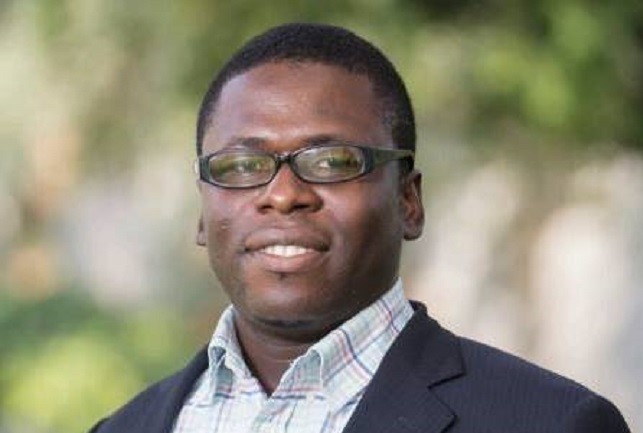
Africa must invest in ground infrastructure, satellite production and data applications to build a sustainable space economy, the head of the African Space Agency has said.

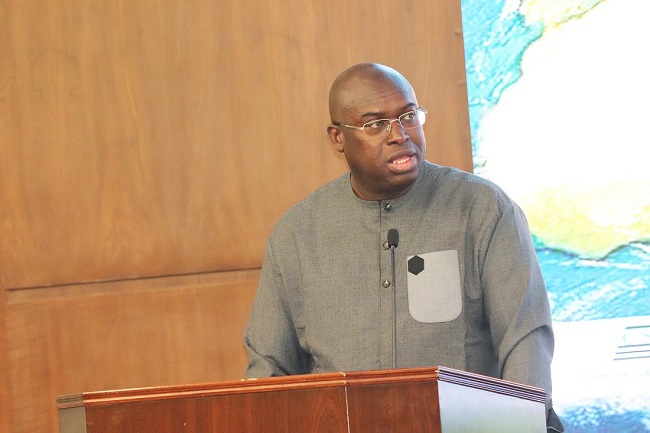
Tidiane Ouattara, president of the agency, outlined the strategy during an interview last week at the GMES & Africa Forum 2 in Cairo, which concluded under the theme of shaping Africa’s Earth observation roadmap.

“The space economy is essentially the contribution of space science and technology to economic growth, either by reinforcing existing sectors or by creating entirely new ones,” Ouattara said.

Tidiane Ouattara
Tidiane Ouattara

He identified three priorities: developing ground facilities such as data centres and receiving stations, advancing satellite and space vehicle production capabilities, and expanding downstream applications that convert satellite data into services.

Downstream applications include flood monitoring, climate surveillance, agricultural forecasting, forestry management, ocean observation and urban planning.

“Applications are where satellite data solves the daily needs of our communities,” Ouattara said.

Space technologies can help African nations manage natural resources, counter illegal mining, monitor transportation, improve navigation and build climate resilience, he said.

Ouattara emphasised that progress requires substantial investment in education and training.

“None of this will ever be possible without building a critical mass of human capital,” he said.

“Space is relatively new in Africa. We must train our young people.”

He urged governments, universities and programs like GMES & Africa to expand training in Earth observation, engineering and data analytics.

The forum produced a commitment to establish an Earth observation roadmap for integrating space technologies into national development plans.

Ouattara said the agency would work with partners to shift Africa from consumer to contributor in the global space economy.

The gathering brought together policymakers, scientists, private-sector representatives and development partners from across Africa.

By Sharon Kavhu, AfricaBrief

IPI Nigeria to immortalise late treasurer with university endowment prize

0

The International Press Institute (IPI) Nigeria has promised to endow a prize at the University of Abuja (UniAbuja) in honour of its late Treasurer, Rafat Idris Salami.

In a statement on Friday, December 5, 2025, IPI Nigeria said the prize to be endowed would be to instill in students of the institution the values that the late Treasurer stood for.

The President of the body, Musikilu Mojeed, confirmed the decision during the opening ceremony of the 2025 IPI Nigeria Conference and Annual General Meeting on December 2, 2025.

Rafat Idris Salami
The late Rafat Idris Salami

Salami, the then Assistant Director of Digital Media at the Voice of Nigeria (VON), died on December 20, 2024, just days after the first annual conference and AGM of IPI Nigeria, where she participated actively despite being ill.

Speaking on her death in his welcome address at the second annual conference and AGM, Mojeed requested members and guests, including Vice President Kashim Shettima and the Minister of Information and National Orientation, Mohammed Idris, to observe a one-minute silence in her honour.

He said: “Last year, even in severe pain and confined to a wheelchair, she insisted on attending the conference.

“She greeted guests, co-ordinated logistics, took photographs with her phone and served with grace until her body could no longer carry her.

“Her commitment was a reminder that Journalism is not merely a job; it is a calling.

“It demands sacrifice; It demands conviction.

“To honour her legacy, the National Committee of IPI Nigeria will endow a prize in her name at the University of Abuja, which was her alma-mater.

“We will work with the University to ensure that every year, young Journalists are inspired by the values Rafat lived by – integrity, courage, and selfless service.”

When she died last year, Salami was eulogised by the IPI; Federal Capital Territory (FCT) Council of the Nigeria Union of Journalists, where she had served as Secretary; her employer, VON, and colleagues.

The late Salami began her career with VON as a News Editor and correspondent in Lagos.

She rose through the ranks to become VON’s Assistant Director in charge of Digital Media before her demise.

Water justice network criticises repressive acts against Senegal union members

0

The Africa Water Justice Network (AWJN) has called on the Senegalese national press and international media outlets to beam their attention on alleged intimidation and “suppression of exceptional gravity”, especially for dissenting voices and union representatives in Senegal’s public water sector.

The groups, in a statement issued on Friday, December 5, 2025, condemned the ongoing intimidation, pressure and threats of dismissal of workers, including trade union representatives, who are advocating transparency, accountability, respect for fundamental labour rights and sector reforms that impact positively on workers and served communities.

Leonard Shang Quartey
Coordinator, Africa Water Justice Network (AWJN), Leonard Shang Quartey

AWJN revealed that the ongoing repression represents a direct attack on union freedoms and people’s rights, adding that at the centre of the crisis is a popular employee, respected worker and union representative, Mr. Oumar Ba, known for his commitment to fair and equitable public water services for communities in Senegal.

In the face of escalating reprisals and a climate of persistent intimidation, he has been compelled to embark on a hunger strike, as a last resort that reflects the depth of injustice workers and communities are enduring, an action that shows a signal highlighting the deteriorating situation of workers’ rights within SEN’EAU.

AWJN’s Steering Committee Chairperson, Aderonke Ige, said, “Threats, sanctions and dismissal attempts against workers exercising their legitimate rights constitute a blatant violation of international labour standards, including the core ILO Conventions ratified by Senegal.”

Restating the need for the sanctity of human rights, a member of the Senegalese Water Justice Network, Fatou Diouf, also stressed that “these practices jeopardise not only fundamental human and trade union rights but also the quality, integrity and stability of the public water service in Senegal.”

The AWJN also expresses its strong support for the SATES union which, despite a hostile environment, continues to stand firm and remains the majority union within SEN’EAU. This status testifies to the sustained confidence of the workforce, despite clear attempts to weaken or intimidate the union’s legitimate activities.

Speaking from the AWJN secretariat in Accra, Ghana, the Network’s Coordinator, Leonard Shang Quartey, stated, “The repression of the Water sector workers needs to be condemned by all, especially where that repression is a result of the unions speaking out for the public good and improving services to communities.

“Their demands for fair treatment, improved working conditions, transparency, and accountability will yield better services for communities and should, therefore, lead to constructive social dialogue, not punitive measures.”

In light of the alarming situation, the AWJN demanded immediate cessation of all threats, intimidation, disciplinary measures, and dismissal attempts targeting workers engaged in trade union activities and urgent medical attention and unconditional protection for Oumar Ba, with guarantees of no reprisals linked to his peaceful protests.

“We demand the establishment of transparent, credible, and inclusive dialogue between SEN’EAU, public authorities and trade union representatives. We also demand full respect for international labour standards, including freedom of association and collective bargaining, as well as an independent review of SEN’EAU’s managerial practices to ensure alignment with principles of public accountability, transparency and human rights. Senegal has long been recognized for its strong culture of social dialogue and democratic governance.

“The current developments seriously threaten this legacy and undermine the dignity of the workers who ensure the daily delivery of a vital public service. The Africa Water Justice Network reaffirms its solidarity with Oumar Ba, SATES and all workers standing for justice, fairness and the protection of human rights in the water sector.

“We urge the Government of Senegal and the management of SEN’EAU to act without delay to resolve this crisis, safeguard workers’ rights and restore a climate of transparency, trust and respect,” the groups stated.

The statement was endorsed by the Africa Water Justice Network, Ghana; Women Collective, Kenya; the Renevlyn Development Initiative (RDI), Nigeria; Senegalese Water Justice Network, Sénégal; FCPG, Kenya; African Water Commons Collective (AWCC), South Africa; and the Help Initiative for Social Justice and Humanitarian Development, Nigeria.

Others are the Ecumenical Water Network Africa, Nigeria; Help Initiative, Nigeria; Community Action Movement of Nigeria; Blue Planet Project, Canada/Bolivia/United States/Ghana; Plataforma de Acuerdos Público Conunitarios de las Americas, The Americas (regional); PAPC (Uruguay) and Corporación Ecológica Feminista Penca de Sábila, Colombia.

AfDB-funded fisheries programme drives economic transformation in 16 Southern African countries

A regional initiative that has overhauled aquatic resource management and boosted cross-border fish trade is now improving the lives of nearly three million people across Southern Africa – raising fish production, consumption, and incomes.

The Programme for Improving Fisheries Governance and Blue Economy Trade Corridors (PROFISHBLUE) has generated cross-border trade volumes exceeding 500,000 tonnes over the past four years, creating employment, strengthening food security, and building climate resilience across 16 SADC member states.

The initiative has built capacity for over 250,000 beneficiaries across seven African Development Fund (ADF) countries (Democratic Republic of Congo, Madagascar, Malawi, Mozambique, Tanzania, Zambia, and Zimbabwe) through trainings, knowledge transfer programmes, fish quality assurance equipment and tools, and refrigerated vehicles.

AfDB
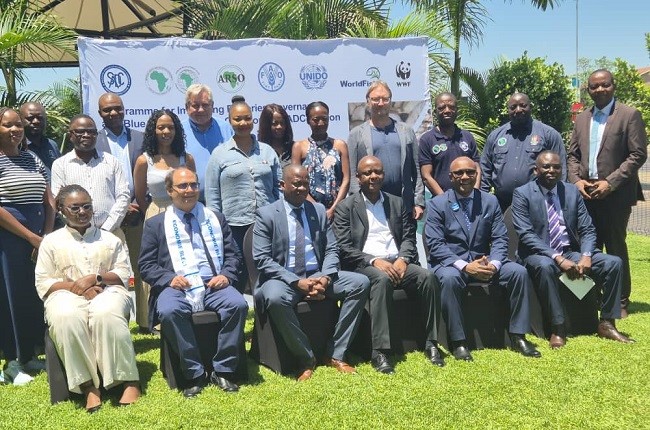
Govt, SADC, and AfDB representatives join stakeholders for the 2025 World Fisheries Day celebrations in Botswana

Training covered multiple areas, including fish value chain and post-harvest utilisation, business development and SME incubation, genetic improvement programmes for endemic tilapia species, common standards and policy harmonisation in collaboration with bureaus of standards and customs officers, nutrition and fish product development, and blue economy investment planning and financing mechanisms.

Further support was provided for fish stock assessments on transboundary lakes, vessel monitoring systems to deter illegal fishing, and training vessel inspection and fish catch statistics.

On World Fisheries Day on November 21, the Southern African Development Community (SADC), the African Development Bank Group, and strategic partners gathered in Gaborone to celebrate these achievements and showcase how the project has transformed fish value chains and local consumer markets since its inception in 2022.

The $9.2 million grant initiative, funded through the African Development Bank’s ADF 15, has successfully facilitated regional integration and economic development by improving fisheries governance and establishing sustainable blue economy trade corridors.

This year’s World Fisheries Day aligned closely with PROFISHBLUE’s multi-level governance and community-centered approach and measurable impact on fisheries communities throughout Southern Africa.

The gathering brought together government officials, development partners, private-sector representatives, and civil society stakeholders to chart a path forward for sustainable fisheries development in the region.

Transformative Impact Across the Region

“We are indebted to the African Development Bank Group for providing funding to implement this project within the Blue Economy space,” said Director Domingos Gove on behalf of Angele Makombo Ntumba, SADC Deputy Secretary for Regional Integration. “This support has demonstrated our capacity to improve aquatic food systems for the benefit of over 380 million people in the region.”

The project has successfully demonstrated that fishery resources can be managed sustainably, equitably, and resiliently in the face of climate change and external shocks.

“The PROFISHBLUE project has shown best practices in regional integration of blue economy trade corridors and cross-border fish trade,” stated Neeraj Vij, African Development Bank’s Regional Sector Manager for Feed Africa Operations for Southern Africa. “About 3 billion people rely on global supply chains for aquatic-sourced food, contributing $300 billion annually to the global economy. This project demonstrates how strategic investment in fisheries governance can create competitive value chains that provide jobs and livelihoods while eradicating extreme poverty, especially in rural areas.”

Vij reaffirmed the African Development Bank Group’s commitment to expanding support for blue economy initiatives across SADC Member States.

Key implementing partners include the Food and Agriculture Organisation (FAO), the United Nations Industrial Development Organisation (UNIDO), the Worldwide Fund for Nature (WWF), WorldFish, and the African Organisation for Standardisation (ARSO).

Director of Fisheries and Apiculture in Botswana’s Ministry of Lands and Agriculture, Kagisanyo Bedi, commended the initiative for creating a crucial platform for learning and exchange of ideas among regional stakeholders in the region.

The celebration featured testimonials from women in fisheries who shared how the project has enhanced their livelihoods, underscoring the project’s inclusive development approach.

“We embarked on an investment journey that few smallholder entrepreneurs would consider piloting technology in seaweed farming. We appreciate the opportunity…” said Hifadhi Hai, a project participant from Tanzania.

This was echoed by a fish processor, Tamala Mtambo of the Twiyule Fish Cooperative, Malawi: “ProFishBlue supported us to turn fish processing into progress.”

Lagos warns estate developers operating without approved layout plans

0

The Lagos State Government has issued a final warning to estate developments operating in the state without approved layout plans.

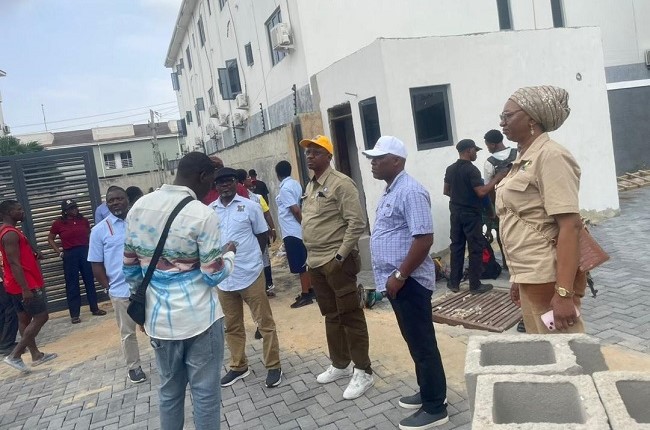
Commissioner for Physical Planning and Urban Development, Dr. Oluyinka Olumide, who led an on-the-spot warning and sensitisation exercise across parts of the Eti-Osa corridor on Tuesday, December 2, 2025, said that the final warning was sequel to the expiration of the grace period earlier granted to all flagged estates to regularise their planning documents.

He said that the State Government had repeatedly emphasised the need for all estate promoters to obtain proper approvals before engaging in land subdivision, sales, or construction.

Lagos
Lagos State Government officials during the on-the-spot warning and sensitisation exercise across parts of the Eti-Osa corridor

He explained that the affected estates had continued to operate in violation of planning regulations despite earlier notices while stressing that the government would no longer tolerate developments that compromise orderly and sustainable urban growth.

The Commissioner reiterated that the final one-week warning issued to the erring estates marked the last opportunity for them to submit their layout plans and obtain necessary approvals. 

He stated that, after the deadline, the government would apply appropriate sanctions, ranging from heavy fines to demolition, depending on the magnitude of each infraction.

Dr. Olumide urged members of the public, especially prospective homebuyers, to always verify the planning status of any estate before committing funds, noting that due diligence remained essential to avoid losses.

The Lagos State Government reaffirmed its commitment to enforcing planning laws to safeguard the environment and ensure orderly development across the state.

The enforcement team visited, among others, Whiteoak Estate 2, behind VGC and Elite Garden Estate, developed by Bosmark Haven Properties Limited, also behind VGC.

NCDMB unveils $100m scheme as Nigerian content hits 61% in 2025

0

The Nigerian Content Development and Monitoring Board (NCDMB) has unveiled a $100 million Equity Investment Scheme among a raft of fresh initiatives to bolster indigenous capacity and participation in the oil and gas industry.

Executive Secretary of the NCDMB, Felix Omatsola Ogbe, announced this in a keynote address he delivered at the opening day of the 14th Practical Nigerian Content Forum, which ended on Thursday, December 4, 2025.

The capacity audience included three ministers of state, members of the Local Content Committees of the National Assembly, a representative of the Bayelsa State Governor, Special Adviser to the President on Energy, two former Executive Secretaries of the NCDMB, Managing Director, Bank of Industry, and captains of the oil and gas industry.

NCDMB
L-R: Chairman, Senate Committee on Local Content, Senator Joel-Onowakpo Thomas, Minister of State for Industry, Trade, and Investment, Senator John Owan Enoh; Chairman, House of Representative Committee on Nigerian Content Development and Monitoring, Hon. Boma Goodhead, Secretary to the Bayelsa State Government (SSG), Prof. Nimibofa Ayawei, Honourable Minister of State for Petroleum Resources (Oil), Senator Heineken Lokpobiri, Special Adviser to the President on Energy, Mrs. Olu Verheijen, Honorable Minister of State for Petroleum Resources (Gas), Rt. Hon. Ekperikpe Ekpo, Portfolio and Country Director, DMG Nigeria Events, Wemimo Oyelana and Executive Secretary, Nigerian Content Development and Monitoring Board, Engr. Felix Omatsola Ogbe at the opening ceremony of 14th Practical Nigerian Content Forum in Yenagoa, Bayelsa State

According to Ogbe, the $100 million Equity Investment Scheme would “provide equity financing to high-growth indigenous energy service companies, while diversifying the income base of the Nigerian Content Development Fund (NCDF).”

In furtherance of the $100 million Equity Investment Scheme, a memorandum of understanding (MOU) was signed at the event between Ogbe and the Managing Director of the Bank of Industry, Dr. Olasupo Olusi, toward management of the scheme, which is a new product of the Nigerian Content Intervention Fund (NCI Fund).

The NCDMB boss also announced that 61 per cent Nigerian Content level already attained in the oil and gas sector by the third quarter of 2025 from the projects being monitored by the Board.

Another major announcement was the Board’s readiness to onboard a new set of Project 100 Companies after the successful implementation of approved interventions relating to the first set of Project 100 Companies, launched in 2019, for which an exit plan is slated for April 2026.

Project 100 Companies is an initiative of the Ministry of Petroleum Resources and the NCDMB under which 100 indigenous companies in the oil and gas industry are nurtured and empowered to higher levels of competitiveness through capacity building and access to market opportunities.

He also said the Board has concluded plans to launch its NCDMB Technology Challenge in the first quarter of 2026 and to hold a Research and Development Fair in the second quarter of 2026. In addition, a review of the Board’s seven current guidelines is to be undertaken between the first and second quarter of 2015.

Ogbe further disclosed that the Board has completed the framework for issuance of NCDF Compliance Certificate, an instrument to confirm that a company in the oil and gas industry has complied with the one per cent remittance obligations. The Certificate will become effective on January 1, 2026, and would be required to obtain key permits and approvals from the Board.

Among recent accomplishments of the Board announced by the NCDMB boss was the expansion of access to community contractors under the Community Contractors Scheme, with over 94 disbursements made in 2025 alone. In addition, the Nigerian Content Academy has commenced operation as a full-fledged division of the Board, with seven of its Lecture Series on key industry issues already organised.

On human capacity development (HCD), the NCDMB has rolled out its Oil and Gas Field Readiness Training Programme for top 10 skills in high demand, on the back of the surge in final investment decisions (FIDs) on big-ticket projects in the oil and gas industry and over 20 Field Development Plans recently approved by the Nigerian Upstream Petroleum Regulatory Commission (NUPRC). The Programme is to ensure availability of indigenous technical capacity at the take-off of the projects.

The construction of the multi-billion-naira Oloibiri Museum and Research Centre (OMRC) at Otuabagi in Ogbia Local Government Area of Bayelsa State has also taken off, with the execution of a contract between the construction firm, Julius Berger Plc and OMRC Limited in December 2024, while mobilisation to site was achieved in July 2025. Jointly sponsored by the Petroleum Technology Development Fund (PTDF), NCDMB, Shell Petroleum Development Company (now Renaissance Africa Energy Limited), and Bayelsa State Government, the project is expected to be delivered within 30 months.

In a presentation, the Chairman, Senate Committee on Local Content, Senator Joel Thomas, expressed concern that some indigenous companies have consistently flouted provisions of the Nigerian Oil and Gas Industry Content Development (NOGICD) Act, 2010, as relates to one per cent remittance to the Nigerian Content Development Fund (NCDF).

His counterpart in the House of Representatives, Boma Goodhead, commended the NCDMB for sustaining the PNC Forum and Exhibition over the years and for ably guiding industry drive toward attainment of objectives of the NOGICD Act.

In his ministerial address, the Minister of State for Petroleum Resources (Gas), Ekperikpe Ekpo, said the theme of the PNC Forum, “Securing Investments, Strengthening Local Content, and Scaling Energy Production,” captures Nigeria’s national priorities that guide interventions by the Board and his Ministry.

He emphasised that “Investment remains the lifeblood of the energy sector,” and that the Board and the Ministry are committed to providing stable policies, transparent processes, and market-driven incentives, to attract long-term capital. He assured that they would “continue strengthening local capacity across fabrication, engineering, technology services, manufacturing of components, and research and development.”

For his part, the Minster of State for Petroleum Resources (Oil), Senator Heineken Lokpobiri, noted with satisfaction that a decade-long stagnation in the oil and gas industry was overcome with the enactment of the long-delayed Petroleum Industry Act (PIA), 2021, and Presidential Directives issued by the Administration of President Bola Ahmed Tinubu in March 2024.

According to him, Nigeria has regained investor-confidence as signalled by the recent surge in FIDs and the increase of oil rigs from 14 to over 60, with 40 currently in active service. “Our investment climate now is globally competitive…our fiscal terms are globally competitive,” he added, while pointing out that “Our policies must be seen to be consistent” at all times.”

He assured that the Federal Government is prepared to support Nigerian Content and the oil and gas industry, but that “things have to be done responsibly.”

The Minister disclosed that “Nigeria has met all its obligations to the African Energy Bank,” and that its Abuja corporate headquarters is fully set with furnishing and all required operational equipment.  

Also speaking, the Minister of State for Industry, Senator John Owan Enoh, said Nigeria stands at the edge of a profound energy transition “not just a transition from fossil to cleaner fuels, but a transition from import dependence to production strength, from resource extraction to value creation, and from talking about local content to building true local a capacity across value chains.”

In a goodwill message, the Managing Director, BOI, Dr. Olasupo Olusi, said that the collaboration between the NCDMB and BOI marked a significant expansion of a longstanding relationship, while assuring that through the $100 million NCIF Equity Investment Fund, “the Bank of Industry will deploy equity and quasi-equity capital to support high-potential Nigerian companies,” to complement traditional debt financing and “strengthening access to the long-term risk capital required for scale, competitiveness, and value creation.”

According to the BOI boss, “With a single obligor limit of $5 million, the Fund is designed to catalyze multiple high-impact investments while maintaining strong governance and prudent risk management.”

In a goodwill message, the Special Adviser to the President on Energy, Mrs. Olu A. Verheijen, commended the NCDMB for sustaining the PNC Forum, which she said accelerates change, drives competitiveness, and pushes the industry toward global standards.

She pointed out that as stakeholders chart the path toward building “a resilient, competitive industrial base in Nigeria,” they must be intentional – not incidental – about in-country value addition, and that the historic transfer of onshore assets from international oil companies (IOCs) to indigenous operators “reflects decades of accumulated local capability, technical maturity, and domestic capital formation.”

According to her, “We have living proof of what happens when policy, ambition, and capability align: from SHI-MCI’s fabrication yards to Waltersmith’s modular refining success; from the NLNG Train 7 Project to the Nigerian Oil and Gas Park Scheme, and the expansive growth of Nigerian-owned marine vessels.”

There’ll be no fuel queues during Yuletide, says Dangote

0

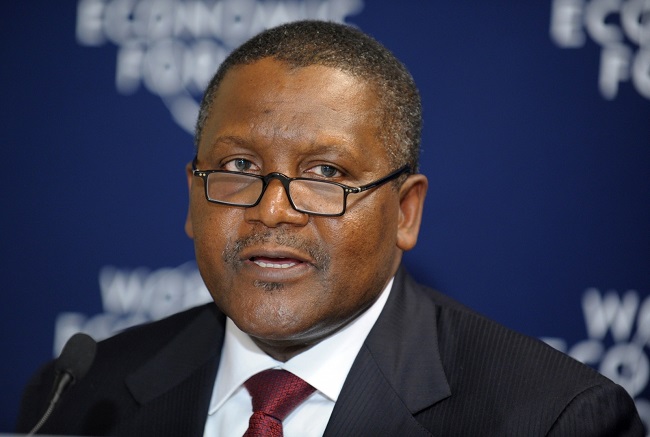
President, Dangote Group, ‎Alhaji Aliko Dangote, says the era of fuel queues during yuletide is gone, assuring that increased output from his refinery will fully meet national demand.

‎He gave the assurance on Friday, December 5, 2025, while speaking with State House Correspondents after what he described as a routine meeting with President Bola Tinubu at the State House, Abuja.

Dangote said the refinery had notified the Nigerian Midstream and Downstream Petroleum Regulatory Authority (NMDPRA) of its ability to supply 50 million litres of petrol daily, surpassing national consumption needs.

Aliko Dangote
Aliko Dangote

‎He said, “Historically, Nigeria has battled fuel queues since 1972. For the first time, we are eliminating those queues, not through imports but by producing locally.

“Even when we were servicing the refinery, there were no queues. I can assure you that queues are now history.”

‎Dangote added that neighbouring countries would also benefit, noting that by February 2026, the refinery would supply 15 to 20 million litres above Nigeria’s consumption.

He added, “So, we must export. Even our neighbours won’t experience queues because they can buy from us.”

Dangote highlighted gains for domestic manufacturers, especially in the plastics sector, which previously spent up to 400 million dollars yearly on imported feedstock.

He said the refinery’s long-term plan included expanding to 1.4 million barrels per day by 2028, overtaking India’s Reliance refinery, currently the world’s largest at 1.25 million barrels daily.

“We have already signed the necessary agreements. Construction piling begins before the end of January, and we will deliver on schedule,” the business mogul said.

He also disclosed plans to raise urea production to 12 million tonnes yearly, positioning Nigeria ahead of Russia and Qatar as the world’s biggest producer.

Dangote added, “Our goal is to use our fertiliser company to supply the entire African continent.”

Responding to questions on the recent drop in petrol and diesel prices, he attributed it to increased competition and reduced smuggling.

He said, “Prices are going down because we must compete with imports. Luckily, smuggling has dropped significantly, though not completely.”

‎Dangote stressed that the refinery was built for long-term value, not short-term profit.

He added, ‎“We’re not here to recover 20 billion dollars overnight; this is a long-term investment.

‎”The legacy I want to leave is that whatever Nigerians need, fuel, fertiliser, power, we will be part of delivering it.”

Dangote endorsed the Tinubu administration’s Naira-for-crude policy, describing it as a patriotic initiative to strengthen the local economy, despite early resistance from international oil companies.

He explained, “It’s a teething problem, but it will be resolved, either through legislation or administrative action.”

Dangote emphasised that industrial investment, not extravagant acquisitions, remained the surest path to sustainable economic growth.

By Muhyideen Jimoh

Oil and oblivion: How spills emptied Ogale’s waters

0

As a boy in the 1970s, Mathew Osaronwaji often led groups of children down to Nsisioken, a cool, winding stream that flowed through Agbi Ogale, a community in Nigeria’s oil-rich Rivers State. At 15, he was already skilled with nets and hooks, catching shrimps, catfish, bonga shad, tilapia, and even electric fish. 

“The harvest was always bountiful,” he recalled. “It was a source of protein and a means of livelihood for our families.”

Back then, the waters of Ogale, part of Ogoniland, teemed with life. The community hosted a yearly fishing festival where children from neighbouring villages competed to fill their baskets first. Then, it wasn’t unusual for a single family to haul in 100 kilograms of fish in a day. Those who didn’t have boats stood by the water’s edge, casting their hooks and lines.

Ogale
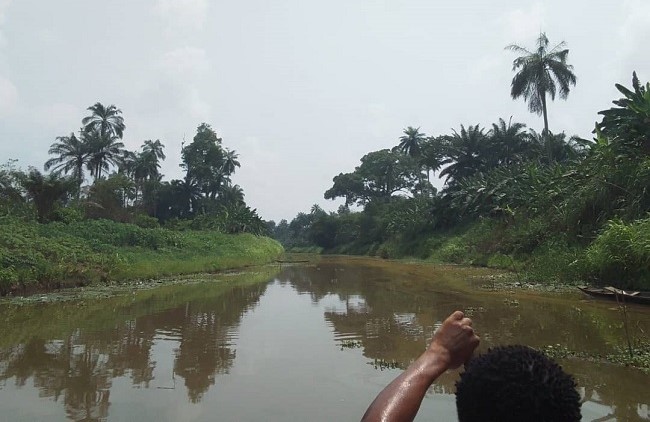
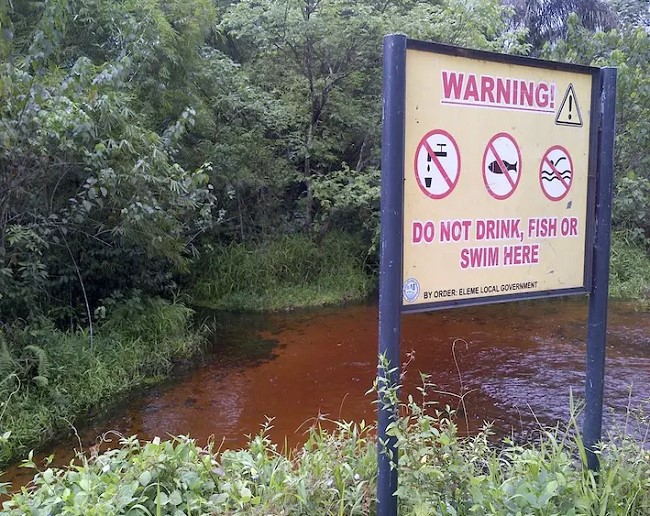
Polluted stream at Ogale

In addition to the Nsisioken Stream, the Ogale community had seven other streams, namely Nmu Okulu Ogale, Oken Mba, Oken Adaran, Okulu Ebo, Oken Eta, Nmu Okon, and Nmu Chapun. These streams were not just rich fishing grounds but also vital sources of drinking and cooking water for the community.

Today, those memories feel like they belong to another lifetime. Since the late 1980s, repeated oil spills have devastated Ogale’s natural environment, eroding its once-rich biodiversity and natural capital.

Decades of oil exploration and production activities by oil companies have turned Ogoniland into one of the “most polluted” places in the world. According to the United Nations, at least 1.5 million tons of crude oil have been spilled across the Niger Delta since 1958 in more than 7,000 incidents, with Ogoniland, comprising 261 communities spread over nearly 1,000 sq km (385 square miles), being the epicentre. Between 1976 and 1991, more than two million barrels of oil polluted Ogoniland alone in 2,976 separate oil spills. 

Shell, one of the main operators in the region, has left a long trail of pollution in Ogale, a community of about 40,000 people. Records show more than 40 oil spills linked to its pipelines and infrastructure since 1989. The company’s own data indicates that, on average, more than two spills have occurred every year, including at least 55 spills in Ogale since September 2011. Although Shell suspended operations in Ogoniland in 1993 following widespread protests over environmental degradation, the legacy of contamination continues to shape daily life in the community.

Now, as Shell withdraws from onshore operations in the challenging Niger Delta terrain, its assets – and their legacy of contamination – are being handed over to a Nigerian consortium, Renaissance Africa.

Biodiversity on the brink

More than two decades after Shell ceased drilling, Ogale’s streams remain contaminated, and its once-thriving fish population has all but vanished. “Our fish have gone into extinction,” said Mr Osaronwaji, now president of the Agbi Improvement Union. “Back then, it was common to see porcupines, grasscutters, and other animals near the streams. Now, they’re gone.”

An environmental scientist at the University of Port Harcourt, Dr Lebari Sibe, said that oil spills kill fish directly, destroy their habitats, and hinder natural recovery, which can eventually lead to the local extinction of certain species. 

“When crude oil spills into rivers, creeks, and mangroves, he said, it coats the surface of the water, blocking sunlight and reducing oxygen exchange, which suffocates fish and other aquatic life,” explains Dr Sibe. “Toxic components of the oil, such as benzene and heavy metals, contaminate the water and sediments, poisoning fish directly and impairing their ability to reproduce.”

He added that over time, these pollutants also kill plankton and invertebrates, disrupting the food chain. In places like Ogale, where spills remain unremediated for decades, habitats are permanently degraded, making recovery nearly impossible. 

“If the ecosystem remains unfavourable or conducive for their survival, they will not appear,” he noted. 

A recent visit to the Ogale community revealed crude oil still floating on two of its streams, with the stench of petroleum thick in the air. Nsisioken, once the pride of the community, is now partly a waste dump, its banks overgrown with weeds.

Memories of a once thriving Past

Eunice Osaronwaji married into the Agbi Ogale community in 1980. She still longs for the days when fishing sustained families and life revolved around the streams.

“Apart from fishing, families planted vegetables, peppers, and water yams around the swampy areas,” she recalled. “The harvests were always bountiful. Today, we can no longer farm near Nsisioken Stream,”.

Friday Oyor, another elder in the Ogale community, remembers when the Nsisioken Stream was surrounded by lush mangrove ecosystems that served as nurseries, feeding grounds, and habitats for fish, crustaceans, birds, reptiles, and mammals.

“We had palm trees and other species such as Acacia, locally known as Ngorongo, growing around Nsisioken,” Mr. Oyor said. “They provided habitats, food, and shelter for birds, mammals, and insects. Now, they are all gone, our swamps, our fishing nets, everything.”

With their streams now contaminated, Mr. Oyor and other residents of Ogale are forced to buy fish at exorbitant prices from Nchia General Market or Eleme Market. They even purchase drinking water from vendors.

For environmental activist Solomon Oyor, the oil spills have destroyed more than livelihoods; they have also eroded cultural traditions. He laments the loss of Oken Adaran, a revered stream where young women once performed pre-marriage water-fetching rituals.

“What worries me most,” Mr. Solomon Oyor said, “is that I don’t believe the remediation agency will restore the Ogale community to what it used to be, not with the pace and quality of work being done.”

His concern reflects findings from U.N. documents obtained by the AP News, which revealed that the cleanup of Ogoniland, including Ogale, as recommended by the United Nations Environment Programme (UNEP), has been largely mismanaged.

No cleanup for Nsisioken 

In its 2011 report, the United Nations Environment Programme (UNEP) found that water from Nsisioken was contaminated with benzene, a known carcinogen, at levels over 900 times above the World Health Organisation (WHO) guideline. UNEP recommended that the contamination required emergency action, prioritising it above all other remediation efforts.

However, findings show that no remediation attempt has been carried out in the area. 

“We don’t know why HYPREP has not come here, since the reports say it should be addressed first; they have not visited, carried out any assessment,”. “We feel abandoned by the government and Hyprep, and we cannot go back to fishing,” said Mr. Osaronwaji.

Although soil and groundwater remediation is ongoing in parts of the Ogale community, many residents doubt its effectiveness, pointing out that underground water remains contaminated. 

Former Community Development Committee (CDC) chairman of Ogale community, Fred Oyor, said that it has been over two years since HYPREP last visited Ogale community, yet groundwater in some locations remains contaminated.

“It is even worse than it was before they started their operations,” he claimed. “And nobody is even talking about the Nsisioken River.” 

According to Olube Obe, who works in HYPREP’s Public Health Department, Nsisioken River was classified as a complex site, which explains why remediation has not yet started. “We had to begin with the semi-complex sites so that whatever lessons we learn can be applied to the complex ones,” Mr Obe explained. “Contracts are now being awarded for the environmental assessment of those complex sites.”

He dismissed claims that HYPREP’s work has been ineffective, noting that in some locations, contractors dug as deep as 11 metres before discovering that pollution was still present. The site has since been classified as complex and will need to be re-awarded for further remediation.

“Funding remains a major challenge because the level of pollution we have encountered is far beyond what we initially anticipated,” he said, adding that fluctuations in the prices of materials are also affecting the progress of the project.

Move to restart drilling and the pushbacks

Despite unresolved environmental damage, Nigeria’s federal government is seeking to restart oil drilling in Ogoniland. In January 2025, President Bola Tinubu met with Ogoni leaders, urging them to put aside past grievances in the interest of peace and development.

The proposal, however, sparked swift opposition. More than 20 civil society groups rejected the plan, warning that resuming oil extraction would deepen pollution and endanger the health and rights of the Ogoni people.

“The contemplated resumption of oil operations in Ogoniland poses a significant threat to the fundamental human rights of the Ogoni people to a clean and healthy environment, the right to health, and the right to life,” said the coalition. “The resumption of oil activities in Ogoniland is not only a betrayal of the Ogoni struggle but also a threat to the environment and future generations.”

Those fears are not without basis. Just a month after the president’s announcement, a new spill occurred at Shell’s Ogale facility following a valve failure, sparking renewed protests. Residents marched through the community carrying placards demanding reparations and environmental justice.

In June, a landmark ruling by the High Court in London allowed Ogale residents to hold Shell liable for years of pollution, a rare legal victory after a decade-long legal battle.

Back in the Ogale community, environmental activist Solomon Oyor insists that cleanup and restoration must come before any discussion of drilling. “We have been dragged years backwards,” he said. “Beyond remediation, we must restore the native species and revive our environment. Without that, there is no future here.”

By Arinze Chijioke

This story was produced as part of Dataphyte Foundation’s Biodiversity Media Initiative project, with support from Internews’ Earth Journalism Network

HOMEF enlightens Niger Delta communities on environmental monitoring

0

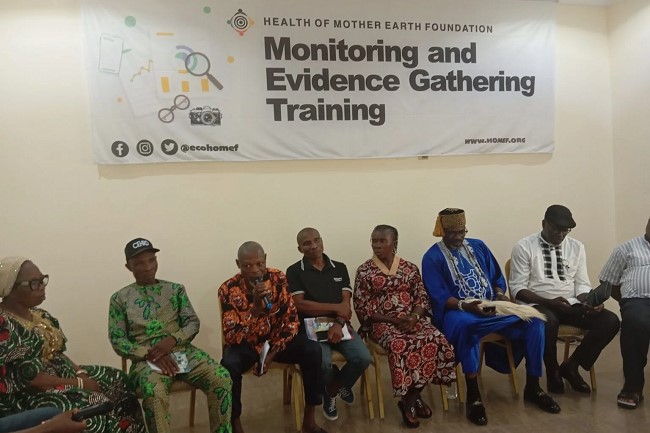
The Health of Mother Earth Foundation (HOMEF) on Friday, December 5, 2025, in Yenagoa, Bayelsa State, concluded an environmental monitoring training workshop for Niger Delta oil communities.

HOMEF is an ecological think-tank and environmental rights advocacy group.

The capacity building programme drew participants across the Niger Delta region from Cross River, Akwa Ibom, Rivers, Bayelsa and Delta.

HOMEF
A panel discussion at the HOMEF environmental monitoring training workshop for Niger Delta oil communities

Mr. Stanley Egholo, Fossil Politics Lead at HOMEF, said that the challenges posed by oil pollution and climate change have made environmental monitoring imminent.

Egholo noted that oil bearing communities often lose cases instituted to seek environmental justice due to lack of credible scientific evidence.

He urged the participants to take interest in defending their environments and gathering empirical evidence whenever there was oil pollution.

Similarly, Mr. Onyekachi Okoro, Executive Director, Media Awareness and Justice Initiative, who served as a resource person, said that empirical data reinforces and strengthens advocacy for environmental justice.

Okoro speaking on the topic “Understanding Environmental Monitoring: Air, Water and Land”, noted that recent technological advancements have made so many digital tools available for monitoring the environment.

He stressed the potentials of smartphones and how they could be deployed in monitoring the environment.

He urged the participants to leverage on the location and geotagging features in mobile phones to geotag photographs.

He explained that evidence obtained by digital tools were credible and universally acceptable for litigation and advocacy.

Speaking at the panel segment, Chief Alagoa Morris, a renowned environmentalist, highlighted the challenges to environmental monitoring and gave tips on how to overcome them.

He urged participants to refrain from exaggerating pollution incidents, as credible facts were sacrosanct in environmental activism and would always survive validity tests.

Morris also encouraged participants to work with residents of pollution impacted communities and avoid taking sides in community conflicts.

By Nathan Nwakamma

×