The Federal Road Safety Corps (FRSC) Celebrity Marshals Unit has released a list of top media and entertainment personalities to be inducted as new members in 2017.
Federal Road Safety Corps (FRSC) marshall, Boboye Oyeyemi. Photo credit: premiumtimesng.com
This was contained in a press release by the Coordinator of the Unit, Chris Kehinde Nwandu, in Abuja.
Some of the new celebrity marshals include AIT’s anchor person of Focus Nigeria, Gbenga Aruleba; Chief Executive of ONTV and Soundcity TV Tajudeen Adepetu; and torch bearing artiste and TV host, Zakky Azzay.
Others include the Managing Director/Editor-in-Chief of The Sun Newspaper, Eric Osagie; Managing Editor of The Eagle Online and President of the Guild of Corporate Online Publishers, Dotun Oladipo; General Manager of AIT in Lagos, Jiire Kuforiji; and General Manager Raypower in Lagos, Yewande Iwuoha.
Also on the bill are veteran actress, Ngozi Ezeonu; Executive Director Marketing, Federal Radio Corporation of Nigeria, Vera Oshokoya; as well as veteran broadcaster, Olusesan Ekisola.
Former President of Directors Guild of Nigeria, Bond Emeruwa; CEO of Goldmyne TV, Sesan Rufai; Editor Sunday of New Telegraph newspapers; Juliet Bumah; radio personality, Nanli Diali of Rhythm FM; and human rights lawyer, Kayode Ajulo, are included in the list.
The induction of the new members will form part of the activities marking the 1st Annual Lecture of the FRSC Celebrity Special Marshals scheduled for November 10, 2017 at Renaissance Hotel, GRA, Ikeja, Lagos.
The event, which commences at 11am, will have as its Guest Speaker the Corps Marshal of the FRSC, Dr. Boboye Oyeyemi, who will be speaking on the topic: “Ember Months, The Myths, The Rush And Subsequent Effects.”
There will also be other notable speakers.
The FRSC Celebrity Special Marshals Unit was established in 2011 with the aim of using notable personalities in the media, movie, music, comedy and other showbiz industry as ambassadors for road safety.
Their mandates include advocacy, national patrol, enlightenment programmes at motor parks and various activities that will help in reducing road crashes.
The current membership of the Unit currently stands at over 100 across the country.
Thirty New celebrities are expected to be inducted at the event, according to Nollywood veteran, Segun Arinze, who doubles as the Chairman of the Membership Committee and Coordinator Lagos Unit of the Celebrity Special Marshals.
The days of dental amalgam use in dentistry in Edo State in particular and Nigeria in general appear to be numbered, thanks to a landmark resolution reached by a gathering of stakeholders in Benin City, Edo State on Tuesday, October 31, 2017.
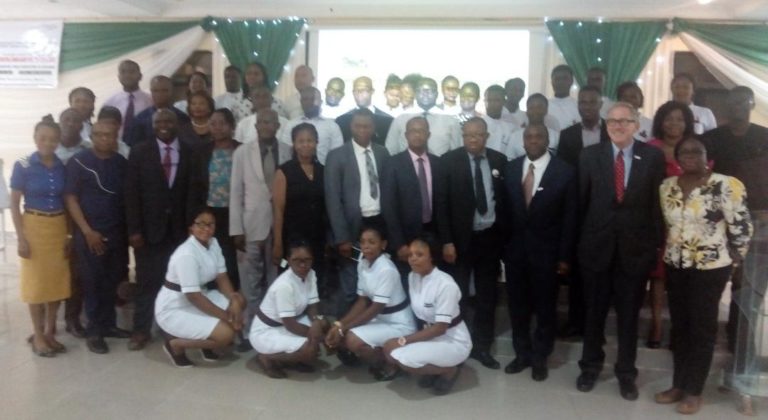
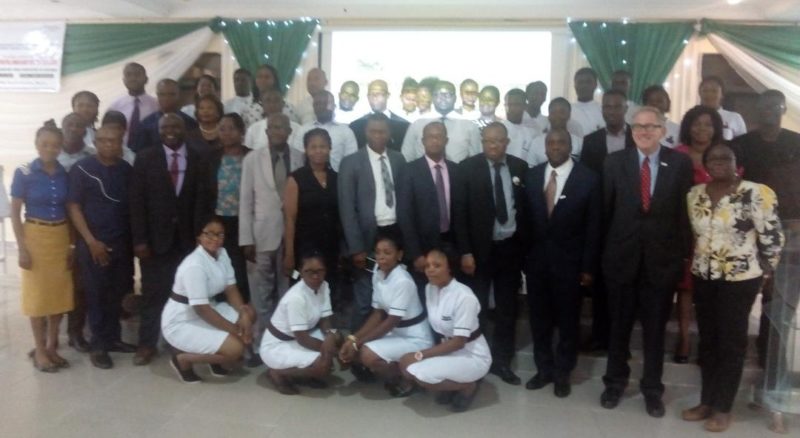
A group photograph of participants at the daylong stakeholder workshop on phase-down of dental amalgam use in Edo State
Dental amalgam is a liquid mercury and metal alloy mixture used to fill cavities caused by tooth decay. Because it contains traces of mercury, it is said to be dangerous to health, especially children and pregnant women.
Participants at the daylong stakeholder workshop on phase-down of dental amalgam use in Edo State including government officials, dental practitioners, dental students and surgery technicians, as well as media and civil society groups resolved to end the use of the item for children in the state by 2018. The event was organised by Sustainable Environment Development Initiative (SEDI) in collaboration with the US-based World Alliance for Mercury-Free Dentistry.
In a communiqué issued at the end of the workshop, participants urged the federal and state governments, as well as other African nations, to end amalgam use in children under 16, along with pregnant and breast feeding women from July 1, 2018.
Participants also want government to, in compliance with the provisions of the Minamata Convention, initiate a coordinated multi-sectoral approach for an effective phase-down of use of dental amalgam in the country.
The Minamata Convention on Mercury is a global treaty to protect human health and the environment from the adverse effects of mercury.
According to them, the authorities should update dental schools training curriculum to emphasise mercury-free dentistry, and that the implementation of a phase down work plan must also include legislative review and development of guidelines, gathering baseline data and developing the national overview.
Apart from the initiation of demonstration projects and application of best available technology and environmental practice in the management of dental amalgam, the forum likewise called for the promotion of alternatives/transition to alternatives by a concession for imported alternative restorative materials. They also underlined the need to engage the public and media as well as other stakeholders in awareness creation on the health impacts of mercury in dental amalgam and the need for prevention of caries.
Participants also called for an urgent need for Nigeria to domesticate the Minamata Convention as soon as possible.
Mercury was described as a chemical of global concern owing to its long range atmospheric transport, its persistence in the environment once anthropogenically introduced and its ability to bio-accumulate in ecosystems.
According to participants, exposure to mercury can harm the brain, heart, kidneys, lungs, cardiovascular system and immune system, particularly in women, unborn children and infants.
Participants also observed the low level of awareness among Nigerians on the dangers of mercury in dental amalgam; the wide spread use of dental amalgam in the country as the most affordable dental filling material serving the restorative health needs of Nigerians, and the limited number of dental clinics and centres to provide services for Nigeria’s teeming population.
In a goodwill message, Minister of State for Environment, Alhaji Ibrahim Jibril, represented by an Assistant Director in the ministry, Mr. Olubunmi Olusanya, said a lot of work is going on in Nigeria by the government and non-governmental organisations to ensure a phase-down of mercury in the country.
The minister, who commended the organisers of the workshop, said it would allow for an analysis of the effect of mercury in dentistry in the country.
Dean, School of Dentistry, University of Benin, Prof. O. Obuekwe, who was represented by Dr. Sunny Okeigbemen, said although dental amalgam use in dentistry has been long but that the school is ready for the shift in paradigm.
He added that the over 40-year-old institution is ready to work with NGOs to make dental amalgam history in Nigeria.
Chairman, Nigeria Dental Association (NDA), Edo State chapter, Dr. Anthony Osaguona, said the group understands the concept and is willing to key into the process, adding that the communiqué would be fully discussed in their meeting in the bid to implement it.
President, World Alliance for Mercury-Free Dentistry, Charlie Brown, an American, said Nigeria has the largest economy and population in Africa and so the campaign started here. The World Alliance for Mercury-Free Dentistry is a global coalition of NGOs championing the campaign for mercury-free dentistry.
He said every country needs to do what the European Union has done because every child is important. Brown stressed that amalgam in dentistry in Edo State phase-down should start now.
In her keynote paper presentation, Dr. Joan Enabulele of the School of Dentistry, University of Benin, said there are viable alternatives to dental amalgam.
Enabulele, whose paper centred on “Mercury Free Dentistry: Alternative to amalgam”, highlighted the alternatives to dental amalgam, as well as the challenges in Nigeria.
Other papers presented at the workshop include: “Minamata Convention: Dental amalgam use in Nigeria” by Mr. Olubunmi Olusanya of the Federal Ministry of Environment; “Minamata Convention: From commitments to results” by Mr. Leslie Adogame of Sustainable Research and Action for Development (SRADev Nigeria); “Understanding the role of Dental Health Workers in phasing down dental amalgam” by Dr. Sunny Okeigbemen and “Dental amalgam phase-down in Nigeria: Leveraging partnerships” by Dr. Anthony Osaguona.
Against the backdrop of the negative impacts of mercury on people’s health and the environment, the Minamata Convention on Mercury was adopted and signed by over 128 nations of the world on October, 10, 2013 at Minamata, Japan.
Nigeria has signed but is yet to ratify the convention.
A collaboration involving the Nigerian Conservation Foundation (NCF) and the Lagos State Government through its Ministry of the Environment saw a colourful carnival-like parade in some parts of the city on Saturday, October 21, 2017.
“Walk for Nature”, as the campaign is termed, is an annual event aimed at promoting public awareness for sustainable environmental practices. This year’s theme, “Cleaner Lagos: the Foundation for Sustainable Ecotourism” was described as a clarion call for an ideal city, a healthy city and the essence of making a cleaner environment a top priority.
NCF President, Chief Philip C. Asiodu, labels “Walk for Nature” as “an awareness campaign platform for environmental protection, nature conservation, biodiversity and sustainable development among the citizenry.”
Izoma Philip Asiodu, President, NCF Board of Trustees (Second from left); Dr. Babatunde Adejare, Commissioner of the Environment, Lagos State; Mr. Babatunde Haunpe, Special Adviser to the Governor of Lagos State on the Environment; Chief Ede Dafinone, Chairman NCF National Executive Council; and Mrs. Adebimpe Akinsola, the Commissioner of Tourism, Arts & Culture, Lagos State, at the 2017 Walk for Nature held in Lagos on Saturday, October 21, 2017Participants at the 2017 Walk for Nature held on Saturday, October 21 2017 in Lagos
Speaker, Benue State House of Assembly, Mr Terkimbi Ikyange (Ushongo/APC), has expressed confidence that the state’s Anti-Open Grazing Law will, from Wednesday, November 1 2017, come into force.
Flashback: Governor Samuel Ortom signs the Anti-Open Grazing Bill into law May 22, 2017 as Speaker, Benue State House of Assembly, Terkimbi Ikyange, lends a hand
Ikyange, who stated this on Tuesday, October 31, 2017 while playing host to the Strict Movement Against Ravages in Tiv Land (SMART-Land) at the Assembly Complex in Makurdi, emphasised that the November 1 date for the commencement of the full implementation of the law was not negotiable.
“There is no going back on the full implementation of the Open Grazing Prohibition Law 2017,” he stressed.
Stressing further, the Speaker stated that the Assembly would continue to enact laws that would defend and protect the people and territorial domain of the state, reiterating that implementation of the law was sacrosanct.
Disclosing that the Assembly was aware of the threats by the Miyetti Allah Kauta Hore over the implementation of the law, he noted that the threats would be reported to appropriate agencies, and so, there was no cause for alarm.
The Miyetti Allah Cattle Breeders Association of Nigeria (MACBAN) had appealed to the Federal Government to prevail on the Benue State Government to extend the implementation of its Anti-Open Grazing Law scheduled to take effect from Nov. 1, 2017.
National Coordinator of the association, Alhaji Garus Gololo, said the extension of the implementation time would enable both the government and herders resolve some grey areas in the law. He, however, did not disclose the duration of the extension needed.
Ikyange encouraged SMART-Land to exercise restraint by remaining law abiding, calm and support the government in its bid to implement the law.
He appreciated them for embarking on the solidarity visit, stating that it was a show of love for their people and father land.
Earlier, National Coordinator SMART-Land, Mr Sevendagas Gbakighir, said that the visit was to register their support for the full implementation of the law.
Gbakighir further said that the association also condemned the threats by Miyetti Allah in all ramifications.
It will be recalled that the law was passed by the Assembly and signed into Law by Governor Samuel Ortom on May 22, 2017.
The World Bank-assisted Nigeria Erosion and Watershed Management Project (NEWMAP) has requested the Akwa Ibom Government to pay its N500 million counterpart fund for the control of erosion in the state.
Dr. Iniobong Ene Essien, Akwa Ibom State Commissioner for Environment and Mineral Resources
The NEWMAP National Project Coordinator, Alhaji Salisu Dahiru, made the request on Tuesday, October 31, 2017 in Uyo at the launch of project in the state.
Dahiru’s submission appears to be in line with major resolutions of the National Council on Environment (NCE) held from October 16 to 18, 2017 in Abeokuta, Ogun State that states interested in keying into NEWMAP should make the contribution. Similarly, they (the states) are to provide 12.90% of total cost of the project as well as make available base line data of erosion sites in their states.
Salisu said in Uyo that, so far, the state had paid only N50 million out of the N500 million counterpart fund for NEWMAP activities.
He added that payment of counterpart fund was necessary to boost the tempo of NEWMAP operations in the state.
He noted that NEWMAP came into being following the failure of several agencies of government to address erosion problems in the country.
The NEWMAP coordinator, however, said Akwa Ibom, earlier listed among the second phase of NEWMAP intervention activities, was on the verge of surpassing the pioneer states in the project intervention.
He commended the state government for making efforts to map out erosion sites across the 31 local government areas of the state with aerial photographs.
The state governor, Mr Udom Emmanuel, who launched the project, promised to support it by fulfilling the conditions for its successful implementation.
The governor, who was represented by his Deputy, Mr Moses Ekpo, urged communities benefitting from NEWMAP intervention to cooperate with the project team.
He said Akwa Ibom was in dire need of support from the World Bank because of its peculiar environmental challenges such as perennial flooding and gully erosion.
“I want to assure the World Bank that as a state that is faced with several environmental challenges, we will endeavour to meet the prerequisites to enable the state to benefit from financing.
“I have directed Ministries, Departments and Agencies in the state as represented in NEWMAP Steering and Technical Committees to give the project the necessary support,” Ekpo submitted.
In his address, the state’s Commissioner for Environment, Dr Iniobong Essien, said a total of
1,000 critical gully erosion sites had been documented in the state.
Essien said the execution of control measures in identified erosion sites across the 31 local government areas of the state would gulp N150 billion.
The commissioner said the State Steering and Technical Committees for NEWMAP were inaugurated in February this year.
Essien added that, so far, NEWMAP had identified 10 critical gully erosion sites for immediate intervention in the state.
He disclosed that affected households would need resettlement to allow full implementation of the palliative measure and permanent intervention in line World Bank guidelines.
The launch of NEWMAP intervention was done at Etim Umana in Uyo, one of the critical gully erosion sites in the state capital.
Other severe sites in the state capital included St.Luke’s Hospital gully erosion sites and IBB Avenue flood site.
The Minister of Power, Works and Housing, Mr Babatunde Fashola, says that the Federal Government is partnering with the United Nations Human Settlements Programme (UN-Habitat) to implement a Participatory Slum Upgrading Programme (PSUP) initiative in Nigeria.
Minister of Power, Works and Housing, Babatunde Raji Fashola (SAN)
Fashola disclosed this on Tuesday, October 31, 2017 at the commemoration of the 2017 “World Habitat Day” and “World Cities Day” by the Ministry with the themes: “Housing Policies: Affordable Homes” and “Innovative Governance, Open Cities” respectively.
While the World Habitat Day is observed on every October 2, the World Cities Day is celebrated on October 31.
Fashola noted that the ministry has been undertaking urban renewal and slum upgrading programmes as a key strategy to encourage housing delivery and improve living condition of the people.
“This initiative has been adopted by the UN agency as a sustainable way of addressing the salient issues and challenges of slum situation in Africa, Caribbean and Pacific (ACP) countries, we are fortunate to benefit from it.
He said that at the instance of the international agency, three cities, namely Karu in Nasarawa State, Ifako-Ijaye in Lagos state and Onitsha in Anambra state have been profiled.
He listed other states, which have further adopted the PSUP initiative and successfully profiled some of their cities as Kastina, Yobe, Rivers, Osun, Ondo, Kogi.
“Nigeria is at the second phase of the programme, which involves implementation of prioritised projects to alleviate slum conditions in profiled settlements,” he added.
He regretted that the housing deficit in Nigeria has continued to increase despite the implementation of various housing policies and programmes in the past.
According to the minister, urbanisation has forced millions of citizens, who cannot afford decent homes to live in slums, squatters’ settlements and marginal lands at the suburbs of cities.
He noted that the urbanisation coupled with dwindling resources to manage the cities posed daunting development challenges in Nigeria urban centres, adding that it has resulted to un-equitable distribution of development.
Fashola said part of the responsibilities of the ministry and its parastatals were to grow the housing and urban development centre harnessing its potentials for sustainable development.
He said necessary machinery has been put in place to start a housing revolution through the innovative nationwide National Housing Programme.
The minister noted that the programmes pilot implementation stage has already created opportunities for 653 contractors, 13,680 direct jobs and 41 indirect jobs.
“To complement these efforts, we have activated the roadmap for Nigeria’s Housing and Urban Development Sector and were in the process of producing a strategic National Physical Development Plan,” he added.
In an address, the Minister of State for Power, Works and Housing (2), Suleiman Zarma, said that this year’s event was unique because Nigeria was celebrating the World Cities Day for the first time since its inception in 2014 by UN.
Zarma noted that the commemoration afforded an opportunity to appraise and review efforts in improving shelter and living conditions of citizens.
He urged all stakeholders in the human settlements sector to work in partnership with the ministry to achieve sustainable development and provide affordable homes.
The UN Assembly on Dec. 17, 1985 adopted every first Monday of October annually as the World Habitat Day for a thorough reflection globally on the state of the towns and cities and basic rights to adequate shelter.
The United Nations General Assembly designated October 31 as World Cities Day, by its resolution 68/239. The Day is expected to greatly promote the international community’s interest in global urbanisation, push forward cooperation among countries in meeting opportunities and addressing challenges of urbanisation, and contributing to sustainable urban development around the world.
On the eve of the World Hepatitis Summit in Brazil, the World Health Organisation (WHO) reports increasing global momentum in the response to viral hepatitis. A record three million people were able to obtain treatment for hepatitis C over the past two years, and 2.8 million more people embarked on lifelong treatment for hepatitis B in 2016.
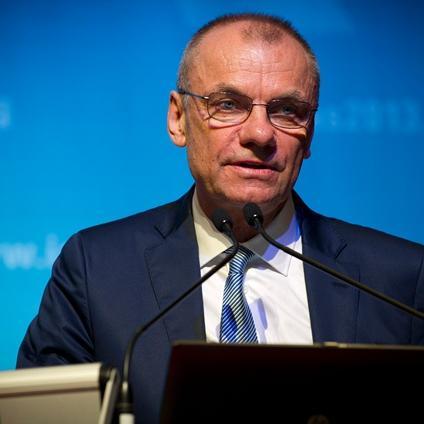
Dr Gottfried Hirnschall, Director of WHO’s Department of HIV and Global Hepatitis Programme
“We have seen a nearly five-fold increase in the number of countries developing national plans to eliminate life-threatening viral hepatitis over the last five years,” says Dr Gottfried Hirnschall, Director of WHO’s Department of HIV and Global Hepatitis Programme. “These results bring hope that the elimination of hepatitis can and will become a reality.”
Hosted by the Government of Brazil, the World Hepatitis Summit 2017 is being co-organised by WHO and the World Hepatitis Alliance. The Summit aims to encourage more countries to take decisive action to tackle hepatitis, which still causes more than 1.3 million deaths every year and affects more than 325 million people.
“We cannot lose sight of the fact that last year 194 governments committed to eliminating viral hepatitis by 2030. For sure we are still a long way from this goal but that doesn’t mean it’s some unattainable dream. It’s eminently achievable. It just requires immediate action,” says Charles Gore, President of World Hepatitis Alliance. “The World Hepatitis Summit 2017 is all about how to turn WHO’s global strategy into concrete actions and inspire people to leave with a ‘can do’ attitude.”
“Brazil is honoured to host the World Hepatitis Summit 2017 – and welcomes this extraordinary team of experts, researchers, managers and civil society representatives to discuss the global health problem posed by viral hepatitis,” says Dr Adele Schwartz Benzaken, Director of the Brazilian Ministry of Health’s Department of Surveillance, Prevention and Control of STIs, HIV/AIDS and Viral Hepatitis.”Brazil is committed to taking recent advances in its response to hepatitis forward – on the road to elimination.”
Progress in treatment and cure
Many countries are demonstrating strong political leadership, facilitating dramatic price reductions in hepatitis medicines, including through the use of generic medicines – which allow better access for more people within a short time.
In 2016, 1.76 million people were newly treated for hepatitis C , a significant increase on the 1.1 million people who were treated in 2015. The 2.8 million additional people starting lifelong treatment for hepatitis B in 2016 was a marked increase from the 1.7 million people starting it in 2015. But these milestones represent only initial steps – access to treatment must be increased globally if the 80% treatment target is to be reached by 2030.
However, funding remains a major constraint: most countries lack adequate financial resources to fund key hepatitis services.
Diagnosis challenge
To achieve rapid scale-up of treatment, countries need urgently to increase uptake of testing and diagnosis for hepatitis B and C. As of 2015, an estimated one in 10 people living with hepatitis B, and one in five people living with hepatitis C, were aware of their infection. Countries need to improve policies, and programmes to increase awareness and subsequent diagnosis.
Prevention gaps
Countries need to provide a full range of hepatitis prevention services that are accessible to different population groups, particularly those at greater risk.
Largely due to increases in the uptake of hepatitis B vaccine, hepatitis B infection rates in children under 5 fell to 1.3% in 2015, from 4.7% in the pre-vaccine era.
However, the delivery of other prevention services, such as birth-dose vaccination for hepatitis B, harm reduction services for people who inject drugs, and infection control in many health services, remains low. This has led to continuing rates of new infections, including 1.75 million new hepatitis C cases every year.
Need for innovation
Innovation in many aspects of the hepatitis response must continue. New tools required include a functional cure for hepatitis B infection and the development of more effective point-of-care diagnostic tools for both hepatitis B and C.
“We cannot meet the ambitious hepatitis elimination targets without innovation in prevention interventions and approaches, and implementing them to scale,” said Dr Ren Minghui Assistant Director-General for Communicable Diseases, WHO. “The great successes of hepatitis B vaccination programmes in many countries need to be replicated and sustained globally in the context of moving forward to universal health coverage.”
Implementation of elimination strategy
The World Hepatitis Summit 2017 will be attended by over 900 delegates from more than 100 countries, including Ministers of Health, national programme managers, and representatives from organisations of people affected by viral hepatitis. The Summit will review progress and renew commitments by global partners to achieve the elimination of viral hepatitis by 2030 – a target reflected in WHO’s elimination strategy and the UN Sustainable Development Goals.
The health of hundreds of millions of people around the world is being damaged by climate change, a major report has revealed.
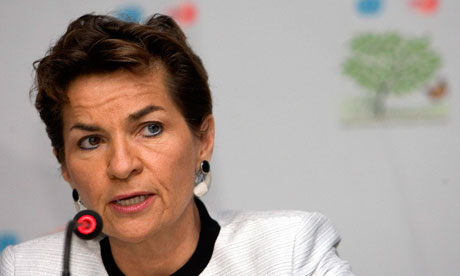
Christiana Figueres, former UN’s climate chief, co-chaired the new report
The report, which was published in the Lancet journal, was prepared by researchers at 26 institutions around the world, including many universities, the World Health Organisation (WHO), World Bank and the UN’s World Meteorological Organisation (WMO).
The report found that climate change has increased the ability of dengue fever to spread, because the mosquitoes and the virus they carry breed more quickly.
Dengue is also known as “breakbone fever” due to the pain it causes and infections have doubled in each decade since 1990, now reaching up to 100 million infections a year now.
Dengue was used as an example in the report and the researchers suggest global warming will also increase the spread of other diseases such as schistosomiasis.
The researchers also said heatwaves are affecting many more vulnerable people and global warming is boosting the transmission of deadly diseases such as dengue fever, the world’s most rapidly spreading disease.
They said air pollution from fossil fuel burning is also causing millions of early deaths each year, while damage to crops from extreme weather threatens hunger for millions of children.
The WMO reported on Monday, October 30, 2017 that the level of carbon dioxide in the atmosphere made a record jump in 2016 to hit a concentration not seen for more than three million years.
“Climate change is happening and it’s a health issue today for millions worldwide,” said Prof Anthony Costello, at the WHO and co-chair of the group behind the new report.
It follows a related report in 2009 that warned thatclimate change was the biggest danger to global health in the 21st century, an assessment repeated in the new report.
Costello said acting to halt global warming would also deliver a huge benefit for health: “The outlook is challenging, but we still have an opportunity to turn a looming medical emergency into the most significant advance for public health this century.”
“Our scientists have been telling us for some time that we’ve got a bad case of climate change. Now our doctors are telling us it’s bad for our health,” said Christiana Figueres who, as the UN’s climate chief, negotiated the Paris climate change agreement and also co-chaired the new report.
“Hundreds of millions of people are already suffering health impacts as a result of climate change,” she told the Guardian.
“Tackling climate change directly, unequivocally, and immediately improves global health. It’s as simple as that.”
One of the most striking of the 40 indicators assessed by the researchers was a huge increase in the number of people over 65 exposed to extreme heat.
This rose by 125 million between 2000 and 2016 and worries doctors because older people are especially vulnerable to heat.
Current national plans to slow down global warming are inadequate and will raise, rather than lower, the likelihood of serious climate impacts, UN Environment Programme (UNEP) said Tuesday, October 31, 2017.
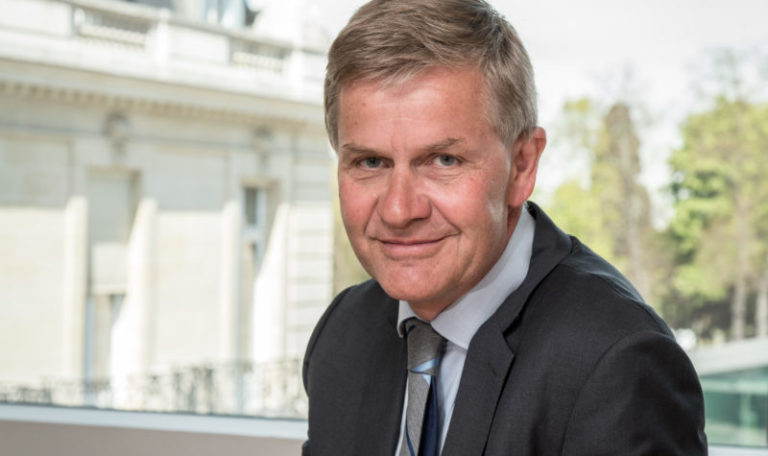
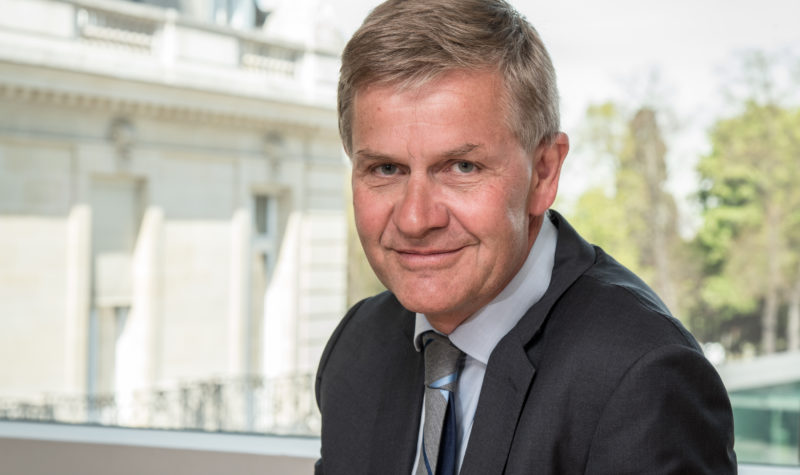
Erik Solheim, Executive Director of the United Nations Environment Programme (UNEP). Photo credit: OECD/Michael Dean
According to UNEP, while signatory countries agreed to limit global warming between 1.5 and two degrees Celcius in the Paris Climate Agreement, national policies to reach that goal would likely heat up the globe by at least three degrees by 2100.
“This is unacceptable,” UNEP chief Erik Solheim said.
The Paris targets are meant to reduce the likelihood that climate change has severe impacts on the health and livelihoods of hundreds of millions of people.
While CO2 emissions have remained stable in the past two years, weather phenomena have pushed concentrations of this gas in the atmosphere to record levels.
In addition, the output of other greenhouse gases such as methane is still rising.
While UN Environment urged governments to come up with more ambitious policies, it also stressed that cities and industries must do more to reduce the risks of climate change.
The UN said on Monday that the amount of carbon dioxide in the atmosphere grew at record rate in 2016 to a level not seen for millions of years, potentially fuelling a 20-metre rise in sea levels and adding three degrees Celsius to temperatures.
The Paris Agreement is already under pressure because U.S. President Donald Trump has said he plans to pull the United States out of the deal unless there is a renegotiation more favourable to Washington.
Conservator-General, Nigeria National Parks Service (NPS), Alhaji Ibrahim Goni, says the service has arrested an international trafficker of endangered species of wildlife.
Zakari Yau was arrested in possession of a pair of elephant tusk. Photo credit: planetsave.com
The Conservator-General, who said this in an interview with News Agency of Nigeria (NAN) in Abuja, gave the trafficker’s name as Zakari Yau.
Goni said that Yau was arrested at a spot near the Nigeria-Cameroon border.
He said that the service rangers had embarked on aggressive patrols of parks, with the aid of the military and other agencies, to check illegal activities in all the national parks.
“The exercise led to the arrest of Zakari Yau from Cameroon, who was in possession of a pair of elephant tusk, contrary to the Convention on International Trade in Endangered Species of wild Fauna and Flora Act (CITES).
“The suspect had since been handed over to the National Environmental Standards and Regulations Enforcement Agency (NESREA) for further investigation and prosecution,” he said.
NAN recalls that the NPS said that it had arrested 325 wildlife offenders at seven parks across the country in the first half of 2017.
Goni said that the offenders had since been taken to court, adding that some of them were fined, while compensations were paid to the NPS.
The conservator-general, however, said that in the first half of 2017, more than 5,356 tourists visited national parks across the country.
“The service is making frantic efforts to improve and maintain international global standards and services; we want to give our parks a facelift to attract more tourists, both local and international,” he said.
Goni said that the service had developed a network of national parks that could compete favourably with other national parks in the world.
“To this end, the park service is making efforts to put in place operational management plans for each park and a systems plan for the entire country.
“We want a national park system that meets the hopes and aspirations of Nigerians, and indeed the whole world, in preserving and protecting our natural heritage and the cultural relics that enliven them for generations to come.’’
Besides, Goni said that 1,986 students, who were on industrial attachment, were trained in national parks across the country.
“The national parks are not only for revenue generation but they are also for research and training,’’ he said.
He thanked the Federal Ministry of Environment, the media, military and paramilitary agencies for their support for the service.