Prolonged power outage and high cost of petrol have worsened the acute water shortage in Yenagoa, the Bayelsa State capital.
Seriake Henry Dickson, Governor of Bayelsa State
Residents now spend more to buy water for domestic uses as they relied on water vendors who sell water in carts as pipe-borne water has dried up.
The News Agency of Nigeria (NAN) reports that a 20-litre jerry can of water, which sold for N20 before, now goes for N30.
Abdullahi Ahmed, a water vendor, said that the price increase was due to the prolonged power outage and exorbitant fuel price which had remained at N200 per litre.
“The light situation in Yenagoa is affecting our businesses; most people with boreholes, where we buy water, are not willing to buy fuel at N200 per litre to pump water.
“Some of them, who use generators to sell to us at higher rates, have no choice, but to pass the cost to our customers, although they complained, we explained to them.
“We do not find it easy to cope with the high demand this dry season; the job of ‘meruwa’ (water vendor) is energy sapping.
“Every day, you have pains all over the body, so what I do is to rest when the sun is much.
“We even charged higher to those who stay on upstairs. We don’t always like to carry water to such customers, we charge like N40 per jerry can for people that stay in first floor, while we take N50 for higher floors,” he said.
The residents said that they spent between N300 and N500 daily on the average on water due to lack of potable public water supply in the state.
Mrs Joyce Tuedor, a housewife, said that she now spends N400 daily on water compared to N250 spent before for the same litres due to the fuel scarcity.
She prayed to see the end of the prolonged power outage which had lasted for weeks.
According to her, she spends additional N120 to buy a bag of 20 sachets of water for drinking.
“This water thing has not been easy for us in the past three weeks and the additional cost is becoming unbearable; we want the government to provide water for residents.
“Even of more concern is the quality of the water that the vendors source from shallow wells which might not meet acceptable public health standards.
“The current water situation can lead to an epidemic should any water borne disease break out, it is God that has been keeping us,” Tuedor said.
Officials of Cleaner Lagos Initiative (CLI) have raised concerns about the activities of some people who they claim have been working round the clock to sabotage the new waste management policy of the Lagos State Government.
The officials sited instances where wastes resurfaced in unnatural sequences in areas where they had just been cleared.
Some of the officials of the CLI, who preferred anonymity, said the rate at which those sabotaging the efforts were working hard to derail the process was worrisome.
A senior official of the CLI said it was unfortunate that those who felt the new arrangement would affect them adversely were working hard to sabotage it by all means, including deliberate dumping of large waste in public places.
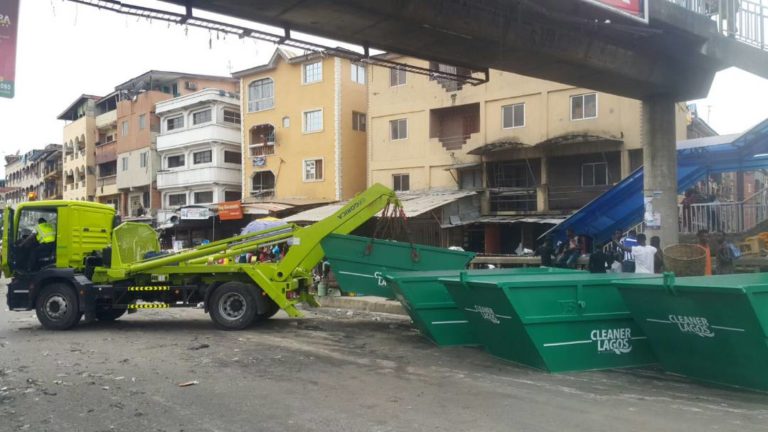
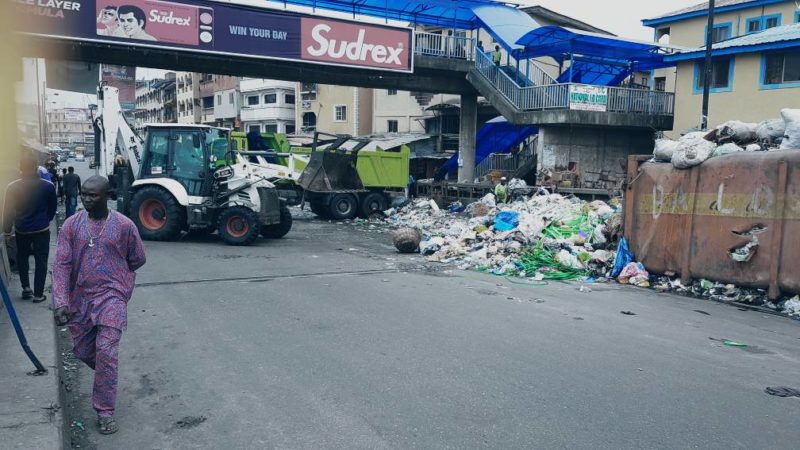
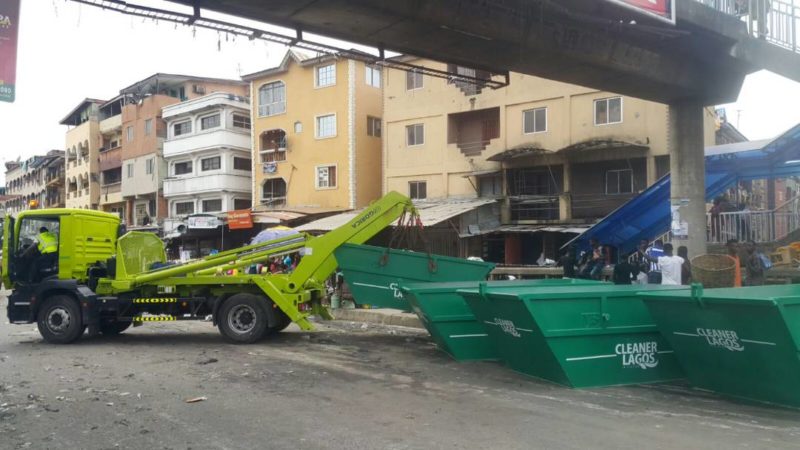
At around 3am, officials of Cleaner Lagos Initiative finished cleaning Idumota area by the pedestrian bridgeBy daybreak, this, claimed, was what they found at the same spot on a Sunday morningCLI officials returned to clear the place again Sunday morning and placed bins there
The official said: “Take for instance, the picture of heaps of refuse under the Idumagbo Pedestrian Bridge that was published today in a national daily. The refuse at that spot was evacuated just overnight and the team finished by 3am today (Sunday) and, by 3am, the heap of refuse was back there, including a fully loaded LAWMA big refuse container that was not there previously.
“As I am talking to you, our officials have returned to the same spot to clear everything. The Commissioner of the Environment was also there to see things for himself and he has asked the Private Sector Participant (PSP) operator that dropped the container belonging to the Lagos State Waste Management Authority (LAWMA) on the spot to remove it immediately.
“That has been the challenge. When our officials clear the heaps of refuse from a spot, before one could say Jack Robinson, the heaps were back on the same spot cleared by our officials and this really has to stop because a cleaner Lagos is in our collective interest,” he said.
A source said the permutation of those behind the sabotage was that if they kept dumping tonnes of refuse in public places, they would achieve the twin objective of distracting CLI officials from paying adequate attention to other places while projecting the initiative, which is targeted at a comprehensive turnaround of Lagos to become one of the cleanest cities in the world, as a failure.
Another reliable source said the situation had also been compounded by members of the public who indiscriminately dump their waste in public places and not the designated spots, saying that such was also a challenge.
Also, in a recent video that went viral on social media, an official of Visionscape Sanitation Solutions, Mr John Olawale Joseph, had lamented how people were dumping refuse on the same spots in public places, thus frustrating the efforts to rid the State of filth.
Joseph, who is Visionscape’s Area Manager for Lagos Island West, alleged that heaps of refuse sometimes appear overnight in places already cleared by environmental officials, saying that the deliberate sabotage of the project called for concern.
Speaking at Obalende moments after waste in the spot was evacuated by his team, Joseph said he could not understand why anyone would deliberately dump waste in large quantity just few minutes after they cleared the same spot.
In the said video, a man wearing LAWMA uniform was seen fleeing from arrest after illegally dumping waste in the same spot.
“We evacuated the waste from here with nine trucks just 20 minutes ago. As you can see now, people have already dumped waste on the same spot and by tomorrow morning or afternoon, you will see heaps of refuse here approximately 200 tonnes. We evacuated waste from here just 20 minutes ago and it is already pilling up; this is what we are facing here.
“What we have noticed is that some people wearing LAWMA uniform are coming to dump waste here in large quantity to make it look as if we are not working. This is bad and something urgent has to be done about it,” Joseph said in the video.
The Majority Leader of the House of Representatives, Femi Gbajabiamila, on Saturday, February 17, 2018 urged residents of Lagos State who are in the habit of indiscriminately disposing waste in public places to desist from such act, and rather join hands with the State Government to ensure the success of the Cleaner Lagos Initiative (CLI).
Gbajabiamila said it had become expedient to impress it on residents who are always dumping waste on roads and public places to refrain from doing so henceforth in order to bring about a cleaner and healthier environment.
The Lagos State Government had also banned cart pushers from operating in the state as part of the measures taken to ensure the success of CLI.
The new policy encapsulated in the CLI was introduced to address the challenges in the sector, and as well revolutionise waste management in the state in line with international best practices.
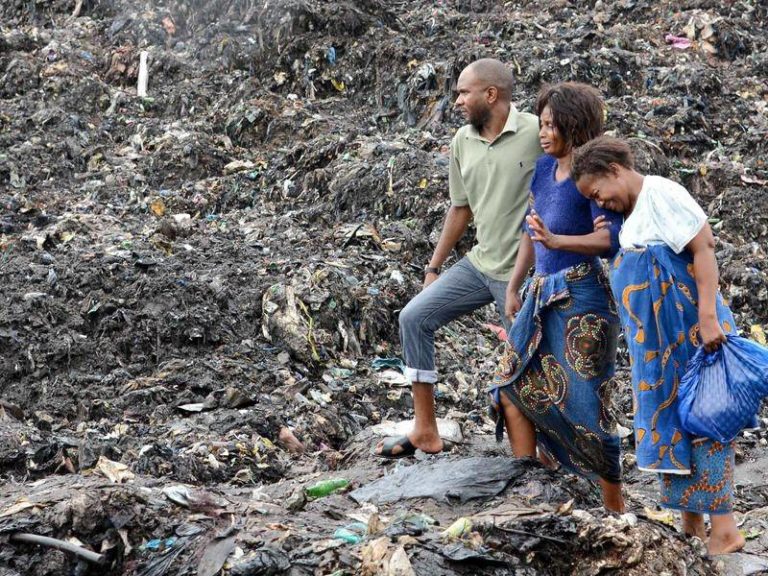
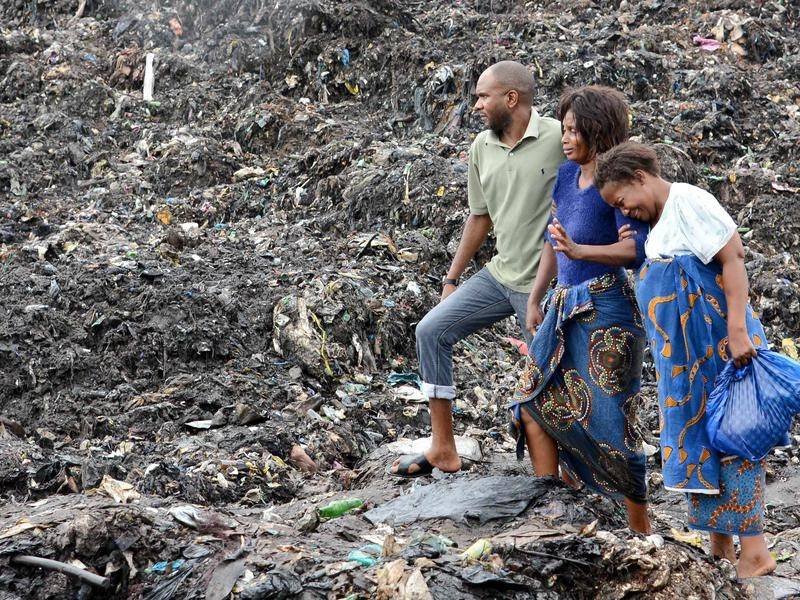
Officials said 17 people died and several others were injured in Mozambique’s capital early on Monday, February 19, 2018 when a 15-metre pile of garbage collapsed due to heavy rain.
The collapse happened at around 3 a.m. (0100 GMT) in the impoverished Hulene neighbourhood in Maputo
The collapse happened at around 3 a.m. (0100 GMT) in the impoverished Hulene neighbourhood, which is around 10 km from the centre of Maputo.
Officials said the houses were built illegally and authorities had previously asked the residents to leave.
“Up to now 17 dead bodies were recovered. We fear more might be unaccounted for.
“So we will keep searching for bodies buried underneath the garbage pile,” a councillor for Ka Mavota Municipal District, Despedida Rita, told reporters.
Land pressure in many African cities leads some people to squat on land they do not own as they seek higher wages available in urban centres.
The dwellings are sometimes built on land that is marginal or unsafe.
India has been announced as hosts of World Environment Day 2018, which will be observed on Tuesday, June 5.
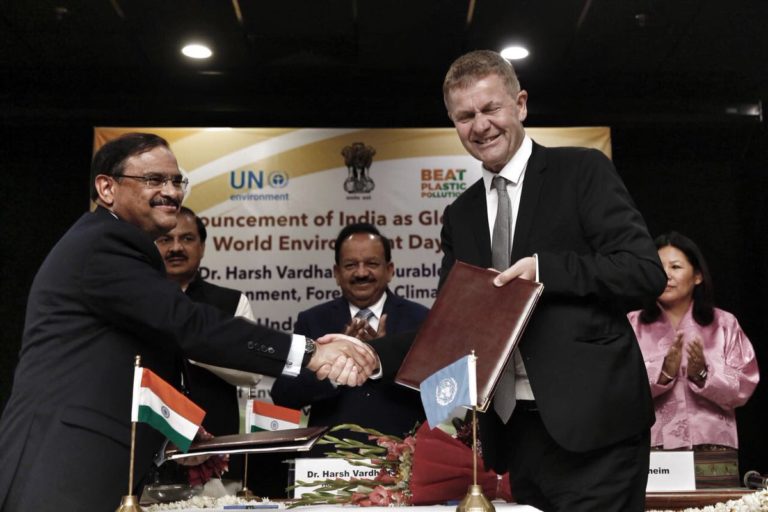
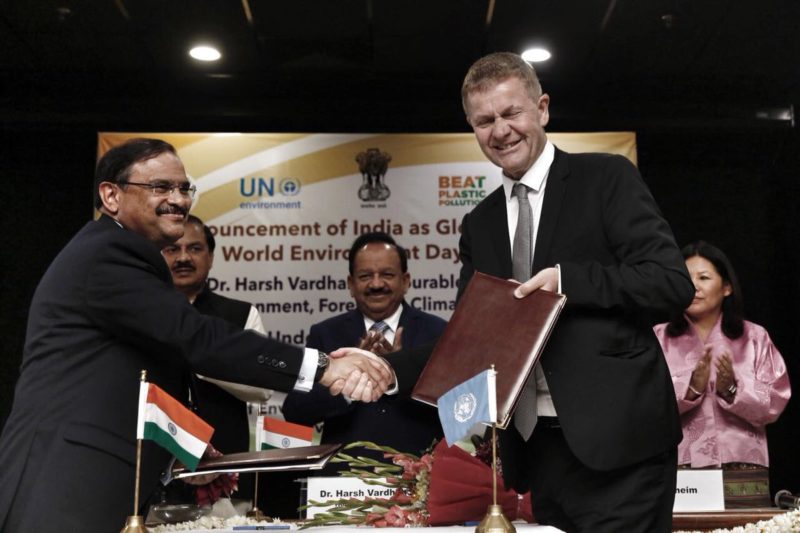
Dr. Harsh Vardhan, India’s Minister for Environment, Forest and Climate Change (left), with Erik Solheim, Head of UN Environment, during the signing of the World Environment Day 2018 host agreement
The global celebrations will be used to raise awareness of plastic waste and find ways to reduce the prevalence of single-use plastics. It has “Beat plastic pollution” as its theme.
The announcement was made on Monday, February 19, by UN Environment and India’s Environment Ministry in New Dehli.
Dr. Harsh Vardhan, India’s Minister for Environment, Forest and Climate Change, commented: “India is excited to host the World Environment Day this year. Indian philosophy and lifestyle has long been rooted in the concept of co-existence with nature. We are committed to making Planet Earth a cleaner and greener place.”
The World Environment Day was established by the UN in 1972 to raise environmental awareness and action. Last year’s day, led by Canada, had the theme: “Connecting people to nature”.
As part of its duties as hosts, India will organise and lead initiatives around the country on plastic waste and clean-up. This will include activities in public spaces, national reserves, beaches and forests to help drive national interest in the issue.
Erik Solheim, Head of UN Environment, said at the announcement on Monday that India will be a “great global host”. In a Twitter message, he described “India’s leadership on reducing plastic pollution” as “absolutely critical!”
His words: “The country has demonstrated tremendous global leadership on climate change and the need to shift to a low carbon economy, and India will now help galvanise greater action on plastics pollution.
“It’s a global emergency affecting every aspect of our lives. It’s in the water we drink and the food we eat. It’s destroying our beaches and oceans. India will now be leading the push to save our oceans and planet.”
According to the UN Environment, India has the highest recycling rates in the world, and is well-placed to help accelerate changes to solve plastic pollution. It is estimated that 500 billion plastic bags are used every year around the world, and that 50 percent of the plastic used is single-use.
Women and girls play a crucial role in the fight against climate change, and it is essential to make sure that this role is not only fully understood, but incorporated into the Sustainable Development Goals, finds a new United Nations (UN) report.
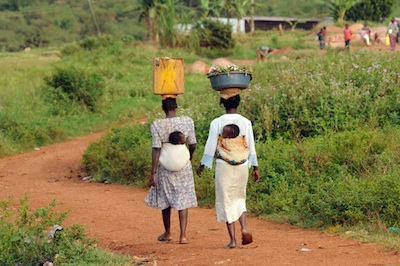
According to gender roles, women are responsible for domestic chores, including food production, cooking, cleaning, caring for the children, and fetching water. Photo credit: projecthavehope.org
From rising sea levels to drops in farming yields and urban floods, the impacts of climate change are being acutely felt by women. Women make up a large percentage of poor communities worldwide that rely on natural resources for their livelihoods.
“The 2030 Agenda holds the potential to transform the lives of women and girls all over the world even though the challenges are daunting. The large-scale extraction of natural resources, climate change and environmental degradation are advancing at an unprecedented pace, undermining the livelihoods of millions of women and men, particularly in the developing world,” the authors say.
Successful action on climate change depends on the engagement of women as stakeholders and planners in ensuring that everyone has access to the resources they need to adapt to and mitigate climate change.
Examples of such involvement described in the report by UN Women range from the role of women in building resilience against natural disasters to being key agents in supporting low-emissions development.
“Although billons have gained access to basic water and sanitation services since 2000, progress has been uneven and some of the gains are increasingly fragile as water stress intensifies due to climate change, unsustainable consumption and intensified agricultural activity and land degradation,” according to the authors.
The report finds that climate change cannot be fully addressed by individual countries, but rather requires enhanced global cooperation from both policy-makers and non-party stakeholders in order to bring women’s voices and specific needs to the table.
The report, “Gender Equality in the 2030 Agenda for Sustainable Development”, highlights the issue of clean energy, notably in the preparation of food.
Food preparation – which across countries is overwhelmingly done by women – requires household energy. In most developing countries and emerging economies, women use cook stoves that rely on solid fuels such as biomass (wood, charcoal, agricultural residues and animal dung) and coal as their primary source.
The use of these dirty solid fuels contributes to harmful emissions of carbon dioxide and black carbon (soot), destructive agents that perpetuate climate change.
Investment in efficient cook stoves that use cleaner fuels – for example, renewable solar energy – is a solution to this carbon-intensive status quo that is simultaneously gender-responsive and environmentally sustainable.
In addition to the adverse climate effects, reliance on solid fuels means women and girls spend a significant amount of time collecting fuel. “The health and environmental impacts of unclean fuels and inefficient technologies can be devastating for women and children, who usually spend more time in the home,” say the authors.
Focus on Women in Agriculture
The role of women in agriculture is also highlighted in the report. Globally, one-fourth of all economically active women are engaged in some sort of agriculture.
The impacts of climate change include reduced crop and forest yields and acidification of the ocean, which negatively affects the harvesting of marine life.
According to the report, by 2050, climate change will have reduced the production of rice by 15%, wheat by 49% in South Asia, and by 15% and 36% respectively in sub-Saharan Africa, resulting in higher food prices and heightened food insecurity.
Many female agricultural workers also face severe inequalities in their access to land, credit and critical inputs such as fertilisers, irrigation, technology, information and markets.
Because of this, adaptation technology such as heat-resistant and water-conserving crop varieties are particularly important for women.
UN Climate Change Boosting Gender Climate Action
A pillar of this international solidarity against accelerating climate change is the Paris Agreement, the goal of which is to limit global average temperature rise to well-below 2 degrees C, and as close as possible to 1.5 degrees C.
“For the Paris Agreement to succeed, women and girls must be fully involved in climate policy. When we include women in climate solutions, we see enhanced economic growth and the outcomes are more sustainable,” says UN Climate Change Executive Secretary, Patricia Espinosa.
Gender climate action under the UN is said to be increasing in scope and speed. At the UN Climate Change Conference in Bonn in November 2017, countries adopted a new roadmap to incorporate gender equality and women’s empowerment in climate change discourse and actions.
The Gender Action Plan sets out, in five priority areas, the activities that will help achieve this objective.
These range from increasing knowledge and capacities of women and men through workshops and information exchanges, so that they can systematically integrate gender considerations in all areas of their work, to pursuing the full, equal and meaningful participation of women in national delegations.
On Monday, February 26, 2018, C40 Chair and Mayor of Paris, Anne Hidalgo, and Mexico City Mayor Miguel, Ángel Mancera, will be bringing together citizens, business leaders and experts for the second annual Women4Climate conference in the Mexican capital.
Mexico City, the sprawling, densely populated and high-altitude capital of Mexico, is hosting the 2018 Women4Climate conference. Photo credit: paradiseintheworld.com
Patricia Espinosa, UN Climate Change Executive Secretary, will be participating in the event and be mentoring a group of young women to become the next generation of climate heroes the world needs to tackle the climate challenge and to achieve the goals of the Paris Climate Change Agreement.
“For the Paris Agreement to succeed, women and girls must be fully involved in climate policy. We can’t fight climate change with only half of the world population. That is why we adopted a Gender Action Plan at COP23 in November, entering a new era in which we must enable women leadership in decision-making at every level of society,” said Espinosa ahead of the meeting.
While women are said to be underrepresented at the highest levels of government, they are however believed to be doing better in the area of local and regional government: in just the last few years, the number of C40 member cities with women mayors has skyrocketed from four to 17.
The Women4Climate conference will build on this momentum as powerful women mayors and CEO’s commit to support the young and innovative change-makers who reinvent our cities.
The Women4Climate conference has three primary goals:
Educate and empower more than 500 mentees by developing a global mentorship programme within cities that belong to the C40 group. This will enhance and speed up climate action within urban communities.
Inform and share knowledge in order to deliver inclusive and just climate action plans within cities.
Drive action and bring inclusion to the forefront of climate action, highlighting the key role that women play in the development and success of climate policies.
The cities of Kochi in India and Hai Phong in Vietnam have started the implementation of the Urban Pathways Project which aims to support Low Carbon Plans for urban basic services. To deliver on this as well on the New Urban Agenda, various stakeholders met in two different meetings in the two countries within the month of January 2018.
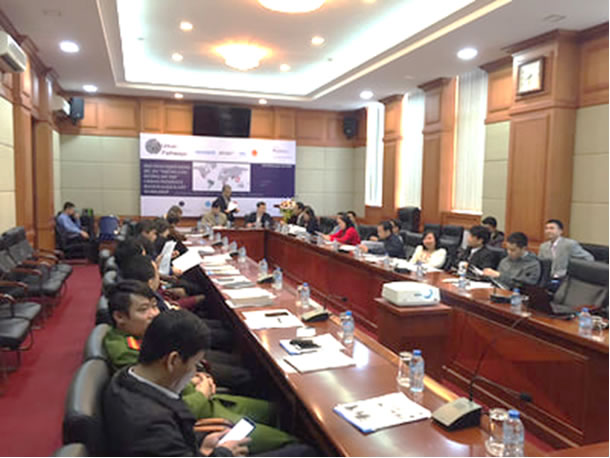
Participants at the consultative meeting convened by the Kochi Municipal Corporation in Vietnam, under the Urban Pathways Project
In Kochi, the consultative meeting convened by the Kochi Municipal Corporation discussed feasible interventions on urban basic services focusing on the city’s public transport system, urban energy and waste management. Target participants for the workshop were representatives from Municipal Departments relating to Natural Resources and Environment, Transport, Energy, Waste Management, Urban Planning and Investment, relevant institutions, NGOs and international organisations.
The Hai Phong meeting discussed opportunities to implement low-carbon urban energy, mobility and resource management solutions in the city and to identify synergies among the various initiatives and projects.
The deliberations in Hai Phong resulted in Urban Pathways concrete action points that include raising awareness of government officials and the local community on sustainable transport, energy consumption and waste management; support Hai Phong to develop action plans to deliver on the Nationally Determined Contributions (NDCs) to mitigate climate change; provide urban change maker to city leaders, government decision makers and the local people with training, workshops, e-learning courses; city-to-city partnership thus connecting with the other pilot countries to learn from experiences; and pilot projects, awareness campaigns on sustainable transport – improvement of public transport – electrification of vehicles.
Kochi and Hai Phong are part of the four major emerging cities selected for implementation of the Urban Pathways Project. Other cities are Nairobi in Kenya and Belo Horizonte in Brazil. The Urban Pathways is currently evaluating possible replication cities to undergo a set of “Proof of Concept” projects and facilitates city-to-city exchange. The project will be implemented over a period of four years with a focus on urban basic services. This includes development of normative guides, support development of low-carbon national action plans, low-carbon local implementation concepts and support capacity building on urban mobility, urban energy and waste management.
The Urban Pathways Project was launched in 2017 in Berlin, Germany, by UN-Habitat and its partners – Wuppertal Institute of Climate, Energy and Environment and UN Environment with the objective to discuss concrete low-carbon energy, mobility and waste-management solutions to deliver on the New Urban Agenda. This launch showcased activities of cities working together on sustainable urban development and helped taking this further into a joint programme of action.
Some wheat farmers in Rigachikun, Igabi Local Government Area of Kaduna State said they have recorded huge losses due to shortage of water.
A wheat farm
The farmers told the News Agency of Nigeria (NAN) in Kaduna on Monday, February 19, 2018 that their crops had wilted, forcing them to abandon the farms for cattle to graze.
One of them, Mallam Usman Rigachikun, said that all their sources of water, streams and ponds had dried up, adversely affecting their farming activities.
He said that climate change had contributed immensely to the dryness of the sources of the water which they relied on for their dry season farming.
“Our crops are dying, as you can see, they have already changed colours due to shortage of water.
“We cannot do anything with the dried crops, so we donated them to cattle rearers for their animals to feed on.
“It is a huge loss to many farmers in the area and that is why we are calling on the state government to come to our rescue.
“If you check all the streams, wells and ponds that most farmers depend on during the dry season farming, you will discover that they are all dried up.
“There is no any other source of water apart from the one we depend on,” Rigachikun lamented.
Another farmer, Bulus Alhassan, who has been farming wheat for over 20 years, said that, apart from wheat, other crops in the area were facing same problem of scarcity of water.
Alhassan called on government to dig boreholes and construct reservoirs for farmers engaged in dry season farming in the area in order to ensure constant supply of water to their farms.
“This year’s dry season is the worst. We never had it this bad. We are appealing to the state government to come to our rescue and save us from further losses,” said Alhassan.
Meanwhile, Prof. Bala Dogo, a Professor of Geography with the Kaduna State University (KASU), has attributed the dryness of streams and ponds to climate change.
He attributed human activities in the environment to the negative impacts on the climate and urged residents to stop activities that may adversely affect the environment.
Dogo listed deforestation, bush burning, building of houses and felling of tress for firewood among factors contributing to climate change.
“The impact of climate change is very visible from drying up rivers, to desertification and changes in weather condition with adverse effect on agricultural production and human health.
“Rivers and streams of yesterday are either dry or have become ponds, speeding desert encroachment, particularly in northern part of the country and gully erosion in southern part of the country.
“Not only that, climate change affects grazing of cattle due to the disappearance of grasses and forest due to shortage of rainfall and human activity,’’ he said.
Dogo called on people to have a change of attitude towards the environment by planting trees and reducing the use of wood for cooking and other activities.
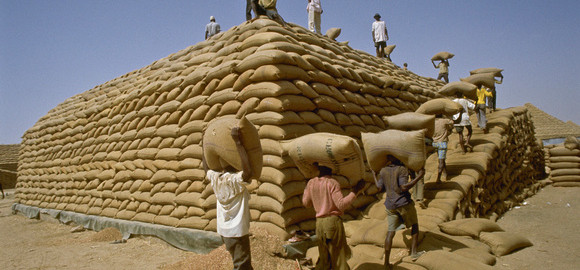
Farmers in Borno State on Monday, February 19, 2018 in Maiduguri announced plans to unveil rice pyramid sequel to the bumper harvest recorded this cropping season.
The groundnut pyramid
The News Agency of Nigeria (NAN) reports that about 18,000 farmers were supported by the Central Bank of Nigeria (CBN), under its Anchor Borrower scheme in the state.
Anchor Borrower is a critical component of the Federal Government’s agriculture transformation programme designed to enhance farmers support services, to achieve self-sufficiency in rice production.
The farmers recorded bumper harvest in spite of combined negative forces of insurgents’ attack, drought and pest infestation which ravaged some of the plantations.
Alhaji Kabir Abiso, the Director, Walwanne and Sons Limited, one of the Anchor Borrower clients, disclosed that work on the pyramid had reached advance stage and it would be unveiled soon in Maiduguri.
Abiso said that the pyramid would be constructed with the paddy rice produced by farmers supported under the programme.
“Borno is one of the major rice producing areas; the idea is to showcase the agricultural potentials of the state.”
Abiso added that his company had registered over 13,000 rice farmers in various local government areas of the state.
He explained that the farmers were provided with fertilisers; seeds, chemicals, knapsack sprayers, tube wells, water pumps and money for farm labour activities.
Abiso explained that each benefiting farmer cultivated one hectares of land with a six to seven tonnes production output during the raining season in Mafa, Maiduguri, Monguno, Damboa, Hawul, Biu, Kwaya-Kusar and Shani Local Government Areas.
The director added that the farmers were also exposed to modern farming techniques to encourage high yields and reduce wastage.
“More farmers are mobilised and engaged in dry season activity under the Anchor Borrower programme scheme,” he said.
Abiso disclosed that the company had so far stocked about 36,000 bags of paddy rice in Biu and Maiduguri.
According to him, the company has concluded arrangement to set up a modern mill, to uptake rice produced by farmers in the state.
While commending the Borno State Government over its farmer support programmes, Abiso called for expansion of the programme to enhance participation.
Not long ago, my friend and co-founder at Connected Development (CODE), Oludotun Babayemi, exited from the Executive Management of CODE and moved to a non-executive role as member of the Board of Trustees. This means that he will no longer have day to day responsibilities or routine involvement in CODE activities, though he will continue to consult, advise and support me and the management team.
Hamzat Lawal (left) with Oludotun Babayemi
I am delighted to say that Dotun’s exit in a very remarkable way symbolises the core spirit and value of the CODE brand and Follow The Money movement. The essence of CODE is not only captured in its written goals, mission and vision, but in an unwritten belief in the evolution of personal development.
For those readers who are not conversant with CODE, it is useful to state who we are. Founded in 2012, CODE is a non-government organisation (NGO) whose mission is to empower marginalised communities in Africa. We strengthen local communities by creating platforms for dialogue, enabling informed debate, and building capacities of citizens on how to hold their government accountable through “Follow The Money”, our governance accountability and transparency initiative.
CODE provides marginalised and vulnerable communities with resources to amplify their voices with independence and integrity while providing these grassroots populations with information that engenders social and economic progress. To enhance effective democratic governance and accountability, we create platforms (mobile and web technologies) that close the feedback loop between citizens and the government. Thus, with global expertise and reach, we focus on community outreach, influencing policies, practices, and knowledge mobilisation.
Our commitment to participatory capacity and community building and monitoring and evaluation creates effective and sustainable programs even within the most challenging environments.
Nevertheless, against this backdrop, we have as our fundamental drive, the hunger to evolve into a global brand that provides a platform for participatory governance, and youth development. We want to see a future where today’s CODE leadership shall be replaced tomorrow by a new cadre of civil society leaders who grew up within our ranks, and evolved into strong thought-leaders while we, the old guard, move on to higher national and global duties.
We want to see Next-Generation leaders who are well-equipped for tomorrow, trained from the emerging societal challenges of today.
This is why we recognise the importance of mentoring. I believe that for there to be a seamless transition into the next generation there needs to be a conscious mentorship agenda on the part of thoughtful leaders of today as well as a willingness on the part of today’s followers to enter what I call a “leadership conveyor belt” in order to be transported through the assembly line of Future Leader manufacture.
For instance, before Dotun left the Executive Team, he consciously planned an exit strategy which sought to “recruit and rejig” a replacement team in the CODE programme value chain.
When we started recruiting A – Team staff last year, he planned to have each new member take the pieces of his role in scaling the organisation, and he provided support for their various tasks while he made his transition to work with the Board. It was when he saw the success of his transition strategy that he felt convinced that the coast was clear to make the launch up the next rung in the ladder.
For me, it was a fulfillment of the CODE dream – establishing a template for leadership evolution.
It is a situation I can relate to, having experienced a similar transition in my task in my other life at the African Youth Initiative on Climate Change (AYICC), when I moved from an Executive role as the Communications Director to a non-executive advisory role as member of the Board. Likewise, some day in the future, I will bow out as the Chief Executive of CODE to a non-executive role.
Just like Dotun is doing today, I will have the privilege of being able to step back and watch CODE develop and grow while I explore other opportunities to add value to the society and impact my world.
I believe robust and sustainable transition is the only way we can emphasise and stay committed to the ongoing success of CODE in particular, and of the wider transparency and accountability community in general. We must remain passionate about open-data, technology and citizen participation, as this is the only real doorway into the journey to deepen democracy by empowering more communities with enough knowledge to be able to hold their government accountable.
And this brings me to a very vital point. It took a long time of personal thought and research to come to the conclusion that the future of Nigeria and indeed Africa depends on active participation of civil society in the political process. A democratic state cannot be stable unless it is effective and legitimate, with the respect and support of its citizens.
Civil society is a check, a monitor, but also a vital partner in the quest for this kind of positive relationship between the democratic state and its citizens. Therefore, the best model would be when the civil society, empowered with their developmental experience and capacity, finds itself playing active role in politics.
There are reasons for this conclusion. First of all, the most basic role of civil society is to limit and control the power of the state. For instance, as is the situation in Nigeria, when a country is emerging from decades of military rule, it needs to find ways to check, monitor, and restrain the power of political leaders and state officials.
Civil society actors serve as a watchdog, and raise public concern about any abuse of power. They campaign for access to information, including freedom of information laws, and rules and institutions to control corruption. They promote political participation by educating people about their rights and obligations as democratic citizens, and encouraging them to critically examine electoral manifestoes and vote in elections. They help develop citizens’ skills to work with one another to solve common problems, to debate public issues, and express their views. They play an important role in mediating and helping to resolve conflicts – by adopting bargaining, accommodation and compromise. These are all functions that guarantee a functional, sustainable state.
Secondly, civil society organisations help to develop the other values of democratic life: tolerance, moderation, compromise, and respect for opposing points of view. And, without this deeper culture of accommodation, democracy cannot be stable. These values cannot simply be taught; they must also be experienced through practice.
So, I see a future where civil society actors-turned politicians shall help to develop programs for democratic civic education in the schools; revise the curricula, rewrite the textbooks, and retrain teachers in order to educate young people about the mistakes of the past and teach them the principles and values of democracy.
Furthermore, because they have ingrained capacity as a result of their experience, these future leaders shall strengthen democracy by providing new forms of interest and solidarity that cut across old forms of tribal, linguistic, religious, and other identity ties. Democracy cannot be stable if people only associate with others of the same religion or identity. They will also play the vital role of engineering electoral best practices by ensuring that the voting and vote counting is entirely free, fair, peaceful, and transparent.
Thirdly, political recruitment of today is flawed. We need a new model to identify and train new types of leaders who have dealt with important public issues and can be recruited to run for political office at all levels and to serve in state and national legislature. To achieve this, civil society mentorship processes of today could become political recruitment platforms of tomorrow.
By Hamzat Lawal (activist and currently the Co-Founder/Chief Executive of Connected Development (CODE). He is working to build a growing grassroots movement of citizen-led actions through Follow The Money for better service delivery in rural communities. He is also a Leader of the Not Too Young To Run Movement)