The Convention on the Conservation of Migratory Species of Wild Animals (CMS) is seeking avenues of close cooperation with the Polar Bear Agreement in order to, among other issues, address the impact of climate change on polar bears.
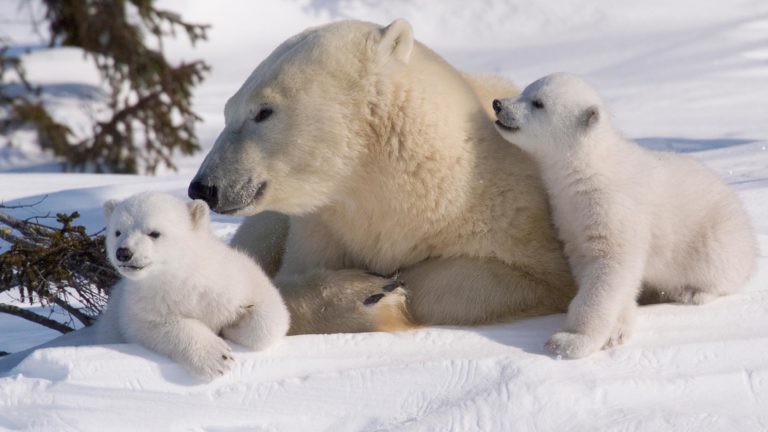
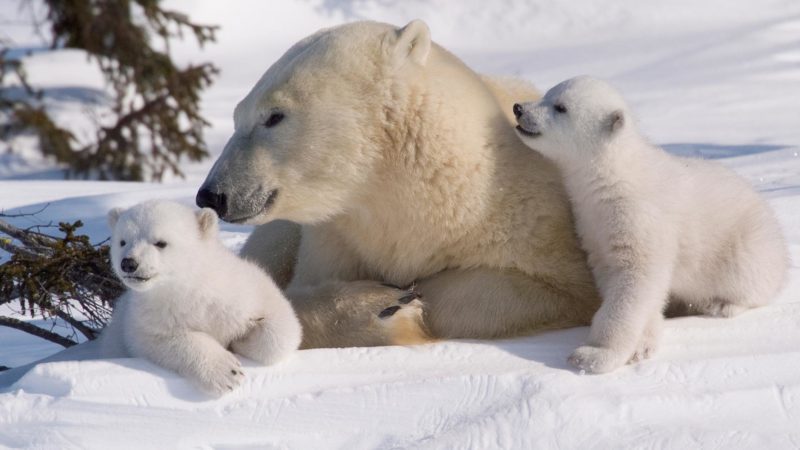
A polar bear mother and its cubs
Executive Secretary of CMS, Bradnee Chambers, who attended the biennial meeting of the Polar Bear Ranges States held recently in Fairbanks, Alaska, USA, stressed how CMS and the Polar Bear Agreement could benefit from closer cooperation, pointing out that their remits are complementary.
The polar bear (Ursus maritimus) was added to Appendix II of CMS at the 11th Conference of the Parties in Quito, Ecuador, in 2014. Appendix II listing means that Range States are encouraged to conclude agreements for the benefit of the species involved; the Polar Bear Agreement meets the criteria laid out in Article V of the Convention.
Climate change is said to be having an effect on polar bear habitat, but its drivers, according to scientists, originate beyond the species’ range and have to be tackled at a global level.
Sustainable tourism, pollution, marine debris, and the correlation between wildlife and the Sustainable Development Goals (SDGs) are other potential areas for cooperation between CMS and the Agreement, says Chambers, adding that CMS, in cooperation with Norway, is proposing to host an expert workshop on the impacts of climate change on polar bears and possible mitigation measures.
“I see a whole range of opportunities where CMS and the Polar Bear Agreement can cooperate. The expertise that CMS is building on the issue of the impacts of climate change on wildlife could complement the impressive scientific work being undertaken by the five Range States of the Polar Bear, a species for which I, as a Canadian, have a particularly strong affinity,” adds Chambers.
In addition, Parties to the Agreement have reviewed arrangements for providing secretariat services and are considering a bid from CMS, which would involve dedicated staff being accommodated in the CMS premises at the UN Campus in Bonn, Germany.
The Polar Bear Agreement was signed in 1973 by all five Range States – Canada, Denmark (for Greenland), Norway (for Svalbard), the USA and the USSR (succeeded by the Russian Federation). The Agreement therefore predates the Convention by some six years.
Of the five parties to the agreement, only Norway is a member of CMS, although the USA and the Russian Federation do participate in the activities of instruments concluded under the Convention, namely the MOUs on sharks, marine turtles of the Indian Ocean, Siberian Crane and Bukhara Deer.
The Nigerian Meteorological Agency (NiMet) has predicted partly cloudy to cloudy weather conditions over the central States of the county on Monday (February 19, 2018) morning.
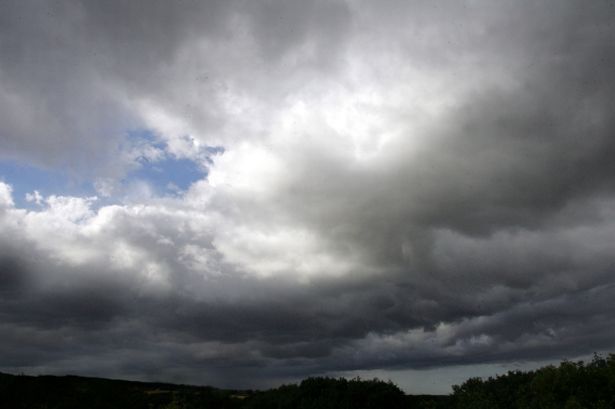
cloudy weather
NiMet’s Weather Outlook by its Central Forecast Office in Abuja on Sunday also predicted day and night temperatures in the range of 31 to 40 and 14 to 24 degrees Celsius respectively.
It also predicted chances of localised thunderstorms over Benue, Nasarawa, Ilorin and Abuja in the afternoon and evening hour.
The agency predicted that the southern States would experience partly cloudy to cloudy conditions with chances of localised thunderstorms over Lagos and Ijebu in the morning.
It also predicted localised thunderstorms over Port-Harcourt, Calabar, Benin, Akure, and Warri during afternoon and evening hours with day and night temperatures of 30 to 38 and 21 to 26 degrees Celsius respectively.
According to NiMet, Northern States will experience dust haze conditions with visibility range of two to five kilometres and localised to less than a 1000 metres throughout the forecast period.
“Day and night temperature values are expected to be in the range of 32 to 39 and 17 to 20 degrees Celsius respectively over the northern cities.
“Dust haze conditions are expected over the Northern cities down to some parts of the Central states.
“However, there are chances of increased cloudiness with prospect of localised rainfall activities over some parts of the central and the southern region within the next 24 hours,” NiMet predicted.
A research published on Monday, February 5, 2018 in the journal Proceedings of the National Academy of Sciences has highlighted the urgent need for governments to develop measures to control the spread of emerging alien species.
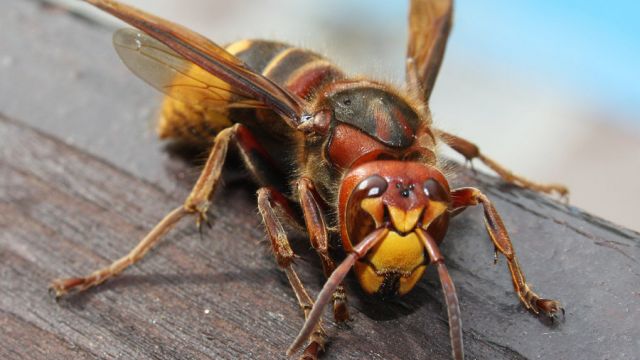
The Asian hornet preys on other species of insect
Up to 16% of all animal and plant species have the potential to become invasive alien species (IAS), according to the new report. “These results suggest that there remains a high proportion of emerging alien species we have yet to encounter, with future impacts that are difficult to predict,” says Dr Hanno Seebens of the Senckenberg Biodiversity and Climate Research Centre and Lead author of the report, in respect of which the International Union for the Conservation of Nature (IUCN) SSC Invasive Species Specialist Group (ISSG) made contributions.
For the study, researchers investigated the emergence of alien species worldwide over time by analysing a number of datasets including the IUCN Global Invasive Species Database (GISD) and the IUCN co-developed Global Register of Introduced and Invasive Species (GRIIS). These datasets provided approximately 46,000 first recorded sightings of established alien species, spanning the past five centuries – the period during which humans increasingly developed passages for species to travel across the globe.
“Between 2000 and 2005, one in four alien species introductions had never been recorded as alien before. These emerging alien species pose a significant challenge to biosecurity measures as it is difficult to predict how they will arrive, and where from,” comments Dr Seebens. “Current biosecurity approaches often rely on knowledge of already known invasive alien species, but this study highlights that early detection and eradication measures will be more important than ever before.”
Over the past two centuries, humans have been responsible for the introduction of thousands of plant, animal and fungi species to regions outside of their native range. Traditionally, species have been introduced to new areas through the transport of commodities, however the study found that new trade networks and environmental change are contributing to the increasing number of introductions of alien species.
Some of these introduced species have become invasive, and have had significant impacts on human health, economies and ecosystems. The Asian hornet (Vespa velutina), introduced to western Europe in 2004, preys on other species of insect, particularly honey bees. This has led to major losses in honey bee colonies, decreasing beekeeping production and therefore impacting local economies. The species is also a threat to public health and incidences of anaphylactic shock due to people being stung have been reported. The full impact of the species invasion as as yet unknown.
“Ignoring emerging alien species may lead to direct socio-economic and environmental consequences. The IUCN SSC Invasive Species Specialist Group are working with scientists and policy makers across the globe in an attempt to increase the knowledge base on alien species, and build capacity in order to prevent their introductions and manage their impacts.” Piero Genovesi, co-author of the paper and Chair of IUCN Invasive Species Specialist Group.
The findings of this study support the Honolulu Challenge, a global initiative born at the IUCN World Conservation Congress, which calls for urgent and bold action on invasive alien species in order to protect biodiversity and human well-being from their current and future impacts.
In addition the GISD and GRIIS databases, IUCN supports global efforts to identify and prioritise IAS through the recently developed Environmental Impact Classification of Alien Taxa (EICAT).
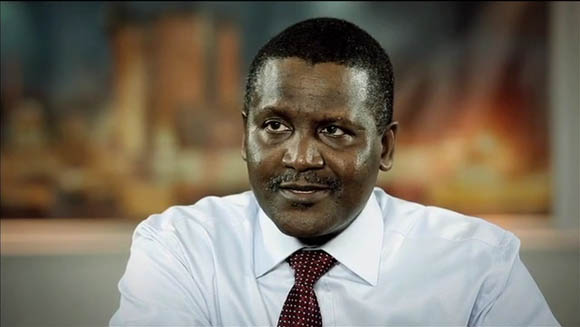
Africa’s richest man and President of Dangote Group, Aliko Dangote, is to play the role of Chief Guest of Honour at the foundation stone laying ceremony for the multi-purpose Editors’ Plaza, a project of the Nigerian Guild of Editors (NGE) scheduled for Thursday, March 1, 2018 in the Guzape District of Abuja.
Alhaji Aliko Dangote
Former Governor of Akwa Ibom State, Senator Godswill Akpabio, who is also the Senate Minority Leader, will chair the event while the Chairman of BUA Group, Alhaji Abdulsamad Rabiu, will perform the traditional “turning of the sod” to herald the construction of a befitting plaza for Nigerian editors in the Federal Capital Territory (FCT).
The Minister of the Federal Capital Territory, Alhaji Mohammed Bello, and his Information and Culture counterpart, Alhaji Lai Mohammed, are also expected to grace the occasion.
Other dignitaries expected at the event are: heads of ministries, departments and agencies (MDAs), members of corporate Nigeria, the business community, and media executives.
The turning of the sod for the Editors’ Plaza is sequel to a fund-raiser on April 10, 2014 in Abuja under the leadership of the then President of the Guild, Mr. Femi Adesina. The goal was to raise funds to build a befitting secretariat for the Guild in Abuja to be named Editors’ Plaza.
Part of the money realised from the fund-raiser has been used to acquire a property in Ikeja area of Lagos State christened Editors’ House which functions as the Guild’s secretariat in Lagos.
The President of the Guild, Mrs. Funke Egbemode, said part of the proposed Editors’ Plaza in Abuja would serve as the Guild’s secretariat while the rest would be leased to the public as offices.
When completed, the multi-storey edifice which sits on an expansive 5,600 sqm piece of land will add to the vastly changing Abuja landscape.
According to Egbemode, the construction of the Editors’ Plaza offers friends of the Guild, individuals and corporates, and all advocates and lovers of free press an opportunity to partner with Nigerian editors whom she described as the torchbearers of the nation’s democracy.
The World Health Organisation (WHO) on Friday, February 16, 2018 announced a new high-level commission, comprised of heads of state and ministers, leaders in health and development and entrepreneurs. The group will propose bold and innovative solutions to accelerate prevention and control of the leading killers on the planet – noncommunicable diseases (NCDs) like heart and lung disease, cancers, and diabetes.
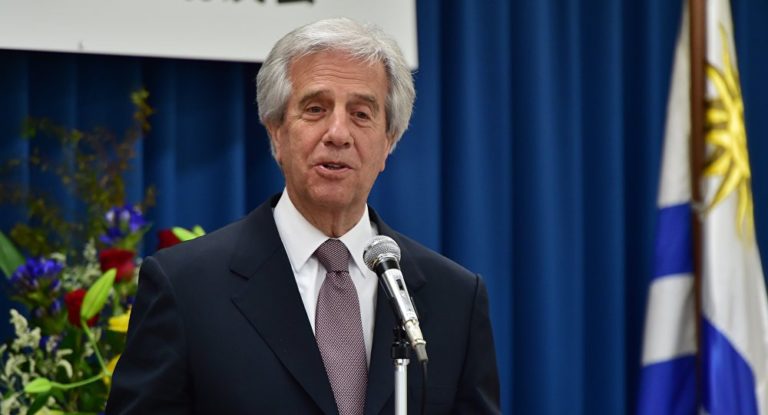
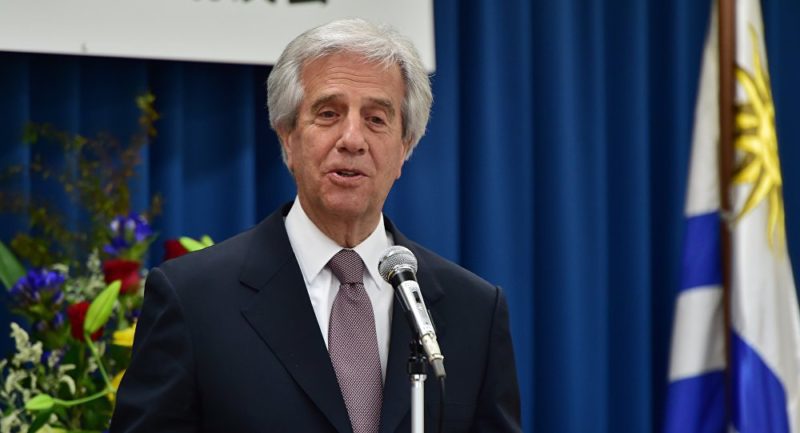
President Tabaré Vázquez of Uruguay, co-chair of the WHO Independent Global High-level Commission on NCDs
The WHO Independent Global High-level Commission on NCDs is co-chaired by President Tabaré Vázquez of Uruguay; President Maithripala Sirisena of Sri Lanka; President Sauli Niinistö of Finland; Veronika Skvortsova, Minister of Healthcare of the Russian Federation; and Sania Nishtar, former Federal Minister of Pakistan.
Seven in 10 deaths globally every year are from NCDs, the main contributors to which are tobacco use, harmful use of alcohol, unhealthy diets, and physical inactivity. More than 15 million people between the ages of 30 and 70 years die from NCDs annually. Low- and lower-middle income countries are increasingly affected, with half of premature deaths from NCDs occurring in those countries. Many lives can be saved from NCDs through early diagnosis and improved access to quality and affordable treatment, as well as a whole-of-government approach to reduce the main risk factors.
“NCDs are the world’s leading avoidable killers but the world is not doing enough to prevent and control them,” says Dr Vázquez. “We have to ask ourselves if we want to condemn future generations from dying too young, and living lives of ill health and lost opportunity. The answer clearly is ‘no.’ But there is so much we can do to safeguard and care for people, from protecting everyone from tobacco, harmful use of alcohol, and unhealthy foods and sugary drinks, to giving people the health services they need to stop NCDs in their tracks.”
Mr Michael R. Bloomberg, WHO Global Ambassador for Noncommunicable Diseases and Commission member, said: “For the first time in history, more people are dying of noncommunicable diseases, such as heart disease and diabetes, than infectious diseases. This loss of human life spares no one — rich or poor, young or old – and it imposes heavy economic costs on nations. The more public support we can build for government policies that are proven to save lives – as this Commission will work to do – the more progress we’ll be able to make around the world.”
The new Commission was established by WHO Director-General, Dr Tedros Adhanom Ghebreyesus, and runs until October 2019. It will provide actionable recommendations to contribute to the Third United Nations General Assembly High-level Meeting on NCDs scheduled for the second half of 2018. This will include the submission of its first report to Dr Tedros in early June.
“Everybody deserves the right to a healthy life,” says Dr Tedros. “We can beat the drivers of the NCD epidemic, which are among the world’s main obstacles to health. I am looking to the Commission to show us new ways to unblock the barriers to good health, and identify innovative, bold and practical actions steps to scale up prevention and treatment of NCDs and provide health for all.”
Co-chair Dr Nishtar says the Commission’s establishment has come at an opportune time, as the world prepares for the UN High-level Meeting on NCDs. “This year, governments will be held to account on progress they have made in protecting their citizens from NCDs,” says Dr Nishtar. “While there have been improvements in some countries and regions, the overall rate of progress has been unacceptably slow. This is resulting in too many people suffering and dying needlessly from NCDs, and leaving families, communities and governments to bear the human and economic costs.”
The World Health Assembly has endorsed the set of WHO “best buys” and other cost-effective interventions proven to prevent or delay most premature NCD deaths. Such measures, which can be readily scaled up in countries, target prevention and treatment of, and raising awareness about, NCDs.
Experts from 20 countries gathered in Fiji on Monday, February 5, 2018 to share lessons on adaptation to climate change at the Targeted Topics Forum. To avoid adding to the climate problem as they sought solutions, the forum’s organisers made the event “climate neutral”, which means its carbon footprint was measured, reduced and compensated for using United Nations (UN) Certified Emission Reductions (CERs).
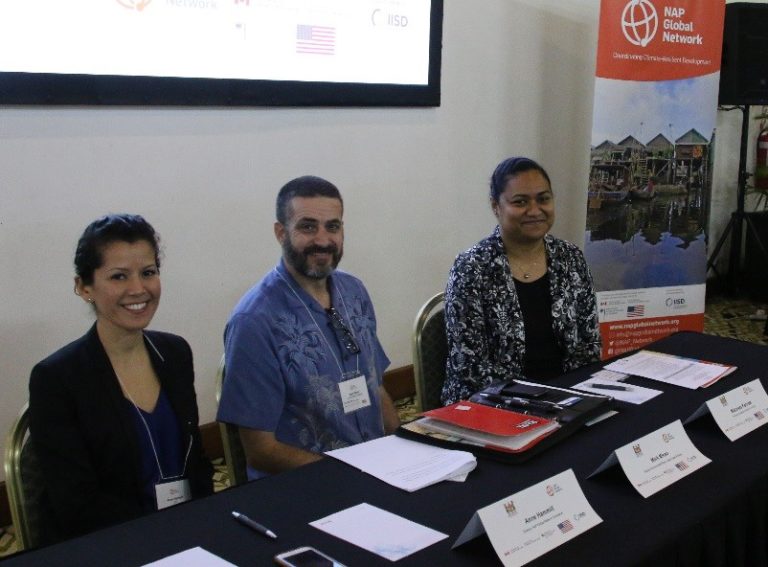
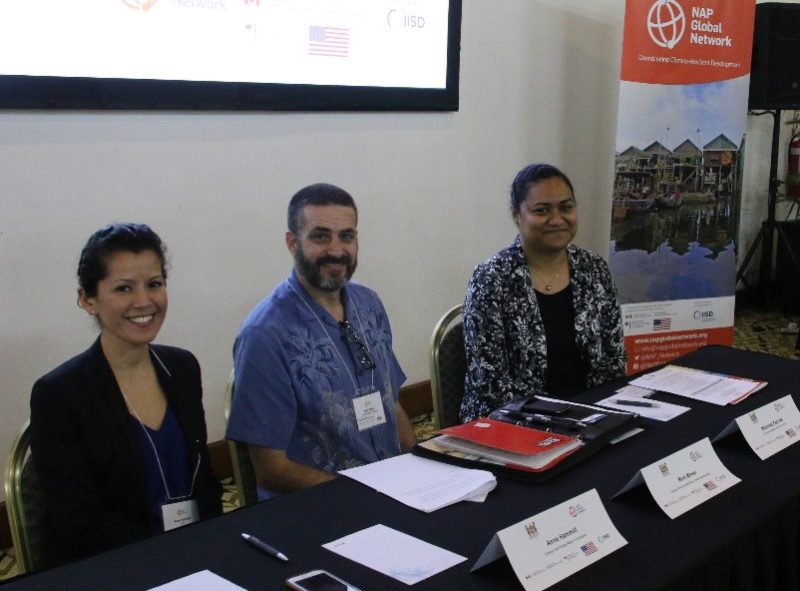
L-R: Anne Hammill, Director of the National Adaptation Plan Global Network Secretariat; Mark Mineo, Regional Environmental Officer to the U.S. Embassy in Fiji; and Makereta Konrote, Permanent Secretary of the Ministry of Economy to the Government of Fiji, open the Targeted Topics Forum in Fiji on Monday, February 5, 2018
Highly vulnerable to sea level rise, Fiji, like other Pacific islands, faces a grave threat from climate change. In 2017, the country presided over the UN Climate Change Conference COP23 in Bonn, Germany. A key focus of the conference was on developing the operating manual for implementation of the Paris Climate Change Agreement, with its goal of limiting the rise of global average temperatures to well below 2 degrees Celsius and as close as possible to 1.5 degrees above pre-industrial levels.
To reach this target, climate neutrality – which is the balance between the output of man-made greenhouse gases and absorption – must be achieved globally by the second half of this century.
The National Adaptation Plan (NAP) Global Network, co-hosting the forum with the Government of the Republic of Fiji, worked together with UN Climate Change initiative “Climate Neutral Now” to make the event climate neutral. Climate Neutral Now encourages individuals, organisations and companies to take voluntary climate action by measuring their carbon footprint, reducing it as much as possible, and finally, offsetting the remaining carbon footprint by purchasing UN CERs.
This three-step methodology was applied to the Targeted Topics Forum. First, an estimate of the carbon emissions caused by the event was made, including flights of the participants, which is the biggest source of carbon emissions in such cases. Next, practical measures were then taken to reduce the carbon footprint as much as possible, including:
Eliminating single-use items in the catering service, including water bottles
Favoring local and organic products as well as vegetarian meals in the menu
Avoiding printing by using USB sticks to disseminate information
Choosing venues that maximise the use of natural light.
As a last step, the remaining emissions were offset by purchasing UN Certified Emission Reductions.
“This week’s Targeted Topics Forum provided a space for sustained peer-learning and exchange between climate specialists from around the world. As we come together, from our different contexts and countries to share lessons and best practices in climate change adaptation, it’s essential that the NAP Global Network play a leading role in reducing emissions and contributing to a climate-neutral future,” said Anne Hammill, Director of the National Adaptation Plan Global Network Secretariat.
Niclas Svenningsen, head of the Climate Neutral Now initiative at UN Climate Change, said, “By achieving climate neutrality, the Targeted Topics Forum demonstrates its forward-thinking approach to solving climate change, and sets an admirable example for other conferences and international events to follow.”
Ghana’s former President John Agyekum Kufuor has stated that “it will be a mistake and a very sad one, for humanity to throw up our hands and abandon our fight against climate change.” He explained that climate change “is very real and its related natural disasters and associated problems are bigger than the human mind can comprehend and that is why we must continue to work out solutions.”
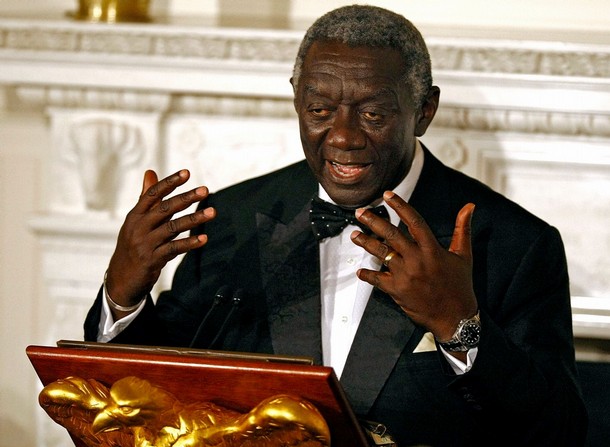
President John Agyekum Kufuor. Photo credit: Chip Somodevilla/Getty Images
President Kufuor expressed these sentiments in response to a question on the seeming waning zeal of some African governments and civil society organisations in the fight against climate change. This was in an exclusive interview on his current perceptions about the phenomenon, following the end of his tenure as one of two erstwhile UN Secretary General Ban Ki Moon’s Special Envoys on Climate Change. The other was Jens Stoltenberg, former Prime Minister of Norway.
The two were assigned to assist in engaging Heads of State and governments around the world to mobilise political will and action on climate change in advance of the 2014 Climate Summit in New York. Their assignment in a way contributed to the international acceptance of the Paris Climate Accord during the 21st Session of the Conference of the Parties of the UN Framework Convention on Climate Change (UNFCCC), dubbed COP21 and held in France in 2015.
The former President said the assignment has made him comprehend climate change issues and the frustrations that come with trying of find solutions.
“At times out of desperation, when you tackle a problem and you don’t get the solutions as quickly as you want to, you throw your hands up and just give up,” adding, “but if we can make our mark, we must continue to accept the guidance of scientific research and technological efforts at findings solutions devoid of sentiments,” he said
He that another impact of the assignment on his life is that, “naturally, I’m still interested in and do follow climate change issues and how nations are mitigating and adapting.”
On the issue of climate financing, President Kufuor said every country is supposed to contribute to working out solutions as indicated by the Nationally Determined Contributions (NDCs). The NDCs are key to the Paris Agreement and represents efforts by each country to reduce national emissions and adapt to the impacts of climate change.
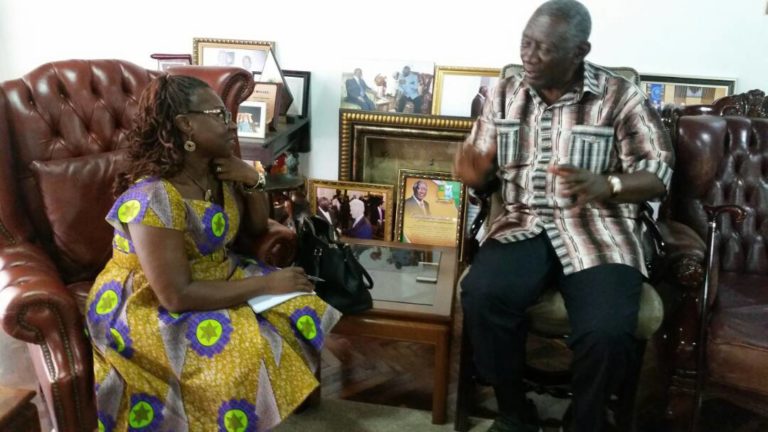
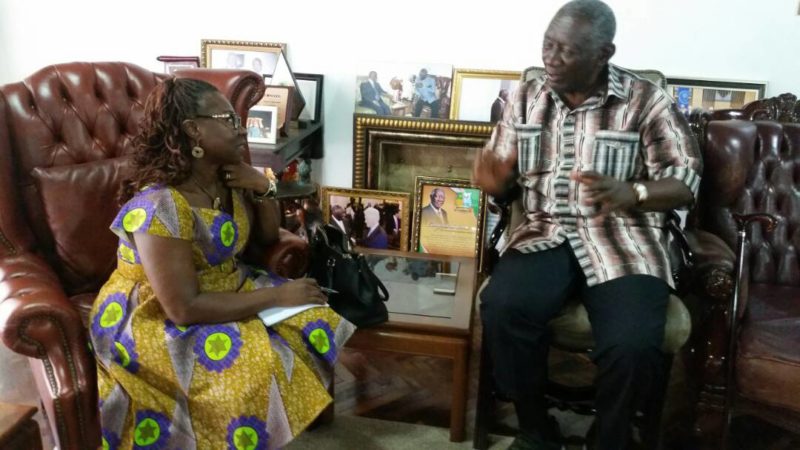
President Kufuor (right) in a chat with Ama Kudom-Agyemang
He noted, “The forces that are being unleashed by climate change are so overwhelming and time is not on our side. We need to do whatever we can by ourselves first of all, and external help will come.” He wondered, “how come rains in recent times, are wrecking such havoc, we didn’t use to see such things before.”
President Kufuor urged African countries to do all in their power to reduce emissions and “once we do our part, the industrialised nations will also live up to their expectations, and then cumulatively we will be working for the entire world.” He was of the view that once, climate change related activities are streamlined and prioritised, allocations could be made in the national budgets to cater for their implementation.
The former President also touched on the perception that the Chinese were importing climate change into African countries through their numerous projects. He cautioned Ghanaians to beware of speaking in such general terms of the counterproductive activities of some Chinese in the country.
President Kufuor explained that statements like “the Chinese are spoiling our country,” could imply that “it is their government or nation that is behind the activities. But no, no, no…” he emphasised.
His thoughts on these developments were that “now the world is opening up so fast with mobility of people and their individual initiatives all around the world, thanks to advancing technology in transportation and communication. So we may get some people coming in to pursue their own selfish economic and business interests.”
President Kufuor added that “they come and without conscience, just driven by greed and perhaps ignorance, they liaise with some locals who again for some petty gain, not appreciating the damage they doing to their own environment engage in galamsey (illegal mining) activities, polluting our waters and environment.” He emphasised that when such people are caught the law should deal firmly with them and reiterated that “we have to be careful of not labeling the Chinese government as being responsible for the infamous activities of some Chinese individuals or firms.”
President Kufuor pointed out that “China as a nation is very concerned about the impact of climate change and the devastation it is causing in their environment.” Therefore, the nation has developed a technology for greening deserts. He recalled his visit at the invitation of the Chinese government to witness how the new technology had been employed. “I was impressed that in the huge Inner Mongolia Kubuqi Desert, about 6000 of the 18, 600 sq. km. of the area has been turned all green, with soil nutrient fixing grass, luscious fruits and vegetables.”
According to an article by Charlie Campbell published in the July 27, 2017 edition of Timeinc.net, “In 1988, the Chinese firm Elion Resources Group partnered with local people and the Beijing government to combat desertification. Almost three decades later, one third of Kubuqi has been greened. Special plants have been grown to grip the shifting sands and to prevent the dunes encroaching on farms and villages.”
Known as the Kubuqi Ecological Restoration Project, the result now is that “the cattle have returned, and secondary industries have sprung up, with tourists flocking to new locally-run hotels and restaurants, eager to explore the dunes on boards and buggies.”
Consequently, the United Nations Environment Programme (UNEP) estimates the project to be worth $1.8 billion over a 50-year period. Thus, “Kubuqi’s transformation burnishes China’s credentials as an environmental leader at a time when Washington is retreating from its international commitments,” notes the writer.
And President Emmanuel Macron of France affirmed these sentiments, when he stated: “Now China leads,” following US President Donald Trump’s refusal to reconsider withdrawing from the Paris Climate Accord
“So I want to be careful we do not generalise when we’re talking about stray Chinese individuals in collusion with some of our own people,” Ghana’s former President stated.
He compared galamsey activities to the American gold rush where people picked up cutlasses and spades wherever they could find gold, saying “this could go on till policy is brought to bear, regularise and guide such activities. In this wise, he commended the government for taking “some very significant steps to contain the situation.”
“But beyond that,” President Kufuor said, “we should also rally the masses of people in the catchment areas of such places for social education. Let them see the dangers they are perpetrating on themselves and on the nation as a whole, and let them know there could be alternatives, let them know that government is fashioning policies perhaps to move them into cooperatives with concessions away from water bodies and farms so they could pick out their living legitimately.”
He further said, “Extension officers could help drum this into the consciousness of galamsey operators that they are not doing things right,” stressing, “we must not stop the current campaign, but we must use mass education with extension guidance and policies to move people away into legitimate operations with appropriate technologies of small scale operators.”
The ex-Un Special Envoy on Climate Change also had a word for Ghanaians ahead of the forthcoming global celebration of World Water Day on March 22 on the theme, “Nature and water.”
“We can’t separate water from nature they are intertwined. We learn from science that as humans our bodies are made up of about 70% water, so how would one say water is there and nature is on the other side. Water is life and without water, we’re killing nature and this is part of the reason why we should uphold the sanctity of water. Because water, life and creation go together and religious people know this,” he said.
World Water Day (WWD) is celebrated by the international community on March 22 of each year to draw attention to the importance of freshwater and advocate for the sustainable management of freshwater resources. The Day was instituted in 1992 by the United Nations, to draw global attention to the importance of water as a vital resource to life.
The Intergovernmental Platform on Biodiversity and Ecosystem Services (IPBES) says it will launch five assessment reports at the 6th IPBES Plenary session (IPBES6) scheduled to hold in Medellin, Colombia from March 17 to 26, 2018.
Dr. Anne Larigauderie, Executive Secretary of the Intergovernmental Platform on Biodiversity and Ecosystem Services (IPBES)
The assessment reports, according to IPBES, were prepared over three years by more than 550 leading international experts from over 100 countries at a cost of over $6 million.
Four Regional Assessment reports, it was gathered, describe the state of biodiversity and ecosystem services in the Americas, Asia and the Pacific, Africa, and Europe and Central Asia. It will be launched on Friday, March 23, 2018.
A fifth IPBES report describes the state of land degradation and restoration at regional and global levels. This will be launched on Monday, March 26, 2018.
Often called “the IPCC for biodiversity”, the Bonn, Germany-based IPBES is the global science-policy platform tasked with providing the best-available evidence to inform better decisions affecting nature.
Representatives of 128 IPBES member Governments at IPBES6 are expected to approve the five peer-reviewed reports, which make important contributions to contemporary knowledge of the state of biodiversity, ecosystem services and land degradation around the world.
French ecologist, Dr. Anne Larigauderie, is the Executive Secretary of IPBES.
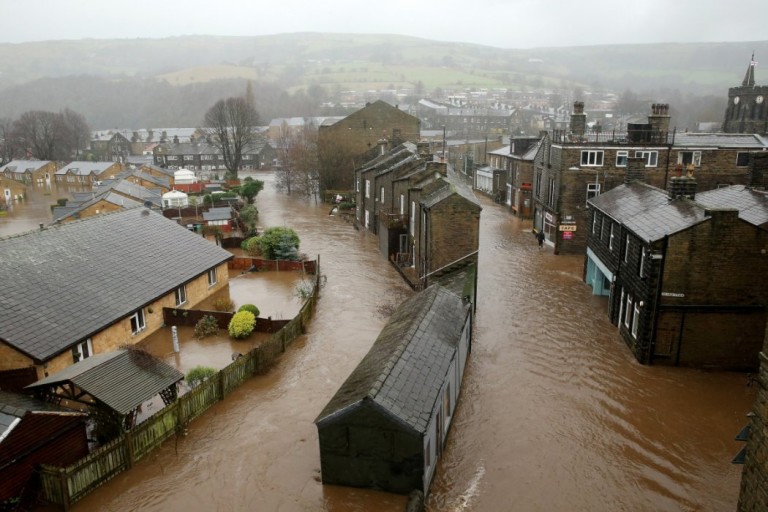
Communities in Britain were warned on Friday, February 16, 2018 to be prepared for more frequent flooding as a result of climate change.
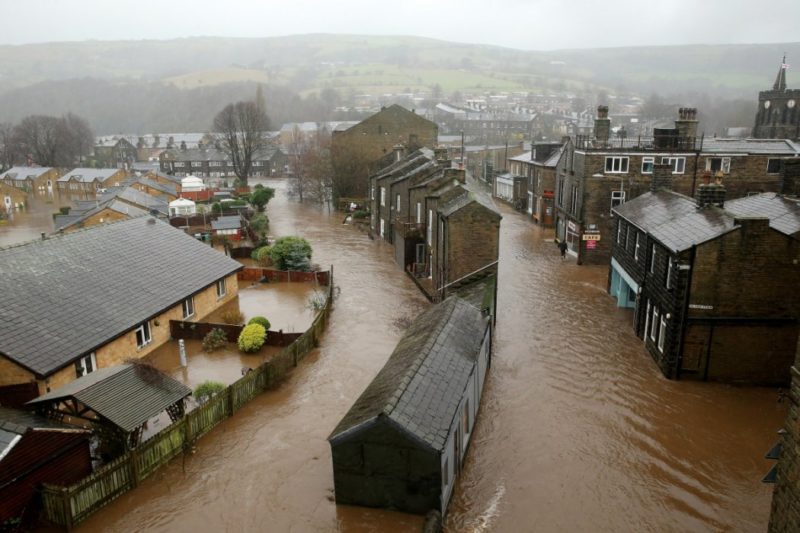
Floodwater rises as the River Calder bursts its banks in the Calder Valley town of Mytholmroyd on December 26, 2015. Photo credit: www.ibtimes.co.uk
The government’s Environment Agency (EA) launched a Flood Action Plan to prepare areas of the country likely to be vulnerable to greater flood risks.
EA said the floods followed severe pattern over the past 10 years, linked to increase in extreme weather events as Britain’s climate continued to change.
Weather office records show that, since 1910, there have been 17 breaking rainfall months or seasons, with nine of them occurring since 2000.
“As intense storms are becoming more frequent, sea levels are also rising because of climate change.
“The agency’s new campaign targets younger people through social media and online advertising to encourage them to check their flood risks.
“They can sign up at the government’s official website for free warnings and be prepared to take action when flooding hits,’’ EA said.
Research shows that 18 to 34 year olds are least likely to perceive flood risk to their area, know how to protect their homes or where to go for information.
They are also at highest risk of fatality as they are less likely to perceive their personal risk.
According to the EA’s CEO Sir James Bevan, climate change is likely to mean more frequent and intense flooding. Floods destroy lives, livelihoods, and property.
“Our flood defenses reduce the risk of flooding, and our flood warnings help keep communities safe when it threatens.
“But we can never entirely eliminate the risk of flooding.
“Checking flood risk is the first step to protecting people and their loved ones and their homes,’’ Bevan said.
In summer 2012, the lengthy period of drought Britain had experienced came to an abrupt end when prolonged and intense rainfall increased the risk of flooding from rivers and surface water for long periods.
Almost 8,000 homes and businesses were flooded across the country, particularly in the south west of England.
The winter of 2013 to 2014 started with a coastal surge and record sea levels on the north and east coasts.
This was followed by 12 storms in succession and became the wettest winter for 250 years, while 11,000 homes were flooded.
Winter 2015 to 2016 brought widespread flooding to 17,000 properties across the north of England, with named storms Desmond, Eva and Frank causing December 2015 to be the wettest month ever recorded.
“The threat of flooding is real and increasing, as is also demonstrated by its listing as one of the nation’s major threats,’’ EA added.
The Met Office recently published new innovative research which found that for England and Wales there is a 1 in 3 chance of a new monthly rainfall record in no less than one region each winter.
Met Office researcher, Prof. Adam Scaife, said that the Met Office supercomputer was used to simulate thousands of possible winters, some of them much more extreme than they have yet witnessed.
“This gave many more extreme events than have happened in the real world, helping us work out how severe things could get,’’ Scaife said.
The 9th World Urban Forum in Kuala Lumpur, Malaysia concluded this week with a call to use the new urban agenda as an accelerator to achieve the Sustainable Development Goals and support climate action.
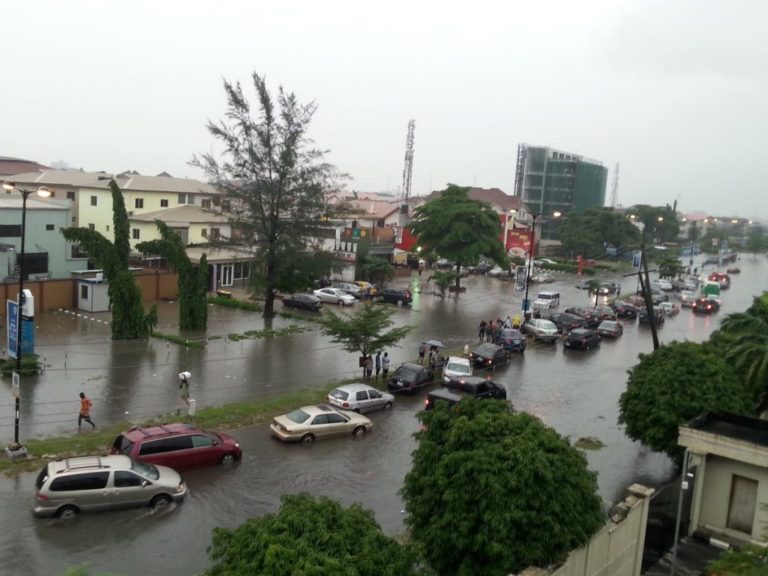
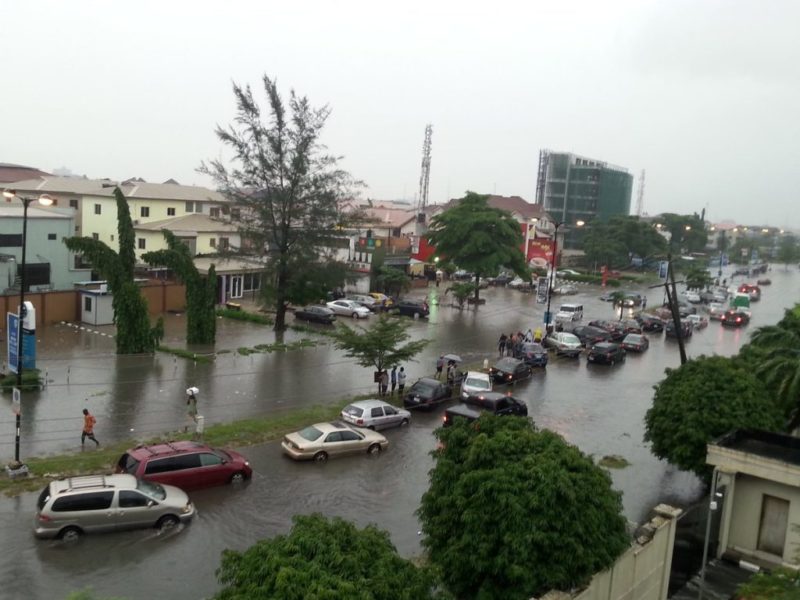
Making cities more climate-resilient: A street overrun by flood on Victoria Island, Lagos
According to the UN, the world’s urban population is expected to grow by 2.5 billion by 2050, with over 90 per cent of this growth to take place in Africa, Asia, Latin America and the Caribbean.
This presents an unprecedented opportunity to re-define urban development, including inventing in livable, low-carbon and resilient cities.
Experts at the meeting recognised the fact that climate change will exacerbate the vulnerability of human settlements to natural and man-made hazards globally. This will especially be the case in developing countries, coastal and delta regions, and Small Island Developing States.
Adapting to climate change in human settlements is critical to ensuring that human development is not jeopardised and that the world’s growing population has the opportunity to thrive.
The Paris Agreement provides a framework for global climate action, engaging both national and local governments, including in least developed countries and secondary cities to take action.
As of today, over 2500 cities reported their commitments to both mitigation and adaptation on the Non-State Actor Zone for Climate Action (NAZCA) platform, showing that many cities are already taking climate action, including in Africa and Asia.
Countries can build resilience and enable adaptation in human settlements through national adaptation through the process to formulate and implement national adaptation plans (NAPs), including, linking national and local adaptation planning, and supporting local governments’ role in planning and implementing adaptation in human settlements.
NAPs provide an opportunity to emphasise human settlements in national adaptation strategies, and foster further adaptation action by local governments in cities, towns and villages of all sizes.
One of the key findings of an upcoming report by UN Climate Change on Adaptation and human settlements will be that national governments have a crucial role in enabling subnational governments to plan and implement adaptation action, and in providing adequate resources to do so. This report will inform climate negotiations in May this year.
And the recently launched Cities and Regions Talanoa Dialogue provides further opportunities to advance and institutionalise multilevel governance on climate action, to ensure coordinated action across all levels of government.