Home Blog Page 1967

New WaterAid scheme in Bauchi to ‘go beyond just providing toilets and taps’

0

The Abuja-based WaterAid Nigeria on Friday, January 26, 2018 announced the commencement of a new project aimed at highlighting how essential clean water, basic sanitation and hygiene (WASH) are to human activity and for national development.
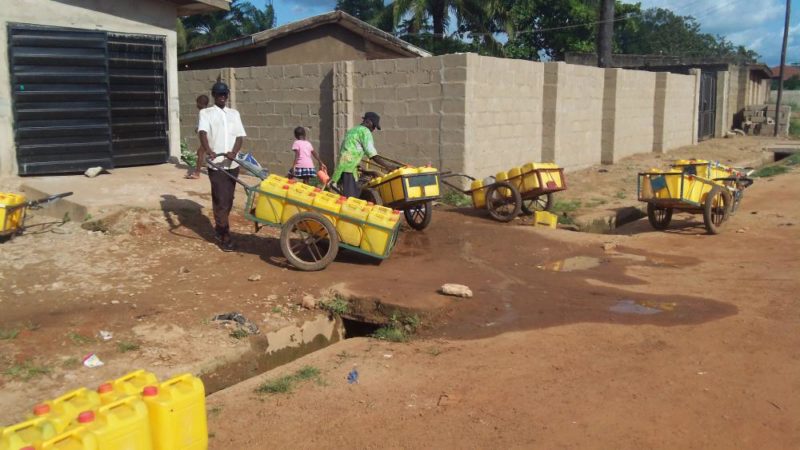
water-vendors
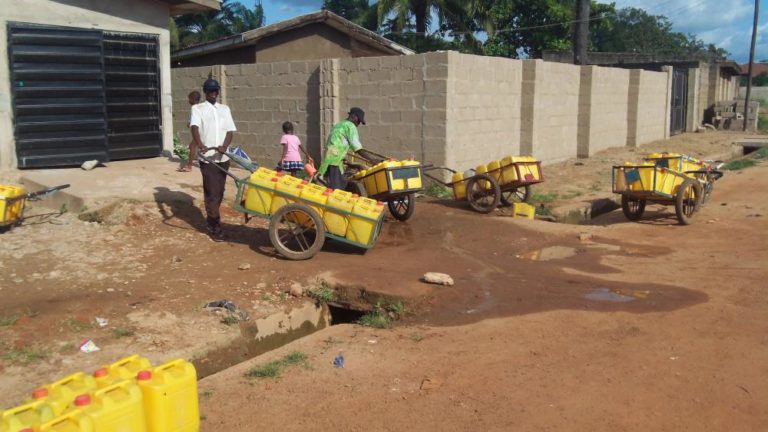
Mai ruwa, or water vendors, in Makurdi, Benue State. The new WaterAid project in Bauchi State, says the group, will go beyond just providing toilets and taps

Titled “Strengthening Water Sanitation and Hygiene Delivery Systems (SWADS)”, the three-year project will be executed in Bauchi State. Supported by the Hongkong and Shanghai Banking Corporation (HSBC), the initiative seeks, according to WaterAid, to fortify the water, sanitation and hygiene sector to deliver equitable and sustainable access to WASH services to the poor and marginalised people in the state through district wide and rights based approaches.

The project, it was gathered, follows a successful partnership with HSBC from 2012-2016 worth $25 million and implemented in six of WaterAid International’s country programmes – Bangladesh, India, Pakistan, Nepal, Nigeria and Ghana. This second phase of the project from 2017-19 is worth $12 million and is being implemented in the same six countries.

WaterAid Nigeria carried out the first phase of the project across three states – Bauchi, Benue and Plateau, transforming the lives of communities in these three states by implementing a mixture of low-cost technologies delivering lasting water, sanitation and hygiene solutions. Over the course of the project, the group said it was able to reach over 220,000 people with clean water and nearly 400,000 with sanitation facilities.

The second phase of the project will however be implemented in Bauchi State, where 65% of the people are said to lack access to sanitation and just over half have access to clean water; even as most of the citizens who do not have access to these services are in the rural areas.

Through the SWADS project, WaterAid says it will strive to support government-led plans in ensuring that WASH is prioritised in policies, plans and budgets; to improve WASH services in communities; to empower citizens to demand their rights and hold government accountable for the provision of sustainable WASH services as well as support to improve cross-sector integration towards increasing access to these basic needs for everyone, everywhere.

Oluseyi Abdulmalik, WaterAid Nigeria’s Communication and Media Manager, said: “Clean water, decent toilets and good hygiene is crucial for human and national development yet 33% of Nigeria’s population does not have clean water, 67% do not have a decent toilet and 26% practice open defecation. The impact onhealth, education, livelihoods, women and girls is enormous. We must change the status quo and to do this, we must go beyond just providing toilets and taps; we must deliver sustainable interventions that are driven by a strong sector.

“We are enthusiastic about the SWADS project and we’ve been brainstorming, planning and collaborating with a wide range of partners and stakeholders at different governance levels and with the relevant expertise and skills required to help unblock the challenges and to strengthen the systems responsible for providing increased access to water, sanitation and hygiene to the citizens.

“Our leaders must honour their commitment to ensure everyone everywhere has access to safe water, sanitation and hygiene by 2030.

“From high level advocacy engagements, political economy analyses, local government area selection processes, assessments of civil society organisations, context analysis and baseline surveys, a project design meeting and a project start-up workshop, WaterAid is working with the government and people of Bauchi State to strengthen systems and structures towards delivering increased and sustainable access to water, sanitation and hygiene in the state.”
GCF, UNEP seek to fortify the Gambia against droughts, floods

0

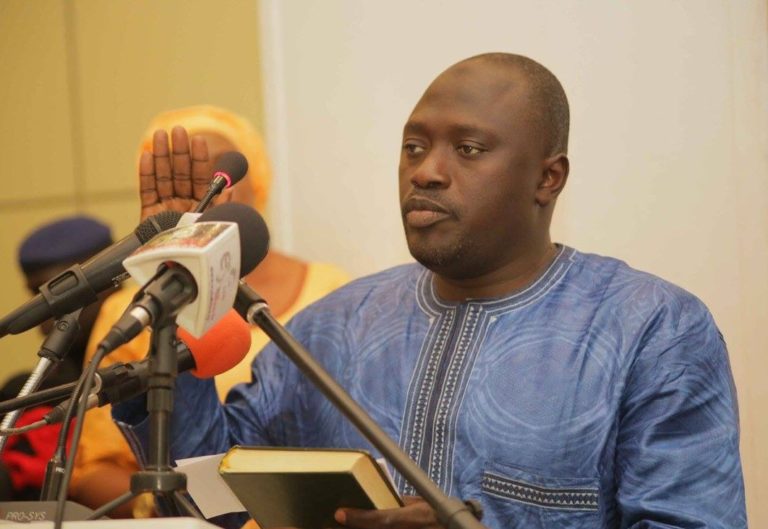
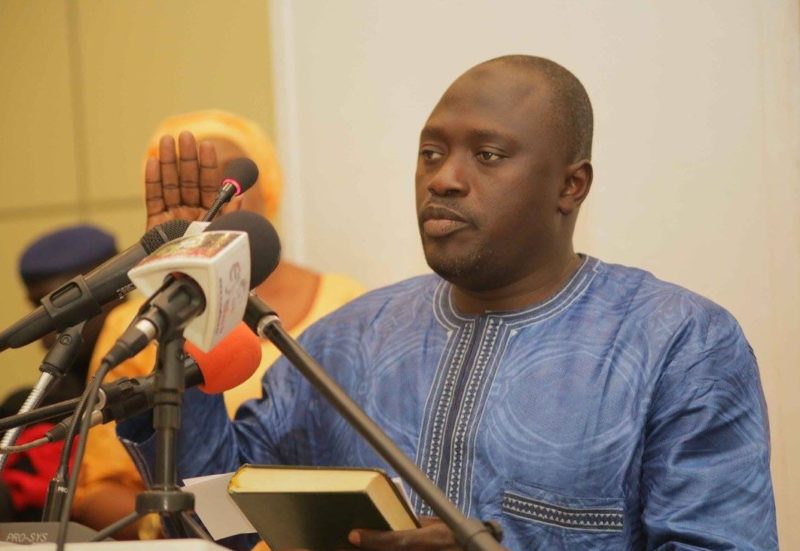
The Minister of Environment, Climate Change and Natural Resources of the Gambia, Lamin Dibba, has said that a Green Climate Fund (GCF)-funded adaptation project launched on Tuesday, January 24, 2018 will provide benefits across the West African country.

Lamin B. Dibba
Minster of Environment, Climate Change and Natural Resources in Gambia, Lamin B. Dibba

“This timely assistance will integrate ecosystem-based adaptation to climate change into planning at the national, district and village levels throughout the Gambia,” said Minister Dibba. “Increasingly severe droughts during the past few years, along with the threat of sea level rise, means the Gambia is particularly susceptible to a changing climate.”

The project, which combines a $20.5 million GCF grant with a $5 million outlay from the government of the Gambia, will restore agricultural landscapes and degraded ecosystems – including forests, mangroves and savannahs – using climate-resilient tree and shrub species across an area of at least 10,000 hectares.

The six-year project along the Gambia River in four of the country’s seven regions is being implemented by UN Environment (UNEP), a GCF Accredited Entity.

Pa Ousman Jarju, GCF’s Director of Country Programming Division, said the project is strengthening the government’s mainstreaming of climate change adaptation across all levels of government. “I am pleased to see this remains a major government priority,” said Mr Jarju.

Mr Jarju added environmental degradation comes with severe economic consequences, as it reduces soil fertility and lowers agricultural productivity. He said this is especially devastating in a country like the Gambia, which relies on agriculture for about 40 percent of its national exports and 26 percent of its GDP.

The geographic nature of this smallest mainland African country, a meandering strip of land which follows the Gambia River and is no wider than 80 km, means it is vulnerable to rising sea levels as well as drought. The combined effects of sea level rise, erosion of coastal embankments and increased river sedimentation threaten to dislocate communities through major flooding.

UN Environment representative Ermira Fida, UN Environment’s Green Climate Fund Coordinator, said during the project launch this initiative is estimated to benefit over 11,000 people, over half of whom will be women.

“UN Environment is particularly proud of this project as its ecosystem-based adaptation approach not only helps vulnerable rural communities build resilience over large landscapes. it also empowers them to use their own knowledge and decision-making processes to take climate change action,” she said.

Paris Agreement: UN opens Talanoa Dialogue portal

0

The UN Climate Change (UNFCCC) secretariat on Friday, January 26, 2018 launched a new portal to support the Talanoa Diaologue, an international conversation in which countries will check progress and seek to increase global ambition to meet the goals of the Paris Climate Change Agreement.

WCCB
A view of the atrium in the World Conference Centre Bonn (WCCB) in Germany, venue of COP23. The Dialogue was launched at the UN Climate Change Conference (COP23) in Bonn in November, 2017

The UNFCCC has, through the portal, invited all countries and other stakeholders, including business, investors, cities, regions and civil society, to make submissions into the Talanoa Dialogue around three central questions: Where are we? Where do we want to go? How do we get there?

Countries and non-Party stakeholders will be contributing ideas, recommendations and information that can assist the world in taking climate action to the next level in order to meet the objectives of the Paris Agreement and support the Sustainable Development Goals (SDGs).

The Dialogue was launched at the UN Climate Change Conference COP23 in Bonn in November 2017 and will run throughout 2018. The Paris Agreement’s central goal is keep the global average temperature rise to below 2C degrees and as close as possible to 1.5C.

Current global ambition to reduce greenhouse gas emissions and to prepare societies to resist increasing climate change is not enough to achieve this under the current national climate action plans known as Nationally Determined Contributions (NDCs).

“The portal is the gateway for the Talanoa Dialogue. It represents the central point for everyone to make their views heard around enhanced ambition. Additionally, it will make available other key resources for the dialogue,” said Patricia Espinosa, Executive Secretary of UN Climate Change.

“I very much welcome the portal because it provides transparency and broadens participation in the dialogue. I look forward to many governments and other actors making their submissions via the portal as part of world-wide efforts required for the next level of climate action and ambition,” she said.

The Pacific island concept of “Talanoa” was introduced by Fiji, which held the Presidency of the COP23 UN Climate Change Conference. It aims at an inclusive, participatory and transparent dialogue.

The purpose of the concept is to share stories, build empathy and to make wise decisions for the collective good. The Talanoa method purposely avoids blame and criticism to create a safe space for the exchange of ideas and collective decision-making.

The Talanoa Dialogue, says the UNFCCC, will be constructive, facilitative and oriented towards providing solutions and will see both technical and political exchanges.

Companies to commit to science-based climate targets

0

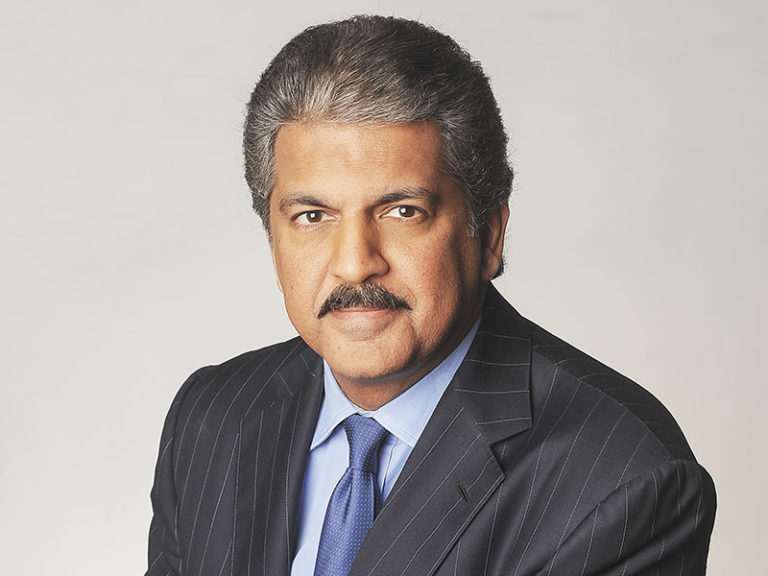
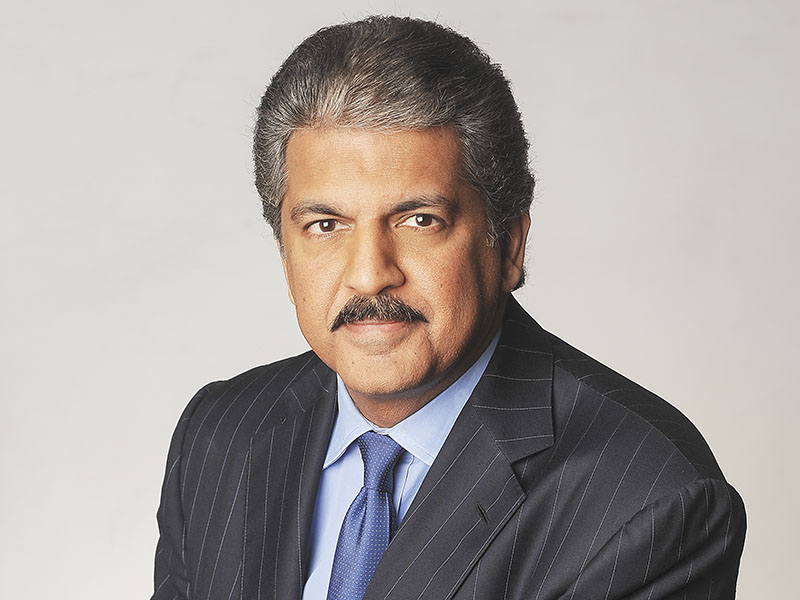
In an effort to spur further climate action at this year’s Global Climate Action Summit (Summit) in September and at the United Nations Climate Change Conference (COP24) in November, Summit co-chair and Mahindra Group Chairman, Anand Mahindra, on Thursday, January 25, 2018 challenged businesses around the world to join the growing number of companies committed to setting greenhouse gas reduction targets in line with climate science.


Anand Mahindra
Mahindra Group Chairman, Anand Mahindra

“I commit that the Mahindra Group will implement the Paris Agreement in its entirety. A powerful way of ensuring corporate climate action, aligned with the ambition of the Paris Agreement, is by setting science-based targets.

“I applaud all 330+ companies that have already committed to set science-based targets through the Science Based Targets initiative. Two of the three Mahindra companies with the highest emissions in the Group, Tech Mahindra and Mahindra Sanyo Special Steel, have already done so.

“Today, I am inviting all companies, particularly those that emit the most, to commit to set science-based targets. Over the course of 2018, I will be working to expand the adoption of science-based targets not only across the Mahindra Group, but amongst my business colleagues so that by the Global Climate Action Summit in September, 500 companies step up and commit to set science-based targets,” said Mahindra.

More than 330 of the world’s biggest companies have already committed to align their strategies with the ambition of the Paris Agreement through the Science Based Targets initiative. Almost 900 more companies have declared their ambition to set science-based targets within the next two years in their disclosures to the CDP, signaling the emergence of a ‘new normal’ in the way businesses are developing their strategies for the future. Mahindra Sanyo Special Steel Pvt. Ltd. set a science-based Greenhouse Gas emission reduction target of 35% under SCOPE 1, 2 and 3 per ton of steel produced by the year 2030, against 2016 baseline year.

A key purpose of the 2018 Global Climate Action Summit which will be held from September 12-14 in San Francisco, is to showcase climate action around the world, along with bold new commitments, to give worldwide leaders the confidence they need to go even further when they meet at the United Nations COP24 in November.

Summit participants, including sub national governments, investors, businesses and others from around the world, will report on their climate action and commit to ambitious new actions that can help prevent the climate from warming more than 2 degrees Celsius – the point at which scientists warn of potentially catastrophic global consequences.

Setting science-based targets is a great way for businesses to future-proof growth and boost their competitive advantage in the transition to a low-carbon economy. It also sends a powerful signal to global governments that business is aligning strategy with the Paris Agreement, opening the way for us all to move further, faster on the ambition of the Agreement. We welcome the challenge to business to step up in advance of the Global Climate Action Summit by committing to the Science Based Targets initiative, and we hope that many businesses will quickly follow Mahindra’s lead,” said Paul Simpson, CEO of CDP, one of the partners of the Science Based Targets initiative.

Thursday’s announcement is the first of what will be multiple “Summit Challenges” that will concretely help deliver greenhouse gas reductions to help ensure worldwide emissions start trending downward no later than 2020 – a goal that must be met to prevent dangerous temperature rise. It will also help the Summit deliver on its goal to help continue a worldwide energy transition that generates quality employment and inclusive economic growth.

Government inaugurates 14-member committee to implement water resources master plan

0

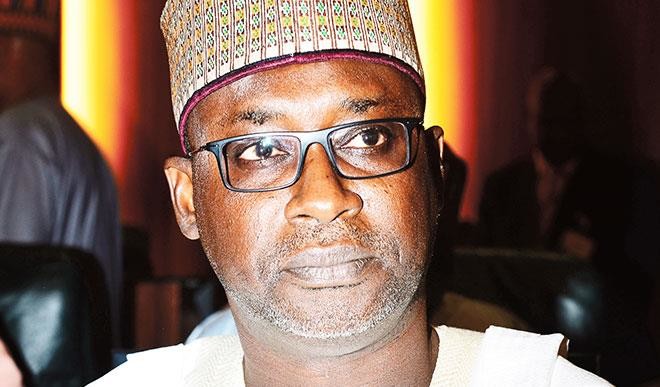
The Minister of Water Resources, Mr Suleiman Adamu, on Friday, January 26, 2018 inaugurated a 14-member Policy Advisory Committee to help in implementing the National Water Resources Master plan.

Suleiman Adamu
Suleiman Adamu, Minister of Water Resources

At the event in Abuja, Adamu said the committee became necessary considering the nation’s diverse and economic water resources which needed coordinated and integrated management.

According to him, continuous growth in population, urban migration, varied and increase in water demand requires well researched policies and effective planning.

“The Policy Advisory Committee shall advise the Minister of water resources concerning local and international developments in the water sector including the implementation of the National Water Resources Master Plan.

“They are to advise on climate change issues, Water Law and Policy implementation, Transboundary Water Issues, tracking of National Council on Water Resources decisions. ”

Adamu expressed hope that with the combined wealth of experience of the committee members, they would be able to meet the target before them.

He also expressed hope that the National Water Resources Bill before the National Assembly would be passed into law towards effective management of the water resources potential of the country.

The minister urged the members to brainstorm of what could be done to change the narrative of the water resources sector in the country, adding that Federal Government was more committed to improve the lives of all Nigerians.

The Chairman of the committee, Prof. Suleiman Mustapha, pledged the commitment of the team to actively engage between themselves towers better water resources management and integration.

Mustapha said the Terms of Reference highlights the urgent issues of the water resources sector, citing the issues of climate change, Lake chad receding, adding that concerted efforts was needed to reverse the trend.

“It’s an onerous task that must be done, We must shun every dishonesty and ensure that the targeted goal is met.

“Water resources over the years have not been given the necessary attention, with this committee in place, we will go forward.”

Another committee member, Mr Michael Adesina, said it was saddening to note that Water resources development has not been given priority of attention, saying more commitment was needed from all stakeholders to move the sector forward.

He cited the 2012 floods which saw some villages washed away due to the inability of the Benue basin to to accommodate the water.

He added that there was the need to keep the momentum high on the importance of water resources as it affects health, socio-economic development.

“If you go round the cities, no less than 50 per cent of hospital attendance and admission are as a result of water borne disease, we need to keep talking about these issues. ”

Others members of the committee are Prof. Ben Nwachukwu, Prof. Lekan Oyebande, Nurudeen Rafindadi, Dr Dauda Gowon, James Obong-Bassey and Musa Ibrahim.

Others are Dr Emmanuel Adanu, Tanwa Koya, Garba Iliya among others.

By Tosin Kolade

Malaria remains Africa’s major health care problem

0

The African Union (AU) and the United Nations (UN) said Friday, January 26, 2018 that the malaria epidemic remains Africa’s major health care challenge.

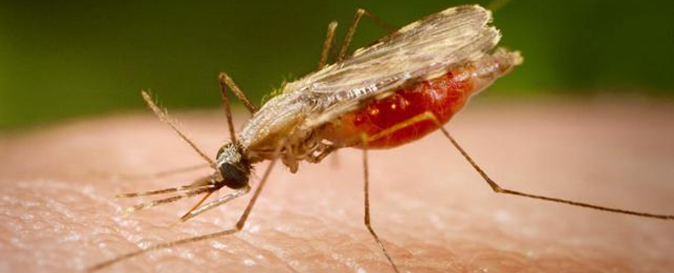
Malaria-anopheles
The malaria-causing anopheles mosquito feeding on a victim

AU and World Health Organisation (WHO) officials, together with ministers of AU member states and global health care partners, expressed the concern during a high-level panel meeting on malaria held on the sidelines of the 30th AU summit at the AU headquarters in Ethiopia’s capital Addis Ababa.

According to AU Commission Chairperson, Moussa Faki Mahamat, malaria posed a multifaceted challenge to the African continent’s health, economic and social sectors.

He said Malaria still contributes a great negative impact to the continent’s state of affairs, and remains a major cause of poverty in Africa.

“We need to continue the global fight against malaria, particularly in Africa,” Mahamat stressed, urging AU member countries to commit to the fight against malaria.

Mahamat further stressed that the malaria epidemic trend in Africa has not a linear trajectory, in which the rate of malaria cases differentiate over the years.

Pedro Alonso, WHO Director of the Global Malaria Programme, also indicated that malaria remains a global health problem with over 216 million cases and some 445,000 deaths every year.

According to Alonso, even though malaria is a continental problem, some countries, such as Nigeria, have the largest share of cases in the African continent.

The WHO said, on the other hand, seven African countries, with less than 10,000 cases of malaria, could reduce transmission to zero by the year 2020.

Algeria is expected to be the first African country to be certified malaria free while some southern African countries are said to have the potential to follow Algeria.

Dutsin-ma varsity establishes directorate to combat desertification

0

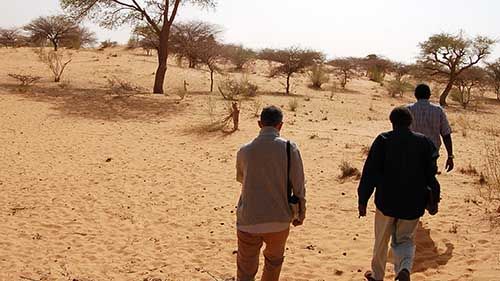
The Federal University Dutsin-ma, Katsina State, has established its Directorate of Desertification Monitoring and Control as part of its efforts to guard against desert encroachment in the country.

Desertification-Nigeria
Desertification in Nigeria

Prof. Armaya’u  Bichi, the Vice-Chancellor (V-C) of the university, disclosed this on Friday, January 26, 2018 in Dutsin-ma during a pre-convocation media briefing.

He said, “The directorate will train people on how to plant trees and tend them to maturity.

“It will also join hands with the relevant authorities to enlighten people on the dangers associated with indiscriminate felling of trees in the environment.

“Experts will be trained because they are relevant stakeholders on the matter.’’

According to Bichi, the university is set to sign a Memorandum of Understanding (MoU) with the Katsina State Government on how to properly utilise the Katsina-Songhai Agricultural project.

“The university has approached the Katsina State Government for collaboration on how to revive the abandoned N3 billion agricultural project and it has accepted to partner the university on the matter.

“The university will use the Songhai project to train its students as well as generate revenue for the university.

“The centre will also serve as an avenue to create jobs for unemployed youths because we will be training them on skills’ acquisitions and entrepreneurship.

“The university will also use the centre to train local farmers on new farming techniques; this will greatly boost food production in line with the Federal Government’s agricultural policy,’’ the V-C said.

The News Agency of Nigeria (NAN) reports that 500 students are expected to be awarded degrees during the convocation which comes up on Saturday.

By Shehu Danjuma

Kaduna allocates N3.8b for new master plans, layouts, others

0

Kaduna State Government has allocated N3.8 billion to the state’s Geographic Information Service (KADGIS) for capital projects in 2018.

Kaduna
Aerial view of Kaduna

The News Agency of Nigeria (NAN) reports that the figure is contained in the state’s 2018 budget obtained from the state Planning and Budget Commission.

According to the document, a total of N3.9 billion was allocated to the agency out of which N3.8 billion would be spent on capital project and N111.8 million for recurrent.

A breakdown of the budget shows that N1.2 billion would be spent on design, installation, management and transfer of KADGIS and N397.8 million on survey and demarcation of news layouts.

The sum of N800 million was also allocated for recovery of public lands and compensation, while preparation of development of the Batch’ B’ Millennium City in the Eastern Sector of Kaduna got N451.2 million.

The document added that N417.6 million would be spent on assessment for compensation for land and economic trees for four layouts of 500 hectare each in the eastern sector.

It also said that preparation of 12 new layouts across the state would gulp N263 million, while N325 million would go to systematic property registration programme.

“N255.5 would be spent on review of Zaria, Sabon-Gari and preparation of 18 other master plans and mappings,’’ it added.

By Hussaina Yakubu

Coral reefs get sick from plastic waste – Study

0

Billions of bits of plastic waste are entangled in corals and sickening reefs from Thailand to Australia’s Great Barrier Reef, scientists said on Thursday, January 25, 2018.

plastic
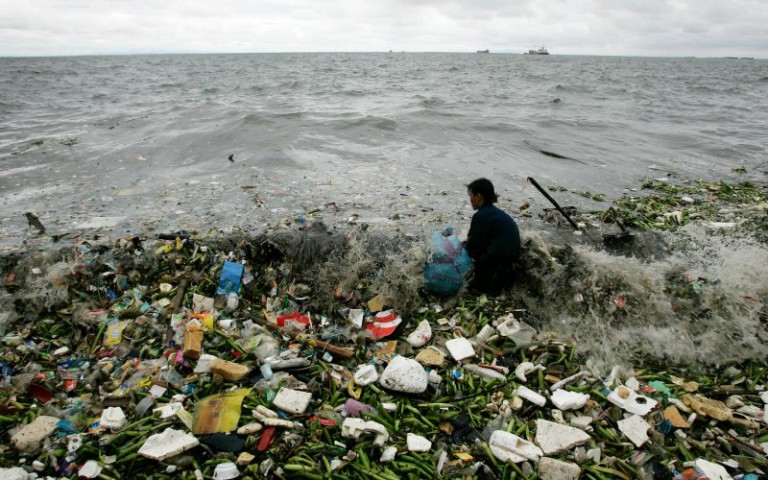
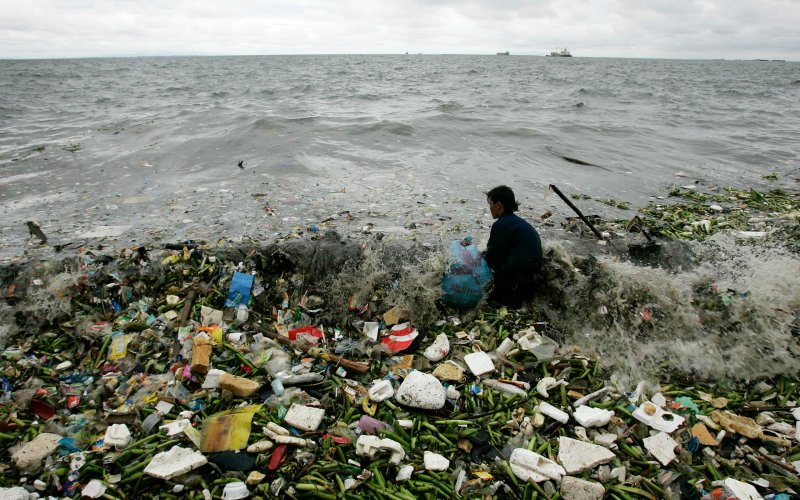
A water body littered with plastic and other waste product. Photo credit: Cheryl Ravelo/Reuters

The trash is another pressure on corals, already suffering from over-fishing, rising temperatures caused by climate change and other pollution.

In the Asia-Pacific region, a total of 11.1 billion plastic items – including shopping bags, fishing nets, even diapers and tea-bags – are ensnared on reefs, the scientists wrote in the Science journal.

They projected the numbers will rise by 40 per cent by 2025 as marine pollution gets steadily worse.

The plastic increases the likelihood of disease about 20 times, to 89 per cent for corals in contact with plastics from four per cent in comparable areas with none.

Trash may damage the tiny coral animals that build reefs, making them more vulnerable to illness. And bits of plastic may act as rafts for harmful microbes in the oceans.

Scientists were shocked to find plastic even in remote reefs.

“You could be diving and you think someone’s tapping your shoulder but it’s just a bottle knocking against you, or a plastic trash bag stuck on your tank,” lead author Joleah Lamb of Cornell University told the Media.

“It’s really sad.

“Corals are animals like us and have really thin tissues that can be cut and wounded, especially if they are cut by an item covered in all sorts of micro-organisms,” she said.

The scientists, from the U. S., Australia, Thailand, Myanmar, Canada and Indonesia, surveyed 159 reefs from 2011 to 2014 in the Asia-Pacific region.

They found most plastic in Indonesia, with about 26 bits per 100 square metres (1076 square feet) of reef, and least off Australia, which has the strictest waste controls.

The link between disease and plastic may well apply to other reefs such as in the Caribbean and off Africa, and may be harming other life on the ocean floor such as sponges or kelp, Lamb said.

At least 275 million people worldwide live near reefs, which provide food, coastal protection and income from tourism.

The presence of plastics seemed, especially to aggravate some common coral afflictions such as skeletal eroding band disease.

The scientists urged tougher restrictions on plastic waste.

In December, almost 200 nations agreed to limit plastic pollution of the oceans, warning that it could outweigh all fish by 2030.

Co-author Douglas Rader of the U.S. Environmental Defence Fund said better management of fisheries was the best way to strengthen coral reefs to enable them to fend off man-made threats such as more plastics.

“This is not a story about ‘let’s give up on corals’,” he told the media.

“Overfishing today is the biggest threat.” He said nations from Belize to the Philippines were acting to regulate fisheries on corals.

Scientists urge museum to kick climate denial funder off its board

0

Over 200 leading scientists – including former NASA head James Hansen, the Nobel Peace Prize-winning psychiatrist Eric Chivian and the former director of the Los Angeles County Natural History Museum James Powell – on Thursday, January 25, 2018 released a letter urging New York’s American Museum of Natural History to cut ties to donor and board member, Rebekah Mercer.

Rebekah Mercer
Rebekah Mercer

“The most important asset any museum has is its credibility. This can be damaged by ties to donors and board members who are publicly known for investing in climate science obfuscation and opposing environmental solutions,” the letter reads.

The scientists refer to billionaire Mercer as an “anti-science propagandist and funder of climate science misinformation.” While Mercer’s unmatched support for Breitbart.com and the Trump campaign are well known, her funding of climate science denial campaigns is starting to garner more attention.

The Mercer Family Foundation, led by Rebekah Mercer, has ramped up its funding of groups who attack climate science and policy solutions over the past decade. The foundation gave tens of millions of dollars to a list of organisations that include ringleaders of climate denial such as the Heartland Institute, which received $5.9 million from the Mercers from 2008-2016, more than the $4 million donated by the Mercers to the American Museum of Natural History.

Previously unreleased tax filings procured by researchers at the Climate Investigations Centre show grants to Heartland Institute for $800,000, the CO2 Coalition for $150,000 and the Centre for the Study of Carbon Dioxide for $125,000. All of the organisations maintain that carbon dioxide pollution is beneficial for ecosystems, agriculture and humanity, a position in clear conflict with the international scientific consensus on climate change.

The Mercers have also been big supporters of climate denier Arthur Robinson, whose Oregon Institute of Science and Medicine dismisses climate change as “false religion”. The Mercers donated at least $1.6 million to the institute, and Rebekah Mercer nominated Robinson for a National Science Advisor position while she was a member of the Trump Transition Team.

“The science tells us climate change is more and more urgent every day, the Mercer-funded network says the opposite. Science deniers should not be in leadership positions at science museums,” said scientist Sandra Steingraber, a signatory on the letter.

The letter was organised by The Natural History Museum, a nonpartisan nonprofit traveling museum that collaborates with scientists, major public museums, educators, artists, and community groups. In 2015 the mobile museum coordinated a similar effort urging the American Museum of Natural History to cut ties to then-trustee David Koch. More than 550,000 people signed a petition, including dozens of top scientists. Mr. Koch resigned from the board a few months later amidst controversy, after serving for 23 years.

“At a time when science itself is under attack, trusted institutions of science are needed now more than ever. The museum’s ties to Mercer risk undermining the credibility of the institution and eroding the public’s trust. That’s a high price to pay,” said Beka Economopoulos, Director of The Natural History Museum.

Climate scientist, Michael Mann, said: “Rebekah Mercer is a top patron of Breitbart.com, a mouthpiece for the alt-right and a megaphone for alt-facts. The platform’s assault on truth and science undermines everything the American Museum of Natural History is about.”

Earlier this week, activists organized a demonstration outside the American Museum of Natural History to protest the museum’s ties to Mercer. And a new petition campaign has been launched calling for the museum to kick Mercer off its board, warning the institution that it could suffer a “loss of public trust” through its association with Mercer.

This month thousands of people shared a twitter comment by environmental economist Jonah Busch about misleading information on climate science on outdated panel in an Exxon-funded exhibit the American Museum of Natural History. To the museum’s credit, the institution’s response was swift: it committed to updating the panel to reflect the best available science. But the initial online public anger showed that trust in the museum is undermined by the museum’s association with known climate science opponents.

“This country is having a crisis of trust, museums are the last bastions of trust and we have to be very careful of preserving that,” said Jon Foley, executive director of the California Academy of Sciences, which doesn’t accept money from fossil fuels. “Science has never been more important to the country, yet it’s under more attack than we’ve seen in decades. It’s worrisome to see prominent – not just donors but trustees – of major museums on the one hand supporting science, but on the other undermining it by funding groups that are deliberately trying to sabotage science on things like climate change.”