The Federal Government has directed the Ecological Fund Office to include the Federal University, Dutse (FUD), Jigawa State, in its data bank for erosion control intervention programmes.
Federal University, Dutse (FUD), Jigawa State
Prof. Fatima Batul-Muktar, the Vice-Chancellor of FUD, made this known at the pre-convocation press briefing of the university in Dutse on Tuesday, February 27, 2018.
Batul-Muktar also said that the Federal Ministry of Water Resources was also assisting the university in the area of flood control.
“The Secretary to the Government of the Federation (SGF) has directed the Ecological Fund Office to include FUD in its data bank on the area of erosion, which is affecting the university.
“Besides, the Federal Ministry of Water Resources is also assisting us in the area of flood control. The ministry has included FUD in its 2018 budget,’’ she said.
Batul-Muktar said that the management of the university had also reached out the Dangote Foundation for assistance with regard to construction of students’ hostels, the Faculty of Medicine complex and drainage channels for roads on the campus.
The vice-chancellor said that the management was also soliciting the assistance of the Nigerian National Petroleum Corporation (NNPC) for the infrastructural development of the institution.
Batul-Muktar also said that the Federal Ministry of Agriculture and Rural Development had also agreed to support the university in launching the proposed Sassakawa Africa Fund for Extension Education (SAFE) Programme for Mid-Career Extension Officers.
She said that the SAFE programme, which was expected to begin in the 2018/2019 academic session, would be executed under the aegis of the Centre for Agricultural Research and Extension Services (CARES).
The Chairman, Lagos Chapter of All Farmers Association of Nigeria (AFAN), Chief Femi Oke, has said that no member of the association had benefitted from Federal Government’s Anchor Borrowers Programme (ABP).
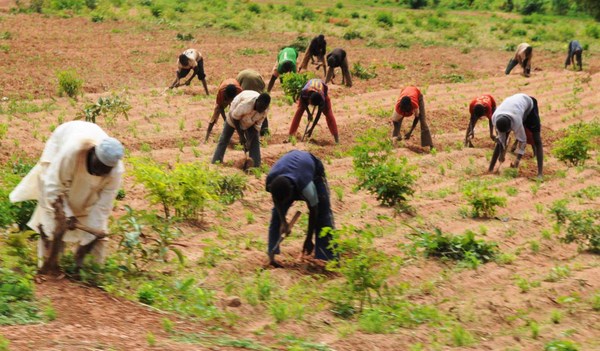
Farming
He made this known in an interview with the News Agency of Nigeria (NAN) on Tuesday, February 27, 2018 in Lagos.
The ABP was initiated by the government, through the Central Bank of Nigeria (CBN), to assist small-holder farmers by creating linkages between them and large scale processors.
According to Oke, the association is still working out modalities to help its members to have access to the programme.
“We have not taken advantage of the Anchor Borrowers Programme yet, but we are trying to see how we can utilise that to improve our outputs.
“However, I will tell you that our members are enjoying other empowerment programmes of the government and other agriculture agencies,’’ he said.
Oke said the association was hopeful that the 2018 planting season would be good in terms of weather conditions to enable farmers to focus on the task of keying into the ABP.
For the programme, the CBN set aside N40 billion as loan to farmers from N220 billion-Micro, Small and Medium Enterprises Development Fund (MSMEDF), at nine per cent interest rate.
The aim is to increase agricultural output and improve capacity utilisation of integrated mills, create jobs on a massive scale, improve local food production and conserve foreign reserve.
The programme was flagged off by President Muhammadu Buhari on Nov. 17, 2017.
The Centre for Science and Environment (CSE) has frowned at the All India Poultry Development and Services Private Limited for its advertisement which appeared on Tuesday, February 27, 2018 on the front page of a leading national daily, as “complete misrepresentation”.
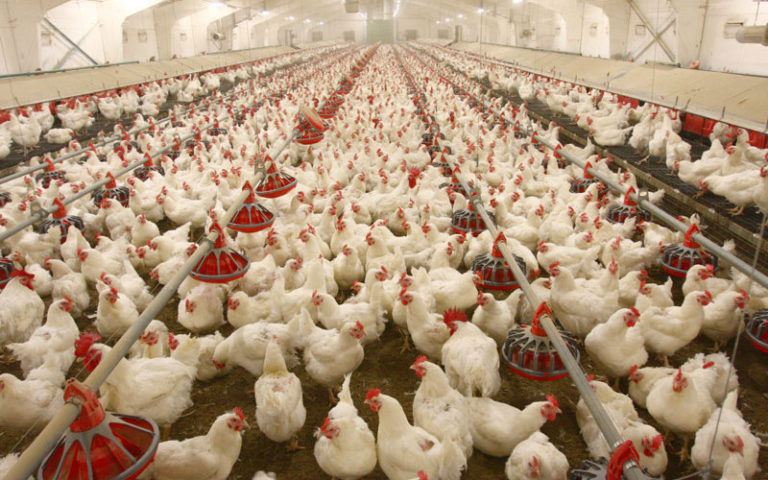
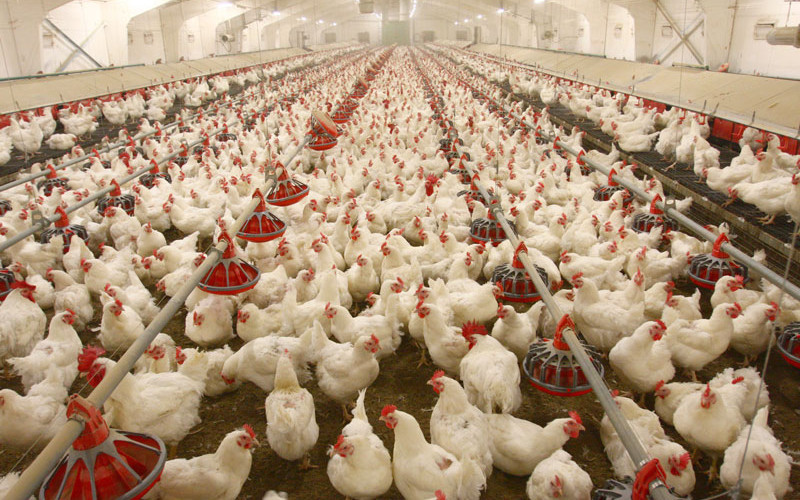
Poultry farming
The advertisement refers to the results of a 2014 study conducted by CSE on chicken meat. CSE said in a statement made available to EnviroNews that it rejects the way the study results were twisted to suggest that there is no misuse of antibiotics in the poultry sector and that the chicken produced is safe.
“This is complete misrepresentation of the facts and the antibiotic misuse practices adopted by the Indian poultry industry. Antibiotic use in poultry sector is rampant. They are even using life-saving drugs like colistin to fatten the chicken. There seem to be no genuine attempt by the industry to reduce antibiotic misuse and this advertisement is eyewash,” said Chandra Bhushan, deputy director general, CSE.
“In fact, the industry has ignored the results of our latest 2017 study, which show how poultry farms are breeding grounds of superbugs. They are misguiding the nation and trying to dilute their contribution to the problem of antibiotic resistance. This will not help the industry in the long-term. They must act responsibly,” Bhushan added.
Referring to the issue of Maximum Residue Limits (MRLs) in the advertisement, Amit Khurana, senior programme manager, Food Safety and Toxins team, CSE, said: “It is a myopic view as residue level in food is only one part of the problem. Resistant bacteria can also get transferred to handlers and consumers. Unabsorbed antibiotics as well as resistant bacteria in chicken droppings which enter into the environment are a big concern. The problem starts with antibiotic misuse.”
Also, informed Chandra Bhushan, India does not have any standards on residue levels in chicken meat. He said: “So, comparing residue results with the MRL of European Union is meaningless. Our study was aimed at establishing the fact that banned, critical and highly prescribed antibiotics are being misused by the poultry industry – we did not make any comparisons with MRL as India does not have an MRL of its own.”
Added Khurana: “Moreover, we have recently highlighted the double standards of fast food multi-nationals in eliminating antibiotic misuse in their chicken supply chains in India. It is clear from our analysis that antibiotics are misused in the absence of control and there is no voluntary commitment to discontinue such misuse.”
CSE researchers believe that even after so many years of the issue being highlighted, the government response to address the antibiotic resistance crisis has been inadequate so far.
“There is no legal ban on use of antibiotic growth promoters in poultry. The 2014 advisory from the Department of Animal Husbandry, Dairying and Fisheries has no legal binding. The Food Safety and Standards Authority of India is yet to come up with final standards of antibiotic residues in chicken. We have a National Action Plan on AMR now, but unfortunately there are no funds allocated for it. The plan would have no real functionality without money put behind it,” said Bhushan.
Snow and frost brought widespread disruption to transport networks across Britain and Ireland on Tuesday, February 27, 2018 as forecasters warned that temperatures this week could plunge to the lowest for no less than five years.
Snow falls in North London, leaving frost covering the front of a bus. Photo credit: The Daily mail
Up to 10 centimeters of snow fell in many areas overnight as Britain’s Met Office warned that “snow showers or longer periods of snow are expected on Tuesday, accompanied by very low temperatures.”
Many British roads were partially or completely closed, and rail services were cancelled or severely delayed.
The Met Office issued yellow and amber weather warnings for northern and north-eastern areas, adding that snow could cut off some isolated communities and disrupt power supplies.
Frank Saunders, chief forecaster at the Met Office, warned on Monday that some areas were “likely to see their coldest spell of weather since at least 2013 – perhaps 1991.”
Many flights were cancelled to and from Manchester and other northern airports, but London’s two main airports, Heathrow and Gatwick, said they were operating as normal.
Similar conditions affected transport in much of Ireland, where national forecaster Met Eireann said daytime temperatures were as low as minus 5 degrees Celcius on Tuesday and expected to fall further on Wednesday.
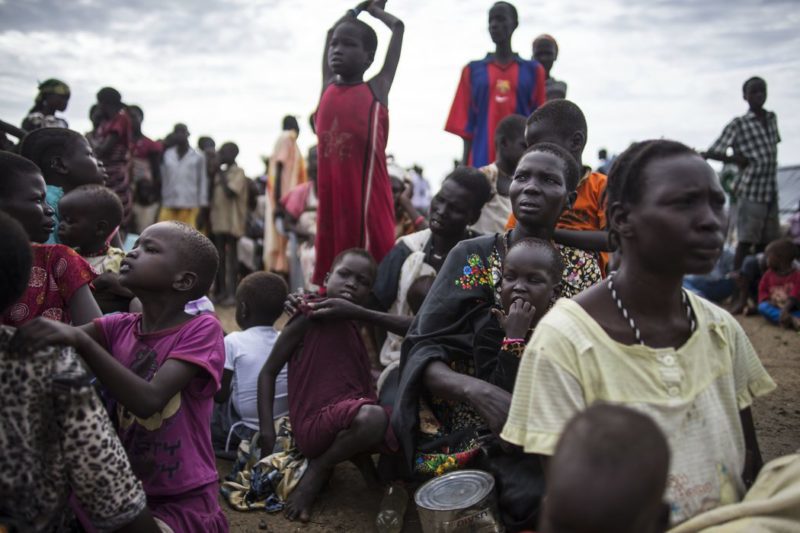
UN agencies have raised the alarm of food crisis in South Sudan, projecting that about 6.3 million people are facing food insecurity one year after famine was declared in parts of the country.
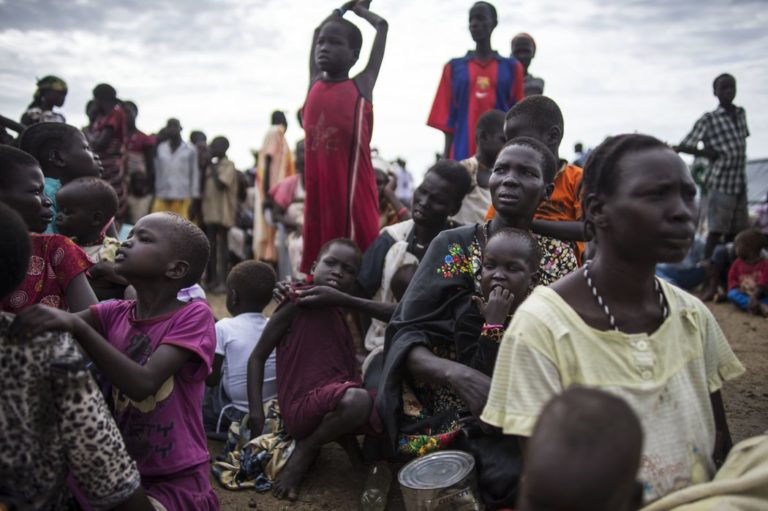
The food crisis in South Sudan appears to be worsening
The Food and Agriculture Organisation (FAO), the UN Children’s Fund (UNICEF) and the World Food Programme (WFP) warned that progress in preventing hunger-related deaths could be undone.
The UN agencies warned that, without sustained humanitarian assistance and access, more than seven million people in the crisis-torn country – almost two-thirds of the population – could become severely food insecure in the coming months.
The agencies, in the report, said: “Projections for February-April reveal 6.3 million people in ‘crisis’, ’emergency’ or ‘catastrophe’ levels of food insecurity, including 50,000 people in the latter.
“The May-July forecast put 7.1 million in those same levels, including 155,000 people in ‘catastrophe’. Moreover, 1.3 million children under age five risk acute malnutrition.”
Protracted conflict, the result of a political dispute that erupted between South Sudanese leaders and their rival factions in 2013, led to reduced food production and disrupted livelihoods.
FAO’s Representative in South Sudan, Serge Tissot, said: “The situation is extremely fragile, and “we are close to seeing another famine. The projections are stark.
“If we ignore them, we’ll be faced with a growing tragedy. If farmers receive support to resume their livelihoods, we will see a rapid improvement in the country’s food security situation due to increased local production.”
Adnan Khan, WFP Representative and Country Director, said: “We are alarmed as the lean season, when the harvest runs out, is expected to start this year much earlier than usual.
“Unless we can pre-position assistance rather than mount a more costly response during the rains, more families will struggle to survive.”
In January, nearly half the population struggling to find enough food each day were in “crisis” or “emergency” levels of food insecurity, according to an Integrated Food Security Phase Classification report.
This represents a 40 per cent increase in the number of severely food insecure people compared to January 2017.
“We are preparing for rates of severe malnutrition among children never before seen in this country,” said Mahimbo Mdoe, UNICEF’s Representative in South Sudan.
“Without an urgent response and access to those most in need, many children will die. We cannot allow that to happen,” he warned.
The Global Water Partnership (GWP) Steering Committee has announced the appointment of Dr. Monika Weber-Fahr as the GWP’s Executive Secretary, effective from May 7, 2018.
Dr. Monika Weber-Fahr
Weber-Fahr joins the GWP after over 20 years in the development field, with diverse experiences in creating and sharing knowledge across global networks and communities. Weber-Fahr succeeds Rudolph Cleveringa, who is retiring.
“At the start of the UN International Decade for Action – Water for Sustainable Development, we are excited to bring in someone with handson experience in innovation and in building strong partnerships,” said Dr. Oyun Saanjasuren, GWP Chair, as she announced the unanimous decision to appoint Weber-Fahr. “Monika’s strengths in translating knowledge on complex issues into pragmatic actions will help shine a light on how the GWP multi-stakeholder partnership brings about excellence in integrated water resources management.”
With a background as an economist, Weber-Fahr began working in development in 1994 with the World Bank. Building communities and partnerships around knowledge and collaboration became a passion that she pursued across multiple projects in areas related to sustainable development and the field of education. For the International Finance Corporation (IFC), she built the Global Business Line for Sustainable Business Advisory, working with the private sector to pursue people-planetprofit opportunities, including on water efficiency and new clean water technologies.
Most recently, Weber-Fahr worked as Chief Operating Officer at Sustainable Energy for ALL (SEforALL), an international NGO promoting access to clean, affordable, and modern energy, where she built organisational management structures and supported day-to-day operations serving a broad network of public-private partnerships.
In accepting the position, Weber-Fahr is passionate about GWP’s local to global reach, noting the network’s platform for changing the way water is managed.
“Good water governance is not optional anymore,” she said. “With growing risks of water pollution, groundwater exploitation, and rainfall variability, we need to come together around the values we hold dear to take decisions on limited resources, mindful of all options and how they influence each other. We need to bring new knowledge, data, and technologies to this critical task, with the centrality of water allowing us to connect with partners across all SDGs and the climate agreements. I am honoured and humbled by the opportunity to serve GWP in its mission to ensure a water secure world for all, especially for the poorest and most vulnerable communities.”
Saanjasuren noted that Weber-Fahr would be taking over as the GWP network begins developing a new strategy. The current one concludes at the end of 2019.
“We are grateful that Rudolph brought increased clarity to GWP’s comparative advantage, as well as a strong focus on core functions at the global secretariat, a foundation Monika will build on,” said Saanjasuren.
Weber-Fahr holds a Ph.D. in Business Economics, a M.Sc. and a B.Sc. in Economics, a Diploma in International Relations, and a Diploma in Corporate Governance.
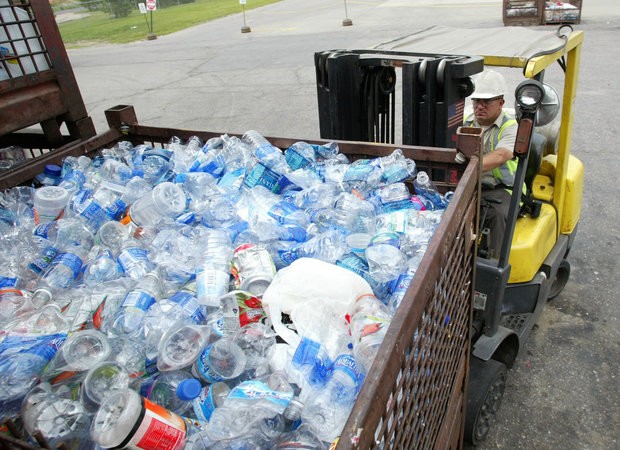
Taiwan has announced plans to ban plastic items in an attempt to reduce plastic pollution. As reported by EcoWatch, Taiwan’s Environmental Protection Agency put forward a 12-year plan that will officially begin in 2019 with a blanket ban on plastic straws in stores and restaurants. In 2020, the ban will be extended to all dining establishments.
Disposal of waste plastic bottles. Photo credit: Al Goldis / Associated Press
By 2025 people will have to pay a fee to use plastic straws, bags, cups, and disposable utensils. Although the specific pricing was not disclosed, we suspect it’ll be high enough to deter people from using plastic items. The plan is to ultimately phase out all plastics by 2030, and replace them with reusable and biodegradable items.
Lai Ying-ying, an EPA official supervising the new initiative, explained to Channel NewsAsia that the average Taiwan citizen uses roughly 700 plastic bags a year. Under the new plans, the hope is this number will be reduced to 100 bags by 2025 and 0 by 2030.
In addition to the ban, Taiwan Today reports that the EPA is also launching a series of programmes to remove plastic waste and other garbage from the nation’s waters.
Even the BBC is changing its policy on plastic. The media company announced in February it would ban all plastic cups, utensils, and containers by 2020, citing the aforementioned Blue Planet II as the cause behind the change. So far, the company’s kitchens have replaced plastic cups with glasses.
The United Nations Educational, Scientific and Cultural Organisation (UNESCO) on Monday, February 26, 2018 said the Lake Chad Basin (LCB) would contribute to the economic and food reserves of countries on its borders if restored.
The International Conference on Lake Chad was declared open by Vice President, Yemi Osinbajo
Mr Getachew Engida, the Deputy Director General (DDG) UNESCO, said this at the opening of the International Conference on Lake Chad (ICLC) in Abuja.
The conference, which is tagged: “Saving the Lake Chad to Revitalise the Basin’s Ecosystem for Sustainable Livelihood, Security and Development’’, is holding from Feb. 26 to 28.
The News Agency of Nigeria (NAN) reports that the conference, which is convened by UNESCO and the Lake Chad Basin Commission (LCBC), has countries bordering the Lake Chad Basin in attendance.
The countries are Nigeria, Cameroon, Chad, Niger and Central African Republic.
Engida said that 90 per cent of activities in agriculture and fishery were the livelihood of countries bordering the lake making it economically viable.
He said when the livelihood of any nation was affected, such nation was bound to suffer setbacks in development.
“The LCB is an important source of fresh water on which more than 40 million people in Nigeria, Cameroon, the Central African Republic, Chad and Niger depend.
“Rainfalls have declined over the past 50 years and the lake’s surface area has shrunk by more than 90 per cent, affecting the region’s ecosystems and economy.
“About two million people in the region have been displaced. We need to break the cycle of ecological disaster on LCB,” he said.
He said the shrinking of the lake had contributed immensely to the activities of security attacks, especially Boko Haram.
According to him, UNESCO has over 20 years working experience in the region and will ensure that the current project addresses the need surrounding the lake squarely.
Engida said that in the course of the conference, UNESCO would launch Biosphere and Heritage of Lake Chad project (BIOPALT), a project funded by the African Development Bank for the period of three years.
Engida said that BIOPALT would contribute to the rehabilitation of wildlife migration corridors between Chad, Cameroon and Nigeria.
According to him, the rehabilitation will help preserve oases and prevent the drying up of water supplies by restoring ponds.
He said two biosphere reserves and heritage sites were being established by the LCB.
“It will also focus on income generating activities such as the production of spirulina, an algae traditionally harvested by women, and support efforts to preserve Lake Chad’s iconic Kuri cattle and endangered species.
“BIOPALT will help countries bordering the lake to work together to meet the management and preservation standards required for trans-boundary sites in the LCB to Biosphere Reserve and a World Heritage sites.
“Two Biosphere Reserves are currently established in the Lake Chad Basin- Waza by Cameroon and Bamingui Bangoran by Central African Republic.
“Also two World Heritage sites are established, which are Manovo-Gounda, St. Floris National Park in Central African Republic and Lakes of Ounianga in Chad,” he said.
Mrs Mariam Katagum, ambassador and permanent delegate of Nigeria to UNESCO said that the conference was expected to propose long term mechanism in actualising the restoration of the LCB and African Union Agenda of 2063.
She said that the conference would highlight lessons to be drawn from recent advances in science and international efforts to reverse environmental degradation of lakes of states confronted with problems similar to Lake Chad.
Katagum said that stakeholders would ensure sustained effort in launching the lake to the World Heritage site, among other benefits the lake could offer.
Five test cities in Germany on Monday, February 26, 2018 opposed a plan to provide free public transport to improve air quality as unrealistic, despite pressure on Berlin to adhere to EU air pollution targets and avoid fines.
Vehicular traffic is a major source of air pollution
“None of the municipalities has proposed completely free local public transport,’’ Bonn Mayor, Ashok Sridharan, said after discussions among the five cities and the Federal Environment Ministry.
The five cities in which the proposal was to be tested are: Bonn and Essen in North Rhine-Westphalia and Mannheim, Reutlingen and Herrenberg in Baden-Wuerttemberg.
Asked if the idea could be tested in at least one city, Sridharan said: “I think that’s quite unrealistic.’’
According to an official report, European Union pollution level limits are still being exceeded in almost 70 Germany cities with Munich, Stuttgart and Cologne the worst affected.
The five cities and towns, however, decided to make suggestions by mid-March to the Environment Ministry on how to improve air quality.
Report says the main aim is to get diesel vehicle owners to switch to public transport, said Reutlingen Mayor Barbara Bosch, but not to make public transport free.
A ministry spokesman said the free public transport idea was not yet off the table.
The Food and Agricultural Organisation (FAO) says that the world can achieve zero hunger if all nations decide to work together.
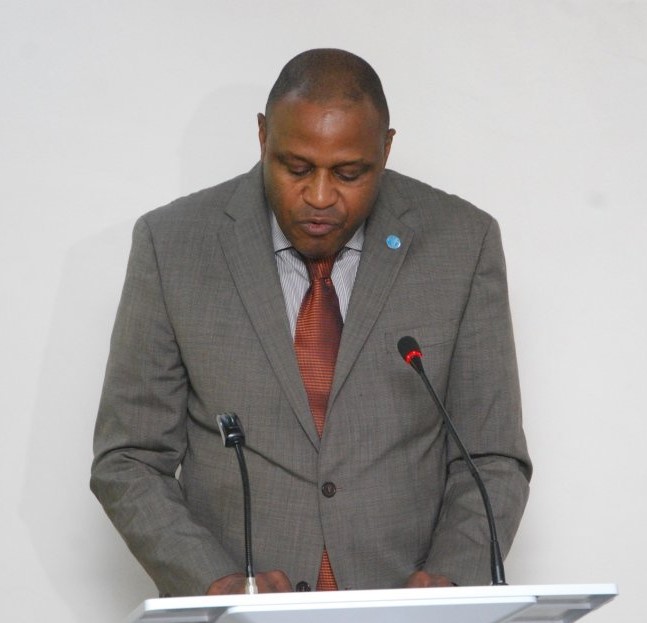
Suffyan Koroma, FAO Nigeria Country Representative
Mr Suffyan Koroma, FAO Country Representative for Nigeria, said this in Abuja on Monday, February 26, 2018 at the opening of a two-day workshop on “Mainstreaming Food Security in the Context of 2030 Sustainable Development Agenda in Nigeria’’.
He said that plans to end poverty and hunger by 2030 were very feasible if all concerned parties could join forces and act on available evidences and data.
Koroma, who was represented by Mr Ahmed Matane, Assistant FAO Country Representative (Programme) for Nigeria, said that the goal could be achieved by tackling the root causes of hunger and poverty.
He said that the strategies included targeting the rural populations, providing access to social protection programmes, promoting sustainable food and agricultural development as well as data collection.
Koroma said that the data collection was the key driver of transformation across all sectors, adding that it would also enable governments to achieve national policy objectives.
“Open data will present a multitude of opportunities to track progress and analyse statistical information in a systemic way and disseminate it widely,’’ he said.
He said that the partnership with the Ministries, Departments and Agencies (MDAs) and Civil Society Organisations (CSOs) had become a relevant tool to hold governments accountable for their duty to fulfil their obligations to the citizens.
Koroma said that FAO, in supporting Nigeria to monitor the Sustainable Development Goals (SDGs), had developed methods and standards for food agriculture and statistics, while providing technical assistance to help the country to meet its monitoring obligations.
“The assistance also includes methodological development of indicators and statistical capacity building,’’ he said.
The FAO country representative, however, said that, for the programme to work in Nigeria, there was a need to take relevant MDAs and CSOs through the concept and methodology of food security measurements.
“Two monitoring tools will be presented to the workshop participants on prevalence of undernourishment and food insecurity experience scale,’’ he said.
Koroma said that the workshop had become imperative because countries were now striving to translate the SDGs into national plans for implementation, while determining how best to commit national efforts to produce transformational change.
He said that the workshop would examine an overview of the SDGs monitoring and evaluation framework for Nigeria as well as an overview of food security measurement and prevalence of undernourishment and food insecurity in the country.
He, therefore, urged participants to use the knowledge they would garner to train other stakeholders in their respective states and organisations, so as to put in place a good road-map for the effective implementation of the plan.
Participants for the workshop were drawn from the states in the North Central geo-political zone, the FCT as well as relevant federal MDAs and CSOs.
News Agency of Nigeria (NAN) recalls that on Sept. 25, 2015, the 193 member states of the UN adopted the 2030 agenda for sustainable development, including 17 SDGs, with 169 targets and 230 indicators.
The 2030 agenda aims at tackling the complex challenges facing the world; ending poverty, hunger and malnutrition as well as sustainably managing the natural resources of the planet.