The World Health Organisation (WHO) on Friday, February 16, 2018 announced a new high-level commission, comprised of heads of state and ministers, leaders in health and development and entrepreneurs. The group will propose bold and innovative solutions to accelerate prevention and control of the leading killers on the planet – noncommunicable diseases (NCDs) like heart and lung disease, cancers, and diabetes.
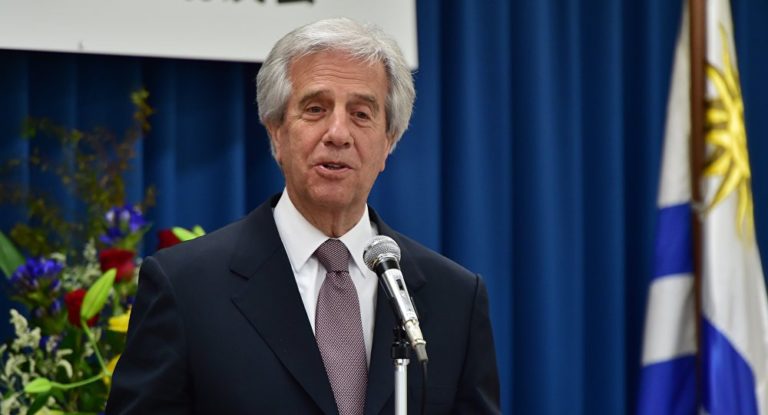
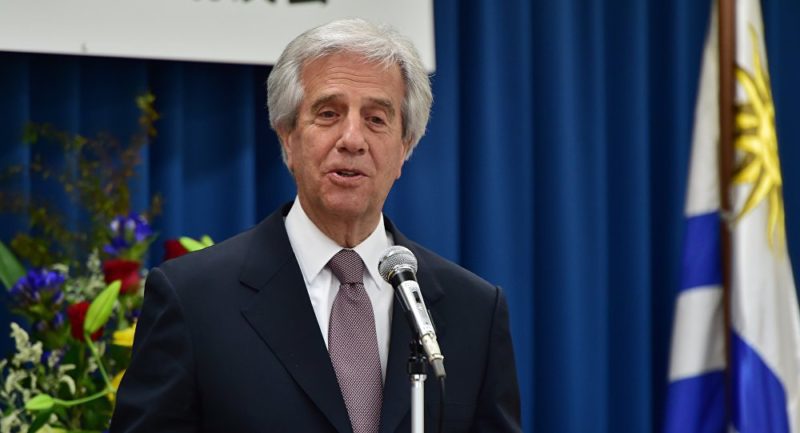
President Tabaré Vázquez of Uruguay, co-chair of the WHO Independent Global High-level Commission on NCDs
The WHO Independent Global High-level Commission on NCDs is co-chaired by President Tabaré Vázquez of Uruguay; President Maithripala Sirisena of Sri Lanka; President Sauli Niinistö of Finland; Veronika Skvortsova, Minister of Healthcare of the Russian Federation; and Sania Nishtar, former Federal Minister of Pakistan.
Seven in 10 deaths globally every year are from NCDs, the main contributors to which are tobacco use, harmful use of alcohol, unhealthy diets, and physical inactivity. More than 15 million people between the ages of 30 and 70 years die from NCDs annually. Low- and lower-middle income countries are increasingly affected, with half of premature deaths from NCDs occurring in those countries. Many lives can be saved from NCDs through early diagnosis and improved access to quality and affordable treatment, as well as a whole-of-government approach to reduce the main risk factors.
“NCDs are the world’s leading avoidable killers but the world is not doing enough to prevent and control them,” says Dr Vázquez. “We have to ask ourselves if we want to condemn future generations from dying too young, and living lives of ill health and lost opportunity. The answer clearly is ‘no.’ But there is so much we can do to safeguard and care for people, from protecting everyone from tobacco, harmful use of alcohol, and unhealthy foods and sugary drinks, to giving people the health services they need to stop NCDs in their tracks.”
Mr Michael R. Bloomberg, WHO Global Ambassador for Noncommunicable Diseases and Commission member, said: “For the first time in history, more people are dying of noncommunicable diseases, such as heart disease and diabetes, than infectious diseases. This loss of human life spares no one — rich or poor, young or old – and it imposes heavy economic costs on nations. The more public support we can build for government policies that are proven to save lives – as this Commission will work to do – the more progress we’ll be able to make around the world.”
The new Commission was established by WHO Director-General, Dr Tedros Adhanom Ghebreyesus, and runs until October 2019. It will provide actionable recommendations to contribute to the Third United Nations General Assembly High-level Meeting on NCDs scheduled for the second half of 2018. This will include the submission of its first report to Dr Tedros in early June.
“Everybody deserves the right to a healthy life,” says Dr Tedros. “We can beat the drivers of the NCD epidemic, which are among the world’s main obstacles to health. I am looking to the Commission to show us new ways to unblock the barriers to good health, and identify innovative, bold and practical actions steps to scale up prevention and treatment of NCDs and provide health for all.”
Co-chair Dr Nishtar says the Commission’s establishment has come at an opportune time, as the world prepares for the UN High-level Meeting on NCDs. “This year, governments will be held to account on progress they have made in protecting their citizens from NCDs,” says Dr Nishtar. “While there have been improvements in some countries and regions, the overall rate of progress has been unacceptably slow. This is resulting in too many people suffering and dying needlessly from NCDs, and leaving families, communities and governments to bear the human and economic costs.”
The World Health Assembly has endorsed the set of WHO “best buys” and other cost-effective interventions proven to prevent or delay most premature NCD deaths. Such measures, which can be readily scaled up in countries, target prevention and treatment of, and raising awareness about, NCDs.
Experts from 20 countries gathered in Fiji on Monday, February 5, 2018 to share lessons on adaptation to climate change at the Targeted Topics Forum. To avoid adding to the climate problem as they sought solutions, the forum’s organisers made the event “climate neutral”, which means its carbon footprint was measured, reduced and compensated for using United Nations (UN) Certified Emission Reductions (CERs).
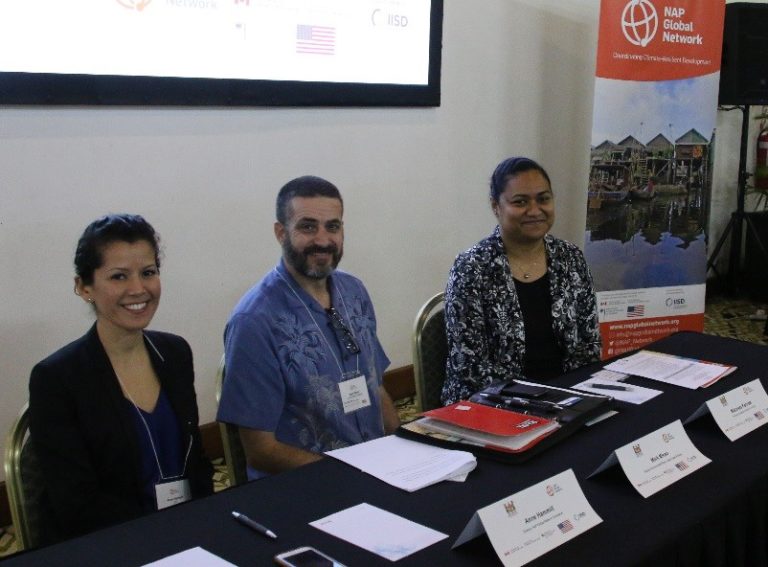
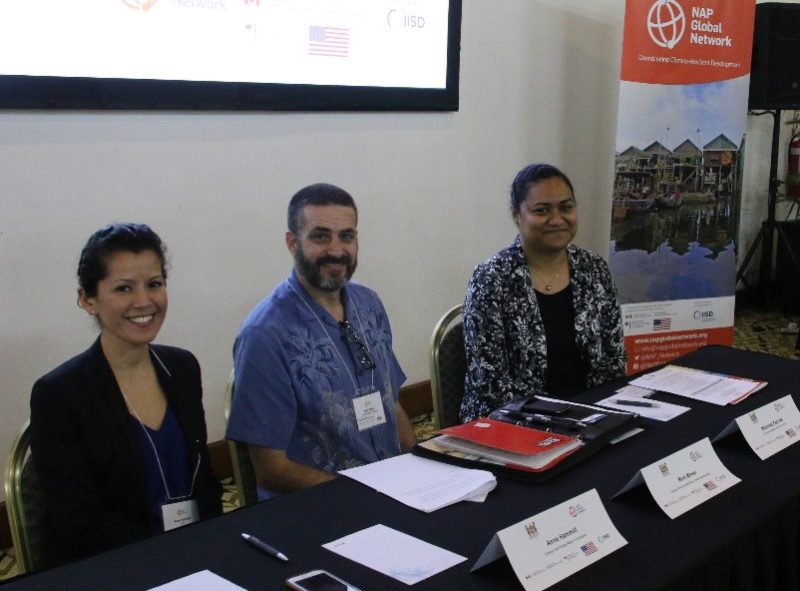
L-R: Anne Hammill, Director of the National Adaptation Plan Global Network Secretariat; Mark Mineo, Regional Environmental Officer to the U.S. Embassy in Fiji; and Makereta Konrote, Permanent Secretary of the Ministry of Economy to the Government of Fiji, open the Targeted Topics Forum in Fiji on Monday, February 5, 2018
Highly vulnerable to sea level rise, Fiji, like other Pacific islands, faces a grave threat from climate change. In 2017, the country presided over the UN Climate Change Conference COP23 in Bonn, Germany. A key focus of the conference was on developing the operating manual for implementation of the Paris Climate Change Agreement, with its goal of limiting the rise of global average temperatures to well below 2 degrees Celsius and as close as possible to 1.5 degrees above pre-industrial levels.
To reach this target, climate neutrality – which is the balance between the output of man-made greenhouse gases and absorption – must be achieved globally by the second half of this century.
The National Adaptation Plan (NAP) Global Network, co-hosting the forum with the Government of the Republic of Fiji, worked together with UN Climate Change initiative “Climate Neutral Now” to make the event climate neutral. Climate Neutral Now encourages individuals, organisations and companies to take voluntary climate action by measuring their carbon footprint, reducing it as much as possible, and finally, offsetting the remaining carbon footprint by purchasing UN CERs.
This three-step methodology was applied to the Targeted Topics Forum. First, an estimate of the carbon emissions caused by the event was made, including flights of the participants, which is the biggest source of carbon emissions in such cases. Next, practical measures were then taken to reduce the carbon footprint as much as possible, including:
Eliminating single-use items in the catering service, including water bottles
Favoring local and organic products as well as vegetarian meals in the menu
Avoiding printing by using USB sticks to disseminate information
Choosing venues that maximise the use of natural light.
As a last step, the remaining emissions were offset by purchasing UN Certified Emission Reductions.
“This week’s Targeted Topics Forum provided a space for sustained peer-learning and exchange between climate specialists from around the world. As we come together, from our different contexts and countries to share lessons and best practices in climate change adaptation, it’s essential that the NAP Global Network play a leading role in reducing emissions and contributing to a climate-neutral future,” said Anne Hammill, Director of the National Adaptation Plan Global Network Secretariat.
Niclas Svenningsen, head of the Climate Neutral Now initiative at UN Climate Change, said, “By achieving climate neutrality, the Targeted Topics Forum demonstrates its forward-thinking approach to solving climate change, and sets an admirable example for other conferences and international events to follow.”
Ghana’s former President John Agyekum Kufuor has stated that “it will be a mistake and a very sad one, for humanity to throw up our hands and abandon our fight against climate change.” He explained that climate change “is very real and its related natural disasters and associated problems are bigger than the human mind can comprehend and that is why we must continue to work out solutions.”
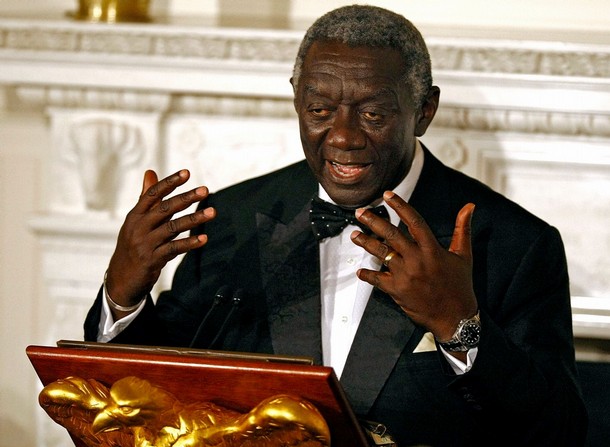
President John Agyekum Kufuor. Photo credit: Chip Somodevilla/Getty Images
President Kufuor expressed these sentiments in response to a question on the seeming waning zeal of some African governments and civil society organisations in the fight against climate change. This was in an exclusive interview on his current perceptions about the phenomenon, following the end of his tenure as one of two erstwhile UN Secretary General Ban Ki Moon’s Special Envoys on Climate Change. The other was Jens Stoltenberg, former Prime Minister of Norway.
The two were assigned to assist in engaging Heads of State and governments around the world to mobilise political will and action on climate change in advance of the 2014 Climate Summit in New York. Their assignment in a way contributed to the international acceptance of the Paris Climate Accord during the 21st Session of the Conference of the Parties of the UN Framework Convention on Climate Change (UNFCCC), dubbed COP21 and held in France in 2015.
The former President said the assignment has made him comprehend climate change issues and the frustrations that come with trying of find solutions.
“At times out of desperation, when you tackle a problem and you don’t get the solutions as quickly as you want to, you throw your hands up and just give up,” adding, “but if we can make our mark, we must continue to accept the guidance of scientific research and technological efforts at findings solutions devoid of sentiments,” he said
He that another impact of the assignment on his life is that, “naturally, I’m still interested in and do follow climate change issues and how nations are mitigating and adapting.”
On the issue of climate financing, President Kufuor said every country is supposed to contribute to working out solutions as indicated by the Nationally Determined Contributions (NDCs). The NDCs are key to the Paris Agreement and represents efforts by each country to reduce national emissions and adapt to the impacts of climate change.
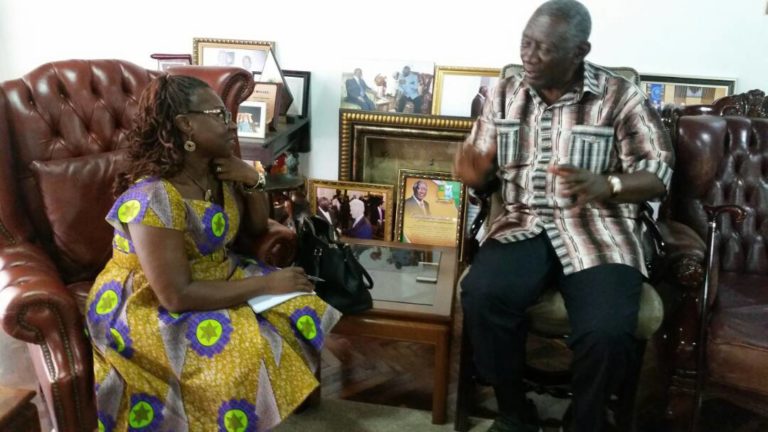
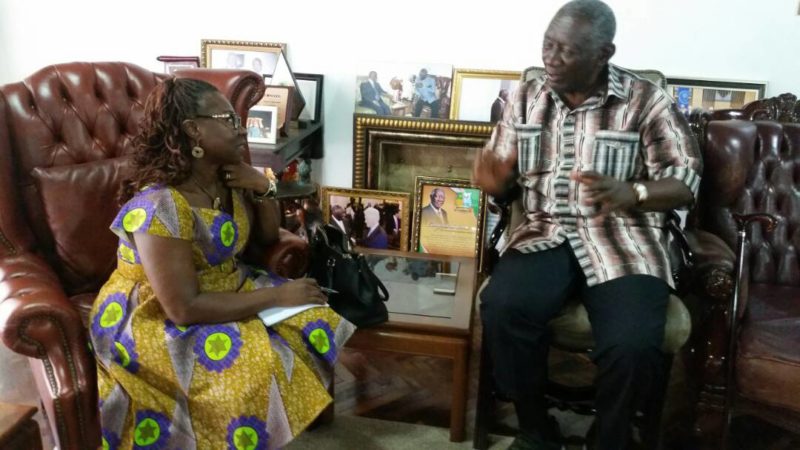
President Kufuor (right) in a chat with Ama Kudom-Agyemang
He noted, “The forces that are being unleashed by climate change are so overwhelming and time is not on our side. We need to do whatever we can by ourselves first of all, and external help will come.” He wondered, “how come rains in recent times, are wrecking such havoc, we didn’t use to see such things before.”
President Kufuor urged African countries to do all in their power to reduce emissions and “once we do our part, the industrialised nations will also live up to their expectations, and then cumulatively we will be working for the entire world.” He was of the view that once, climate change related activities are streamlined and prioritised, allocations could be made in the national budgets to cater for their implementation.
The former President also touched on the perception that the Chinese were importing climate change into African countries through their numerous projects. He cautioned Ghanaians to beware of speaking in such general terms of the counterproductive activities of some Chinese in the country.
President Kufuor explained that statements like “the Chinese are spoiling our country,” could imply that “it is their government or nation that is behind the activities. But no, no, no…” he emphasised.
His thoughts on these developments were that “now the world is opening up so fast with mobility of people and their individual initiatives all around the world, thanks to advancing technology in transportation and communication. So we may get some people coming in to pursue their own selfish economic and business interests.”
President Kufuor added that “they come and without conscience, just driven by greed and perhaps ignorance, they liaise with some locals who again for some petty gain, not appreciating the damage they doing to their own environment engage in galamsey (illegal mining) activities, polluting our waters and environment.” He emphasised that when such people are caught the law should deal firmly with them and reiterated that “we have to be careful of not labeling the Chinese government as being responsible for the infamous activities of some Chinese individuals or firms.”
President Kufuor pointed out that “China as a nation is very concerned about the impact of climate change and the devastation it is causing in their environment.” Therefore, the nation has developed a technology for greening deserts. He recalled his visit at the invitation of the Chinese government to witness how the new technology had been employed. “I was impressed that in the huge Inner Mongolia Kubuqi Desert, about 6000 of the 18, 600 sq. km. of the area has been turned all green, with soil nutrient fixing grass, luscious fruits and vegetables.”
According to an article by Charlie Campbell published in the July 27, 2017 edition of Timeinc.net, “In 1988, the Chinese firm Elion Resources Group partnered with local people and the Beijing government to combat desertification. Almost three decades later, one third of Kubuqi has been greened. Special plants have been grown to grip the shifting sands and to prevent the dunes encroaching on farms and villages.”
Known as the Kubuqi Ecological Restoration Project, the result now is that “the cattle have returned, and secondary industries have sprung up, with tourists flocking to new locally-run hotels and restaurants, eager to explore the dunes on boards and buggies.”
Consequently, the United Nations Environment Programme (UNEP) estimates the project to be worth $1.8 billion over a 50-year period. Thus, “Kubuqi’s transformation burnishes China’s credentials as an environmental leader at a time when Washington is retreating from its international commitments,” notes the writer.
And President Emmanuel Macron of France affirmed these sentiments, when he stated: “Now China leads,” following US President Donald Trump’s refusal to reconsider withdrawing from the Paris Climate Accord
“So I want to be careful we do not generalise when we’re talking about stray Chinese individuals in collusion with some of our own people,” Ghana’s former President stated.
He compared galamsey activities to the American gold rush where people picked up cutlasses and spades wherever they could find gold, saying “this could go on till policy is brought to bear, regularise and guide such activities. In this wise, he commended the government for taking “some very significant steps to contain the situation.”
“But beyond that,” President Kufuor said, “we should also rally the masses of people in the catchment areas of such places for social education. Let them see the dangers they are perpetrating on themselves and on the nation as a whole, and let them know there could be alternatives, let them know that government is fashioning policies perhaps to move them into cooperatives with concessions away from water bodies and farms so they could pick out their living legitimately.”
He further said, “Extension officers could help drum this into the consciousness of galamsey operators that they are not doing things right,” stressing, “we must not stop the current campaign, but we must use mass education with extension guidance and policies to move people away into legitimate operations with appropriate technologies of small scale operators.”
The ex-Un Special Envoy on Climate Change also had a word for Ghanaians ahead of the forthcoming global celebration of World Water Day on March 22 on the theme, “Nature and water.”
“We can’t separate water from nature they are intertwined. We learn from science that as humans our bodies are made up of about 70% water, so how would one say water is there and nature is on the other side. Water is life and without water, we’re killing nature and this is part of the reason why we should uphold the sanctity of water. Because water, life and creation go together and religious people know this,” he said.
World Water Day (WWD) is celebrated by the international community on March 22 of each year to draw attention to the importance of freshwater and advocate for the sustainable management of freshwater resources. The Day was instituted in 1992 by the United Nations, to draw global attention to the importance of water as a vital resource to life.
The Intergovernmental Platform on Biodiversity and Ecosystem Services (IPBES) says it will launch five assessment reports at the 6th IPBES Plenary session (IPBES6) scheduled to hold in Medellin, Colombia from March 17 to 26, 2018.
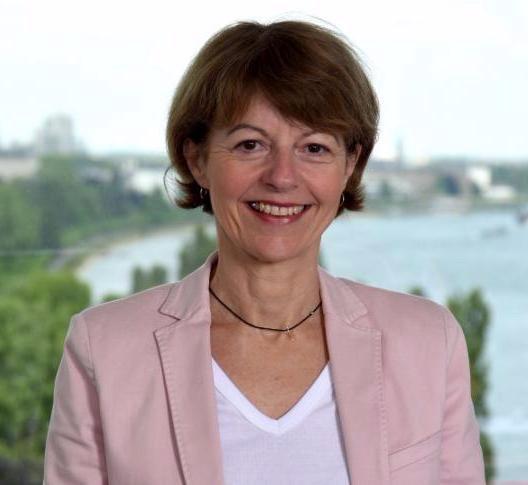
Dr. Anne Larigauderie, Executive Secretary of the Intergovernmental Platform on Biodiversity and Ecosystem Services (IPBES)
The assessment reports, according to IPBES, were prepared over three years by more than 550 leading international experts from over 100 countries at a cost of over $6 million.
Four Regional Assessment reports, it was gathered, describe the state of biodiversity and ecosystem services in the Americas, Asia and the Pacific, Africa, and Europe and Central Asia. It will be launched on Friday, March 23, 2018.
A fifth IPBES report describes the state of land degradation and restoration at regional and global levels. This will be launched on Monday, March 26, 2018.
Often called “the IPCC for biodiversity”, the Bonn, Germany-based IPBES is the global science-policy platform tasked with providing the best-available evidence to inform better decisions affecting nature.
Representatives of 128 IPBES member Governments at IPBES6 are expected to approve the five peer-reviewed reports, which make important contributions to contemporary knowledge of the state of biodiversity, ecosystem services and land degradation around the world.
French ecologist, Dr. Anne Larigauderie, is the Executive Secretary of IPBES.
Communities in Britain were warned on Friday, February 16, 2018 to be prepared for more frequent flooding as a result of climate change.
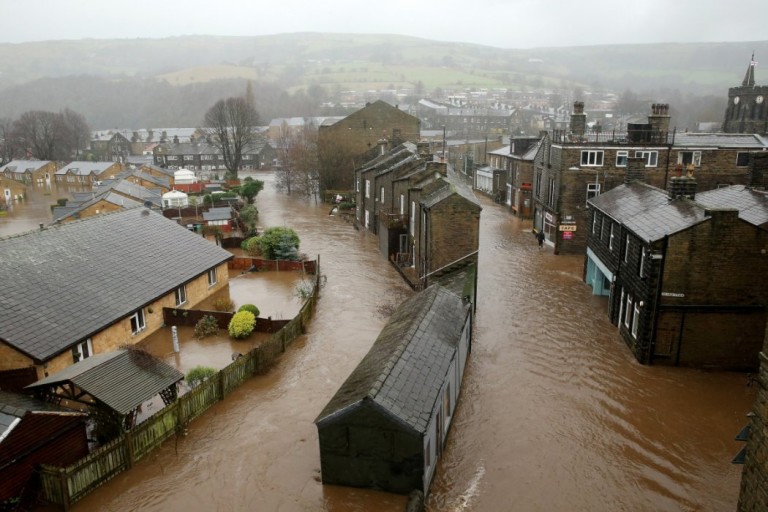
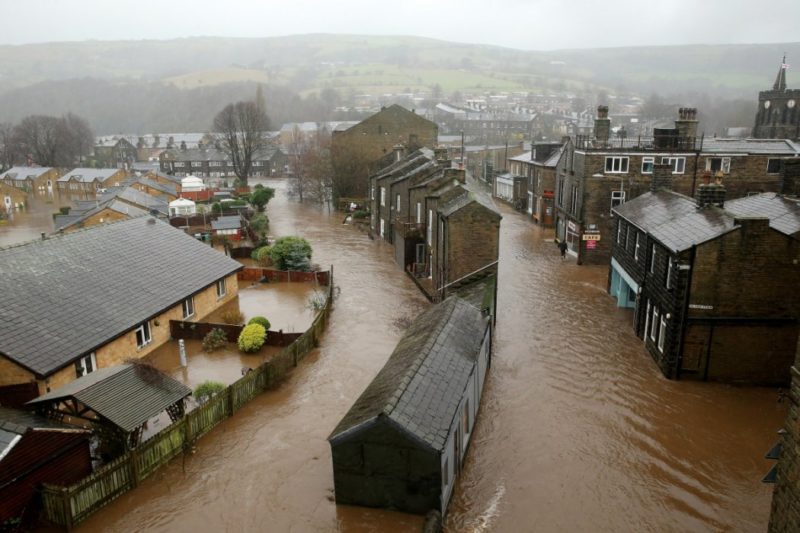
Floodwater rises as the River Calder bursts its banks in the Calder Valley town of Mytholmroyd on December 26, 2015. Photo credit: www.ibtimes.co.uk
The government’s Environment Agency (EA) launched a Flood Action Plan to prepare areas of the country likely to be vulnerable to greater flood risks.
EA said the floods followed severe pattern over the past 10 years, linked to increase in extreme weather events as Britain’s climate continued to change.
Weather office records show that, since 1910, there have been 17 breaking rainfall months or seasons, with nine of them occurring since 2000.
“As intense storms are becoming more frequent, sea levels are also rising because of climate change.
“The agency’s new campaign targets younger people through social media and online advertising to encourage them to check their flood risks.
“They can sign up at the government’s official website for free warnings and be prepared to take action when flooding hits,’’ EA said.
Research shows that 18 to 34 year olds are least likely to perceive flood risk to their area, know how to protect their homes or where to go for information.
They are also at highest risk of fatality as they are less likely to perceive their personal risk.
According to the EA’s CEO Sir James Bevan, climate change is likely to mean more frequent and intense flooding. Floods destroy lives, livelihoods, and property.
“Our flood defenses reduce the risk of flooding, and our flood warnings help keep communities safe when it threatens.
“But we can never entirely eliminate the risk of flooding.
“Checking flood risk is the first step to protecting people and their loved ones and their homes,’’ Bevan said.
In summer 2012, the lengthy period of drought Britain had experienced came to an abrupt end when prolonged and intense rainfall increased the risk of flooding from rivers and surface water for long periods.
Almost 8,000 homes and businesses were flooded across the country, particularly in the south west of England.
The winter of 2013 to 2014 started with a coastal surge and record sea levels on the north and east coasts.
This was followed by 12 storms in succession and became the wettest winter for 250 years, while 11,000 homes were flooded.
Winter 2015 to 2016 brought widespread flooding to 17,000 properties across the north of England, with named storms Desmond, Eva and Frank causing December 2015 to be the wettest month ever recorded.
“The threat of flooding is real and increasing, as is also demonstrated by its listing as one of the nation’s major threats,’’ EA added.
The Met Office recently published new innovative research which found that for England and Wales there is a 1 in 3 chance of a new monthly rainfall record in no less than one region each winter.
Met Office researcher, Prof. Adam Scaife, said that the Met Office supercomputer was used to simulate thousands of possible winters, some of them much more extreme than they have yet witnessed.
“This gave many more extreme events than have happened in the real world, helping us work out how severe things could get,’’ Scaife said.
The 9th World Urban Forum in Kuala Lumpur, Malaysia concluded this week with a call to use the new urban agenda as an accelerator to achieve the Sustainable Development Goals and support climate action.
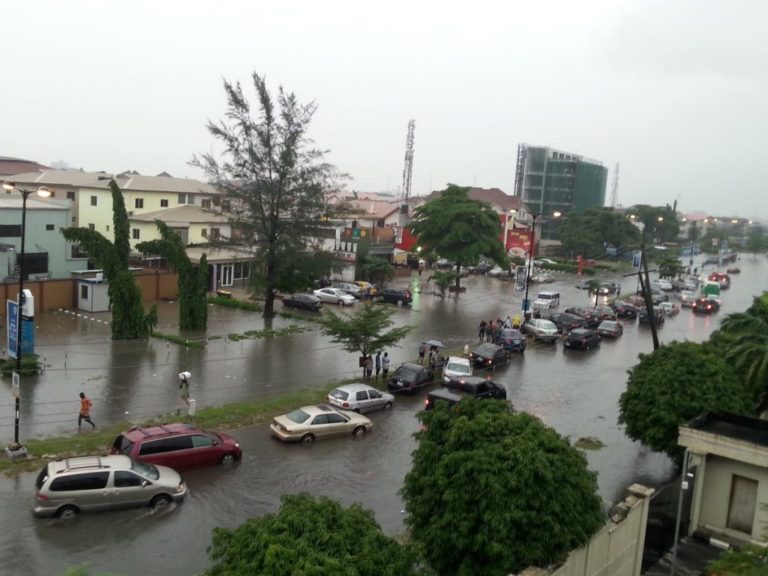
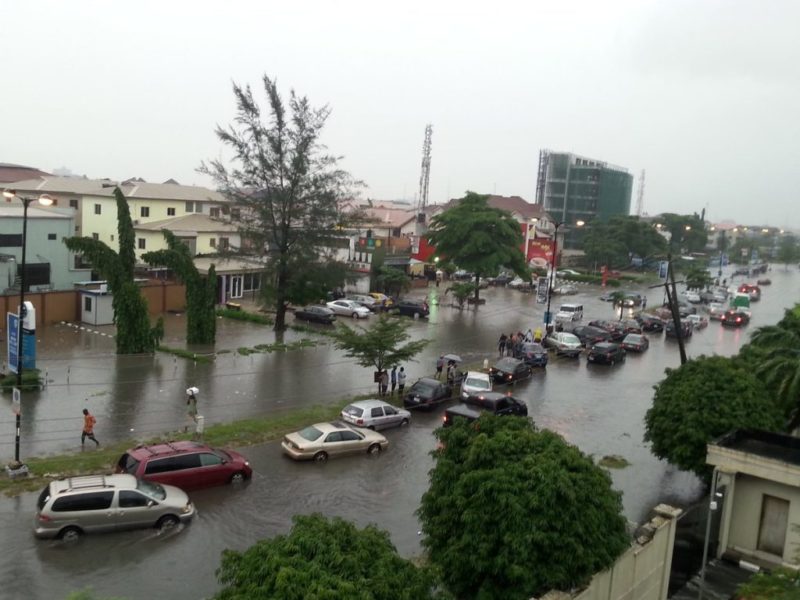
Making cities more climate-resilient: A street overrun by flood on Victoria Island, Lagos
According to the UN, the world’s urban population is expected to grow by 2.5 billion by 2050, with over 90 per cent of this growth to take place in Africa, Asia, Latin America and the Caribbean.
This presents an unprecedented opportunity to re-define urban development, including inventing in livable, low-carbon and resilient cities.
Experts at the meeting recognised the fact that climate change will exacerbate the vulnerability of human settlements to natural and man-made hazards globally. This will especially be the case in developing countries, coastal and delta regions, and Small Island Developing States.
Adapting to climate change in human settlements is critical to ensuring that human development is not jeopardised and that the world’s growing population has the opportunity to thrive.
The Paris Agreement provides a framework for global climate action, engaging both national and local governments, including in least developed countries and secondary cities to take action.
As of today, over 2500 cities reported their commitments to both mitigation and adaptation on the Non-State Actor Zone for Climate Action (NAZCA) platform, showing that many cities are already taking climate action, including in Africa and Asia.
Countries can build resilience and enable adaptation in human settlements through national adaptation through the process to formulate and implement national adaptation plans (NAPs), including, linking national and local adaptation planning, and supporting local governments’ role in planning and implementing adaptation in human settlements.
NAPs provide an opportunity to emphasise human settlements in national adaptation strategies, and foster further adaptation action by local governments in cities, towns and villages of all sizes.
One of the key findings of an upcoming report by UN Climate Change on Adaptation and human settlements will be that national governments have a crucial role in enabling subnational governments to plan and implement adaptation action, and in providing adequate resources to do so. This report will inform climate negotiations in May this year.
And the recently launched Cities and Regions Talanoa Dialogue provides further opportunities to advance and institutionalise multilevel governance on climate action, to ensure coordinated action across all levels of government.
A non-governmental organisation (NGO), Synergos Nigeria, on Thursday, February 15, 2018 said it was developing new controlled grazing mechanism to address the herdsmen and farmers conflict in parts of the Northern Region.
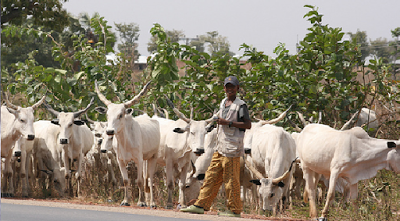
Herdsmen grazing their cattle
The Field Manager of Synergos, Victor Adejoh, disclosed this at the presentation of a research study in Kaduna to support the development of a comprehensive policy and action plan to end the conflict.
Adejoh said the research work, titled: “Study to Support and Inform the Development, Review and Implementation of Controlled Grazing Policy in Nigeria”, had identified viable options and strategies to effectively manage the frequent clashes.
He said the strategy would include interactions between local farming communities and nomadic herdsmen to prevent repeated conflicts.
“It will explore means of demarcating existing grazing reserves, designing improved incentives and establishing proper monitoring and compliance systems.
“The study will equally facilitate the push for gradual injection of modernisation processes into traditional livestock production system and recommend policy interventions that will reduce conflict,“ the official said.
Also, the Permanent Commissioner, Kaduna State Peace Commission, Saleh Momale, said the aim was to develop effective mechanism to coordinate use of rural land resources.
Momale said the conflicts had always been over grazing and farm lands, water and forest resources.
“Sometime in Sept. 2017, Synergos, in collaboration with the Bill and Melinda Gates Foundation, requested for a study to look out for some of the issues affecting pastoralist and farmers relations, as well as the emerging policies on controlled grazing in Nigeria with particular focus on Kaduna, Kogi and Benue states.
“We have sampled the opinions of varied stakeholders including farmers, pastoralist, traditional rulers, state governments institutions, civil society organisations and a number of community-based organisations.
“The study sampled opinions on how they feel about the issue of livestock management and production as well as conflicts and inter community relations,“ Momale said.
According to him, the team was mandated to recommend best ways of resolving the issues to ensure positive economic development, peace and security in the affected states.
On the findings of the study, he said “the weakness of the traditional institutions, due to a number of factors, have made it difficult to deal with the diverse problems of insecurity and conflicts.
“They, therefore, cannot effectively govern the land spaces unlike what was happening in the past.
“Also the local government institutions are not able to respond and perform their duties effectively in terms of management of resources at the local level and this allowed for massive encroachment and unregulated farming activities into areas that were used for grazing,“
Momale hoped that the Bill and Melinda Gates Foundation would provide the needed support towards financing some strategic interventions in Kaduna State and other conflict areas.
Various stakeholders including traditional rulers, security agencies, agric and forestry officers, All Farmers Association of Nigeria, Miyetti Allah Cattle Breeders Association of Nigeria among others attended the event.
Asteven International Group, an indigenous renewable energy company in Nigeria, is set to launch what it describes as the first private sector financed comprehensive renewable energy and energy efficiency centre in the country – the Asteven Renewable Energy and Energy Efficiency Academy.
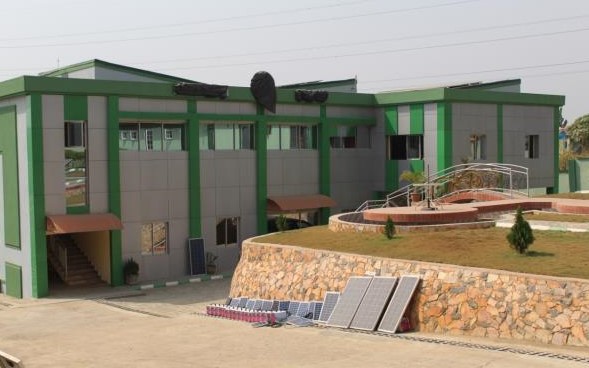
A view of the Asteven Renewable Energy and Energy Efficiency Academy
The academy, a 100% solar powered institute, is conceptualised to build technical know how and capacity, creating solar entrepreneurs, solar/renewable energy technicians, installers and engineers in its state-of-the-art facility equipped with high tech equipment.
The Academy disclosed in a statement made available to EnviroNews that it’s training curriculum and modules have been developed in collaboration with Global Energy Institutes.
“It is dynamic in nature with a strong focus on local content. It seeks to promote backward integration in the renewable energy sector and create green jobs for women, youths, and university graduates. Overall, it is set to address the skills gap that is so prevalent in the renewable energy sector in Nigeria,” the group stated.
The centre will be officially opened on Monday, February 24, 2018 by the Senate President, Dr. Bukola Saraki, with Governor Ibikunle Amosun of Ogun State as Chief Host.
Special guests include Minister of Power, Works and Housing, Babatunde Raji Fashola, and the Minister of Energy in Sierra-Leone, Henry O Macaulay.
The group pointed out that, over the years, the dearth of skilled manpower had impeded the growth of the renewable energy sector in Nigeria. Most renewable energy companies in Nigeria and indeed West Africa are presumed not to have the required technical capacity to embark on renewable energy projects, it adds, pointing out that this assumption is fueled by the array of failed renewable energy projects seen all over the country.
“As the first of its kind, the Academy has an obligation to provide superior, globally competitive training and specialist certifications to trainees at this state-of-the-art Academy. The Academy shall develop forward-looking curricula, identify career pathways, share labour market data and resolve issues related to trainings on Renewable Energy Technologies and workforce development. This shall be done through multiple offerings, including train-the-trainer workshops and webinars, distance learning courses, and mobile laboratory training modules.
“Associated with the Academy is the Centre of Excellence. This is the Entrepreneurship arm of the Academy that focuses on empowering the society in a more evolving environment dealing with energy issues. Trainees shall be provided with the requisite skillsets and opportunities to be entrepreneurs, contributing towards Nigeria’s socio-economic development.
“With the launch of the Academy, the renewable energy sector is poised to grow in Nigeria powering Eco-Development and driving enhanced Green Growth Awareness. The Academy is endorsed by the various associations in the industry in Nigeria including; the Council for Renewable Energy Nigeria, Renewable Energy Association of Nigeria and Sustainable Energy Practitioners Association of Nigeria. The Academy has built a strong partnership as well with Global Legislators Organisation for a Balanced Environment (GLOBE), Nigeria Chapter.”
Other subsidiaries of Asteven Group International are: AS Solar World, Green Energy Finance International Limited, Wave Engineering, AS Technics and Akpoyibo Green Foundation.
An Australian farmer who shot dead an “iconic” 100-year-old crocodile because he was “sick of losing cattle” has been fined $8,000 (10,000 Australian dollars).
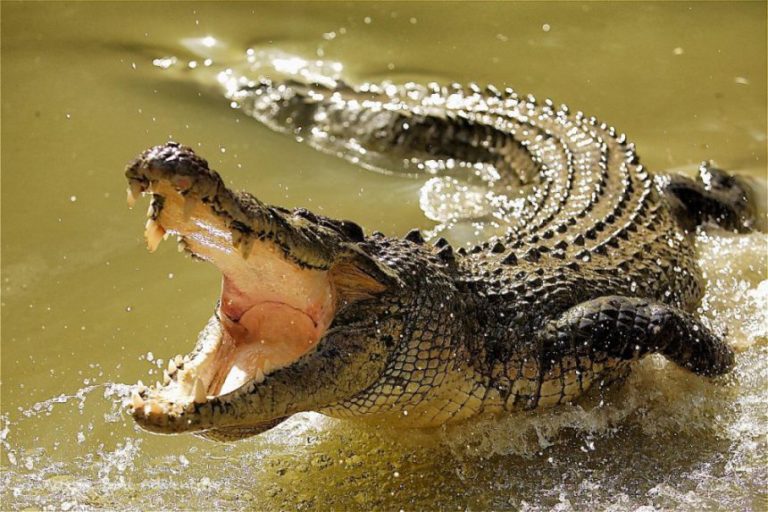
A crocodile
The 5.2-metre crocodile was shot between the eyes in a river next to a farm in Rockhampton in central Queensland in September, 2017.
Luke Orchard, 31, pleaded guilty in court but said he was sick of the animal taking his calves.
He argued that he was protecting cattle at Belmont Research Station, where he was working.
Jess King, a police prosecutor, told the court that experts estimated the crocodile was about 100 years old, making it rare and of cultural significance to the region.
Crocodiles are protected animals in Australia.
They cannot be killed without authority from wildlife officers unless they pose a threat and the penalty for killing “iconic” crocs, which are more than five metres in length, is higher.
Wildlife experts warned that the death of the large crocodile would create a power vacuum in the local river ecosystem, resulting in young crocs becoming more aggressive as they battle for territorial dominance.
Rowan King, Orchard’s lawyer, said the property stretches for 13 kilometres along the Fitzroy River and it was the primary source of drinking water for the cattle in Orchard’s care.
But the Department of Environment never received any official report of livestock being taken from the property, the court was told.
“You knew that it was a protected animal, you knew there was a process by which the presence of the animal on that property could have been reported to authorities,” Judge Jeff Clarke said.
An international non-government organisation (NGO), African Climate Reporters, has embarked on a public sensitisation campaign on the effects of bush burning and tree felling on the environment.
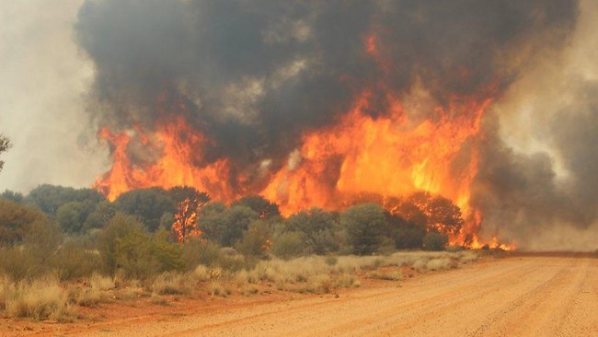
Bush burning
Mr Mohammed Zakariyya, Director of the organisation in West Africa, made this known in Kaduna on Friday, February 16, 2018 in an interview with News Agency of Nigeria (NAN).
Zakariya, who said that the organisation would visit Gabarawa, Igabi Local Government Area of Kaduna State, stressed that “we want to educate the people on the dangers inherent in bush burning.
“Trees play a major role in climate control by moderating the effects of the sun, rain and wind.
“Leaves absorb and filter the sun’s radiant energy, keeping things cool, especially during the hot season, same as trees; they also provide a screen (partition) from harsh wind,’’ he said.
The climate expert said that the organisation was encouraging tree planting, as it was fundamental to combat deforestation.
“Part of our targeted areas include schools; we want to impart the culture of safeguarding the environment to the younger ones,’’ he said.
Zakariya said the sensitisation activity was aimed at safeguarding the environment and protecting the health of the people.