Global food prices rose for the second consecutive month with the index for these commodities averaging 172.8 points in March 2018, 1.1 per cent higher than in February, the United Nations food security agency announced on Thursday, April 5, 2018.
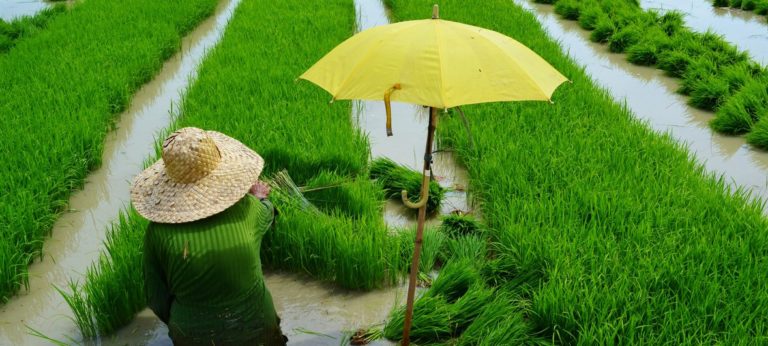
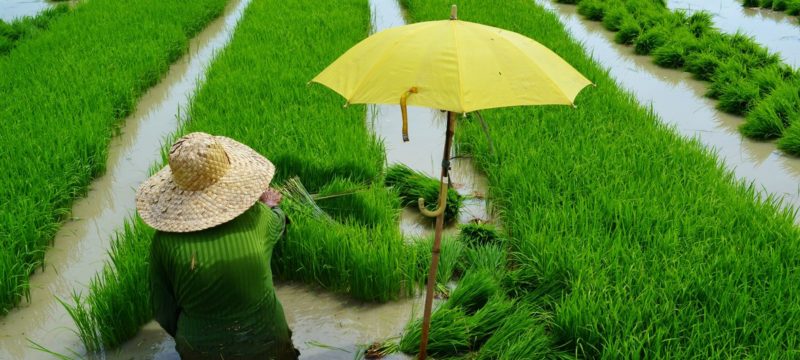
A farmer transplants rice in a paddy field in the Philippines. Photo credit: FAO/Ryanwil Baldovino
According to the Food and Agriculture Organisation (FAO) of the UN, the rise was driven by “robust increases” in the prices of cereals (165.6 points) and dairy products (197.4 points), averaging 2.7 per cent and 3.3 per cent higher, respectively, than their prices the previous month.
Wheat prices increased mostly on weather worries, including prolonged dryness in the United States of America and cold wet conditions in parts of Europe. Similarly, maize – another major cereal – saw its prices rise on back of strong global demand and deteriorating crop prospects also in Argentina.
FAO also anticipates that 2018 world maize and wheat production could decline based on early forecasts. Worldwide wheat output could drop to 750 million tonnes, about 1 per cent below its near-record level of the previous year.
In 2017, worldwide cereal production, including wheat, hit a record level, up 33 million tonnes from 2016, to nearly 2,646 million tonnes globally.
Price indices for sugar and vegetable oils, however, recorded declines in March, averaging 186 points and 156.8 points, respectively. The meat price index (169.8 points) remained almost unchanged from February.
UN Climate Change on Thursday, April 5, 2018 launched a webinar series to support developing nations in reporting on their efforts to tackle climate change.
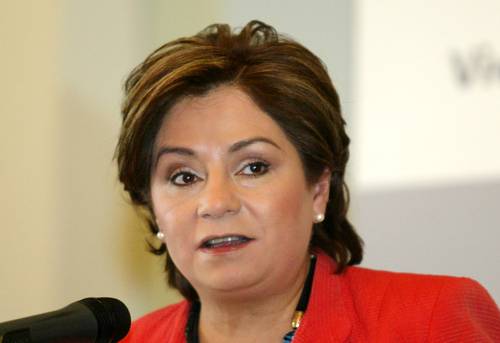
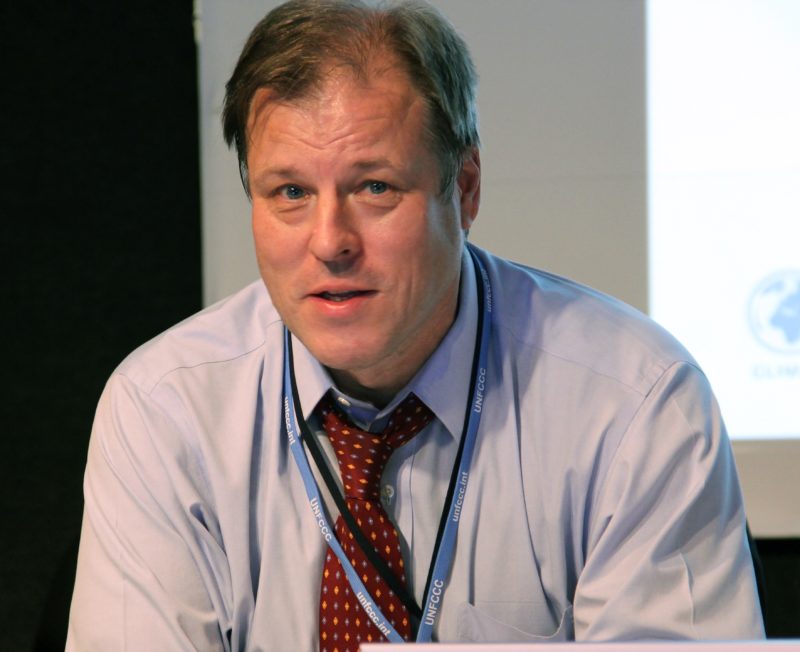
Patricia Espinosa, executive secretary of the UN Framework Convention on Climate Change (UNFCCC)
The series aims to provide a platform for practitioners to focus in-depth on specific methods or tools, across all the themes, namely, greenhouse gas inventory, mitigation, vulnerability and adaptation, and support.
The webinar series will focus on:
How a country can better implement the current Measurement, Reporting and Verification (MRV) arrangements under the UN Framework Convention on Climate Change (UNFCCC)
How a country can better showcase its climate action on mitigation and adaptation through national communications and biennial update reports
Methodologies used and tools available
Lessons learned and good practices from developing countries.
The webinars, 45 to 60 minutes in duration, will be held in the first and third week of each month. They will be offered in English, Spanish and French, as resources permit.
The first webinar in the series on “Introduction to MRV process and cross-cutting issues” held on Thursday. It commenced at 3 pm (CET). The topics covered included:
Introduction to the 2018 webinar series
Overview of the MRV process for developing countries
Explanation of the institutional arrangements that are needed for MRV systems
Process for gender mainstreaming when preparing national reports.
The webinar series is organised by the Consultative Group of Experts on National Communications from Parties not included in Annex I to the Convention (CGE), an expert group that provides technical assistance and advice to developing countries to participate effectively in the MRV arrangements under the UNFCCC.
According to the organisers, subsequent sessions will be programmed based on the emerging interests and priorities of the countries.
Interested persons can register for the webinar here.
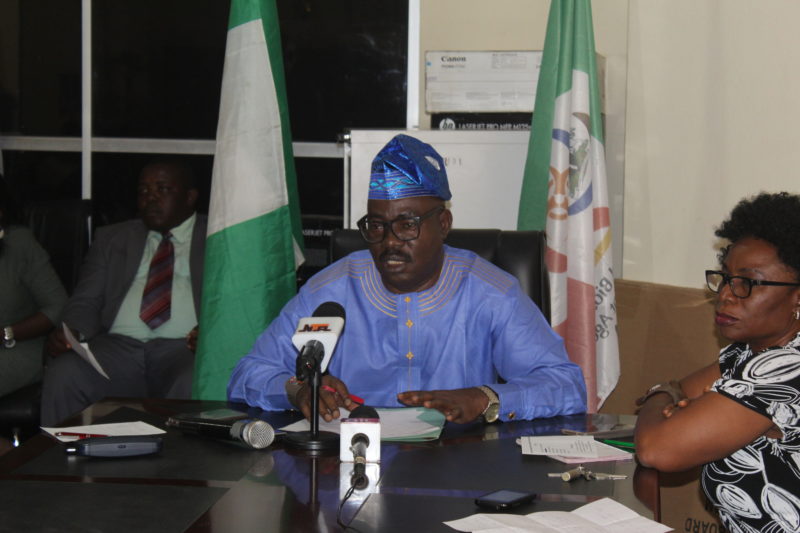
The Director General/CEO of the National Biosafety Management Agency (NBMA), Dr. Rufus Ebegba, has given importers of genetically modified (GM) seeds a seven-day ultimatum to formalise their dealings or risk being shut down.
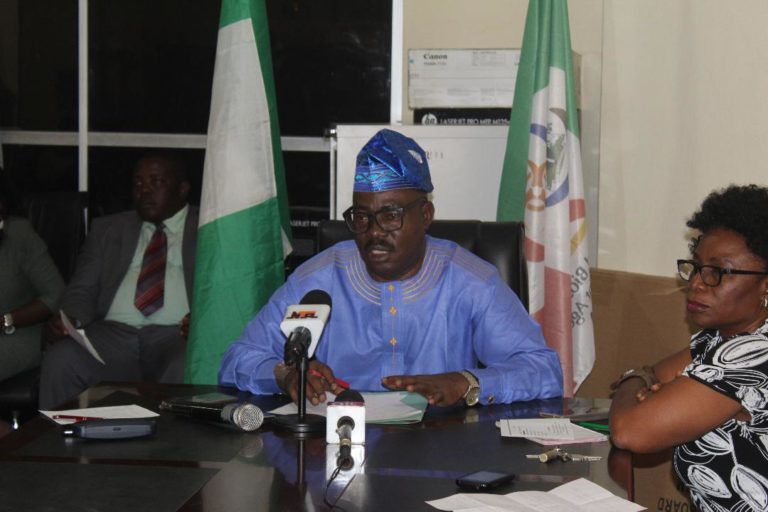
Director General/CEO of NBMA, Dr. Rufus Ebegba
The DG, who said this at a media conference in Abuja on Thursday, April 5, 2018, noted that there is a current influx of illegal GM products in the country and urged dealers to obtain the necessary biosafety permit from the agency before making such importation. The permit allows the agency carry out risk assessments on GM seeds.
Dr. Ebegba said the agency would not hesitate to prosecute those trading in genetically modified organisms (GMOs) and their by-products illegally. He noted that the agency was established to ensure that GM products are safe for Nigerians, adding that no product would be allowed into the country without the necessary safety analyses and risk assessments.
He recalled that there had been a meeting where potential importers were familiarised with the procedure to trade GMOs and their by-products.
The DG also stated that GM products in confined field trials would not be released to the market till they are confirmed safe to both human health and the environment.
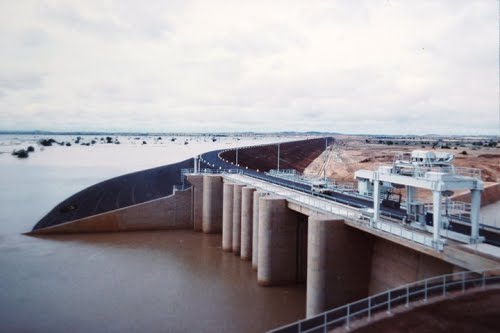
The Minister of Water Resources, Mr Suleiman Adamu, on Thursday, April 5, 2018 raised an alarm over continuous shrinking of water dammed by the Goronyo Dam in Sokoto State.
Goronyo Dam
Adamu told the News Agency of Nigeria (NAN) in Abuja that this had shown the impact of climate change as it was affecting livelihoods in parts of the country.
He said the ministry had carried out assessment of the dam two years ago, with obvious devastating evidences, saying that the recent visit had revealed an immediate threat.
“Well, I am really shocked about what I saw, you will probably recall that, in less than two years ago, I was there and was marvelling at the amount of water that remained in the dam.
“And to come and see this desolate place in less than two years, I think it is mind bugling.
“Obviously, we can see the effect of climate change right on our doorsteps, for those that were sceptical about it, this is real’’.
He said Goronyo Dam, which was the second largest earth dam in the northern part of the country, was built to store one billion cubic metres of water, saying that its reduction to only 10 per cent of its required storage was alarming.
“We didn’t expect this from such a large dam, but then for the fact that it has happened showed that we have a serious challenge of climate change,’’ he said.
The minister said the ministry would set up a technical committee, which would consists of team of experts to look at the issues, saying that climate change was not the only issue affecting the dam.
Adamu listed poor watershed management, deforestation, irrigation system, waste and poor management of hydrology in the catchment area as some of the factors affecting the dam.
He urged the National Assembly to pass the bill on the National Water Resources to enable the establishment of a comprehensive law to allow setting up of a catchment modelling committee to manage Nigeria’s water bodies.
According to him, the idea of desilting the dam is not an option as there will be the issue of where to drop the spoils. This will be too expensive to do, he adds.
“It would be better to look for another location to build another dam than to talk about desiltation, we are not ruling it out; we will allow the experts to look at it and advise us holistically.
“There is no quick fix about this; this is a natural phenomenon we are dealing with, if we are lucky, God in his infinite mercy may decide to make the rain to fill up the dam again to the brim.
“I am very optimistic about this, anybody that understands hydrology knows that there is a cycle, there is drought, low rainfall and high rainfall, and hopefully it will not happen again.”
The minister said there was the need for all Nigerians to learn from how poor management affected water resources potential, saying that steps must be taken to reverse this trend.
Latin American and Caribbean countries are at the forefront of the first effects of ocean acidification on people’s lives, according to experts who gathered in Santa Marta, Colombia to address the threat of acidification to the region at an event co-organised by the International Union for the Conservation of Nature (IUCN).
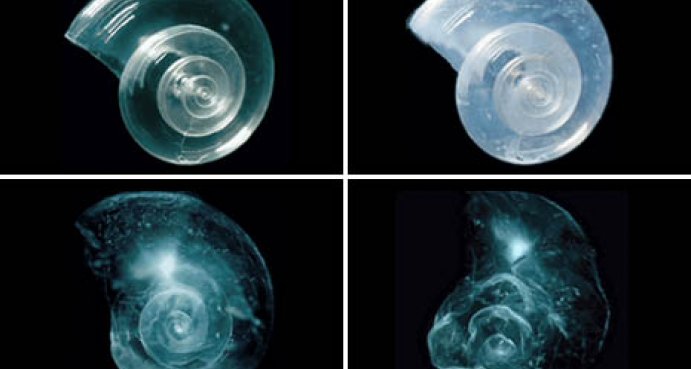
A shell placed in seawater with increased acidity slowly dissolves over 45 days
Research suggests that rising seawater acidity is already impacting the ability of organisms such as shellfish and corals in the region to build shells and skeletons. This could undermine regional food security and livelihoods in Latin America and the Caribbean, the first regional meeting of the Ocean Acidification International Reference User Group (OaiRUG) heard. HSH Prince Albert II of Monaco, IUCN Patron of Nature, who attended the meeting, called for urgent action on ocean acidification – a call echoed by others present.
“Ocean acidification is a silent storm that is starting to have real impacts on people’s lives, together with pressures from overfishing and pollution, exacerbated by ocean warming and reduced oxygen levels,” said Dan Laffoley, Marine Vice Chair of the IUCN World Commission on Protected Areas. “Latin American and Caribbean countries depend on the sea for food and livelihoods. Without significant cuts in carbon dioxide emissions, the effects of ocean acidification on this region could be catastrophic.”
Carbon dioxide emissions from human activities are altering ocean chemistry, causing the acidity of seawater to rise. Caribbean islands have seen decreasing pH levels for the last 20 years, whilst seawater saturation of calcium carbonate, necessary for organisms such as corals and shellfish to build skeletons, has declined by approximately 3% per decade. In the colder waters of northern Chile, reduced shell calcification has been observed along with a 25% reduction in the growth rate of cultured scallops. In Patagonian waters, studies indicate that ocean acidification will reduce biomass production of mussel aquaculture by between 20 and 30%.
“It was very important to discover the scale of vulnerability of marine tropical, temperate and cold-water ecosystems present in the Americas, and also the complexities and the economic implications of ocean acidification in the region”, said Captain Francisco Arias Isaza, General Director of the Colombian marine and coastal research institute, Invemar. “This places an obligation on scientists, governments and civil society to work together to enhance the knowledge and propose actions to address this issue.”
The event, attended by over 50 delegates from 19 countries including scientists, aquaculture experts, policy makers and civil society representatives, explored how the Latin American region can respond to increased seawater acidity levels. It identified gaps in the region’s ability to cope with current and future acidification, and set out priorities for moving forward, including funding, science, communication, policy decisions and implementation.
The meeting was funded by the Prince Albert II Foundation as part of a long-term strategy of HSH Prince Albert II, with additional support from the International Atomic Energy Agency, and held in collaboration with IUCN and the Latin American Ocean Acidification Network (LAOCA).
A Regional Action Plan on Ocean Acidification for Latin America and the Caribbean: Encouraging Collaboration and Inspiring Action will be published by Invemar in partnership with IUCN and LAOCA later this year.
Climate experts from Africa, including representatives from government, private sector, finance and research institutions, will meet from Monday, April 9 to Tuesday, April 10, 2018 in Nairobi, Kenya to discuss collaboration and technology transfer.
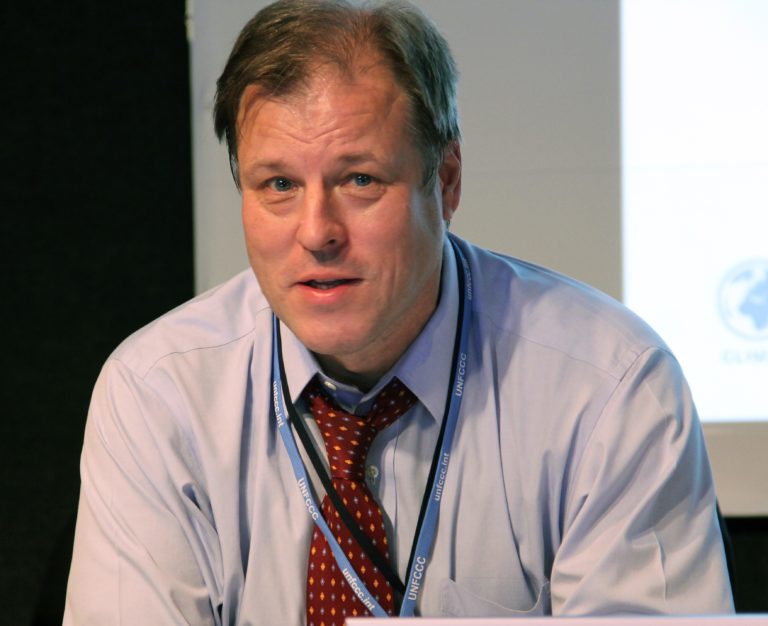
CTCN Director, Jukka Uosukainen
Nationally-selected technology focal points (National Designated Entities, or NDEs) from more than 40 countries including Algeria, Benin, Botswana, Burundi, Cameroon, Central African Republic, Chad, Comoros, the Democratic Republic of the Congo, Côte d’Ivoire, Djibouti, Egypt, Equatorial Guinea, Eritrea, Ethiopia, Gabon, Gambia, Ghana, Guinea, Kenya, Lesotho, Liberia, Madagascar, Malawi, Mauritania, Mozambique, Namibia, Niger, Nigeria, Rwanda, Senegal, Seychelles, South Sudan, Sudan, Swaziland, Tanzania, Tunisia, Uganda, Zambia, Zimbabwe, and South Africa will share experiences and best practices in the region. The United Nations Climate Technology Centre and Network (CTCN) will play host to the regional forum.
“Africa is facing increasing challenges from changing weather patterns, increasing droughts and extreme rain and floods that have an impact on the security of food supplies. By serving as a bridge between developing countries’ technology needs and the proven expertise of finance, private sector and research experts from around the world, the CTCN builds partnerships that achieve countries’ climate and development objectives,” says CTCN Director, Jukka Uosukainen.
The CTCN promotes the development and transfer of clean technologies, and provides developing countries with access to free technology solutions at their request by mobilising relevant technology experts from a global network of more than 400 technology companies and institutions to design and deliver customised solutions. Over 100 technology transfers are currently underway in more than 75 countries for sectors ranging from agriculture and energy to industry and transportation. The CTCN provides expert policy and technology support to developing country stakeholders, coordinated by the NDEs.
“Most African countries have chosen clean energy technologies as a part of their environmental solutions. ICRAF supports these efforts through its work in developing cleaner options for woody biomass-based energy, a key technology used across the continent,” said Tony Simons, ICRAF Director General. “In partnership with CTCN, we contribute to environmentally sustainable clean energy solutions by helping countries in Africa to formulate national policies and sub national programmes designed to meet their national targets on climate through agroforestry.”
As the implementing arm of the United Nations Framework Convention on Climate Change (UNFCCC) Technology Mechanism, the Climate Technology Centre is hosted and managed by the United Nations Environment and the United Nations Industrial Development Organisation (UNIDO).
The forum is organised together with the World Agroforestry Centre (ICRAF), a founding CTCN consortium partner.
The United Nations Environment Programme (UN Environment) Africa Office, the Renewable Energy Solutions For Africa (RES4Africa) and other partners will be conducting a Micro-Grid Training for the Africa Women Energy Entrepreneurs from the East Africa Community in Nairobi, Kenya from April 4 to 13, 2018.
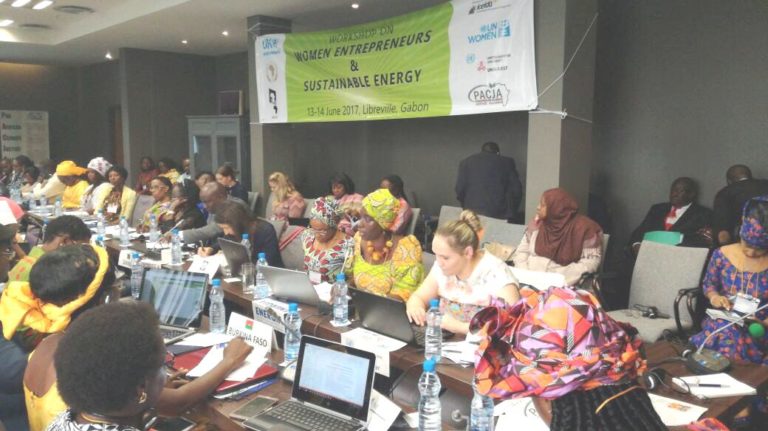
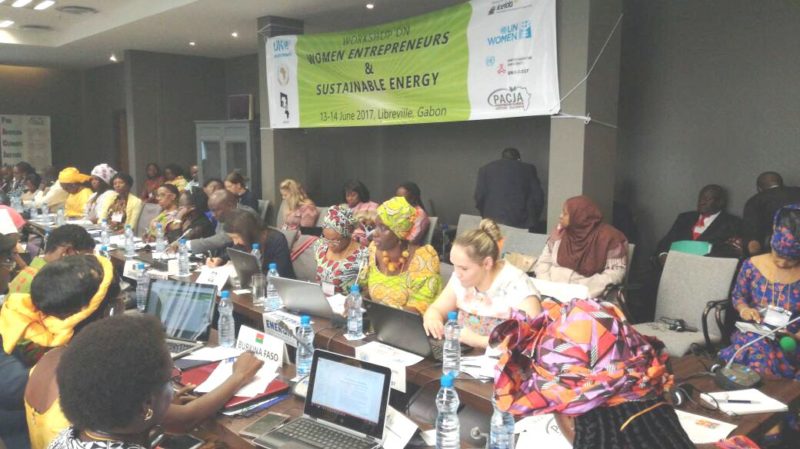
A gathering of women entrepreneurs
Over 25 women working as energy entrepreneurs are expected to participate in the training, including other women entrepreneurs from Europe including Italy. The training is expected to boost south-south cooperation and share best practices.
The objective of the training is to enhance access to energy in rural communities, local enterprises and job creation. This, according to the UN, will positively impact on health and education services, women empowerment, environmental protection and climate change mitigation.
The workshop holds at the Kenya Power and Lighting Company (KPLC) facilities in Nairobi and will use the 20 – 40kW micro-grid for hands-on training. It will support managers and engineers to plan, design, build and operate grid connected as well as hybrid mini-grids.
The workshop holds within the framework of the implementation of the innovative environmental solutions, as recommended by the African Ministerial Conference on the Environment (AMCEN), which has called on countries in the region to strengthen the technical and business skills of African women entrepreneurs in the energy sector.
The workshop will be led by the Micro-Grid Academy (MGA), which is an Eastern-African capacity building platform that aims to enhance access to energy and green jobs market through technical and entrepreneurial training programmes. The platform focuses on decentralised renewable energy solutions.
The UN Environment will convene a one-day meeting on Tuesday, April 10, 2018 to share best practices on renewable energy development among trainees, instructors and representatives of partners of Microgrid Academy.
A decade-old campaign by German environment activist group, Sign of Hope, to stop the destruction of lives, livelihoods and the environment in South Sudan as a result of large scale oil pollution may have accomplished a major breakthrough.
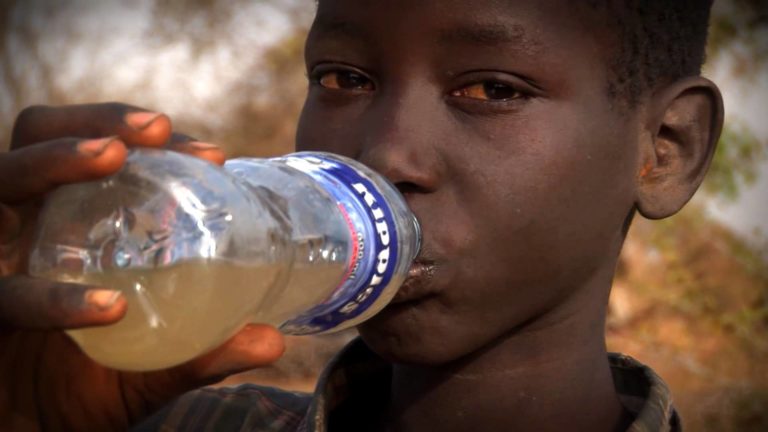
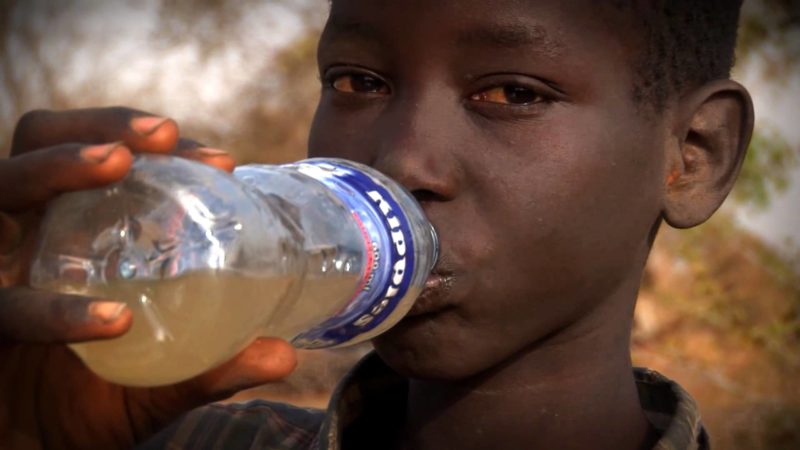
A South Sudanese boy drinking polluted water
In a hearing held on Wednesday, April 4, 2018 the country’s Legislative Assembly began to take a searching look at the causes and effects of the devastation, which has been repeatedly described by authoritative sources as being “one of the world’s great crimes against the environment and humanity.”
The hearing follows years of denials by the country’s government that the problem even existed. The denial was reportedly accompanied by the persecution of journalists who had uncovered the scandal.
The hearing features testimony by Dr. Bior K. Bior, the expert and somewhat fearless investigator of Big Oil’s practices, and by the country’s ministers of petroleum, the environment and others.
These testimonies, in turn, build on the systematic field work conducted by Sign of Hope and its team of scientists.
Sign of Hope says that, since 2008, it has waged “a heroic campaign” to put an end to “one of the world’s most horrifying environmental scandals”, which it describes as the pollution of water and land in South Sudan by China National Petroleum, Malaysia’s Petronas, India’ ONGC Videsh and other oil giants.
The group describes “the scandal” as the pouring of heavy metals and salts-laden wastes into South Sudan’s ground water. The consequences of the dissemination of this “witches brew”, it adds, are that millions of lives, livelihoods and square kilometres of the environment have been devastated, and some completely destroyed.
“This long and hard campaign has recently achieved a number of heartening and striking breakthroughs. Along with new and important information, these breakthroughs – and what they mean for the hard-pressed South Sudanese – will be presented at a press conference on Wednesday, April 18, 2018 in Berlin, Germany,” disclosed the group.
The forum, it was gathered, will feature input from Nnimmo Bassey, whose title of “Hero of the Environment” and receipt of the Alternative Nobel Prize stemmed from his leading the fight against Big Oil’s contamination of Nigeria’s Niger Delta; and from Bior K. Bior, who has repeatedly risked his life to investigate and chronicle abuses of power by South Sudan’s corrupt government and its corrupt allies.
Oil was discovered in what would become South Sudan in 1979. Production commenced in 1993. From the very outset there were concerns about the oil companies’ adherence to the environmental standards imposed on the disposal of the processed water ensuing from their pumping operations. Indigenous people consuming water taken from wells located in the catchment areas of the oil rigs began arriving at local clinics.
The peoples’ health complaints ranged from nausea and skin problems to neurological disorders. The villagers also reported that the water in their wells had become salty, that it stank, and that their livestock and plants were ailing, even dying after having consumed it.
In the early 2000s, local residents resisted their forced expulsion from their lands by oil companies and their governmental allies. South Sudan was recently ranked as the most dangerous country in the world for humanitarian workers – due to the world’s highest rate of fatalities and other grave incidents. This comes with the assassination of a number of journalists who were striving to report on the links between Big Oil and the South Sudanese government.
In 2008, Sign of Hope, a German NGO that supports two clinics in South Sudan, decided to launch an investigation. Conducted by Sign of Hope and associated scientists, this investigation comprised the making of field trips entailing the taking of samples of water in local wells and in catchment pits situated in the Thar Jath oil field. The samples of water and hair were then evaluated by laboratories of unimpeachable reputation.
The findings: the water was contaminated with a witches’ brew of heavy metals, salts and other noxious substances. The source of these was quite obviously the local oil field. Sign of Hope also delivered the ‘smoking gun’ proving the link between the desecration of the groundwater in and around the oil fields and the destruction of lives and habitats. This “smoking gun” took the form of samples of local residents’ hair, which international experts found to contain shockingly high concentrations of noxious chemicals. All told, some 180,000 local peoples have been exposed to the effects of this contamination.
Since Thar Jath is only one of the 10 oil fields in South Sudan, and since long-term and latitudinal effects have yet to be covered, the actual number of victims could well be in the millions. Perpetrators of the contamination are said to include notably China National Petroleum Corporation, Indian company Videsh and Malaysia’s Petronas.
Sign of Hope has been spearheading a campaign to convince the oil companies and their governmental and corporate allies to desist such practices, to remediate the environment, and to treat local residents’ ailments – and to provide them with compensation for their loss of life and livelihood. Affected by this contamination are the Sudd wetlands (one of the world’s greatest sources of biodiversity) and the Nile, which creates and drains them. Needed is a full-scale, country-wide investigation, especially in view of South Sudan’s plans to greatly ramp up the pumping of oil.
Forms of mobilisation: local residents have organised themselves into self-help groups that strive to make their communities aware – via talks, street theatre and works of art – of the dangers of consuming poisoned water. As has been the case with efforts to find alternative sources of water, this self-help has been hampered by the hunger and fear plaguing most of South Sudan. They have caused millions of South Sudanese to flee.
The French Republic has become the latest Party to endorse the Kigali Amendment, bringing the total number of nations who have ratified the modification to the Montreal Protocol to 31.
Emmanuel Macron, President of France
Besides France, the other Parties that have ratified the treaty include: Australia, Benin, Canada, Chile, Comoros, Côte d’Ivoire, Democratic People’s Republic of Korea, Ecuador, Finland, Gabon, Germany, Ireland, Lao People’s Democratic Republic, Luxembourg, Malawi, Maldives, Mali, Marshall Islands, Micronesia (Federated States of), Netherlands, Norway, Palau, Rwanda, Samoa, Slovakia, Sweden, Trinidad and Tobago, Togo, Tuvalu and the United Kingdom of Great Britain and Northern Ireland.
Sweden’s ratification last November of the treaty, which aims to bring about a global phase-down of hydrofluorocarbons (HFCs), ensured the pact will now enter into force with effect from January 1, 2019.
Head of the UN Environment, Erik Solheim, in a message, remarked: “Congratulations to France for ratifying the Kigali amendment to the Montreal Protocol! This is a great commitment to eliminate dangerous greenhouse gases and thus protect our planet!”
EU Commissioner for Climate Action and Energy, Miguel Arias Cañete, said: “The Kigali Amendment is proof of the global resolve to tackle climate change and shows what we can achieve when we work together. For Europe, implementation of our commitment will not only help us to meet our climate objectives but will also create new opportunities for European manufacturers of air conditioning and refrigerants.”
The Amendment was adopted by the 28th Meeting of the Parties to the Montreal Protocol on October 15, 2016 in Kigali, Rwanda. Under the Amendment, all countries will gradually phase down HFCs by more than 80 per cent over the next 30 years and replace them with more planet-friendly alternatives.
Developed countries will start reducing HFCs as early as 2019, while developing countries will start later. Phasing down HFCs under the Protocol is expected to avoid up to 0.5°C of global warming by the end of the century, while continuing to protect the ozone layer.
All prior amendments and adjustments of the Montreal Protocol, which marked its 30th anniversary in 2017, have universal support.
Implementation of the agreement is expected to prevent up to 80 billion tonnes CO2 equivalent of emissions by 2050, which will make a significant contribution to the Paris Agreement objective to limit the global temperature rise to well below 2°C.
Further benefits may be achieved by exploiting synergies with energy efficiency in the transition to alternative new technologies. Observers believe that the 30-year-old Montreal Protocol has been somewhat successful in protecting the Earth’s ozone layer, and the Kigali Amendment will allow it to make a wider and important contribution to global efforts to mitigate climate change.
The EU is said to be leading global efforts to limit emissions of HFCs and other fluorinated greenhouse gases. Its 2014 regulation on fluorinated gases will ensure that the EU can meet its obligations under the Kigali Amendment while also driving innovation in the field.
HFCs are synthetic substances which are mainly used mainly in refrigeration and air-conditioning equipment, as well as for propellants in foams. Their global warming effect is up to 15,000 times greater than that of carbon dioxide. The use of HFCs use is the fastest growing source of greenhouse gas emissions worldwide, although the EU’s own emissions recently fell for the first time in almost 15 years.
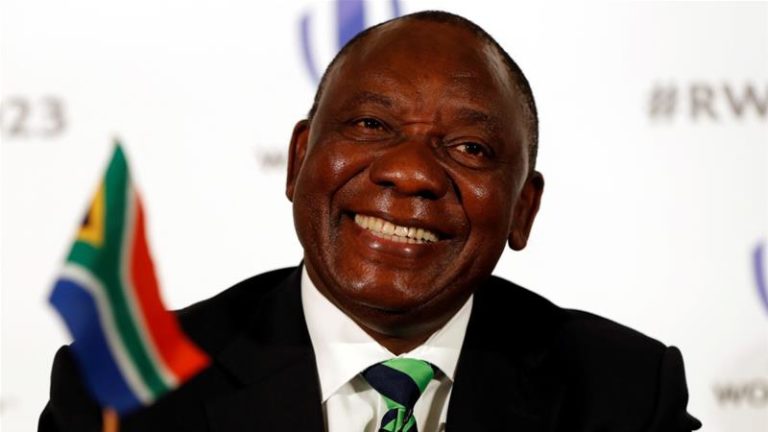
South Africa signed long-delayed renewable-energy contracts worth $4.7 billion with independent power producers on Wednesday, April 4, 2018 in the first major investment deal under President Cyril Ramaphosa.
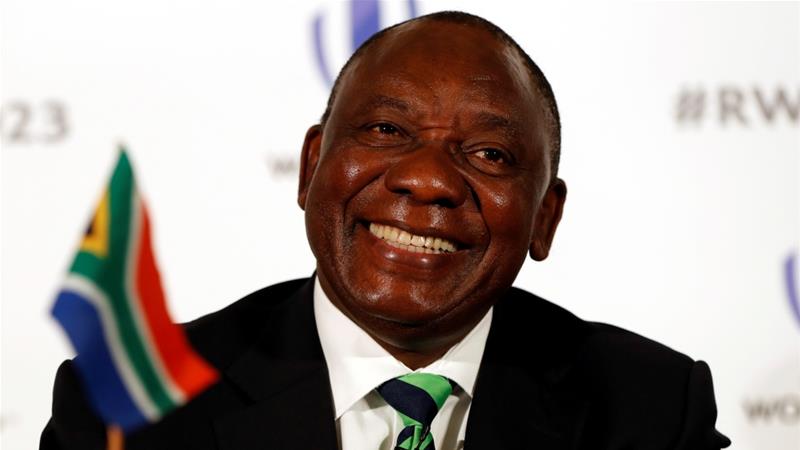
President Cyril Ramaphosa of South Africa
The signing of power purchase agreements for the 27 mostly solar and wind projects was held up for over two years under ousted president, Jacob Zuma, who favoured a plan to build additional nuclear power plants.
It was also the subject of a last-minute legal challenge by the NUMSA labour union and Transform RSA lobby group, but a court rejected their application for an urgent interdict last week.
The signing represents a victory for Ramaphosa, who has promised to unlock investment and kick-start economic growth since replacing scandal-plagued Zuma in February.
“This will bring much-needed policy and regulatory certainty and maintain South Africa’s position as an energy investment destination of choice,” the energy ministry said in a statement.
Ramaphosa, a wealthy businessman, has prioritised revamping the economy and turning around struggling state-owned enterprises like utility Eskom.
Eskimx will purchase power from independent producers as part of the deals agreed on Wednesday.
Opponents of the renewable contracts argued that Eskom could not afford the additional financial burden and that they would lead to job losses in the coal sector.
South Africa relies on coal-fired plants for more than 80 per cent of its electricity generation, while renewable contribute around 7 per cent.
Transform RSA, which opposed Zuma’s removal as head of state, said it would continue to fight the renewable deals and had appealed last week’s court ruling dismissing its application for an interdict.
“Eskom simply does not have the liquidity, cash flow and strong balance sheet to support this hideous gamble on the fiscus and state electricity supplier,” Transform RSA president, Adil Nchabeleng, said.