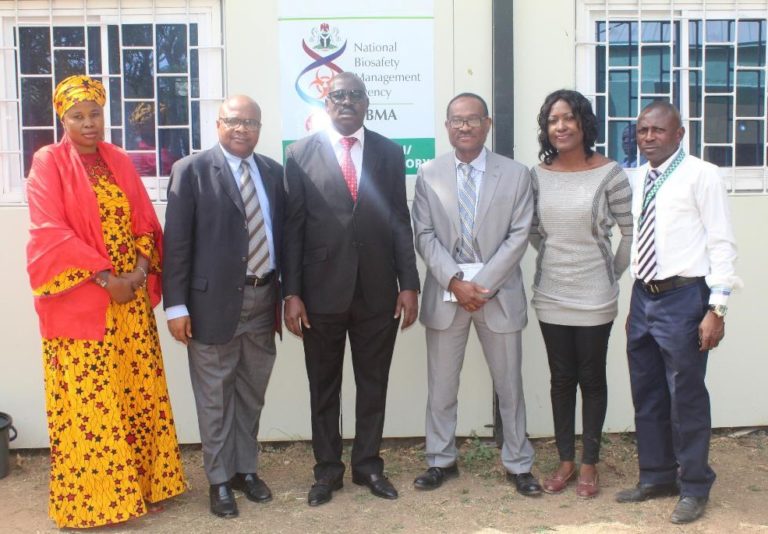
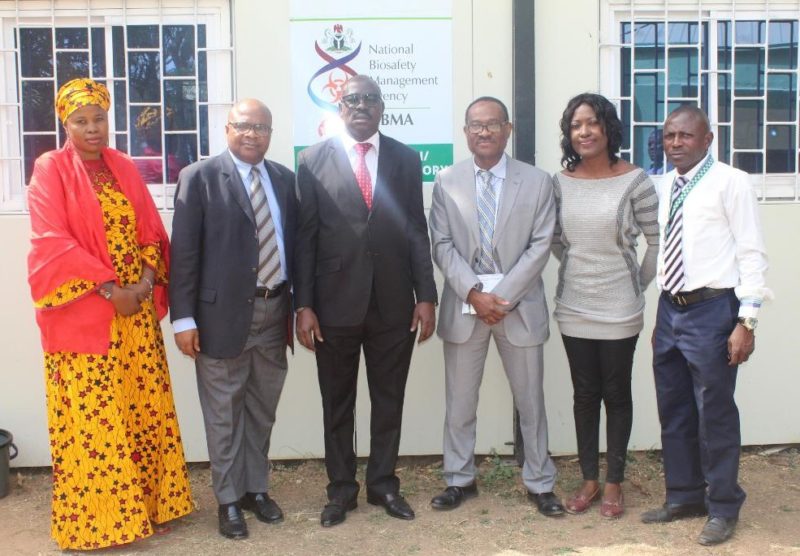
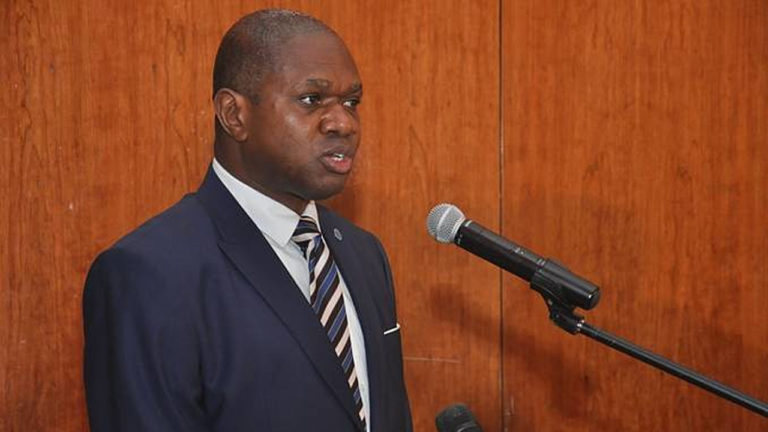
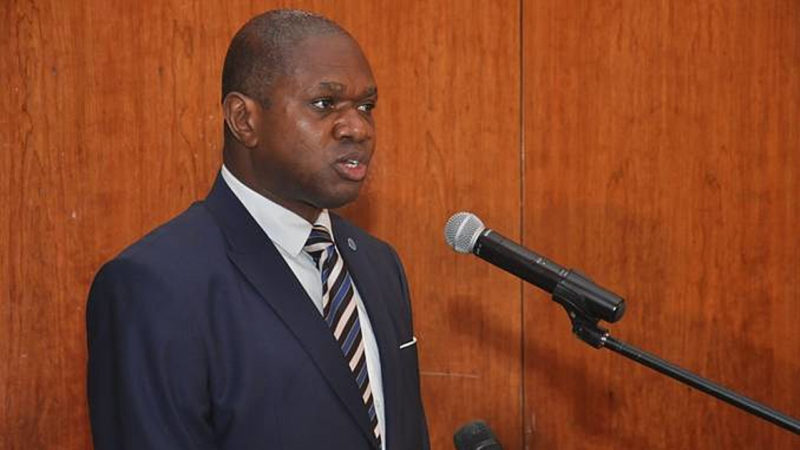
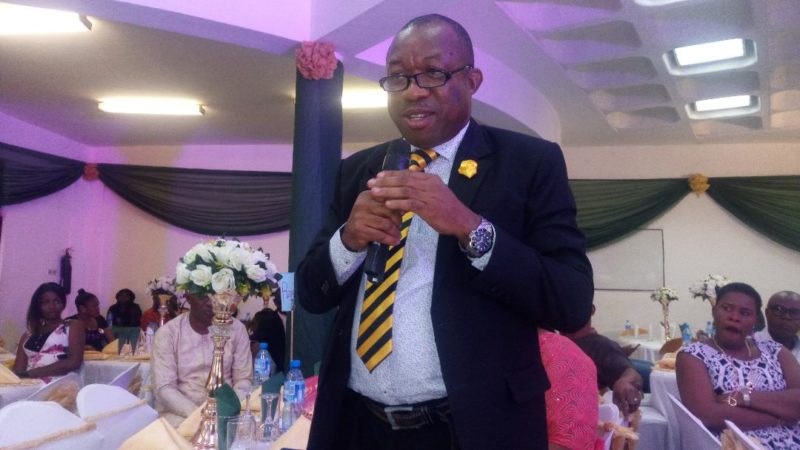
A team from the Lagos office of the United States Department of Agriculture (USDA), which visited the National Biosafety Management Agency (NBMA) in Abuja on Thursday, February 1, 2018 on a fact finding mission, has pledged its readiness to collaborate with the agency in achieving set mandate.
NBMA Director General, Dr. Rufus Ebegba, who received the team, said that the agency was established by the Federal Government of Nigeria to regulate the practice of modern biotechnology to ensure that it does not pose any threat to the environment and human health.
He noted that the practice of modern biotechnology would provide raw materials for industrial use as well as bring about job creation.
Dr. Ebegba stated that, since the inception of the agency, it has approved some permits for genetically modified (GM) crops for confined field trials, another for commercial release and recently approved a permit for GM maize for feed processing.
According to him, due process was followed in the issuance of all the permits, adding that risk assessments were conducted and no potential harm was found.
He said the agency has signed Memoranda of Understanding (MoUs) with other government agencies to ensure that all government border agencies are on the same page on the regulation of modern biotechnology and its products in the country.
Leader of the team, Jude Akhidemor, expressed optimism in spite of the challenges the practice of modern biotechnology faces and stated the department’s preparedness to work with the agency.
Also known as the Agriculture Department, the USDA is the U.S. federal executive department responsible for developing and executing federal laws related to farming, agriculture, forestry, and food.
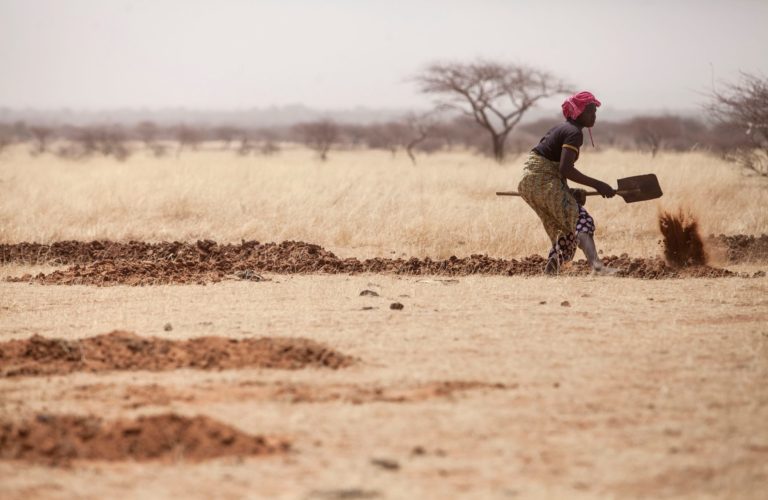
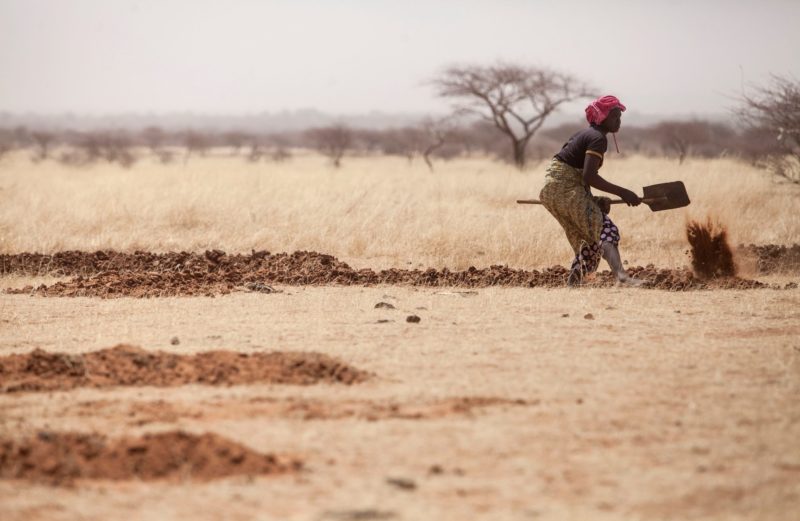
Deputy Director, Department of Drought and Desertification Amelioration, Federal Ministry of Environment, Mr Bala Gukut, has advised Nigerians to take measures to reduce land degradation in the country.
A degraded land
Gukut gave the advice in Abuja on Monday, February 5, 2018 in an interview with News Agency of Nigeria (NAN).
He said that Nigerians, especially those living in rural communities, should do everything possible to protect the land for useful developmental purposes.
“It is unfortunate that people do not accept change; they are not ready to adjust from the activities which their forefathers practised.
“When you tell them to change from the old attitude and educate them on the implications, they will tell you they cannot afford to change the practice.
“There are some activities which our forefathers practised that are currently affecting our lands; now we have discovered that if people continue with such activities, it will cause more harm to our land.
“We try to let people know that human activities such as bush burning and cutting of trees, among other activities, can cause land degradation.
“But people are not ready to accept the change and embrace our concept; this has become a big challenge to us.
“When we even tell them the implications of cutting down trees or bush burning, they don’t listen; rather they would respond that they are doing what their forefathers did.
“They often say `our forefathers never allowed trees to grow without cutting them; we have been cutting our trees for firewood even without replacing them.
“We put fire in our lands and do other activities; we don’t see any negative effect and our forest is still healthy for us; we cannot accept this change.
“Therefore, it is difficult for people to accept our concept and that is a big challenge to us.
“If we did not work towards restoring our degraded lands, it will be very difficult to keep people on farm.
“It will definitely affect our farm production. In other words, food security will consequently become a big challenge to us in the country,’’ he said.
Gukut urged the citizens to embrace the concept of land degradation neutrality in their activities, saying that such efforts would promote the achievement of environmental sustainability by 2030.
He said that the ministry was partnering with relevant stakeholders to ensure the restoration of degraded lands across the country.
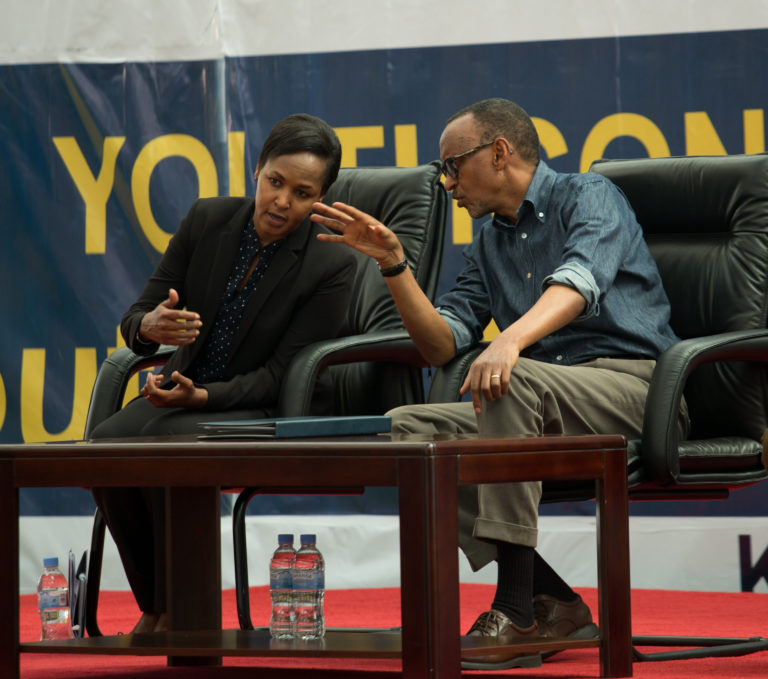
President of Rwanda, Paul Kagame, has said the nation made remarkable achievement despite inherent challenges.
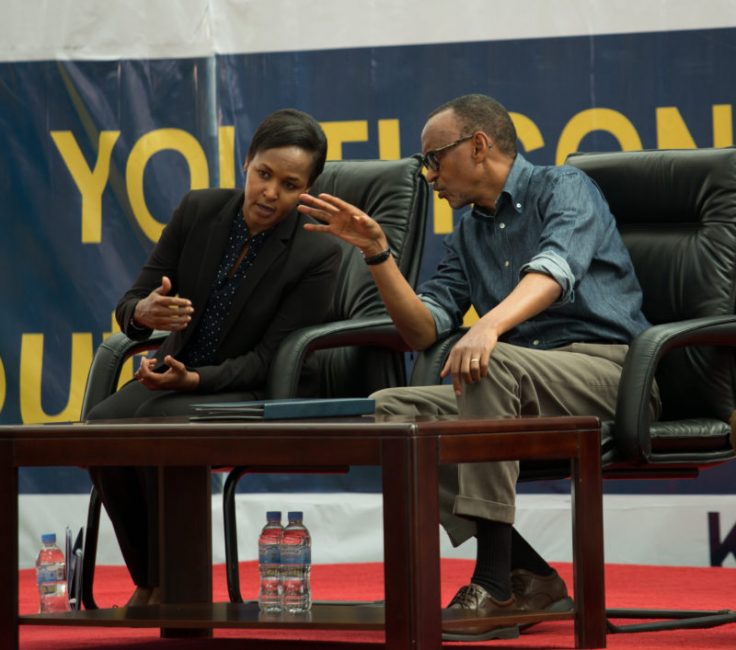
President Paul Kagame of Rwanda (right) during the Council. Photo credit: Hope Mafaranga
Kagame made the submission while opening the Umushyikirano (National Dialogue Council) recently at the Kigali Convention Centre in Kigali town, Rwanda.
The Council, which meets once a year, debated issues relating to the state of the nation and national unity.
Kagame said the country’s agriculture has grown to 8% this year despite the challenges that faced the country. Kagame named some of the challenges to include attack of armyworm and severe drought.
He however added that the country was able to overcome them due to the cooperation of government agencies that worked closely with farmers to improve on irrigation to combat the drought and found a solution to end armyworm crisis that had staged a threat to food security.
“Agriculture and animal production is the centre of our growth and we shall do everything possible to protect the sector from any attack,” he said.
Kagame also said government had invested in domestic seed production which has reduced imports of seeds and improved on the quality of the seeds farmers can get from the market.
“When we produce our own seed, we are able to monitor the quality of seeds. This will also reduce crop diseases that have affected the country in the past,” he added.
This year, a plague of crop-destroying armyworm caterpillars spread to East Africa where officials confirmed their presence for the first time in Uganda.
The caterpillars ate maize, wheat, millet and rice, which are key food sources in eastern Africa, where many areas are already struggling with shortages after years of severe drought.
They also attack cotton, soybean, potato and tobacco fields.
The president also said they will reach out to the young people who have just graduated to take up agriculture in order to increase the food production that will improve on the food security and exports.
Taking the audience through the investment and infrastructure, Kagame said the government invested $1.5 billion this year, adding that the Bugesera Airport is already under construction that will boost the economy of the country.
He said the Made-in-Rwanda strategy has increased the export to 50% while the imports declined to 3% and over 800 jobs were created.
He thanked the health workers for their dedication towards service delivery, adding that they have been able to contain HIV and malaria that were nightmares to Rwandans.
“We are now going to focus on disease prevention so that our people do not get diseases that could easily be prevented,” he explained.
The president said that, this year, over 169 international meetings took place in Rwanda because of the customer care the country has showed. “Rwanda will continue to a dream destination for such meeting and tourists at large,” he added.
The president also re-emphasised the need for regional integration, strengthening international relations and promotion of peace and security.
Giving an overview of the National Strategy for Transformation, the Rwanda Prime Minister, Dr. Edouard Ngirente, said government has created jobs for the youth and currently 24% of the workforce in Rwanda comprised young people.
He however said they are targeting 29% by 2024. “The government has decided to let the youth bridge and play a significant role in the job market,” he added.
Clare Akamanzi, Chief Executive Officer of Rwanda Development Bank, said the private sector should create over 2,000 jobs per year in order to fight unemployment.
She said these are needed for restructuring and adding value to the good that are made in Rwanda.
“Made in Rwanda, Start in Rwanda, grow and beyond Rwanda is the strategy we should focus our energies on as it has the capacity to grow our economy and create more jobs for the young people. That means we need a serous transformation and scaling up,” she said.
The Minster of State, Budget and National Planning, Mrs Zainab Ahmad, on Monday, February 5, 2018 said no fewer than 300,000 Nigerians displaced by Boko Haram insurgency are taking refuge in Cameroun, Chad and Niger.
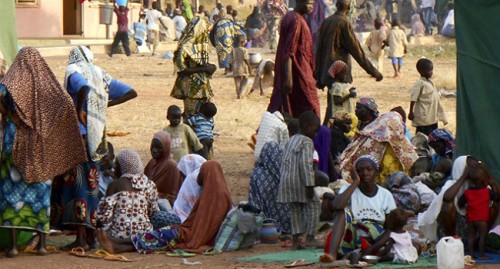
Women and children in a IDPs camp. The displacement was informed by the Boko Haram insurgency. Photo credit: channelstv.com
She made the disclosure at the Special Town Hall Meeting for Military and Security Agencies in Maiduguri, Borno State.
She said 8.5 million persons were displaced by Boko Haram insurgency in the northeast and that
80 per cent of the displaced persons were from Borno.
She explained that 30 per cent of the people were taking shelter at Internally Displaced Persons (IDPs) camps, while 70 per cent of them were staying in host communities.
The minister said the Federal Government, in partnership with the UN and humanitarian actors had initiated various programmes to address the effects of crisis in the region.
Zainab said government had distributed 30,000 tonnes of grains under the Emergency Food Intervention Programme, adding that the government, in concert with World Food Programme (WFP) was providing food assistance to over one million people on monthly basis.
She added that healthcare services were also extended to 42 local government areas in collaboration with the United Nations Children’s Fund (UNICEF) and World Health Organisation (WHO).
She noted that “government had been providing healthcare services to six million people in the past two years.
“We also controlled diseases such as cholera, measles and Hepatitis, as well as malnutrition and
provided water to affected persons.”
Ahmad said government had worked out modalities to ensure continuity and consolidate on the feat achieved in reconstruction, rehabilitation, reconciliation and re-settlement.
She stressed the need for effective programmes to build resilience and provide livelihoods to enable displaced persons to return to their homes and resume their normal lives.
While commending the military over the successes recorded in the counter-insurgency operation in the region, she said the military had been overstretched, and called for engagement of police to facilitate restoration of civil authorities.
The minister expressed concern over proliferation of humanitarian organisations especially in Borno,
saying most of the groups operate without proper registration.
She suggested effective modalities to fast track rehabilitation and training of teachers, nurses and doctors to address manpower shortage and enhance delivery of quality education and healthcare services.
Minister of Interior, Abdulrahman Dambazau, said Federal Government had signed a tripartite agreement with Cameroun and UN-Refugee Agency (UNHCR) to facilitate safe and voluntary return of refugees.
He said “there are about 90,000 Nigerian refugees in Cameroun alone.
“We have a technical committee and we are working with Cameroonian authorities to sort out some issues.
“The movement, expected to hold now, has, however, been shifted to next month.”
Dambazau said sound programmes were also implemented for rehabilitation, resettlement and de-radicalisation of repentant insurgents.
He added that government had adopted effective modalities to address social, economic and ecological challenges facing the northeast region.
The News Agency of Nigeria (NAN) reports that the special town hall meeting was organised by the Ministry of Information and Culture.
The meeting was attended by Minister of Defence Mansur Dan-Ali, Minister of Information and Culture Lai Muhammad, Minister of State, Budget and National Planning, Zainab Ahmad and Minister of Interior Abdulrahman Dambazau.
Other participants included Gov. Kashim Shettima of Borno, members of national and state houses of assembly, emirs, humanitarian and community based organisations, as well as civil society organisations.
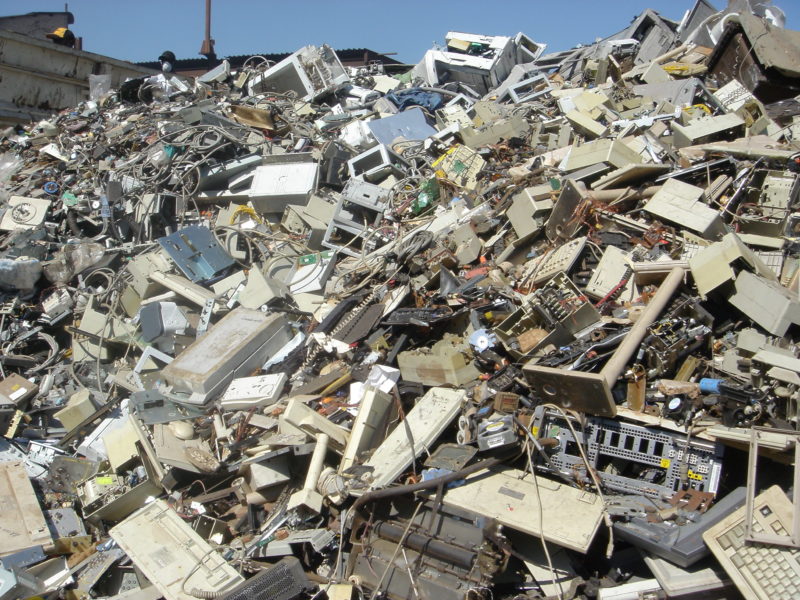
As African countries embrace the latest technology that includes use of phones, computers and other electronic gadgets, quite a number have however not thought about a national e-waste management strategy that will address the unsavoury effects of this venture that appears to have taken the continent by storm.
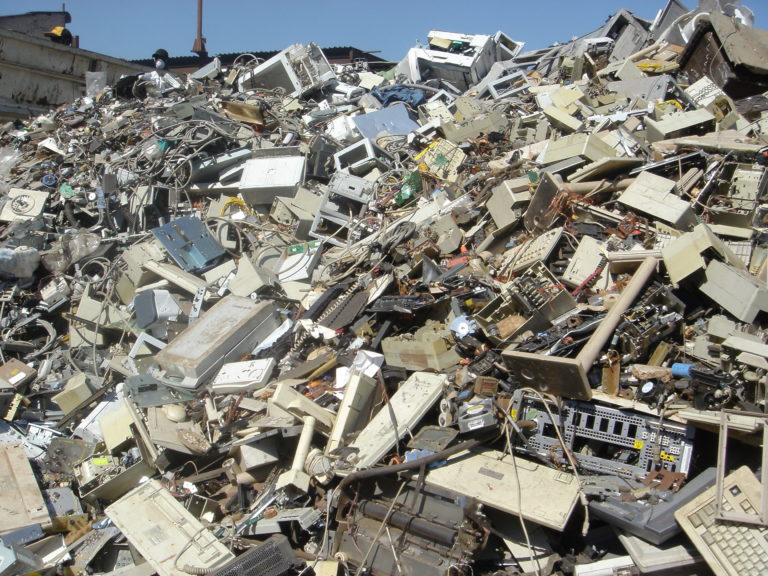
E-waste
According to the Rwandan Minister of Environment, Dr. Vincent Biruta, the rapid growth of economies has contributed to massive generation of electrical and electronic waste commonly known as e-waste where, an estimated global quantity of e-waste generation in 2014 was around 41.8 million tonnes, with this amount of e-waste expected to grow to 49.8 million tonnes in 2018, with an annual growth rate of 4 to 5 per cent, with most of this heading to developing countries for reuse and disposal.
“Rwanda, being no exception, has grown dependence on the use of modern technologies in all sectors of her economy, which has led to an increase in the amount of discarded EEE,” he said.
He said the discarded EEE contains hazardous substances such as lead, mercury, arsenic, cadmium, and selenium, among others, which poses peculiar threats and risks to human health and to the environment if not properly handled and disposed.
“Adequate e-waste management allows the recovery of precious metals such as gold, silver, platinum, palladium, copper and tin from disposed components, and also creates new business and job creation opportunities in the e-waste collection and management value chain, while reducing environmental burden to landfills,” he explained.
He added that e-waste with such risks and potentials should be separated from other types of waste and either recycled or properly disposed. “There is an urgent need for a clear framework for handling and disposal of the E-waste,” he said.
E-waste Programme Manager at the Ministry of Trade and Industry, Olivier Mbera, said one of the measures Rwanda adopted was to carry out a detailed inventory to establish the current e-waste situation, develop a strategy, policy and legal framework to enable the establishment of environmental friendly e-waste collection centres and dismantling facility.
Mbera said the ministry is also creating awareness in the private sector, public institutions and the communities, saying that the facility would benefit the conservation of natural resources, the creation of green jobs, the reduction of risks from hazardous materials affecting human health and environment.
“The national framework for e-waste recycling and a country wide collection scheme with incentives and the establishment of a dismantling facility will be as well as connected to a sustainable recycling industries on a national, regional and international level,” he said
David Toovey the communications advisor for Rwanda’s Green Fund said the country has invested close to $1.5 million in an e-waste facility.
Located in Bugesera in Eastern Rwanda, the second plant in Africa after South Africa, the facility is designed to collect and treat e-waste according the required standards.
“The recycling facility is now operational and yielding positive socio-economic impacts for the country. Some 300 people are already employed in green jobs and students have been given internships at the facility,” he said.
He also said collection centres have been established in each district across the country which has created more than 1,000 employments.
“The e-waste facility is so advanced that it can recycle 15,000 tons per year. Sustainable e-waste management is a robust engine of green growth as both consumers and recyclers play their part. We are proud of what we have achieved with support from the Rwanda Green Fund,” he said.
Precious metals such as gold, copper, and silver, along with other electronic components, are being extracted, recycled and sold to be made into other valuable items.
Jean Philbert Nsengimana, the Minister of Information Communication and Technology (ICT) said the demand on EEE has significantly increased in Rwanda due to its rapid economic development.
He said the demand is enhanced by the national initiative to enhance ICT that require varieties of ICT tools such as computers and mobile phones.
“As such, there has been an enormous increase in ICT usage that led to high demand of the newer products. Additionally, as people are eager for newer technologies, the period for use of these products is progressively decreasing. Consequently, older and outdated products are becoming obsolete and being discarded as E-waste in large quantities and at increasing rates worldwide,” he said.
“In most cases, e-waste is mixed with ordinary waste at homes and disposed of at regular dumpsites. The facility will therefore control end of life electronics and electrical equipment resulting industry development including ICT, thus enhancing green and healthy environment,” he said.
Uganda’s policy on e-waste in draft
According to Bob Nuwagira, the information officer at the National Environment Management Authority (NEMA) said Uganda has formulated a draft policy on e-waste.
“We have a problem with e-waste,” said Nuwagira, adding that e-waste is currently considered as waste and ends up at the landfill which is supposed to receive only solid waste.
“We do not have a landfill for e-waste and do not know how to manage it.”
He added, “Old electronic equipment contains toxic materials and some of them are persistent organic pollutants.”
The quantities of e-waste remain unknown but it expected to be large volumes. “So many people use mobile phones and computers,” he said, adding that such gadgets are being changed without proper disposal of the old ones. “Most people are still keeping electronic waste in their houses because of low levels of awareness.”
In addition, the e-waste sometimes is worked by artisanal workers something which Nuwagira believes exposes them to toxic materials and endangers their health.
Such concerns, according to Nuwagira are behind the policy on e-waste, which is currently in draft form. “The National Environment Management Authority together with ICT Ministry has been developing a policy on e-waste,” said Nuwagira.
As Uganda grapples with e-waste, neighbouring Rwanda is showing the way out of growing e-waste problem.
Katrin Jakobsdottir, the 41-year-old chairwoman of the Left-Green Movement, emerged in November 2017 as the newest Prime Minister of Iceland. One of the most well-liked politicians in the country, Jakobsdottir, a former education minister and avowed environmentalist, has pledged to set Iceland on the path to carbon neutrality by 2040.
Katrin Jakobsdottir, Prime Minister of Iceland
Considered to be Iceland’s most trusted politician, Jakobsdottir took office on Wednesday, November 29 after formally signing a new government accord with the centre-right Independence and Progressive parties.
As Iceland’s fourth prime minister in only two years, Jakobsdottir took office at a time when national politics was tainted by public distrust and scandal. A democratic socialist, Jakobsdottir is viewed as a bridge-building leader that may lead the country towards positive, incremental change.
“She is the party leader who can best unite voters from the left and right,” said Eva H. Onnudottir, a political scientist at the University of Iceland, according to the New York Times. “Because this coalition includes parties from the left to the right, their work will be more about managing the system instead of making ‘revolutionary’ changes.”
Since forming its governing coalition, Jakobsdottir’s Left-Green party has already taken bold steps to assert its environmentalism. Rather than appointing a party member of parliament, the Left-Greens have picked Guðmundur Ingi Guðbrandsson, environmental activist and CEO of Landvernd, the largest nature conservation and environmental NGO in Iceland, to serve as Minister of the Environment. The government’s new coalition is expected to continue the work to address climate change began under previous administrations.
While climate change has proven to be somewhat of a boost for Iceland’s tourism industry, which welcomed approximately 2.2 million visitors in 2017, the nation of just over 300,000 recognises the importance of shifting to a clean energy economy and preparing for disruptive changes in the coming decades. Iceland’s climate change action plan involves shifting to clean energy in transportation by improving infrastructure for electric cars, planting more trees, and sourcing all energy for public institutions from renewable sources.
Scientists have warned micro-plastics in the ocean and the toxic chemicals in them are posing a significant risk to giant animals like whales, sharks and manta rays that are marine filter feeders.
Micro-plastics in the ocean and the toxic chemicals in them pose a risk to giant animals like sharks
The scientific analysis published in the journal Trends in Ecology & Evolution said on Monday, February 5, 2018 that such animals swallowed thousands of cubic metres of seawater daily in an effort to capture plankton.
“In which case they can ingest micro-plastics directly from polluted water or indirectly through contaminated prey,’’ the scientific analysis revealed.
It said plastic-associated chemicals and pollutants can accumulate over decades and alter biological processes in the animals, leading to altered growth, development and reproduction, including reduced fertility.
“While a definitive connection between microplastic ingestion and toxin exposure for filter feeders remains to be confirmed, studies into seabirds and small fish have found a link,’’ Elitza Germanov, the lead researcher of the study, said.
The marine species are also in danger due to their habitat areas overlapping micro-plastic pollution hotspots like the Gulf of Mexico, the Mediterranean Sea, the Bay of Bengal and the Coral Triangle – an area from Malaysia to the Solomon Islands in the Pacific.
Report says micro-plastics are small plastic pieces less than five millimetres long, which are harmful to the marine life.
“Many of the animals, like manta rays, are threatened species, so, it is difficult to assess plastic concentrations via conventional methods such as stomach analysis.
“So, we are using the non-lethal sampling of small amounts of tissue which we are testing for chemical tracers using sophisticated and sensitive analytical tools,’’ Germanov said.
Landmark University, Omu-Aran, Kwara State, on Monday, February 5, 2018 inaugurated a sensitisation campaign against bush burning to celebrate the 60th birthday of Pastor Faith Oyedepo, the wife of the institution’s Chancellor, Bishop David Oyedepo.
The Vice-Chancellor, Professor Adeniyi Olayanju handing over the bush burning campaign fliers to the Dean, College of Agricultural Sciences, Professor Charity Aremu
The News Agency of Nigeria (NAN) reports that Faith, born on Feb. 5, 1958, is the Vice-President, Education, Living Faith Church Worldwide, also known as Winners’ Chapel.
The campaign was jointly organised by Landmark University Community Development Impact Initiative (LMUCDII), College of Agricultural Sciences and Omu-Aran Fire Service Outstation.
The campaign, which involved distribution of hand bills to educate residents on the danger associated with bush burning, took the team to schools and markets in Omu-Aran and other designated areas in Eleyin and Ipetu-Igbomina communities in the state.
Speaking at the inauguration, Prof. Adeniyi Olayanju, the Vice-Chancellor of the university, said that the campaign was in line with the institution’s corporate social responsibility.
Olayanju, who decried the negative impact of bush burning on humans, soil and environment, said the menace had become a stumbling block to the socio-economic development of communities.
He noted that the regulatory responsibility against incessant bush burning, especially at the grassroots, had gone beyond what the government alone could shoulder and advocated a collective effort to achieve the desired results.
Olayanju also said there was the need to check the activities of some hunters whom he accused of deliberately setting bushes on fire.
He listed the negative consequences of bush burning to include depletion of soil nutrient, environmental pollution, reduction in farm yield and income, rendering farm harvest unsafe for consumption as well as destruction of the ecosystem.
“Consequences of bush burning also include serious eye and respiratory infections as well as breathing problems among others.
” It is on this basis that we are spearheading the anti-bush burning campaign in Nigeria to tackle the menace head on,” he said.
Prof. Charity Aremu, Dean of the College of Agricultural Sciences, said the campaign was informed by the need to save both humans and the environment from bush burning-induced attack.
Aremu extolled the virtues of the celebrator, commending her commitment to spiritual devotion and restoration of the dignity of the black race.
“These activities are geared toward honouring a woman of immense spiritual values who detests human oppression in all its ramifications,’’ she said.
An animal breeder, Prof. Olufunmilayo Adebambo, on Monday, February 5, 2018 said Genetically Modified Organisms (GMOs) should not be an issue in Nigeria as there were presently no infrastructure for it.
GMOs
Adebambo told the News Agency of Nigeria (NAN) in Lagos that embarking on GMOs could lead to loss of lives as facilities such as power to preserve and sustain such foods were unavailable in the country.
She decried the epileptic power supply in Nigeria, adding: “I had to spend over N4 million to establish solar power and make the Federal University of Agriculture Abeokuta’s (FUNAAB) Biotechnology Centre functional while I was the director there.’’
The animal scientist said GMOs were not necessarily harmful except if factors in the food were modified to the extent that they became unhealthy.
“Genetically Modified Organisms are a non-issue in Nigeria because of our obvious constraints. We will be killing ourselves if we decide to start modifying foods genetically.
“Also I do not support importation of GMOs. Nigeria should stop being an all or any comers market.
“China does not open its borders to foreign products even India; so, why can’t Nigeria emulate these countries?’’
Adebambo said what were undertaken by scientists in Nigeria were biotechnology not GMOs.
She described GMO as an introduction of foreign genes into livestock.
“For example, using banana to produce insulin for diabetic patients instead of extracting insulin from the Islet of Langerhan (part of a pig’s intestines),’’ she said.
On the availability of agric genetics experts in Nigeria, Adebambo said there should be over 400 geneticists in Nigeria under the Animal Breeding Genetics Group of Nigeria (ABGEN) group.
“I have personally produced over 50 postgraduates students in Nigeria.
“Low investment by the government in our educational system is its bane.
“We have everything in quality and quantity in Nigeria; the problem is however that we do not put our money where our mouth is,’’ she said.
The don said animal breeding was not an all-comers field and not a rapidly evolving enterprise rather it was generational, capital intensive and time-consuming.
“As an animal breeder, you forgo holidays, you cannot go on strike, forgo Christmas and Ramadan holidays.
“This is because somebody must feed your animals, clean their pens and water them every day.
“You must be ready to be committed to the work and you must have trustworthy people working with you,’’ she said.
Adebambo is a first female professor of animal breeding in Nigeria and was a former director of the FUNAAB biotechnology centre, who has been lecturing for 41 years.
Reactions have trailed Nigeria’s ratification of the Minamata Convention on Mercury, with the United Nations Industrial Development Organisation (UNIDO) promising assistance, and a civil society operative urging greater national consultation and awareness.
UNIDO Nigeria Country Representative, Mr Jean Bakole
The UNIDO Representative and Regional Director, Regional Office Nigeria, Jean Bakole, in a reaction, described the development as an achievement for all.
Speaking on his behalf, Environmental Expert, UNIDO Nigeria Regional Office, Abuja Industrial Development, Oluyomi Banjo, told EnviroNews on Sunday, February 4, 2018 that “work has just started, and we must all continue to make concerted effort to protect our health and the environment”.
His words: “Now that the country is fully bound by the obligations of the Convention but also eligible for the policy and financial benefits, actions should now be geared towards national and regional cooperation. “On behalf of the UNIDO Regional Director, UNIDO will actively support the country for the implementation of Nigeria’s Minimata Initial Assessment which has been completed and endorsed.”
Leslie Adogame of SRADev Nigeria
Executive Director of SRADev Nigeria, Leslie Adogame, on his part, underlined the need for greater national consultation and awareness on products to be phased out or phased down by 2020.
He said: “My first reaction is that of great elation about the ratification development. We must congratulate ourselves and the Nigerian government for keeping to their promise the journey that started about 10 years ago.
“The Nigerian government must from this time stay true to the spirit and intent of the Convention. In reality, the implementation process is just about to begin with domestication. It is time for National Action Plan (NAP), the enabling laws and regulations urgently need to be reviewed or promulgated.
“It is an era for deeper government transparency on who is exporting or importing from which countries for instance mercury products before phase out by 2020.”
Nigeria on Thursday, February 1, 2018 deposited its instrument of ratification, thereby becoming the 88th Party to the Minamata Convention.
The Minamata Convention on Mercury (“Minamata Convention”) is an international environmental convention for global community to sswork collaboratively against mercury pollution. It aims at achieving environmentally sound mercury management throughout its life cycle.
The Convention was adopted at the diplomatic conferences held in Minamata City and Kumamoto City in October 2013.