The Federal Government has initiated a National Oil Spill Contingency Plan (NOSCP) for the clean-up and remediation of impacted oil spill sites in the country, an official has said.
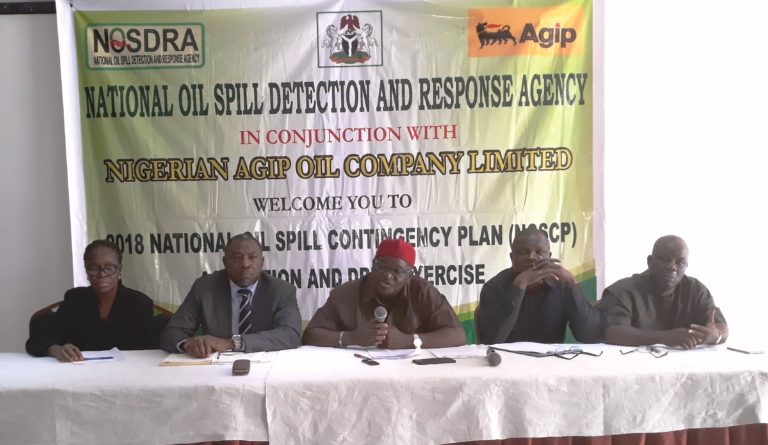
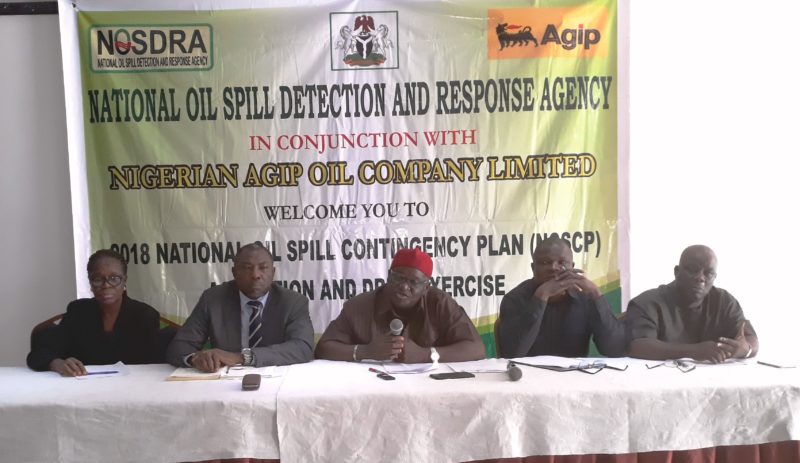
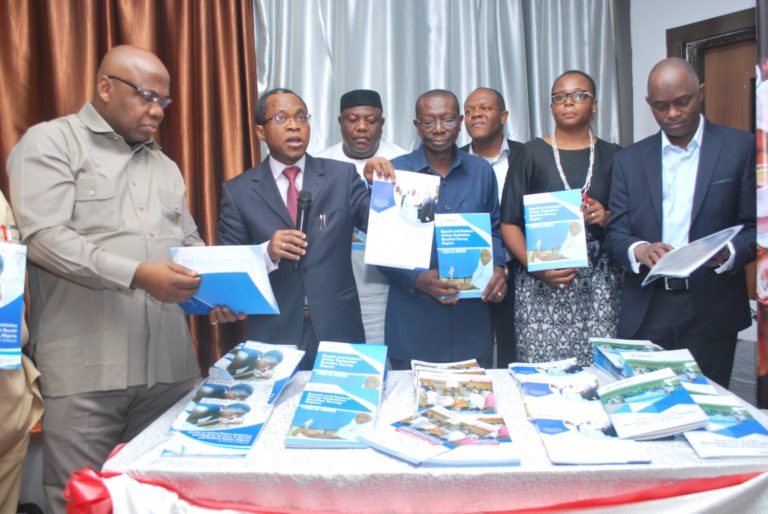
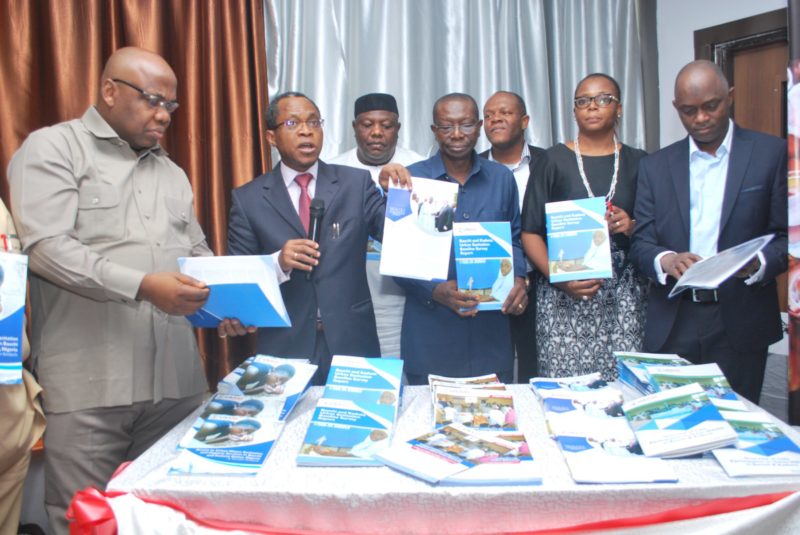
Officials at the flag-off of a Joint Activation and Drill Exercise in Port Harcourt, Rivers State
Mr Peter Idabor, Director General of the National Oil Spill Detection and Response Agency (NOSDRA), said this at the flag-off of a Joint Activation and Drill Exercise in Port Harcourt, Rivers State, on Tuesday, April 17, 2018.
He said the exercise, which is in collaboration with the Nigeria Agip Oil Company (NOAC), would ensure timely, effective and appropriate response to oil spills in communities.
“The objective is to test the effectiveness of our incident management structure and emergency preparedness of all major stakeholders in oil spill containment and management.
“The exercise will also ensure the effectiveness in inter-agency collaboration as a necessary ingredient in responding to oil spill incidents,’’ Idabor said.
He further said the exercise would open communication between stakeholders, communities and the media as well as ensure clear understanding in the line and chain of command.
“Similarly, it will help assess availability and effectiveness in the deployment of oil spill response equipment and technical personnel.
“The National Oil Spill Contingency Plan will incorporate useful recommendations and updates arising from the exercise,” Idabor added.
He said the agency had succeeded in its bid to become a regional coordinating centre for oil spill preparedness and response in the West, Central and sub-Saharan Africa.
The NOSDRA boss urged stakeholders to take the exercise as call to national duty.
Also speaking, the General Manager, District of NOAC, Mr Rotondi Marco, said his company was delighted to partner with NOSDRA towards the protection of environment from oil spillage.
Represented by Uchechukwu Amaechi, NOAC’s Manager of Environment, Marco said that arrangement had been put in place to ensure hitch-free activation of the plan.
“NOAC will continue to collaborate with NOSDRA knowing the exercise is vital in ensuring preparedness when oil spill occur,” Macro said.
In Nigeria, about 50% of the population (estimated to be about 191 million people) are not connected to the national electricity grid and majority are located in the rural areas. Umon Island and Bagana Community, both located in Biase Local Government Area of Cross River State are among the numerous communities in the country that are not connected to the national electricity grid.
Array of solar panels in Umon Island
The two communities are located in extremely difficult terrain that makes them very unattractive for grid extension. They are surrounded by the water of River Cross. Until this time, the community members rely on traditional energy sources such as candles and kerosene lanterns for lighting. Those that can afford it generate electricity from the privately-owned petrol or diesel generators.
The Umon Island Mini-grid Project is a 50 kW solar photovoltaic system that is supplying electricity to two communities – Umon Island and Bagana Community, with a total population estimated to be about 5,000 people. The facility will be serving a total of 253 houses in the two communities which include three schools, two primary health care centres, six churches and local businesses.
The project is expected to boost commercial activities in the two communities and give them ready access to information. The project is being implemented to complement the Federal Government policy of increasing access to electricity especially in rural areas to boost economic activities. The technology is carbon neutral, thus helping to mitigate the emission of greenhouse gases
Furthermore, the facility will help to minimise the use of unsustainable energy sources such as the kerosene lamps, candles and fossil fuel bases private generators – estimated 80% of the inhabitants of the two communities use petrol/diesel generators to generate electricity. It is also expected to boost health care services and reduce rural-urban migration. The facility has since commenced operation and the people of Umon Island and Bagana now enjoy electricity without using private generators.
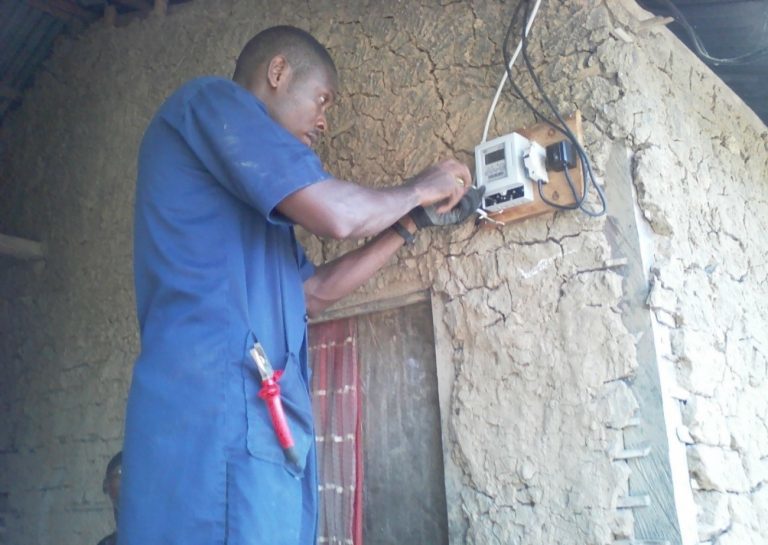
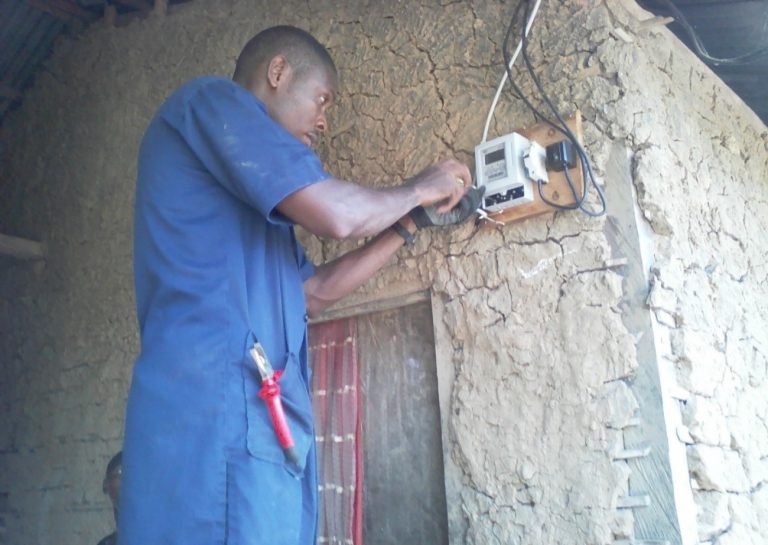
Installation of pre-paid meters in Umon Island
As a way of preparing the communities ahead of the operation of the mini-grid, two workshops were organised at Umon Island by the Community Research and Development Centre, a not-for-profit outfit and the Project Developer, to educate the community on energy efficiency and conservation, safety tips on using electricity and on the productive use of electricity.
Before commencing activities in the communities, the Project Developer signed a memorandum of understanding (MOU) with the leadership of both communities. Furthermore, before connecting the individual households, end-user contract was signed with each customer. A total of 91 households representing about 50% of the total customers have been connected as at the time of this report. Each customer was given a single-phase prepaid meter with IC card to top up when credit is exhausted.
The people of Umon Island and Bagana Communities now enjoy electricity just like those living in big cities. The electricity is not free; the tariff was determined using a financial modelling tool. The preliminary study in the communities revealed that members are willing and able to pay for the electricity. The Project is supported by the Nigerian Energy Support Programme (NESP) of the GIZ and the European Union while the Community Research and Development Centre serves as the Project Developer and Operator. The project was executed in collaboration with the Cross River State Government.
Last month’s call by the Manufacturers Association of Nigeria (MAN) that the Federal Government should halt the proposed hike in the excise duty on tobacco products starting from June 4, 2018 is not all together unanticipated. But the fact that it is the umbrella body of manufacturers that spoke on behalf of the tobacco entities is what makes the call suspect.
According to scientists, tobacco smoking is dangerous to health
The suspicion arises from the fact that tobacco transnationals like the British America Tobacco Nigeria (BATN), Philip Morris Nigeria International Limited and other tobacco entities with limitless financial muscle are members of the body and have all it takes to call the shots in MAN.
The alarm about likely job losses (surprisingly computed quickly and put at 20,000 workers) and possible shut down of the tobacco entities operating in Nigeria, hold no logic when viewed in the light of contemporary examples of countries that have hiked tobacco excise duty to safeguard the lives of their citizens.
Within our own Africa, countries like Algeria, South Africa and Gambia have in place 38.14 per cent, 36.52 per cent and 30 per cent excise duty respectively on tobacco products compared with Nigeria’s just-announced cumulative specific excise duty rate for tobacco which is calculated at 23.2 per cent of the price of the most sold brands.
Finance Minister, Dr. Kemi Adeosun, had announced last month that the new policy would be spread over a three-year period from 2018 to 2020 to moderate the impact on the prices of the products. Ironically, the new rates fall far short of the recommendation of the World Health Organisation (WHO) in Article 6 of its Framework Convention on Tobacco Control (FCTC) that countries implement 70% excise on tobacco products.
According to the WHO, policies to control tobacco use, including tobacco tax and price increases, can generate significant government revenues for health and development work as well as protect people’s health from leading causes of death such as cancers and heart disease.
With a recent report by the Africa Tobacco Control Alliance (ATCA) showing that Nigeria is among 10 key African nations particularly targeted by the tobacco industry for marketing of cigarettes in single sticks, it can be said that the Federal Government’s policy to hike excise duty on tobacco at this time is indeed timely.
A previous survey carried out by the Environmental Rights Action and the Ibadan-based Nigeria Tobacco Control Research Group (NTCRG) also showed deliberate targeting of kids by the tobacco industry through marketing of cigarettes in sticks near schools. This practice was and prevalent in five states – Lagos, Oyo, Enugu, Kaduna and Nassarawa.
The job loss myth that the MAN is championing has been debunked time and again. Tobacco control does not harm economies. The number of jobs dependent on tobacco has been falling in most countries, largely due to technological innovations and privatisation of once state-owned manufacturing. In Nigeria for instance, the job loss argument cannot hold water since BATN – the biggest tobacco manufacturing company in Nigeria – has an automated plant manufacturing billions of sticks of cigarettes in Ibadan.The factory is supposedly world class and requires little human effort aside starting the machines.
Activists have time and again said the company employs less than a thousand Nigerians and demanded that the company make public the number of its employees to justify its constant alarm about job losses whenever tobacco control policies are in the horizon.
Whichever way, it cannot be argued that with the aggressive marketing of tobacco by tobacco entities, if Nigeria does not take very drastic steps an epidemic will follow. The response of the Federal Government to MAN should be to totally discountenance its call. It is unacceptable for the body to cry wolf on the new policy even when the decision to adopt it was taken after an all-inclusive meeting between the Tariff Technical Committee of the Federal Ministry of Finance and key industry stakeholders.
Looking beyond the issue at stake, what Nigerians want the government to do is for it to ensure full implementation of the policy and commencement of enforcement of the nine key provisions of the National Tobacco Control (NTC) Act announced by the Minister of Health, Professor Isaac Adewole, on May 31, 2017. The Act prohibits smoking in public places and bans sale of cigarettes in single sticks and to persons below 18 years of age, among others.
The International Institute of Tropical Agriculture (IITA) in Ibadan, Oyo State, has reiterated its commitment to conducting researches that will nourish African agriculture.
Dr Nteranya Sanginga, Director General of the IITA
The Director-General of IITA, Dr Nteranya Sanginga, gave the assurance at the 21st Annual Symposium of IITA and International Association of Research Scholars and Fellows (IARSAF) on Tuesday, April 17, 2018 in Ibadan.
News Agency of Nigeria (NAN) reports that the symposium had “Sustainable Graduate Research for Transformation of Africa’s Agro-food and Industrial Utilisation’’ as its theme.
Sanginga, who was represented by Dr May-Guri Saethre, the IITA Deputy Director-General, Research for Development (R4D), said that without basic research, the institute would have nothing to offer regarding the achievement of its goals. He urged the research fellows to strategise on how their research could intensify agriculture and development in Africa.
“We will continue to do our best and support you to ensure that you develop researches that will transform Africa and its people.
“We are educating young scientists to pick up new ideas so that when the old scientists leave tomorrow, the new ones will continue,” he said.
Also speaking, Dr Kenton Dashiell, the Deputy Director-General of IITA, urged the researchers to strive to build a sustainable career through hard work.
“Do more than just get high marks in your exams, work closely with your supervisors and strive to achieve higher giant strides in your work,” he said.
Earlier, the chairman of the event, Dr Akin Fagbemi, said that the theme of the symposium was of great importance because there were a lot of problems facing Africa’s agriculture, including climate change.
“The future of Africa belongs to researchers, the earlier we start carrying out researches that will improve Africa’s agriculture, the better for us Nigerians,” he said.
The IARSAF President, Mr Taofeek Adegboyega, said that the symposium was designed for research fellows of IITA to provide update on their research activities.
He noted that it also served as a platform to exchange innovative ideas among young professionals.
Adegboyega said that the theme was chosen as a result of the perceived disconnect between research and industries, adding that there was, therefore, the need to seek avenues to bridge gaps and conduct researches on industrial utilisation.
He added that the symposium would aid efforts to mitigate the challenges of food insecurity, malnutrition and poverty.
“We have erudite experienced speakers, we shall have a special session tagged ‘Mentor and Mentee’ with senior scientists, as well as training and technical sessions, among others.
“More importantly also, we shall visit two rural communities in the bid to disseminate IITA’s research solutions and provide technical support to local farmers,” he said.
The highlight of the event was the launch of IARSAF website.
The Lagos State Government has urged residents to desist from dumping refuse in drains to prevent flooding.
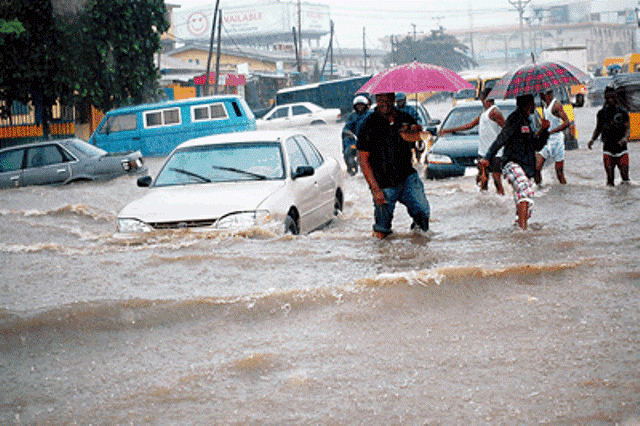
Flood in Lagos: The city of Lagos is susceptible to flooding from rainfall
Mr Oluwatoyin Adeni-Awosika, the Director, Public Enlightenment and Community Relations in the state’s Ministry of Information and Culture, gave the advice in an interview with the News Agency of Nigeria (NAN) in Lagos on Tuesday, April 17, 2018.
He said the state government had begun maintenance work on drainage channels ahead of the rainy season.
“The state government has embarked on a number of strategies aimed at enlightening the citizenry on the need for them to be weary that the rainy season is coming.
“They should be weary of doing many things that cause flooding such as building on drainage channels, dumping of refuse in drainage channels, pot holes and what have you.
“So government continued to educate everyday telling people; please bag these refuse very well and dump at appropriate places.
“Don’t dump in drainage channels; don’t drop in rivers; don’t dump in the wrong places; we all will suffer the environmental and medical implications.
“So let us all do the right thing; put your refuse in appropriate places.
“It is a collective thing. Government is doing its own part; the citizenry too equally do their own part; then we all will enjoy.
“Government will enjoy; you too will enjoy the dividends of democracy.
“We started with jingles early in the year to sensitise people.
“We’ve been going round different parts of the state on the need for everybody to know we should prevent flooding.
“Not that when the flood comes, we start pushing blames.’’
Adeni-Awosika said the ministry was also working closely with market leaders, the academia, civil society groups, and clerics towards sensitising residents to the measures they should take to prevent flooding.
Lagos State Government on Monday, April 16, 2018 said that it would need a minimum of five engineered landfill sites and 25 transfer loading stations to tackle environmental issues.
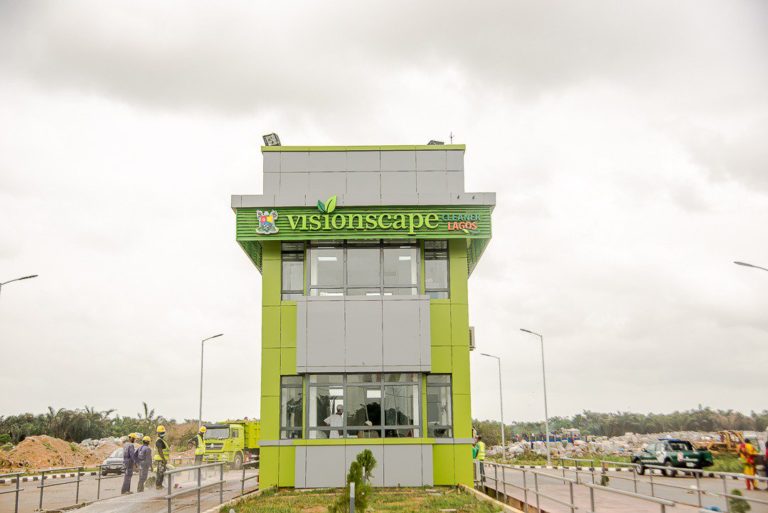
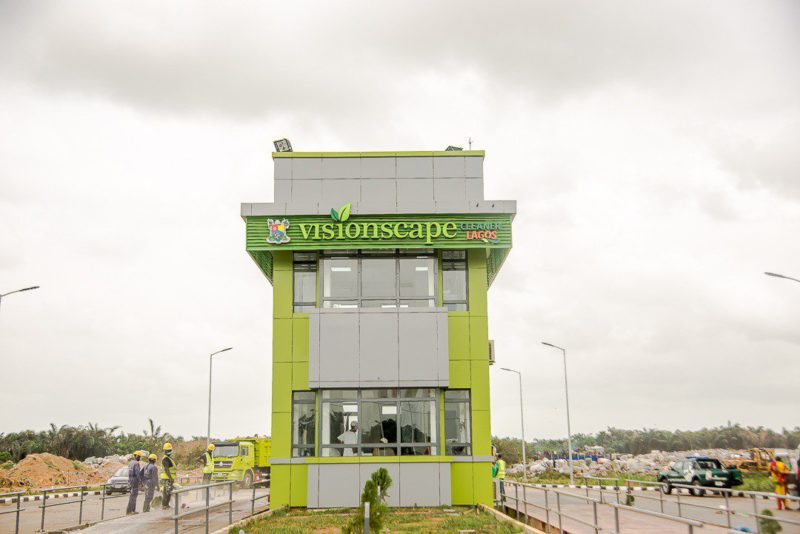
Engineered Landfill Site / EcoPark, Epe, Lagos
Gov. Akinwunmi Ambode made this known at the opening of the 52nd annual conference of Science Association of Nigeria (SAN) with the theme: “Science and Technology in Emerging Smart Cities and Sustainable Development.’’
The governor, who was represented by his Senior Special Adviser on Education, Mr Obafela Bank-Olemoh, said that the government was committed to ensuring a smarter Lagos through infrastructure development.
“The environment issue is something we are confident will be a thing of the past in a few months’ time, with the ecosystem in place.
“We are working to see that we have engineering landscape sites around the state.
“Lagos needs a minimum of five engineered landfill sites and 25 transfer loading stations.
“The Cleaner Lagos Initiative is supposed to be a private sector-driven model that can help the state government to achieve its goal in the long run,” he said.
According to Ambode, the government does not have the financial strength to achieve the goal alone; it needs to involve partners.
“For the government to get the sites in place, it will cost government a minimum of $25 million,” he said.
He said that the state government would continue to create an enabling environment for private/public partnership.
“We know that, as a government, we are to create an enabling environment, and we are doing that.
“We are excited by what is going on today. The state has no other choice, but to continue embracing technological advancement.
“We appeal to Lagos residents to bear with us; the state will eventually be the best in Africa,” the governor said.
According to Ambode, the first engineered landfill site being built in the country is in Epe, Lagos.
Mr Sewanu Adebodun-Toplonu, Chairman, Local Organising Committee of the conference, urged SAN members to contribute their quotas to national development in line with the objectives of the association.
He said that it was paramount for scientists to take their rightful positions in the society, adding that science was the bedrock of economic growth and technological advancement.
The chairman said that the association would mobilise its members for robust scientific researches for the development of the state.
“I am very optimistic that through SAN’s technical backup, science officers under the employ of Lagos State and the organised private sector will give support.
“They will support government in providing quality services to achieve not just a smart city, but a low carbon smart city.
“Scientists will commence advocacy for resource efficiency and cleaner production centres across the country,” he said.
The News Agency of Nigeria reports that the conference will end on April 19.
Under nutrition, obesity and diet-related non-communicable diseases are leading to catastrophic costs to individuals, to communities and to national healthcare systems in Africa. Every year, it is estimated that 11 million Africans fall into poverty due to high out-of-pocket payments for healthcare. According to experts attending a meeting in Nairobi, Kenya, nutritional status, a critical component of a person’s health and wellbeing, must be recognised as a necessary building block towards achieving Universal Health Coverage (UHC) and the Sustainable Development Goals (SDGs) by 2030.
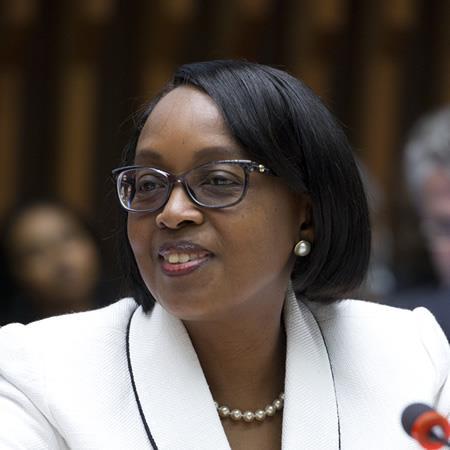
Dr. Matshidiso Moeti, the World Health Organisation (WHO) Regional Director for Africa. Photo credit: pbs.twimg.com
“Not only do current figures mean we are unlikely to achieve the six global nutrition targets for 2025 but also the more ambitious target of ending all forms of malnutrition by 2030, which is integral to the goal of ensuring healthy lives and promoting wellbeing for all, at all ages,” said Dr Matshidiso Moeti, the WHO Regional Director for Africa. She added that “an exclusive focus of our energies – and finances – on curative services and related medical equipment, supplies and medicines to treat diseases that often are rooted in malnutrition will limit our chances of achieving health and wellbeing for all.”
In 2016, an estimated 59 million children in Africa were stunted and 14 million suffered from wasting – a strong predictor of mortality among children under five. That same year, 10 million were overweight; almost double the figure from 2000. In a 2014 report on Africa, it was estimated that 5 percent of males and 15 percent of females over 18 years of age were obese. The same report showed that 8 percent of adults above 25 years of age had diabetes and that is expected to double by 2035, while hypertension affected 46 percent of adults.
Poverty, hunger and disease are the main drivers of malnutrition in the African region and are linked with poor living conditions, lack of education, insecure livelihoods, and lack of access to basic services including health care and healthy, safe, nutritious foods.
“The burden of under-nutrition still persists across the African region, and today its impacts are being felt alongside overweight, obesity and diet-related non-communicable diseases in many poor households,” said Dr Felicitas Zawaira, Director of the Family and Reproductive Health Cluster at the WHO Regional Office. “In recent years, we’ve rightly focused many of our energies on addressing hunger, but what we must recognise is that ending hunger does not guarantee improved nutrition,” she added.
Obesity and diet-related NCDs are largely the result of lifestyles characterised by limited physical activity and the consumption of unhealthy diets consisting of highly processed foods that are rich in calories, sugars, fats, salt and additives, but low in essential nutrients.
“When micronutrient deficiencies are taken into account, Africa is in fact experiencing a triple burden of malnutrition,” said Abdulaziz Adish, Deputy Regional Director and Nutrition Advisor, Nutrition International. “Micronutrient deficiencies, which often pass unnoticed, are responsible for reduced bodily resilience and resistance to infections. They compromise early child development, negatively affect reproductive health and reduce work rate capacity,” he added.
It is estimated that almost 50 percent of pregnant women in Africa suffer from anaemia, which increases death risk for themselves and their unborn babies, as well as incidences of low birth weight.
According to Dr Zawaira, “improving nutrition sustainably requires consideration of how to produce, deliver and ensure access to healthy diets and essential nutrients, not just greater quantities of food,” which is the vision of the Rome Declaration and Framework of Action endorsed by Ministers of Agriculture and Health at the Second International Conference on Nutrition in 2014.
“Tackling all forms of malnutrition for the achievement of UHC and the health-related SDGs requires remedial actions from multiple sectors and on many fronts,” Dr Zawaira added. These actions, she explained, include policies and community action to control the marketing and consumption of unhealthy foods and beverages (including breast milk substitutes); setting nutrition standards and dietary goals; nutrition labelling of processed foods; policies to promote consumption of healthy foods through taxation and subsidies; initiatives to promote consumption of fresh fruits and vegetables and increased physical activity; social marketing campaigns and multi-component community-based interventions, among others.
Sector-specific recommendations by participants include:
The health sector should provide nutrition and health promoting interventions in the first 1000 days of life and throughout the life cycle; including screening, early diagnosis and treatment of malnutrition and associated diseases, as well as monitoring health outcomes.
The agriculture sector should play a critical role in climate-smart, sustainable, production of diversified nutrient-rich foods and promotion of family farming to help secure communities’ livelihoods.
The trade sector should contribute through enforcing food standards, food labelling and taxation to facilitate consumer access to healthy foods.
The education sector should support integration of nutrition and health promotion in the curriculum; school garden projects and school feeding; nutrition standards for school meals; controlling the marketing of unhealthy foods and non-alcoholic beverages in schools; and provide facilities for physical activity.
Food processors and manufacturers should play a key role in promoting healthy diets through food reformulation, fortification and appropriate labelling of food products.
Civil society and consumer organisations should continue looking out for the common good and holding stakeholders accountable for safeguarding public health.
Academia will be relied on to fine-tune the evidence of what works and how to reduce malnutrition.
The media should educate the public on how the choices they make when shopping for and consuming food translate in terms of nutritional wellbeing.
The experts warned that unless countries in Africa start enacting measures to tackle the double burden of nutrition affecting the continent, the road towards UHC will be marred with obstacles as will the aspiration to achieve health and wellbeing for all by 2030.
The WASH Coordination Project (WCP) has launched Nigeria’s first learning platform on urban water, sanitation, and hygiene (WASH), a Community of Practice (CoP) to facilitate the knowledge exchange within the country’s WASH sector.
WASH Manager USAID, Dr. Joachim Ezeji (left); Chief of Party, WASH Coordination Project (WCP) Timeyin Uwejamomere; Chairman, Community of Practice Steering Committee, Hosanna Dajan; Deputy Director / Acting National Project Coordinator of National Urban Water Sector Reform Project, Olabode Fashoyi, Dr Taibat Lawanson of the University of Lagos, Akoka, and others at the public presentation of Urban WASH Community of Practice in Lagos
To ensure the Community of Practice for Urban WASH in Nigeria is as informative and useful as possible, the WCP Team discussed its design with donors, government officials, development practitioners, utility management, civil society organisation representatives, and other interested stakeholders across the country over the span of a year.
In August 2017, Suleiman Adamu, the Minister of Water Resources, introduced the Community of Practice at the National Council of Water Resources, in Akure, Ondo State, Nigeria and inaugurated a 10-man Steering Committee comprising of sector professionals in various relevant field of expertise and an adviser to the Committee. In November 2017, with the support of the Steering Committee, the WASH Coordination Project made the CoP Online Learning Platform publicly available.
The CoP is focused on triggering improvements in four critical domains of utility operations: commercial viability; governance and social accountability; citizens’ engagement; and urban sanitation and hygiene. The website, which can be found at this link: https://www.urbanwashcop.ng, includes a Research Centre with relevant WASH documents; a Practitioner’s Toolkit with a variety of tools for individuals involved in the provision of WASH services; and an Opportunities page with information on available jobs, tenders, as well as grants within the urban WASH sector in Nigeria; among numerous other resources on urban WASH.
According to Timeyin Uwejamomere, the WCP Chief of Party, utilities that have successfully implemented reforms and, as a result, are closer to offering sustainable services partly attribute this achievement to peer-to-peer learning and knowledge development support. He, therefore, hopes the CoP will serve as a learning platform for WASH practitioners to help Nigerian water utilities fast-track the implementation of needed reforms.
In his speech, Dajan Hossana, the chairperson of the COP Steering Committee, noted that the primary purpose of the website is to provide readily available and accessible information on best practices in the WASH sector though the framework of a self-sustaining, demand-driven, and locally appropriate platform to foster dialogue among practitioners to accelerate reforms in the sector.
“The website serves as a resource center for Nigerian urban WASH stakeholders by providing a platform for disseminating practical and relevant information on WASH development, tools, and best practices,” he said.
The WCP is a two-year project funded by the United States Agency for International Development (USAID) in Nigeria. The project seeks to achieve the dual benefits of improved health and well-being for Nigerians through increased and more financially sustainable access to WASH services, and to build the confidence of the public in the government’s ability to deliver basic services in Bauchi and Kaduna states. The Development Innovations Group, a U.S.-based firm with offices in Kaduna and Bauchi, is the prime implementer of the WCP.
The WCP will support the maintenance of the website until the project ends on October 31, 2018, at which time a Nigerian entity will become responsible for maintaining the online Community of Practice (CoP), while the Steering Committee (SC) continues to provide oversight on operations. In addition to supporting the WCP to make the CoP website available to the public, the Steering Committee has also worked with the WCP to develop a strategy and manual that will guide the operations of the Community of Practice.
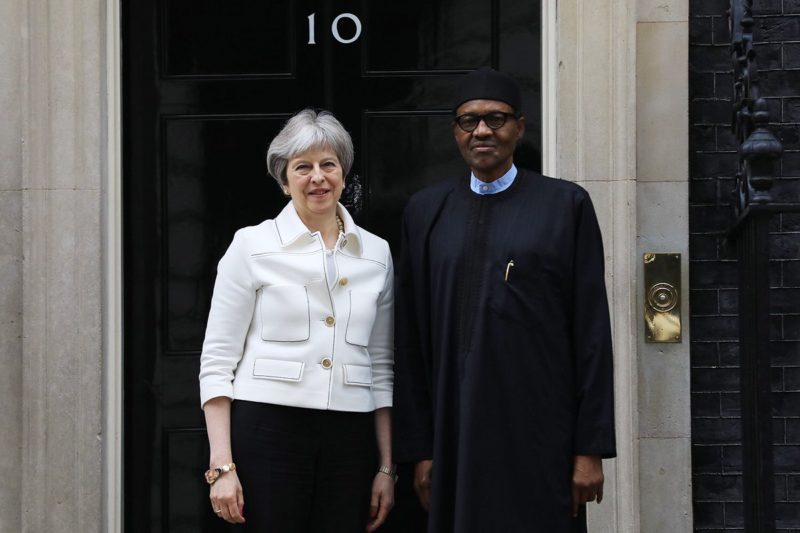
Fifty-three heads of states converged on London, the United Kingdom, on Monday, April 16, 2018 for the biennial Commonwealth and Heads of Governments Meeting (CHOGM), a gathering that should have taken place in Vanuatu before it was hit by Cyclone Pam in 2015.
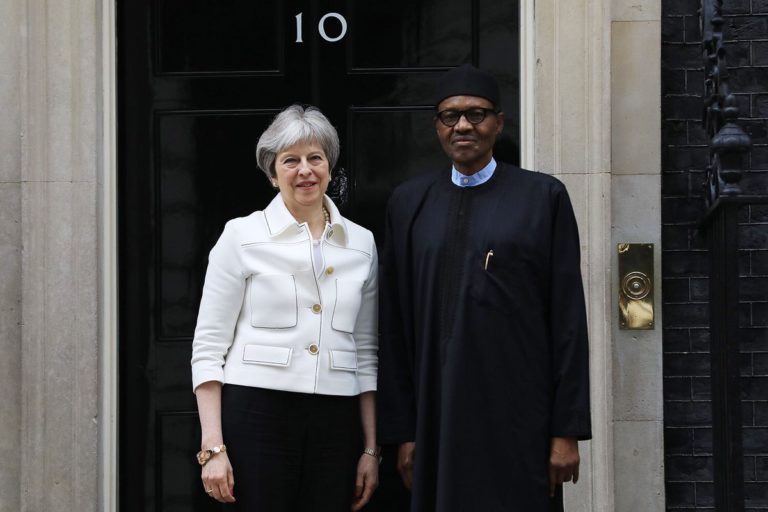
President Muhammadu Buhari of Nigeria and British Prime Minister Theresa May meet as CHOGM kicks off, on Monday, April 16, 2018
The meeting, which comes to a close on Wednesday, April 18, marks the start of a countdown towards 2020, when countries from around the world are expected to raise their climate ambition in line with the Paris Agreement. Leaders from Pacific Islands, Africa and South East Asia are expected to demand more action from global leaders as climate impacts start to bite across the planet.
The head of the Commonwealth, Queen Elizabeth II, on Monday unveiled her plan involving all 53 Commonwealth members to radically accelerate global forest cover, a vital step in protecting biodiversity and tackling climate change. The UK, Canada, New Zealand and Fiji are all expected to underline their commitment to accelerating climate action during the summit.
Commonwealth member states – who are blessed with millions of square kilometres of ocean – also will announce new plans to protect the seas from plastic pollution and highlight the impact climate change is having on fish species and ocean acidification.
The week of the CHOGM began with four forum events, bringing together representatives from the worlds of business, civil society and government.
The forums offer an opportunity for Commonwealth dialogue and provide a platform for wider debate of some of the key issues and challenges, in advance of discussions by leaders at CHOGM.
For the first time, all of the Commonwealth Forums are coming together in the same venue on a single day to discuss shared agendas, forge important new partnerships and celebrate common interests.
Organisations from around the globe will on Wednesday, April 18, 2018 host a forum to share their experiences on issues relating to Veolia’s global water operations. The organisation holds its annual shareholders’ meeting in Paris, France on Thursday.
The offices of SEEG, the power and water utility operated by Veolia
Veolia Environment S.A., branded as Veolia, is a French transnational company with activities in four main service and utility areas traditionally managed by public authorities – water management, waste management, transport and energy services.
“The corporation’s water projects have been plagued by allegations of corruption, labour and human rights abuses, corner cutting, negligence and failed promises spanning multiple continents. These issues not only have a negative impact on development and democracy, but also carry real financial implications. While Veolia will be quick to gloss over such concerns, the corporation is under investigation in multiple countries and is facing numerous class action lawsuits, among other major issues that present real risk for investors,” disclosed Philip Jakpor of the Environmental Rights Action/Friends of the Earth Nigeria (ERA/FoEN).
The virtual forum will feature people from cities that have been affected by the water projects, who are currently opposing pending projects, and organisations monitoring Veolia’s global activities will detail the reality of Veolia’s water operations.
Participants from countries with documented issues of human rights abuses with Veolia will join the virtual press briefing from the United States, India, Nigeria and Paris, it was gathered.
From Flint, United States, Gina Luster of Flint Rising will speak on the city’s water crisis blamed on Veolia, while Alyson Shaw of the Pittsburgh United and the Our Water Campaign will speak from Pittsburgh, Pennsylvania. Jammu Anand of Nagpur Municipal Corporation Employees Union will join the call from Nagpur, India, while Jean-Luc Touly of the Association pour le Contrat Mondial de l’Eau, Front Républicain d’Intervention Contre la Corruption will join from Paris, France.
Jakpor of the ERA/FoEN will speak on water privatisation plans by the Lagos State Government and the aversion of Lagosians to the takeover of the public water utility company by Veolia, Abengoa and Metito.
Shayda Naficy of Corporate Accountability will also join from Boston, Massachusetts.
According to a statement by Taylor Billings, press officer at Corporate Accountability, Veolia is facing scandals in multiple continents.