Home Blog Page 1916

Berlin 2018 African media fellows to raise the stakes on energy transition

0

African media fellowship to the 2018 Berlin Energy Transition Dialogue have underscored the urgency of deploying innovative solutions and technologies to fast-track the transition to clean energy in Africa.
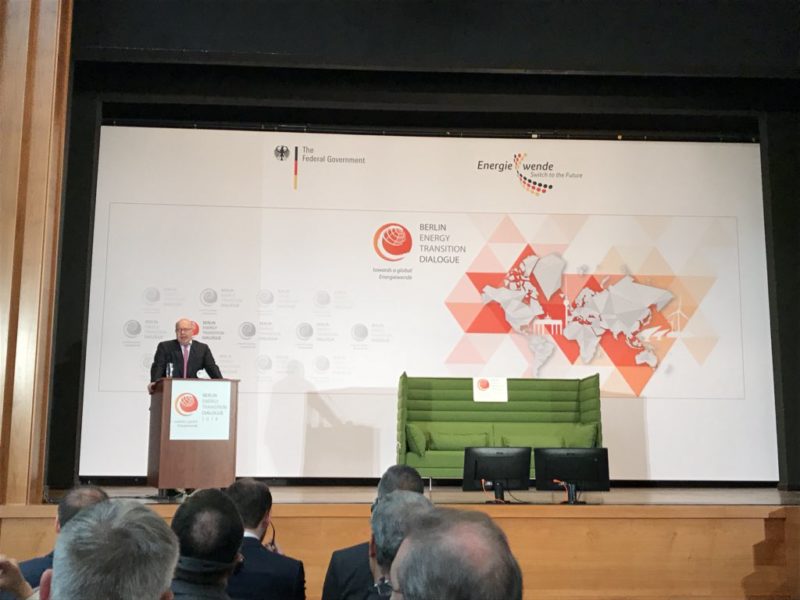
Peter Altmaier
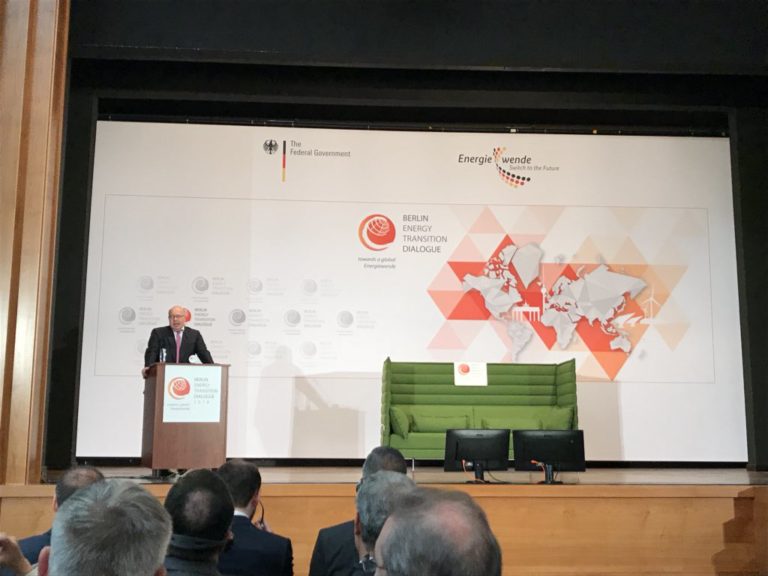
German Minister for Economic Affairs Peter Altmaier opening the Berlin Energy Transition Dialogue

Speaking on the pervasive level of energy poverty on the continent, the four media fellows from Nigeria, South Africa and Tunisia all pledged their commitment to putting ‘energiewende’ (energy transition) on the front burner of national discourse in their respective countries.

Africa’s energy poverty leaves about 600 million people in darkness with no access to energy. According to McKinsey’s projection, Africa requires $490 billion investment by 2040 to turn the tide in its quest for energy efficiency.

A bit disappointed by the low level of her country’s representation at the global energy talks which attracted high-ranking delegations from 40 countries and around 2,000 delegates from 95 countries, Meriam Khadraoui from Tunisia’s La Presse expressed her determination to deploy the unique hands-on experiences and innovative concepts she came across during the fellowship in pushing Tunisia to the next frontier of renewable energy and energy efficiency.

“Germany’s pioneering role in energy transition remains a model which my country should adopt in view of the abundant renewable energy sources that we have,” Khadraoui said.

For Ayoola Kassim of Channels TV and Atâyi Babs Opaluwah of Climate Reporters, both from Nigeria, a country endowed with abundant renewable energy resources like large and small hydro, solar, biomass, tidal and ocean waves as well as geothermal, energy transition is not just an option but a key to unlocking Nigeria’s full potential.

“With the right regulatory frameworks and policies in place, energiewende will leapfrog Nigerian film industry (Nollywood) by unleashing the unbreakable Nigerian spirit through renewables,” says Opaluwah.

That Nigeria still reels under pervasive energy poverty with her per capita electricity use remaining very low despite amazing wealth of fossil and renewable energy resources, the fellows say, is enough justification for her to toe the German path to energy efficiency.

“There is an urgent need to create a low carbon energy future that meets the sustainable development needs of all people in Nigeria, West Africa and and indeed the whole of Africa. That is where our experiences in Berlin, the hotspot of global energy transformation, comes in handy as we hope to influence policies and frameworks while shifting focus to energy transition through our works,” Opaluwah added.

Lebo Tshangela of the South African Broadcasting Corporation (SABC) finds it worrying that South Africa meets 77% of its energy needs through coal and only 16% through renewable energy.

“This is disturbing as before us is a bold plan to reduce emissions by below two degrees celsius as stated in our nationally determined contributions to the Paris Accord,” he said.

“It is my hope that this fellowship will help me in working to change perceptions of government, private sector and individuals as well as raise awareness on the danger of our continued reliance on fossil fuels for our energy needs in South Africa, Lebo added.

Put in place by the German Federal Office, the Berlin Energy Transition Dialogue fellowship programme brings together selected journalists from across the world to report on global energy transition imperatives and to raise awareness on the opportunities in the renewable energy sector as well as its contributions to meeting the targets of the Paris Agreement.
CrossBoundary, Rockefeller launch Africa mini-grid innovation lab

0

CrossBoundary in partnership with The Rockefeller Foundation on Tuesday, April 24, 2018 officially launched the Mini-Grid Innovation Lab. The Lab, with support from The Rockefeller Foundation, is the first R&D Fund for sub-Saharan Africa that focuses exclusively on testing business model innovations in the mini-grid sector.

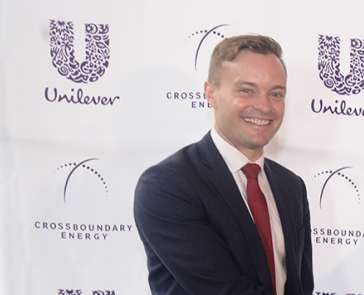
Matt Tilleard
Matt Tilleard, Managing Partner, CrossBoundary Group

Over 600 million people in sub-Saharan Africa still lack access to electricity. The Lab conservatively estimates that at least 100 million of these people are most cost effectively served by mini-grids, and the investment required to connect them is $11 billion based on new analysis. This number could be as high as 290 million people, according to the International Energy Agency’s Africa Energy Outlook report, based on forecast cost reductions and extrapolating universal access in 2030.

However, mini-grid deployment in Africa has been low. Governments, policy makers and donors do not see mini-grids as a viable substitute to the main grid. This deters investors, who also struggle to understand the business case. According to Crunchbase, from 2012 to 2017, the top five mini-grid developers in Africa raised less than $100 million. In the same period, Africa’s pay-as-you-go solar home system sector raised over $750 million.

Working with over 15 leading mini-grid developers across Africa, the African Mini-Grid Developers Association (AMDA), Energy4Impact, Duke University, Carnegie Mellon University, the University of Massachusetts at Amherst, and Power For All, the Lab will test business solutions for mini-grids based in Africa so that they can provide more power, to more people, at less cost. In doing so, it aims to demonstrate to governments, policy makers, investors and donors that mini grids can play a key role in connecting 600 million people in Africa without power.

Gabriel Davies, Head of Energy Access, CrossBoundary says, “The Lab takes a data-driven, iterative testing approach to put numbers to the questions that governments, donors, and investors need answers to. Do mini-grids deliver power to the standard of the main grid? Do mini-grid customers use energy to increase their income? How do mini-grids integrate with the main grid? By partnering with developers, who are closest to the daily challenges of providing power to rural customers, we can answer these questions with real world data.”

An early finding of the Lab comes from analysis of millions of data points provided by developers from their customer smart meter data. Findings show rural mini-grids provide far more reliable power to their customers, with 2% downtime during evening hours, compared to the power some urban grid customers receive, which were found to have downtimes of 53% on average in Dar es Salaam in Tanzania.  The Lab and the mini-grid developers are ready to work with governments, donors, academia, non-profits and other partners to support mini-grids to deliver affordable, reliable power to rural households and businesses.

Other near-term initiatives of the Lab include a closer look at how mini-grids can integrate with the main grid, and how household and business energy use on mini-grids change if they charge electricity tariffs on par with main grid tariffs.

Ashvin Dayal, Associate Vice President and Managing Director (Smart Power), of The Rockefeller Foundation, says, “We are delighted to be partnering with the Cross Boundary Group.  The ultimate goal of this effort is to equip governments, investors and developers to dramatically accelerate rural electrification in an integrated manner, unlocking new economic opportunities for millions of households”.

Matt Tilleard, Managing Partner, CrossBoundary Group, concludes, “We’re launching the Mini-Grid Innovation Lab at a time where when momentum is building for the sector. Achieving the Lab’s objectives could potentially accelerate the ability of mini-grids to provide power to millions of people in Africa and deliver on SDG7.” He added, “We are especially proud to partner with The Rockefeller Foundation, whose interests are aligned with ours, to see this through.”

World Malaria Day: RBM Partnership restates resolve to beat malaria

0

With the rallying call “Ready to Beat Malaria”, the RBM Partnership to End Malaria is encouraging governments, health bodies, private sector companies and the public to accelerate progress against malaria, making the 2018 World Malaria Day even more vital.

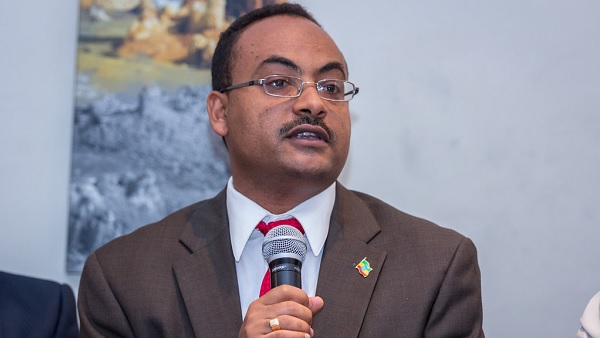
Kesete Admasu
Dr Kesete Admasu, CEO of the RBM Partnership to End Malaria

Wednesday, April 25 marks the 10th World Malaria Day and the culmination of a month of worldwide action against the disease at a time when global malaria cases are on the rise for the first time in a decade.

“After a decade of success in pushing back malaria, it is on the rise again and will come back with a vengeance if we do not act decisively now,” warns Dr Kesete Admasu, CEO of the RBM Partnership to End Malaria.

Admasu adds: “Half the world is still threatened by malaria, an entirely preventable, treatable disease which takes a child’s life every two minutes. Worldwide action is needed to meet the 2030 target of reducing malaria cases by at least 90%. We are delighted that more countries than ever, forty-four, are reporting less than 10,000 cases, however we must ensure we continue to press forward to end malaria – not only in high-burden nations but also those on track to eliminate the disease. It is our global responsibility to consign malaria to the history books.”

Dr Winnie Mpanju-Shumbusho, RBM Partnership Board Chair, comments: “This month has seen world leaders come together to renew commitments to step up funding and speed up innovations against the disease. It has been a truly momentous time in the fight against malaria, but the battle is not yet won. We also need citizen and community action around the world to drive momentum towards reaching global targets.

“The malaria fight is at a crossroads and we could be the generation to end the disease for good. If we don’t seize the moment now, our hard-won gains will be lost. We’re ready to beat malaria – are you?”

Dr Tedros Adhanom Ghebreyesus, Director-General of the World Health Organisation (WHO), says: “World Malaria Day reminds us of the challenges that remain. The declining trend in malaria cases and deaths has stalled and vital funding for malaria programmes has flat lined. If we continue along this path, we will lose the gains for which we have fought so hard.

“We call on countries and the global health community to close the critical gaps in the malaria response. Together we must ensure that no one is left behind in accessing lifesaving services to prevent, diagnose and treat malaria.”

World Malaria Day comes on the heels of two major malaria events – the Commonwealth Heads of Government meeting, where UK Prime Minister Theresa May and other Commonwealth leaders made a commitment to halve malaria burden across 53 member countries by 2023 in response to the London Malaria Summit. In addition, the Multilateral Initiative on Malaria (MIM) conference in Dakar brought together scientists and researchers from across Africa to share the latest innovations in the fight against the disease.

The day has also inspired creativity from RBM Partnership partners worldwide, from music videos by the Nigeria National Malaria Elimination Programme to Japanese traditional theatre performances from Malaria No More Japan.

Other events taking place across the globe to celebrate World Malaria Day include:

  • The RBM Partnership to End Malaria and the Swiss Malaria Group are hosting the 10th anniversary celebrations of World Malaria Day in Geneva on 25 April 2018. An inauguration of the World Malaria Day art installation on Place des Nations will take place followed by a high-level roundtable organised together with the Global Health Centre of the Graduate Institute.
  • There are numerous events happening in Nigeria, the country with the heaviest malaria burden in Africa, around World Malaria Day:
  1. Ready to Beat Malaria in the State of Osun is running from April 23 to 25 and will include a Continuing Medical Education (CME) program on the holistic approach to the management of malaria and community outreach to rural communities featuring health talks on malaria prevention strategies and malaria screenings.
  2. The End Malaria World Festival promises to be the biggest ever malaria event in Nigeria and will take place at the convocation Arena Rivers State University Port-Harcourt on April 24 to 25 to create awareness on the increasing scourge of malaria in Nigeria and efforts at combating it.
  3. The Nigerian Ministry of Health will convene 300 doctors in Lagos to discuss whether Nigeria is ready to beat malaria and how technology and nutrition can help fight the disease.
  • On April 24, The All-Party Parliamentary Group for Malaria & Neglected Tropical Diseases (NTDs) in the UK hosted a parliamentary event at the Palace of Westminster to discuss the challenges and opportunities for tackling malaria across the Commonwealth.
  • On April 25, in Port au Prince, Haiti, the First Lady of Haiti Martine Moïse and more than 300 government officials, civil society representatives, scientists and technical partners, including the Malaria Zero Alliance, are gathering to increase awareness of Haiti’s commitment to eliminating malaria by 2022.
  • In Washington D.C., USA, the Malaria roundtable (which includes UN Foundation’s Nothing But Nets, Malaria No More, PATH, Friends of the Global Fight, ASTMH) is hosting a reception on Capitol Hill in conjunction with the Senate Caucus on Malaria and NTDs on April 25. The reception will include comment from members of Congress, Administration officials and partners celebrating the U.S. impact in the malaria fight
  • The John Hopkins Bloomberg School of Public Health in Baltimore, US is hosting a symposium on malaria drug development and resistance at the Bloomberg School of Public Health on April 25.

The RBM Partnership to End Malaria is said to be the largest global platform for coordinated action against malaria. Originally established as Roll Back Malaria (RBM) Partnership in 1998, it mobilises for action and resources and forges consensus among partners. The Partnership is comprised of more than 500 partners, including malaria endemic countries, their bilateral and multilateral development partners, the private sector, nongovernmental and community-based organisations, foundations, and research and academic institutions.

Lagos initiates award to boost environmental protection

0

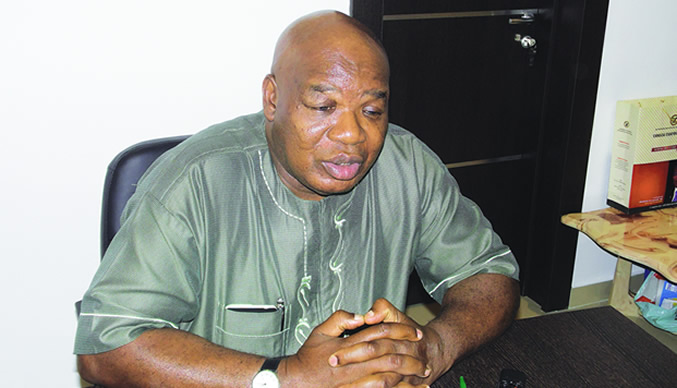
The Lagos State Commissioner for Environment, Mr Babatunde Durosinmi-Etti, said on Tuesday, April 24, 2018 in Lagos that the “Lagos Green Award” has been introduced to commemorate the 2018 World Environment Day.

Babatunde Durosinmi-Etti
The Lagos State Commissioner for Environment, Mr Babatunde Durosinmi-Etti

Durosinmi-Etti said that the award would recognise and honour individuals, groups and organisations that had contributed to the environment.

The World Environment Day is celebrated on June 5 annually.

He said the award, which would be in nine different categories, was one of deliberate policies of the Akinwunmi Ambode administration to stimulate the appreciation of the environment among Lagos people.

”Over the years, various individuals and corporate organisations have continued to contribute to the process of making the environment better.

”Most of these individuals and corporate organisations are often not noticed or recognised for their contribution to the environment.

”Our environment will be safer if we all embrace the opportunity to get involved in protecting it, which is the superstructure on which our civilisation rests,” he said.

According to him, members of the public can nominate deserving individuals, group or organisations whose actions have directly improved the environmental resilience of the state.

”Members of the public can nominate in any of the nine areas: Environmental Management, Best Environment Practices, Oil Spill Management and Health, Safety and Environmental Performance.

”Others are Waste Prevention and Recycling, Solid Waste Treatment and Disposal, Emissions Control Technologies, Natural Resources Conservation, Innovation and Sustainable Solution,” he said.

The commissioner said that the conferment of the awards would follow a competitive process, as participating units would be assessed against different sets of environmental performance criteria

He said that nominations or entries for the award should clearly identify an environment initiative and how it had impacted on the state.

The World Environment Day (WED) is the United Nations’ principal vehicle for raising awareness and encouraging global action for the protection of the environment.

It has been a flagship campaign for raising awareness on emerging environmental issues such as marine pollution, overpopulation, global warming, sustainable consumption and wildlife crime.

Since its inception in 1973, WED has grown to become a global platform for public outreach, with participation from over 143 countries annually.

Each year, WED has a new theme that major corporations, NGOs, communities, governments and celebrities worldwide adopt to advocate environmental causes.

By Florence Onuegbu

Wells Fargo pledges to invest $200b in sustainability by 2030

0

The multinational financial services company Wells Fargo has pledged to invest $200 billion over the next decade in climate action and sustainability, 50 percent of which will go into renewable energy, clean technologies, sustainable transport, and green bonds.

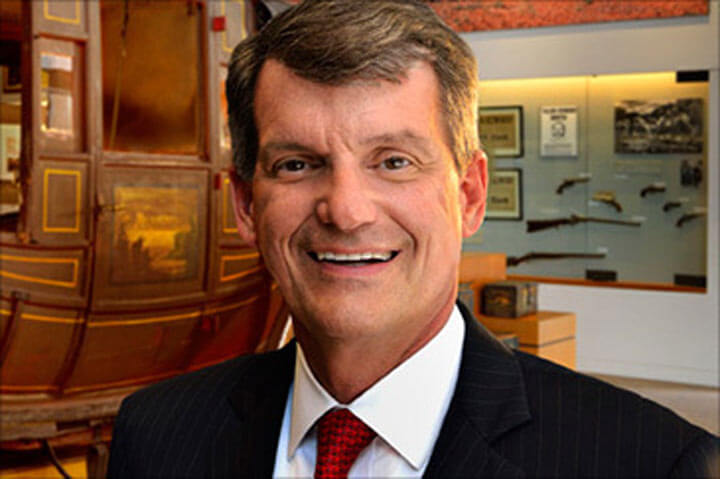
Tim Sloan
Tim Sloan, CEO of Wells Fargo

Sustainable financing is a crucial component of achieving the objectives of the Paris Agreement, which aims to limit the rise in global average temperature to well below two degrees Celsius and as close as possible to 1.5 degrees compared to the pre-industrial level.

“Wells Fargo is committed to taking a leadership role in supporting the transition to a low-carbon economy and promoting environmental sustainability through our products and services, operations and culture, and philanthropy,” said CEO Tim Sloan in an announcement.

Wells Fargo has total assets of $1.9 trillion. The new commitment follows on from its 2012 goal of investing USD 30 billion in clean technologies by 2020, which it met within three years.

Wells Fargo has also committed to greater transparency on the carbon intensity of its portfolio, and it will regularly report on the impacts of its lending, in line with the recommendations of the Task Force on Climate-related Financial Disclosure.

“With this commitment, we are combining a strong financial goal with enhanced transparency and disclosure practices that we believe will lead to sector-wide progress on responsible, sustainable finance,” Sloan added.

Mindy Lubber, CEO of the non-profit organisation Ceres, said the bank’s new commitments were “significant” and help contribute to the growing momentum within the financial sector to make more investments in clean energy.

“More and more investors and companies understand the economic imperative and strategic long-term benefits of keeping global temperature rise to well-below 2-degrees Celsius,” she added.

Climate Finance Globally on the Rise, but Trend Needs to Be Accelerated

The announcement by the company is a promising indication that decisive and enhanced climate action is picking up on the part of many stakeholders, including finance.

Already in 2014, the UNFCCC Standing Committee on Finance report that total global climate finance – which includes considerable investment by the private sector, as well as national and subnational governments worldwide – reached approximately $741 billion, an increase of about 15 percent from 2011 levels.

However, whilst the overall trend is promising, the current volume of finance being mobilised falls far short of what is needed to deliver the targets of the Paris Agreement.
In March, Spanish bank BBVA also announced plans to spend €100 billion by 2025 on fighting climate change. HSBC will also invest a similar amount in low-carbon projects.

Government to train indigent Ogonis on agro-business – HYPREP

0

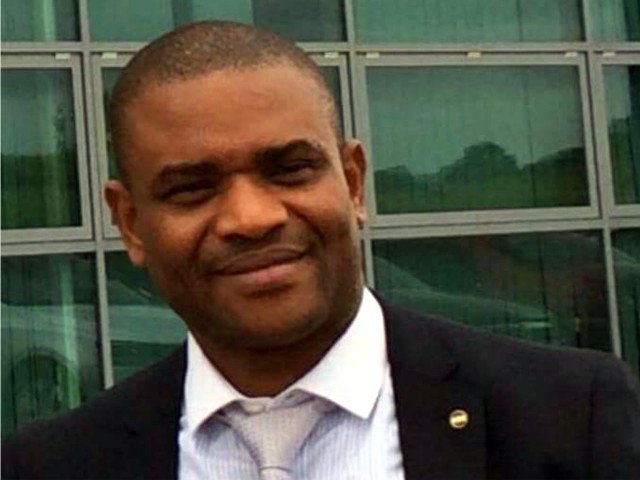
The Coordinator of Hydrocarbon Pollution and Remediation Project (HYPREP), Dr Marvin Dekil, says the Federal Government is to train indigent Ogoni women and youths on agro-business.

Marvin Dekil
Coordinator of Hydrocarbon Pollution and Remediation Project (HYPREP), Dr Marvin Dekil

Dekil made the disclosure on Tuesday, April 24, 2018 on the sidelines of a medical outreach held by HYPREP for indigent Ogonis in Ogale, Eleme Local Government Area of Rivers State.

According to Dekil, the training exercise will be anchored and certified by the United Nations Institute for Training and Research (UNITAR).

“The Livelihood Restoration Programme (training) is a key recommendation of the United Nations Environment Programme (UNEP) Report on restoration of livelihoods of communities affected by hydrocarbon pollution.

“We want to have world class training that would be certified by UNITAR. We are looking at a situation whereby the certification is valid in Nigeria and the world all over,’’ he said.

Dekil also said that HYPREP had inspected Songhai Farm in Tai Local Government Area and other agricultural facilities to serve as training ground for the exercise.

“The training is going to be under the framework of UNITAR. It will mainly be agro-based while we are also diversifying into other aspects.

“Recently, the ambassadors of Norway and United States visited and we spoke at length about livelihood restoration. So, we are in active communication with the international community,” he said.

Dekil said the exercise would commence in August in the four local government areas that make up Ogoniland.

He debunked claims that ongoing collation of data for disease trend in the area was politically motivated, saying that the exercise was part of recommendations of the UNEP Report.

Earlier, the Paramount Ruler of Ogale community in Eleme, Godwin Okpabi, expressed delight over the health outreach programme in the area.

Okpabi, who is a member of the cleanup Board of Trustees, said the current administration had shown commitment to the remediation of hydrocarbon impacted communities in Ogoniland.

“I assure critics of the Federal Government that they will begin to see action now. People should be patient as the cleanup would soon commence,” he said.

By Desmond Ejibas

World Bank to assist Africa embrace green buildings to combat climate change

0

The private sector arm of the World Bank Group on Tuesday, April 24, 2018 said that it would assist African nations to embrace green buildings in order to combat climate change.

jim-yong-kim
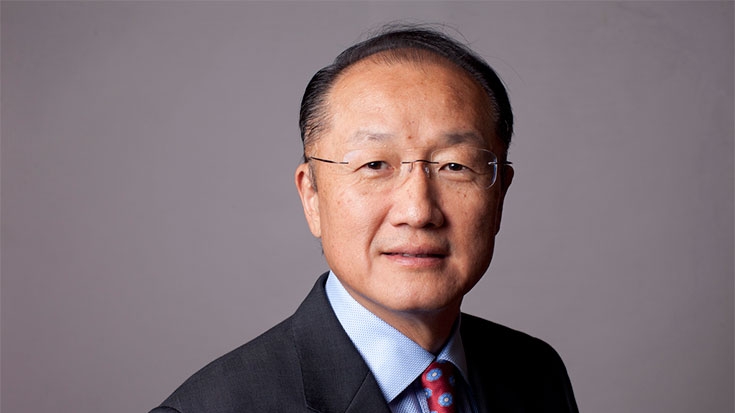
World Bank Group President, Jim Yong Kim

Dennis Odenyi Quansah, Consultant for Excellence in Design for Greater Efficiencies Africa Implementation, at the International Finance Corporation (IFC) told Xinhua in Nairobi, Kenya that the aim of the organisation is to ensure that real estate developers in Africa go green so that they reduce energy and water consumption.

“The IFC will provide technical expertise for African governments to develop incentives that will encourage the private sector to construct green buildings,” Quansah said during the fifth annual East Africa Property Investment Summit.

The two-day conference brought together over 500 delegates, 150 expert speakers and 20 exhibitors to review issues affecting the East African real estate market.

The event aims to provide platform for discussions around development, private equity, finance and economics, with insights from some of the best minds in real estate investment sector.

Quansah noted that buildings are a significant contributor of greenhouse gas emissions and hence green buildings could play an important role in fighting climate change.

He added that the IFC is keen to increase green building technology in Africa, as the continent is expected to experience rapid urbanisation in the future.

“So if Africa embraces a green development path, it will be able to secure greenhouse gas emission cuts even as it achieves its economic growth,” he noted.

He observed that while green buildings tend to have high upfront costs, they have enormous savings over the long term.

World Bank to disburse N8.6b in 23 states for FADAMA youth scheme

0

The World Bank, through the FADAMA III Additional Financing (AFII) Programme, will soon disburse N8.6 billion to 5,916 youths across the country in the Graduate Unemployment Youths Support Scheme (FADAMA GUYS).

farming-can-be-fun
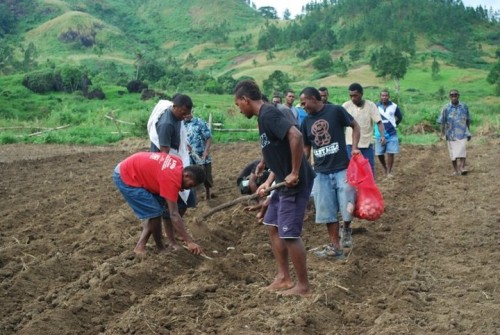
Youths involved in farming. Photo credit: smeonline.biz

Mr Kwaji Daguru, the Chairman of FADAMA GUYS Implementation Committee, disclosed this in an interview with News Agency of Nigeria (NAN) in Abuja on Tuesday, April 24, 2018.

Daguru, who is also Procurement Specialist for FADAMA III (AFII) Programme, said that the programme targeted 5,916 youths in 23 states to improve the country’s agricultural production.

He said that the involvement of youths in the agricultural programme would contribute significantly to the country’s efforts to achieve food security and boost capacity building as well as employment opportunities.

NAN recalls that the enrolment for the programme ended on May 15, 2017 with the aim of selecting the beneficiary youths would boost job creation in the 23 states.

Daguru, who said that the funds disbursement had yet to start, however, assured that the money earmarked for the project was intact.

He, nonetheless, said that the disbursement would be made through the Grant and Funds category of the project.

“We have applied to the Federal Government, through Federal Ministry of Finance for permission to reallocate funds from other categories like Consultancy, Training, Civil Work into the Grant and Funds category.

“Any moment from now, disbursement will take place, especially to those who would engage in rainy season agricultural activities because they have completed the grant agreement and submitted their land documents.

“The Phase One is expected to gulp about N8, 675, 013, 679.12 to fund the business plans of the 5,916 candidates in 23 states.

“If the resources permit in the last segment of the project, we will be able to upscale to other states in the second phase.’’

Daguru said: “The objective of the programme is to work with government in three areas of job creation, while building capacity of our youths and aiding efforts to keep the foreign exchange rates low.

“We are making sure we import low quantities of rice and tomatoes, while putting less pressure on our Naira (currency) so as to make our economy strong.’’

He said that the target beneficiaries were those with ages between 18 and 35 as well as graduates and undergraduates of higher institutions.

“The programme would support all aspects of agricultural production in a business or commercial manner; right from crop and livestock production, inputs support supply and advisory services.

“It would also assist extension services and post-harvest production services like storage, warehousing, marketing and products distribution.’’

Daguru said that after the screening of the candidates, they would be exposed to a two-week intensive training in business and technical fields in the states.

“During the application process, candidates would be allowed to choose specific enterprises of their choice in the agricultural value chain and they would be trained in the ventures accordingly.

“At the end of the training, they would be asked to submit business plans on their chosen enterprises; we will then invite professionals to review the business plans and come up with standard modules.

“We have 5,916 trainees and they have opened bank accounts with two selected commercial banks that are used by the FADAMA Coordinating Offices in the states.’’

The committee chairman said that the rationale behind the opening of the accounts was to have dedicated accounts for the project so as to facilitate proper project monitoring.

Daguru said that the organisers did not want the trainees to use their existing bank accounts, as they could be tempted to use ATM (Automated Teller Machine) to withdraw money from the accounts arbitrarily.

“We want to control the use of the funds, while ensuring that the funds are used for the intended purposes.

“They would not be able to withdraw money from the dedicated accounts without prior approval of state FADAMA offices.

“We will also ensure that they insure their businesses with the Nigeria Agricultural Insurance Corporation (NAIC) in the business plans.

“We have made provision for 2.5 per cent deduction from the total cost of the business as insurance premium,’’ he explained.

NAN reports that 23 participating states are Abia, Adamawa, Akwa Ibom, Anambra, Bauchi, Bayelsa, Benue, Ebonyi, Ekiti, Jigawa, Katsina, Kebbi, Kogi, Niger, Ogun and Ondo states.

Others include Osun, Oyo, Plateau, Sokoto, Taraba and Zamfara states as well as the Federal Capital Territory (FCT).

By Kudirat Musa

Cow might soon be the world’s largest land mammal, says study

0

Due to the spread of human activities around the world, the cow could be left as the biggest land mammal on earth in just a few centuries, a new study has found on Monday, April 23, 2018.

Mambilla
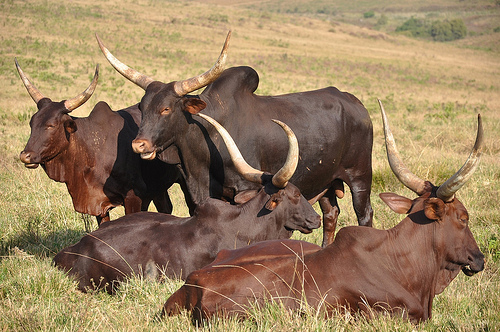
Cows

The study, published in the journal Science, examines the trends of extinction of large mammals over 125,000 years.

According to the study, the spread of hominims since thousands of years ago coincided with the extinction of megafauna such as the mammoth and the glyptodont, an armadillo-like creature with the size of a car; as such big animals were usually targeted by humans for meat.

“There is a very clear pattern of size-biased extinction that follows the migration of hominims out of Africa,” the study’s lead author, Flisa Smith of the University of New Mexico, was quoted by The Guardian as saying.

In North America, the mean body mass of land mammals has dropped from 98 kg to 7.6 kg since the arrival of humans.

“If such a trend continues, the largest mammal on Earth in a few hundred years may well be a domestic cow at about 900 kg,’’ the researcher concluded, adding it would mean the extinction of elephants, giraffes and hippos, among others.

In spite of the conservation efforts, Smith pointed out that the populations of large land mammals were falling and “declining population is the trajectory to extinction.”

The world’s last male northern white rhino named Sudan died in Kenya in March.

Nigeria, ECOWAS to host confab on herders/farmers conflicts

0

The Minister of Interior, retired Lt.-Gen. Abdulrahman Dambazau, says the Federal Government in collaboration with the ECOWAS Commission, will host a sub-regional ministerial meeting on Thursday, April 26, 2018 in Abuja.

Herdsmen
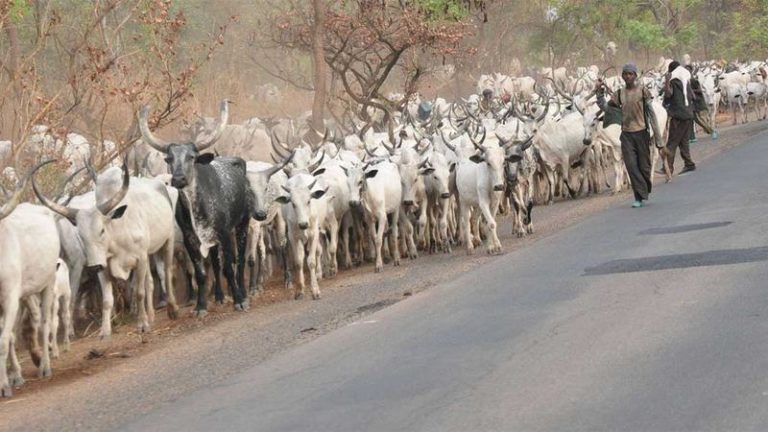
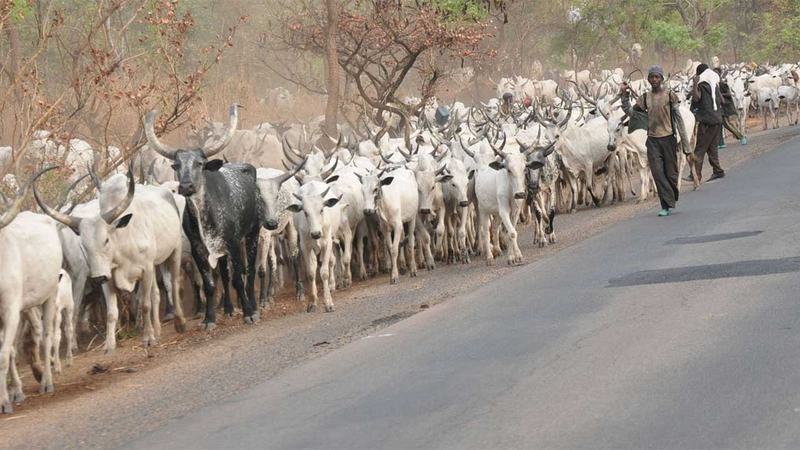
Herdsmen

Dambazau said the ministerial meeting would come up with solutions to the challenges posed by the recurrent conflicts between herders and farmers in the region.

He disclosed this in a statement issued by the Director, Press & Public Relations of the Interior Ministry, Mr Hassan Dodo, on Monday, April 23 in Abuja.

He made the announcement ahead of the meeting which would involve the countries in the ECOWAS sub-region.

The minister said the meeting would take place on Thursday at ECOWAS Commission, Abuja, and would be preceded by Governmental Experts Meeting from April 24 to April 25.

He said the meeting was informed by the need to adopt a coordinated regional approach in addressing the escalation of cases of conflicts between herders and farmers.

Dambazau said the meeting would also address the attendant killings, disruption of socio-economic activities, and displacement of citizens in almost all the countries in the region.

He said each ECOWAS member state would be represented by two delegates comprising the Ministers in charge of Internal Security and Agriculture.

According to him, President Muhammadu Buhari would declare the Ministerial Conference open on April 26.