Global wind markets have reached all time high as wind power successfully competes against heavily subsidised fossil fuels in the global marketplace, according to a new report from the Global Wind Energy Council (GWEC).
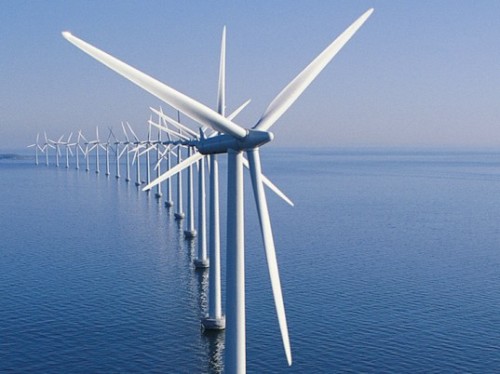
Wind, solar and other renewable energy sources added 138GW to global power capacity in 2016, up 8% from the 127.5GW added in 2015. Photo credit: offshorewind.biz
Massively ramping up clean, renewable energy is crucial to meeting the objectives of the Paris Climate Change Agreement, which aims to limit the rise in global average temperature to well below two degrees Celsius and as close as possible to 1.5 degrees compared to the pre-industrial level.
More than 52GW of clean, emissions-free wind power were added in 2017, bringing total installations to 539 GW globally. And there were dramatic price reductions for both onshore and offshore wind. Markets in Morocco, India, Mexico and Canada range in the area of $ 0.03/kWh, with a recent Mexican tender coming in with prices well below $ 0.02/kWh.
“Wind power is leading the charge in the transition away from fossil fuels; and continues to blow away the competition on price, performance and reliability”, said Steve Sawyer, GWEC Secretary General. “Both onshore and offshore, wind power is key to defining a sustainable energy future”.
Meanwhile offshore wind had its first ‘subsidy-free’ bids in tenders In Germany and the Netherlands, with tenders for nearly 2 GW of new offshore wind capacity receiving no more than the wholesale price of electricity.
GWEC’s rolling five-year forecast puts the 2018 market at a similar level as 2017, as the dominant EU markets in Germany and the UK will face reductions due to changing regulatory environments, and India’s market will drop temporarily due to a “policy gap” between the old and new systems; but the sector will return to dramatic growth in 2019, will pass the 60 GW milestone in 2020, and move upwards from there to reach a total of 840 GW by 2022.
“We have a booming new market in Argentina, a return to form in South Africa, Mexico on the verge of dramatic growth, and a powerhouse building in India”, said Sawyer. ‘We see huge potential just beginning to be realized in Russia, Vietnam and even Saudi Arabia; and offshore is spreading like wildfire across the globe due to Europe’s patient, pioneering efforts to bring the technology to cost-competitiveness.”
The US market is projected to remain strong at least through 2020, and probably beyond, and Brazil will continue to dominate Latin American markets, although with a new challenger from Argentina. New markets continue to emerge in Africa and Asia, although China will continue to be the dominant market globally, but with less spectacular growth than in the past decade.
Wind penetration levels continue to increase rapidly. Denmark got 44% of its electricity from wind in 2017, and Uruguay more than 30%.
In 2017, wind supplied 11.6% of the EU’s power, led by Denmark, Portugal and Ireland at 24% and Spain and Germany just under 20%. Four US states get more than 30% of their electricity from wind, as does the state of South Australia, and a number of states in Germany.
“Driven by the improving economics of wind power, as well as solar and storage, the outlines of a 100% renewable energy system is becoming clear,” concluded Sawyer.
On the occasion of World Malaria Day 2018 observed on Wednesday, April 25, the African Development Bank (AfDB) has released “Money and Mosquitoes: The Economics of Malaria in an Age of declining Aid”. Authors include Harvard University’s Nobel laureate economist Eric Maskin; African Development Bank Group Vice-President for Economic Governance and Knowledge Management, Célestin Monga; Josselin Thuilliez of the French National Centre for Scientific Research, and Jean-Claude Berthélémy, Professor of Economics at the University of Paris 1 – Panthéon-Sorbonne and Corresponding Member of the Institut de France.
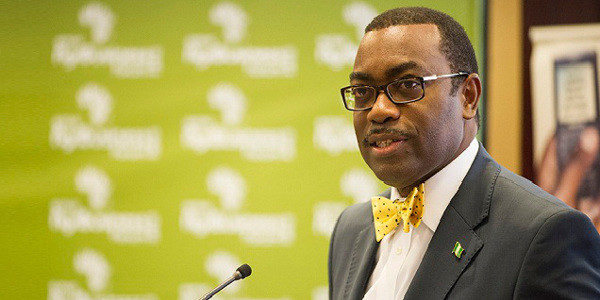
Dr. Akinwumi Adesina, President of the African Development Bank (AfDB)
The report examines financing in the battle against malaria, focusing on the role of foreign aid. It analyses whether or not a disease such as malaria can be controlled or eliminated in Africa without health aid. It also presents a theoretical model of the economics of malaria and shows how health aid can help avoid the “disease trap.” While calling for increased funding from international sources to fight malaria, it also recommends that African countries step up their own efforts, including on domestic resource mobilisation. In 2016, governments of endemic countries contributed 31% of the estimated total of $ 2.7 billion.
Between 2000 and 2014, malaria control efforts were scaled up and worldwide deaths were cut in half. But declining health aid and deprioritised vertical aid (as for malaria), despite its potentially great efficiency, have led to rising numbers of cases. In 2016, 216 million cases of malaria were reported, up from 211 million in 2015. Africa was home to 90% of all malaria cases and 91% of malaria deaths in 2016. Progress appears to have stalled in the global fight against the disease.
“Malaria is bad for business,” AfDB President, Akinwumi Adesina, told the African Leaders Malaria Alliance, a coalition of 49 African Heads of State and Government that was established in 2009 to eliminate malaria by 2030, during the African Union Summit in January. “For this reason, Africa should invest in the local manufacturing of low-cost generic medicines to facilitate access to treatment for its people.”
Malaria strains national economies and impoverishes households, Adesina remarked, adding that the economic impact of the tropical disease costs Africa an estimated $12 billion annually. The gross domestic product of some nations is affected by as much as 5-6%. Of the drugs consumed on the continent, an estimated 79% are imported from India and China whereas if anti-malaria medicines were manufactured locally, they would be affordable for most Africans families.
Lift Above Poverty Organisation (LAPO), a non-governmental organisation (NGO), says Nigeria losses about N132 billion to malaria annually through treatment costs, prevention and loss of man-hour.
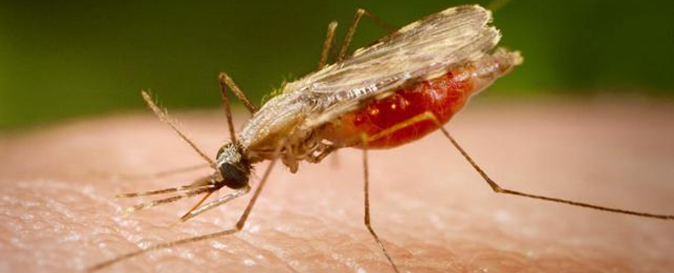
The malaria-causing anopheles mosquito feeding on a victim
Ms Sabina Idowu-Osehobo, the Executive Director of LAPO, disclosed this on Wednesday, April 25, 2018 at the 2018 World Malaria Day sensitisation programme.
The event was held in Meiran Community, Agbado Oke-Odo Local Council Development Area (LCDA) of Lagos State.
The News Agency of Nigeria (NAN) reports that the programme, which was organised by LAPO Lagos 2 Region, had “Ready to Beat Malaria,” as its theme.
Idowu-Osohobo, represented by the Regional officer, LAPO Lagos 2, Mrs Sandra Asowata, said that malaria constituted a huge epidemiologic burden in Africa and had continued to cripple the economic development in the region.
According to her, malaria remains an important cause of morbidity and mortality in Nigeria with all year transmission and 97 per cent of the population at risk.
She said Nigeria also accounted for 32 per cent of the global estimate of 655,000 malaria deaths annually.
She said that the victims were mostly pregnant women with their unborn babies and children below the age of five years.
Idowu-Osehobo said: “Malaria is responsible for 60 per cent out-patient visits to health facilities, 30 per cent childhood death, 25 per cent of death in children under one year and 11 per cent maternal death in Nigeria.
“Malaria is a major cause of increasing household poverty and slow phase of national development.
“The financial loss due to malaria annually is estimated to be about N132 billion in form of treatment costs, prevention, loss of man-hours, yet the disease is a treatable and completely eradicable.”
She noted that collective effort was therefore needed to beat the scourge of malaria in the country.
“We believe that with collective efforts of everyone – international partners, government at all levels, business sectors, NGOs, community stakeholders and direct beneficiaries, we are ready to beat Malaria,” she said.
According to her, LAPO will continue to collaborate with the Roll Back Malaria Partnership and the Nigeria’s National Malaria Control Programme (NMCP) in their quest to end the disease.
She said that LAPO activities for malaria prevention were aimed at reducing the social and economic burdens of malaria on individuals and the society.
“In 2017, LAPO distributed thousands of information materials, treated bed nets and provided free malaria screening services to 38,593 beneficiaries across our target communities,’’ she said.
Idowu-Osehobo said: “A total of 946 stakeholders from local government councils, primary health care facilities and target communities participated in our 2017 World Malaria Day events with the theme: ‘A Push for Prevention’.
“LAPO will continue to support every malaria control effort of Government of Nigeria to show that we are “Ready to Beat Malaria”.
“We believe that beating malaria means healthier societies, increased attendance at school and work, more productive communities, and stronger economies.
“Beating malaria is critical to ending poverty, and achieving the Sustainable Development Goals (SDG) of ending poverty in all its forms.
“It is also in line with Goal 3.3 which is to end epidemics of AIDS, TB, Malaria and neglected tropical diseases by 2030,” she said.
NAN reports that LAPO sensitised the community members on how to keep their environment clean in order to curb the spread of Malaria.
It also distributed free treated bed nets to the community residents as well as conducted free Malaria and blood pressure tests for them.
Nigeria is yet to be listed among African countries that have made significant progress in eliminating malaria, a statement by the World Health Organisations (WHO) says.
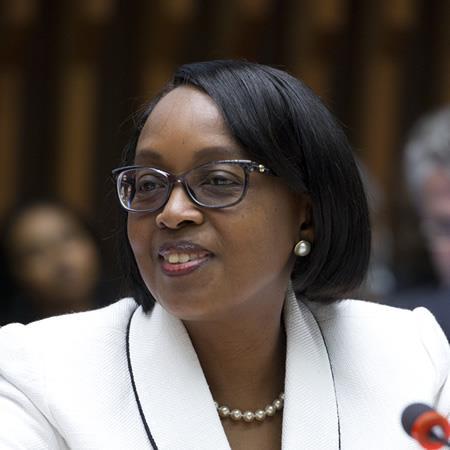
Dr. Matshidiso Moeti, the World Health Organisation (WHO) Regional Director for Africa. Photo credit: pbs.twimg.com
Dr Matshidiso Moeti, the WHO Regional Director of Africa, in her message to commemorate the “World Malaria Day 2018” in Abuja on Wednesday, April 25, 2018, said 14 countries with the world’s biggest malaria problem were in sub-Saharan Africa.
Moeti said these countries still accounted for 80 per cent of the global burden of malaria with 194 million new cases and 410,000 deaths recorded in 2016 alone.
She however said some countries in the region have witnessed a decrease in malaria cases and deaths showing significant potential to eliminate malaria by 2020.
According to Moeti, Ethiopia, Madagascar, Senegal, Gambia and Zimbabwe are among 16 countries globally that witnessed a decrease in malaria cases and deaths by more than 20 per cent between 2015 and 2016.
She said that Algeria, Botswana, Cape Verde, Comoros, South Africa and Swaziland could potentially eliminate malaria by 2020.
The WHO regional director expressed concern over the slow pace of progress in some African countries with significant gaps in the implementation measures to eliminate the disease.
Moeti said international and domestic funding for malaria prevention and control has also stagnated in the region.
“Some countries in the African region recorded the biggest rise of malaria testing in the public sector from 36 per cent of suspected cases in 2010 to 87 per cent in 2016.
“Over half the people at risk of malaria across sub-Saharan Africa have been sleeping under insecticide-treated nets for the past five years indicating some success in behaviour change and outreach campaigns.
“This progress needs to be sustained. Eliminating malaria requires above all political leadership at the highest level as well as leadership of programmes, resource mobilisation, inter sectoral and cross-border collaboration.
“We are ready to beat malaria but the pace of progress must be accelerated to achieve a 40 per cent drop in global malaria cases and deaths by 2020 compared to 2015 levels,” Moeti said.
She said that the world malaria day was an occasion to renew political commitment and continue investing in malaria prevention and control.
The regional director said the day also focuses global attention on malaria and its devastating impact on families, communities and development.
Moeti called on countries still affected by malaria to work with development partners to boost investments in malaria prevention and control, especially in new tools to combat the scourge.
She said: “This will propel countries along the road to elimination and contribute to the achievement of other Sustainable Development Goals (SDGs) such as improving maternal and child health.’’
The theme for the 2018 World Malaria Day is “Ready to Beat Malaria”.
The theme stresses the need to accelerate efforts to defeat malaria and remind countries of their commitment to end malaria epidemic by 2030 as one of the SDGs.
The News Agency of Nigeria (NAN) reports that the Federal Government on April 22, committed to securing $300 million from the World Bank, Islamic Development Bank and African Development Bank to eliminate malaria in the country.
The government also pledged additional $18.7 million to leverage on $37 million from the Global Fund Grant to enable it distribute 15 million mosquito nets and support local manufacturing of essential malaria commodities.
The Coordinator, Malaria Research Programme, Nigerian Institute of Medical Research (NIMR), Dr Samuel Awolola, said that Nigeria still has between 30 and 50 per cent of malaria prevalence rate.
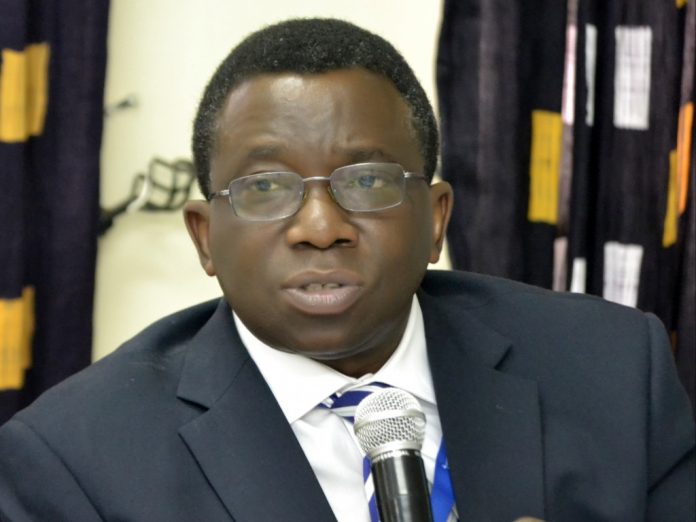
Minister of Health, Isaac Adewole
Awolola, who is also an entomologist, said this in an interview with the News Agency of Nigeria (NAN) in Lagos, on Wednesday, April 25, 2018.
NAN reports the World Health Organisation has declared April 25 of each year as the World Malaria Day (WMD) to recognise global efforts to control malaria with a common goal of ensuring a world free of malaria.
The theme for this year’s commemoration is entitled “Ready to Beat Malaria”.
He said that the prevalence rate was among the highest in world, adding that governments have not done much to reduce it within the last one year.
“The data shows clearly that over the last five years, the prevalence remains the same, in spite of the increase in distribution of long lasting insecticide nets.
“Government needs to do more, by more interventions to eradicate malaria in the country
“Long lasting insecticide nets is one of the interventions which has prevented a lot of children and pregnant women from contracting malaria.
“There is another great intervention that can help to reduce the burden of malaria which is indoor residual spray.
“Most people complained that indoor residual spray is very expensive but with the help of both federal and state governments it can be distributed to the people,” Awolola said.
According to the expert, Lagos state has the lowest prevalence in malaria in the country.
“Lagos state government was able to provide indoor residual spray in three local governments which helped to reduce burden of malaria in the state.
“But currently, Lagos environment is dirty with refuse, potholes and bad drains which can breed more mosquitoes.
“Most times the type of mosquitoes it may breed may not cause malaria but causes other diseases such as; zika virus, yellow fever and so on”.
Awolola called on state government to clear and clean the environment in both the rural to urban areas.
“Individual and governments must make sure that environment is properly clean because malaria does not know anybody, which means it can affect anybody.
“Especially, individuals can be their own health inspectors by cutting grass, clearing the drains and blocking all potholes in their environment,” he said.
Awolola urged government at all levels to invest more in malaria prevention and treatment, which could help to eliminate the disease in the country
“Theme of this year is ‘Ready to beat malaria”; I think we are still very far to beat malaria.
“If governments can invest more in malaria elimination, it can help us to beat malaria.”
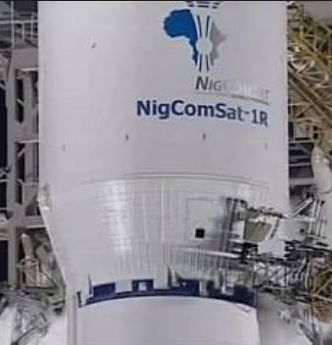
The Nigerian Communication Satellite (NIGCOMSAT) Ltd. and the Turkish Satellite Company (TURKSAT) are set to reach both the served and the underserved with satellite-based services in Africa.
The NigcomSat-1R
NIGCOMSAT disclosed this in a statement signed by its Head, Public Affairs, Mr Adamu Idris.
Idris said that NIGCOMSAT, which is famous for broadband Internet service delivery, is collaborating with the Turkey-based communication satellite company to ensure the deployment of satellite solutions.
He said the agreement provided for a framework of cooperation between the two satellite operators in various areas, which included shared satellite ground infrastructure in Africa and Europe and back-up capacity arrangements.
The official said the agreement with TURKSAT also included satellite communication training, broadcast content sharing and satellite applications development with particular emphasis on e-government applications.
“This new collaboration is expected to allow both operators to use their resources and specific expertise to provide new and innovative satellite-based solutions.
“It is expected to meet government interest in broadband penetration in every part of Nigeria, including other parts of the world where its footprints are visible.’’
According to Idris, the two agencies signed the Memorandum of Understanding (MoU) in Ankara, Turkey.
The Nigerian delegation to Ankara was led by the Executive Director, Technical services, Mr Kazeem Raji, while the Turkish Vice President, Hasan Ertok, led the TURKSAT delegation.
The World Health Organisation (WHO) says it does not have enough resources to pursue the malaria eradication agenda in Nigeria as required by the Malaria Elimination Global Strategy.
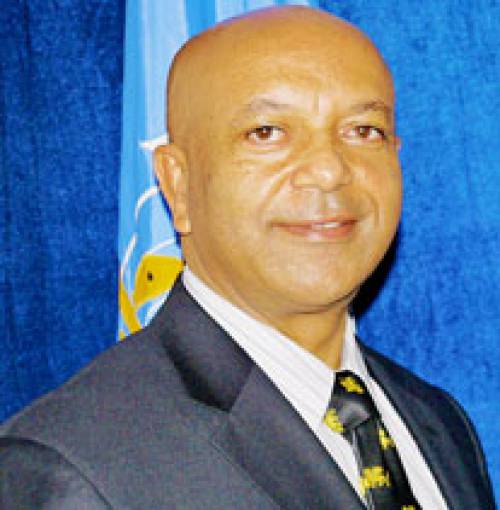
Dr Wondi Alemu, Nigeria Country Representative, WHO
Dr Wondi Alemu, the Nigeria Country Representative of the organisation, said this at a news conference in Abuja on Tuesday, April 24, 2018 to mark the “World Malaria Day 2018”.
Alemu said that although global health partners had pledged at least $6.7 billion towards implementing the malaria elimination strategy, more funds were required to achieve the target in countries with high disease burden.
“Great has been done over many years but more needs to be done in addition to what has been put together from financial institutions.
“There is not enough money to push the implementation of the eradication agenda as indicated in the global strategy.
“I am talking globally on how this impacts the African region which has 80 per cent of the problem.’’
Also speaking at the event, Dr Rex Mpazanje, the WHO Head of Cluster for Non-Communicable Diseases, said that, globally, countries had made ambitious plans for malaria elimination without making the necessary arrangements for funding.
“All countries took the decision to go with the ambitious agenda of malaria elimination in line with Sustainable development Goals (SDGs).
“They have not so far matched that ambition with making available the necessary funding so that is really the challenge.
“It is not that the money has decreased; it is simply that the agenda of eliminating malaria requires a little bit more money and so far, globally the international community and countries have not yet put enough in line with the ambition of eliminating malaria.’’
According to WHO reports, the African region had 194 million new cases of malaria and 410,000 deaths in 2016.
The region carried a disproportionately high share of the global malaria burden recording 90 per cent of malaria cases and 91 per cent deaths the same year.
The News Agency of Nigeria (NAN) reports that the Federal Government on April 22, committed to secure $300 million from the World Bank, Islamic Development Bank and African Development Bank to support the fight against malaria in the country.
The government also pledged additional $18.7 million to leverage on the $37 million from the Global Fund Grant to enable it distribute 15 million mosquito nets and support local manufacturing of essential malaria commodities.
The World Malaria Day is celebrated globally every year on April 25 to stress the need to accelerate efforts to defeat malaria.
The theme for the 2018 World Malaria Day is “Ready to Beat Malaria”.
The 2nd International Symposium on Agroecology was held at FAO headquarters of the Food and Agriculture Organisation (FAO) in Rome, Italy from April 3 to 5, 2018, where organisations of small-scale food producer and civil society organisations made a declaration at the close of the event. Mariam Sou, pioneer agroecological peasant farmer, from ENDA-Tiers Monde, Senegal, read the declaration on behalf of the delegate. Agroecology is the study of ecological processes applied to agricultural production systems
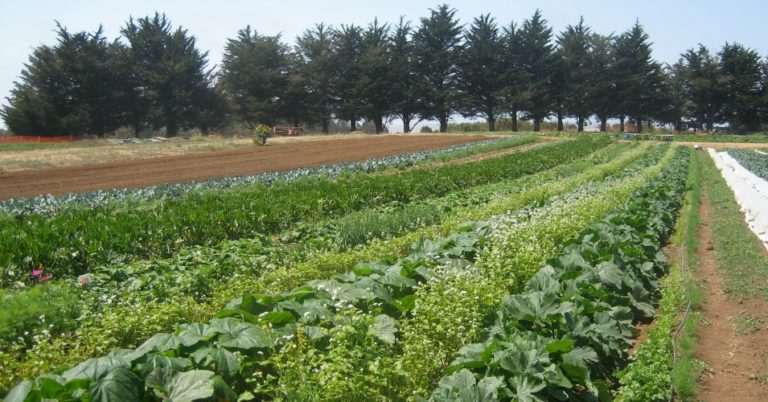
A farm that incorporated the agroecology principle
We are delegates of different organisations and social movements of small-scale food producers. We are peasants, fisherfolk and fish workers, indigenous and traditional peoples, pastoralists and nomads, agricultural and food workers, the landless, urban and peri-urban communities living in poverty and food insecurity, consumers, youth, women and NGOs.
Agroecology cannot be understood as a simple set of techniques and productive practices.
Agroecology is a way of life of our peoples, in harmony with the language of Nature. It is a paradigm shift in the social, political, productive and economic relations in our territories, to transform the way we produce and consume food and to restore a socio-cultural reality devastated by industrial food production. Agroecology generates local knowledge, builds social justice, promotes identity and culture and strengthens the economic viability of rural and urban areas.
This vision, and these principles and common values of Agroecology, agreed upon at the International Forum on Agroecology in Nyéléni in 2015, have been continuously enriched, innovated, adapted, multiplied, implemented in different ways according to our varied realities and respecting our worldviews, cultures, economies and local food systems, based on the real production of agroecological food.
Our peoples and organisations are historical subjects who, through their ancestral production systems and struggles, have moved forward in the construction of Agroecology and Food Sovereignty. In other words, it is not something new, it is the fruit of the wisdom of original peoples that is strengthened today with the recovery of traditional practices together with new peasant innovations, caring for Mother Earth and producing abundant healthy food to feed our peoples.
We women among us are not objects of policies that want to empower us, but rather we are active subjects of Agroecology and guardians of Biodiversity. We want our central role in food production and in the reproduction of life, as well as in the economy of our families and communities, to be visible and recognised.
Agroecology means that our rights as women are protected and realised, not just as mothers and caregivers of our homes. Agroecology implies our full participation in the social and political life of our communities, ensuring our access to land, water, seeds and means of production with autonomy and freedom. Our equal participation in decision-making spaces is essential.
Our peoples and organisations have broadened and deepened their knowledge through collective building and alliances, through dialogues of knowledges between different sectors and generations.
For us, scaling up agroecology means having more and more small producers moving forward, and the central ingredient is social organisation in our territories. That is to say, our own processes of our organisations of women and men producers, workers and consumers that, build the social, political, economic and cultural fabric that will allow us to advance in the transformation of a failed and harmful industrial agro-food system that damages the environment and the health of our peoples.
Any public policy that seeks to support and/or promote Agroecology must be constructed and implemented with the participation of its central subjects, we small-scale food producers and our organisational, productive and training processes.
Agroecology cannot be just another tool for the expansion of the industrial agrifood production model.
Due to the lack of differentiated public policies for rural youth, young people represent one of the sectors most affected by the agrarian crisis, land grabbing and migration to the cities. Agroecology, on the other hand, is emerging as a tool for transformation and social justice to guarantee the rights of youth, ensuring their access to decent living conditions in rural areas.
To guarantee all the above, and considering that small-scale producers are a fundamental pillar of Agroecology, it is crucial to guarantee the collective rights of the peoples who feed the world, to protect our access to and control over seeds, biodiversity, land and territories, water, knowledge, culture and the commons.
We salute the fact that this Symposium has taken a step forward in the recognition and promotion of Agroecology. Faced with the urgency brought about by asymmetries, protracted crises, land grabbing, conflicts, occupations and wars, as well as the alarming wave of criminalisation and violent repression of defenders of territories and small-scale producers, we call for the implementation of Human Rights based processes, the cornerstone of the United Nations and in particular of FAO, citing, among others, the Right to Food, the Tenure Guidelines, the Small-Scale Fisheries Guidelines, the ILO Convention 169, the Free Prior and Informed Consultation, the CEDAW and its General Recommendation 34 and the process of the UN Declaration on the Rights of Peasants and other people working in rural areas.
We welcome the fact that this Symposium is a new step in the recognition and promotion of Agroecology by intergovernmental institutions, governments, universities and research centres. FAO and other UN agencies must continue to strengthen their work in Agroecology. This requires their governance bodies to take appropriate measures to implement differentiated market policies, like public procurement, and other policies for training, financing and technical assistance, among others, that support small-scale producer organizations and own processes at the local, national, regional and international levels.
Without the protection of our Rights, there is no Agroecology!
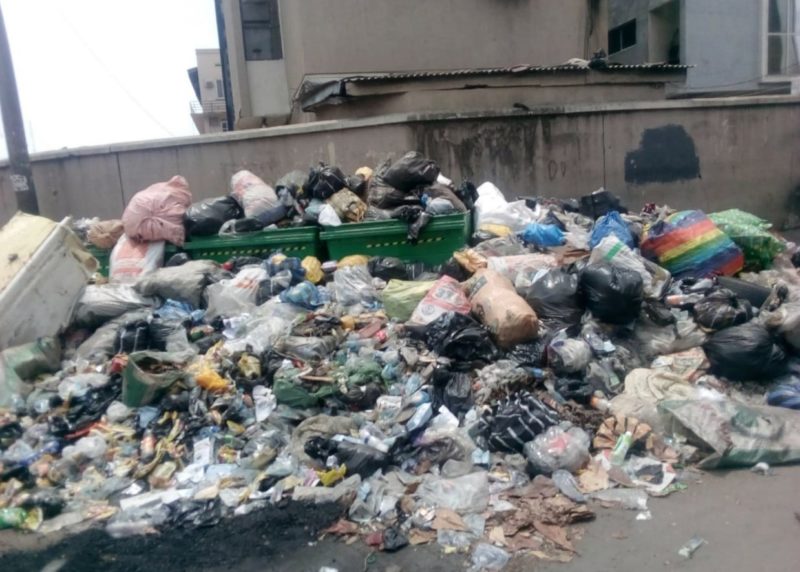
The Lagos State Government has assured Lagosians that, with the renewed collaboration between the state government, waste collection operators and Visionscape, heaps of refuse will disappear from Lagos streets in a few days.
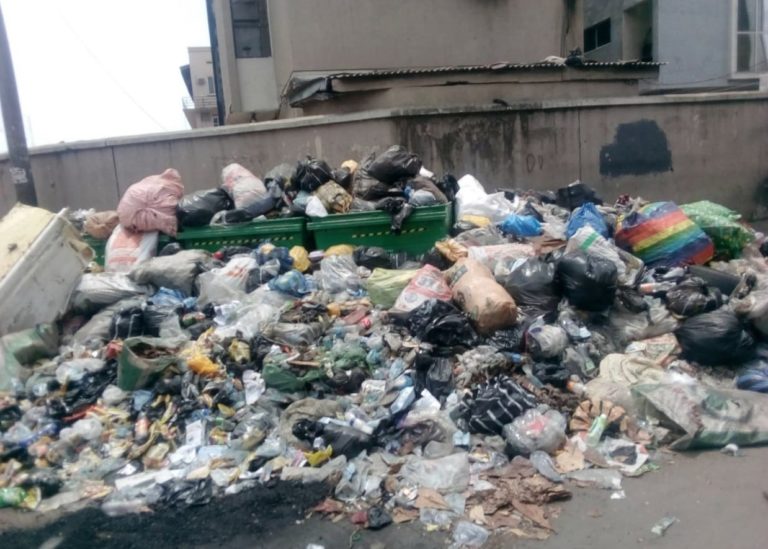
Heaps of refuse on a Lagos feeder road
Giving this assurance at the weekend was the Special Adviser to the Governor on the Cleaner Lagos Initiative, Adebola Shabi.
Shabi stated that the concerted efforts of the stakeholders would lead to an imminent total evacuation of waste from the streets.
“We have been engaging different stakeholders, the waste collection operators, the community development committees, the market women, the civil societies, landlords and tenants’ associations and various NGOs in the state to assess how we have performed in the last one year.
“There are still ongoing discussions with the waste collection operators, the former PSP operators and the state government, in conjunction with Visionscape to have as many Transfer Loading Stations, to ease the disposal of waste in the state.
“Olusosun dumpsite has been shut down by His Excellency because of the safety of the people working there and public health. And we have been asking the trucks to be going down to Ewe Elepe and Epe and we are looking at the distance, as most of the waste collectors’ trucks cannot go far distance,” Shabi stated.
The SA to the governor said that 60 per cent of waste generated in Lagos would end up at the Epe landfill while the remaining 40 per cent would be recycled and used for other purposes.
“In the next few months, Visionscape will take stock of more trucks to enhance performance in waste collection,” he said.
According to him, Visionscape has distributed over eight million garbage bags and over 400,000 garbage bins in the last two months.
“What we want from people living in Lagos is to generate your waste, bag your waste and drop them in front of the houses, for effective cleaning and preventive blockage of our drainages and canals.
“The garbage bags and bins are meant for the waste generated, so please ensure that the wastes are being packaged and kept at the front of the houses,” he said.
Shabi also said the state government will establish plastic collection centres in 57 council areas of the state.
“The theme of the World Earth Day this year is plastic pollution, and that is one of the biggest menace in the state today.
“So, we are going to have 57 collection centres in the state, we are going to encourage youths to bring plastic to the centres and you are given something in return. Then the plastics will be sold to the public for reuse,” he said.
As the world commemorates the World Malaria Day on Wednesday, April 25, 2018, the African Media and Malaria Research Network (AMMREN), made up of a group of African journalists and scientists leading a malaria advocacy agenda, congratulates African countries such as Egypt and Morocco which have been malaria-free since 2,000 including Algeria, which achieved this feat in 2016.
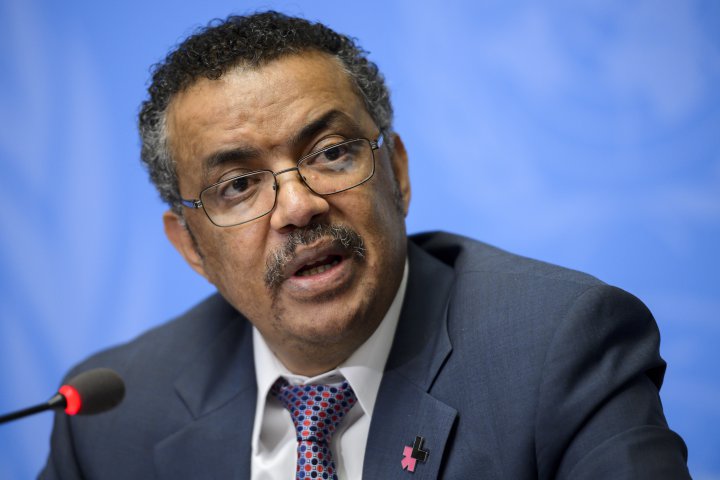
Dr Tedros Adhanom Ghebreyesus, Director General of the World Health Organisation (WHO). Photo credit: FABRICE COFFRINI/AFP/Getty Images
AMMREN also acknowledges the five African countries, namely, Botswana, Cape Verde, Comoros, South Africa and Swaziland, which have been identified as most likely to eliminate malaria by 2020.
“It is also gratifying that Algeria, Comoros, Madagascar, the Gambia, Senegal, and Zimbabwe have also been honoured this year by the African Leaders Malaria Alliance for leadership in scaling down malaria cases,” says Dr. Charity Binka the AMMREN Executive Secretary.
She adds: “As we all look up to these shining examples of countries that are making progress in the fight against malaria, AMMREN is urging countries such as Ghana, Nigeria and Kenya to double the malaria control efforts to ensure they join or at least get close to the ranks of countries at the elimination stages by 2020.”
Global efforts directed at eliminating malaria is said to have increased with statistics showing that malaria deaths have plunged by more than 60 percent since 2000, however in Africa malaria cases went up in a number of countries in 2016.
Anti-malaria campaigners and experts have noted that the world has become a little bit complacent in dealing with the disease. The information is that over the last couple of years, signs emerged that progress was slowing down. In 2016, there were 216 million cases of malaria, five million more than the previous year.
“This situation calls for more action and a robust approach including political leadership and financial investments, which should be directed at dealing with the disease. There is also the need for new tools, including the malaria vaccine to fight the disease,” stresses Binka.
AMMREN, an advocate of better malaria prevention and treatment for all, is helping to beat the killer by acknowledging and promoting the inclusion of alternative medicine in the campaign, she adds.
Binka further discloses: “Fortunately, in Ghana, the National Malaria Control Programme of the Ghana Health Service and other stakeholders have set the scene by creating alternative medicine units in selected hospitals across the country.
“Today, we need not only ensure that malaria remains high on the political agenda. We must also rediscover the efficacious remedies used by our forebears to repel insects like mosquitoes and treat diseases including malaria.
“There are many insect-repellent plants being researched in Cameroon to know more about them. Even in Ghana there are plants whose smell and smoke do the same job.
“As we seek more pertinent, practical and indigenous ways to beat malaria, we must also seize the amazing job creation opportunities available by tasking and funding young chemistry and biology graduates to work in this area.
“Helping to beat malaria demands that we not only admit alternative medicine into the fight to wipe out malaria, but also allow it to play its merited role in the campaign.
“The global plan to contain the threat of mosquito-resistance to remedies has generated a frantic effort to develop new antimalarials to overcome resistance issues.
“It is crucial to expand the mix of efficacious therapies to be able to respond when it is necessary.
“AMMREN supports the opinion of researchers that we can contribute to this global plan against malaria by developing our local herbs and keep searching until we find another potent remedy for malaria.
“Artemisinin is a Chinese herb on which the whole world is depending to fight malaria. This is an indication that an African herb can also be developed to save our lives.
“In most African countries, such as Nigeria, Ghana and Tanzania, there are many plants which people use to treat fevers. Surely, the older folks would be glad to reveal truths that have never been told about herbal malaria therapy handed down through generations.
“The various departments of chemistry, pharmaceutics, and the Centre for Plant Medicine Research in Ghana, for instance, can collaborate and systematically develop an awesome malaria therapy given proper funding.
“Malaria can be defeated. Together we can win the war against malaria.”
Each year, April 25 is set aside as the World Malaria Day to highlight efforts to control malaria and celebrate the gains that have been made.
Since 2000, the world has reportedly made remarkable progress against malaria, saving millions of lives. However, half the world still lives at risk from the preventable and treatable disease, which costs a child’s life every two minutes.