Home Blog Page 1896

Africa’s industrialisation in focus as AfDB, KOAFEC deliberate

0

The 2018 Annual Meetings of the African Development Bank (AfDB) Group commences on Monday, May 21, 2018, in Busan, Korea, addressing “Accelerating Africa’s Industrialisation.” It ends on Friday, May 25.
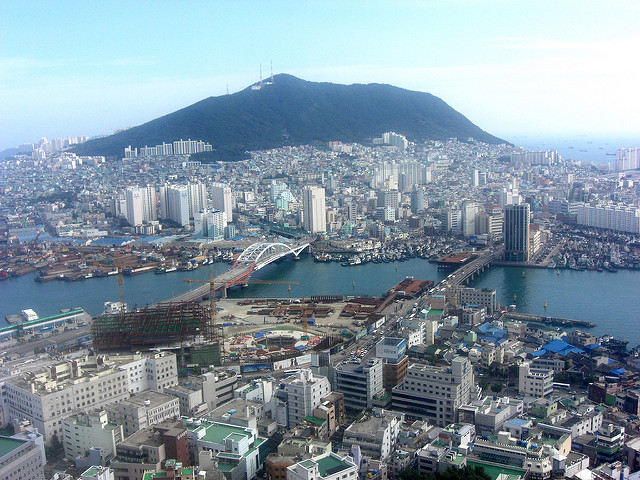
Busan
Busan in Korea is hosting the 2018 Annual Meetings of the African Development Bank (AfDB) Group and the 2018 Korea-Africa Economic Cooperation (KOAFEC) Conference

On May 22 and 24, in tandem with the Annual Meetings, the 2018 Korea-Africa Economic Cooperation (KOAFEC) Conference holds, with the theme: “Africa and the 4th Industrial Revolution: Opportunities for leapfrogging?”

Industrialise Africa is one of the AfDB’s High 5 priorities to speed up the continent’s development. The bank’s President, Akinwumi Adesina, states, “The secret of the wealth of nations is clear: developed nations add value to everything they produce, while poor nations export raw materials. Africa must quit being at the bottom of the global value chains and move rapidly to industrialise, with value addition to everything that it produces.”

His comments, the organisation says, preface “Industrialise Africa: Strategies, Policies, Institutions, and Financing”, a publication to be shared at the meetings.

Busan is said to provide evidence for discussions about why some countries, especially in Africa, stagnate while others make tremendous progress via industrialisation. In the 1960s, Korea’s economic prospects were considered more challenging than those of most African countries. Today, however, the country is regarded as being at the top of the development ladder.

Korea’s industrial transformation is famous for high-tech consumer electronics, cars, ships and oil and gas platforms. Korea is currently building the world’s largest semi-submersible platform.

Africa’s lack of industries is said to be largely responsible for its low standing in global development. African industry generates an average of $700 of GDP per capita, barely one-fifth of East Asia’s $3,400, which probably explains why it continues to depend for most needs on industrialised economies despite its own strong economic growth for almost two decades, according to the AfDB.

It notes that low-tech unprocessed natural resources comprise the bulk of African exports, representing more than 80% of exports from Algeria, Angola or Nigeria, for example.

At the AfDB meetings, thousands of delegates, Heads of State, public and private sector CEOs, development partners, academics, civil society and media are expected to gather to reflect on Africa’s industrialisation and related issues including climate change, infrastructure, private sector and governance.

A series of knowledge events are organised to generate new ideas for developing and financing Africa’s industrialisation. The meetings will include a High-Level Presidential Dialogue: Visions, Experiments and Lessons Learned at whose panel political leaders from Africa and Korea will present their visions and strategies for industrialisation and ideas for overcoming the challenges of implementation.

On Wednesday, May 23, the AfDB will launch its flagship economic publication, the “African Economic Outlook (AEO) 2018”. The following day, it will provide an overview of its operations, financial profile and capital market activities for 2017 during the Financial Presentation.
Radio Report: Government empowers MSMEs with solar energy

0

The Federal Government remains strongly committed towards supporting initiatives that promote mass use of clean and renewable power solutions especially among Micro, Small and Medium Scale Enterprises (MSMEs) for sustainable economic growth.

Minister of State for Industry, Trade and Investment Hajia Aisha Abubakar, stressed the point in Lagos at the inauguration of an off-grid national solar power solutions for empowering MSMEs in the country.

Correspondent Innocent Onoh was there.

Progress on emission reductions sluggish, as global economy improves – UN

0

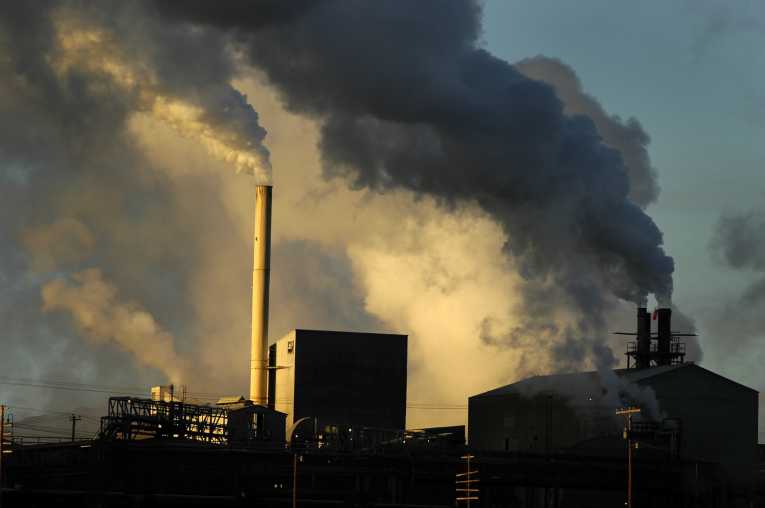
A new United Nations (UN) report shows that whilst short-term prospects for the world economy are improving, with the world gross product expected to expand by 3.2 per cent in both 2018 and 2019, a lot more needs to be done to avert a major economic downturn linked to unchecked climate change.

GHG emission
Greenhouse gas increases are leading to a faster rate of global warming. Photo credit: earthtimes.org

The study, prepared by the UN’s Department of Economic and Social Affairs, points towards a 1.4 percent increase of energy-related carbon dioxide emissions in 2017 due to a combination of accelerated economic growth, relatively cheap fossil fuels and weak energy efficiency efforts.

“While recent evidence points to progress in decoupling emissions growth from GDP growth in some developed economies, it is still manifestly insufficient. The rate of global energy efficiency gains has been slowing since 2015, reaching 1.7 percent in 2017 – half the rate required to remain on track with the Paris Agreement,” say the authors of the report titled: “World Economic Situation and Prospects as of mid-2018.”

Improving energy efficiency and a radical shift to low carbon for the world’s markets is integral to meeting the objectives set forth by the Paris Agreement, which aims to respond to climate change by keeping a global temperature rise well below 2 degrees Celsius above pre-industrial levels and as close as possible to 1.5 degrees C.

The authors of the report say that several steps can be taken to notably align the rate of energy efficiency gains with the goals of the Paris Agreement. These include the reform of fossil fuel subsidies and taxes, deploying renewable energy technology, and decreasing the cost of renewable energy generation.


Warnings of Climate Impacts Setting In

Man-made greenhouse gas emissions account for 2016 and 2017, being the two hottest years on record.

Evidence from the report states that a rising global average temperature could translate into a slower growth of per capita output in countries, with a high average temperature, most of which are low-income countries.

The sectors of agricultural production, labour productivity, weather dependent industry, capital accumulation and human health are most at risk for disruption from an unpredictable climate.

Warmer climates create shifting rainfall patterns, rising sea levels, and an increased frequency of extreme weather events. Respectively, these events can move the locations of farmlands, endanger Small Island Developing States, and threaten large population centres.


Policy Reform Crucial to Meeting Paris Agreement Goals

The report says that a reform of fossil fuel policy could increase the rate of energy efficiency gains.

Additionally, the use of new technologies such as wind, solar, electric vehicles and battery storage is critical.

In 2017, renewables accounted for 61 percent of all newly installed net power capacity in 2017 with solar alone encompassing 38 percent.

Falling costs for solar and wind power supported the economic viability for several renewable energy projects.

But even with the newly-installed capacity, renewable energy today only accounts for 19 percent of power capacity and 12.1 percent of power generation around the globe.

At the current rate of change, the pace of power transition would take approximately 55 years for the share of renewables to reach 50 percent of earth’s total energy capacity – too late to ensure the Paris Agreement’s goals can be met.

WSSCC applauds five open defecation-free local councils

Executive Director, Water Supply and Sanitation Collaborative Council (WSSCC), Mr Rolf Luyendijk, has commended the Federal Government for the cessation of open defecation in five local government areas in the country.

Rolf Luyendijk
Executive Director of WSSCC, Mr Rolf Luyendijk

He conveyed the commendation on Wednesday, May 16, 2018 at a meeting with members of the Programme Coordinating Mechanism (PCM) of the Rural Sanitation and Hygiene Programme in Nigeria (RUSHPIN), in Abuja, the federal capital city.

The five local government areas are Obanliku, Bekwarra, Yakur Local Government Areas (LGAs) in Cross River State as well as Dass and Warji LGAs in Bauchi State.

Luyendijk, however, underscored the need to get more communities to imbibe the culture of building and using toilets, adding that efforts to end open defecation were a worthwhile venture.

He reiterated that the cessation of open defecation in the five local government areas was praiseworthy and commended the Benue Government, in particular, for releasing N50 million counterpart funds to scale up sanitation interventions in the state.

“To have five open defecation-free LGAs is commendable, it is a good progress but let us be ambitious as we look forward to one open defecation-free state.

“The payment of N50 million from the Benue Government is also commendable, it shows its commitment to the RUSHPIN programme,’’ he said.

Luyendijk expressed hope that with the creation of Water, Sanitation and Hygiene (WASH) units in all local government areas, more communities would be out of the poverty cycle that was fuelled by poor hygiene practices.

The executive director said that the role of advocacy in sensitising decision makers to the benefits of budgeting for sanitation and hygiene could not be over-emphasised, calling for sustained commitment in that regard.

He said that WSSCC was partnering with the “Sustainable Water for All’’ team towards achieving target of leaving no one behind, in line with the objectives of the Sustainable Development  Goals (SDGs), while increasing partnership for scaling up access to WASH facilities.

The PCM Chairman, Mr Emmanuel Awe, said that his team was carrying out advocacy visits to the beneficiary states of Benue and Cross River because of the need to ensure the timely release of counterpart funds.

He said that state governments ought to show more commitment to hygiene promotion by taking ownership of WASH programmes, adding that this would be for the benefit of their citizens.

Dr Ella Ejembi, General Manager, Benue Rural Water Supply and Sanitation Agency (BERWASSA), called for continuous support for Internally Displaced Persons (IDPs) in the state.

He said that the conflicts and clashes in some parts of the state thwarted efforts to have one open defecation-free local government area.

Ejembi said that 1,350 communities, out of the 1,509 communities in Agatu, Gwer East and Logo LGAs had been declared open defecation free by the WASH units of the local government councils.

Three local government areas each in Benue and Cross River states are currently benefiting from the RUSHPIN programme.

By Tosin Kolade

Biotechnology agency creates web portal on animal genetic resources

0

The National Biotechnology Development Agency (NABDA) says it has created an online portal on animal genetic resources to improve scientific findings in the country.

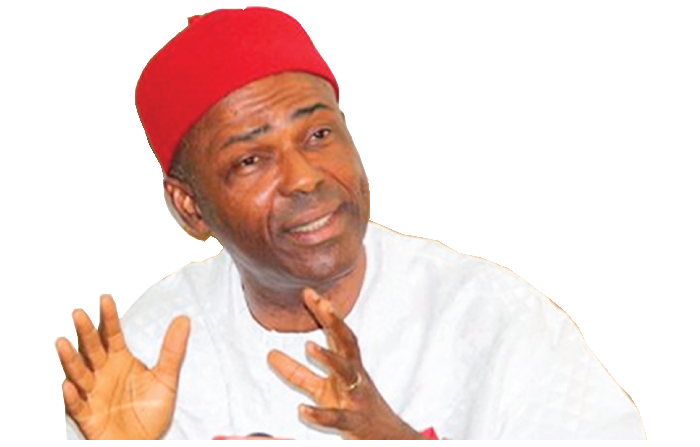
Dr-Ogbonnaya-Onu
Dr. Ogbonnaya Onu, Minister of Science and Technology

The Project Lead, Animal Genetic Resources, NABDA, Dr Mustapha Popoola, disclosed this to the News Agency of Nigeria (NAN) on Friday, May 18, 2018 in Abuja.

Popoola is also Secretary, National Advisory Committee, Animal Genetic Resources in Nigeria.

According to him, a lot of scientists in the country are doing different things in different parts of the country which is not documented anywhere.

He said the decision to create the portal came at a stakeholders’ meeting where scientists insisted it was necessary to have an online portal whereby research results and findings could be submitted from anywhere in the country.

According to him, the portal would be managed by NABDA under the animal genetic resource project, and the web address will soon be made public.

He said: “It is an encrypted portal with some level of security; there are things you can access as a contributor with particular write-ups or research works.

“However if you don’t have that, it will become difficult because we need to protect people’s intellectual property rights.

“We are going to be aggregating published work, ongoing researches, and funded projects nationwide that have to do with livestock.

“So it now left to anybody who wants to do anything in the country both internationally or locally to go through it and see clearly what you want to do.

“It gives the researcher the information about the status of animal genetic resources in the country,  part of the icons in the portal has provision for a short profile of all the experts in the field nationwide.’’

Popoola added that professors from every university, depending on their specialisations, can be contacted through the portal.

He described the portal as a national asset that would have linkages to official portal of key ministries like the ministries of science and technology, and agriculture, as well as other relevant ministries and agencies.

Popoola said the portal was the first of its kind in the whole of Africa and it would be expanded to cover ECOWAS countries if it records huge success.

He said the portal would also facilitate both local and foreign direct investments because people would have good information on investment “that are verifiable and precise’’.

“It will give the world a clear picture of what Nigeria is doing in the area of genetic resources research and other research works which otherwise would not be known by the world,’’ he said.

By Perpetua Onuegbu

South Sudan rebels release 210 child soldiers

0

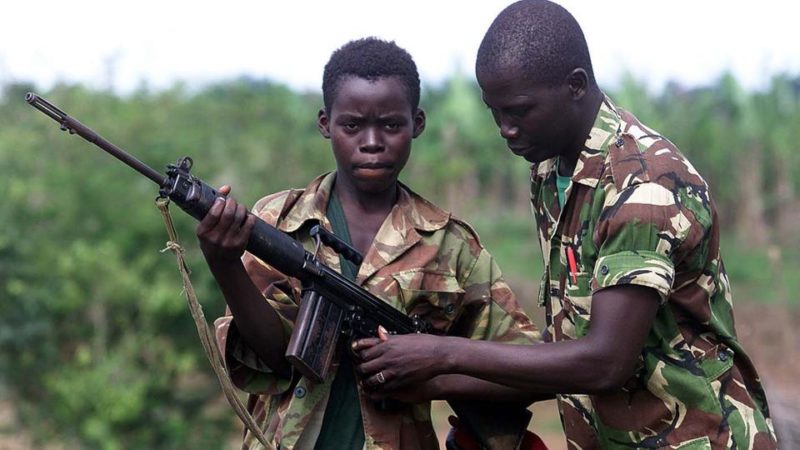
About 210 child soldiers were released by rebel groups in South Sudan’s Pibor area, the United Nations Children’s Fund (UNICEF) confirmed on Friday, May 18, 2018.

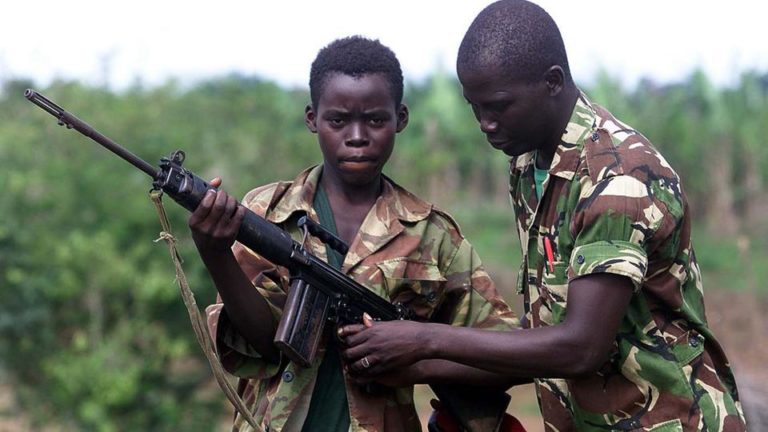
Child soldier
A fourteen year old child soldier for the Sierra Leone Army, Abu Kamara, left

Mahimbo Mdoe, UNICEF’s Representative in South Sudan, said in a statement issued in Juba, the nation’s capital, that they were released on Thursday.

“Every time a child is released and able to return to their family, it’s a source of great hope – hope for their future and for the future of the country,” Mdoe said.

“We also hope there will be many more of these events until there are no longer any children in the ranks of armed groups,” Mdoe added.

It said 806 child soldiers have now been released across South Sudan since the start of 2018, adding that more children are expected to be freed in the coming months.

UNICEF said the freed children would be reunited with their families and provided with three months’ worth of food assistance and provided with vocational training aimed at improving household income and food security to support their initial reintegration.

According to the children’s agency, an estimated 19,000 children continue to serve in the ranks of armed forces and groups in South Sudan.

The UN agency called on all parties to the conflict to end the recruitment of children and to release all children in their ranks.

Agency warns that desertification may engulf Nigeria

0

The Director General, National Agency for the Great Green Wall (NAGGW), Mr Goni Ahmed, says desertification, if not tackled, will spread across the nation.

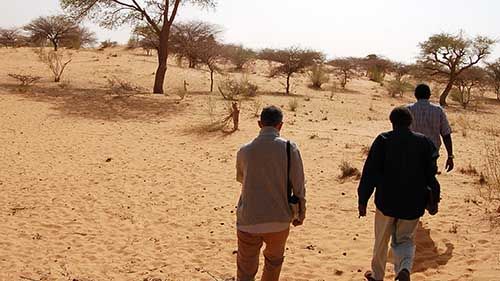
Desertification-Nigeria
Desertification in Nigeria

Ahmed made this assertion when he received the Director- General of the Nigerian Conservation Foundation (NCF), Dr Muktari Aminu Kano, in his office on Thursday, May 18, 2018 in Abuja.

He said that desertification and land degradation were very worrying phenomena that had devastated the northern Nigeria and that if not tackled would spread across the country.

He said the speed at which desertification was moving, destroying farmlands, livestock and even humans, was disturbing and, if adequate measure was not taken, the country might be engulfed with the menace.

The D-G said since the inception of the NAGGW, over 600 km of shelterbelts, 200 km of woodlots, and almost 300 hectares of Orchards had been established.

He said 157 boreholes were sunk and five skill acquisition centres built, among other achievements.

He noted that the project had been faced with some challenges as with any other government projects.

Ahmed said however that the agency was not relenting in seeing that the vision and mandate of the Great Green Wall (GGW) programme was achieved.

He expressed appreciation at the collaboration with the foundation as a window to other international groups, saying that, for the agency to bring back life and hope to the affected people, support from NGOs such as the NCF was welcomed.

According to him, this would help to achieve the goals of the GGW programme in Nigeria.

The Director-General, Nigerian Conservation Foundation (NCF), Dr Muktar Kano, said he was pleased that what was conceived by President Olusegun Obasanjo and adopted by the African Union had matured.

He said his foundation had prioritised agencies to work with, for maximum input and the NAGGW was found to be a credible one.

He said collaborations such as the one with NAGGW was important, adding that, in the past, so many government projects had not succeeded because of lack of cooperation.

Kano noted that the task of the agency was not only on environmental issues but also on socio-cultural ones such as security, unemployment, poverty and migration, among others, mostly caused by desert encroachment.

He said NCF, as an environmental NGO, works to preserve the natural resources and biodiversity of Nigeria.

“It has partnership with a number of international environmental groups including the World Wildlife Fund (WWF), the International Union for Conservation of Nature (IUCN), among many others,” said Kano.

He promised to give a major input in bringing in some of these international groups to join in the fight against desertification and land degradation to ensure the GGW was built and completed.

“This will help to tackle desert encroachment and other socio-economic activities in the country,’’ he said.

By Ebere Agozie

Congo’s Ebola cases rise to 14

0

The number of confirmed Ebola cases in Congo has risen from three to 14, according to the Central African country’s Health Ministry.

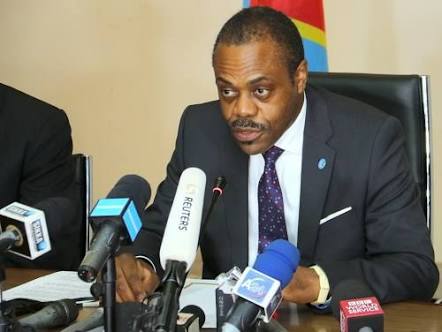
Orly Ilunga
Orly Ilunga, the Congolese Minister of Health

“In total since the start of the epidemic, there have been 45 cases of hemorrhagic fever, including 10 suspected cases, 21 probable cases, and 14 confirmed cases,” the ministry said in a statement on Friday, May 18, 2018.

The ministry said just one person had been confirmed dead from the virus, but 25 people are suspected to have died from it.

Earlier on Thursday, the ministry had only three confirmed cases, one of which – the first in a major urban area – had prompted an urgent World Health Organisation (WHO) meeting for Friday to decide what measures should be taken, including the possible declaration of a public health emergency.

Ebola is a highly infectious virus that can cause fever and bleeding.

The death rate runs as high as 90 per cent, but the lethal risk can be reduced significantly if patients are quickly isolated and if they receive fluids.

Earlier this week, more than 5,000 Ebola vaccines arrived in Congo as part of the UN’s efforts to stem the outbreak.

Similarly, the European Commission has released around €1.6 million ($1.9 million) to help tackle an Ebola outbreak in Congo, as well as organising flights to transport emergency staff and equipment to the affected areas.

Of that, €1.5 million will provide logistics support to the WHO and €130,000 will help the Congolese Red Cross perform life-saving interventions.

“All must be done to isolate the Ebola cases, especially since there has been a case in Mbandaka city,” said EU Humanitarian Aid Commissioner, Christos Stylianides.

The EU is also ready to deploy its pool of voluntary specialists and medical assets, and its Copernicus satellite will provide emergency mapping services to help reach affected areas, a statement says.

Nuimi, Saloum national parks tagged areas of ecological importance

0

The Executive Director of the National Environment Agency of The Gambia has said that protected areas play a fundamental role in the conservation of biodiversity, as well as ecosystem services, including providing services such as water, timber and food, in addition to cultural and spiritual services. But he however disclosed that protected areas are under heavy and increasing threats from anthropogenic pressures, which are now being exacerbated by climate change.

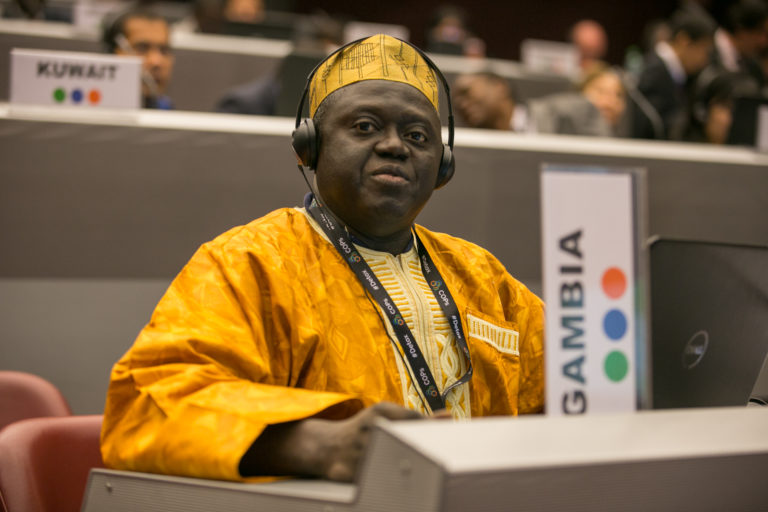
Momodou Jaama Suwareh

Momodou Jaama Suwareh made this submission during the opening ceremony of a two-day Strategic and Technical Workshop on the finalisation and endorsement of the Nuimi-Saloum Transboundary Management Plan recently held at the Senegambia Beach Hotel. The environment boss revealed that climate change impacts have already been observed on biodiversity and the impacts are causing shifts in the distribution of species, as well as reductions in population sizes, and even extinctions of local populations.

This means that protected areas that have been created to protect certain species or ecosystem types may not do so in the future. He, however, noted that such sites may become important for other species or ecosystems of conservation concern, and thereby play a key role in helping them to adapt to climate change.

Protected areas, he added, are also a very useful tool in mitigating climate change, by optimising carbon sequestration and storage, by preventing deforestation and forest degradation which constitute a major source of greenhouse gas emissions, and by supporting ecosystem-based adaptation for the benefit of people.

In order to design appropriate management and adaptation actions, it is crucial to gain a better understanding of the vulnerability of protected areas in the face of climate change and the suitability of the existing protected area network. According to him, between 2010 and 2015, the Gambia implemented a full-size GEF project which focused on the impacts of climate change on protected areas and the site selected for pilot activities was the trans-boundary area between Niumi National Park in The Gambia and the Delta du Saloum Park in Senegal.

The Niumi National Park was established in 1986 and covers 7,758 ha from Barra at the mouth of the River Gambia and it encompasses Jinack Island and a natural extension of the Saloum Delta National Park. Additionally, he revealed that Delta du Saloum was established in 1976 and is located in the central West of Senegal in the Sine Saloum natural region. It covers 76,000 ha and was established as a biosphere reserve in 1981 and recognised as a wetland (Ramsar site) of international importance in 1984.

Since 2008, two national parks (Niumi National Park in The Gambia and the Delta du Saloum Park in Senegal) formed a complex ecosystems classified as wetland of international importance and a protocol of agreement between The Gambia and Senegal for the trans-boundary management of protected areas, known as the Jinack Protocol, which specifically applied to the Niumi-Saloum trans-boundary site signed in 2001.

A draft trans-boundary management plan for the Niumi-Saloum complex was created in October 2010 and would have been updated as part of the PARCC project to take into account climate change aspects.

The importance of the two-day workshop, Suwareh noted, cannot be over-emphasised because it aims to facilitate collaboration between the two national parks by promoting networking, exchange of ideas and share lessons learnt, prepare key stakeholders and communities to better support the process.

Furthermore, he said, it will help the participants to complete all the steps that have been undertaken so that relevant stakeholders from Senegal and Gambia can come together review, finalise and validate the management plan for its upcoming implementation in the current and future projects and programmes.

He reiterated that bringing together these two institutions will help advance the work identified to consolidate the achievements which has already been known, and that the management plan would be focused and finalised with the help of experts and the different actors involved in the management of trans-boundary ecosystems.

He however challenged all to do justice to the working documents through a thorough review and active participation. Suwareh acknowledged the continuous partnership, financial as well as technical support from partners especially Wetlands International for the works they have been doing in the region.

By Sheikh Alkinky Sanyang

Over half of world’s population lacks access to essential healthcare services – WHO

0

More than half the global population lacked access to essential healthcare services, the latest annual report released by the World Health Organisation (WHO) revealed on Thursday, May 17, 2018.

Peter Salama
Peter Salama, WHO’s Deputy Director-General of Emergency Preparedness and Response

The report, titled “World Health Statistics: Monitoring Health for the Sustainable Development Goals”, is WHO’s annual snapshot of the state of the world’s health.

The 2018 edition contains the latest available data for 36 health-related Sustainable Development Goal (SDG) indicators.

In total, more than 50 SDG indicators measure health outcomes or health service provision.

“Less than half the people in the world today get all of the essential health services they need,” the report stated.

According to the report, weak health systems in a large number of countries are at fault for the lack of access to basic health services.

“In many countries, weak health systems remain an obstacle to progress and lead to shortages in coverage of even the most basic health services, as well as poor preparedness for health emergencies,” the report stated.

The WHO report disclosed that for the period of 2007-2016, 76 countries reported having less than one physician per 1,000 of the population.

Also 87 countries reported having fewer than three nursing and midwifery personnel per 1,000 of the population.

According to WHO, medicines for palliative care and pain management are considered essential.

However, data from health facility surveys conducted nationally in 29 countries during the period 2007-2017 showed that only 64 per cent of public sector facilities surveyed in low income countries.

Also, only 58 per cent of public sector facilities surveyed in lower middle income countries stocked medicines for pain management and palliative care.

The report identified that apart from access to basic and necessary healthcare, challenges also persist in attaining the eight Millennium Development Goals [MDG], which range from combating AIDS, malaria, and other diseases to reducing child mortality.

“In spite all the progress made during the [MDG] era, major challenges persist in the MDG priority areas.

“These challenges will need to be addressed if further progress is to be made in reducing maternal and child mortality, improving nutrition, and combating communicable diseases such as HIV/AIDS, tuberculosis (TB), and malaria,” the report stated.

The SDGs were adopted by UN member states in 2015 as the world’s objectives for the next 15 years.

They comprise 17 interlinked goals and 169 targets to be achieved globally by 2030.