
The Shell Nigeria Gas leadership team recently paid a visit to the Nigeria Gas Processing and Transport Company (NGPTC) in Warri, Delta State, South-South Nigeria.


The Shell Nigeria Gas leadership team recently paid a visit to the Nigeria Gas Processing and Transport Company (NGPTC) in Warri, Delta State, South-South Nigeria.
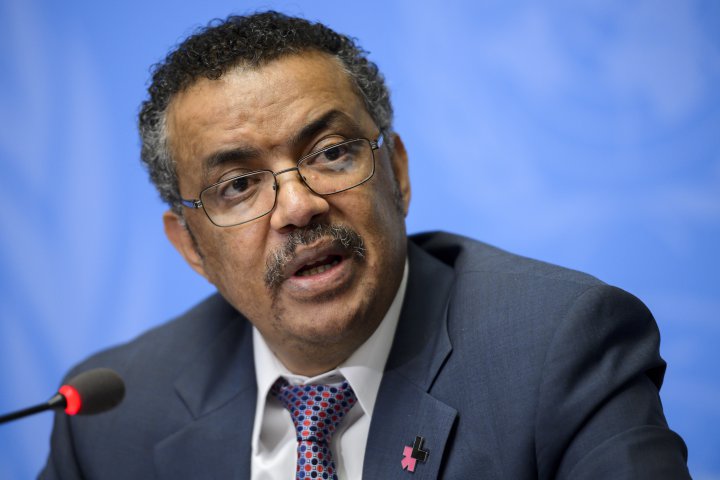
The World Health Organisation (WHO) has warned that if the outbreak of cholera in parts of Adamawa State in Nigeria continues it may spread to other areas and across the border to Cameroon, and thus posing a major public health threat.
The organisation on its Twitter Handle @WHONigeria on Saturday, June 9, 2019 said that a month into the outbreak, it had recorded 1,168 cases and 20 deaths in Mubi North and Mubi South Local Government Areas (LGAs) of the state.
The News Agency of Nigeria (NAN) recalls that during its first report of cholera outbreak in the state in May the organisation said that it recorded 434 cases of the disease and 13 deaths as at May 26.
WHO, however, reassured that it was carrying out continuous disease surveillance activities in Mubi North and Mubi South LGAs and managing a cholera treatment centre in collaboration with state health authorities.
It said that it has also ensured the chlorination of commercial sources of water and was presently conducting house-to-house active case search to prevent any spread of the disease.
WHO assured that it was leaving “no stone unturned” to ensure that the outbreak does not spread beyond the immediate vicinities of the two councils.
“Disease surveillance in emergencies can be tasking especially where insecurity, difficult terrain and frequent displacements hamper accessibility to the affected populations.
“Robust surveillance characterised by early detection, rapid and coordinated response are, however, critical in bringing outbreaks under control and reducing threat of further spread.
“New cases are being reported every day due to an active house-to-house surveillance led and coordinated by WHO.
“The case fatality ratio was 17 per cent as at May 12, but dropped to 1.7 per cent as at June 7, an indication that cases are being detected and reported early by the surveillance team.”
The organisation said that it has so far visited at least 3,141 households, disinfected up to 893 of these households including their neighbours and sensitised up to 7,199 persons in the community.
By Yashim Katurak

The Federal Ministry of Water Resources says that the National Water Resources Bill is consistent with the Constitution of the Federal Republic of Nigeria and the Land Use Act, and should not be politicised.
The ministry also on Friday, June 8, 2018 urged Nigerians to disregard misleading allegations, which were evident from the various commentaries noticed from those opposing the Bill.
The minister, Mr Suleiman Adamu, in a statement, noted that the bill was not a new law; rather an amalgamation of Water Resources Laws that have been in existence as enshrined in LFN 2004.
He said reports in the media appear to have neglected the provisions of the bill which was for the development, management and efficient use of the Nation’s water resources in line with global best practices.
The minister further appealed to stakeholders and Nigerians in general to have faith in the bill as it was for the good of the nation.
“It is in the overall best interest of every citizen of the country that the process of its passage is not politicised.
“The general public is invited to note that this National Water Resources Bill when passed into Law will better serve and provide for the enhancement of the Nigeria Water Sector in line with global best practices.”
He said the attention of the ministry was drawn to the erroneous and distorted analysis of the National Water Resources Bill, which was currently before the Senate having already been passed by the House of Representatives.
He noted that the overall objective was geared towards efficient management of the Water Resources Sector for the economic development of Nigeria and the well-being of its citizens.
“These Laws are: Water Resources Act, Cap W2 LFN 2004, the River Basin Development Authority Act, Cap R9 LFN 2004, the Nigeria Hydrological Services Agency (Establishment) Act, Cap N1100A.LFN, 2004 and National Water Resources Institute Act, Cap N83 LFN 2004.
“These Laws are being re-enacted with necessary modifications in the new bill to actualise current global trends and best practices in Integrated Water Resources Management (IWRM). “
He added that that the bill, drafted in 2006 had passed through series of consultations among stakeholders up to 2008, since which time it received no priority attention by successive administrations until now.
The News Agency of Nigeria reports that the bill provides for professional and efficient management of all surface and ground water for the use of all people.
It provides for domestic and non-domestic use, irrigation, agricultural purposes, generation of hydro-electric energy, navigation, fisheries and recreation.
The Federal Government intends to ensure through the provisions of the law that “the water resources of the Nation are protected, used, developed, conserved, managed and controlled in a sustainable manner for the benefit of all persons in accordance with its constitutional mandate’’.
It is noteworthy that the Water Resources Bill provides for the creation of an enabling environment for public and private sector investment.
The bill also provides for capacity building processes to foster good governance whilst establishing a water use and licensing framework to ensure sustainable financing for Water Sector
By Tosin Kolade
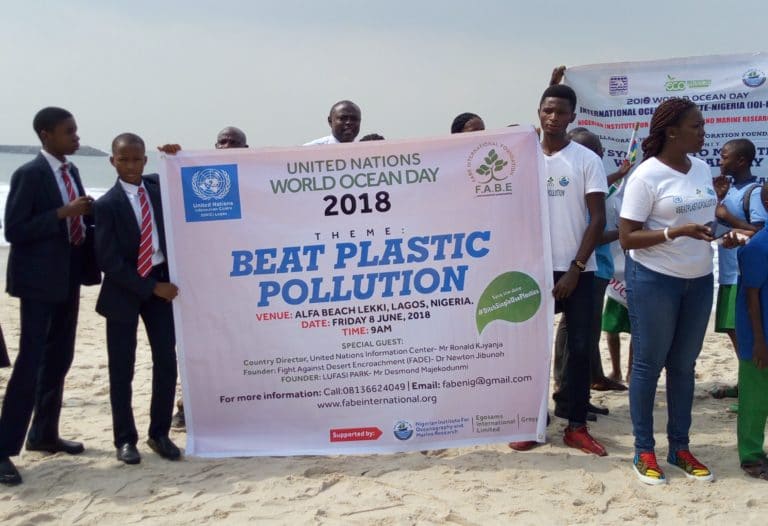
The Nigerian Institute for Oceanography and Marine Research (NIOMR) on Friday, June 8, 2018 called on Nigerians to do more to ensure safety of marine lives.
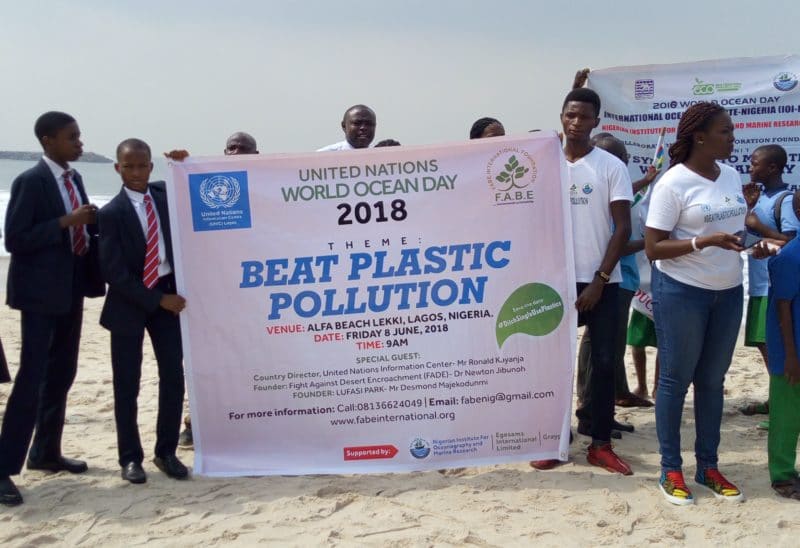
NIOMR’s Assistant Director, Dr Mabel Yarhere, made the call in Lagos during the “Alfa Beach Clean-up and Up Cycle Training” to mark the 2018 World Oceans Day.
The institute organised the event in collaboration with the United Nations Information Centre (UNIC), Lagos, and FABE International Foundation.
Yarhere said that there was the need to save aquatic lives because they were source of food for humans.
She said that oceans must be devoid of plastic pollution in order to save marine lives.
She noted the United Nations declared June 8 World Ocean Day, adding that the year 2018 had the theme: “Preventing Plastic Pollution and Encouraging Solutions for a Healthy ocean”.
She said: `’Plastic prevents the dissolved oxygen that is supposed to penetrate the ocean and marine resources are affected.
“Plastic also affects our fisheries; when plastics enter the tracks of fishes, they (fishes) die.
“The endangered species in our water, especially the turtles, are killed by plastics, and they are supposed to produce minerals into the ocean for fishes to reproduce.
“Plastics also affect the navigation of vessels in oceans and prevent the productivity of the oceans,” she said.
The assistant director noted that the Sustainable Development Goal 14 aimed at making marine productive.
She said that this would make the world to feed well and have oceans devoid of plastics that cause casinogene in the body.
“In clearing the oceans, let us start from our homes. We have to properly dispose of plastics; we have to reuse them by recycling them.
“Avoid buying bags that are disposable.
“When you dispose of plastics properly, they will not block the terrestrial realm,” Yarhere said.
Mrs Temitope Okunnu, the Founder of FADE International Foundation, said that plastic pollution had become critical because of the menace of plastics in the oceans.
Okunnu said that there was the need to properly dispose of every kind of waste so that it would not enter oceans.
“We should recycle and upcycle wastes.”
She said that plastics were a menace because they would not degrade.
She, however, noted that plastics had a long-term value and could be harnessed to make beautiful things.
According to her, the foundation engages in using plastic waste generated from oceans and drainage systems to build decorative materials.
She said that the foundation also engaged in training people, including students, on how to utilise plastic waste to make money.
Okunnu said that the foundation would use plastics picked up from the Beach clean-up, such as plastic spoons, plates, disposable cups, table water containers and sweet wrappers, to produce fancy household products.
Mr Olumide Ajayi, Representative of Environment Department, Nigerian Ports Authority (NPA), said that there had been many efforts to protect the marine environment from plastic pollution.
According to him, the cause of deaths of many fishes in the ocean has been recently linked to eating of micro plastics.
”These are the same fishes we bought every day and use in making different kinds of dishes we consume,” he said.
Ajayi said that promoting lifestyles that could rid the oceans of plastic pollution would make the oceans safe and reduce costs and delay in shipping goods and clearing them.
Dr Desmond Majekodunmi, the Founder of LUFASI Natural Parks, said that oceans needed to be protected by ensuring that plastics were not dumped there.
He said that celebration of Ocean Day should remind Nigerian Government and people of their responsibilities of clearing the ocean of all types of waste.
According to him, the earth is the ultimate for our life support system, with the ocean as an important part of the system.
Miss Miracle Emefiele, a JSS2 student of Linsy High School, Lekki, Lagos, one of the schools that participated in the beach clean-up, said that everybody should be involved in checking pollution of oceans with plastics.
She said that those going to beaches for relaxation should learn to carry back home, any waste they could generate while at the beach, for proper disposal
By Florence Onuegbu and Chidinma Agu
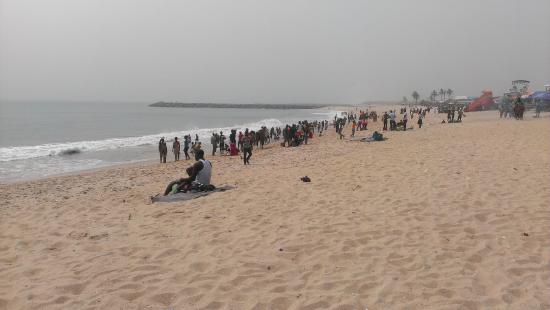
An environmental group, Let’s Do It Campaign Nigeria, and the Junior Chamber International (JCI) Lagos Metropolitan, on Saturday cleaned-up the Elegushi beach to mark the World Ocean Day.
The Elegushi Beach is a private beach located at Lekki in Lagos State. The beach is owned by the Elegushi Royal family of Lagos.
World Oceans Day is observed yearly on June 8. It has been celebrated unofficially since its original proposal in 1992 by Canada’s International Centre for Ocean Development (ICOD) and the Ocean Institute of Canada (OIC) at the Earth Summit — UN Conference on Environment and Development (UNCED) in Rio de Janeiro, Brazil.
The Campaign Manager of Let’s Do It Nigeria, Mr Gafar Odubote, said that the clean-up was to take a stand against plastic pollution in the waterways.
“Let’s Do it Nigeria and partners took a stand against Plastic Pollution today with a massive cleanup project at the Elegushi beach to commemorate the World Oceans Day.
“The World Ocean Day is an opportunity to further emphasise the need to bring people’s attention to the increasing rate of plastic pollution in Nigeria both on the lands and beaches,’’ Odubote said.
The environmentalist said the exercise was possible due to the concerted efforts of volunteers and environmental enthusiasts to pollution in the oceans.
“The Elegushi Beach Cleanup project is largely inspired by concerned members of the society who wanted to take action to reduce the amount of trash and plastic that enters the ocean.
“With 51 volunteers, we were able to bagged 107 wastes sorted into plastic bottles, glass bottles, rubber slippers, polythene nylons and food wastes.
“There are many things we can do as individuals to reduce our plastic consumption. Individuals must control their consumption pattern, stop patronising single-use plastics and develop a positive attitude towards waste disposal,’’ he said.
Odubote called on the Federal Government to enact and enforce policies and regulations to quell plastic pollution in the waterways.
“There are many things we can do as individuals to reduce our plastic consumption but the government must come up with enforceable regulations on plastic bags and bottles.
“These laws should regulate the production, importation, sale and use of plastic bags and bottles in Nigeria,’’ he told NAN.
Adeyanju Adeonipekun, the President, JCI Lagos Metropolitan, said the cleanup at the beach was an attempt to enlighten people on the risks of an unclean ocean.
“This Beach cleanup project at Elegushi is to enlighten the people on the risk of unclean oceans and its hazards to health.
“The World Oceans Day is a wakeup call for everyone in Nigeria to ensure their environment is clean and healthy.
“Our planet is dying gradually of wastes and as active citizens, the responsibility is on us to act fast to save the planet,’’ Adeonipekun said.
By Mercy Okhiade
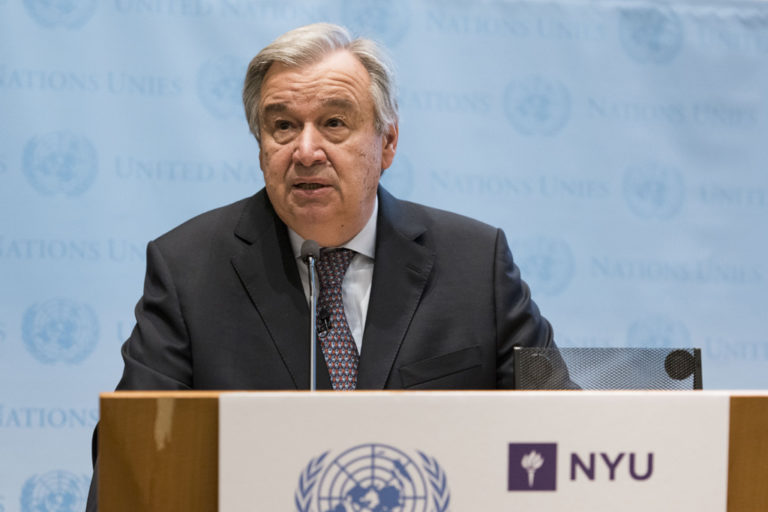
UN Secretary-General António Guterres said everybody needs to do something to stop plastic pollution from getting into the world’s oceans.
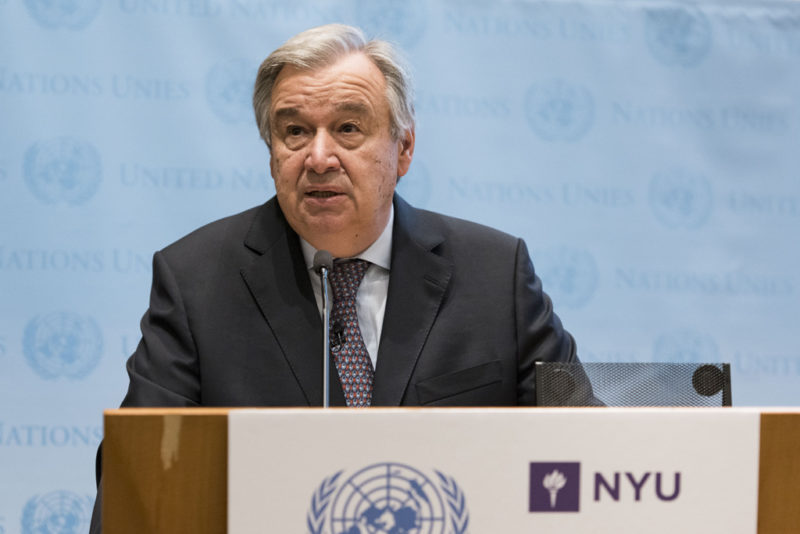
Guterres, who stated this in his message for World Oceans Day, said everybody could contribute “from carrying your own water bottle, to volunteering for a local clean-up”.
The UN chief reminded everyone of the major role the oceans had in everyday life, as the lungs of the planet, providing most of the oxygen that we breathe.
“The oceans make our blue planet unique in our solar system – and not just visually,” he said.
He added that they helped regulate “the global climate and are the ultimate source of the water that sustains all life on Earth, from coral reefs to snow-covered mountains, from tropical rain forests to mighty rivers, and even deserts.”
“However, the ability of the oceans to provide their essential services is being threatened by climate change, pollution and unsustainable use,” he stressed.
Plastic pollution alone is wreaking tremendous havoc on the marine resources of the world, he said, highlighting the problem of plastic pollution in particular.
About 80 per cent of all pollution in the sea comes from land, including some eight million tonnes of plastic waste each year.
This has cost the lives of one million seabirds and 100,000 marine mammals, while it causes eight billion dollars in damage annually to marine ecosystems.
Guterres said pollution “chokes waterways, harms communities that depend on fishing and tourism, kills turtles and birds, whales and dolphins, and finds its way to the most remote areas of the planet and throughout the food chain on which we ultimately rely”.
“Unless we change course, plastic waste could soon outweigh all the fish in the oceans,” Guterres added.
The UN chief urged everyone to work individually and collectively to “stop this preventable tragedy” and significantly reduce marine pollution of all kinds.
Guterres said: “Action starts at home, and speaks louder than words. The United Nations aims to lead by example, and more than 30 of our agencies have now begun working to end the use of single-use plastic.
“But everyone needs to play a part by taking simple actions like carrying your own water bottle, coffee cup and shopping bags; recycling plastic; avoiding products that contain microplastics; and volunteering for local clean-ups.
“If we all do a little, our combined actions can be massive. On this World Oceans Day, I urge governments, communities and individuals alike to celebrate our oceans by helping clear them of pollution and ensure they remain vibrant for generations to come.”
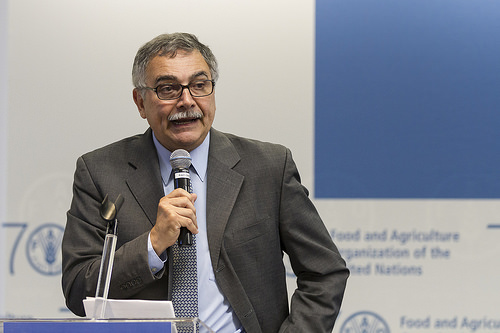
The Food and Agriculture Organisation (FAO) says conflicts and adverse local weather conditions have continued to acutely aggravate and prolong severe food insecurity in parts of Nigeria and 38 other countries.
The UN food agency also said the situations had raised the list of countries requiring external assistance for food, according to its new “Crop Prospects and Food Situation” report.
Underscoring how persistent conflicts and adverse climate shocks were taking a toll on food security, no country exited the list, which comprises 31 countries in Africa, seven in Asia as well as Haiti.
That list now comprises 39 countries, up two countries from the last report in March, with the addition of Cabo Verde and Senegal.
These include Burkina Faso, Burundi, Cameroon, Central African Republic, Chad, Congo, Democratic Republic of the Congo, Djibouti, Eritrea, Ethiopia, Guinea, Kenya, Lesotho, Liberia, Libya, Madagascar, Malawi, Mali, Mauritania, Mozambique, Niger, Nigeria, Sierra Leone, Somalia, South Sudan, Sudan, Swaziland, Uganda, and Zimbabwe.
The other countries outside of Africa are Afghanistan, Haiti, Iraq, Democratic People’s Republic of Korea, Myanmar, Pakistan, Syria, and Yemen.
FAO’s latest forecast for world cereal production in 2018 foresees a 1.5 percent annual drop from the record high realised in 2017.
“Conflicts have choked agricultural activity in swathes of Central Africa, notably in the Central African Republic and parts of the Democratic Republic of Congo, where access to food is further hindered by surging inflation.
“Conflicts in Nigeria and Libya have led to less demand for meat, one reason behind the drastic drop in incomes for many pastoralist households in the Sahel region, where grazing and water resources are already strained and the ongoing lean season is expected to last longer than usual.”
The UN food agency said recent rains point to cereal production gains in East Africa after consecutive seasons of drought-reduced harvests, FAO said.
It, however, noted that recent abundant rains triggered flooding in Somalia, Ethiopia and Kenya, displacing about 800,000 people.
In contrast to the trend in the sub-region, staple food prices are high and rising in the Sudan and South Sudan, affecting access to food and intensifying food insecurity risks, FAO said.
The UN agency said the number of severely food insecure people in South Sudan was expected to rise – in the absence of humanitarian assistance – to 7.1 million people during the current peak of the lean season (from June to July).
By Prudence Arobani
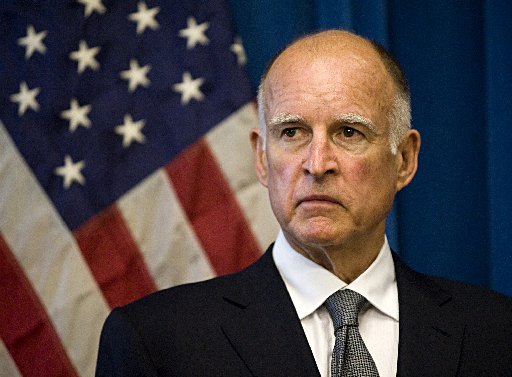
Tens of thousands of people will take part in the Rise for Climate mobilisations in September 2018 with distributed local actions in towns, institutions, universities, and houses of worship around the world. The actions are expected to drive climate action within communities and send a message to governments about what the will of the people really is ahead of the Global Climate Action Summit (GCAS).
The GCAS, hosted by California Governor Jerry Brown, will take place from September 12 to 14 and will be attended by governments, cities, businesses and other stakeholders. The forum is intended to showcase climate action by non-state actors taking place around the world and inspire deeper commitments from national governments.
The Rise for Climate mobilisations, it was gathered, will set the bar for the Summit by demonstrating what real climate leadership looks like and challenging governments to accelerate progress towards a just and equitable transition to 100% renewable energy for all while stopping all new fossil fuel projects and embarking on a just and managed decline of existing production.
Diverse groups representing faith, youth, justice, labour and cities are said to be supporting the Rise for Climate mobilisation that springs from the fast-growing grassroots climate movement. Notable actions will include: tens of thousands taking to the streets of San Francisco in USA, a continental day of action in Australia, several events planned across the Pacific islands and Africa including local renewable energy summits, actions across major European cities with a major march planned in Portugal and a flagship event in Kiev in Ukraine, creative actions in Latin America, and virtual marches planned in East Asia.
The Climate Action Network (CAN) says: “Through these actions we will collectively demand even more from local and national governments across the world at this critical juncture where people’s livelihoods are at stake due to the growing impacts of the climate crisis. This mobilisation is part of a larger wave of global mobilisations unfolding this year including Reclaim Power and Global Frackdown – together these actions will help to build a groundswell of support for real climate leadership, pile the pressure on national leaders that are falling short of their commitments, and create the right momentum to secure a fast and just transition to an equitable world by 2020.”
Over 740 primary pupils of LEA Primary School in Nyanya-Gwandara, Nasarawa State, share only two toilets, Mr Akwe Omadefu, the Headmaster of the school, has said.
Omadefu made the revelation on Friday, June 8, 2018 in Nyanya-Gwandara when a team of officials of the Network of Water and Sanitation (NEWSAN) visited the school as part of their activities to commemorate the 2018 Menstrual Hygiene Management Day.
He said that the dearth of toilets and a perimeter fence around the school had negatively affected school attendance and pupils’ enrolment.
“You can see the surroundings; the school is not fenced and we have been trying all we can to make the state government to come to our aid and fence the school.
“When this done, we will be able to control the movement of pupils in the school. This is very important because some of the pupils do not usually return to school after the end of the break time.
“We have only two toilets here: one for males and the other for the female pupils. We don’t have potable water; the school authorities have to buy water from water vendors,’’ he said.
The head teacher said that the scarcity of toilets in the school had somewhat promoted open defecation around the school premises, adding that this explained why the surrounding area of the school was dirty and foul-smelling.
Omadefu solicited the provision of toilets and perimeter fence as well as teaching and learning materials for the school, saying that this would encourage the pupils to stay in school and face their studies.
The National Coordinator of NEWSAN, Mr Benson Attah, who bemoaned the situation in the school, said that the school was in dire need of facilities that would encourage learning and discourage open defecation.
Attah said that it was saddening to note that such a school existed, despite its proximity to Abuja, the nation’s capital.
He said that the group would solicit the assistance of donor agencies and other stakeholders for the school.
Ms. Gift Eke, NEWSAN Secretary in the FCT, said that the group was carrying our assessment of schools in and round the FCT to create public awareness of their needs and solicit the support of donor agencies for efforts to improve the state of the schools.
She underscored the need to give priority attention to the provision of basic water and sanitation facilities for the school so as to boost pupils’ enrolment and school attendance.
Besides, Eke said that the group had sensitised the school children to the importance of menstrual hygiene management, saying that the pupils had been equipped with basic menstrual hygiene skills.
Eke, however, called for the provision of free sanitary pads for schoolgirls, saying that the proposal was aimed at boosting the school attendance and wellbeing of the girl child.
“We are advocating for the provision of free sanitary pads for girls of school age. Since condoms are given to people free of charge and are available everywhere, why can’t the government provide free sanitary pads for schoolgirls as well?” she asked.
However, some cynics have expressed reservations about the proposed provision of free sanitary pads to school girls, saying that it would be difficult to ascertain the quality and wholesomeness of such menstrual pads.
Mr Dayo Ajileye, a civil servant, said that since sanitary pads were aptly considered as personal hygiene kits, the free distribution of sanitary pads should be strictly monitored to check any plot to contaminate the reproductive health of the potential beneficiaries.
He said that in checking such sharp practices by unscrupulous persons, deliberate efforts should be made to assign some recognised agencies or associations to oversee the manufacture and distribution of the sanitary pads that would be distributed to schoolgirls free of charge.
By Tosin Kolade
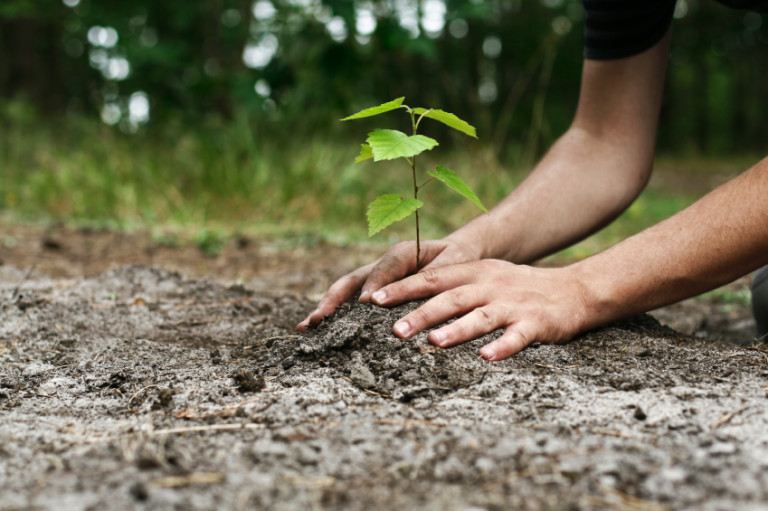
Executive Secretary, Taraba State Environmental Protection Agency (TEPA), Mr Julius Butu, on Friday, June 8, 2018, urged the people of the state to embark on massive tree planting to protect the environment.
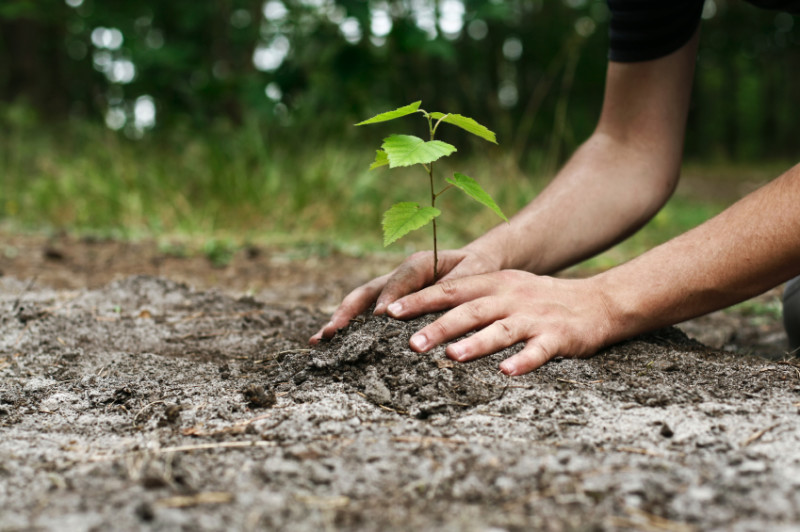
Butu told newsmen in Jalingo, the state capital, that planting trees would help in preserving the environment for a conducive human and animal habitation.
He noted that government was planning to lead the tree planting campaign for a friendly environment.
“I want to appeal to all residents of Taraba to embark on massive planting of trees.
“Nigeria is signatory to Paris Agreement that encourages protection of the environment by all members and there is no other way to achieve this than to plant more trees.
“We urge the people of the state to plant both economic and other trees to check hazards associated with absence of trees.
“We appeal to the people to shun harmful environmental practices such as bush burning, deforestation and indiscriminate disposal of plastic and other waste, ‘’ Butu said.
The executive secretary said the state government through TEPA had taken steps to check indiscriminate disposal of plastic waste by creating awareness among motorists, organisations, among others, to keep wastebaskets.
He said that the state government had concluded plans to procure a waste recycling machine to encourage people to dispose waste properly and even earn little income from it.
Butu explained that a clean environment would guarantee a healthy living for human beings and animals.
By Gabriel Yough