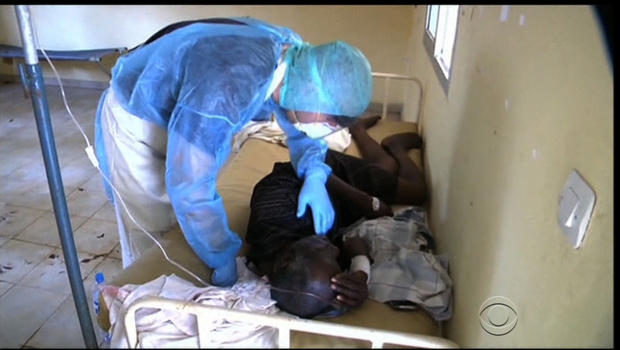
Congo has begun Ebola vaccinations of medical staff in the northwest city of Mbandaka, a Reuters witness has said. The vaccinations are said to be the first in the Central African country to help stem an outbreak believed to have killed 25 people since early April.
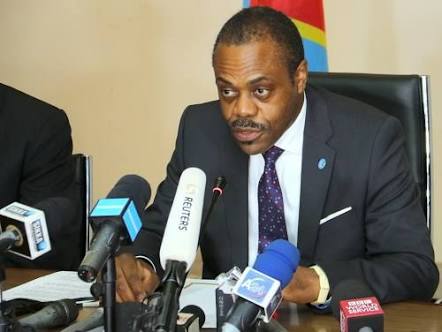
Orly Ilunga, the Congolese Minister of Health
The World Health Organisation (WHO) is sending over 7,540 doses of Ebola vaccine to Congo, 540 of which have been earmarked for Mbandaka where four Ebola cases have been confirmed.
Health workers in the Democratic Republic of Congo (DRC) began the vaccination aimed at containing an outbreak of the deadly Ebola virus.
A spokesperson for the health ministry, Jessica Ilunga, said that 4,000 doses of vaccine were shipped on Saturday, May 19, 2018 to the city of Mbandaka.
The outbreak is Congo’s ninth since the disease made its first known appearance in the 1970s.
The cases in Mbandaka, a port city on the Congo River, have raised concerns that the virus could spread downstream to the capital Kinshasa, which has a population of 10 million.
A government spokesman said that Congo’s partners had promised to make available a total of 300,000 doses of vaccine.
President of the African Development Bank (AfDB), Dr Akinwumi Adesina, on Monday, May 21, 2018 urged African countries to add value to their products in all sectors for rapid industrialisation of the continent.
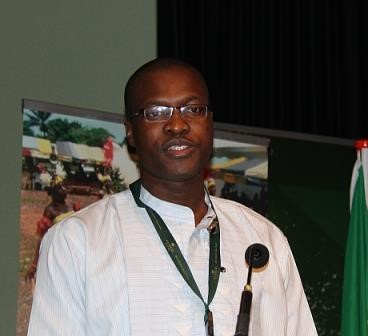
Dr. Akinwumi Adesina, President of the African Development Bank (AfDB)
He made the call at a breakfast meeting for newsmen at the bank’s Annual Meeting in Busan, South Korea.
He said Africa was greatly endowed with natural resources such as gas, oil and agricultural and mineral products that needed to be tapped for exports.
“Africa needs to create jobs, add values to products for export because no nation achieves industrialisation by exporting raw materials,” he said.
Adesina expressed the belief that Africa’s surest way to economic growth was through agricultural industrialisation.
The president said African countries needed to create jobs, wealth and fiscal base by encouraging the growth of medium and small scale enterprises.
He said a major challenge of Africa was that most countries exported raw materials, adding that the practice should stop.
He said the bank would invest 35 billion dollars in the next 10 years to support industrialisation in Africa to grow its industrial GDP.
According to him, Africa is a resilient continent, doing a lot of things for its growth and ready to take its right place.
He called for public/private sector participation to drive development and industrialise the continent.
He said most countries in Africa were driving industrialisation through government support for infrastructure development, f0reign direct investments and mobilisation of money from the capital markets into the economies.
South Korea is hosting the meeting as one of the non-regional member of the bank as the 2017 edition held in India.
Adesina said such meetings were being held outside Africa to give the hosts sense of belonging
Other non-regional members include Brazil, Argentina, Canada, U.S. and Korea.
The theme of the five-day meeting is “Accelerating Africa’s Industrialisation” and being attended by Africa’s ministers of Finance, Central Bank Governors and participants from both public and private sectors of the economy.
Lagos State Commissioner for Environment, Babatunde Durosinmi-Etti, says half of the 47-hectare Olusosun Metropolitan Dumpsite in Ojota has been capped.
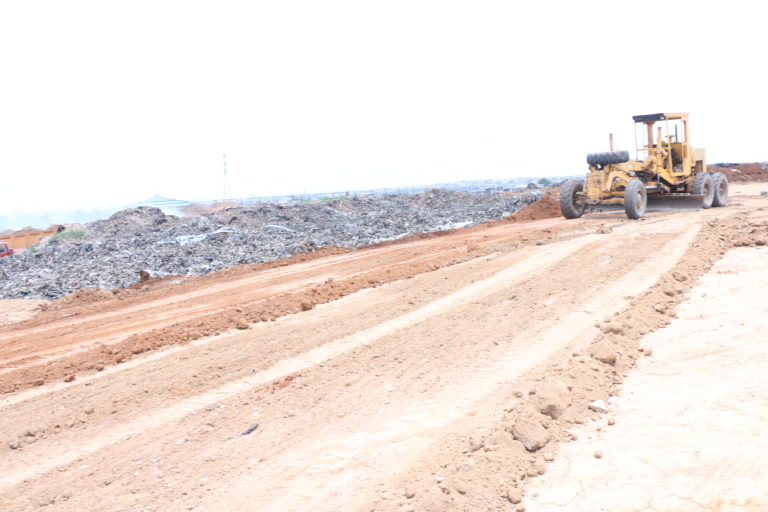
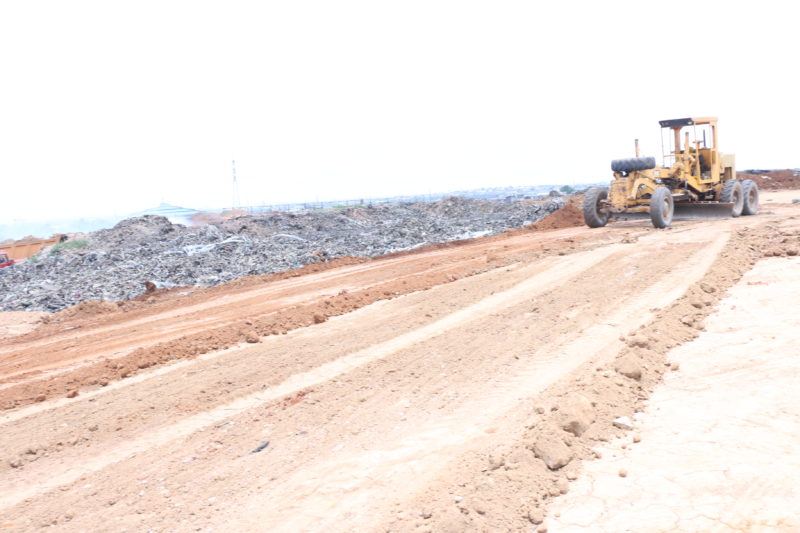
Capping at the Olusosun dumpsite in Lagos
Speaking with newsmen during the supervision of the capping activities on the dumpsite in Lagos, Durosinmi-Etti said that 50 per cent of the dumpsite was successfully capped within three weeks.
According to him, there is a need to cap the dumpsite to prevent a recurrence of fire outbreak in the area.
“The capping started over three weeks ago and what has happened is that we have covered a lot of mileage.
“And we are looking at another three weeks to complete the whole capping, before the rain starts. So, it is quite important that we take advantage of every good weather.
“We have covered over 50 per cent of the work. We use a minimum of 250 trips of laterite and this is not the best time of getting laterite because of the rain.
“The dumpsite is now odourless, the fume has gone and this is as a result of the hard work being put in by the team from the Ministry of Environment.
“This is a new Lagos. The toll gate is there, an entry point into Lagos. The dumpsite is not the sort of thing people should be seeing as the first impression.
“By the time this place is turned into a world-class recreation park, it will be pleasing to the sight of people coming into Lagos.
“We are looking at a mix array of activities in planned recreation park.
“The residents of this area should be rest assured that there are greater things coming their way in terms of recreation, in terms of much cleaner and healthier environment than they ever envisaged,” he said.
Essien Nsuabia, Operations Manager, Lagos Waste Management Authority (LAWMA), said that the capping was aimed at dousing fire and smoke, using landfill equipment to level the place and cover it with laterite sand.
“Landfills are not level, some places are high while some places are low and gases are going out from there, which eventually cause fire outbreak.
“So landfill equipment are used to cut the dumpsite, making it level, hence, covering the vent, then use the laterite sand to cover it completely.
“Laterite sand does not allow oxygen to go inside to continue to fuel the burning,” Nsuabia said.
He said that laterite removed oxygen from underneath the waste and when oxygen was removed, the level of flammability would be reduced.
According to him, weather is a determinant of the time of concluding the capping of the dumpsite.
“When the rain comes it slows down the work, that is why we have devised a means of working both day and night anytime we have great weather,” he said.
The Ojota Metropolitan Lagos dumpsite, popularly called Olusosun dumpsite, was gutted by fire on March 14.
A total of N14.86 billion has been invested by the Shell Petroleum Development Company of Nigeria Ltd (SPDC) operated Joint venture on Global Memorandum of Understanding (GMoU) clusters in Rivers State, giving communities a highly-valued opportunity to decide and implement projects and programmes that have a lasting impact on people’s lives. The funding, since the GMoU concept took off in 2006, has enabled the 19 clusters in Rivers State to embark on projects covering health, education, water and power supply improvement, sanitation and infrastructure development.
Shell Petroleum Development Company of Nigeria Limited (SPDC) General Manager, External Relations, Igo Weli.He describes the academics research programme as key aspect of Shell’s effort to contribute to the development of higher education in the country
“The GMoU initiative has opened a new and exciting chapter in the relationship between SPDC JV and communities and empowered the people at the grassroots to take charge of their own development,” said SPDC’s General Manager, External Relations, Igo Weli, at a presentation of the 2018 Shell Nigeria Briefing Notes to journalists in Port Harcourt. Mr. Weli, who was represented by the Manager, Social Investment/Social Performance, Ms. Gloria Udoh, said the success of the GMoU initiative proves what can be achieved when government, international oil companies, communities and NGOs work together for the common good.
Under the terms of the GMoU, SPDC JV provides secure five-year funding for communities to implement development projects of their choice, which are managed by Cluster Development Boards (CDBs) under the guidance of mentoring NGOs. There are 37 active GMoU clusters in Rivers, Delta, Bayelsa and Abia states, which have been funded to the tune of more than N41 billion since 2006.
GMoU clusters in Rivers State have recorded landmark achievements, including setting up a Community Health Insurance Scheme (CHIS) at Obio Cottage Hospital in Port Harcourt, where the average number of patients increased from about 600 to about 7,500 per month in 2017, making it one of the most utilised health facilities in the area. Other clusters have awarded foreign and Nigerian tertiary scholarships, set up transport schemes and built roads.
In another social investment initiative in Rivers State, SPDC JV has trained more than 800 young men and women under the Shell LiveWIRE programme which was introduced in 2003 to help young entrepreneurs to convert their bright ideas into sustainable businesses, creating wider employment and income opportunities for communities. SPDC JV also implements a robust health intervention scheme, supporting 10 hospitals in the state.
In 2017, SPDC JV established Nigeria’s first centre of excellence in Marine Engineering and Offshore Technology at Rivers State University in Port Harcourt, which has commenced programmes leading to the award of Masters Degrees in Marine Engineering (Power Plants), Naval Architecture and Offshore and Subsea Engineering. This and other educational interventions build on a pioneering scholarship programme that was introduced by SPDC since the 1950s.
Mr. Weli added: “We’re proud of our extensive social investment footprints in Rivers State, which in some cases even stretch beyond the SPDC joint venture. For example, to mark Nigeria’s centenary anniversary, Shell exclusively donated a modern public library to the Port Harcourt Literary Society in November 2016 at a cost of N1.58 billion. While we will continue to work with government, communities and other stakeholders for the development of the Niger Delta, we strongly appeal for a conducive operating environment since this is only way we can do business and implement the needed social investment projects and programmes.”
American environmentalist and President of Tompkins Conservation, Kristine McDivitt Tompkins, was on Friday, May 18, 2018 designated UN Environment (UNEP) Patron of Protected Areas during an event at the United Nations headquarters in New York.
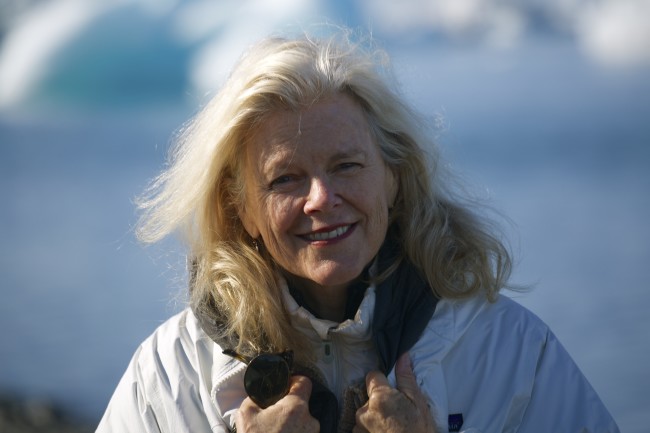
Kristine McDivitt Tompkins
The former CEO of Patagonia, Inc., Tompkins is renowned for her outstanding environmental leadership, and particularly for expanding public protected areas and engaging the business community with the conservation of pristine mountains, grasslands, forests, and wetlands in Chile and Argentina.
Famed for purchasing vast swaths of landscapes in Patagonia and returning them to national Governments in the form of national parks, Ms. Tompkins together with her late husband Douglas Tompkins – founder of The North Face and co-founder of Esprit – and their partners have worked with the governments of Chile and Argentina to create 13 parks spanning five million hectares to date, more than any private individuals in history.
The couple is also recognised for recovering species such as the giant anteater in Argentina, in the areas where they work and boosting jobs and incomes through their conservation effort in territories full of clean water and ancient forests.
In January of 2018, on behalf of Tompkins Conservation, Tompkins donated 400,000 hectares of land to the Government of Chile, which were leveraged with government land to create a new 4.5 million hectares of national park network. Meanwhile in Argentina, Tompkins is leading the creation of Iberá National Park, which is in its final stages of becoming an official national park, with a donation of 150,000 hectares. Tompkins continues taking a leading role in protecting areas, through promoting the creation of new National Parks in Argentina as well as contributing to the creation of protected marine areas undertaken by the Government of Argentina.
As Patron of Protected Areas, Ms. Tompkins will support UN Environment to expand its message of conservation among individuals, governments and business.
“We warmly welcome the support of Ms. Tompkins in highlighting the connection between protected areas and other issues like marine litter, pollution, climate change and the illegal trade in wildlife,” said Erik Solheim, UN Environment Executive Director. “We need to nurture a new generation of responsible consumers to act as custodians to our planet.”
“The legacy that the Tompkins will leave us is ground-breaking in many areas: the achievements regarding saving biodiversity, park creation, restoration, ecological agriculture and activism with rising of awareness, have allowed immense transformations. The results of your efforts will accompany us and the future generations to come,” said Ambassador García Moritán, Permanent Representative of Argentina to the UN.
“It is an honour to be recognised by such a venerable institution as the United Nations. At this moment of human history, we must act to protect what’s left of untouched land and sea and work against the extinction crisis,” said Tompkins. “I hope that our energy and sense of urgency can inspire and accelerate new ways to work on behalf of nature.”
Tompkins is the president and co-founder of the non- profit Tompkins Conservation and was recognised in 2017 with the Carnegie Medal of Philanthropy and in 2016 with the World Tourism Award and the Lowell Thomas Award.
An environmentalist, Mr Idowu Salawu, on Sunday, May 20, 2018 told the Federal Government to formulate a national policy on plastic waste management to make wastes useful to humanity.
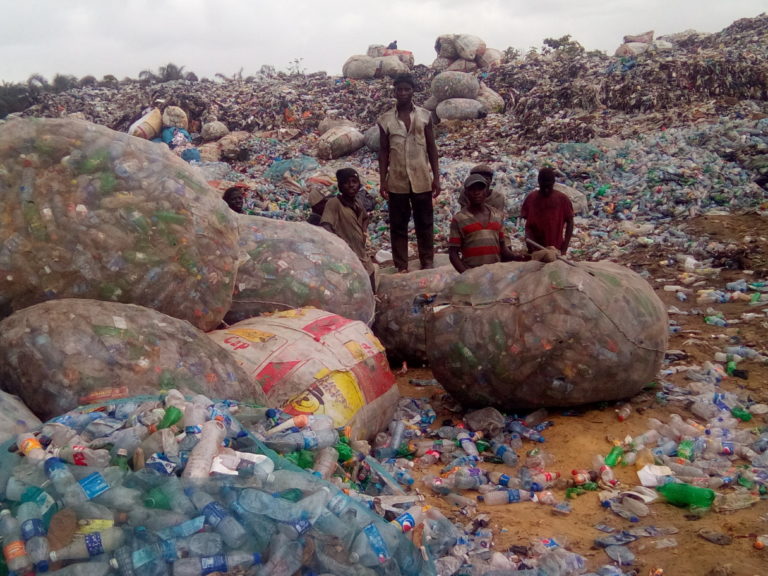
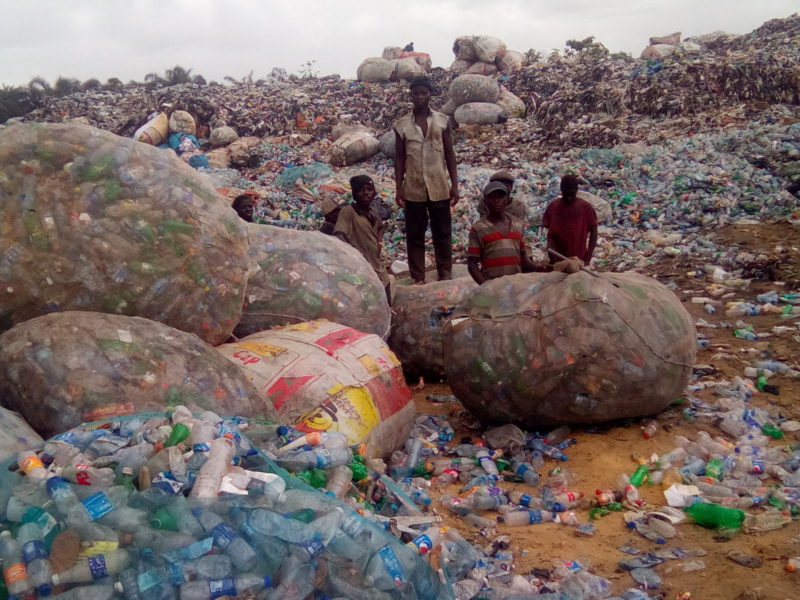
Plastic bottle scavengers and their wares at the Epe Landfill Site/EcoPark in Lagos
Salawu gave the advice in an interview with the News Agency of Nigeria (NAN) in Lagos.
He said that a national policy was necessary to find economic advantages of plastic waste products, instead of allowing the materials to constitute environmental hazards.
Salawu, who is a consultant to the Federal Government on the environment, said that government should also evolve means of analysing waste streams to make wastes useful to economic growth.
“We have organic and inorganic wastes in the Nigerian waste stream. The inorganic aspect of waste is between 30 to 40 per cent, while the organic waste composition is about 60 to 70 per cent.
“Plastic wastes come in different forms. We have the high density and low density polyethylene plastics.
“In Nigeria, we are generally having serious problems in managing plastic wastes. This should not be.
“We have the habit of co-mingling our wastes. The plastic component of our waste is about 10 per cent. If we separate our wastes, we will be able to recycle plastic wastes.
“We need to use these resources, especially our plastic wastes for our own benefits as human beings.’’
He pointed out that there were innovative ways that plastic wastes could be recycled for the overall development of the economy.
“In developed climes, they use plastics for road construction. High density and low density polyethylene plastics are converted into cornflakes, and then to pellets with the inclusion of additives to make green roads.”
Citing the apparent crisis in waste management in Lagos State, Salawu argued that what was needed was for the state government to adopt integrated approach to waste management.
He noted that it was wrong to engage only one company to manage waste in a mega-city like Lagos.
“There are numerous smart ideas to manage waste in a big city like Lagos. One company cannot handle it alone.
“We experts on the field have been challenging government that this Visionscape people cannot do this work alone. They need to work with people on ground.”
He advised the government to resuscitate transfer loading stations in the state and to carry out a feasibility study on the state’s waste terrain to enable Visionscape do a better work.
“The issue with Visionscape is that they did not carry out a feasibility study before embarking on the new waste management scheme in Lagos.
“If there was a feasibility study in place, they will be able to understand the waste management terrain of the state.
“The smart city advice I want to give to Lagos State is that the solution to waste management is centred on the issue of transfer stations. There must be transfer stations within the city.
“The smart city solution to waste management in Lagos, therefore, hinges on transfer stations that can recover recyclable materials like metal, aluminum, paper and plastics.”
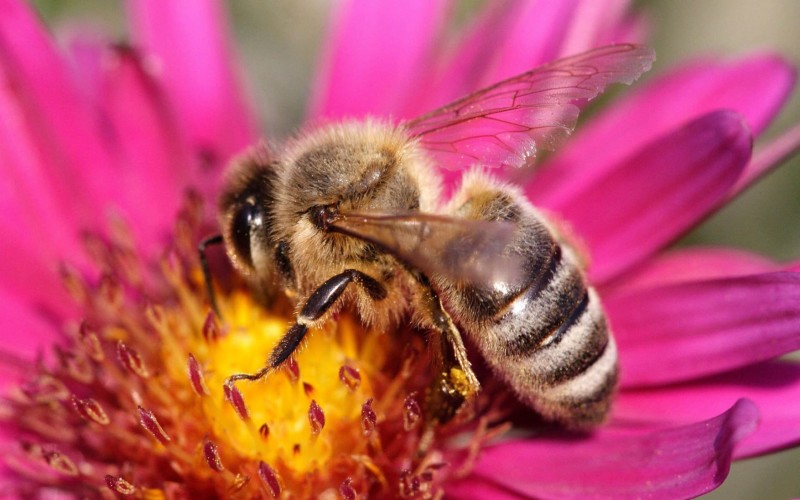
For centuries bees, busy as they are known to be, have benefited people, plants and the planet. By carrying pollen from one flower to another, bees, butterflies, birds, bats and other pollinators facilitate and improve food production, thus contributing to food security and nutrition. Pollination also has a positive impact on the environment in general, helping to maintain biodiversity and the vibrant ecosystems upon which agriculture depends.
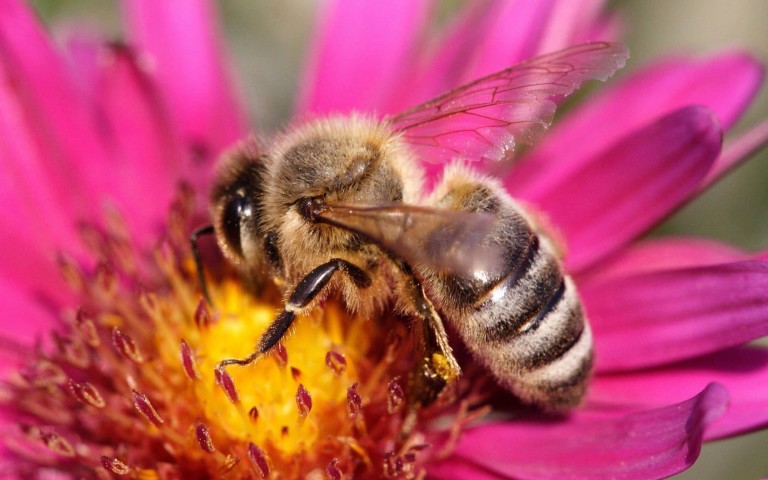
Bee pollination
The first ever World Bee Day was observed on Sunday, May 20, 2018 in an apparent bid by the United Nations to draw attention to the essential role bees and other pollinators play in keeping people and the planet healthy. The Day, adds the UN, provides an opportunity for governments, organisations, civil society and concerned citizens everywhere to promote actions that will protect and enhance pollinators and their habitats, improve their abundance and diversity, and support the sustainable development of beekeeping.
The date for the observance was chosen as it was the day Anton Janša, a pioneer of modern apiculture, was born. Janša came from a family of beekeepers in Slovenia, where beekeeping is an important agricultural activity with a long-standing tradition.
The proposal set forth by the Republic of Slovenia, with the support of Apimondia, the International Federation of Beekeepers’ Associations and the Food and Agriculture Organisation of the UN (FAO), to celebrate World Bee Day on May 20 of each year met with approval by the United Nations General Assembly in 2017.
The World Bee Day intends to shine a light on the habitat of pollinators to improve the conditions for their survival so that bees and other pollinators may thrive.
FAO Director-General, José Graziano da Silva, said: “The World Bee Day presents an opportunity to recognise the role of beekeeping, bees and other pollinators in increasing food security, improving nutrition and fighting hunger as well as in providing key ecosystem services for agriculture.”
Slovenia’s Minister of Agriculture, Forestry and Food, who is also Head, World Bee Day project, Dejan Zidan, noted: “This is the beginning of a difficult process of the protection of bees and other pollinators. We must do more than just talk – we should undertake concrete activities to increase care for bees and promote the development of beekeeping everywhere.
On Friday, May 18 in Ljubljana, over 150 beekeepers from around the world gathered in Slovenian capital city for a conference to discuss the role of bees and challenges in beekeeping ahead of the first World Bee Day, declared by the UN for observance on May 20.
Philip McCabe, president of the International Federation of Beekeepers’ Associations or Apimondia, highlighted the role of bees as pollinators, saying there were many challenges ahead.
Speaking at the conference, Zidan said that, by having World Bee Day declared, Slovenia symbolically proved that honey bees and other pollinators were endangered and should be helped.
“We secured an important victory, and now we’re going forward,” he said, stressing activity had been launched to have bees declared an endangered species at the EU level.
Slovenian Beekeepers’ Association president, Bostjan Noc, who had given the idea for World Bee Day and is happy it was declared, said celebrations alone would not save honey bees, but concrete measures to protect them will.
Zirovnica Mayor, Leopold Pogacar, added he was proud that World Bee Day was being celebrated in the hometown of the pioneer of modern beekeeping, Anton Jansa (1734-1773).
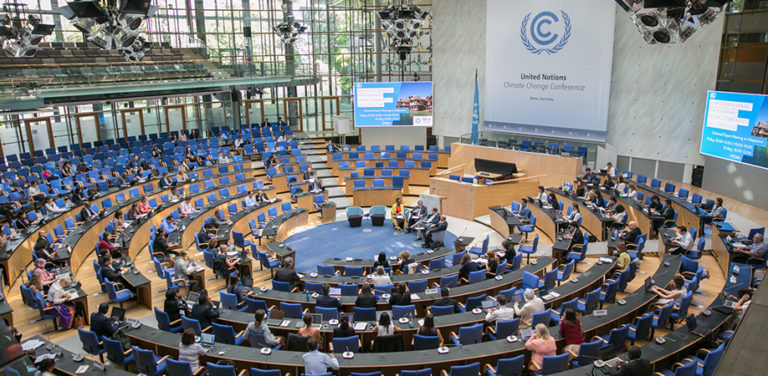
In conjunction with the Bonn Climate Change Conference 2018 that ended on Thursday, May 10, 2018, experts from around the world gathered in the German city to champion the benefits of circular economies.
A session during the Bonn conference
Having come a long way from its theoretical inception in the 1960s, circular economies are now being implemented with ever greater success by front-running government ministries, businesses, NGOs and international organisations.
Experts convened to share their innovative approaches, lessons learned and tangible benefits for the climate and sustainable development. Aligned with the year-long Talanoa Dialogue around ambition before and after 2020, the expert gathering helped to boost climate action before 2020 in concrete terms.
“This meeting plays a crucial role to boost climate action before 2020 by informing and inspiring countries about the currently available solutions and best practices on waste-to-energy and supply chain re-design,” said Mr. Emmanuel Dlamini, chair of the subsidiary body for implementation in his opening remarks.
He asked the experts and participants to ponder ways forward and necessary actions to be taken by countries, cities, businesses, and organisations to replicate and upscale identified innovative approaches.
A “circular economy” is an alternative to a traditional linear economy (make, use and dispose). It aims to use resources as long as possible, extract the maximum value from them and recover and regenerate materials at the end.
Supply chain redesign solutions are integral parts to achieving circular economies and the associated triple benefits: economic, environmental and employment.
Waste-to-energy: Best practices from the government and technological innovators
A number of experts presented innovative technologies for waste-to-energy solutions and associated challenges.
Mr. Le Viet Vinh from Viet Hien Coffee Processing Machinery, Vietnam explained the pyrolysis-flox technology, which is very useful and efficient for turning agricultural waste (such as rice husks, coffee husks, maize spindles, and cashew shells) into clean heat energy and biochar, a natural soil enhancer.
Ms. María José Gonzalez from Biovalor Project, Uruguay gave an example from two pilot projects of how slaughterhouse’s waste from 500 cows is powering a biogas plant to meet the energy demand of the nearby community. However, technological innovation also comes with some barriers. “One of the barriers is that this kind of project has high investment risks for the size of our producers. Also, there is still a lack of knowledge about technologies,” she said.
Ms. Jenitha Badul, a representative from Department of Environmental Affairs, South Africa explained that “…the initial investments for waste-to-energy solutions are quite high, but the return is fast. A balanced package of supportive legal framework, political leadership and an incubation fund for start-ups through public and private investment could spur such solutions.”
Re-designing supply chain to achieve circularity
Ms. Ines dos Santos Costa from Ministry of Environment Portugal told the gathering of the ministry’s important public outreach initiative on circular economies. “We are focusing on raising awareness to inspire the public and companies about the circularity. Our means are a website, roadshows and workshops to showcase the best examples of companies, products, and projects in implementing a circular economy. We also have a funding program to provide start-up investment and support,” stated Costa.
It is also interesting to see what the private sector is doing for circular economies and how it is working with the governments for circular economy to be adopted in the supply chain. As cited by Mr. Stefan Henningsson from WWF Sweden, Agriprotein in South Africa is reusing organic waste protein to replace fish and soy meal in animal feedstock.
In doing so, they reduced emissions by 23 million tons of CO2 per year by 2014. This initiative prevents burden on marine life, land use, transport and landfill, and CO2 are saved in feedstock sourcing. Another initiative comes from Bamboo Winding Pipelines in China where bamboo is used to replace nonrenewable material, such as steel, concrete, and plastic. Thus, 63 million tons of CO2 avoided.
Ms. Preeti Srivasta, Director Corporate Climate Action of Ecofys, said, “Industries are creating circular economy initiatives right now. But the private sector by itself will not be able to make a systemic change for the circular economy. Therefore, it is important to start engage with the suppliers and redesigning the supply chain.”
Enhanced innovation and collaboration needed to upscale and replicate identified solutions
Sira Saccani from Climate-KIC suggested ways to harness the potential of digital innovation in fostering circular economy activities. She gave an example of Pendula Resource Management from Germany, in which they enable companies and recyclers to easily organise, track, and then review recycling operations online using real-time data and analytics.
Mr. Alois P. Mhlanga from United Nations Industrial Development Organisation (UNIDO) said: “There is a huge potential for innovation and business models to be scaled up. It is critical to create easy access to financing for entrepreneurs and innovation start-ups, coupled with capacity building support.”
Minister Inia Seruiratu, the high-level champion, said, “The multi-stakeholders’ cooperation is needed to unlock high mitigation potential opportunities, including sustainable development benefits. The enhanced partnership and engagement amongst policy makers, industries, cities, regional and local organisations, civil societies can create an inclusive business model for waste-to-energy and supply chain redesign.”
He also added that the Technical Expert Meetings are very important vehicles to take a deep dive into the specific policies and opportunities with high mitigation potential that are both actionable in the short-term and align with the long-term goals of Paris Agreement.
This event was held as part the technical examination process on mitigation (TEP-M), mandated by governments at the United Nations Climate Change Conference in 2013. In the mandate, governments set the aim of exploring high-potential mitigation policies, practices and technologies with significant sustainable development co-benefits that could increase the mitigation ambition of pre-2020 climate action. This process was further specified at COP 20.
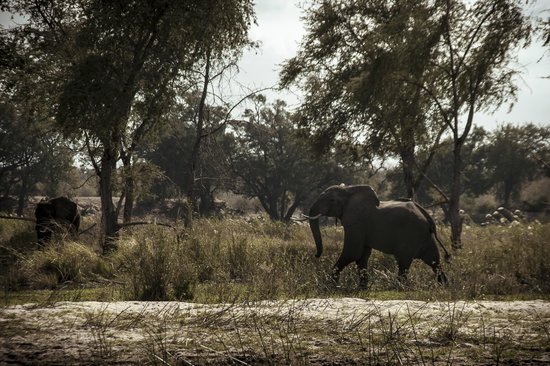
A Strategic Anti-Poaching Operations Centre located in the Chewore Safari Area in Zimbabwe has been handed over by Japanese Ambassador, Toshiyuki Iwado, to the Zimbabwe Parks and Wildlife Management Authority.
Elephants at the Chewore Safari Area in Zimbabwe
The centre serves as a post for field rangers conducting operations, and has significantly strengthened the Wildlife Management Authority’s capacity to address current and emerging threats impacting this important site of the CITES “MIKE” programme to monitor levels of illegal killing of elephants.
The Chewore Safari Area, a World Heritage Site, is one of the last truly wild ecosystems left in the world. The area provides shelter for immense congregations of Africa’s large mammal populations, which concentrate on its flood plains. However, the site faces a real threat from poaching and, in recent years, elephants have come under increasing pressure.
In 2016, seven elephants were reportedly poached between January and July in this area alone. In this context, the capability of the Zimbabwe authorities in keeping surveillance over, and preventing elephant poaching in the area has been enhanced through the establishment of the Centre, allowing for better and more secure planning and management of patrol activities by the rangers.
“The illegal wildlife trade is an urgent global issue. Japan is deeply committed to the cause of protecting elephants from atrocious acts by international criminal organizations and others. Thus, Japan attaches great importance to supporting range states, such as Zimbabwe, in the fight against elephant poaching, including through the assistance via the CITES MIKE Programme,” said Mr. Iwado, Ambassador of Japan to Zimbabwe. “Japan continues to make utmost efforts in implementing the trade control of ivory under CITES, and to work together with our international partners to tackle the problem of elephant poaching.”
In light of shared concerns in the international community about the poaching of elephants in Africa and the illegal trade in their ivory, the Government of Japan made a voluntary contribution of $60,000 for a project to establish the Anti-Poaching Operations Centre in the Chewore Safari Area of the Lower Zambezi Valley. The Centre has been operational since October 2017.
“Today we are witnessing an initiative that demonstrates the importance of collaborative work and all interested parties are bringing to conservation. This facility we are celebrating today plays an important role in easing patrol operations in the sub-region,” said Arthur Musakwa, Director, Conservation of the Zimbabwe Parks and Wildlife Management Authority.
“This project greatly complements the work undertaken by the CITES MIKE programme in the Chewore Safari Area in collaboration with the Zimbabwe Parks and Wildlife Management Authority and the Tashinga Initiative that implements the CITES MIKE programme in the area. We are therefore most grateful to the generous support of the Japanese Government,” said Thea Carroll, Coordinator of the MIKE Programme. “The CITES-MIKE Programme is supporting the Chewore Safari Area to strengthen its law enforcement capacity and systems aimed at reducing the illegal killing of elephants and other wildlife species.”
“The funding provided by the Government of Japan for the development of essential infrastructure needed to support management operations is invaluable. The investment and attention given to the area which is relatively remote and rarely visited has had a significant impact on the overall morale of the staff based in Chewore Safari Area by enhancing their capacity to effectively protect the area,” added Carroll.
Mr. Arthur Musakwa, Director of Conservation; Mr Kwanele Munongo, Regional Manager of the Zimbabwe Parks and Wildlife Management Authority; Ms. Lynne Taylor, Founder and Executive Director of the Tashinga Initiative; Mr. Dave Henson, CITES MIKE Programme Officer; and wildlife rangers in the area were present at the handover ceremony that held on Wednesday, May 16, 2018.
The Ebola outbreak in Congo poses a greater danger to the Central African country and the region than previously assumed, according to the World Health Organisation (WHO).
An Ebola virus patient being attended to
The recent confirmation of a case in Mbandaka, a large city that straddles national and international transport routes, had increased the risk of the virus spreading further, the UN health agency said on Friday, May 18, 2018 in Geneva, Switzerland.
“WHO has, therefore, revised the assessment of public health risk to very high at the national level and high at the regional level,’’ it said in a statement.
The global significance of the outbreak that has killed 14 people so far is being discussed at a WHO emergency meeting and was expected to be announced at a later time.
The WHO had previously said that the chance of a global outbreak is low.
In Congo, the Health Ministry announced that the number of confirmed Ebola cases in the country had risen from three to 14.
“In total since the start of the epidemic, there have been 45 cases of haemorrhagic fever, including 10 suspected cases, 21 probable cases and 14 confirmed cases,’’ the ministry said late Thursday.
While one person was confirmed dead from the virus, 25 people are suspected to have died from it, the ministry said.
One of the most contagious viral diseases known, Ebola’s symptoms are extraordinarily painful and include severe vomiting, diarrhoea, fever, impaired kidney and liver function as well as internal and external bleeding.
The UN and aid organisations are racing to prevent the recurrence of an outbreak like in 2014, when 11,000 people died in the West African epidemic that was centred in Guinea, Liberia and Sierra Leone.
The executive of the EU on Friday announced the release of €1.6 million ($1.9 million) to help tackle the outbreak, with most of the money going to the WHO to provide logistics support.