Home Blog Page 1874

CIFOR, Mongabay partner to improve forest research communication

0

The Centre for International Forestry Research (CIFOR), a scientific organisation that researches ways to better manage and preserve the planet’s tropical forests, and Mongabay, a leading environmental reporting platform dedicated to raising awareness globally about social and environmental issues related to tropical forests, have launched a partnership to increase the dissemination of news about the status of the world’s forest ecosystems.
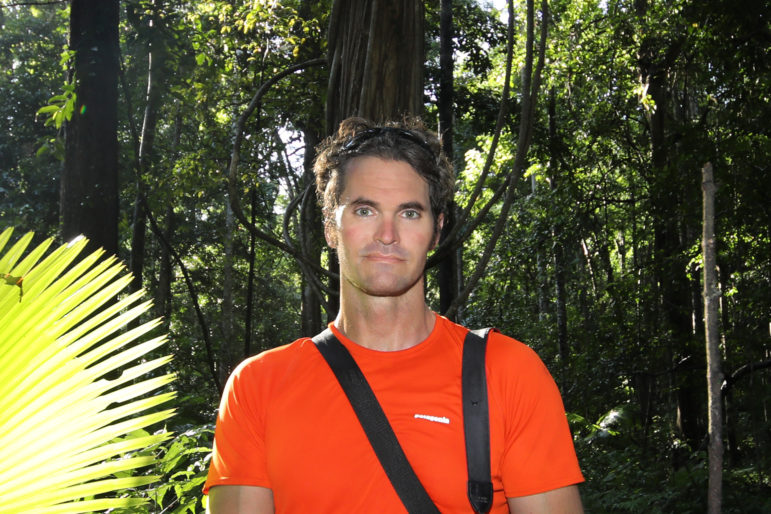
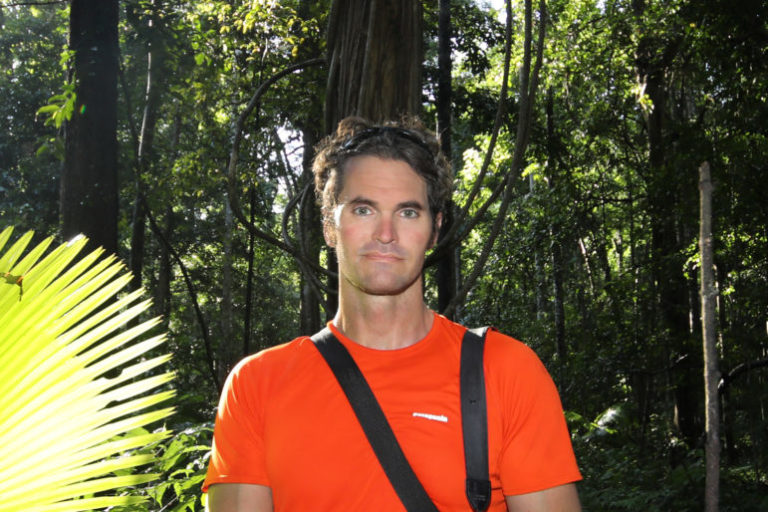
Rhett Butler
Founder and CEO of Mongabay, Rhett Butler

As both organisations share a commitment to communicating scientific research and improving the capacity of journalists and investigators to report on forest conservation, the two-year agreement will help to build awareness of the crucial relationship between forests and people across the globe.

The two organisations will complement each other’s activities through greater production of original reports and news about forests and conservation, expanded participation in CIFOR events and webinars and through professional training opportunities for Mongabay’s network of journalists.

“I have always been a great fan of Mongabay,” said Robert Nasi, CIFOR Director General. “This is science communication at its best – informing and influencing society for a more sustainable world. I see only benefits in our future collaboration.”

“Combining Mongabay’s reach and commitment to in-depth environmental journalism with CIFOR’s world-class research will take science communication to the next level,” said John Colmey, CIFOR’s Director of Communications, Outreach and Engagement.

“As one of the world’s top forest research institutions, CIFOR is at the forefront of efforts to understand forest ecosystems globally,” said Founder and CEO of Mongabay, Rhett Butler. “This collaboration will enable Mongabay’s vast network of journalists to leverage CIFOR’s expertise and expansive body of research to explore issues related to tropical forest conservation and management.”

“This collaboration between CIFOR and Mongabay is a breakthrough. It’s exciting to see two key players in forest conservation join forces to investigate and report on the progress and challenges we are facing in saving forests and addressing climate change,” added Aida Greenbury, an Indonesia-based advisory board member of Mongabay.

42 new cases reported in Adamawa cholera outbreak

0

The Director Public Health of Adamawa State Ministry of Health, Dr Bwalki Dilli, has said that the number of those infected by suspected Cholera outbreak in Mubi has increased from 134 to 176.

Bindo Umaru Jibrilla
Governor Bindo Umaru Jibrilla of Adamawa State

Dilli told News Agency of Nigeria (NAN) on Wednesday, May 23, 2018 in Yola, the state capital, that no additional death has been recorded apart from the initial 12.

He said that sufficient drugs had been mobilised for the patients receiving treatment in Mubi General Hospital with the support of the World Health Organisation (WHO) and the United Nations Children’s Fund (UNICEF).

“The outbreak is still contained within Mubi North and Mubi South Local Government Areas (LGAs) of the state,” Dilli said.

Also speaking to NAN, the chairman of Mubi North LGA, Alhaji Musa Bello, lauded the prompt intervention by health officials and called on the public to give the needed support and cooperation.

Bello said the outbreak started following a heavy downpour that flooded many sources of water particularly wells in rural communities.

He called for more personal and environmental hygiene, particularly the need to stop open defecation.

By Yakubu Uba

Rivers to establish tyres, waste recycling centres to curb soot pollution

0

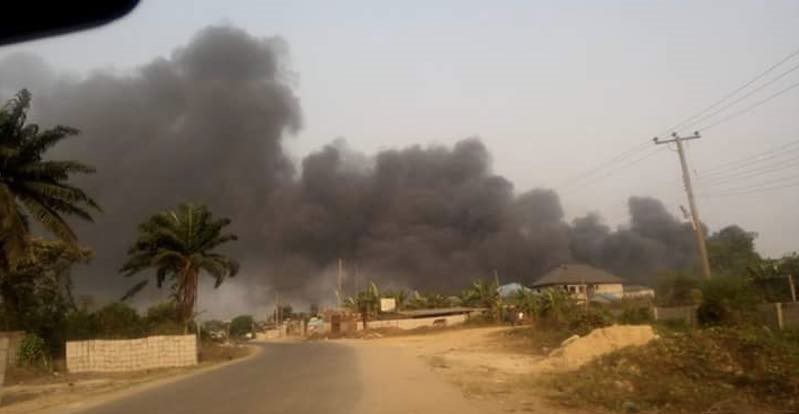
Governor of Rivers State, Nyesom Wike, has said that the government is planning to establish a centre to recycle used tyres and organic waste material to end soot menace in the state.

soot-port-harcourt
Soot spreading over a neighbourhood in Port Harcourt, Rivers State

Wike told newsman on Tuesday, May 22, 2018 in Port Harcourt, the state capital, that the government was also discussing with experts on other environmentally friendly ways to end the perennial hydrocarbon emissions in the state.

“The Rivers government is committed to ending the current soot in the atmosphere due to grave the implication it has on the health of the people.

“We support the destruction of illegal refineries by security agencies, but while doing this, we shouldn’t do it in a manner that would destroy lives and depopulate the state,” he said.

The governor said that his administration had also started sensitising the people on ways to reduce the effect of soot in their homes.

“The soot does not discriminate between who is APC or PDP member or discriminate between who is a governor and who is not; it affects all of us.

“If you enter my room, everywhere is black, and so, it also affects me. We are all into this together,” he said.

The governor urged security agencies to adopt other environmentally friendly methods in the destruction of illegal refineries and bunker sites in the state.

By Desmond Ejibas

GMOs: Biosafety agency seeks collaboration with Interpol

0

The National Biosafety Management Agency (NBMA) is seeking to collaborate with the International Criminal Police Organisation (Interpol) as part of efforts to ensure the safe application of modern biotechnology and the use of its products which includes genetically modified organisms (GMOS).

Rufus-Ebegba
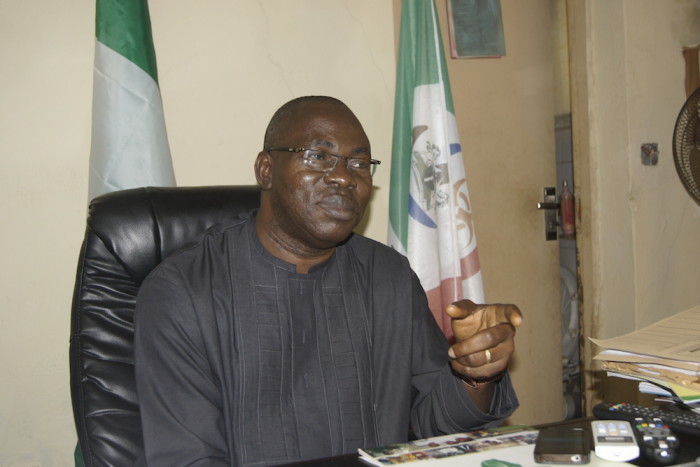
Dr Rufus Ebegba, Director-General and CEO of the the National Biosafety Management Agency (NBMA). Photo credit: climatereporters.com

Director General of the agency, Dr Rufus Ebegba, said this when he led the NBMA management team who paid a courtesy visit to the office of the Commissioner of Police and Head of Interpol National Centre Bureau (NCB), who is also the head of the Interpol committee delegate representing Africa.

The DG said the essence of the collaboration is to synergise with the Interpol and to make sure that the agency is promptly alerted whenever GM seed or grain comes into the country without an NBMA permit, and to also ascertain the country of origin and those involved.

Rufus said the agency has signed a memorandum of understanding (MoU) with other sister agencies all in a bid to ensure that its mandate is achieved, noting that a collaboration with the centre would help the agency in its bid to deliver on its mandate.

Responding, the head of the Interpol NCB, Olushola Subair, said the Interpol is ready and willing to collaborate with the agency to ensure that the mandate of the NBMA is achieved. He noted that there are key areas Interpol can collaborate with the agency.

The CP said the Interpol would collaborate with the agency in terms of training for staff, provide protective kits and equipment for staff of the NBMA, among others.

The CP led the NBMA’s delegation to the centre’s cybercrime unit and the digital resource centre.

Fistula Day: End obstetric fistula, save women’s lives – DevComs

0

The Lagos-based Development Communications (DevComs) Network has underlined the need for collective action to get appropriate treatment to avoid the needless debilitating conditions and death that could result from pregnancy and childbirth complications in the country.

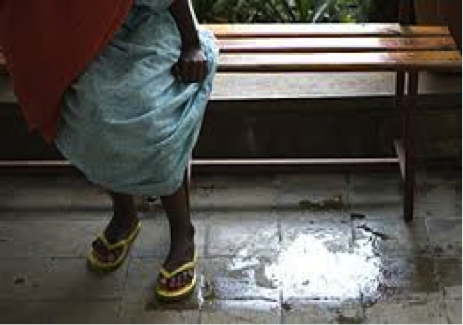
obstetrics fistula
A woman suffering from inconvinience caused by obstetrics fistula

Akin Jimoh, Programme Director of DevComs, made the submission in a statement on Wednesday, May 23, 2018 against on the occasion of the commemoration of the 2018 International Day to End Obstetric Fistula.

With about 500,000 Nigerian women living with obstetric fistula, women need to avail themselves with regular medical check up to prevent health complications, including fistula, that could lead to death of mothers, he said, adding: “We need to end obstetric fistula in Nigeria by addressing all factors, from poverty to early childbearing, that predisposes women, especially the girl-child to this debilitating condition.”

Most fistulas are as a result of difficult childbirth and obstructed labour lasting more than 24 hours.  Nigeria records no fewer than 12,000 new cases of fistula annually as a result of complications in childbirth. Obstetric Fistula is a hole between the vagina and rectum or bladder, caused by prolonged, obstructed labour, leaving a woman incontinent of urine or faeces or both.

According to UNFPA Nigeria, each year some 50,000 to 100,000 women sustain an obstetric fistula in the act of trying to bring forth new life. It is said to be the most devastating of all pregnancy-related disabilities and Nigeria accounts for 40% of fistula cases worldwide. Currently, there are about half a million women in Nigeria suffering from vesico vaginal fistula (VVF), according to the Ministry of Health.


How then do we help the women living with Fistula?

According to The Nigerian National Strategic Framework, about 6,000 fistula repairs are performed every year in Nigeria but more than 148,000 women were on the waiting list for surgery.

Jimoh laments that some of the VVF centres do not have enough beds or adequate electricity to operate, adding that government needs to increase the funding allocated to the health sector and implement provisions of various policies to address the needs of women and children.

The annual International Day to End Fistula (IDEOF) was set aside by the United Nations as a day to rally support and draw attention to activities targeting the elimination of fistula around.  According to UNFPA, the theme of this year’s IDEOF, “Hope, healing, and dignity for all,” is, at its heart, a call to realise the fundamental human rights of all women and girls everywhere, with a special focus on those most left behind, excluded and shunned by society.

Anti-tobacco campaigners engage Abuja community

0

Tobacco control campaigners have challenged communities to do more to make the Nigerian government to enforce the National Tobacco Control (NTC) Act 2015 to avert a looming health crisis in the country.

Cigarette-smoking
According to scientists, tobacco smoking is dangerous to health

They made this demand at a Community Tobacco Control Parliament held in Jahi 1 community, Abuja, where the dangers of tobacco to the youth dominated discussions.

Among a host of groups that were at the community are the Environmental Rights Action/Friends of the Earth Nigeria (ERA/FoEN), the Nigeria Tobacco Control Alliance (NTCA), Gatefield, and Cedars Foundation, among others.

Philip Jakpor, ERA/FoEN Head, Media & Campaigns, while explaining the purpose of the Parliament, revealed that tobacco kills nearly six million people annually with the figures set to hit eight million from year 2020 if nothing is done to nip it in the bud.

In his presentation titled: “Health Impacts of Tobacco”, Jakpor said that the decision of the tobacco community to commence aggressive grassroots campaigns as exemplified by the Parliament was because of the rising deaths from tobacco which can be pegged to smokers’ ingestion of 4000 chemicals including some carcinogens and pathogens while smoking or causing others to via second hand smoke.

He listed some of the dangerous chemicals in cigarette to include carbon-monoxide, tar which coats the lungs like soot in a chimney, methane, Acetone which is used in nail polish remover, and formaldehyde – a colorless liquid used to preserve the dead. Others are ammonia which is used as flavoring in dry cleaning and benzene which is a hydrocarbon obtained from coal.

Akinbode Oluwafemi, deputy executive director of ERA/FoEN, in a presentation titled: “Reversing the tobacco menace through the National Tobacco Control Act”, said that the rate of addiction to tobacco by the youths, particularly girls was becoming worrisome, even as he added that tobacco is the gateway to addiction to other harmful substances such as cocaine, heroin and marijuana.

He also drew the attention of the participants to shisha which he said, the tobacco industry deliberately portrays as less harmful even when medical experts have through researches proven otherwise.

The ERA/FoEN boss said that the campaign at the policy level with documents was being complemented at the local level with pictorials that will help the under-informed to grasp the magnitude of tobacco harms. He promised the community that the tobacco control community will ensure that pictorial advocacy materials get to them before the commemoration of the 2018 World No Tobacco Day event themed: “Tobacco and Heart Diseases”.

Adewunmi Emoruwa of Gatefield spoke on the threats posed by youth uptake of the smoking habit while Micheal Olaniyan, representative of the Campaign for Tobacco-Free Kids (CTFK), said that the tobacco menace is global in nature but more prevalent in Nigeria and other developing nations with weak legislations and no legislation at all in some places. To that effect, he said the CTFK is working with its local partners to ensure that effective legislation guided by the World Health Organisation- Framework Convention on Tobacco Control (WHO-FCTC) is in place.

Earlier, Village Head of Jahi 1 community, Seriki Adamu Dogo, said that the visit to the community was a very welcome one and encouraged the TC community not to relent but to take the campaign to other communities across the country.

Fistula Day: UNFPA offers 100,000 surgeries in 15 years

0

The UN Population Fund (UNFPA) says it has conducted more than 100,000 surgical repairs on Nigerian women and girls who suffered Obstetric Fistula (VVF) in the last 15 years. The agency said that more than 18,000 of such surgeries were carried out in 2017 alone.

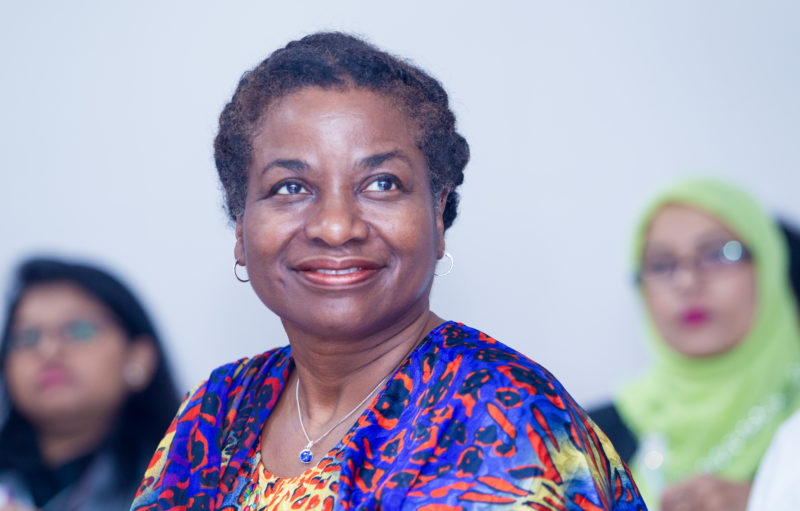
Dr. Natalia Kanem
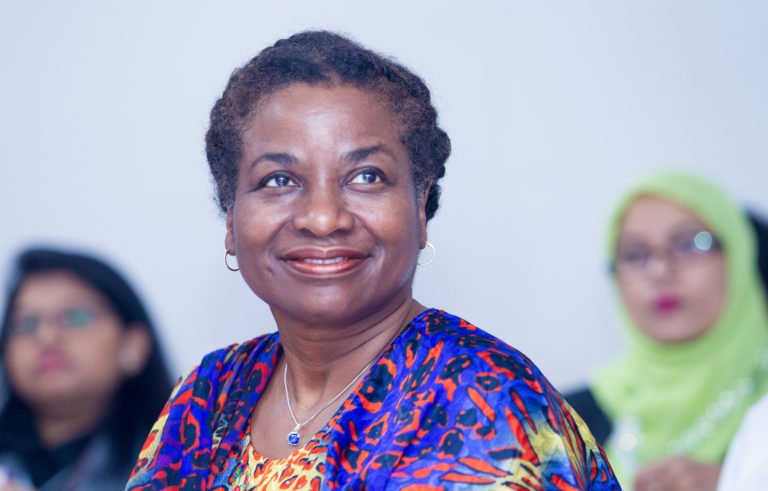
Dr. Natalia Kanem, UNFPA Executive Director

Dr Natalia Kanem, the Executive Director, UNFPA, made this known in a statement issued on Tuesday, May 23, 2018 in Abuja to commemorate the 2018 International Day to End Obstetric Fistula.

Kanem said that UNFPA had led the campaign to end the scourge in partnership with nearly 100 agencies around the global and hundreds of others at the national and community levels.

“Since 2003, UNFPA the leader of the global campaign to end fistula, has, with its partners supported nearly 100,000 live-transforming surgeries to heal the physical and psychological wounds of fistula survivors.

“Over the last 15 years, UNFPA has directly supported more than 100,000 surgical repairs for women and girls, with more than 18,000 surgeries in 2017 alone.

“It is time we end the needless suffering caused by fistula in keeping with the 2030 Agenda and the Sustainable Development Goals.

“Let us commit to putting the furthest behind first and ensuring human rights, well-being and dignity for all.

“UNFPA is committed to ending fistula within a generation, and we call upon the world to join us in this bold endeavour,’’ she said.

The executive director said that on daily basis, more than 800 women die from pregnancy-related complications globally.

She added that fistula had been virtually eliminated in developed nations, but it was estimated that more than two million women and girls bear the scourge in developing nations.

Kanem said that fistula was preventable and, in most cases, can be repaired surgically, with estimates showing that between 50,000 and 100,000 new fistula cases occur annually.

She said the 2018 International Day to End Obstetric Fistula, observed on May 23, has a theme “Leaving no one behind: Let us commit to ending fistula now!”

She urged countries and the international community to significantly step up efforts to ensure that every potential new case of fistula was prevented.

She also urged key stakeholders to ensure that every woman or girl suffering from fistula is treated and receives adequate follow-up, social reintegration and rehabilitation support.

“In this way, in the spirit of the Sustainable Development Goals (SDGs), we can reach those `furthest behind’ and achieve `hope, healing and dignity’ for all,” she said.

Kanem said that eliminating fistula was a key element of “leaving no-one behind.

“Thus, it is critical to integrate fistula into the national-level planning for the SDGs.

“UNFPA should take every opportunity to incorporate fistula into national-level planning to achieve the SDGs, including countries’ targets and indicators under the SDGs,’’ she said.

By Mustapha Yauri

AfDB, Korea initiate measures to achieve Africa’s rapid industrialisation

0

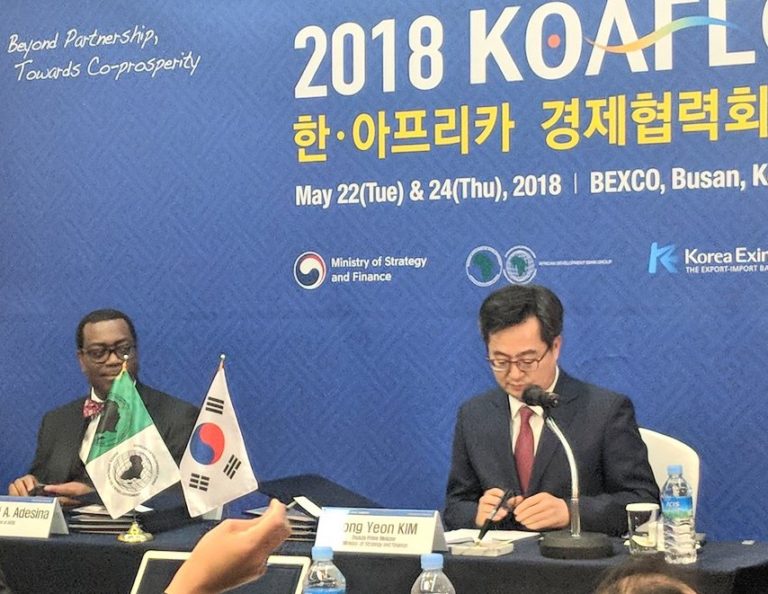
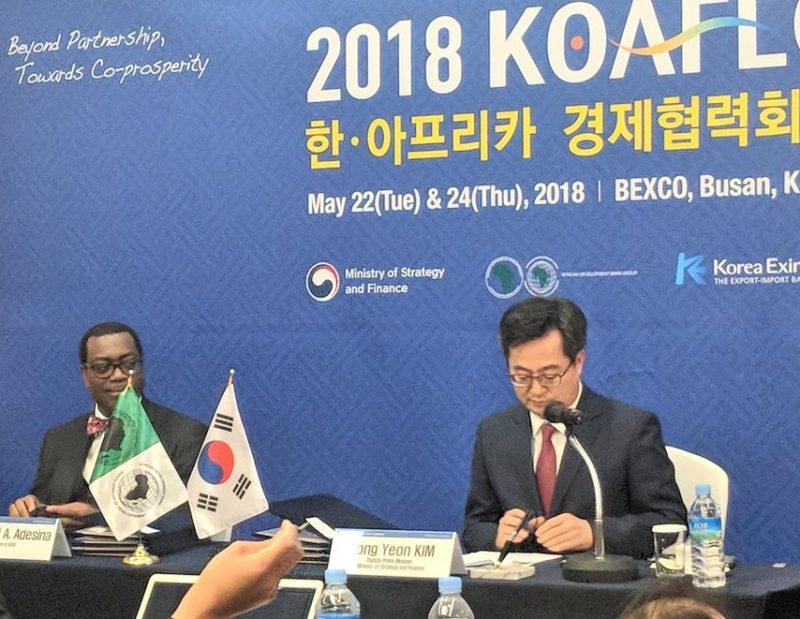
African countries, through the African Development Bank (AfDB) on Tuesday, May 22, 2018 in Busan, South Korea, opened a new chapter in the continent’s efforts to industrialise under an economic cooperation with the Africa-Korea Economic Cooperation (KOAFEC).

AfDB
AfDB President, Dr Akinwumi Adesina, with the Korean Deputy Prime Minister, Dr Yeon Kim

Finance Ministers and Central Bank Governors of the 54-nation continent, at a Ministerial Roundtable spearheaded by KOAFEC and AfDB, rose from a session at the Busan Exhibition Centre with a consensus to utilise Africa’s comparative advantage in agriculture to achieve rapid industrialisation.

AfDB President, Dr Akinwumi Adesina, announced resolutions of the session, that the countries examined critical issues militating against the continent’s desire to achieve greatness through industrial and technological breakthrough.

He said the countries agreed to invest massively on digital infrastructure by closing the huge gap, adding that the energy, transport and other critical sectors would be accorded adequate attention to achieve greatness and financial inclusion.

The ministerial session also opted for proper long term planning for industrialisation towards economic competition with the rest of the developed nations.

“The private sector roles are also critical in this direction as the participants agreed to mobilise the stock exchange in closing the infrastructure gaps.”

Adesina also signed a four-pronged Memorandum of Understanding with the Korean Government on technical and general cooperation agreements, including a technical corps programme and energy facilities.

He said after signing the documents on behalf of the AfDB, that the contents would assist Africa on exchanging high technical linkage and ideas as Korea was determined to drive digital economy and high industrialisation for Africa.

Adesina announced that the bank was investing on some African universities in science and technical education to produce highly skilled manpower to drive the continent’s desire for competency, research and scientific innovation.

Commenting on China’s current massive participation in Africa’s development, he said the Asian country was involved in massive investment on infrastructure development through close relationship with the governments.

“There is no competition between China and Africa but partnership; we have to build wider partnerships and China is part of Africa’s development.

“Investments and training by China are critical to Africa but the nature of trade with China has to be value-based, not just exports.

The Korean Deputy Prime Minister, Dr Yeon Kim, signed for the government, saying that Korea would assist in technological advancement of Africa’s fast growing economies.

By Idris Abdulrahman

Africa CDC responds to Ebola outbreak in DRC

0

The Africa Centres for Disease Control and Prevention (Africa CDC) is deploying 25 epidemiologists, laboratory experts, and anthropologists to support the government of the Democratic Republic of Congo’s (DRC) efforts to control the recent Ebola virus outbreak in Mbandaka and Bikoro.

Dr. John Nkengasong
Dr. John Nkengasong, Director of the Africa CDC

Following the announcement on May 8, 2018 of the Ebola outbreak by the government of DRC, the Africa CDC deployed an assessment mission within 48 hours and activated its Emergency Operational Centre to link, scan and monitor the situation.

“The global community needs to respond to this outbreak as a crisis and not as an emergency, by quickly deploying public health assets to the affected areas expiditiously. I want to applaud the Minister of Health of the DRC for his exemplary leadership in managing this current outbreak so far. “All our efforts should be geared towards supporting his leadership,” said Dr. John Nkengasong, the Director of the Africa CDC, upon his return this week, with a high level delegation, to the affected areas in Mbandaka and Bikoro.

The DRC government is working with partners to improve coordination mechanisms, enhance surveillance, laboratory confirmation, contact identification and follow-up, case management, infection prevention and control, safe and dignified burials, social mobilisation and community engagement, logistics, risk communication, vaccination, partner engagement, research and resource mobilisation.

During the Africa CDC team’s visits they assisted the Ministry of Health, together with other partners, to develop three strategies:

  • Surveillance and contact tracing,
  • Defining the various health areas affected, and
  • Laboratory testing and network.

The Africa CDC will provide up to $2 million to support Africa CDC interventions. Due to the remote nature of the Equateur Province, it is expected that more efforts will need to be put in supply chain issues to ensure that essential items needed are delivered swiftly.

Last week the African Union Peace and Security Council was briefed on the situation and will continue to receive reports.  Under Article 6(f) relating to its mandate with regard to humanitarian action and disaster management the Council can authorise deployment of military and civilian missions and assets to tackle emergency situations as it did in August 2014 in the Ebola outbreak in the West Africa sub-region. This outbreak is the 9th outbreak of the Ebola virus disease over the last four decades in the country. The affected health area of Bikoro covers 1,075 km and has a population of 163,065 inhabitants. This huge population is supported by only three hospitals and 19 health centres, most of which have limited functionality.

The risk of speard of the virus is high at national and regional levels due in part to the proximity of the epidemic focus to the Congo River which links with the capitals of the Republic of Congo and the Democratic Republic of Congo and the Central African Republic. As such, Africa CDC is coordinating with these countries to ensure that their surveillance systems are activated and information is shared in real time.

The Africa CDC supports all African countries to improve surveillance, emergency response, and prevention of infectious diseases. This includes addressing outbreaks, man-made and natural disasters, and public health events of regional and international concern. It further seeks to build the capacity to reduce disease burden on the continent.

Sub-Saharan Africa to receive £25m in new programme aimed at early career scientists

0

A new sub-Saharan Africa grant scheme, Future Leaders – African Independent Researchers (FLAIR) Fellowships, opened for applications on Monday, May 21, 2018. The scheme offers talented African early career researchers who have the potential to become leaders in their field, the opportunity to develop an independent research career in a sub-Saharan African institution.

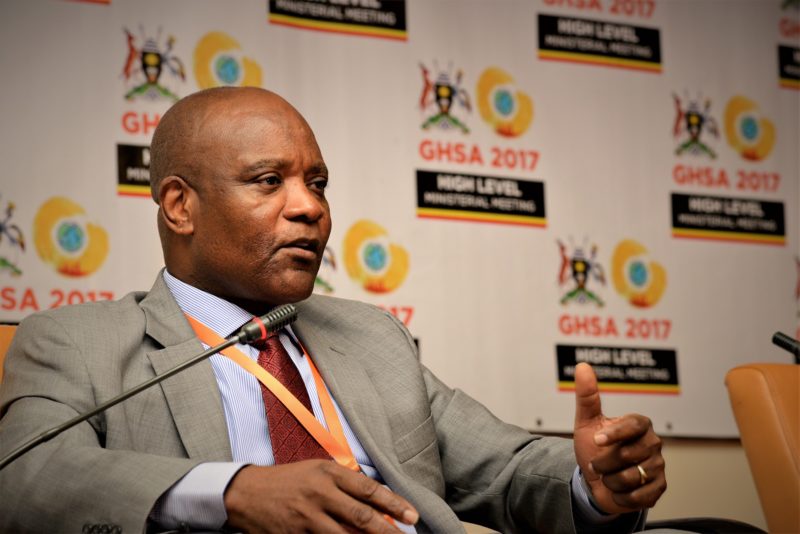
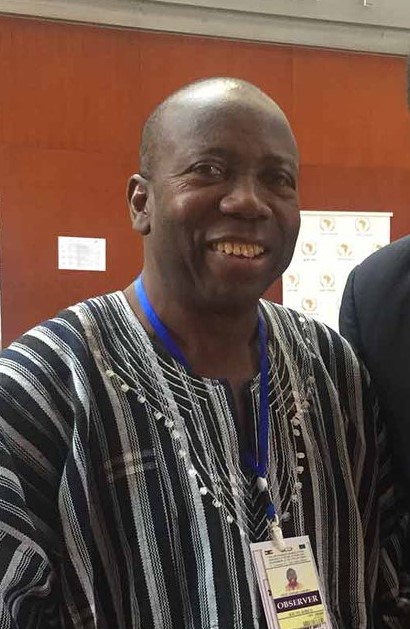
Prof Felix Dapare Dakora
Prof Felix Dapare Dakora, President, African Academy of Sciences (AAS)

The programme is being run in partnership with the African Academy of Sciences (AAS) and the Royal Society, with support from the UK’s Global Challenges Research Fund.

The aims of the FLAIR fellowship programme are:

  • Developing Africa’s next generation of research leaders – supporting talented early career African researchers to establish their scientific independence, focus on developing their research and become leaders in their chosen discipline covering natural sciences.
  • Supporting excellent research – enabling African researchers to address areas of global significance across the natural sciences through high-quality research, advancing knowledge and innovation which aims to benefit their country and address aspects of the Sustainable Development Goals.
  • Enhancing research environments – working through relevant partners, awards will contribute towards institutional research capacity strengthening and establishing good financial grants practice in African universities and research institutions.
  • Fostering collaboration and impact – establishing mutually beneficial long-term links between African Fellows and UK researchers to harness the expertise of the UK research base through equitable partnerships and enhancing knowledge exchange and translation into sustainable policy and practical benefits.

Professor Richard Catlow, Foreign Secretary of the Royal Society said: “We are delighted to have joined in partnership with the African Academy of Sciences, and are looking forward to working together with support from the Global Challenges Research Fund, to launch the FLAIR Fellowships.

“Science is a truly global endeavour that benefits from a diversity of approaches and experiences. Our ambition for FLAIR is that it will help to establish the next generation of leading African scientists, supporting them in partnership with the African Academy of Sciences to realise their goals and forge independent paths in research, whilst addressing the global challenges that are directly relevant to their countries and developing countries more broadly. FLAIR also provides an opportunity for these future leading scientists to tap into the network of scientific excellence that both the Academies’ represent, to take advantage of training and mentoring opportunities, as well as building lasting connections and international collaborations with peers across Africa and UK scientists.”

Prof Felix Dapare Dakora, AAS President said: “The AAS sees postdoctoral training as a critical stepping-stone to a successful research career and to promote globally competitive research in African universities and research institutions.

“This partnership with the Royal Society enables us to address critical gaps in the continent’s research capacity to ensure thriving ecosystems and catalyse science-driven enterprises as well as to help African scientists to develop their careers and to support them to provide solutions to improve the quality of lives for all Africans.”

Each Fellowship provides:

  • Up to £150,000 per year, for two years initially, to include funding for research fellow’s salary, research expenses, equipment, training, travel and subsistence and institutional overhead.
  • In addition the scheme will provide a wider programme of support to develop fellows as independent research leaders including training and mentoring, and opportunities to network and develop international collaborations.