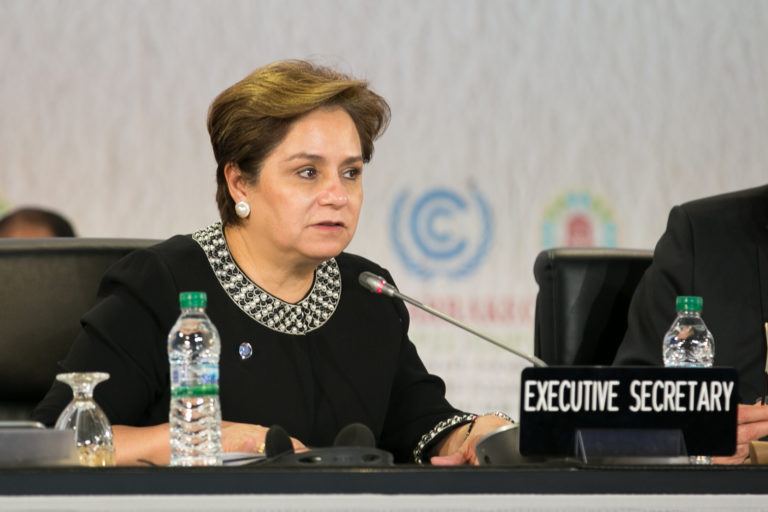
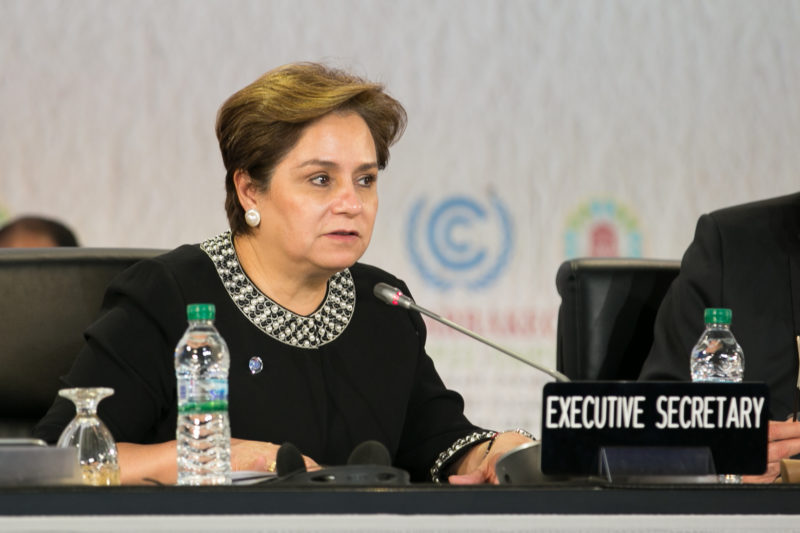
From June 8 to 9, 2018, Canada will be hosting this year’s G7 Summit. In advance of the meeting, the Executive Secretary of UN Climate Change, Patricia Espinosa, in this piece published in the “G7 Canada: The Charlevoix Summit”, G7 members to unlock the promised and necessary funding to actualise their contribution to climate action and help the world reach the goals of the Paris Agreement
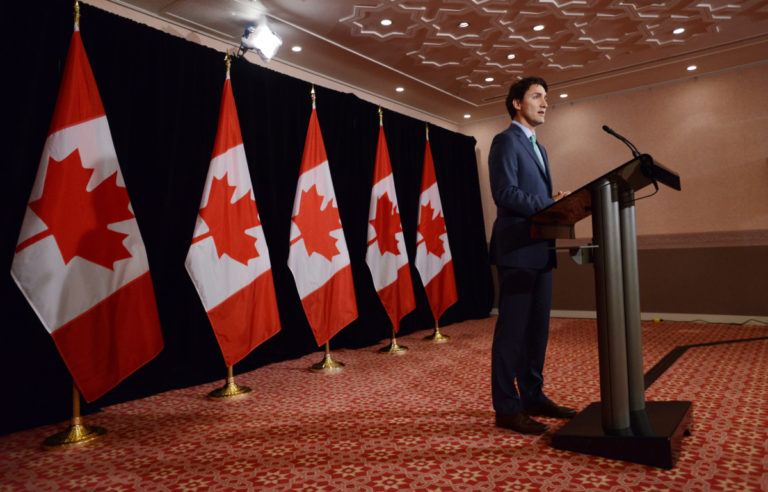
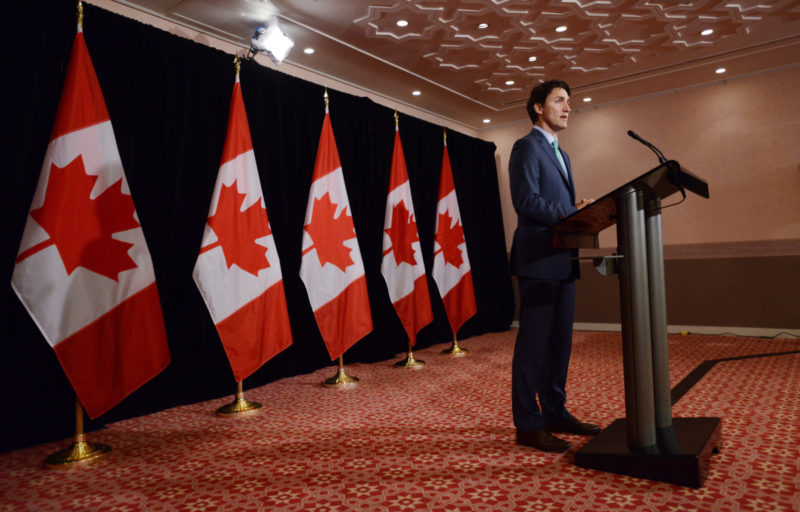
Justin Pierre James Trudeau, Prime Minister of Canada: Canada hosts the 2018 meeting of G7 leaders in Charlevoix, Quebec. Photo credit: THE CANADIAN PRESS/Sean Kilpatrick
Strong action now lays the foundation for stronger action later. Strong action now will also increase the chances of attaining the goals of the Paris Agreement, as well as reduce the cost of action in the future. Accelerating action before 2020 in all aspects of climate change action, including reducing emissions and scaling up climate finance, is critical for stronger action later.
At the UN Climate Change Conference COP23 in Germany last year, countries agreed to take stock of action before 2020, both at COP24 in Poland in 2018 as well as in 2019. This represents a good opportunity for countries to reconfirm progress on pre-2020 ambition. For G7 members – and for developed countries more broadly – taking stock also represents an opportunity to fulfil their collective pledge of mobilising $100 billion annually by 2020.
Many developing countries desperately need this support in order to make their contribution to climate action. I urge G7 members to unlock the promised and necessary funding to make this contribution possible. The contribution by developing countries will become ever more important in the future. Unlocking the promised funds will help the world reach the goals of the Paris Agreement.
The G7 is a very influential group that can make a huge contribution to stepping up climate action and ensuring that 2018 yields a successful outcome for all. The G7 has the power to raise ambition. The G7 can provide the vision to engender renewed political will. And the G7 has the leadership to ensure tangible progress and action before 2020.
A clear signal from the Charlevoix Summit would provide positive impetus for the climate change process in 2018. UN Climate Change stands ready to support all efforts by all countries towards shared success at COP24 in Katowice.
Around the world, one in three girls face inadequate toilets, and many others face social and cultural limits when on their periods. On the occasion of the 2018 Menstrual Hygiene Day observered on Monday, May 28, WaterAid Nigeria, an international organisation, is encouraging governments around the world to prioritise better toilets and washing facilities in schools, and to provide accurate information around menstruation, to ensure girls’ rights to education and equality.
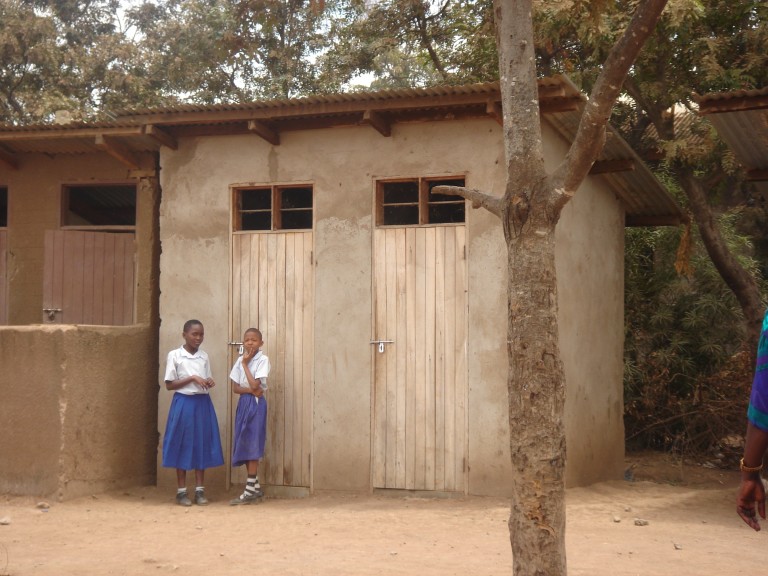
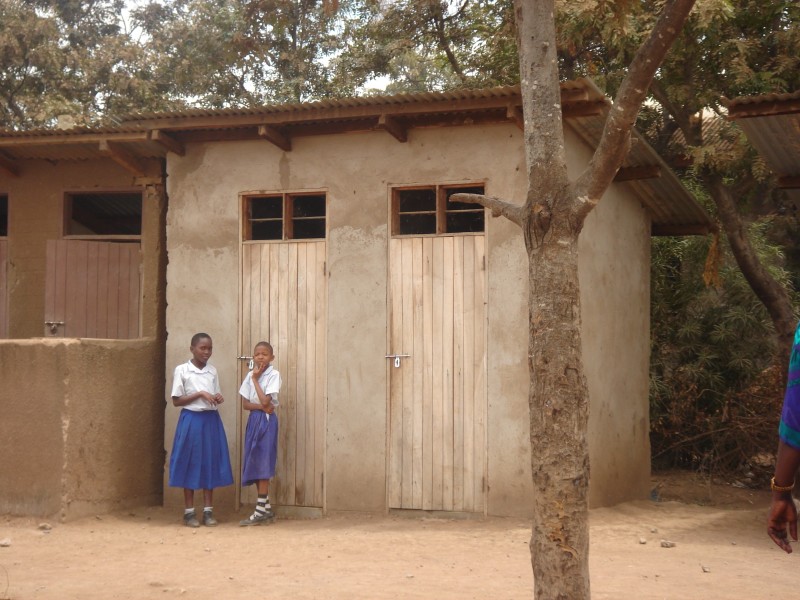
A school toilet for girls: Governments around the world are being urged to prioritise better toilets and washing facilities in schools
The call comes as nations prepare for a July 2018 review of the United Nations’ Sustainable Development Goal 6, to deliver water and sanitation to everyone, everywhere by 2030, which is expected to show that progress on sanitation is far behind.
As the world commemorates Menstrual Hygiene Day, WaterAid states that more than a billion women and girls around the world must manage their periods without a safe, private place to go to the toilet, risking infection as well as being subject to ostracism and shame because of the stigma that still surrounds menstruation.
“Globally, about half of women and girls, around a quarter of the world’s population, are of reproductive age; most of them will menstruate every month. Menstruation is an important issue yet it is shrouded in silence because of deeply rooted taboos and negative social norms. Cultural beliefs and myths about menstruation are perpetuated by society and often portray women and girls as inferior to men and boys. This reinforces gender inequalities, often constitutes discrimination and has a negative impact on the fulfilment of the universal human rights to dignity, health and education of women and girls.”
In many countries, women and girls are not allowed to cook, go to the farm or are even banished from the family home to an outdoor shed during each menstrual cycle. WaterAid’s study on menstrual hygiene management in selected states in Nigeria revealed deeply rooted attitudes and myths surrounding menstruation including the belief that a menstruating woman or girl is cursed and possessed by evil spirits and brings bad luck. Such beliefs result in restrictions being placed on girls and women during their menstruation – including exclusion from attending religious services and even holding their infants in some of the communities. To make matters works, these women and girls lack access to safe water or private toilets at home, in schools and in public places. The effects are devastating.
Nearly half of schools in low- and middle-income countries like Nigeria do not have basic toilets – meaning girls who are menstruating risk embarrassment and shame during this time, and may decide not to attend school. UNESCO estimates that 1 in 10 adolescent girls in Africa miss school during their menstruation and eventually drop out.
An article in the medical journal PLOS Medicine, co-authored by WaterAid, highlights a lack of guidance, facilities and materials for girls to manage their periods at school, affecting their health, their education and their self-esteem. Girls facing shame, fear and confusion around periods have this exacerbated when there is no clean source of water, soap, or safe, private girls’ toilet with space to wash in. A study by USAID has shown that safe, private toilets for girls in schools, combined with private places to wash, can boost their enrolment by 11%.
Proper menstrual hygiene management for women and girls requires inclusive water, sanitation and hygiene facilities in schools and public places; provision of protection materials at affordable rates; behavioural change and communication and a review of existing policies to address this important issue.
This year’s Menstrual Hygiene Day theme, #NoMoreLimits, highlights how crucial it is to support women and girls break free from limits and reach their full potential. In order to do this, we must break the silence surrounding menstrual taboos, stigmatisation; and ensure that menstrual hygiene management is taken seriously and girls and women have the required resources to manage their menstruation with confidence and dignity.
Country Director of WaterAid Nigeria, Dr ChiChi Aniagolu-Okoye, said: “Menstrual hygiene management is not just about providing sanitary pads. It’s more than that. It’s about helping young girls and the people around them, including the men in their lives, to have the information awareness and the knowledge around this issue. It’s about helping girls to have the confidence to manage their hygiene safely and with dignity and also to ensure that wherever they are, provision is made for them to be able to manage their menstrual periods safely and hygienically and for the products to be collected and disposed effectively.
“Menstruation is not just a women’s issue; it is a topic that should affect everyone as unhygienic management of menstruation matters to all of society at large. It is crucial we promote and advocate for long-term hygiene behaviour change.
“Menstrual hygiene management is a human rights issue that matters to the achievement of several Sustainable Development Goals including the goals on health (3), education (4), gender equality (5), water and sanitation (6), economic growth (8) and sustainable consumption and production patterns (12).
“This Menstrual Hygiene Day, we amplify our call for cooperation with the education and health sectors as well as those working in reproductive and sexual health to ensure girls are prepared for the onset of menstruation, to ensure they can care for themselves in a dignified and hygienic way, and to dispel the myths and taboos that often accompany menstruation.”
WaterAid calls on government and relevant stakeholders to support:
The mobilising of resources to facilitate infrastructural improvements in water, sanitation and hygiene facilities in schools that will provide safe and private spaces for school girls to manage their periods hygienically
Curriculum policy reforms that will ensure the continuing education of school girls on how to manage their menstruation safely.
Building the capacity of school teachers and other gatekeepers to provide quality and comprehensive education and appropriate support to girls in schools and in the wider community for managing their menstruation safely.
Menstrual Hygiene Day was started by WASH United in 2014 to build awareness of the fundamental role that good menstrual hygiene management plays in helping women and girls reach their full potential.
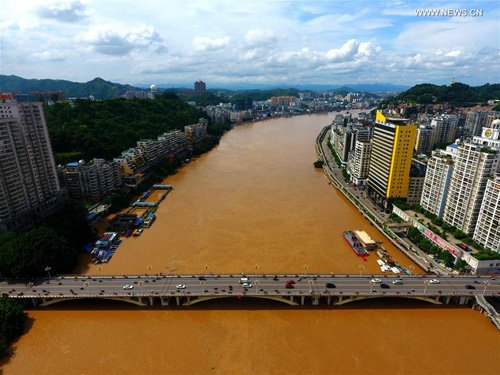
Intensifying river floods could lead to regional production losses worldwide caused by global warming. This might not only hamper local economies around the globe – the effects might also propagate through the global network of trade and supply chains, a study now published in Nature Climate Change shows.
The annual monsoon season has been accompanied by torrential rainfall in many parts of China
It is said to be the first to assess this effect for flooding on a global scale, using a newly developed dynamic economic model. It finds that economic flood damages in China, which could, without further adaption, increase by 80 percent within the next 20 years, might also affect EU and US industries. The US economy might be specifically vulnerable due to its unbalanced trade relation with China.
Contrary to US president Trump’s current tariff sanctions, the study suggests that building stronger and thus more balanced trade relations might be a useful strategy to mitigate economic losses caused by intensifying weather extremes.
“Climate change will increase flood risks already in the next two decades – and this is not only a problem for millions of people but also for economies worldwide,” says Anders Levermann, project leader from the Potsdam Institute for Climate Impact Research (PIK) in Germany and Columbia University’s LDEO in New York.
Without further adaption measures, climate change will likely increase economic losses worldwide due to fluvial floods by more than 15 percent accumulating to a total of about $600 billion within the next 20 years. While the bulk of this is independent of climate change, the rise is not.
“Not only local industries will be affected by these climate impacts,” says Sven Willner, lead author of the study from PIK. “Through supply shortages, changes in demand and associated price signals, economic losses might be down-streamed along the global trade and supply network affecting other economies on a global scale – we were surprised about the size of this rather worrying effect.”
World Bank Economist: “Natural disasters are not local events anymore”
The World Bank’s lead economist with the Global Facility for Disaster Reduction and Recovery, Stéphane Hallegatte, who pioneered research in the area of indirect disaster effects but was not involved in the present study, comments: “This work combines two very innovative lines of work: global risk assessment for natural hazards and network theory to understand how localised shocks propagate in time and space. It contributes to scientific progress in multiple ways, but one of the most important policy messages for me is that the world is so interconnected that natural disasters are not local events anymore: everybody can be affected by a disaster occurring far away. It means that risk management is more than each country’s responsibility: it has become a global public good.”
The study is based on projections of near-future river floods on a regional scale already determined by the greenhouse gas emissions that humans have so far emitted into our atmosphere – impacts after 2035 depend on future additional emissions. The authors investigate the overall economic network response to river flood-related shocks, taking into account the inner dynamics of international trade. They do so with the specifically designed, new Acclimate-model, a dynamic economic computer simulation.
Without major adaptation, China could suffer biggest direct losses
Without major adaptation measures, China could suffer the biggest direct economic losses from river floods – adding up to a total of more than $380 billion in economic losses over the next 20 years, including natural flood events not related to global warming. This corresponds to about 5 percent of China’s annual economic output. 175 billion of the total losses in China will likely occur due to climate change. “This is a lot,” says Willner, “and it is only the effect by river floods, not even taking into account other climate change impacts such as storms and heat waves.”
The European Union and the United States on the contrary might be affected predominantly by indirect losses passed down along the global trade and supply network. In the US, direct losses might be around $30 billion, whereas indirect losses might be $170 billion in the next 20 years.
“The EU will suffer less from indirect losses caused by climate-related flooding in China due to its even trade balance. They will suffer when flooded regions in China temporarily fail to deliver for instance parts that European companies need for their production, but on the other hand Europe will profit from filling climate-induced production gaps in China by exporting goods to Asia. This yields the European economy currently more climate-prepared for the future,” says Willner. “In contrast, the US imports much more from China than it exports to this country. This leaves the US more susceptible to climate-related risks of economic losses passed down along the global supply and trade chain.”
Global trade allows global buffering – India could be a winner
“More intense global trade can help to mitigate losses from local extreme events by facilitating market adjustments,” explains co-author Christian Otto from the Potsdam Institute and Columbia University. “When a supplier is impacted by a disaster hampering its production, international trade increases the chance that other suppliers can jump in and temporarily replace it. Interestingly, the global increase of climate-induced river floods could even cause net gains for some economies such as India, South East Asia, or Australia.”
The study’s focus is not on damages to production facilities of businesses, but to what extent a regional economy stagnates due to flooding. “We adopted a rather optimistic view when it comes to the flexibility and promptness of shifting production towards non-affected suppliers after an extreme weather event,” explains Christian Otto. “Hence our study rather underestimates than overestimates the production losses – things could eventually turn out to be worse.”
Trump’s tariffs might impede climate-proofing the US economy
“We find that the intensification of the mutual trade relation with China leaves the EU better prepared against production losses in Asia than the US. The prospect that the US will be worse off can be traced back to the fact that it is importing more products from China than it is exporting,” says PIK’s Anders Levermann. “Interestingly, such an unbalanced trade relation might be an economic risk for the US when it comes to climate-related economic losses. In the end, Trump’s tariffs might impede climate-proofing the US economy.”
For resolving this risk and balancing out the negative trade relation, there are generally two options: either isolation or more trade. “By introducing a tariff plan against China, Trump currently goes for isolation,” says Levermann. “But Trump’s tariff sanctions are likely to leave US economy even more vulnerable to climate change. As our study suggests, under climate change, the more reasonable strategy is a well-balanced economic connectivity, because it allows compensating economic damages from unexpected weather events – of which we expect more in the future.”
The UN Climate Change on Monday, May 28, 2018 confirmed that Asia Pacific Climate Week (APCW2018) will be convened in Singapore from July 11 to 13.
UN Climate Change Executive Secretary, Patricia Espinosa, will participate in the event
The event – which lands two months ahead of both the Global Climate Action Summit in California and New York Climate Week – will be instrumental in demonstrating that there is genuine international support for stepping-up climate action by mobilising actors across the Asia Pacific region.
APCW2018, which is being organised by the Nairobi Framework Partnership with support from the Singapore Government, will provide a critical stepping-stone on the wider journey towards completing the operational guidance for the Paris Climate Change Agreement at the international climate negotiations at COP24 in Katowice, Poland in December 2018.
UN Climate Change Executive Secretary, Patricia Espinosa, will participate in the event, alongside the High-Level Climate Champions, H.E. Minister Inia Seruiratu from Fiji and Mr. Tomasz Chruszczow, Special Envoy for Climate Change from Poland, as well as city and business leaders.
Patricia Espinosa said, “I welcome the hosting of Asia Pacific Climate Week at this critical moment, as it will make an invaluable contribution to spurring enhanced national climate ambition ahead of COP24.”
The theme of APCW2018 is: “Climate Action for Sustainable Development: Driving Change in Asia”. The high-level segment that takes place on Wednesday, July 11 will bring together the business community and focus on areas, such as: visions for NDC enhancement and implementation; challenges and opportunities for cities in the Asia Pacific region; the role of transport for sustainable development and climate action; and climate finance.
Other highlights at the event include the Asia Pacific Carbon Forum and a technical session on the cross-linkages between markets and the Sustainable Development Goals.
Owing to the political significance of the upcoming Talanoa Dialogue this year, APCW2018 will explore strategies for accelerating global climate action, including by realigning finance flows in the Asia Pacific region consistent with a pathway towards low greenhouse gas emission and climate-resilient development for the implementation of the Paris Agreement.
APCW2018 follows-on from the success of Africa Climate Week (ACW2018) hosted in Nairobi earlier this year. On August 20 to 25, the Latin America and Caribbean Climate Week will take place in Montevideo, Uruguay.
The goal of these Climate Weeks is to support the implementation of countries’ Nationally Determined Contributions (NDCs) under the Paris Agreement and climate action to deliver on the Sustainable Development Goals. In so doing, they will bring together diverse array of international stakeholders in the public and private sectors around the common goal of enhancing climate action.
The Plateau Government has given private waste evacuators in charge of Jos-Bukuru one week to clear all dump sites in the area.
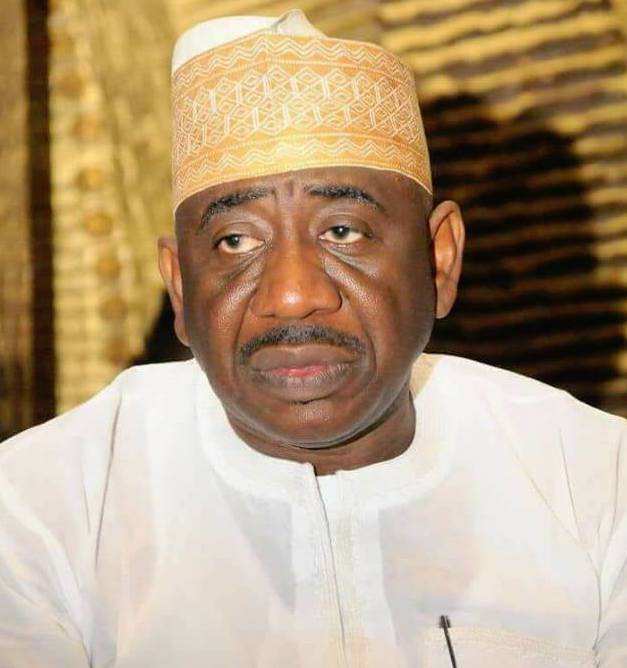
Abdullahi Abbas, Plateau State Commissioner for Environment
Mr Abdullahi Abbas, the state’s Commissioner for Environment, gave the deadline on Saturday, May 26, 2018 after an assessment tour of the 14 waste collection zones in the Jos-Bukuru metropolis.
Abbas said any of the evacuators who failed to adhere to the ultimatum stands the chance of losing his contract.
He said that most zones in Bukuru were littered with waste and was currently emitting foul smell, as well as blocking most of the water channels in the area.
According to Abbas, eight of the 14 evacuators have defaulted in clearing their designated zones.
He explained that the sites, which were not cleared, had become breeding spots for most vectors and rodents that transmit diseases such as cholera and Lassa fever virus.
One of the evacuators, Mr Stephen Kitnanka, the Chief Executive Officer of Laven Enterprises in charge of evacuating Zone 1 – Mararaban Jama to Bukuru, told NAN that people dumped waste indiscriminately.
Kitnanka appealed to the state government to put more emphasis on enforcement to curtail indiscriminate dumping of waste.
He also called for more awareness, using Ward heads to sensitise the people to the dangers of dumping waste indiscriminately, as well as the penalty it attracts.
The Plateau Government had in January awarded the contract for clearing of waste in the state to private evacuators.
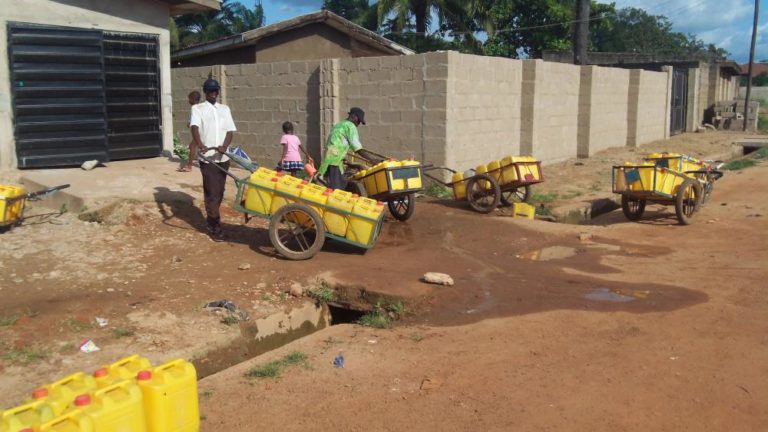
Residents of Gishiri Community in Abuja Municipal Area Council have called on relevant authorities in the FCT Administration to provide potable water and other basic amenities for the benefit of inhabitants.
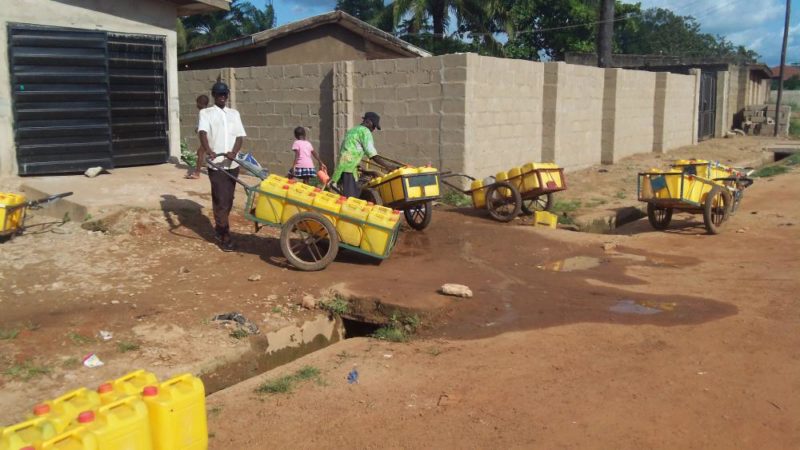
Due to lack of potable water, there has been an increase in activates of water vendors
They told the News Agency of Nigeria (NAN) on Monday in an interview that inadequate water supply and basic amenities made life difficult and unbearable for them in the community.
According to them, it is important for the FCT Administration and philanthropists, to provide a source of potable water to reduce the number of children dying from water-borne diseases in the village.
Some of the residents, who spoke with NAN, said women and girls usually spend long hours searching for water in distant streams and rivers.
They said that this was not giving them the space to source for their livelihoods.
A civil servant, who resides in the community, Yakubu Saleh, bemoaned the long hours spent in search of water.
He said this challenge was causing loss of man hours that should have been used to source for means of livelihood.
He said there were no recreation centres and other relaxation spots in the community, which was close to the nations’ capital, saying this trend needed to be reversed.
“We don’t have water at all, we go to far places to get water from the streams and rivers, the water is dirty, but that is the only source of water we have here.
“Since it is the only source of water in the community, the people are usually left with the option of using the water the way it is.
“We want the Federal Government and the FCT Administration to come to our rescue; so that our children will stop falling ill from preventable disease and water borne diseases.”
Saleh said children from the community usually fall sick from cholera and diarrhoea, saying this had led to most of them not being punctual at schools.
Another resident, Cecilia Audu, told NAN that she had to trek long distances before getting water for domestic use, saying this had caused untold hardship to most women.
She said women in the community gave birth at home and through the use of traditional birth attendants.
She expressed regret that the only health centre in their area had no infrastructure for delivery to take place.
According to her, a large number of them have died while giving birth, saying in most cases, the children died due to lack of emergency response to arrest pregnancy complications.
She said due to lack of potable water, there was an increase in activates of water vendors, known as “mairuwa”, who use the opportunity to make money, selling a 20-litre jerry can for N50.
Audu said the quality of the water sold by the water vendors could not be ascertained as that was the only available option.
“Although, some houses have boreholes, it is still not free, even if you want to fetch the water, you may wasting time because of the queue, and pay maybe N20 or N50, depending on your containers.”
Another resident, Adama Shuaibu, called on relevant authorities to provide access roads to the community, saying there were difficulties in conveying farm products to the markets.
“We need road in this community, cars find it difficult to get into this place, and we have to park at a distant place and use motorcycles.
“It is very difficult to take our goods into the market; some of us have fallen on several occasions, while climbing motorcycles into town,” Shuaibu said.
The Manager, Hope of Survival Orphanage, Mr Cephas Shedrach, said there was the need for private individuals to help in the provision of basic needs to the orphanage.
He called for concerted efforts from all stakeholders to help in the improvement of lives of all Nigerians.
Up to 150,000 New Zealand cattle will be culled as the government attempts to eradicate the disease “Mycoplasma bovis”.
Jacinda Ardern, Prime Minister of New Zealand
Mycoplasma bovis is a bacterium that causes diseases in cattle including udder infections, abortion, pneumonia and arthritis. Humans are not at risk of infection.
“This is a tough call – no-one ever wants to see mass culls,” Prime Minister Jacinda Ardern said in a statement on Monday, May 28, 2018.
The alternative was to risk the spread of the disease across the national herd of over 10 million cattle in more than 20,000 dairy and beef farms, she added.
The cull of around 126,000 cattle in 192 properties, in addition to cull of 26,000 already underway, will take place over the next 24 months.
The full cost of eradication over 10 years is projected at $615 million.
All farming lobby groups are supporting the decision.
There was no doubt the decision to attempt to eradicate Mycoplasma bovis from New Zealand was going to cause pain and anguish for more farmers, Federated Farmers President Katie Milne said.
“But industry has always, from the beginning of this, been committed to working with the government to eradicate, if the science said it was feasible,” she said.
The disease was first discovered in July on a farm on the South Island and has since spread to 37 farms around the country.
Some 260 farms are suspected to harbour the disease as well.
An investigation into how the disease got into the country is still underway.
It is unclear if it arrived through imported live cattle, frozen semen, embryos, veterinary medicines and biological products, feed, used farm equipment, or other imported live animals.
Farmers who have animals culled or their farm operations restricted will be eligible for compensation.
Mycoplasma bovis is a difficult disease to diagnose and to control, Agriculture and Biosecurity Minister Damien O’Connor said.
For this reason, it was possible that at some stage the government may have to let the fight go and learn to manage it in New Zealand herds, O’Connor said.
No country has managed to eradicate the disease so far.
Until July, New Zealand was one of only two major Organisation for Economic Co-operation and Development dairying countries that were free of M. Bovis. Norway is now the only one.
The National Biosafety Management Agency (NBMA) has stressed the need for the government to invest in Science, Technology and Innovation (STI) to properly drive change for country’s development.
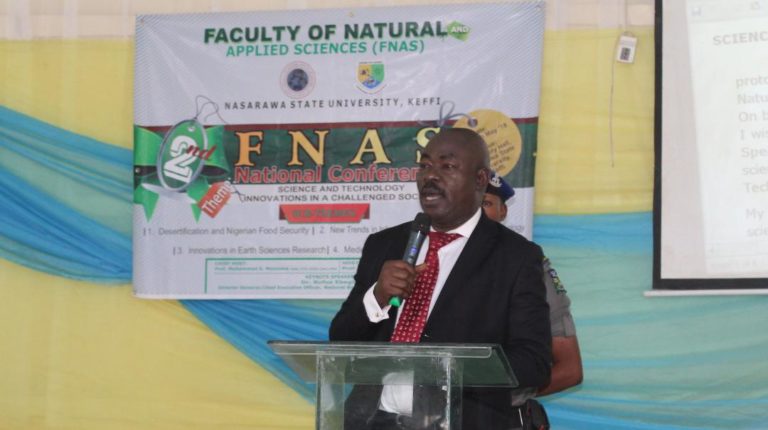
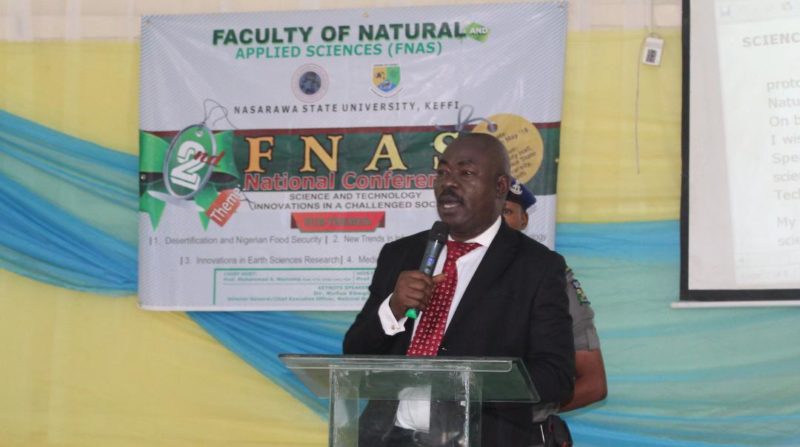
Dr Rufus Ebegba, D-G of the National Biosafety Management Agency (NBMA), making his presentation
Dr Rufus Ebegba, the Director-General of the agency, made the call in a presentation on Monday, May 28, 2018 at the 2nd National Conference on Science and Technology by the Faculty of Natural and Applied Science of Nasarawa State University, Keffi.
Ebegba said Nigeria had invested little in STI as the county’s gross expenditure for research and development “is very low’’.
“The country must look at developed nations and draw lessons on science and technology because they are drivers of change in any society. Investment in research and development must be improved in the country.
“The Federal Government has taken a step in the right direction with the approval of the National Science, Technology and Innovation Roadmap from 2017 to 2030.
“Among other things, this roadmap will help with the diversification of the economy and the development of indigenous technologies.
“Advanced countries such as the U. S. and the UK continue to invest greatly in research and development to sustain their industries and create new innovations.
“In recent years, many Asian countries, especially China and Korea, have invested aggressively in research and development, infrastructure and educational capacity.
“Nigeria ought to emulate this level of commitment and investment in science and technology,’’ he said.
Ebegba said there was need to place emphasis on science education at all levels of the country’s educational system.
“Mechanisms must be put in place to improve the quality of scientific infrastructure available for learning and research at the tertiary level.
“This will improve the quality of scientific research in our institutions and also create opportunities for innovation,’’ he said.
Ebegba stressed the need for collaborations between scientists and industry for the commercialisation of patents and innovations.
“Forums that bring scientists together should also endeavour to accommodate technologists, engineers and experts of industry, so that indigenous technologies can be advanced to solve challenges facing the people,’’ he said.
He noted that the Federal Government had provided structures to ensure that these innovations thrived and would not have adverse effect on humans and the environment.
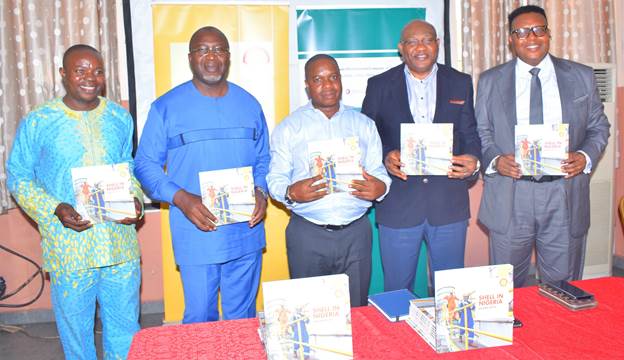
The Shell Petroleum Development Company of Nigeria Limited (SPDC), operator of the SPDC Joint Venture, has restated its active presence in Delta State against the belief in some quarters that the multinational energy firm has pulled out of the state.
L-R: Chairman, Warri Correspondents Chapel of the Nigeria Union of Journalists, Akpokona Omafuaire; Head, Government and Community Relations, The Shell Petroleum Development Company of Nigeria Limited, Alaye Dokubo; Michael Ikeogwu, State Chairman, Nigeria Union of Journalists, Delta State Council; SPDC’s Head, Community Interface, Evans Krukrubo; and Community Interface Coordinator, Jerry-Gaultney Udjo, at the media presentation of the 2018 Shell Nigeria Briefing Notes to Journalists in Warri, Delta State… on Thursday, May 24, 2018
As a proof of its significant footprints in Delta State, the company said it has implemented wide ranging projects in different parts of the state, including the disbursement of N1.88 billion to Global Memorandum of Understanding (GMoU) clusters in host communities and the establishment of a Professorial Chair at the Federal University of Petroleum Resources, Effurun (FUPRE).
SPDC’s General Manager External Relations, Igo Weli, said this at the presentation of the company’s 2018 Briefing Notes to journalists in Warri on Thursday, May 24, 2018 where he said the company recently donated N600 million facilities to five schools under a Youth Sports and Athletics Development Project (YSADP) to mark Nigeria’s centenary anniversary.
“These projects show our continuous presence and interest in the development of Delta State,” said Weli, who was represented by the company’s Head of Community Interface, Evans Krukrubo. “While it is true that SPDC divested from a number of assets in Delta State in line with our business strategy, and in support of the participation of more Nigerian companies in the oil and gas industry, we are still active in the state, for example, operating Forcados Terminal, flow stations, gas plants and a network of pipelines. There is no better way to relay this message than undertaking projects and initiatives that are helping to rebuild lives and communities in the state.”
The GMoU funding covers the three clusters currently active in Delta State since the inception of the concept in 2006. The Cluster Development Boards (CDBs), like their counterparts in other parts of the Niger Delta, are implementing health and educational projects, among others.
The centenary project in Delta State, which was inaugurated this month, includes the development of an athletic curriculum by Africare, an international NGO, using the American National Collegiate Athletic Association standards, the provision of facilities for long/triple jump, high jump, shot put, javelin, discus and hammer throw in five schools as well as the construction of a 400m six-lane rubberised track at Government College, Ughelli.
A key component of the project was the inclusion of 283 athletic and leadership training sessions, academic performance tracking and mentoring. A total of 150 students from across the five project schools benefitted from the leadership programme.
Delta State Governor, Senator Ifeanyi Okowa, had said that the project marked a major turning point in the lives of students and communities.
The Professorial Chair in Light Weight Automobile Engine Development was activated at FUPRE in December last year and is the latest of six established by SPDC JV. The Chair at Effurun is expected to contribute to the growth of local content in Nigeria’s automobile industry.
In a bid to boost employment especially among youths, more than 700 young men and women benefited from Shell’s LiveWIRE initiative between 2003 and 2017. Also, a total of 160 students from Delta State have received the SPDC flagship Cradle-to-Career scholarship awards since they were instituted in 2010. The programme offers fully-funded six-year awards for children from rural communities to attend some of Nigeria’s top secondary schools.
Mr. Weli added: “SPDC JV is always prepared and willing to contribute its quota to the development of its host communities in close collaboration with other stakeholders. It is however, necessary for communities to help create a conducive atmosphere to attract and retain investments in the Niger Delta. Violence, vandalisation of pipelines and other anti-social behaviours will not only discourage investments but also impede the holistic development we badly need in the Niger Delta.”
The Global Environmental Facility-Small Grant Programme (GEF-SGP) gave Nigeria a $4.9 million grant to fund 141 environmental related projects in 25 states between 2009 and 2017.
Among other schemes, the GEF-SGP undertook in-situ conservation of the critically endangered Sclatter’s Guenon monkey that is endemic to southern Nigeria
Mrs Ibironke Olubamise, GEF-SGP National Coordinator, who disclosed this to the News Agency of Nigeria (NAN) in Abuja, said that the grant was an additional fund to complement the environmental projects in the states.
She said that the grant was used to fund projects on biodiversity, climate change, land degradation, persistent organic pollutants and international waters.
GEF-SGP provides grant, technical and coordination support to poor, marginalised and vulnerable communities.
This is through national non-governmental organisations (NGOs) and community-based organisations (CBOs) to implement local environmental initiatives.
Funded by the GEF, SGP is implemented by UN Development Programme (UNDP) on behalf of the GEF partnership and is executed by the United Nations Office for Project Services (UNOPS).
The coordinator said the GEF-SGP had supported alternative livelihood activities that helped to reduce pressure on the environment and enhanced the quality of lives of the target communities, including widows and aged.
According to her, 800,000 poor rural dwellers – 65 per cent women and 35 per cent men – have benefitted directly from the projects.
“60 per cent of communities have either never experienced or benefitted from any development support or participated in such a way as allowed by SGP.
“GEF-SGP also demonstrates collaborative effort between NGO, community and private sector to address pollution. Many of SGP projects have been up-scaled/replicated,” Olubamise stated.
In addition, she said the programme supported over 40 climate change mitigation projects such as tree planting to regenerate forests, energy saving stoves to consumption of fuel wood.
“GEF-SGP has supported projects in several states to address erosion and loss of farmlands to boost food production capacity with modern farming techniques.
“It assists in establishing skills acquisition centre to train beneficiaries especially women, widows and youth on alternative livelihood activities to discourage unsustainable land exploitation.
“It also supports the awareness creation and teaching simple techniques such as rain water harvesting to reduce stress of water and impact of drought; pitcher irrigation technology to reduce stress of irrigation on farmlands,’’ she said.
Olubamise, who said the grant also addressed the issue of biodiversity, said over 500 indigenous plant species were currently being conserved.
She said that it supported the establishment of Community Forest Management Committees and capacity building for forest protection.
The GEF-SGP coordinator added that it also enhanced indigenous knowledge of biodiversity and revived interest in traditional medicinal values of plant species.
“We also undertook in-situ conservation of the critically endangered Sclatter’s Guenon monkey (Cercopithecus sclaterri) that is endemic to southern Nigeria.
“The animal is internationally rated No. 4 in the 2006 International Union for Conservation of Nature (IUCN) global Red Data list of endangered species of fauna,’’ she said.
Olubamise said the grant also supported the protection and restoration of over 1.2 million hectares of land in Nigeria.
She, however, said that effective monitoring and evaluation of the projects was responsible for the successes GEF recorded between 2009 and 2017.
“GEF in collaboration with NGOs/CBOs conducts pre-monitoring and evaluation of these projects, carry out the evaluation during and after the implantation of the projects,’’ she said.