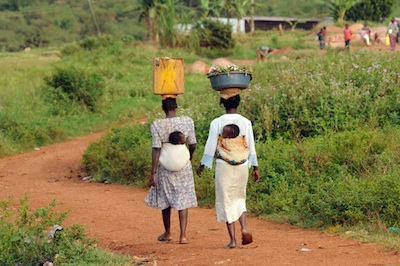
African charity that improved access to drinking water and sanitation and reduced the chance of cholera deaths in a village in Togo, was on Monday, February 19, 2018 awarded the Kyoto World Water Grand Prize.
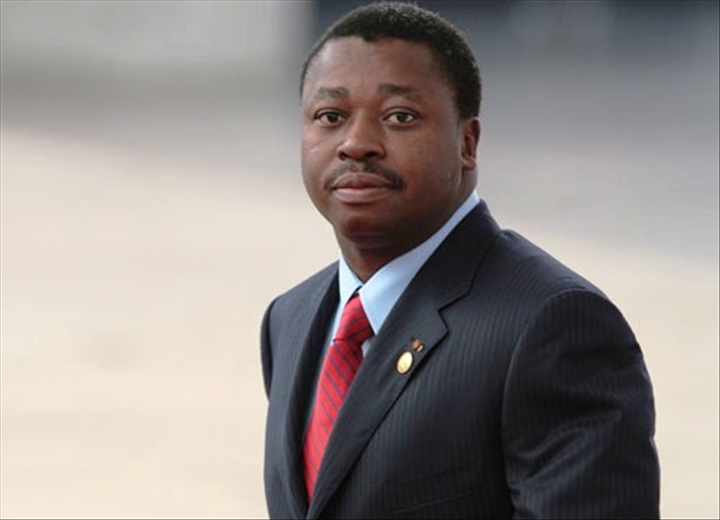
Faure Essozimna Gnassingbé, president of Togo
The award is granted every three years for outstanding grassroots projects to solve water issues in developing nations.
Judges said the project by the Christian Charity for People in Distress (CCPD), which helped 290 villagers, had cut the risk of disease and death in a community prone to cholera outbreaks.
“The organisation provided a serious and coherent project, with proper monitoring, and demonstrated above all an excellent efficiency,” said Jean Lapègue, a board member of the World Water Council, which adjudicates the award.
Judges also praised the project’s use of ecological toilets as an alternative to pit latrines, Lapègue told the Thomson Reuters Foundation by email.
More than 60 per cent of Togo’s population lives below the poverty line, and many people lack reliable access to drinking water, education, health and electricity, according to the United Nations Development Programme (UNDP).
In addition, the UNDP said Togo’s natural resources were becoming increasingly scarce, particularly clean water.
The CCPD will receive the award and the two million Japanese yen prize (19,000 dollars) at a ceremony next month in the Brazilian capital, Brasilia, during the eighth World Water Forum.
Lapègue said the prize should help CCPD to extend its project in rural areas of the West African Francophone country of eight million people and also help connect the charity to other actors in the water and sanitation sector.
The award is co-organised by the Japan Water Forum and the World Water Council.
CCPD is the second African charity to win the award after Uganda’s Katosi Women Development Trust won in 2012.
Some lecturers of the Federal University of Agriculture Abeokuta (FUNAB) and Bayero University Kano (BUK) have proposed the establishment of integrated crops-livestock settlements to address the protracted farmers-herdsmen clashes.
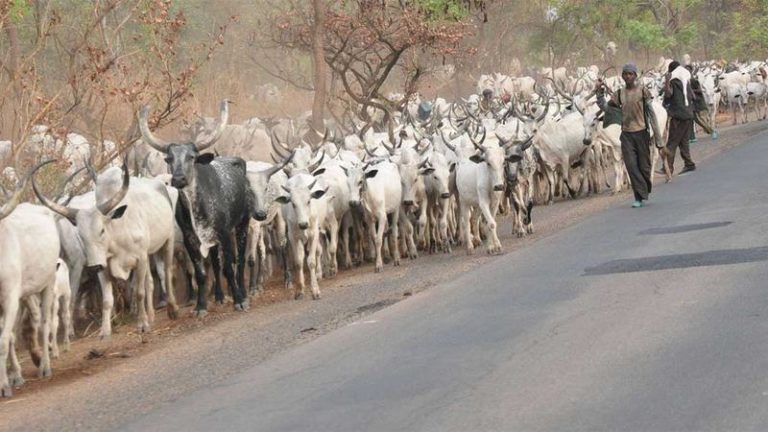
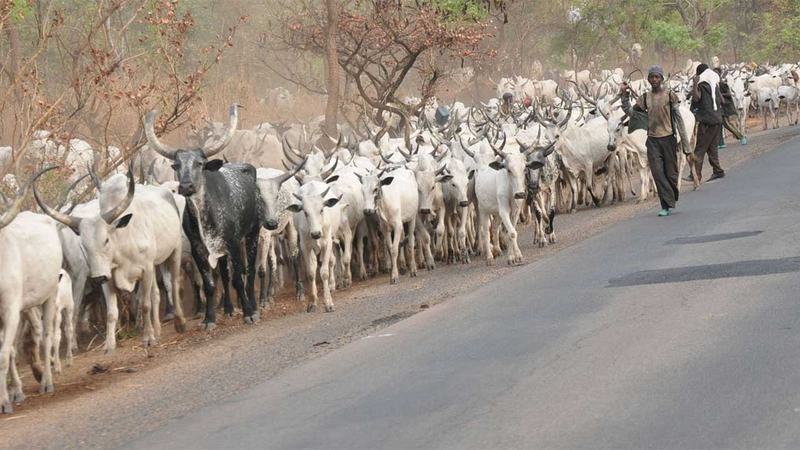
Herdsmen
The dons made the proposal at a validation workshop on controlled grazing, which was organised by Synergos Nigeria on Monday, February 19, 2018 in Abuja, the federal capital city.
Prof. Olufemi Onifade of the Department of Pasture and Range Management at FUNAB said that, apart from reviving abandoned grazing reserves and establishment of ranches, the proposed integrated settlements could be the most sustainable solution to the farmers-herdsmen crisis.
Onifade said that, based on a study on “Support and Inform Development: Review and Implementation of Controlled Grazing Policy”, which was conducted in Benue, Kaduna and Kogi states, farmers and pastoralists had agreed to embrace the proposed scheme.
He said that the initiative would increase the income of farmers and herdsmen, while reducing conflict and strengthening mutual interaction among them.
He identified poor governance and community participation, weak policies and legislations as well as ineffective inter-community relations and dispute resolutions as the major causes of violent conflicts between the two groups.
Onifade said that the conflicts had necessitated stable engagements with political, traditional and religious leaders in the affected states.
As part of recommendations of the study, the professor advised the Federal Government to initiate a National Development Plan and Strategy which would enable farmers and pastoralists to easily have access to land in peaceful and acceptable manner.
“The recommendations include the provision of a framework to ensure quality education for rural populations of pastoralists and farmers as a strategy to build human resources for sustainable development.
“Others are the management of extreme environmental changes such as drought, land degradation, overgrazing and climate change and its associated effects.
“Then, there is the need to take cognisance of regional policies and framework for cooperation such as African Union (AU), Economic Community of West African States (ECOWAS) and the United Nations Charter and conventions,’’ he said.
Onifade, who also spoke on the proposed cattle colonies, advised the Federal Government to allow individual states to determine the best approach to addressing the issue.
Besides, Prof. Abba Aminu of the Department of Agriculture Economics and Extension, BUK, said that the recommendations, when adopted, would be beneficial to both herdsmen and farmers.
According to him, cattle of livestock farmers can graze on uncultivated marginal fields during wet season, while the cattle can graze freely on harvested fields.
He noted that communities in Kogi and Kaduna states, where the study was conducted, largely accepted the initiative except for Benue.
Mr Adewale Ajadi, Synergos Country Director, urged the media to avoid publishing sensational reports, insisting that they should instead promote fair and objective reportage of issues, particularly those relating to communal crisis.
Ajadi, who said that the livestock sub-sector had a vast economic potential, called for collective efforts to step up the campaign against farmers-herdsmen clashes.
He, nonetheless, said that the major objective of the study was to support the development of a comprehensive policy and action plan that would promote mutual coexistence between pastoralists and farming communities.
News Agency of Nigeria (NAN) reports that Synergos – a non-profit international organisation which aims at facilitating systemic changes in the society – is currently executing some development programmes in Kogi, Benue and Kaduna states.
The Federal Ministry of Water Resources has proposed a 12-month emergency action plan to scale up access to sanitation and hygiene services in the country’s public spaces.
Suleiman Adamu, Minister of Water Resources
This was part of the recommendations at the end of a National Retreat on Revitalisation of Water, Sanitation and Hygiene (WASH), and made available to News Agency of Nigeria in Abuja on Tuesday, February 20, 2018
The plan showed that, by 2030, every Nigerian would have access to safely managed sanitation and hygiene facilities in cities, small towns, and rural communities.
The plan also stipulates that state and local governments enforce existing building codes and related legislation regarding the minimum number of sanitation facilities required for buildings and facilities.
This would also ensure that where such existing codes and legislations were inadequate, new codes would be drafted and enacted.
In an interview with NAN, Mr Emmanuel Awe, the Director, Water Quality Control and Sanitation, said there was the need for all tiers of government to institutionalise sanitation as a counterpart to water supply.
The director asserted that ignoring sanitation would be detrimental to the wellbeing of the citizenry.
He expressed regret that most policies and programmes from previous administration was solely on water supply, adding that budgeting for sanitation was important to meeting the Sustainable Development Goals (SDGs) by 2030.
“Sanitation cannot be ignored, it is a silent killer. Nigeria can reduce its disease burden by making access to Water and Sanitation a priority.
“We need to wake up to the reality to advocate for more funding to scale up sanitation and hygiene before the end of the SDGs.”
He said Nigeria could reduce its disease burden with a working sanitation action plan in place, adding that no fewer than 46 million people practice open defecation in the country.
According to him, no fewer than 2.4 million deaths occur annually from poor sanitation, and stressed the need to improve hygiene education to promote behaviour change toward reducing open defecation practices.
He said there was also the need for all stakeholders to wake up to advocate for more funding for sanitation and hygiene.
Awe noted that Nigeria needed three times the present funding for scaling up sanitation, which he said amounted to about 1.3 per cent of its annual Gross Domestic Product.
He disclosed that the ministry was developing a Sanitation Value Chain Strategy to promote investment in addressing the near absence of wastewater and fecal sludge in Nigeria.
This strategy, he said, would include the promotion of innovative technologies that reuse treated fecal sludge and wastewater into economically-viable byproducts, such as fertilisers, bio-gas, and water for irrigation.
He said the ministry was putting measures in place to launch a national campaign to end open defecation in June, 2018 to create awareness on its dangers and what can be done to reverse the trend.
According to him, the ministry is also working to fast-track the ongoing development of the National Policy on Urban Sanitation, which will be approved and disseminated by August.
The Lagos State Government on Tuesday, February 20, 2018 said that the ongoing construction of the Ilubirin Housing Scheme would be completed before the end of the year while it would go on sale to members of the public from the first quarter of 2019.
Lagos State Governor, Mr. Akinwunmi Ambode (in white shirt), during an inspection of the Ilubirin Housing Scheme on the Lagos Island
The government, in a statement signed by the Commissioner for Housing, Mr. Gbolahan Lawal, said the development of the scheme would be built in seven phases starting with the completion of the existing structure which is already underway, while other plashes of the project would be completed over a period of three years terminating in 2022.
The Ilubirin Housing Scheme, initiated under the Lagos Home Ownership and Mortgage Scheme (LAGOSHOMS) in 2014 and conceived as a purely residential scheme, was redesigned to accommodate a live, work and play area in the scheme.
Lawal said the government, due to the massive housing projects ongoing across the state and the limited budgetary provision to complete them, sought a partnership with private sector players through a joint venture agreement to complete the project.
“After a review of the proposals received from various companies for the completion of the project, Messrs First Investment Property Company (FIDC) was selected to partner with the state government to fulfill the vision of Ilubirin.
“The company is expected to source fund for the completion of the project and also to provide technical expertise for its completion. The equity of the state is majorly the land and the development executed to date,” the commissioner said.
He said the new design of the project will comprise 472 units of studio apartments; one-, two- and three-bedroom flats; terraces; and penthouses, while commercial unit and recreational facilities such as sporting facilities, parks, a club house as well as child day care facilities would also be accommodated.
“The water front will be developed as an active promenade with restaurants and bars. A shopping mall will be located by the eco-park and will be a destination for visitors and sight seers. There would be something for everyone in Ilubirin,” Lawal said.
The commissioner also disclosed that careful infrastructural and environmental planning was considered, explaining that due to the location of the scheme on a reclaimed land, flood simulations had to be undertaken, integrity tests carried out while traffic studies were commissioned due to its proximity to the busiest network of roads between the Mainland and Island.
“One challenge unique to the site however is its proximity to a series of drainage channels carrying effluent from Lagos Island. To address this, an eco-park has been designed to counter the impact of sewage and contribute to a cleaner Lagos.
“The high visibility of the site along the Third Mainland Bridge axis demands exemplary aesthetics. Like the Lekki Link Bridge, this project has the potential of becoming an iconic reference point and a catalyst for the regeneration of the surrounding areas such as Isale-Eko, Dolphin and Osborne Foreshore,” he said.
He said the FIDC has already assembled a team of local and international experts to come up with a master plan that would showcase the site’s position as a residential, commercial and leisure environment along the lagoon resulting in a 24-hour cosmopolitan lifecycle.
Besides, Lawal said a power generation project supplying electricity to the grid would be hosted on the site to drive a 24-hour live, work and play environment, while the project will enhance the Light Up Lagos Initiative of the State Government.
“A new flyover will be built to connect the development to the Third Mainland bridge axis. This will ensure seamless integration into the wider road network without impacting negatively on the existing traffic,” he said.
Prolonged power outage and high cost of petrol have worsened the acute water shortage in Yenagoa, the Bayelsa State capital.
Seriake Henry Dickson, Governor of Bayelsa State
Residents now spend more to buy water for domestic uses as they relied on water vendors who sell water in carts as pipe-borne water has dried up.
The News Agency of Nigeria (NAN) reports that a 20-litre jerry can of water, which sold for N20 before, now goes for N30.
Abdullahi Ahmed, a water vendor, said that the price increase was due to the prolonged power outage and exorbitant fuel price which had remained at N200 per litre.
“The light situation in Yenagoa is affecting our businesses; most people with boreholes, where we buy water, are not willing to buy fuel at N200 per litre to pump water.
“Some of them, who use generators to sell to us at higher rates, have no choice, but to pass the cost to our customers, although they complained, we explained to them.
“We do not find it easy to cope with the high demand this dry season; the job of ‘meruwa’ (water vendor) is energy sapping.
“Every day, you have pains all over the body, so what I do is to rest when the sun is much.
“We even charged higher to those who stay on upstairs. We don’t always like to carry water to such customers, we charge like N40 per jerry can for people that stay in first floor, while we take N50 for higher floors,” he said.
The residents said that they spent between N300 and N500 daily on the average on water due to lack of potable public water supply in the state.
Mrs Joyce Tuedor, a housewife, said that she now spends N400 daily on water compared to N250 spent before for the same litres due to the fuel scarcity.
She prayed to see the end of the prolonged power outage which had lasted for weeks.
According to her, she spends additional N120 to buy a bag of 20 sachets of water for drinking.
“This water thing has not been easy for us in the past three weeks and the additional cost is becoming unbearable; we want the government to provide water for residents.
“Even of more concern is the quality of the water that the vendors source from shallow wells which might not meet acceptable public health standards.
“The current water situation can lead to an epidemic should any water borne disease break out, it is God that has been keeping us,” Tuedor said.
Officials of Cleaner Lagos Initiative (CLI) have raised concerns about the activities of some people who they claim have been working round the clock to sabotage the new waste management policy of the Lagos State Government.
The officials sited instances where wastes resurfaced in unnatural sequences in areas where they had just been cleared.
Some of the officials of the CLI, who preferred anonymity, said the rate at which those sabotaging the efforts were working hard to derail the process was worrisome.
A senior official of the CLI said it was unfortunate that those who felt the new arrangement would affect them adversely were working hard to sabotage it by all means, including deliberate dumping of large waste in public places.
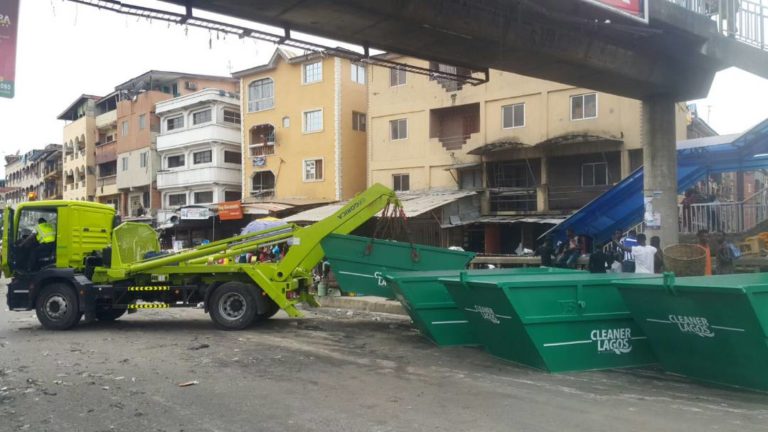
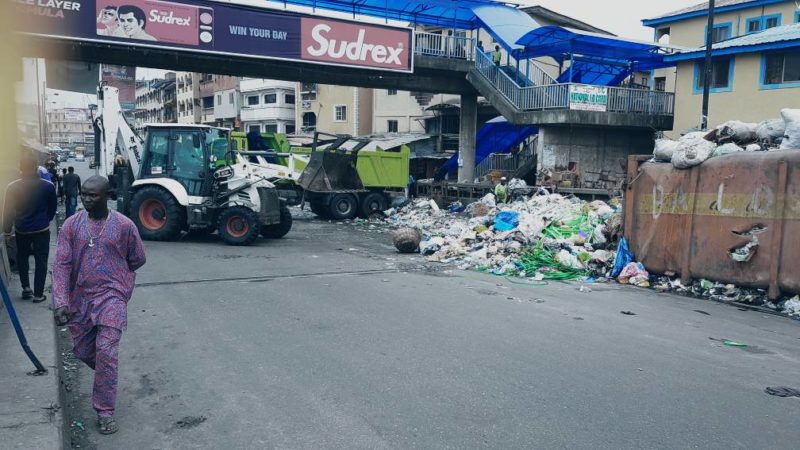
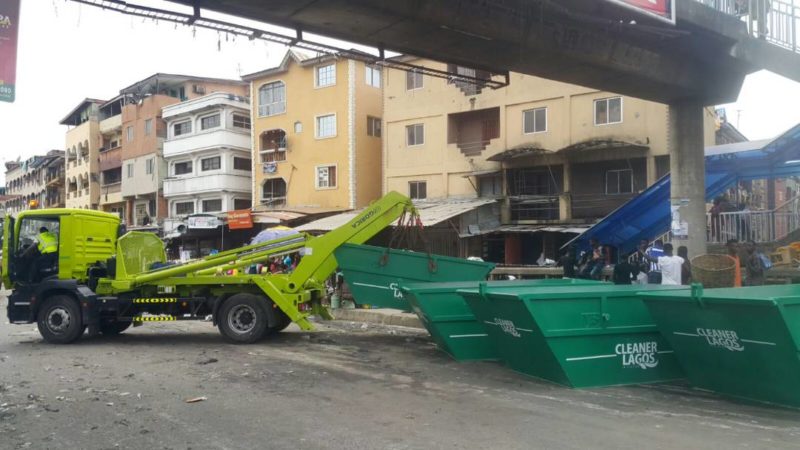
At around 3am, officials of Cleaner Lagos Initiative finished cleaning Idumota area by the pedestrian bridgeBy daybreak, this, claimed, was what they found at the same spot on a Sunday morningCLI officials returned to clear the place again Sunday morning and placed bins there
The official said: “Take for instance, the picture of heaps of refuse under the Idumagbo Pedestrian Bridge that was published today in a national daily. The refuse at that spot was evacuated just overnight and the team finished by 3am today (Sunday) and, by 3am, the heap of refuse was back there, including a fully loaded LAWMA big refuse container that was not there previously.
“As I am talking to you, our officials have returned to the same spot to clear everything. The Commissioner of the Environment was also there to see things for himself and he has asked the Private Sector Participant (PSP) operator that dropped the container belonging to the Lagos State Waste Management Authority (LAWMA) on the spot to remove it immediately.
“That has been the challenge. When our officials clear the heaps of refuse from a spot, before one could say Jack Robinson, the heaps were back on the same spot cleared by our officials and this really has to stop because a cleaner Lagos is in our collective interest,” he said.
A source said the permutation of those behind the sabotage was that if they kept dumping tonnes of refuse in public places, they would achieve the twin objective of distracting CLI officials from paying adequate attention to other places while projecting the initiative, which is targeted at a comprehensive turnaround of Lagos to become one of the cleanest cities in the world, as a failure.
Another reliable source said the situation had also been compounded by members of the public who indiscriminately dump their waste in public places and not the designated spots, saying that such was also a challenge.
Also, in a recent video that went viral on social media, an official of Visionscape Sanitation Solutions, Mr John Olawale Joseph, had lamented how people were dumping refuse on the same spots in public places, thus frustrating the efforts to rid the State of filth.
Joseph, who is Visionscape’s Area Manager for Lagos Island West, alleged that heaps of refuse sometimes appear overnight in places already cleared by environmental officials, saying that the deliberate sabotage of the project called for concern.
Speaking at Obalende moments after waste in the spot was evacuated by his team, Joseph said he could not understand why anyone would deliberately dump waste in large quantity just few minutes after they cleared the same spot.
In the said video, a man wearing LAWMA uniform was seen fleeing from arrest after illegally dumping waste in the same spot.
“We evacuated the waste from here with nine trucks just 20 minutes ago. As you can see now, people have already dumped waste on the same spot and by tomorrow morning or afternoon, you will see heaps of refuse here approximately 200 tonnes. We evacuated waste from here just 20 minutes ago and it is already pilling up; this is what we are facing here.
“What we have noticed is that some people wearing LAWMA uniform are coming to dump waste here in large quantity to make it look as if we are not working. This is bad and something urgent has to be done about it,” Joseph said in the video.
The Majority Leader of the House of Representatives, Femi Gbajabiamila, on Saturday, February 17, 2018 urged residents of Lagos State who are in the habit of indiscriminately disposing waste in public places to desist from such act, and rather join hands with the State Government to ensure the success of the Cleaner Lagos Initiative (CLI).
Gbajabiamila said it had become expedient to impress it on residents who are always dumping waste on roads and public places to refrain from doing so henceforth in order to bring about a cleaner and healthier environment.
The Lagos State Government had also banned cart pushers from operating in the state as part of the measures taken to ensure the success of CLI.
The new policy encapsulated in the CLI was introduced to address the challenges in the sector, and as well revolutionise waste management in the state in line with international best practices.
Officials said 17 people died and several others were injured in Mozambique’s capital early on Monday, February 19, 2018 when a 15-metre pile of garbage collapsed due to heavy rain.
The collapse happened at around 3 a.m. (0100 GMT) in the impoverished Hulene neighbourhood in Maputo
The collapse happened at around 3 a.m. (0100 GMT) in the impoverished Hulene neighbourhood, which is around 10 km from the centre of Maputo.
Officials said the houses were built illegally and authorities had previously asked the residents to leave.
“Up to now 17 dead bodies were recovered. We fear more might be unaccounted for.
“So we will keep searching for bodies buried underneath the garbage pile,” a councillor for Ka Mavota Municipal District, Despedida Rita, told reporters.
Land pressure in many African cities leads some people to squat on land they do not own as they seek higher wages available in urban centres.
The dwellings are sometimes built on land that is marginal or unsafe.
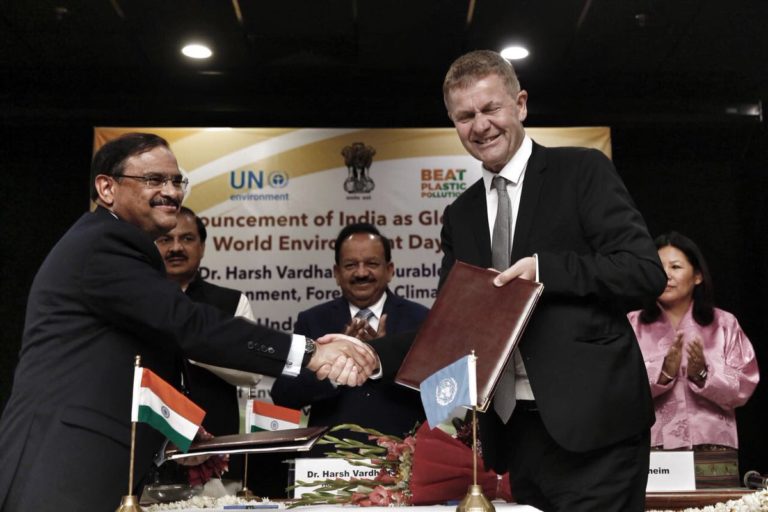
India has been announced as hosts of World Environment Day 2018, which will be observed on Tuesday, June 5.
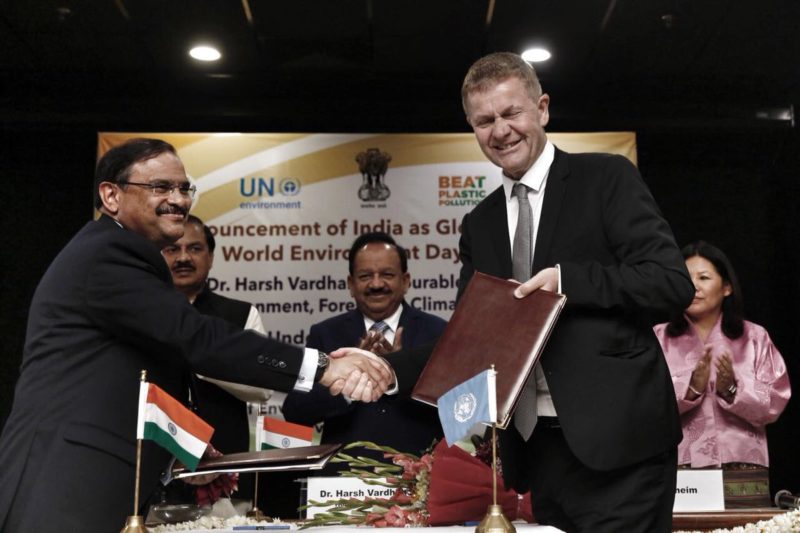
Dr. Harsh Vardhan, India’s Minister for Environment, Forest and Climate Change (left), with Erik Solheim, Head of UN Environment, during the signing of the World Environment Day 2018 host agreement
The global celebrations will be used to raise awareness of plastic waste and find ways to reduce the prevalence of single-use plastics. It has “Beat plastic pollution” as its theme.
The announcement was made on Monday, February 19, by UN Environment and India’s Environment Ministry in New Dehli.
Dr. Harsh Vardhan, India’s Minister for Environment, Forest and Climate Change, commented: “India is excited to host the World Environment Day this year. Indian philosophy and lifestyle has long been rooted in the concept of co-existence with nature. We are committed to making Planet Earth a cleaner and greener place.”
The World Environment Day was established by the UN in 1972 to raise environmental awareness and action. Last year’s day, led by Canada, had the theme: “Connecting people to nature”.
As part of its duties as hosts, India will organise and lead initiatives around the country on plastic waste and clean-up. This will include activities in public spaces, national reserves, beaches and forests to help drive national interest in the issue.
Erik Solheim, Head of UN Environment, said at the announcement on Monday that India will be a “great global host”. In a Twitter message, he described “India’s leadership on reducing plastic pollution” as “absolutely critical!”
His words: “The country has demonstrated tremendous global leadership on climate change and the need to shift to a low carbon economy, and India will now help galvanise greater action on plastics pollution.
“It’s a global emergency affecting every aspect of our lives. It’s in the water we drink and the food we eat. It’s destroying our beaches and oceans. India will now be leading the push to save our oceans and planet.”
According to the UN Environment, India has the highest recycling rates in the world, and is well-placed to help accelerate changes to solve plastic pollution. It is estimated that 500 billion plastic bags are used every year around the world, and that 50 percent of the plastic used is single-use.
Women and girls play a crucial role in the fight against climate change, and it is essential to make sure that this role is not only fully understood, but incorporated into the Sustainable Development Goals, finds a new United Nations (UN) report.
According to gender roles, women are responsible for domestic chores, including food production, cooking, cleaning, caring for the children, and fetching water. Photo credit: projecthavehope.org
From rising sea levels to drops in farming yields and urban floods, the impacts of climate change are being acutely felt by women. Women make up a large percentage of poor communities worldwide that rely on natural resources for their livelihoods.
“The 2030 Agenda holds the potential to transform the lives of women and girls all over the world even though the challenges are daunting. The large-scale extraction of natural resources, climate change and environmental degradation are advancing at an unprecedented pace, undermining the livelihoods of millions of women and men, particularly in the developing world,” the authors say.
Successful action on climate change depends on the engagement of women as stakeholders and planners in ensuring that everyone has access to the resources they need to adapt to and mitigate climate change.
Examples of such involvement described in the report by UN Women range from the role of women in building resilience against natural disasters to being key agents in supporting low-emissions development.
“Although billons have gained access to basic water and sanitation services since 2000, progress has been uneven and some of the gains are increasingly fragile as water stress intensifies due to climate change, unsustainable consumption and intensified agricultural activity and land degradation,” according to the authors.
The report finds that climate change cannot be fully addressed by individual countries, but rather requires enhanced global cooperation from both policy-makers and non-party stakeholders in order to bring women’s voices and specific needs to the table.
The report, “Gender Equality in the 2030 Agenda for Sustainable Development”, highlights the issue of clean energy, notably in the preparation of food.
Food preparation – which across countries is overwhelmingly done by women – requires household energy. In most developing countries and emerging economies, women use cook stoves that rely on solid fuels such as biomass (wood, charcoal, agricultural residues and animal dung) and coal as their primary source.
The use of these dirty solid fuels contributes to harmful emissions of carbon dioxide and black carbon (soot), destructive agents that perpetuate climate change.
Investment in efficient cook stoves that use cleaner fuels – for example, renewable solar energy – is a solution to this carbon-intensive status quo that is simultaneously gender-responsive and environmentally sustainable.
In addition to the adverse climate effects, reliance on solid fuels means women and girls spend a significant amount of time collecting fuel. “The health and environmental impacts of unclean fuels and inefficient technologies can be devastating for women and children, who usually spend more time in the home,” say the authors.
Focus on Women in Agriculture
The role of women in agriculture is also highlighted in the report. Globally, one-fourth of all economically active women are engaged in some sort of agriculture.
The impacts of climate change include reduced crop and forest yields and acidification of the ocean, which negatively affects the harvesting of marine life.
According to the report, by 2050, climate change will have reduced the production of rice by 15%, wheat by 49% in South Asia, and by 15% and 36% respectively in sub-Saharan Africa, resulting in higher food prices and heightened food insecurity.
Many female agricultural workers also face severe inequalities in their access to land, credit and critical inputs such as fertilisers, irrigation, technology, information and markets.
Because of this, adaptation technology such as heat-resistant and water-conserving crop varieties are particularly important for women.
UN Climate Change Boosting Gender Climate Action
A pillar of this international solidarity against accelerating climate change is the Paris Agreement, the goal of which is to limit global average temperature rise to well-below 2 degrees C, and as close as possible to 1.5 degrees C.
“For the Paris Agreement to succeed, women and girls must be fully involved in climate policy. When we include women in climate solutions, we see enhanced economic growth and the outcomes are more sustainable,” says UN Climate Change Executive Secretary, Patricia Espinosa.
Gender climate action under the UN is said to be increasing in scope and speed. At the UN Climate Change Conference in Bonn in November 2017, countries adopted a new roadmap to incorporate gender equality and women’s empowerment in climate change discourse and actions.
The Gender Action Plan sets out, in five priority areas, the activities that will help achieve this objective.
These range from increasing knowledge and capacities of women and men through workshops and information exchanges, so that they can systematically integrate gender considerations in all areas of their work, to pursuing the full, equal and meaningful participation of women in national delegations.
On Monday, February 26, 2018, C40 Chair and Mayor of Paris, Anne Hidalgo, and Mexico City Mayor Miguel, Ángel Mancera, will be bringing together citizens, business leaders and experts for the second annual Women4Climate conference in the Mexican capital.
Mexico City, the sprawling, densely populated and high-altitude capital of Mexico, is hosting the 2018 Women4Climate conference. Photo credit: paradiseintheworld.com
Patricia Espinosa, UN Climate Change Executive Secretary, will be participating in the event and be mentoring a group of young women to become the next generation of climate heroes the world needs to tackle the climate challenge and to achieve the goals of the Paris Climate Change Agreement.
“For the Paris Agreement to succeed, women and girls must be fully involved in climate policy. We can’t fight climate change with only half of the world population. That is why we adopted a Gender Action Plan at COP23 in November, entering a new era in which we must enable women leadership in decision-making at every level of society,” said Espinosa ahead of the meeting.
While women are said to be underrepresented at the highest levels of government, they are however believed to be doing better in the area of local and regional government: in just the last few years, the number of C40 member cities with women mayors has skyrocketed from four to 17.
The Women4Climate conference will build on this momentum as powerful women mayors and CEO’s commit to support the young and innovative change-makers who reinvent our cities.
The Women4Climate conference has three primary goals:
Educate and empower more than 500 mentees by developing a global mentorship programme within cities that belong to the C40 group. This will enhance and speed up climate action within urban communities.
Inform and share knowledge in order to deliver inclusive and just climate action plans within cities.
Drive action and bring inclusion to the forefront of climate action, highlighting the key role that women play in the development and success of climate policies.