Renewable energy accounted for 70% of new global power generating capacity in 2017, the largest increase in renewable power capacity in modern history, according to REN21’s Renewables 2018 Global Status Report (GSR) published on Monday, June 4, 2018.
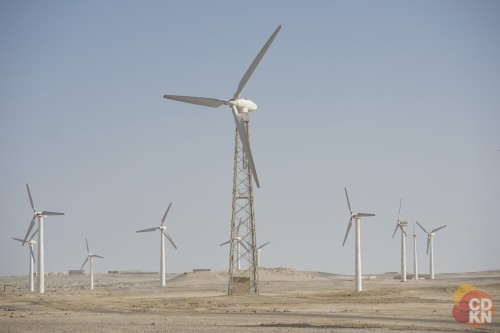
Renewable energy: Wind turbines in Egypt
According to observers, scaling up renewable electricity is crucial to meet the central goals of the Paris Climate Change Agreement, which is to hold the global average rise as close as possible to 1.5 degrees Celsius.
However, as the new report points out, the entire power sector and specifically the heating, cooling and transport sectors must also be transformed for a world to a stand a chance of meeting the Paris goals.
“We may be racing down the pathway towards a 100% renewable electricity future, but when it comes to heating, cooling and transport, we are coasting along as if we had all the time in the world. Sadly, we don’t,” said Rana Adib, Executive Secretary of REN21.
The fact is that the heating and cooling sectors have seen little change in renewables uptake over recent years. Modern renewable energy supplied about 10% of total global heat production in 2015. National targets for renewable energy in heating and cooling exist in only 48 countries around the world, whereas 146 countries have targets for renewable energy in the power sector.
To achieve 1.5 degrees C, the heating, cooling and transport sectors, which together account for about four-fifths of global energy demand, will need to follow the same path as the power sector – and fast.
Adequate Policy Frameworks are Crucial for Rapid Deployment of Clean Energy
For these sectors to change, the right policy frameworks need to be put in place to drive innovation and the development of new technology.
Arthouros Zervos, REN21 Chair, said: “To make the energy transition happen there needs to be political leadership by governments – for example by ending subsidies for fossil fuels and nuclear, investing in the necessary infrastructure, and establishing hard targets and policy for heating, cooling and transport. Without this leadership, it will be difficult for the world to meet climate or sustainable development commitments.”
Small changes are under way. In India, for example, installations of solar thermal collectors rose approximately 25% in 2017 as compared to 2016. China aims to have 2% of the cooling loads of its buildings come from solar thermal energy by 2020.
With 1.2 million electric passenger cars sold in 2017, the transport sector increases its level of electrification and offers new possibilities for renewable energy uptake. Still, the industry has a long way to improve since only 42 countries have national targets for the use of renewable energy in transport.
Investment added 178 GW of renewable power generation capacity in 2017 which was more than twice that of net, new fossil fuel and nuclear power capacity combined.
Thanks to their increasing cost-competitiveness, the share of renewables in the power sector is expected to only continue to rise. New solar photovoltaic capacity grew to a record 98 gigawatts in 2017, while 52 GW of wind power were added globally.
The report says that investment in renewables is regionally concentrated: China, Europe and the United States accounted for nearly 75% of global investment in renewables in 2017. Further, the Marshall Islands, Rwanda and many other developing countries have proportionally (according to gross domestic product) invested as much as or more in renewables than their peers in developed economies.
Some 288 institutional investors with $26 trillion in assets under management have issued a new call to climate action to governments, albeit with the support of the UN.
Patricia Espinosa, the Executive Secretary of UN Climate Change (second right), with some of the representatives of the institutional investors at the meeting in London
In a statement issued ahead of the upcoming G7 Summit in Canada and presented to Patricia Espinosa, the Executive Secretary of UN Climate Change, in London on Monday, June 4, 2018, the investors urged governments to step up their level of ambition to achieve the goals of the Paris Agreement on Climate Change.
“We are concerned that the implementation of the Paris Agreement is currently falling short of the agreed goal of ‘holding the increase in the global average temperature to well below 2 degrees Celsius above pre-industrial levels,” the investors said.
“The global shift to clean energy is underway, but much more needs to be done by governments to accelerate the low carbon transition and to improve the resilience of our economy, society and the financial system to climate risks,” they add.
Espinosa, on her part, spoke about the dramatically accelerating climate change impacts around the world and issued a passionate call to action, saying: “We can invest in the status quo, exploiting everything we can from the earth, knowing it will poison our air, our water and our very existence on this planet. Or we can invest in the future and capitalise on the fact that we are standing at the precipice of nothing less than one of the greatest transformational eras of modern times an era increasingly driven by clean technology, fuelled by renewable energy, and supported by a new economy.”
She pointed out that leveraging private finance to fund the transition to a low-emissions and low-carbon future in order to meet the goals of the Paris Agreement is a necessity, and one that public administrations cannot afford to do on their own. She called on investors to engage with national governments more directly on climate policies and how investors can contribute to the implementation of the agreement at the country level.
“While resources are available and investors like you have the vision, the majority of the developing countries do not receive significant amounts of investment flows for the implementation of their national climate action plans. Get in touch with the right ministries, the right people in charge of the programs and policies – the people who can affect real change, and specially with the people who right now are saying that finance is not available to them,” she told the investors meeting in London.
In the 2018 “Global Investor Statement to Governments on Climate Change” presented to Patricia Espinosa, investors note that they continue to make significant investments into the low-carbon transition across a range of asset classes, and increasingly incorporate climate change scenarios and climate risk management strategies into their investment processes, while engaging with the largest greenhouse gas emitters.
Specifically, investors are asking world governments to:
Achieve the goals of the Paris Agreement
Accelerate private sector investment into the low carbon transition
Commit to improve climate-related financial reporting
The Investor Agenda calls on global investors to accelerate and scale up the actions that are critical to tackling climate change and achieving the goals of the Paris Agreement. It is a comprehensive agenda for investors to manage climate risks and capture low-carbon opportunities, and a mechanism to report on their progress in four key focus areas: Investment, Corporate Engagement, Investor Disclosure and Policy Advocacy.
The Federal Government said on Monday, June 4, 2018 that no part of the country would suffer neglect owing to its geographical location or political affiliation.
Minister of Defence, Brig.-Gen. Mansur Dan Ali (rtd)
The Minister of Defence, Brig.-Gen. Mansur Dan Ali (rtd), gave the assurance at the inauguration and handing over of Magama Erosion and Flood Control Project, executed at about N530 million by the Ecological Funds Office (EFO) in Magama Local Government Area of Niger State.
“The project, which is one of the 18 ecological intervention projects across the six geo-political zones of Nigeria, will ameliorate and control some of the most outstanding flood and erosion problems in the area.
“The intervention project is intended to bring relief to the sufferings of the people of the community and reduce danger to lives and property associated with erosion and persistent flooding.”
He said that the execution of the projects across the country, demonstrates the sincerity of purpose of the Buhari-led administration toward entrenching justice, equity and fair play in the land.
He urged members of the community to take responsibility for maintaining and protecting the project as well as prevent indiscriminate dumping of refuse in the drainage channels.
Udochi Nwachukwu, the Deputy Director, Erosion and Flood Control, who represented the Permanent Secretary of the EFO at the inauguration, said the project would give the community a sense of belonging.
He said that the project was initiated following a request by Shehu Sale, representing Magama/Rijua Constituency in the House of Representatives.
“The project, which commenced in June 2017 and was completed in April this year, will ensure safety of lives and property as well as improve the general well-being of the people.”
The Vice Chairman of the local government, Sani Doma, thanked President Muhammadu Buhari for starting and completing the project.
“I really thank God for allowing me to see this project completed; we appreciate the FG’s effort because this is what we have been praying for and with God’s intervention, we now have it in place.
“This project is a good one because people die every year while crossing the big river, especially during the rainy season. With this intervention, lives will be saved and all the people of Magama are grateful.”
Doma, however, solicited more Federal Government assistance to construct the road leading from Kawon Auna to Tungan Bako.
He appealed to the Federal Government to ensure the completion of the entire scope of the work covering more stretches of degraded land within the community.
Nigerian and international civil society organisations on Monday, June 4, 2018 repeated their call for the immediate start of the clean-up of oil pollution in Ogoniland in Nigeria’s Niger Delta region.
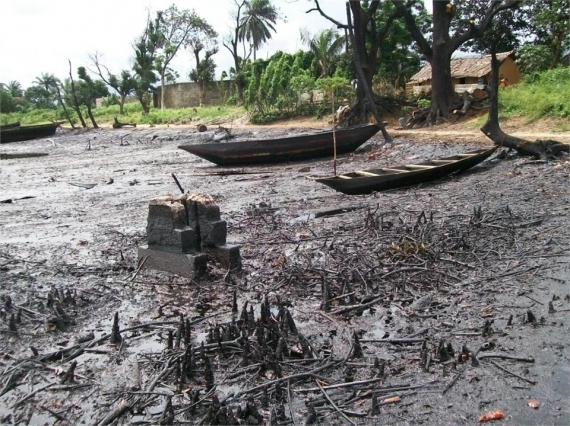
Land degradation from oil spill in Ogoniland, Nigeria
This, according to them, should be undertaken in line with recommendations made by the United Nations Environment Programme (UNEP) in its landmark 2011 study of the region. The conclusion of the UNEP report was that Shell had, for years, not cleaned up the oil pollution properly. As a result of the oil industry pollution, hundreds of thousands of children, men and women have been exposed to a sustained assault on their human rights to food, water, health and work.
Despite UNEP’s 2011 recommendations, communities affected by decades of oil spills continue to live amongst severe contamination, it seems. The Nigerian government officially launched a clean-up programme in Ogoniland two years ago, but affected communities are still waiting for emergency measures to be taken and clean-up to begin. The emergency measures identified by UNEP warranted immediate action on drinking water and health protection.
The Nigerian government has however taken administrative steps such as putting in place the governing structures required for carrying out activities on the clean-up project, and has appointed a coordinator to lead the Hydrocarbon Pollution Remediation Project (HYPREP), the implementation agency.
The government also advertised for contractors to deliver projects that would ensure the clean-up and remediation of oil impacted sites in Ogoniland and of the widespread contamination of Ogale’s groundwater, water sources and drinking water. But, seven years after publication of the UNEP report, very little meaningful progress has been made to improve the situation on the ground, either by the Nigerian government or by Shell, the main operating company, in the area, according to the activists, who list some of their concerns to include:
Failure to establish a billion-dollar fund
UNEP called for an initial billion-dollar fund to begin the clean-up which may take up to 25 to 30 years. Despite the promises of the Nigerian government, Shell and the other oil companies, this has yet to be delivered. HYPREP has set up the “Ogoni Trust Fund Account” so there is no reason to delay the transfer of the money any further. In addition, the companies appear to be trying to cap their contribution to this initial billion. The government needs to pressure Shell and the other oil companies to commit to fund the full clean-up of Ogoniland.
Failure to deliver emergency action
UNEP called for emergency action to ensure communities have access to clean drinking water. Action in the community of Ogale has been included as a separate emergency measure, as the Ogale people have been consuming water with benzene over 900 times the WHO guideline. Seven years later communities are still waiting for clean and safe drinking water supplies. The Nigerian government and the oil companies must now immediately ensure sustainable access to clean water and address the situation in Ogale with full urgency.
Inadequate health assessment
UNEP recommended a comprehensive medical examination of everyone who has consumed contaminated water by physicians knowledgeable about the possible adverse health effects of hydrocarbons. The recent health outreach programme in the region, while welcome, is far too limited in scope and does not make mention of including these health experts. It is unclear what is done with the additional recommendation to track the health of the Ogoni community over their lifetimes and to ensure swift action if health impacts are identified.
Failure to require companies to step-up and properly clean-up
With the continued use by the oil companies of the RENA method of clean-up, the activists are concerned that the people of Ogoniland will be left with oil pollution even after any clean up. The clean-up, they say, must be carried out to the highest international standards and be overseen by credible, independent international experts with no conflict of interest.
In a statement circulated to the media by Philip Jakpor, Head, Media and Campaigns, Environmental Rights Action/Friends of the Earth Nigeria (ERA/FoEN), the groups said the time is now for action.
‘’Seven years is too long for any people to have to wait for their air, land and water to be free from toxic oil pollution. After decades of suffering it’s time the people of Ogoniland to live free of the oil industry’s negligence. It’s time to implement the clean-up now,” Godwin Uyi Ojo, Executive Director, ERA/FoEN, was quoted in the statement as saying.
“It is time for action not words. The government was right to promise the clean-up of Ogoniland but it now needs to fulfil that promise. It is simply not right that people should continue to live in such a damaged environment and forced to drinking contaminated water,” said Osai Ojigho, Director, Amnesty International Nigeria.
The groups called on the Nigerian government to take immediate action, saying: “HYPREP announced that the clean-up with 26 polluted sites would begin in August this year. As several announcements have been made in the past, it is only when works begin that we will be confident that clean-up has begun.
“It is also crucial that HYPREP involves all relevant stakeholders in the steps they take and guarantee a flow of up to date information to the public published on a dedicated website. The work plan and other key documents should be made public so that stakeholders can assess all the planned activities, progress, milestones, effectiveness, efficiency and successes.
“The justification for and selection of sites for clean-up should also be transparent. Full transparency will be vital for the confidence of all stakeholders in the process. After decades of living with oil pollution, ceremonies are not enough. It’s time for clean-up.”
At least 49 people were killed while 70 others are still missing following tropical cyclone Sagar that caused heavy rains and flooding in Somaliland, the UN humanitarian agency said on Monday, June 4, 2018.
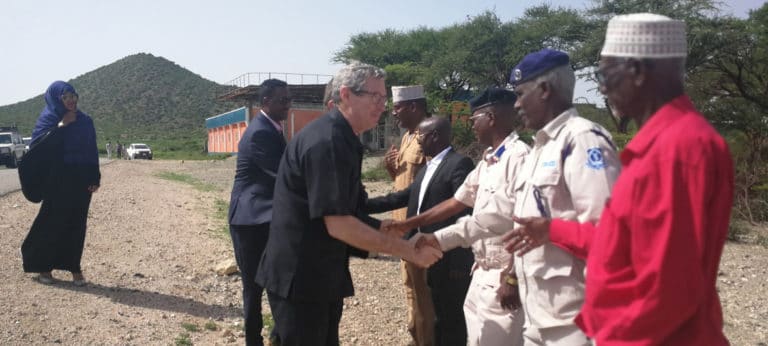
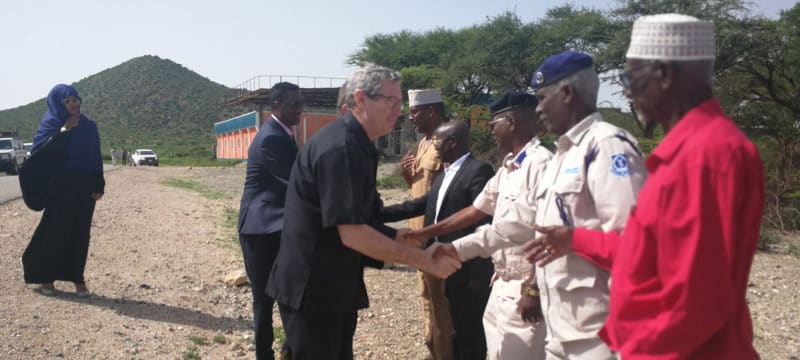
On a visit to Borama town, 180 kilometres southwest of Somaliland’s capital, Hargeisa, the UN Humanitarian Coordinator for Somalia, Peter de Clercq, is greeted by local officials who later shared with him information about the impact that Cyclone Sagar had on the community. Photo credit: UNSOM/Carlos Gomez del Campo
Citing estimates from Somaliland’s disaster management authority, NADFOR, the UN Office for Coordination of Humanitarian Affairs (UNOCHA) said nearly 168,000 people were directly affected and some 277 hectares of land destroyed in the affected villages.
“Key infrastructure, including roads, fishing boats, medical facilities, boreholes and water wells were damaged. Over 80 per cent of community shelters have been destroyed and 33 schools were affected,’’ said OCHA in its latest humanitarian bulletin.
According to the UN, communities in the coastal areas of Somaliland and major portions of Awdal district, as well as some coastal communities in Puntland are still reeling from the impact of tropical cyclone Sagar.
The cyclone, one of the strongest storms ever recorded in Somalia, left an entire year’s worth of rain in a matter of hours, according to SWALIM.
“It left in its trail death, floods and strong winds, as well as the destruction of farmland and infrastructure. Thousands of livestock were killed and civilians displaced.
“The impact of the cyclone has affected communities that were still recovering from prolonged drought,’’ said the UN relief agency.
In Puntland, said the UN, flash floods in Bari left three people dead and damaged the road linking the town of Bossaso to areas in the south.
“Humanitarians have reported that 3,600 families were affected.
“The worst-affected areas include the coastal towns of Bareeda, Caluula, Gumbax, Murcanyo, Xaabo and some parts of Qandala,’’ says the report.
It added that houses and fishing boats were washed away while agricultural land was also swamped.
Cyclone Sagar which formed in the Gulf of Aden hit Somaliland, northern Somalia on May 19.
It also affected neighbouring Ethiopia where 188,000 people were reportedly displaced.
The National Environmental Standards and Regulations Enforcement Agency (NESREA), Southwest Zone, has appealed to residents of Ibadan in Oyo State to reduce the use of plastics to protect the environment.
Ibadan, Oyo State, Nigeria
The agency made the appeal at a rally to commemorate the 2018 World Environment Day (WED) on Monday, June 4, 2018.
The Zonal Director, Mr Adeleke Ajani, said that the rally was to create awareness and call people to action to protect the environment.
“Plastic pollution is one of the biggest environmental concerns facing us today and this has constituted a global problem.
“We are visiting parks, markets, roads and public institutions to raise awareness that everyone has a role to play in taking care of the environment.”
According to him, the use of plastic has become a serious challenge because of it is widespread.
“They are easily available, cheap and light and this has constituted a public menace because plastic pollutes the environment from the time they are manufactured till their final disposal.
“Improper disposal also poses a problem because we see our canals and water channels blocked by these polythene bags,” he said.
He also said the production of plastics involved emission of obnoxious gases, which posed serious health problems to the workers and the neighborhood.
“Plastics can also be toxic and harmful to the human health. Many of these plastics also end up in rivers and oceans and thus endangering our aquatic life.
“Plastic debris consumed by fishes is also dangerous to humans because we also end up eating those fishes.
“That plastic is likely to find its way into the tissues of our bodies with potentially harmful consequences.
“It is important that we all understand the enormous responsibility of protecting the environment for future generations,” he said.
An annual event with the theme, “Beat Plastic Pollution”, the WED aims at encouraging global action to protect the planet and take ownership of the environment.
The African Development Bank (AfDB) says there is the need to take action against plastic pollution in Africa.
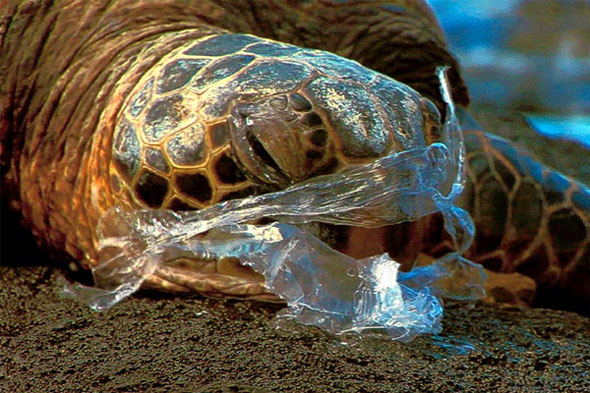
A turtle eating plastic
The bank made the call in a statement signed by its Communication Officer, Climate Change and Green Growth Department, Mrs Sonia Borrini, on Sunday, June 3, 2018 in Abuja.
The News Agency of Nigeria (NAN) reports that the call is coming on the heels of the 2018 World Environment Day slated for June 5, with the theme: “Beat Plastic Pollution’’.
According to the bank, it aims to celebrate the World Environment Day (WED) 2018 and the World Ocean Day (WOD) by raising awareness of its own staff as well as engage key partners.
“Every year, 500 billion plastic bags are used around the world, 13 million tonnes of plastic leak into the ocean and 17 million barrels of oil are used on plastic production.
“About 100,000 marine animals are killed by plastics and 83 per cent of tap water are found to contain plastic particles.
“This is alarming and dangerous to the environment.
“In particular, it is impacting the ocean, which is the lungs of our planet, providing most of the oxygen we breathe, major source of food and medicines and a critical part of the biosphere,’’ AfDB said.
AfDB said it would join the rest of the world to celebrate the “World Environment Day’’ on June 5, as well as the “World Ocean Day’’ on June 8, with focus on “Preventing Plastic Pollution and Encouraging Solutions for a Healthy Ocean.’’
It said through this initiative, the bank was reconfirming its commitment to playing a leadership role in ensuring environmental sustainability while supporting economic prosperity and social inclusion in Africa.
According to the Bank, WED 2018, is a call to action for Africa to come together to combat plastic pollution, one of the greatest environmental challenges of our time.
It said the celebration would afford stakeholders the opportunity to consider how they could make changes in their everyday lives to reduce the heavy burden of plastic pollution on the natural and human environment.
The bank said that the use of plastic had severe environmental and health consequences.
Country Coordinator, Ecological Organic Agriculture (EOA), Dr Olugbenga Adeoluwa, says the EOA is collaborating with stakeholders for effective development of the value chain for organic produce.
Minister of Agriculture and Rural Development, Chief Audu Ogbeh
Adeoluwa, who said this on Friday, June 1, 2018 in Abuja, pointed out said that the EOA, in conjunction with the Association of Organic Agriculture Practitioners of Nigeria, would organise the 2018 National Organic Agriculture Business Summit (NAOBS) to create more awareness on organic farming systems.
“The summit at Lagos Airport Hotel, which starts on July 10 and ends on July 13, will serve as a platform for organic agriculture farmers, consumers and interested members of the public to exchange ideas and services for job creation.
“The value chain strategy will strengthen enterprises, business relationships, services, market structures and the business environment, so that they can channel more benefits to the poor, while creating more and better jobs for the people,’’ he said.
Adeoluwa said that the summit would address issues pertaining to retailing networks, quality control, value chain development and appropriate packaging for agricultural produce.
He, however, underscored the need to promote organic agriculture, right from primary schools to higher institutions of learning, so as improve the health of the people and the environment.
“We will continue to work with schools, hotels, health givers, tourism practitioners and other stakeholders to make Nigerians live healthy life,’’ he said.
Adeoluwa urged Nigerian farmers to embrace organic farming to enable them to reap all the advantages of the farming system.
“Some of the benefits include improved health and nutrition. Organic farming causes little damage to the environment and less costs for the society, while reducing loss of micronutrients in soils as well as erosion.
“Organic farming facilitates better water management, low use of non-renewable resources, safer working conditions and less risk of contamination.
“It makes efficient use of solar energy; it promotes production of biological systems, maintains and improves soil fertility, while maximising re-circulation of plant nutrients and organic matter,’’ he said.
Adeoluwa said that the products of organic farming were all appropriately guided by organic standards.
“Pure organic farming practice maintains its standards by the use of microbial preparations for pest management, as well as the use of high-yielding but disease-resistant breeds of crops and animals,’’ he added.
Some environmentalists have called for action against plastic pollution ahead of the commemoration of the 2018 United Nations (UN) World Environmental Day (WED) on June 5.
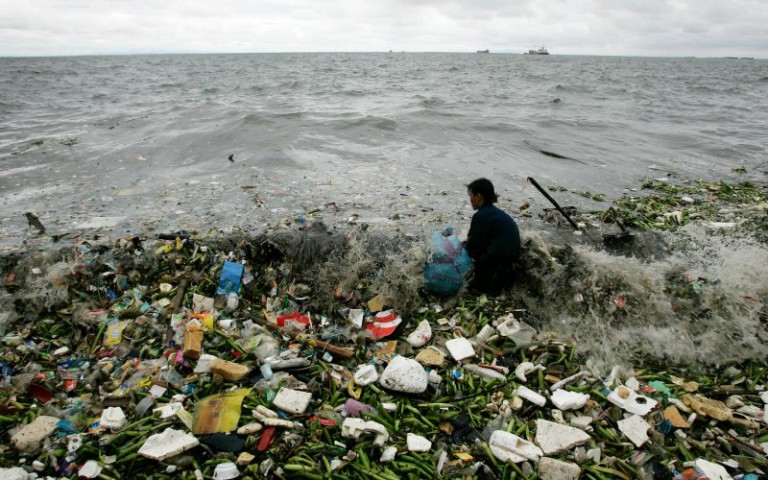
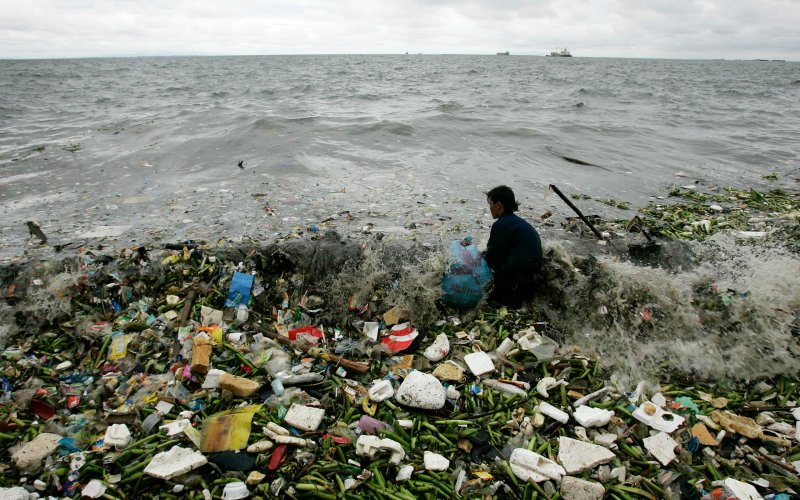
A water body littered with plastic and other waste product. Photo credit: Cheryl Ravelo/Reuters
The environmentalists, in separate interviews in Lagos and Abuja, advocated the importance of recycling of plastic products to create wealth and protect the environment.
The WED, which began in 1974, is a day set aside by the UN to encourage worldwide awareness and action for the protection of the environment.
Mr Gafar Odubote of Let’s Do It Nigeria, a non-governmental organisation (NGO), said environmentalists in Nigeria would commemorate the day by taking a stand against single plastic use.
“Let’s Do it Nigeria and partners are taking a stand against single-use plastic with series of campaigns all over Nigeria to commemorate the UN World Environment Day holding June 5 with the theme: #BeatPlasticPollution.
“WED will be an opportunity to further emphasise the need to bring people’s attention to the increasing rate of plastic pollution in Nigeria,” said Odubote.
According to him, WED had often served as an opportunity to task the Federal Government on the need to enact policies and laws to fight plastic pollution.
“World Environment Day is a call to action for all of us to come together to combat one of the great environmental challenges of our time.
“While many countries around the world have already banned plastic bags and bottles, Nigeria is yet to do anything about its usage, which is growing uncontrollably in the cities.
“People discard plastic water bottles and shopping bags indiscriminately because the government is yet to address the issue with a proper institutional framework and infrastructure required,” Odubote noted.
He said the harm caused by plastic pollution was enormous and capable of causing negative impacts on the nation’s environment in the nearest future.
“In Nigeria, water sachets and pet bottles are not properly disposed. The plastic ends up in drainages, landfills and oceans with only a few recycled.
“The manufacturers keep producing plastics without a robust plan for recycling; the people’s lifestyle and consumption patterns further escalate the uncontrollable spread of single-use plastics.
“The world is currently at the risk of losing both its land and oceans to plastic,” Odubote warned.
Also, Ms Gloria Bulus, the founder of “Bridge that Gap Initiative,” an advocacy group said WED would help sensitise Nigerians against plastic pollution.
He said, “Enough emphasis has not been placed on WED. Nigerians need to understand how important our environment is to us, and the future generation.
“We need more environmental advocates and publicity to sensitise Nigerians on the adverse effect of plastic pollution,” explained Bulus.
She stated that WED would also build awareness on the immense benefits of recycling.
“Asides sensitisation and awareness, we want people to understand the importance of reuse and recycling in Nigeria and how they can create wealth from recycling.
“We want Nigerians to come up with solutions to beat plastic pollution and not rely on government for solutions,” she said.
An environmentalist, Mr Richard Inyamkume, called on the government and other stakeholders to intensify campaign to change public attitude and behaviour towards the use and disposal of plastics.
Inyamkume, the Senior Programme Officer, Climate Change Mitigation and Adaptation Initiative (CCMAI), said: “There are many ways of addressing environmental issues of this nature. One way is to raise advocacy that will change public attitudes and behaviour towards the use and disposal of plastics.”
Inyamkume said that other methods of tackling the environmental issue involved public activism and legislation.
“I believe in change of attitude as it can increase public consciousness about the impact of plastics on the environment, while prompting alternative considerations for the use of plastics in the country.
“A campaign against improper plastic waste disposal can begin in the home setting before going into the streets; it should make high impact and encourage plastics reuse, recycling and substitution,’’ he said.
Inyamkume, however, underscored the need for the citizens to understand their specific roles in the campaign for a plastics-free environment, adding that they should also be encouraged to organise regular community cleanup activities to clear plastic waste.
“Besides, government and policymakers ought to review national legislation and policies so as to discourage the production of single-use disposable plastic materials, while encouraging the production and importation of environmentally friendly products.
“The 2018 World Environmental Day will somewhat be celebrated in a unique way, as it sets to address plastic pollution which has been a serious environmental concern, among other issues.
“Plastic pollution occurs where plastic materials are indiscriminately dumped in an area in such a way that it begins to impact negatively on the ecosystem,’’ he said.
He said that the global community was planning to achieve clean, sustainable and pollution-free cities by 2030 and as such, efforts were underway to address plastic pollution.
“In Nigeria, plastic pollution has increased over time due to the proliferation of plastics producing factories and a corresponding increase in the demand for plastic materials by the public.
“These increases have come with attendant environmental consequences such as plastic pollution, mostly in urban and commercial areas, and there has not been enough public awareness or sensitisation on the proper methods of disposing plastics.
“What usually constitutes plastic pollution includes but is not limited to single-use plastics. These are plastic bags, water bottles, straws, cups, utensils, dry cleaning bags, take-away containers or disposable plastic materials,’’ he said.
The environmentalist said that if not properly managed, plastic waste could affect life on land and in oceans or rivers.
“As a concerned environmentalist, I think there is need for concerted efforts to address plastic pollution globally,’’ he said.
Inyamkume said that Nigeria should to join the global crusade to end plastic pollution because of its hazards to the environment.
Mr John Ekoko, the former Chairman of the Lagos Island chapter of Nigerian Environmental Society, called for increased research on biodegradable materials to replace plastic packaging materials.
Ekoko stressed that plastic materials were not biodegradable and they were, therefore, not environmental friendly.
“The 2018 World Environment Day is creating awareness of the environmental pollution caused by plastics and the need to curb the menace.
“This requires the involvement of all tiers of government, organisations manufacturing plastics products and related materials as well as individuals — the end users of the products.
“The government should champion the gradual phase-out of the use of plastics materials for product packaging by organisations.
“It should also encourage the recycling of plastic products, while ensuring that the citizens imbibe proper ways of disposing plastic packages,” he said.
Ekoko noted that there was a lot of plastic pollution going on across the world, as plastic waste often competed for space in oceans and on land.
He said that the plastics had some harmful micro-organisms which could contaminate underground water, adding that whenever people drank the contaminated water, they were prone to contracting water-borne diseases.
The environmentalist said that many big firms had now resorted to using paper products as alternative packaging materials, adding that other companies should be made to emulate such firms.
Ekoko said that the government should also regulate the use of plastics for product packaging, while promoting the use of biodegradable materials as an alternative.
By Mercy Okhiade, Chidinma Agu and By Deji Abdulwahab
In commemoration of the World Environment Day and the World Oceans Day 2018, Nnimmo Bassey, Director, Health of Mother Earth Foundation (HOMEF), describes the plastic pollution menace as a haunting reminder of the harm that mankind is doing to the environment
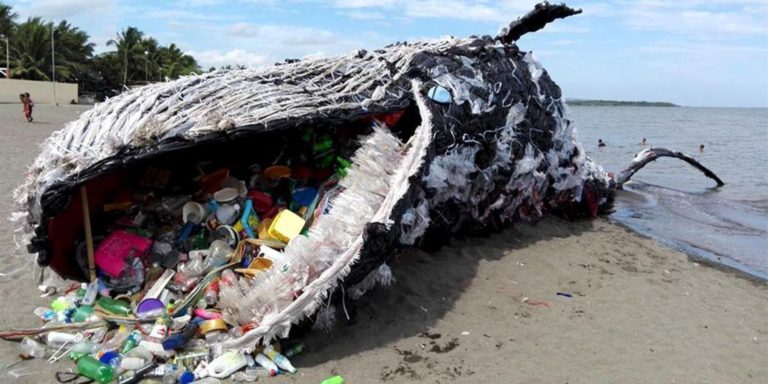
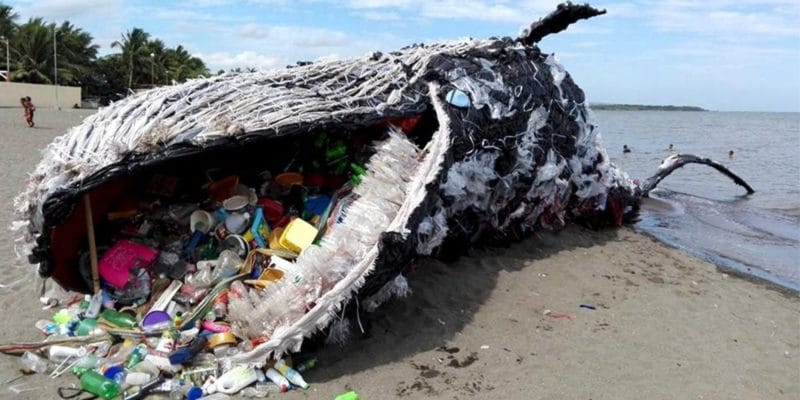
The giant “Dead Whale” is a reminder of the massive plastic Pollution Problem
It was a surreal feeling for me to literally step into the belly of a whale in December 2017. It was an unforgettable experience, to say the least. One could not but imagine what would have been the fate of biblical Jonah if he had found himself in the belly of a whale like the one I encountered.
My encounter was with a Cuvier’s beaked whale. An adult male Cuvier’s beaked whale can weigh up to 3,000 kilogrammes and measure 5 to 7 metres in length. These whales usually have just two visible teeth at the tip of their short beak. Lacking much in terms of teeth, they feed by suction. They hunt by echolocation and can be injured or confused by noises generated by humans, including noise from seismic exploration for fossil fuel resources.
Encountering them is not easy, so Jonah would probably not have been given a hike by this specie. Why? They live where there is no light, at about 2,000 metres way down in the ocean. Plus, they feed on fish, crustaceans and mostly deep-sea squid. This appetite for squid may be one of the key problems that modern man now poses to these deep-sea creatures.
Scientists suspect that the Cuvier’s beaked whales get attracted to floating plastics, mistaking them for squids or ingest them while hunting for other species that may seek hiding places in floating plastics materials. Plastics in the seas are a huge threat to the Cuvier whales and other sea creatures.
Ending a Plastic Civilisation
The World Environment Day 2018 presents a challenge and an instigation. The theme, “Beat Plastic Pollution”, challenges us to take action and the notion that plastics pollution can be beaten should inspire actions. The World Oceans Day equally urges action against plastic pollution.
Beating plastics pollution is a huge challenge when we consider the perverse culture of current disposable economy. Fifty percent of plastics in use are disposable or single-use type. Globally, we buy one million plastic bottles every minute and use up to 5 trillion plastic bags every year. The least anyone can do is to pause and think before grabbing that plastic bottle of so-called soft drinks. We should learn to refuse plastics and not just aim to reduce, reuse or recycle them. It is time to tackle this menace at source. Packaging is said to account for 40 percent of all plastics in use. It is time to terminate this plastic civilisation.
Sadly, many folks think that the story of their plastic bags or wraps end once they toss them into the trash bin. In a bid to appear hygienic, we cover or wrap foods with plastics – in both restaurants and homes. However, plastics out of sight are not plastics out of life. Tons of these materials end up in the gutters, rivers and the oceans. Some 15 tons of plastics are said to end up in the ocean every minute with more than 8 million tons being dumped into the oceans every year. An incredible 1 million seabirds and 100,000 marine mammals lose their lives to plastic pollution every year.
Reports by Ocean Conservancy suggest that there will be more plastics than fish in the oceans by 2050. Already, plastics have been found in over 60 percent of all seabirds and in all sea turtles species that mistake plastic for food. We must beat plastics, for our survival and for the survival of other species. We need fish, not plastics.
Floating on the waves
It is interesting when we consider how long it takes for some of the plastics that end up in the oceans to decompose. Tissue papers decompose in two to four weeks. Cigarettes decompose in five years. The plastic cups in which coffee is served at cafes and fast food shops float around for 50 years. Plastic bottles will swirl about for 450 years. And, wait for it, the plastic in baby diapers will equally hang around for 450 years – long after the babies who wore them would have become ancestors. Even the balloons that are used as decorative items – when released to float around for a few minutes or hours end up taking years to degrade in the oceans and water ways.
And, so, there was I in the belly of the Plastic Whale Museum, a museum set up at the University of Bergen, Norway, to serve as a poignant reminder of the harm that plastics pose to our oceans and to marine life in particular. This museum hosts displays of the plastics recovered from the belly of the whale that was stranded on the Sotra Island, west of Bergen, on 28th January 2017. The whale had more than 30 plastic bags and a large quantity of microplastics in its belly.
As we gathered in the museum to discuss plastics, oil pollution and the threat to our communities as well as to marine ecosystems, the plastic backdrop was a haunting reminder of the harm that we are doing to our environment. When we eat fish that feeds on plastics, it is reasonable to say that we are actually eating plastics.
On that day, I ended my talk with a rendition of my poem: We Thought it Was Oil, but It Was Blood. Perhaps I should have changed that to read: We Thought it Was Fish, but It Was Plastic. We simply have to beat plastic pollution.